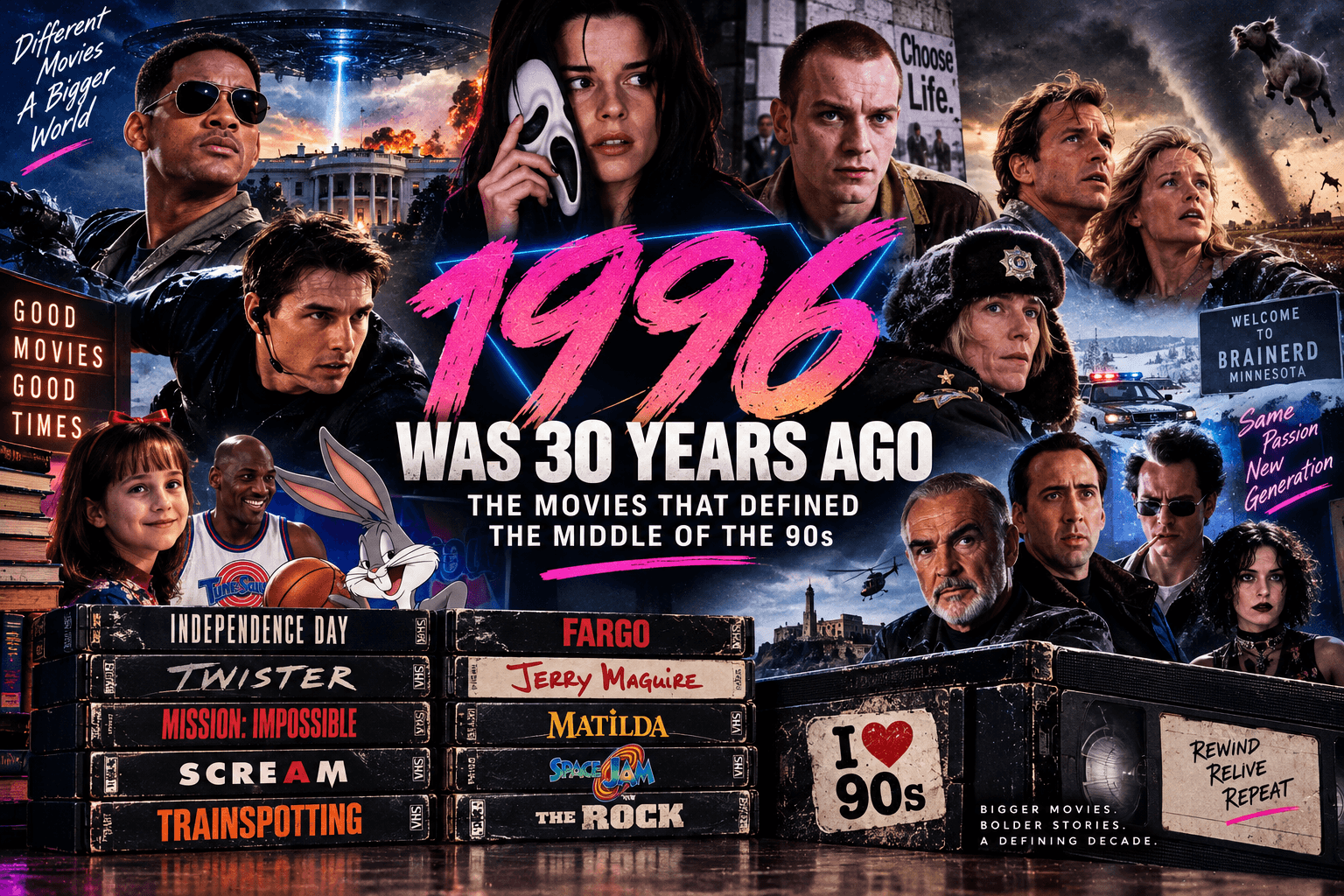
1996 Was 30 Years Ago — The Movies That Defined the Middle of the 90s
Independence Day. Twister. Scream. Mission: Impossible. Trainspotting. Fargo. Thirty years later, 1996 looks like one of those remarkable movie years where almost every corner of cinema produced something we still remember.
30 Years Of Film
The Time Went But The Movies Are Still Here
Thirty years ago, aliens destroyed the White House, tornadoes threw cows through the air, Ethan Hunt accepted his first impossible mission, and Ghostface asked a terrified teenager if she liked scary movies.
It was 1996.
And somehow, all of those movies are now thirty years old.
Ten years earlier, 1986 gave audiences Top Gun, Aliens, Ferris Bueller’s Day Off, and an extraordinary collection of movies that still define the 1980s.
By 1996, cinema felt different.
The stars had changed. Computer-generated effects were becoming increasingly important. Independent cinema had grown enormously influential. Blockbusters were becoming bigger, louder and more technically ambitious.
But something hadn’t changed.
Audiences were still getting movies they would be talking about decades later.
And looking back from 2026, 1996 was absolutely loaded with them.
THE BLOCKBUSTER
Independence Day Made Blowing Up the World Feel Like an Event
Some movies are blockbusters; others seem to take over an entire summer.
Independence Day was the latter.
Roland Emmerich’s alien-invasion spectacular arrived with enormous spaceships hovering over the world’s cities before destroying some of its most recognisable landmarks.
The image of the White House exploding became one of the decade’s defining blockbuster marketing images.
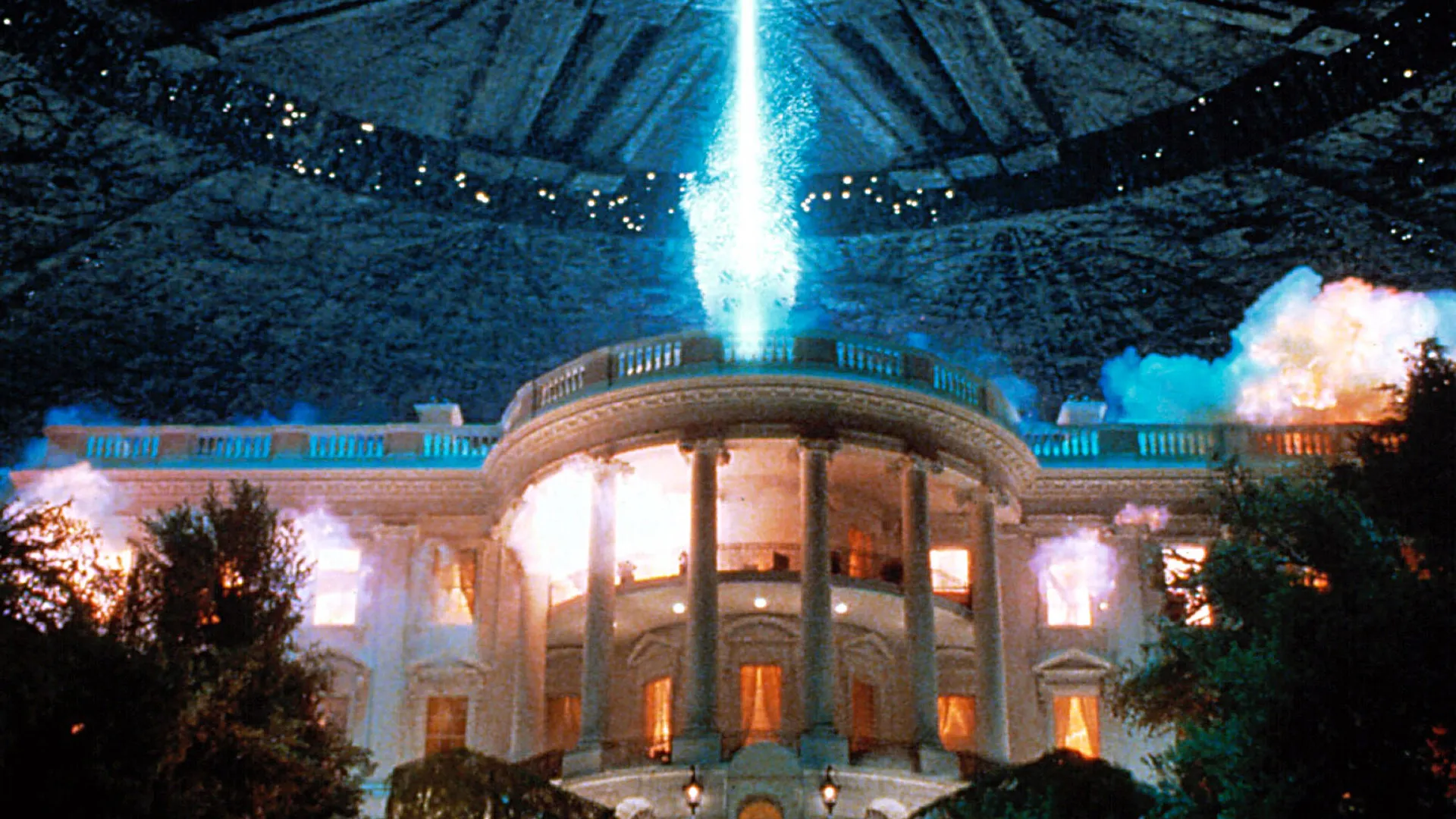
But the movie had something even more valuable than spectacle.
It was fun.
Will Smith’s charisma was operating at full power. Jeff Goldblum brought his signature nervous intelligence. Bill Pullman got one of the great blockbuster presidential speeches.
Audiences responded.
Independence Day earned approximately $817 million worldwide, making it the highest-grossing movie released in 1996.
Thirty years later, that mixture of enormous spectacle, memorable characters and unapologetic entertainment still feels like pure 1990s summer cinema.
DISASTER MOVIES
Twister Made Us Believe a Tornado Could Be a Movie Star
1996 didn’t stop after destroying major cities.
It sent tornadoes after us, too.
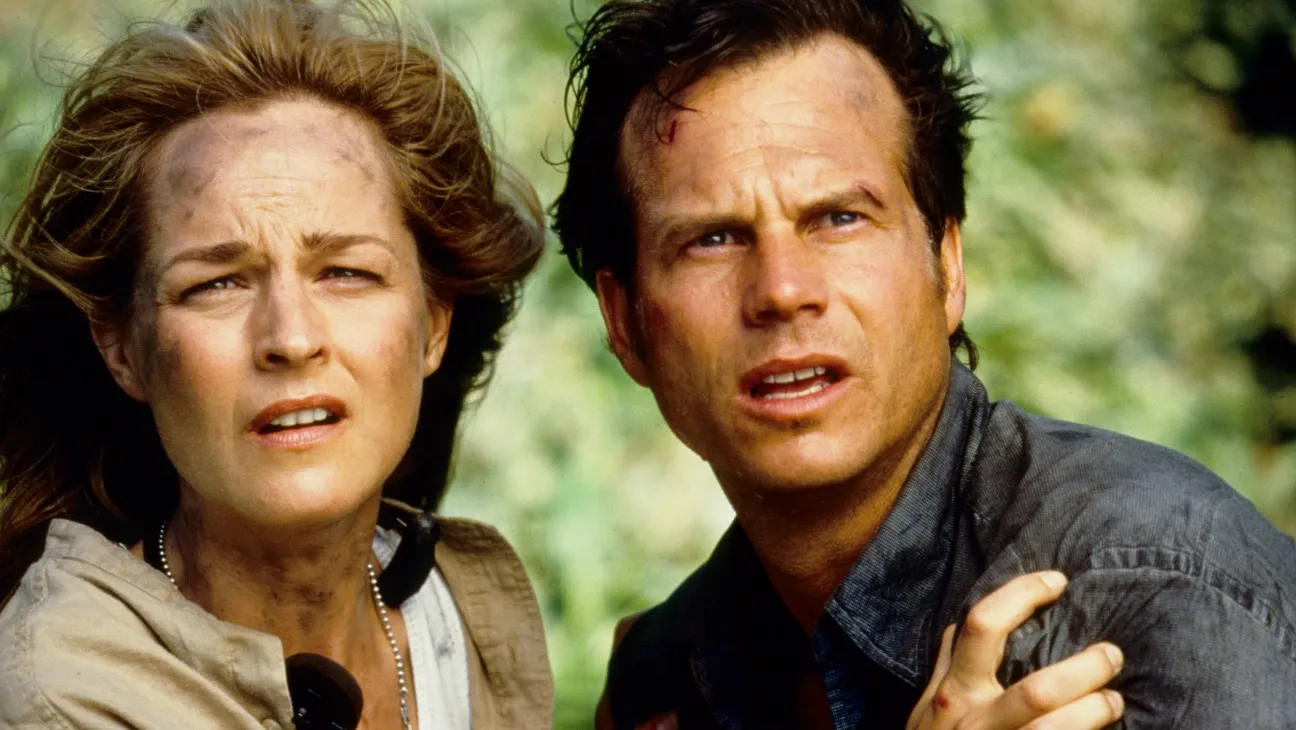
Jan de Bont’s Twister took something audiences already understood was terrifying and turned it into a full-scale theatrical experience.
Helen Hunt and Bill Paxton led a group of storm chasers attempting to deploy their experimental Dorothy equipment directly into a tornado.
The human drama mattered.
But let’s face it.
We were there for the tornadoes.
Flying debris. Houses being torn apart. Trucks being thrown around.
And, of course, the cow.
Twister became another enormous worldwide success, taking roughly $495 million globally, according to Box Office Mojo.
It was exactly the sort of movie you wanted to see on the biggest screen possible.
THE NEW ACTION HERO
Mission Impossible Introduced Us to Ethan Hunt
It’s strange watching the original Mission: Impossible now.
Not because it hasn’t aged well.
Because nobody watching it in 1996 could possibly have known what it was starting.
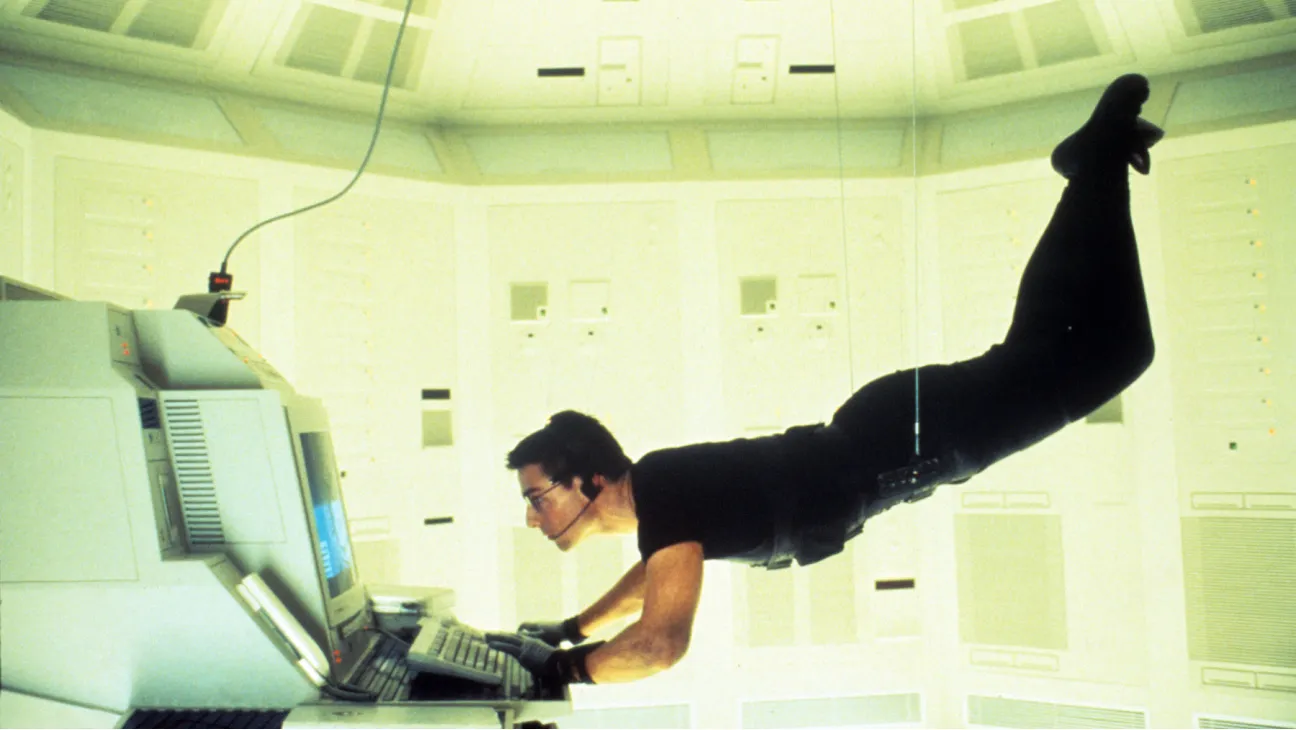
Tom Cruise’s Ethan Hunt was introduced in Brian De Palma’s adaptation of the television series, beginning a film franchise that would continue for decades.
And before Ethan was hanging from aeroplanes and climbing the world’s tallest buildings, he was dangling silently above a computer terminal.
That CIA vault sequence remains brilliant.
No explosions are necessary.
The tension comes from watching a single bead of sweat threaten to ruin everything.
The movie earned more than $457 million worldwide, making it one of 1996’s biggest global releases.
Sometimes a movie becomes memorable.
Sometimes it starts something much bigger.
Mission: Impossible managed both.
HORROR
Then Scream Changed the Rules
While Hollywood’s biggest movies were getting larger, Wes Craven was preparing to do something very different.
He made horror look at itself.
Scream opens with Drew Barrymore receiving a phone call.
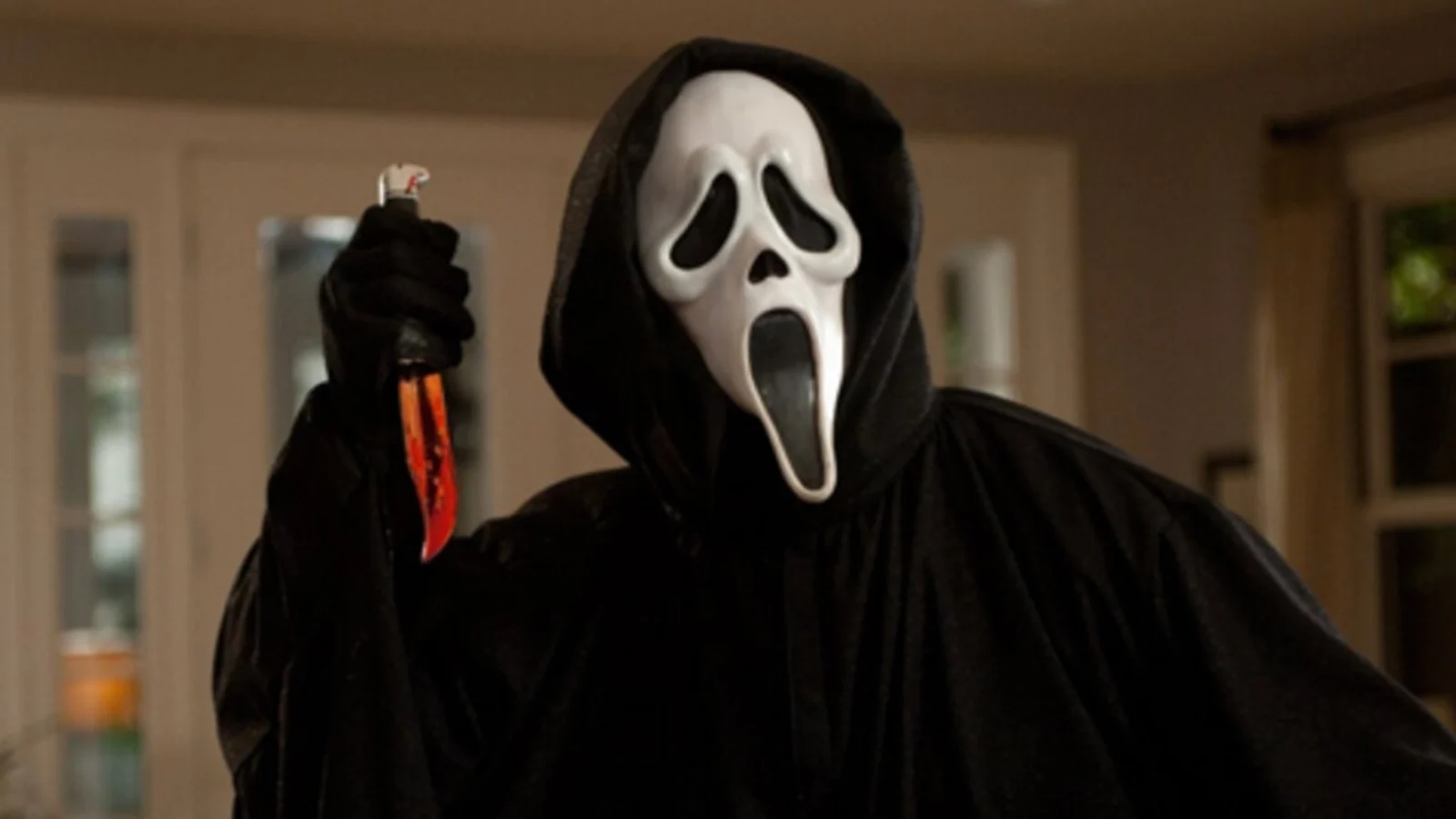
What begins almost playfully becomes increasingly uncomfortable until the movie makes it brutally clear that knowing the rules of horror films won’t necessarily save you.
Kevin Williamson’s screenplay understood that audiences had become horror experts.
They knew you shouldn’t investigate strange noises.
They knew splitting up was a terrible idea.
They knew the person saying “I’ll be right back” probably wouldn’t be.
So Scream made that knowledge part of the story.
The film went on to earn around $173 million worldwide — remarkable business for a movie made on a fraction of the budget of the year’s giant blockbusters.
More importantly, Ghostface became one of horror cinema’s most recognisable figures.
1996 didn’t merely produce another successful slasher.
It helped restart an entire genre.
BRITISH CINEMA
Trainspotting Had Absolutely No Interest in Behaving Itself
Then Britain contributed something completely different.
Danny Boyle’s Trainspotting was fast, ugly, funny, disturbing and bursting with energy.
Ewan McGregor’s Renton and his circle of friends weren’t presented as conventional movie heroes.
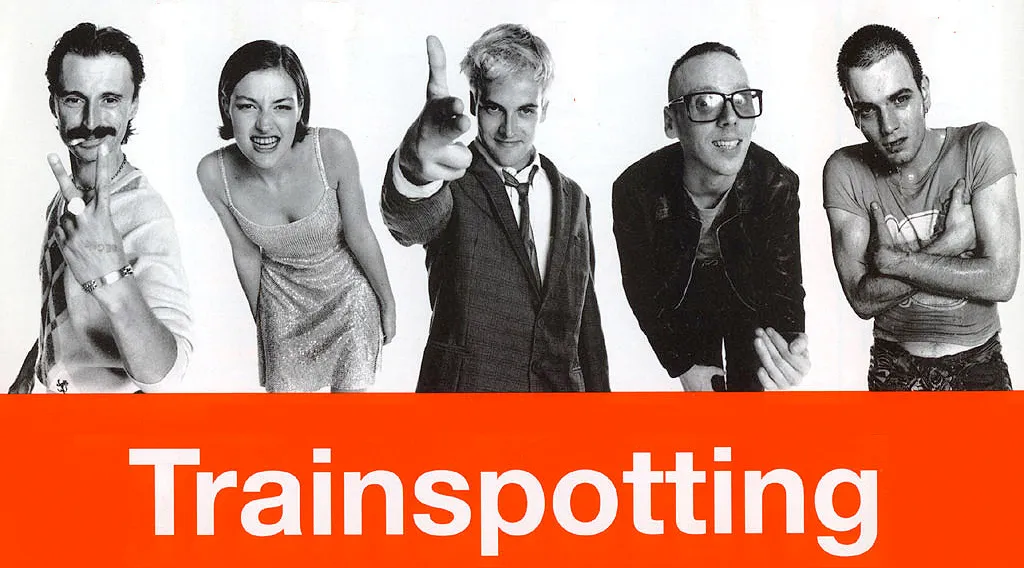
Their lives were chaotic.
Their decisions were frequently disastrous.
And the film refused to tidy any of it up for the audience.
From its opening “Choose Life” sequence onwards, Trainspotting announced exactly what sort of film it intended to be.
The soundtrack became inseparable from the experience.
The editing had a frantic energy.
Scenes such as Renton’s dive into the “Worst Toilet in Scotland” were almost impossible to forget, whether you wanted to or not.
The BFI has since included Trainspotting among its notable films from what it described as an unusually strong year for cinema.
Few British movies captured the attitude of mid-1990s cinema quite like it.
CRIME
Fargo Found Darkness in the Snow
Joel and Ethan Coen didn’t need alien invasions or tornadoes.
They had Minnesota.
Fargo begins with a kidnapping scheme that seems relatively straightforward.
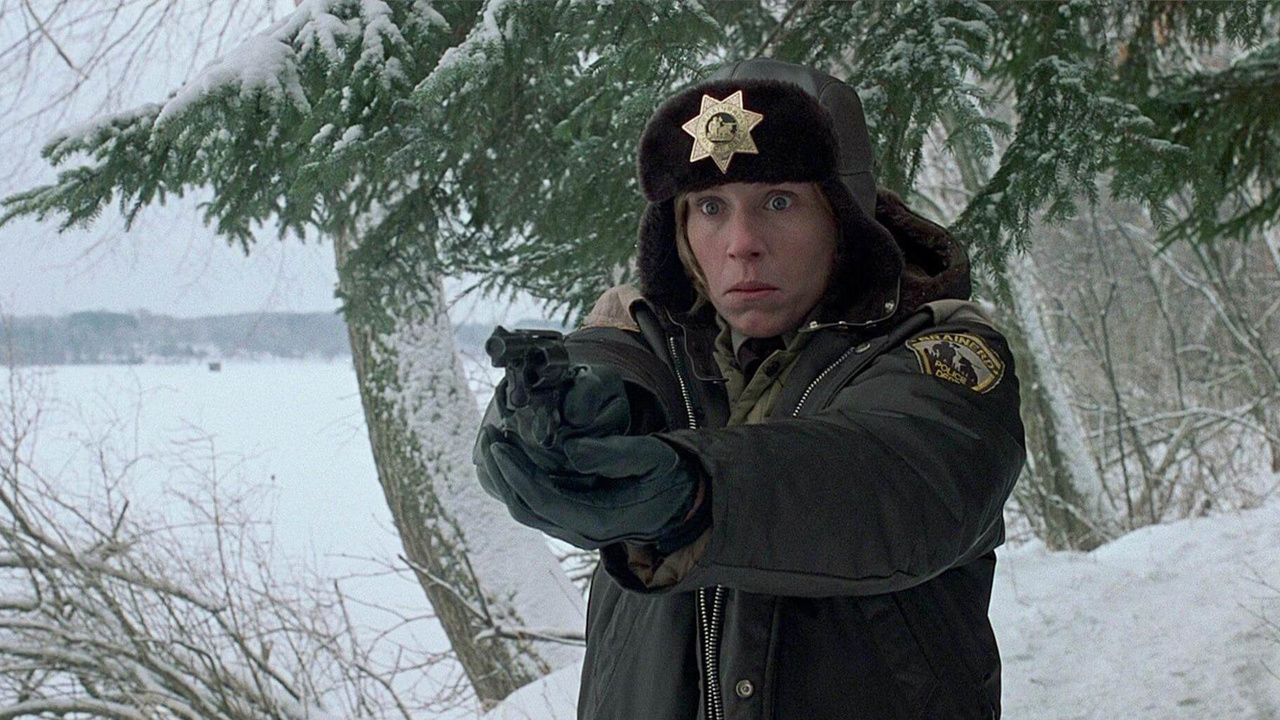
It doesn’t remain straightforward for very long.
William H. Macy’s Jerry Lundegaard becomes increasingly trapped by his own decisions while Frances McDormand’s heavily pregnant police chief Marge Gunderson quietly works through the resulting carnage.
That’s the magic of Fargo.
It’s simultaneously funny, disturbing, warm and incredibly bleak.
McDormand won the Academy Award for Best Actress, while the Coen brothers won for their original screenplay.
Among all the noise of 1996, Fargo proved that a quiet conversation over breakfast could be just as memorable as a spaceship destroying a city.
ROMANCE
Jerry Maguire Gave the 90s Two Lines Everybody Knew
“You complete me.”
“Show me the money.”
Getting one phrase into popular culture is difficult enough.
Jerry Maguire managed two.
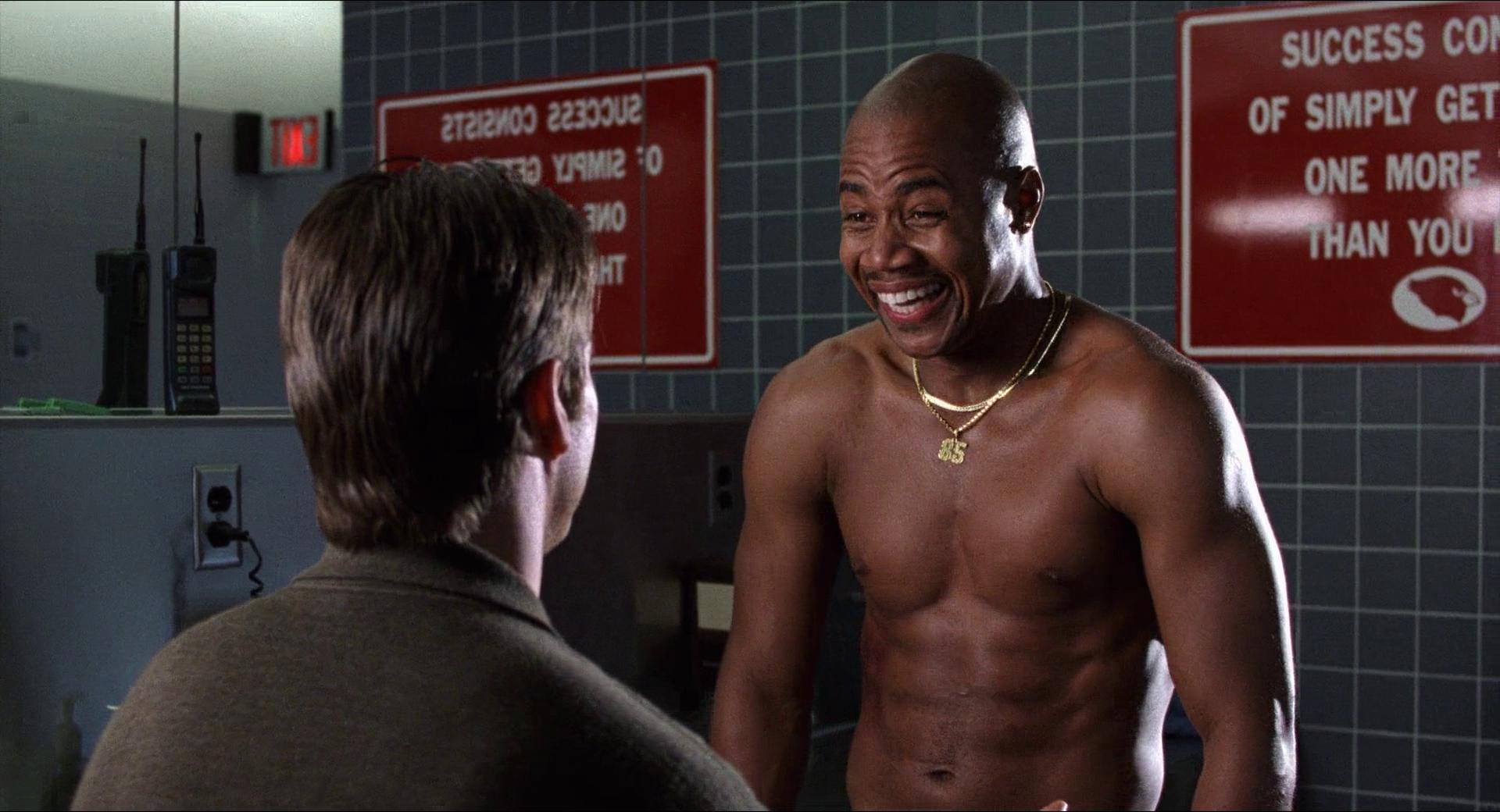
Cameron Crowe’s film gave Tom Cruise one of his most recognisable performances outside the action movies that increasingly surrounded his career.
But the film belongs just as much to Renée Zellweger and Cuba Gooding Jr.
Gooding’s performance as Rod Tidwell won him the Academy Award for Best Supporting Actor.
What makes Jerry Maguire endure isn’t simply its quotability.
Underneath the sports-agent story is a movie about somebody discovering that professional success isn’t particularly useful when the rest of your life is empty.
FAMILY MOVIES
Matilda Gave Kids the Ultimate Revenge Fantasy
Not every enduring movie of 1996 needed a gigantic box office result.
Matilda is one of the best examples.
Danny DeVito’s adaptation of Roald Dahl’s novel gave us Mara Wilson as an extraordinarily intelligent child surrounded by adults who either ignored her or actively made her life miserable.
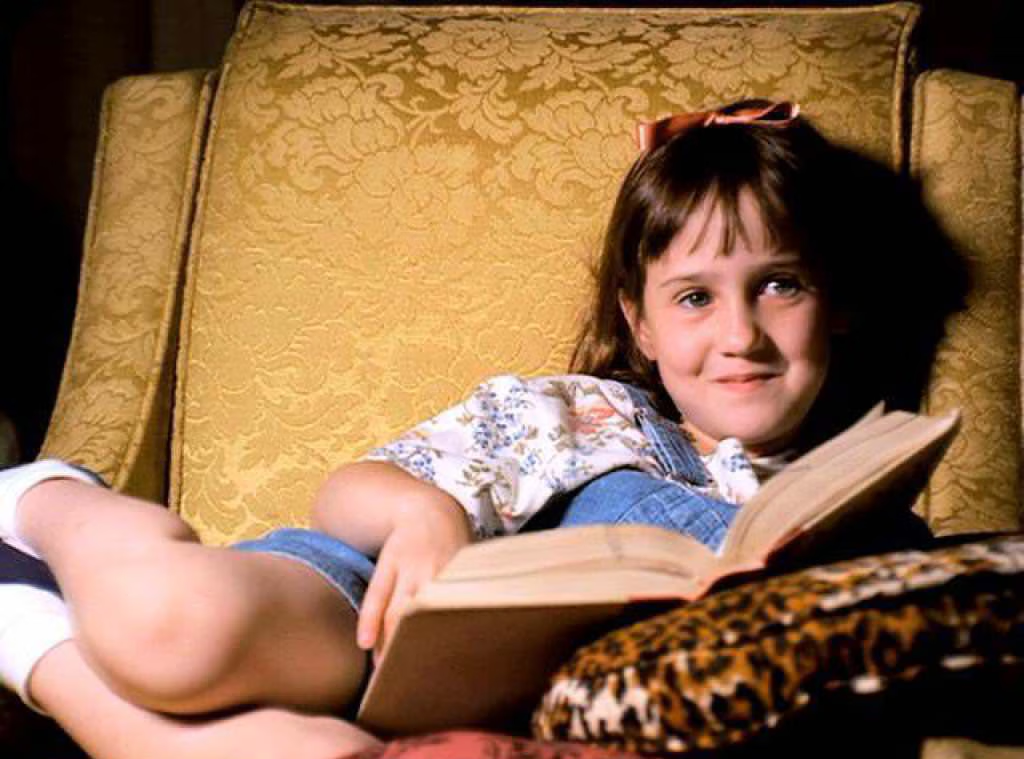
And then there was Miss Trunchbull.
Pam Ferris created a children’s movie villain capable of terrifying an entire generation.
The chokey.
The hammer throw.
The chocolate cake.
If you know, you know.
Like so many films from the decade, Matilda grew beyond its original theatrical life through home video and television.
For millions of children who watched it repeatedly afterwards, its original box-office performance was irrelevant.
It simply became one of their movies.
SPORTS AND POP CULTURE
Space Jam Could Only Have Happened in the 1990s
Try explaining Space Jam without sounding completely insane.
Michael Jordan plays basketball with Bugs Bunny and the Looney Tunes against aliens who have stolen NBA players’ abilities.
That’s the movie.
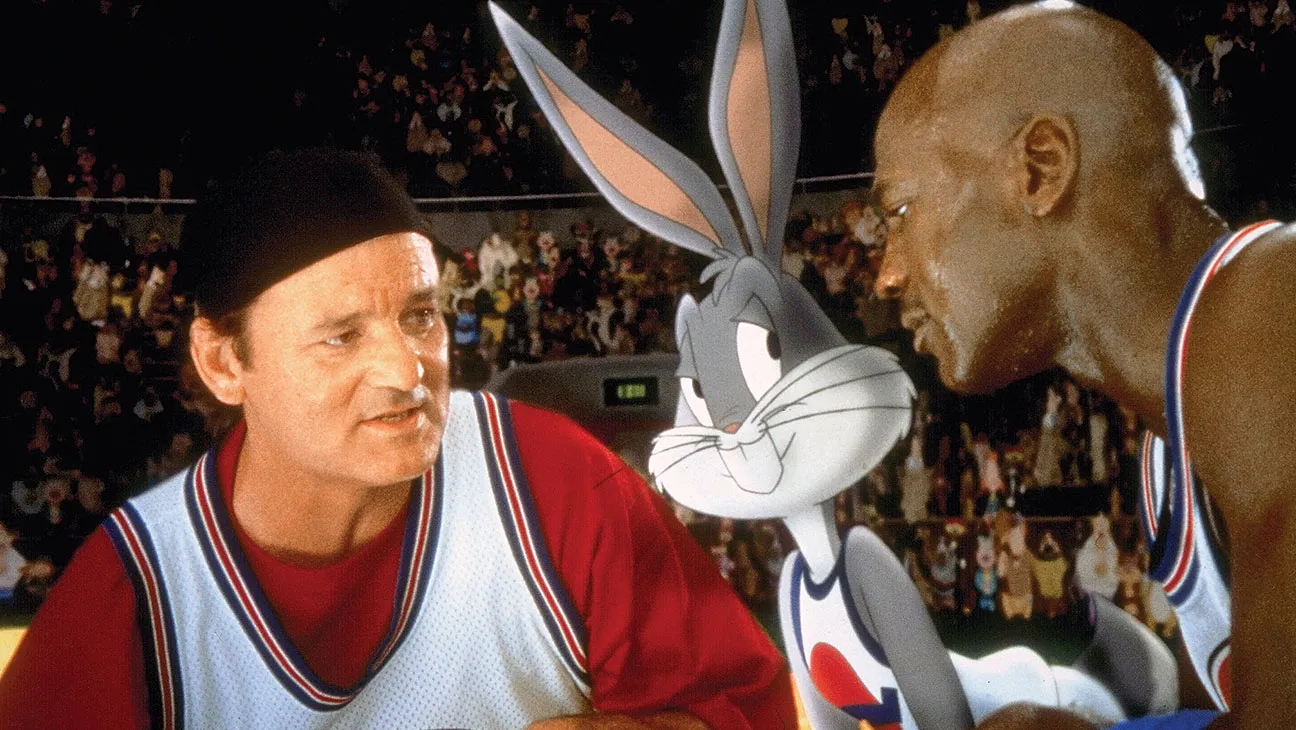
And somehow it worked.
Space Jam exists at the precise intersection of 1990s basketball culture, animation, celebrity and merchandising.
Michael Jordan wasn’t merely an athlete at the time.
He was one of the most recognisable people on Earth.
Put him alongside Bugs Bunny and suddenly you had something that felt less like a conventional movie and more like a 1990s cultural event.
Would anybody greenlight exactly that film today?
Probably not.
That is part of why it’s such a perfect snapshot of its era.
ACTION
The Rock Reminded Everyone How Much Fun Action Movies Could Be
Nicolas Cage.
Sean Connery.
Ed Harris.
Alcatraz.
Sometimes that’s enough.
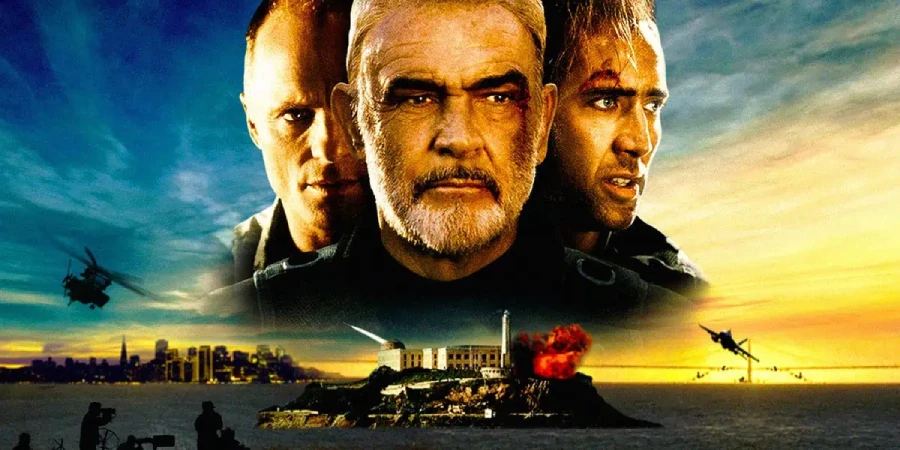
Michael Bay’s The Rock arrived during the director’s early run of enormous action movies and delivered exactly what audiences expected.
Explosions.
Car chases.
One-liners.
An absurdly dangerous mission.
But the casting elevated it.
Connery brought effortless presence as John Mason, while Cage’s Stanley Goodspeed was refreshingly uncomfortable with almost everything happening around him.
Ed Harris gave the antagonist enough humanity to stop him becoming a simple cartoon villain.
It’s loud, excessive and completely committed to entertaining you.
In other words, it’s very 1996.
THE CULT MOVIES
And Then You Look Beyond the Biggest Hits
This is where the year becomes seriously impressive.
From Dusk Till Dawn begins like one movie before abruptly transforming into another.
The Long Kiss Goodnight gave Geena Davis and Samuel L. Jackson one of the decade’s most entertaining action pairings.
The Cable Guy took Jim Carrey’s enormous 1990s popularity somewhere considerably darker.
Mars Attacks! allowed Tim Burton to unleash an army of deliberately ridiculous aliens.
Primal Fear introduced many moviegoers to Edward Norton.
The Craft found an audience that only grew after its theatrical release.
Beautiful Girls, Swingers, Kingpin, Bottle Rocket, The Frighteners and That Thing You Do! all arrived during the same twelve months.
Then there was Romeo + Juliet, with Baz Luhrmann taking Shakespeare and throwing Leonardo DiCaprio, Claire Danes and an unmistakably 1990s visual style at it.
This year wasn't carried by three blockbusters.
There was interesting stuff everywhere.
WHY 1996 MATTERS
Cinema Was Sitting Between Two Eras
Looking back, 1996 feels particularly interesting because Hollywood was in transition.
Practical filmmaking still dominated much of what appeared on screen, but digital effects were rapidly improving.
Movie stars still had enormous power.
Tom Cruise could open Mission: Impossible and then appear months later in something as different as Jerry Maguire.
Will Smith was moving from television star to one of the biggest movie stars on the planet.
Independent and international filmmaking had become increasingly visible to mainstream audiences.
Meanwhile, home video meant a theatrical disappointment didn’t necessarily disappear.
A film could fail at the box office and spend the next decade being discovered on VHS and DVD.
Cinema wasn't yet dominated by the internet.
Streaming didn't exist.
Social media didn't exist.
For many of us, discovering a movie still meant seeing a trailer, reading a magazine, hearing about it from somebody at school or wandering around a video shop until a cover caught our attention.
1996 sits right in the middle of that world.
THIRTY YEARS LATER
The Movies Never Really Left
Perhaps the strangest thing about revisiting 1996 in 2026 is how many of its films remain familiar.
Mission: Impossible became a decades-long franchise.
Scream became one too.
Independence Day received a sequel twenty years later.
Space Jam eventually received a follow-up.
Twister inspired another theatrical chapter with Twisters.
But sequels aren't the real reason 1996 survived.
We kept watching the originals.
They moved from VHS to DVD, from DVD to Blu-ray and eventually onto streaming services.
Some became franchises.
Others simply became favourites.
And that's ultimately what matters.
A successful movie can own a weekend.
A great one can stay with people for thirty years.
THE LEGACY
1996 Wasn't Just a Great Movie Year — It Was Completely 90s
Every decade has years that seem to capture something about it.
1996 is one of those years.
The enormous spectacle of Independence Day.
The technical ambition of Twister.
The star power of Mission: Impossible.
The self-awareness of Scream.
The attitude of Trainspotting.
The weirdness of Fargo.
The pop-culture collision of Space Jam.
The warmth of Matilda.
Put them together, and you get something that feels unmistakably mid-90s.
Thirty years have passed.
Technology has transformed cinema.
The way we discover films has changed almost beyond recognition.
But somewhere, somebody is still watching Ghostface make that phone call, Ethan Hunt hang inches above the floor, Bill Paxton chase another tornado, or Will Smith look up at an alien spaceship.
1996 might be thirty years ago.
It just doesn't feel like it.
Keep reading
More features
Movies
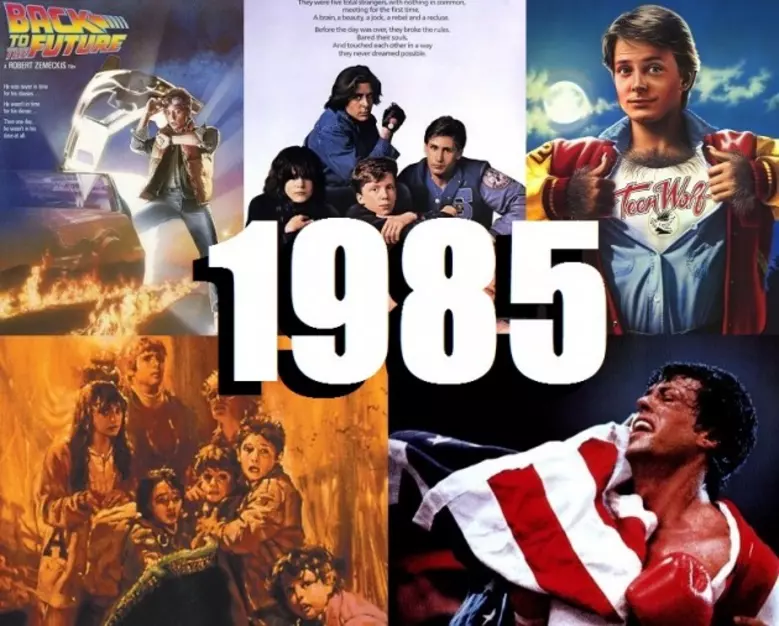
10 Movies That Defined 1985
From time machines to pirate treasure, 1985 might have been one of the most ridiculously entertaining years in movie history.
Read the feature →
Horror
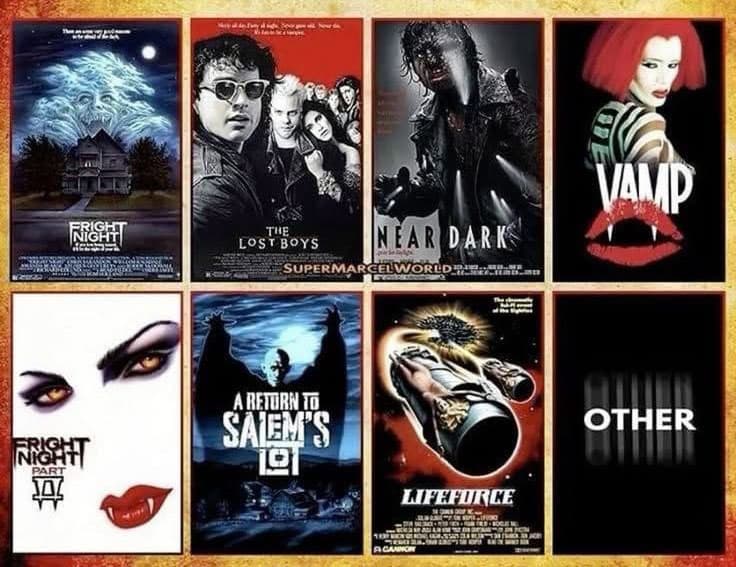
Why 80s Vampire Movies Were So Damn Good
The decade gave vampires leather jackets, nightclubs, motorbikes and a completely new attitude.
Read the feature →