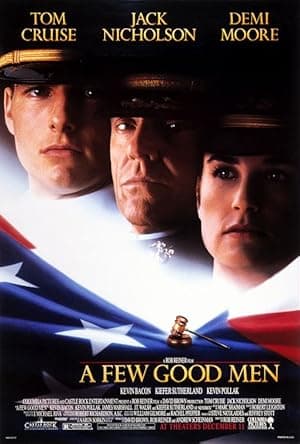
A Few Good Men
Courtroom pressure, military orders and a young lawyer who decides to stop pleading out.
// The setup
PLAYBACK STARTED
If you think of A Few Good Men and immediately see a courtroom, you're already halfway there. Rob Reiner's 1992 drama funnels its energy into one procedural machine — investigations, testimony and a climactic cross‑examination — and asks what happens when obedience collides with conscience. At the centre is Lieutenant (j.g.) Daniel A. Kaffee, the reluctant JAG officer who has to grow a spine and take a case to trial.
THE MOVIE
Lieutenant (junior grade) Daniel A. Kaffee, USN, JAG Corps is still the reason this movie works
A Few Good Men sets a clear table from the start: two Marines at Guantánamo Bay are accused of participating in the disciplinary action that killed a fellow Marine. That legal fact gives Rob Reiner something fierce to aim at — questions about orders, responsibility and what the chain of command really covers.
Tom Cruise’s Lieutenant (j.g.) Daniel A. Kaffee begins the film as a lawyer more comfortable with quick pleas than messy trials. The movie's forward momentum comes from nudging him out of that comfort zone and forcing him to treat the case as a courtroom contest rather than paperwork to be filed away.
Around Kaffee orbit a neat cast of players — Jack Nicholson's base commander, Demi Moore's internal‑affairs officer and Kevin Bacon's career prosecutor — and Reiner keeps the apparatus tight: investigation scenes feed the trial, which then becomes the engine for the film's moral questions.
THE SETUP
The idea that sets A Few Good Men in motion
The inciting image is grim and straightforward: PFC William Santiago dies after being disciplined by his unit, and what starts as an internal matter becomes a full military investigation. That single death is the machine that drives every interview, motion and objection that follows.
What the defence has to do — and what gives the film its procedural interest — is trace who ordered that discipline. Was it a rogue decision at the lower levels, or did an order come down the chain of command?
Because the story moves between base life, investigative interviews and courtroom scenes, the trial does double duty: it exposes facts while also staging the film’s arguments about authority, duty and culpability.
All of which makes the courtroom more than a set-piece. It is where the plot and the ethical questions collide.
THE PERFORMANCE
Why Jack Nicholson's performance matters
Jack Nicholson’s portrayal of Colonel Nathan R. Jessep is one of the film’s undeniable anchors. The performance received industry attention — an Academy Award nomination for Best Supporting Actor — which signals how central that role is to the movie's dynamics.
Jessep functions in the story not just as an antagonist but as the institutional force the defence is trying to pin down. The fact that Nicholson was singled out in awards season reflects how much the film leans on the clash between his authority and the courtroom's demand for accountability.
Put simply: the trial's moral battle needs a credible, towering figure to push against. The nomination is evidence the film supplied exactly that.
UNDER THE SURFACE
A Few Good Men has more on its mind than the plot suggests
At surface level it’s a courtroom thriller about facts and testimony. Beneath that, the film keeps pulling you toward questions of obedience versus conscience: what do you do when an order feels wrong?
Closely tied to that is a meditation on military authority and accountability. The drama constantly tests whether institutional power protects those who wield it or those who follow it — and whether the system will ever admit its own mistakes.
The courtroom framework also allows the movie to interrogate truth and legal responsibility: the proceedings are less about theatrical speeches than about whether truth can be established under the rules of evidence.
Finally, there’s a quieter tug-of-war between careerism and ethics. Several characters are clearly motivated by the next promotion or reputation; Kaffee’s arc trips over that calculus as he learns the cost of refusing an easy way out.
THE FILMMAKING
How A Few Good Men was put together
A Few Good Men wears its stage origins in its structure: long scenes of dialogue, careful staging of witnesses and a narrative built around legal procedure. That shape is the product of Aaron Sorkin’s adaptation of his own play, realised on film by Rob Reiner.
The credits list names familiar to anyone who notices craft: Robert Richardson behind the camera, J. Michael Riva on production design, editors Robert Leighton and Steve Nevius shaping the film’s pace, and Marc Shaiman supplying the score. Those collaborations helped the movie move from stage to screen without losing dramatic momentum.
The result is a film that keeps the machinery visible — investigations feed testimony, testimony feeds cross‑examination — which is precisely what a courtroom drama needs to stay taut for 138 minutes.
PURE 80S
A Few Good Men could not belong to any other decade
Released in 1992, A Few Good Men sits squarely in the early‑1990s wave of courtroom films that treated legal procedure with blockbuster clarity. It’s the sort of mainstream drama that polished courtroom theatrics for a wide audience.
The movie is also an important moment for Aaron Sorkin: it marked his move from a stage playwright to a screenwriter with a national profile, a transition that shaped much of the decade’s sharp, dialogue‑driven dramas.
Institutions like AFI have repeatedly flagged the film as a prominent courtroom piece of the era — and one of its lines earned a spot among memorable movie quotes — which underlines how the film's central scenes fit the decade’s appetite for dramatic verbal showdowns.
THE LEGACY
Why A Few Good Men still matters
Part of the film’s afterlife is plain and factual: it received four Academy Award nominations, including Best Picture and a nod for Jack Nicholson as supporting actor. Those nominations kept the film visible beyond its initial run.
AFI’s recognition of the movie — both as a representative courtroom drama and for placing a line on its movie‑quotes list — has helped keep the film in public conversation, especially whenever people trade memorable courtroom moments.
Equally important is what the movie did for Aaron Sorkin: it raised his profile as a writer and helped establish the kind of terse, procedural dialogue that would define much of his later work.
So the film’s staying power comes from a mix of craft, a few very public honours and the fact that it helped position key creative voices for the decade that followed.
THE VERDICT
Does A Few Good Men still hold up?
Yes — and the reason isn’t nostalgia. The film's engine is the court‑martial itself: investigation, testimony and a climactic cross‑examination that forces institutional questions into plain language. If that procedural core still satisfies you, the movie will too.
Tom Cruise’s Kaffee starts off the easy option — bargains and avoidance — and the film earns its pay‑off by making him accept the harder route: a trial that demands the truth be traced up the chain of command. That arc gives the courtroom stakes a moral heft beyond mere spectacle.
The cast of supporting players — from Demi Moore driving the defence’s early investigation to Kevin Bacon’s prosecutorial counterweight and Jack Nicholson as the commander at the centre of the cross‑examination — keep the film focused on accountability rather than theatrics alone.
In short: if you enjoy precisely structured legal drama that asks who is responsible when orders go wrong, then A Few Good Men remains well worth a watch.
Share this movie
// Keep watching
More movies from the 90s
If A Few Good Men is your kind of movie, there's plenty more on the shelves worth rewinding.
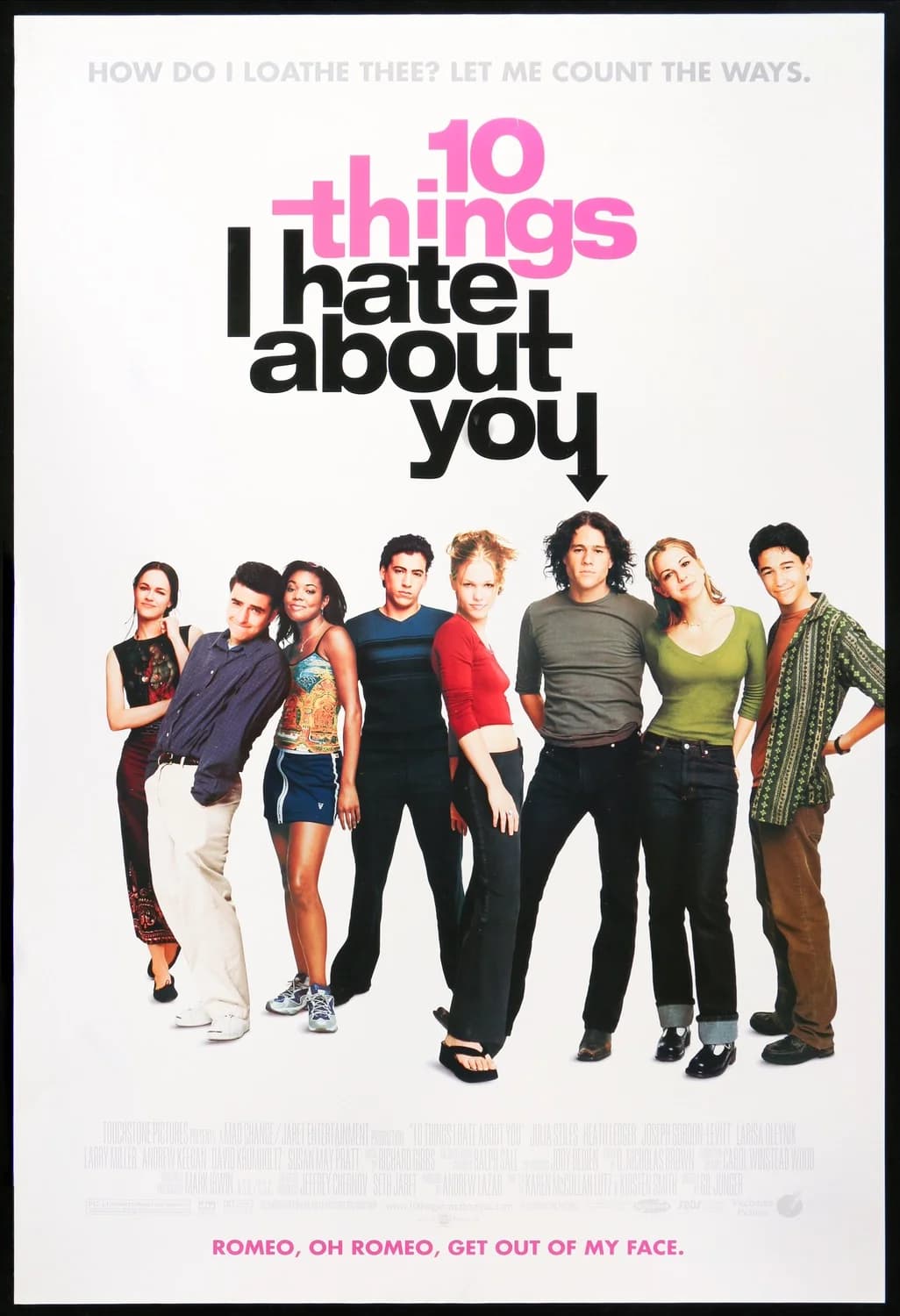
1999 // VHS
10 Things I Hate About You
Sibling rules, a rooftop serenade and one very stubborn Kat — Shakespeare in a school corridor.
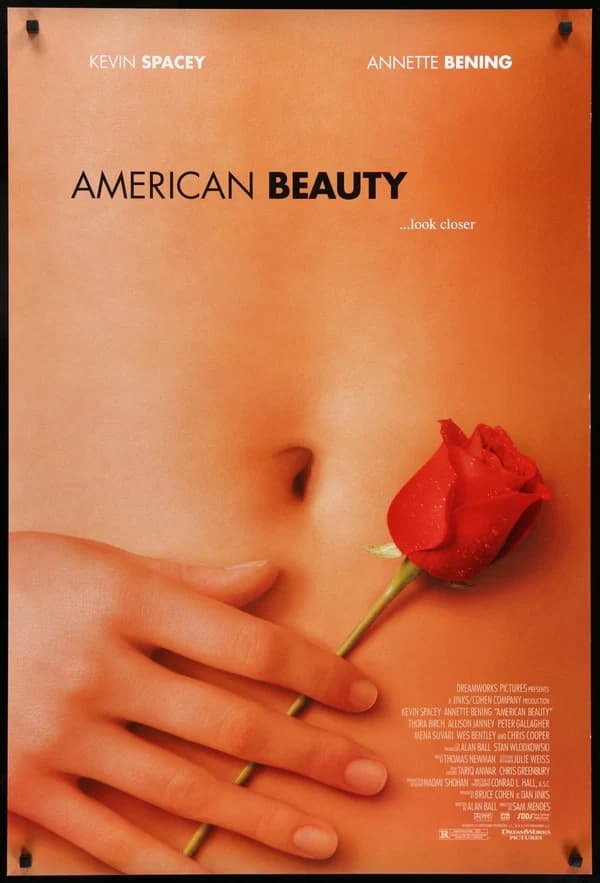
1999 // VHS
American Beauty
Lester Burnham, suburban rot and a midlife argument that still stings.
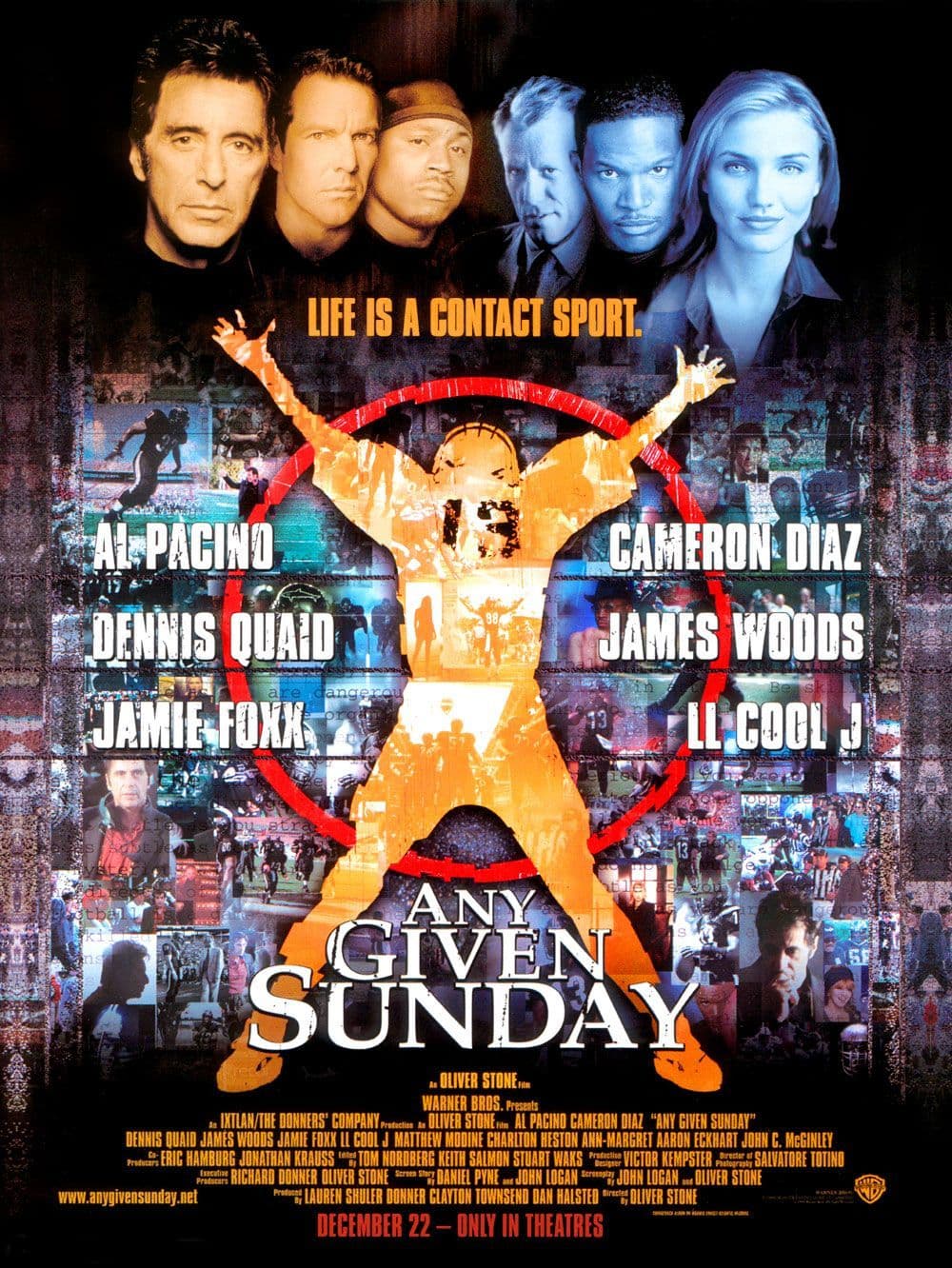
1999 // VHS
Any Given Sunday
Al Pacino's coach anchors the chaos of a film about football turned into product — loud, messy and oddly persuasive.