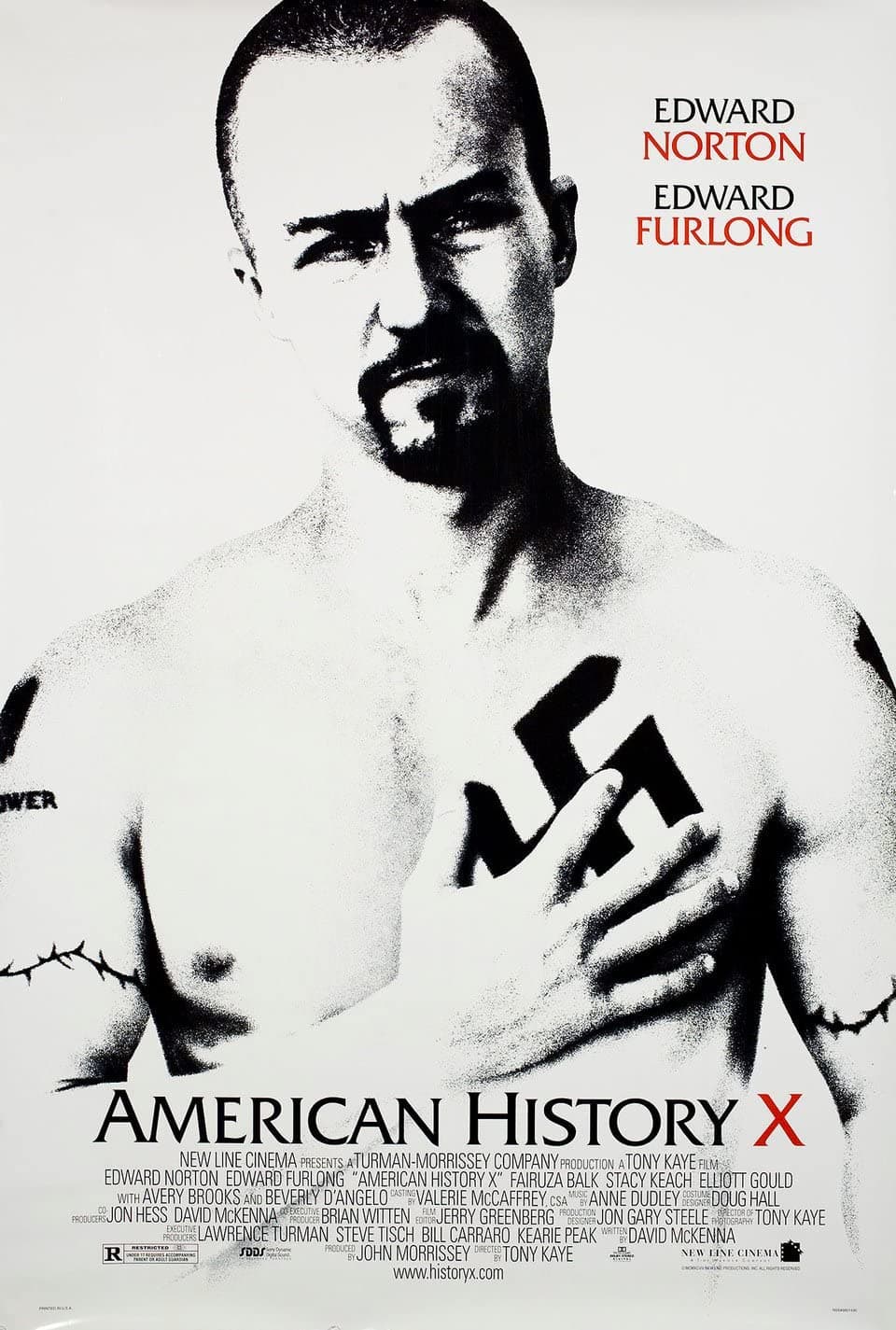
American History X
A film about hatred that keeps returning the gaze to the people who inherit it.
// The setup
PLAYBACK STARTED
American History X refuses easy answers. It centres on one brother's violent descent and the other brother's fascination with him, and uses a bold, split-time structure to make you watch both the recruitment and the aftermath. It's still worth revisiting because the movie keeps steering us back to the moment where hate becomes family business.
THE MOVIE
Derek Vinyard is still the reason this movie works
If you remember just one thing about American History X, it's probably Derek Vinyard. The film follows him: a charismatic neo‑Nazi who, after a prison sentence for a racially motivated murder, comes back into his family's life and tries to stop his younger brother from walking the same dark path.
The story refuses to be linear. Present‑day scenes sit in colour while long flashbacks are shown in black and white, which keeps the film moving between cause and consequence — showing recruitment and its aftermath almost at the same time.
All of this comes through a director with a very particular hand: Tony Kaye. And at the centre of the whole thing is Edward Norton as Derek — the older brother whose time inside and subsequent change of heart are the engine that drives everything else.
THE SETUP
The idea that sets American History X in motion
At its simplest, the film stages a tidy but potent dramatic problem: one brother has become a public embodiment of racial violence; the other worships him. That sibling worship — Danny's essay and his idolisation of Derek — is the device that threads the movie together.
The plot pivots on prison. Derek's everyday work and the people he lives with there start to chip away at the beliefs that sent him to prison in the first place; that process is presented as a genuine turning point rather than a throwaway moment.
Because the narrative jumps between now and then, the film lets us see recruitment happen and then immediately watch its consequences at home. It keeps the idea of responsibility close to the family dinner table as well as in the street.
Behind the camera, the movie carried some late‑production noise — a public dispute over editing — but none of that changes the basic set-up: a brother trying to unmake what he once helped build.
THE CHARACTER
Why Derek Vinyard matters
Derek is not just a symbol; he's the pivot around which the film’s ideas turn. He starts as a young man driven by white supremacist beliefs and a hunger for masculine authority following his father's death.
Those motivations make him disturbing and believable: he is the product of recruitment and grievance, a man whose politics are as much personal as they are ideological.
The story makes Derek's change of heart the emotional centre. His prison experience — the daily interactions and the people he meets there — are what force him to reassess, and that shift is the point the film keeps returning to.
And because Danny idolises him, Derek's choices have immediate consequences. The drama isn't abstract; it's about a household where ideas are passed down and tested, one sibling at a time.
THE PERFORMANCE
Why Edward Norton's performance matters
From the moment critics began writing about the film, Norton's portrayal of Derek was singled out. That attention culminated in an Academy Award nomination for Best Actor.
What that nomination signals — without turning this into an actor's biography — is that the role is the film's touchstone: Derek's arc is where the viewer’s moral attention lands, and how that arc is communicated matters enormously.
The nomination also framed how audiences watched the film at the time: not just as a story about racism, but as a performance‑driven drama where one man's reversal carries the emotional load.
Put simply: the movie depends on the audience following Derek's interior journey, and the contemporary reaction to Norton underlines how central that journey was to the film's impact.
UNDER THE SURFACE
American History X has more on its mind than the plot suggests
On the surface it's a crime drama with a prison chapter. Underneath, the film is preoccupied with how extremist movements recruit and hold on to young people.
It’s also a family story. The movie treats intergenerational influence as the battlefield on which ideology is inherited or resisted.
Redemption and moral reckoning are threaded through that family drama: the idea that someone can change — and what that change means for the people who loved or feared them — drives the emotional stakes.
Finally, the film nods to the power of mentorship and education: encounters and relationships (inside and outside prison) matter because they create the possibility of different choices.
THE FILMMAKING
How American History X was put together
The film's final shape wasn't entirely smooth sailing. Editing choices and the order of sequences became a public matter, with several parties — including the star and producers — involved in the decisions that determined the released cut.
That dispute went further: Tony Kaye openly objected to changes made after his initial edit and attempted to distance himself from the released version, which made the production conflict part of the movie’s story as it reached audiences.
You don't need to be a production geek to see why that matters. A film that plays with time and perspective is vulnerable to every tweak in post: who decides the rhythm of flashbacks and when the colour returns affects how the argument reads.
So American History X is as much a discussion about how a film is assembled as it is about what the film says — the fights over the edit are part of how people encountered the movie.
PURE 80S
American History X could not belong to any other decade
Released in 1998, the film arrived at the tail end of a strong run for American independent dramas that doubled as message pictures. It sits in that indie‑meets‑speciality distribution moment — a mainstream arm (New Line) carrying a serious, small‑scale picture to wider audiences.
The movie’s content and the production row around it also fit the late‑1990s press climate: there was appetite for films that suggested real social argument, and there was interest in the backstory of how those films got made.
That context helped the film be talked about not just for its story but for its place in a moment when indie sensibilities were crossing into mainstream conversation.
So while the tale itself could happen at any time, the way audiences first met the film — and the noise around its release — is very much a late‑1990s moment.
WATCHING IT NOW
What has aged — and what hasn't
If you watch it now, the central family dynamics still land. The film's attention to how ideas get passed between siblings — how admiration becomes imitation — remains uncomfortably clear.
Derek's arc — the older brother whose prison sentence prompts a profound rethinking of his beliefs — is still the engine of the story. The bones of that personal transformation continue to give the film emotional weight.
Likewise, Danny's role as the younger brother and the narrative device of his school essay still work as a means to document and question what he has inherited.
Put together, those elements keep the movie watchable today because its core is about relationships and choices rather than trendier production flourishes.
THE LEGACY
Why American History X still matters
Part of the film’s continuing presence is straightforward: Edward Norton received an Academy Award nomination for Best Actor for his role as Derek, which kept the movie in cultural conversation after release.
Another part of its afterlife is the production controversy. Tony Kaye's public disavowal of the released edit and his attempts to remove his name became as talked about as the picture itself, and that industry story has stayed attached to the film.
Finally, the movie continues to be a subject for reassessment. Critics and anniversaries return to it to argue about how it handles race, extremism and the choices it makes as both a narrative and a piece of filmmaking.
Taken together, those threads explain why the film keeps getting talked about: it's tied to awards attention, a very public production row, and ongoing critical discussion of its themes.
THE VERDICT
Does American History X still hold up?
Yes — with a clear rider. American History X remains worth watching because it centres a believable throughline: a charismatic neo‑Nazi who, after a prison sentence for racially motivated violence, returns home and tries to derail his brother's path. That personal knot gives the film urgency.
The way the story is told — jumping between present‑day colour and black‑and‑white flashbacks — keeps the recruitment and the reckoning in conversation. The prison chapter, where daily work and fellow inmates push Derek to question his beliefs, is the film’s moral fulcrum.
The film also lays out how ideology is taught and contested at home: Danny's essay and his idolisation of Derek are used as a narrative device to show how hate replicates across generations, while figures such as Cameron Alexander act as recruiters who exploit vulnerable young men. Even small characters, like Lamont the inmate who works with Derek, are written to humanise the people Derek once saw as enemies and to make the change credible.
So watch it for the discomfort of that family dynamic and for the way the film forces you to stare at how ideas travel. It isn't a tidy lesson — it never pretends the problem is solved — but it remains a sharp, unsettling reminder that the most dangerous classroom is often the one under your own roof.
Share this movie
// Keep watching
More movies from the 90s
If American History X is your kind of movie, there's plenty more on the shelves worth rewinding.
1998 // VHS
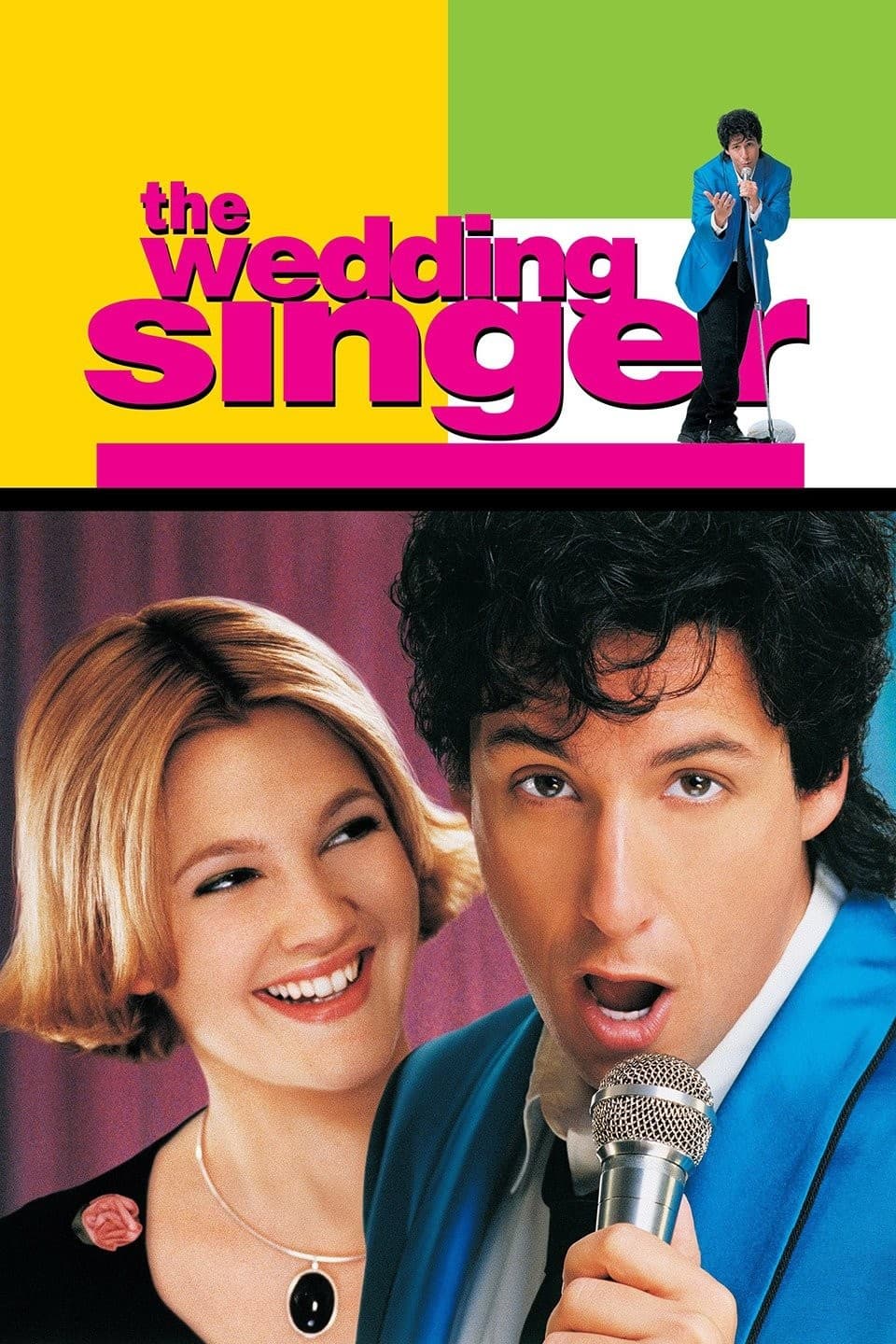
The Wedding Singer
A love story wrapped in 1980s pop — and carried by one very earnest wedding crooner.

1998 // VHS
There's Something About Mary
Romantic obsession, awkward masculinity and a hair‑gel gag you can't unsee.
1999 // VHS
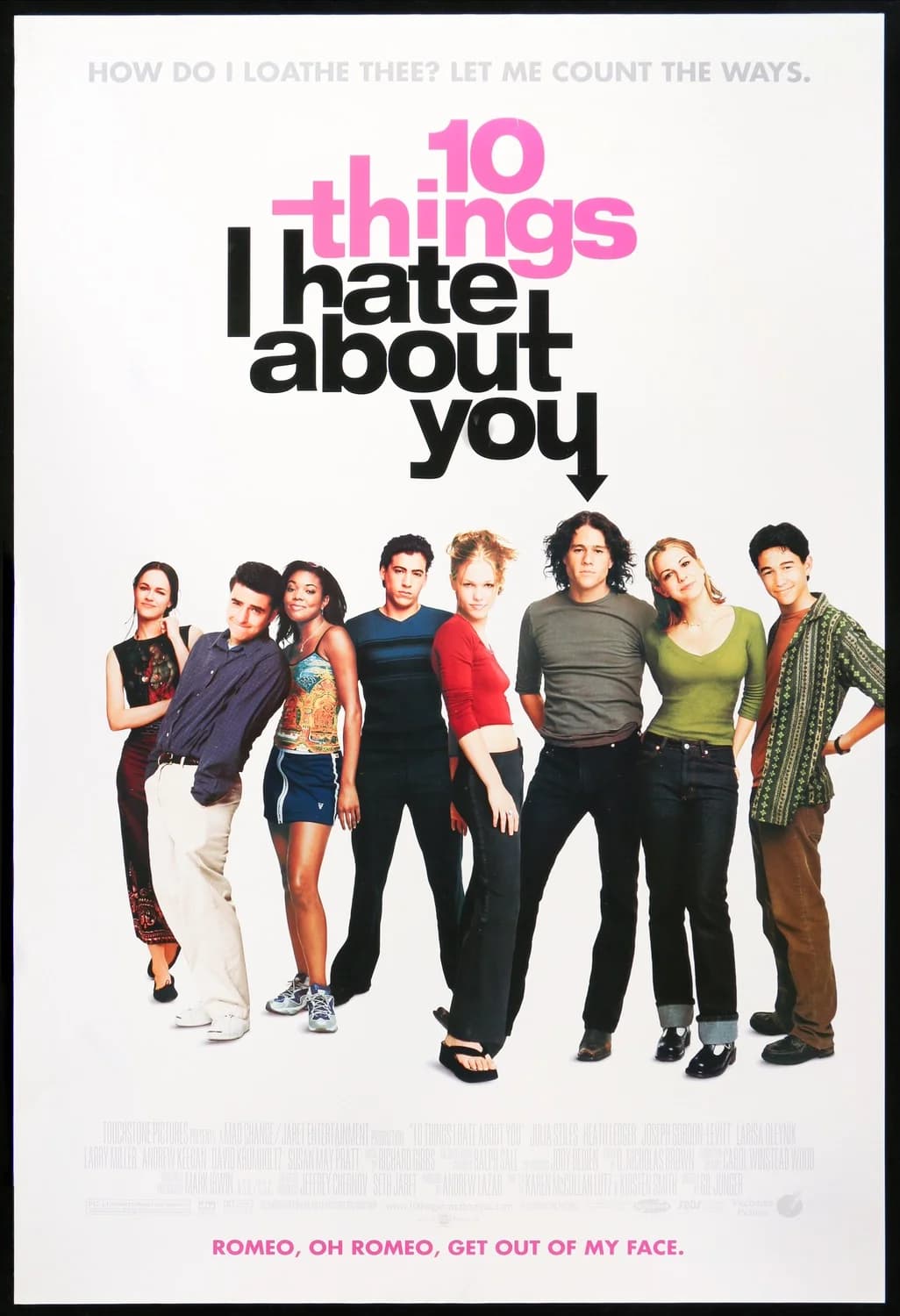
10 Things I Hate About You
Sibling rules, a rooftop serenade and one very stubborn Kat — Shakespeare in a school corridor.