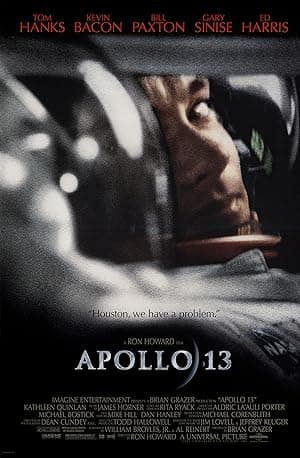
Apollo 13
A story of calm heads, clever hands and one very awkward canister.
// The setup
PLAYBACK STARTED
Apollo 13 isn’t spectacle dressed up as heroics; it’s a machine-room drama about people who know how to keep cool when everything goes wrong. Ron Howard’s 1995 retelling follows the mission after an oxygen-tank explosion forces a desperate, improvisatory journey home — and it’s Jim Lovell’s steady presence that keeps the whole film honest. If you like procedural pressure, human problem-solving and the slow tightening of suspense, this is your kind of rescue movie.
THE MOVIE
Jim Lovell is still the reason this movie works
Apollo 13 dramatises the April 1970 mission and then watches everything get smaller: the lunar landing disappears, and the whole story becomes survival — hands on panels, decisions by the book, and improvisation on the fly. What starts as a routine mission is set spinning by an oxygen-tank explosion that cripples the Service Module and forces every priority to change.
At the centre is Jim Lovell, played by Tom Hanks, who is written and staged as the commander who keeps the crew and the story level-headed. That calm — the kind of steady decision-making you want on a long, terrifying night — gives the film a moral anchor. It’s not flashy. It’s necessary.
Ron Howard directs with a clear purpose: to turn a historic emergency into a human coordination problem. The film alternates between the claustrophobic, technical world onboard and the procedural, communal effort on the ground, so the drama lives in people doing their jobs under pressure rather than in manufactured spectacle.
THE SETUP
The idea that sets Apollo 13 in motion
The movie’s premise is straightforward and ruthless: an in-flight explosion cripples the Service Module, so what had been a lunar mission becomes a race to survive and return. That single pivot reframes every choice made by the crew and Mission Control.
From there, the drama comes from constraints. The astronauts move into the Lunar Module to use it as a lifeboat, conserve power and scrub for air with whatever they can scrounge. Those technical limits make every moment tense because the solutions have to be practical, literal and reliable.
On the ground, the film follows teams that invent step-by-step procedures under time pressure — most famously working out how to adapt Command Module carbon-dioxide scrubbers to the Lunar Module environment. Those procedural scenes are a kind of thriller: the suspense isn’t explosions but whether the plan can actually be translated into action.
Finally, the editing alternates between cramped, survival-focused onboard sequences and Mission Control’s procedural problem-solving. That parallel construction builds suspense without ever pretending the rescue will be a straightforward action set-piece.
THE CHARACTER
Why Jim Lovell matters
Jim Lovell is the film’s stabiliser. The script, adapted from Lovell’s own account, puts him where a captain should be: in the thick of decisions, but measured enough that you can trust those choices will have consequences. That positioning makes the story less about heroic improvisation and more about responsible command.
Tom Hanks plays Lovell, but the point here is the character’s role in the story: he is the calm centre who holds together the onboard crew and gives Mission Control a human focus for their efforts. When the mission’s priorities shift, Lovell’s composure tells us how to watch and how to feel.
Lovell’s importance is structural. Because the narrative often flits between ship and ground, the commander’s steadiness keeps the emotional through-line intact. Without that, the film’s procedural focus would risk feeling clinical rather than involving.
Finally, the movie’s fidelity to Lovell’s own story — the screenplay draws on his book — means the character isn’t an invention of melodrama. He functions as the point where personal responsibility and institutional procedure meet.
UNDER THE SURFACE
Apollo 13 has more on its mind than the plot suggests
On the surface Apollo 13 is a survival story; under the surface it’s a portrait of organised minds in crisis. The film privileges teamwork under pressure — not the lone heroics we often expect, but coordinated effort between ship and ground.
Leadership and responsibility are central themes. The drama often hinges on people making the right call for others, and the film demonstrates how command is less about bravado and more about steady judgement when the stakes are highest.
Technical improvisation is treated with a kind of reverence. The movie takes pleasure in the step-by-step cleverness of engineers translating ideas into functioning procedures. Those scenes are quietly thrilling because they show ingenuity that actually has to work.
There’s also a thread of nostalgia and national memory: by retelling an Apollo-era emergency with care, the film participates in a wider 1990s reassessment of the space programme — a reminder that these moments mattered, beyond headlines.
THE FILMMAKING
How Apollo 13 was put together
A lot of Apollo 13’s personality comes from the craft choices that insist on authenticity. Production design rebuilt Mission Control and spacecraft interiors on soundstages with full-size replicas so actors could interact with things that felt and behaved like the real hardware.
Ron Howard’s filmmaking team explicitly credited specialists: Dean Cundey worked as director of photography and Michael Corenblith handled production design. Those credits matter because the film’s look and tactile environments are part of how it sells procedural tension.
The editing also deserves a mention: Daniel P. Hanley and Mike Hill won the Academy Award for Best Film Editing, a recognition that makes sense given how the film stitches together shipboard containment and ground-based problem-solving to sustain suspense.
Finally, the production consulted with NASA personnel and former flight controllers and astronauts, which kept procedural scenes grounded. That consultation is why the film reads like a careful dramatisation rather than an imaginative leap into space melodrama.
PRACTICAL EFFECTS
The effects work that gives Apollo 13 its physical personality
Weightless scenes were achieved the old-fashioned way: a mix of sprung platforms and real zero-gravity footage shot aboard a KC-135 aircraft. That combination lets the film show bodies and tools negotiating an unforgiving environment without hiding behind obvious optical tricks.
The production built multiple full-size replicas of the Command Module and Lunar Module so sets could be used practically, with hands-on interactions and stunts that feel convincing because they were physically possible on set.
For the film’s procedural moments, props mattered. Replicated instrument panels, switchgear and mock lithium-hydroxide canisters give the crew and ground controllers something concrete to work with — which keeps the problem-solving scenes tactile and believable.
PURE 80S
Apollo 13 could not belong to any other decade
Released in 1995, Apollo 13 arrived when audiences and creators were taking another look at Cold War-era achievements and technology. The film fit into a 1990s mood that treated the Apollo years as material worth dramatising and re-examining.
The movie didn’t stop at a single film: the creative team — Howard, Hanks and producer Brian Grazer — went on to expand the conversation about Apollo with a 1998 miniseries, linking the film to a broader, late-90s audiovisual project about NASA’s history.
Put simply, Apollo 13 feels of its time because it participates in that cultural moment: it’s not nostalgia for nostalgia’s sake, but a deliberate revisit to an era of American engineering and communal effort that the 1990s were suddenly keen to reframe.
THE LEGACY
Why Apollo 13 still matters
The film’s awards recognition is concrete proof it resonated with the industry: it earned nine Academy Award nominations and won Oscars for Best Film Editing and Best Sound. That recognition underlines how craft — the cutting and the sound — carried the film’s dramatic weight.
Ron Howard’s DGA award for the picture is another marker that the movie was taken seriously by his peers. Those honours aren’t the whole story, but they matter when you’re judging a film built on procedural tension and technical authenticity.
Beyond trophies, Apollo 13 helped generate more audiovisual attention to the Apollo programme: the same creative team later co-produced the 1998 miniseries From the Earth to the Moon, which expanded public engagement with the subject.
Universal has kept the film in circulation through anniversary and restored editions and even an IMAX reissue, so it’s remained available to new audiences rather than vanishing after its theatrical run.
THE VERDICT
Does Apollo 13 still hold up?
Yes — and the reason is simple: the drama is procedural and human, not dependent on a one-note visual trick. At its heart the film stages a race against time where Mission Control and the crew improvise technical solutions to get home, and that kind of pressure reads as interesting now as it did in 1995.
The specific story mechanics — moving into the Lunar Module as a lifeboat, conserving power and resources, and adapting carbon-dioxide scrubbers — keep the conflict concrete. You’re watching people solve tangible problems, which makes the suspense stubbornly durable.
Ron Howard and his editors build tension by cutting between confined, survival-focused onboard moments and the focused, rule-based problem-solving of the ground teams. That parallel editing keeps the film taut without leaning on melodrama.
If you want a rescue story that respects procedure, values teamwork and shows leadership under stress, Apollo 13 still delivers. Watch it for the checklist drama; stay for the way calm decision-making and collective ingenuity win the day.
Share this movie
// Keep watching
More movies from the 90s
If Apollo 13 is your kind of movie, there's plenty more on the shelves worth rewinding.
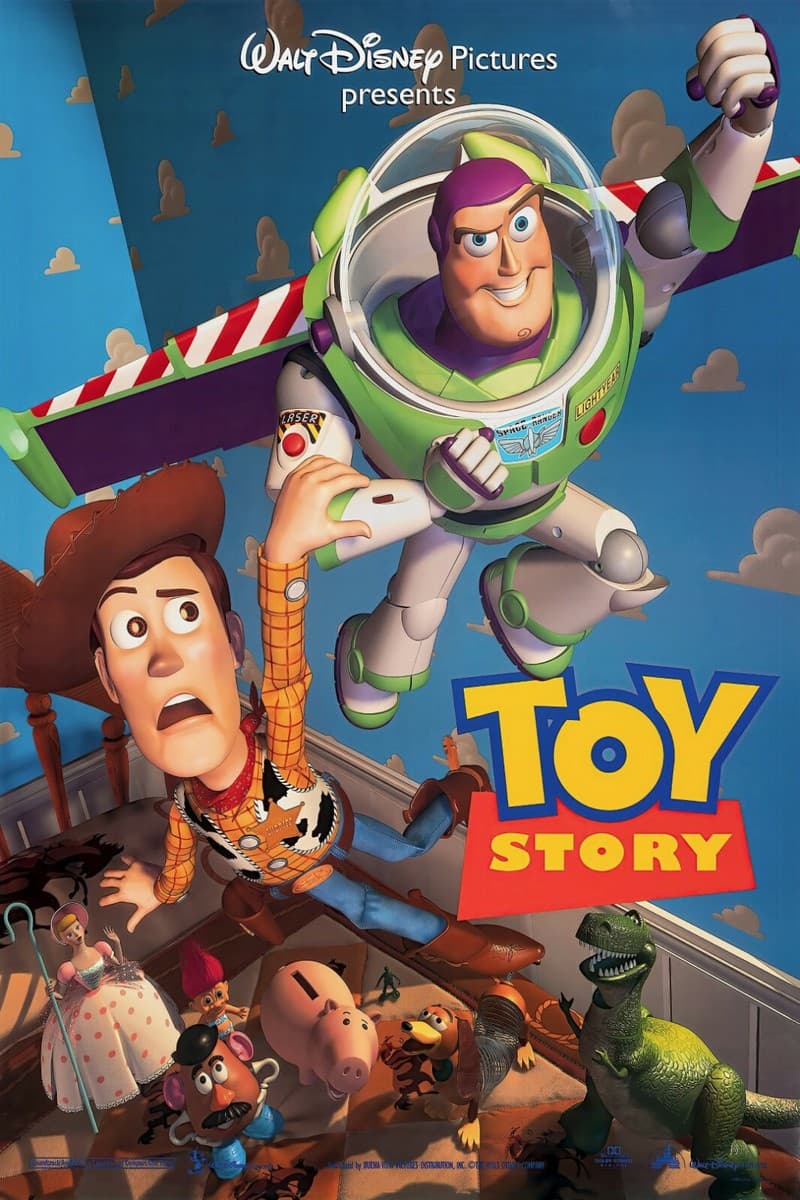
1995 // VHS
Toy Story
A pull‑string cowboy, a deluded space ranger and a small, very particular war over being loved.
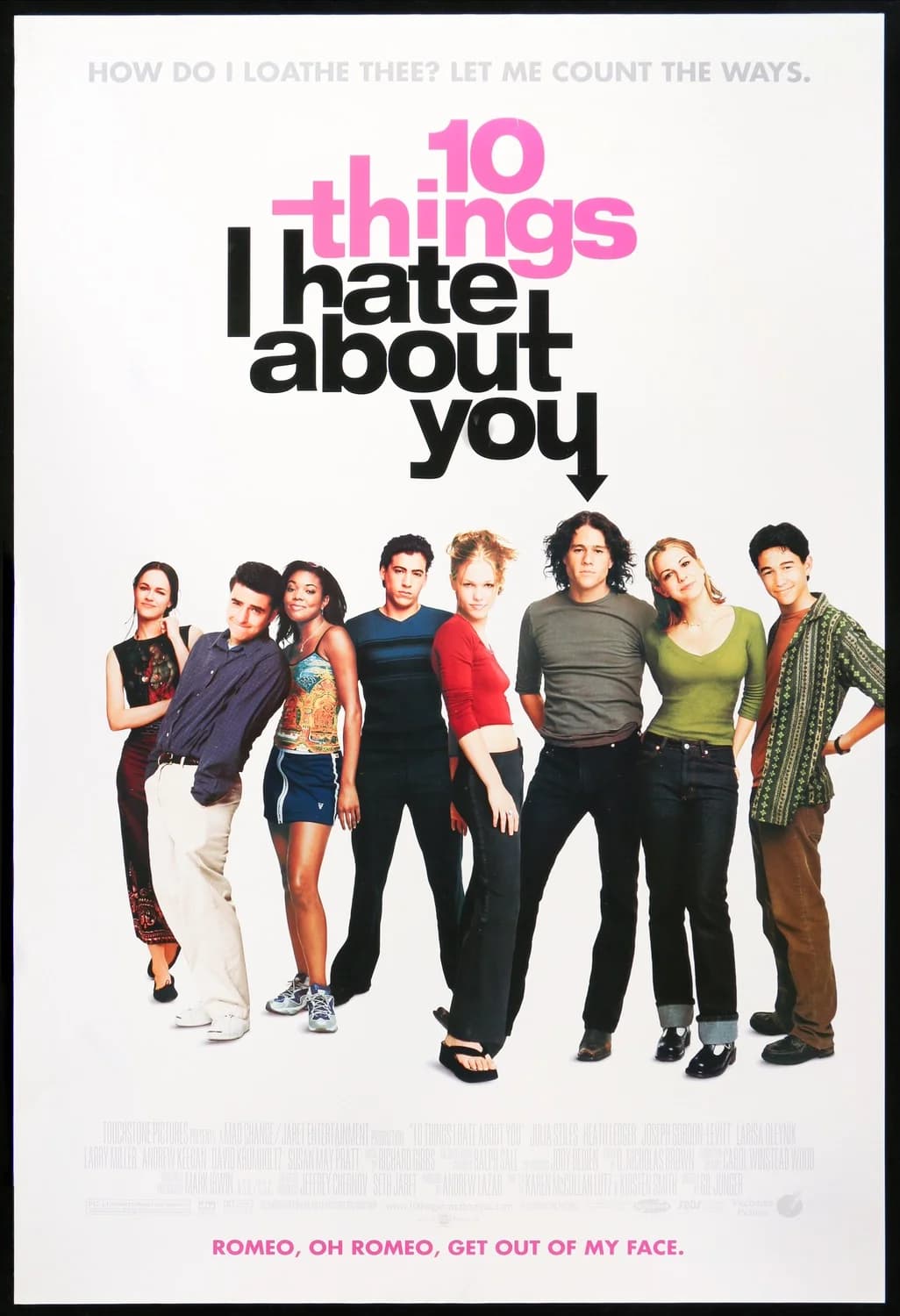
1999 // VHS
10 Things I Hate About You
Sibling rules, a rooftop serenade and one very stubborn Kat — Shakespeare in a school corridor.
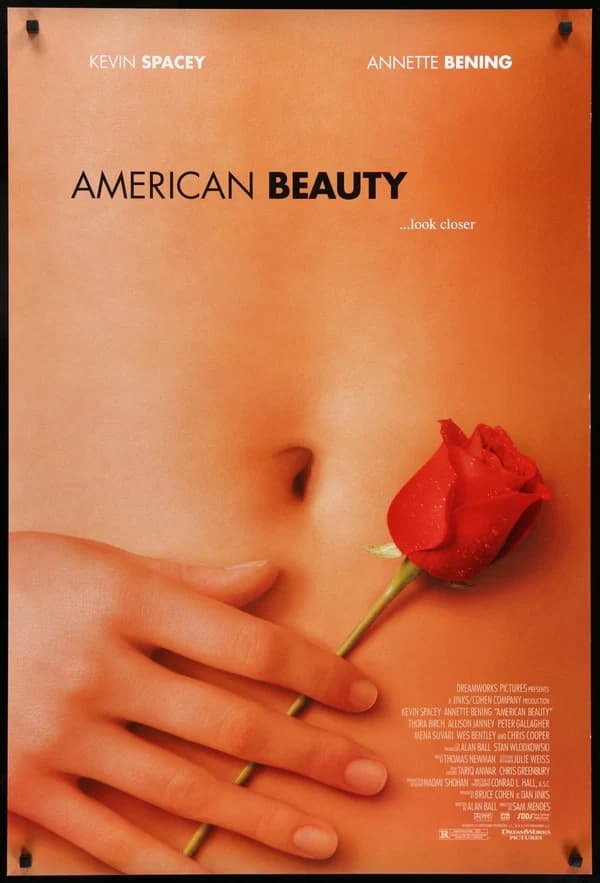
1999 // VHS
American Beauty
Lester Burnham, suburban rot and a midlife argument that still stings.