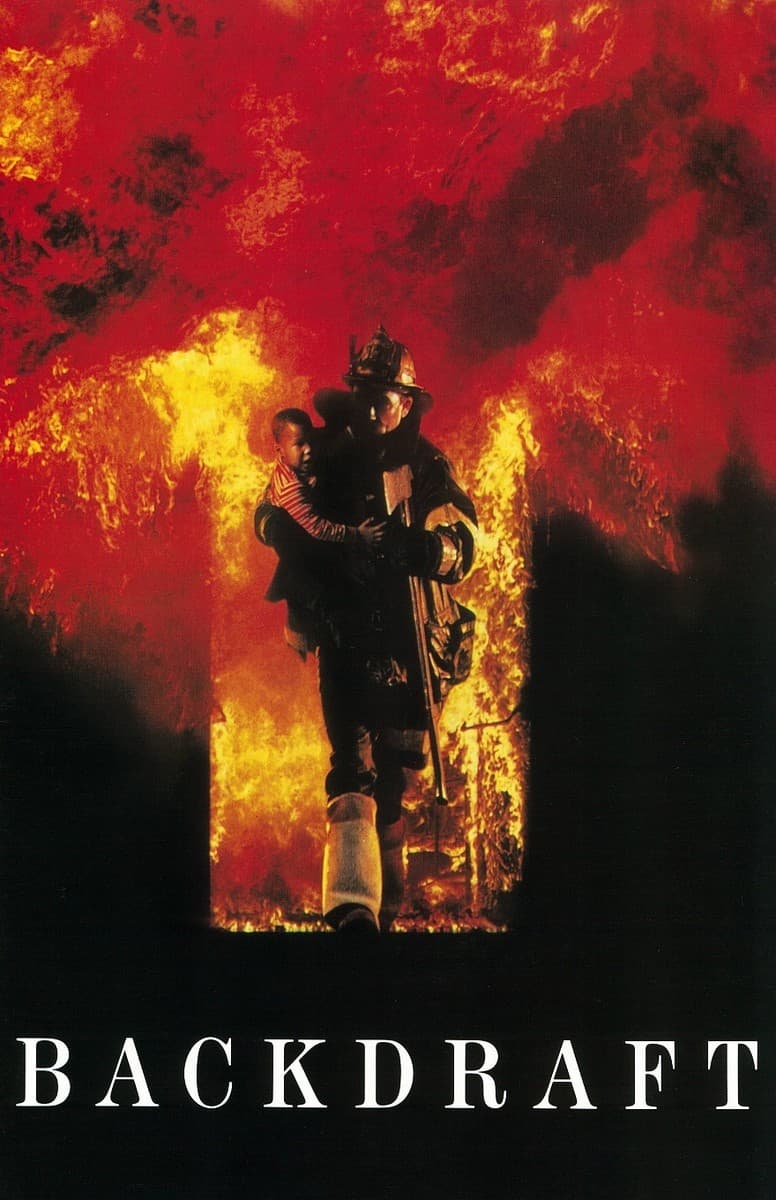
Backdraft
Brotherhood, firefighting and obsession — flames at the heart of everything.
// The setup
PLAYBACK STARTED
Backdraft is the sort of crowd-pleasing studio drama that smells faintly of smoke and ambition: Ron Howard directs a big-hearted yarn about two Chicago brothers whose lives orbit the same dangerous profession. It opens with a single childhood loss — their father's death in an apartment fire — and builds everything around how that moment shapes loyalty, risk and rivalry.
THE MOVIE
Stephen "Bull" McCaffrey (also appears uncredited as Dennis McCaffrey in the 1971 prologue) is still the reason this movie works
There’s an unmistakable centre to Backdraft and it isn’t the special effects or the arson mystery: it’s the brothers. The film follows Stephen and Brian McCaffrey, two Chicago firefighters whose careers and private lives are—quite literally—shaped by the same terrible childhood event: their father’s death in a flat fire.
Ron Howard steers a big-studio drama that deliberately foregrounds that fraternal pressure. Stephen is the veteran firefighter whose sense of who he is lives in the engine room and the hose; his decisions are coloured by loss and a fierce protectiveness towards his younger brother, and that emotional freight is what gives the action stakes beyond spectacle.
Kurt Russell and William Baldwin occupy those poles as Stephen and Brian, and the film runs for a generous 136 minutes, giving room for station-house routines, procedural investigation and the occasional moral tug-of-war. Brotherhood, rivalry and the business of being a front-line hero are the engines that keep Backdraft moving.
THE SETUP
The idea that sets Backdraft in motion
Backdraft begins from a simple but effective premise: a single traumatic fire in 1971 alters the course of two brothers’ lives. That prologue is not just backstory; it’s the narrative hinge the film keeps returning to.
Twenty years on, both brothers are firefighters in Chicago and the everyday rhythms of the job—alarms, shifts, the jokes and the grief—form the texture of the story. Into that routine come a string of suspicious blazes and an arson investigation that starts to pull lives apart rather than stitch them together.
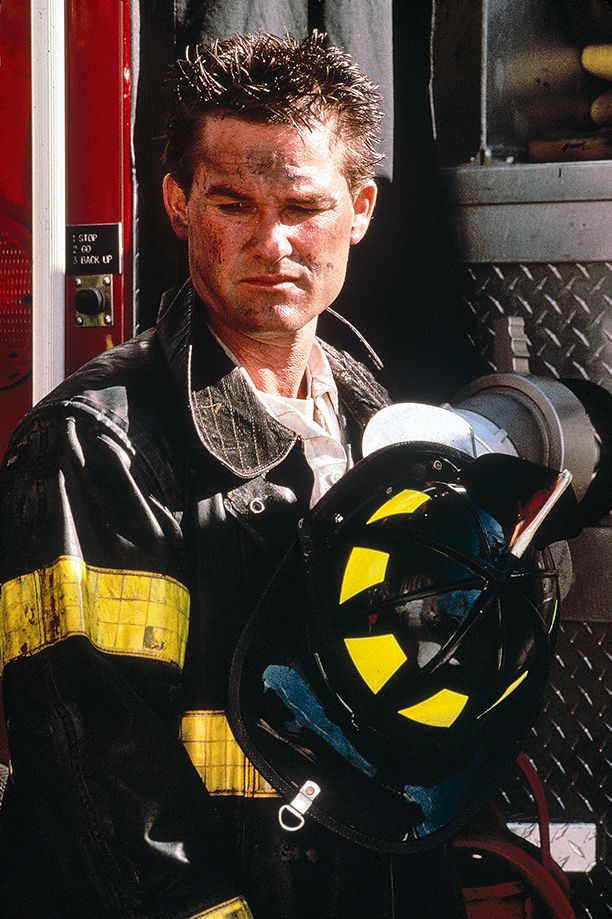
The movie mixes station-house drama with procedural beats: you get the brother-versus-brother heat, but also investigation scenes and politics that complicate who’s right and who’s in the wrong. It never relies on a single viewpoint character; the story is a small ensemble operating under pressure.
Practically, the film leans on real firefighting practice and terminology—the phenomenon of a backdraft is a recurring story mechanic—so the action sequences and investigative moments feel tied to actual risks rather than invented pyrotechnics alone.
THE CHARACTER
Why Stephen "Bull" McCaffrey (also appears uncredited as Dennis McCaffrey in the 1971 prologue) matters
Stephen McCaffrey is the film’s lodestone. Portrayed as a veteran lead firefighter, his identity is bound up with being on the front line: it is where he finds purpose, where grief is negotiated, where he proves himself again and again.
That protectiveness toward his brother is what makes many of his choices readable. He isn’t a generic action hero; he’s a man whose instincts have been hammered by personal loss and long service, and the film keeps returning to how that upbringing pushed him into a particular relationship with danger.
The story literally opens with the family trauma that created him: the 1971 prologue where the brothers’ father dies in an apartment fire. That scene is the emotional cornerstone—everything Stephen does can be traced back to it.
Behind the scenes, Gregory Widen’s original story went through rewrites and Ron Howard ultimately steered the film toward the brothers’ relationship, which is why Stephen reads less like wallpaper for the plot and more like the story’s moral anchor.
UNDER THE SURFACE
Backdraft has more on its mind than the plot suggests
On the surface Backdraft is an arson thriller and a career drama. Underneath it’s mainly about brotherhood—how two men who share the same origin story make different bargains with risk and responsibility.
Trauma and loss are never decorative here; they’re the motor that explains stubborn behaviour, poor choices and fierce loyalty. The opening fire isn’t just dramatic setup, it’s a recurring emotional reference point for every argument and decision.
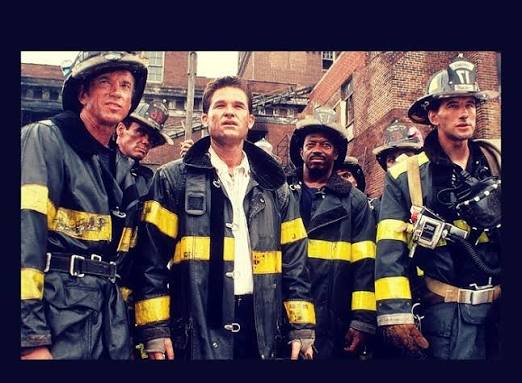
Professional identity and heroism are treated as honest occupations rather than cinematic wallpaper. The film cares about what it means to do dangerous work every day, and how that work becomes a way of measuring yourself.
There’s also an almost obsessive fascination with elemental force: flame is not merely an antagonist but a presence the characters respect, fear and sometimes worship. That motif helps the movie feel less like a conventional thriller and more like a study of people who are spellbound by their tools and their trade.
THE FILMMAKING
How Backdraft was put together
Backdraft’s identity owes a lot to how it was shot and staged. Ron Howard teamed with cinematographer Mikael Salomon and a production design crew to construct large-scale, practical fire sequences on sets built for purpose.
Those sequences weren’t filmed from a safe distance: the production used specially designed camera protection — 'fireboxes' — so lenses could be placed extremely close to real flames. That choice gives the movie a physical immediacy you notice even if you’re not thinking about camera tricks.
The decision to stage effects practically rather than hide them in post-production makes the action feel tactile. The filmmaking choices prioritise getting into the heat of things rather than keeping spectators comfortably far away.
The technical craft was recognised at the time: Backdraft earned three Academy Award nominations for its visual and sound work, which tells you how seriously the industry took its technical achievement.
PRACTICAL EFFECTS
The effects work that gives Backdraft its physical personality
The production leaned hard on practical techniques to sell its fires. Falling ash was created from cut cardboard and choreographed with air movers to get the right motion and density on camera.
To get heavy, dark smoke for some distance shots the crew altered fuels—adding diesel to the propane that pyrotechnicians more commonly use—so the backgrounds read as believable, choking blazes.
For dramatic shots the flames themselves were chemically altered to suggest colour and intensity beyond what ordinary fire would provide, giving several scenes a curiously motivated look.
Some sequences were even filmed on sets built upside down and recorded in slow motion so the flames behaved in ways that felt more surreal and cinematic than real-time combustion. All of these techniques combined to make the fire feel like a physical character rather than a background effect.
PURE 80S
Backdraft could not belong to any other decade
Backdraft opened over Memorial Day weekend 1991 and sits comfortably in that era of multiplex spectacles where practical effects and set-piece filmmaking still ruled the roost.
It belongs to a brief moment when studios translated big-screen thrills into real-world attractions: Universal turned the film into a theme-park effects demonstration in 1992, which ran for years and speaks to the film’s showpiece ambitions.
The movie’s insistence on in-camera pyrotechnics and stunt-heavy staging links it to late-80s/early-90s action dramas that preferred tangible craft to digital trickery. It wears that period choice proudly rather than apologetically.
In short: Backdraft is very much a product of its moment, a mainstream studio picture that trusted physical effects and theatrical spectacle to do the heavy lifting.
WATCHING IT NOW
What has aged — and what hasn't
The elemental heart of Backdraft—the brotherhood and how one early trauma reshapes two lives—retains emotional clarity. The opening prologue sets a psychological baseline that the rest of the film keeps returning to, and that structure still gives the film ballast.
The station-house scenes, the procedures and the arson-investigation beats still read as purposeful; the story is built around believable occupational pressures and the way they rupture personal relationships.
Technically, some viewers will find the film’s spectacle more of a throwback than a problem: it’s big, practical and deliberately theatrical. Whether that feels charming or dated depends on how much you like watches-that-you-can-feel filmmaking.
Even the fact that the original writer returned to this world for a sequel decades later suggests the characters and setup have enough narrative weight to keep being revisited, for better or worse.
THE LEGACY
Why Backdraft still matters
A lot of Backdraft’s afterlife comes from its craft: it received three Academy Award nominations for Visual Effects, Sound and Sound Effects Editing, which underlines how seriously the industry regarded its technical work.
It was also a commercial success at the time, opening strongly over the Memorial Day weekend in 1991 and going on to earn a substantial worldwide figure in its year after release.
Beyond awards and receipts, Universal turned the movie into a theme-park attraction in 1992 that stayed open for many years — a neat sign that the film’s set pieces were built to be experienced in public, not just on a home screen.
Finally, the story’s continuing presence in a 2019 sequel and multiple home-video reissues shows there’s a durable appetite for these characters and that particular mix of procedural and family drama.
THE VERDICT
Does Backdraft still hold up?
Yes—mostly. If you come for the human story rather than pure pyrotechnics, Backdraft still delivers. The film is built around two brothers whose lives were altered by a single childhood fire; that set piece remains the story’s moral compass and keeps the various plot strands tethered to something emotionally real.
The arson investigation, station-house banter and city politics add shape and momentum without flattening the family element. The script mixes procedural beats and brother-versus-brother drama in a way that still feels satisfying: it never reduces the story to one gimmick.
Technically the film still impresses. The production trained cast members at the Chicago Fire Academy and used real firefighters and locations; cinematographer Mikael Salomon and the effects crew used camera fireboxes to get terrifyingly close to real flames, and the team’s practical techniques — from ash machines to altered fuels — pay off on screen.
If you’re watching Backdraft now, expect some dated studio melodrama and a tone that belongs to early-90s spectacle. But expect also a clear emotional core about duty, grief and the very particular loyalties of people who run toward danger. It’s a film whose heat comes from both its effects and the human choices at its centre.
Share this movie
// Keep watching
More movies from the 90s
If Backdraft is your kind of movie, there's plenty more on the shelves worth rewinding.
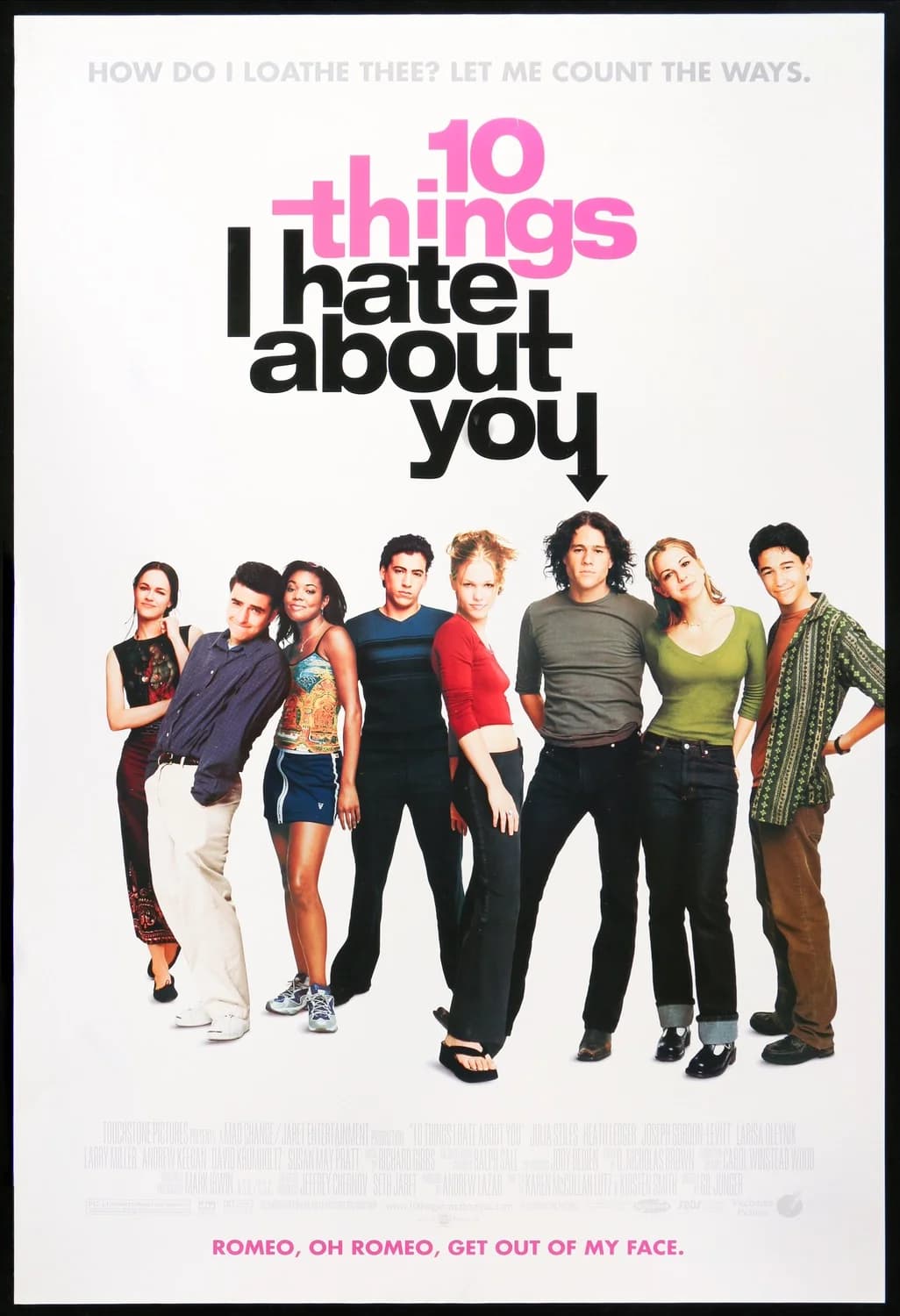
1999 // VHS
10 Things I Hate About You
Sibling rules, a rooftop serenade and one very stubborn Kat — Shakespeare in a school corridor.
1999 // VHS
American Beauty
Lester Burnham, suburban rot and a midlife argument that still stings.
1999 // VHS
Any Given Sunday
Al Pacino's coach anchors the chaos of a film about football turned into product — loud, messy and oddly persuasive.