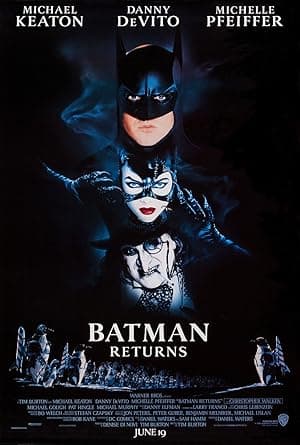
Batman Returns
A winter’s tale of outcasts, double lives and a city that loves its own spectacle.
// The setup
PLAYBACK STARTED
Tim Burton came back to Gotham with a mood rather than a manual: Batman Returns doubles down on strange characters and stranger loyalties, and it asks who counts as human when the city keeps rewriting the rules. Keaton’s Batman is the straight line through all that mess — the figure the film keeps testing by throwing odd, dangerous people at him.
THE MOVIE
Batman / Bruce Wayne is still the reason this movie works
Batman Returns opens as a film that enjoys setting up strange people in ridiculous circumstances. It gives you a Penguin whose back story — abandoned at birth and raised underground — explains why he stages grotesque public stunts, and it gives you Selina Kyle on the verge of a life remade by violence and exposure.
Those two threads — a grotesque outsider craving acceptance and a reserved corporate secretary pushed to the edge — are the movie’s bloodlines. The film places Batman, the returning figure from Burton’s 1989 picture, in the middle of both stories and asks how a man who lives between masks responds when the city itself becomes performative.
Tim Burton directs, Michael Keaton plays the dual role at the centre, and the cast around him — from Danny DeVito’s Penguin to Michelle Pfeiffer’s Selina — make the movie feel like a calibrated, deliberately strange holiday thriller that runs a little over two hours.
THE SETUP
The idea that sets Batman Returns in motion
At its simplest, Batman Returns is a collision of spectacle and private history. Public events — a Christmas-tree lighting, parades, televised moments — keep getting hijacked, and those disruptions are the film’s engine rather than any single puzzle to solve.
The Penguin’s origin gives him motive to perform: his past (and the people around him) drives him to contrive sympathy through dramatic public gambits. Selina’s story is the mirror image — a life of quiet work that shatters when she discovers a corrupt plan and is pushed into a new persona after an apparent death and revival.
That set-up keeps the narrative oscillating between the personal and the theatrical. The film uses stage‑like environments and built sets — underground lairs and large soundstage locations — to turn private grudges into public spectacles.
Meanwhile, the screenplay credit sits with Daniel Waters, though story material also traces back to Sam Hamm; that shared lineage helps explain how the movie strings comic-book mechanics onto darker, idiosyncratic character beats.
THE CHARACTER
Why Batman / Bruce Wayne matters
Michael Keaton returns as Bruce Wayne/Batman, and that continuity matters because Burton’s sequel deliberately sets Bruce as the steady point in a film otherwise full of extremes. He’s the connective tissue between a grotesque outsider and a woman whose life fractures into something unrecognisable.
Batman matters here because the story isn’t just about who wins or loses fights; it’s about which personhood the city recognises. Bruce is the figure who can move between Gotham’s elite and its underbelly, and that mobility is what lets the film test both its villains against him.
Max Shreck sits in the screenplay as the corrupt corporate figure whose schemes touch both Wayne and Selina; his presence drags Batman into conflicts that are civic as much as personal.
Small family details — the existence of Tucker and Esther Cobblepot in Penguin’s backstory — remind the audience that the movie’s grotesqueries have human roots, which in turn keeps Batman’s interventions from feeling like simple vigilantism.
THE PERFORMANCE
Why Danny DeVito's performance matters
Contemporary reaction to Batman Returns singled out the Penguin as a striking piece of screen business, in part because the role involved heavy prosthetics and a very particular physical approach.
Danny DeVito’s turn, described at the time as a prosthetic-heavy portrayal, helped make the Penguin feel like a constructed oddity you couldn’t easily ignore — which matters because the character’s entire plan depends on being seen and pitied by the public.
Those same contemporary notices also flagged Christopher Walken’s Max Shreck as a distinctive supporting presence; both performances were noted as shaping how audiences read the film’s strange moral geography.
The practical, physical nature of the Penguin — the way the character is presented to the city — is as much part of the storytelling as the plot devices he uses.
UNDER THE SURFACE
Batman Returns has more on its mind than the plot suggests
Otherness and exclusion are built into the story’s bones. The Penguin’s origins and the way he stages his life are a sustained meditation on who Gotham accepts and who it rejects.
Parallel to that sits identity and duality. Selina Kyle’s transformation from a reserved secretary into Catwoman after a near‑death experience isn’t just a plot twist; it’s the movie interrogating how fragile a person’s public self can be when pushed by violence and betrayal.
The film also keeps returning to corruption: Max Shreck is the emblem of corporate malfeasance, using bribery and influence in ways that infect civic life and force other characters into extremes.
Finally, media spectacle runs through everything. Televised events, manufactured sympathy and public manipulation aren’t incidental — they’re the mechanisms by which the film’s conflicts unfold, and by which characters win or lose their claims on the city.
THE FILMMAKING
How Batman Returns was put together
Production design is where the film announces its personality. Bo Welch, credited as the production designer, intentionally drew on architectural ideas — including references to Precisionist painting and monumental, disciplined forms — to give Gotham a vertical, monumental feel.
That design choice matters because it makes the city itself a character that expects ceremony and spectacle, which the screenplay then exploits: public events become stages you can manipulate.
Contemporary critics often homed in on those production elements, praising the look of the film even when they questioned other parts of the script or tone.
All of which means the movie’s visual thinking and its narrative gambits are in deliberate alignment: Burton’s darker instincts meet a design language that supports them.
PRACTICAL EFFECTS
The effects work that gives Batman Returns its physical personality
A good chunk of the movie’s strangeness is made tangible: Stan Winston’s studio built dozens of animatronic penguin puppets and full suit pieces, while the production also used live penguins and some digital elements to bring the Red Triangle’s menagerie to life.
Costume and prop workshops produced many versions of the key hero suits — reports from the production point to numerous Batsuits and a very large number of Catwoman bodysuits — which underlines how much of the movie’s character work relied on tangible costume craft.
The production’s action staging involved practical stunt work too; at least one planned explosion produced on-set injuries, and multiple stunt coordinators and second-unit directors were employed to manage the film’s more dangerous sequences.
All of these choices make Batman Returns feel materially constructed: a film that prefers objects, bodies and mechanical puppets to purely invisible tricks.
PURE 80S
Batman Returns could not belong to any other decade
Released in 1992, Batman Returns sits at the beginning of the early‑1990s wave of big studio comic-book adaptations and arrived as a high-profile sequel to Burton’s 1989 Batman.
What marks it as of its moment is the way it doubles down on Burton’s auteurial signature: the film doesn’t attempt to smooth out oddities for mass appeal so much as lean into them, making a dark, idiosyncratic blockbuster.
Seen against its era, it’s a studio picture that trusted peculiar vision as much as spectacle — a choice that helps explain both its commercial muscle and the flashes of critical disagreement it produced.
THE LEGACY
Why Batman Returns still matters
The film’s place in the franchise is notable: it reunited Burton and Keaton and kept several of Burton’s collaborators on board, even as the studio later chose a different direction for the next entry.
Batman Returns also earned recognition in awards seasons for its craft: it received Academy Award nominations for makeup and visual effects, which points to the industry noticing its technical ambitions.
Across retrospective writing and lists, Michelle Pfeiffer’s Catwoman and Danny DeVito’s Penguin — and the film’s distinct production design — are the elements most often singled out as memorable parts of Batman’s screen history.
Put together, those facts explain why the movie continues to come up: it’s a sequel that didn’t play it safe, and certain performances and production choices have stuck in the critical imagination.
THE VERDICT
Does Batman Returns still hold up?
Yes — with caveats. If you come for tight plotting and a neatly boxed conclusion, this isn’t the leanest comic-book film. But if you want a movie that stages conflicts where character, spectacle and civic rot meet, Batman Returns still delivers in ways that feel deliberate rather than accidental.
The film’s main tensions — a Penguin shaped by abandonment, a Selina who transforms after a violent break, and a corrupt industrialist who manipulates public opinion — are structured around public spectacle and overlapping personal histories, and those dramatic choices continue to feel interesting on a rewatch.
Production design, practical effects and the movie’s appetite for constructed oddness (from animatronic penguins and numerous hero suits to large soundstage set pieces) mean it remains a film you can poke at physically: there’s a tangible craft to it that still registers.
So if you’re curious about a superhero picture that prefers theatrical extremes to tidy moralising, Batman Returns is worth your time. It’s a winter blockbuster that likes its own strangeness — and Michael Keaton’s returning Batman is the steady line that lets the film swing wildly without completely losing anchor.
Share this movie
// Keep watching
More movies from the 90s
If Batman Returns is your kind of movie, there's plenty more on the shelves worth rewinding.
1999 // VHS
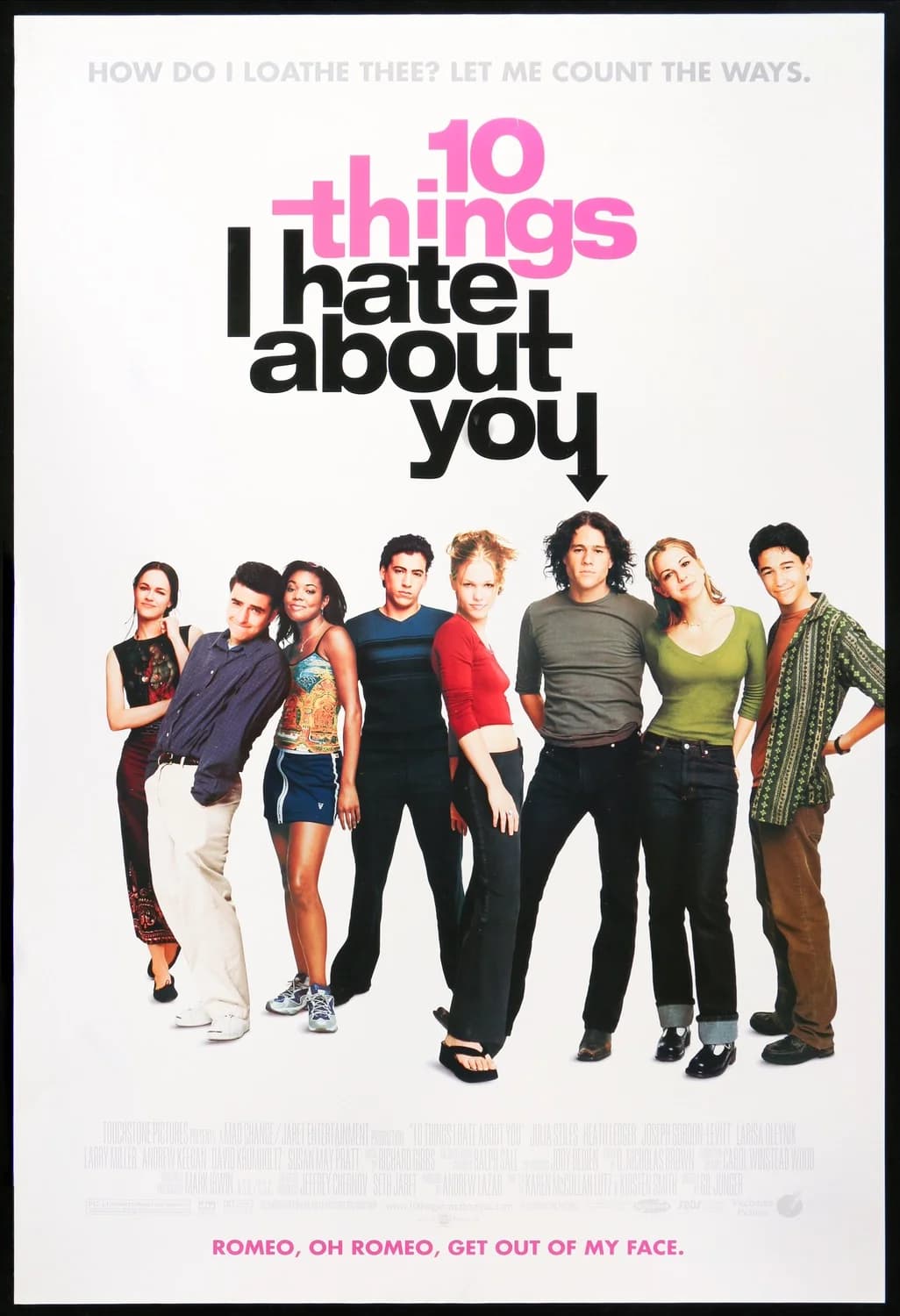
10 Things I Hate About You
Sibling rules, a rooftop serenade and one very stubborn Kat — Shakespeare in a school corridor.
1999 // VHS
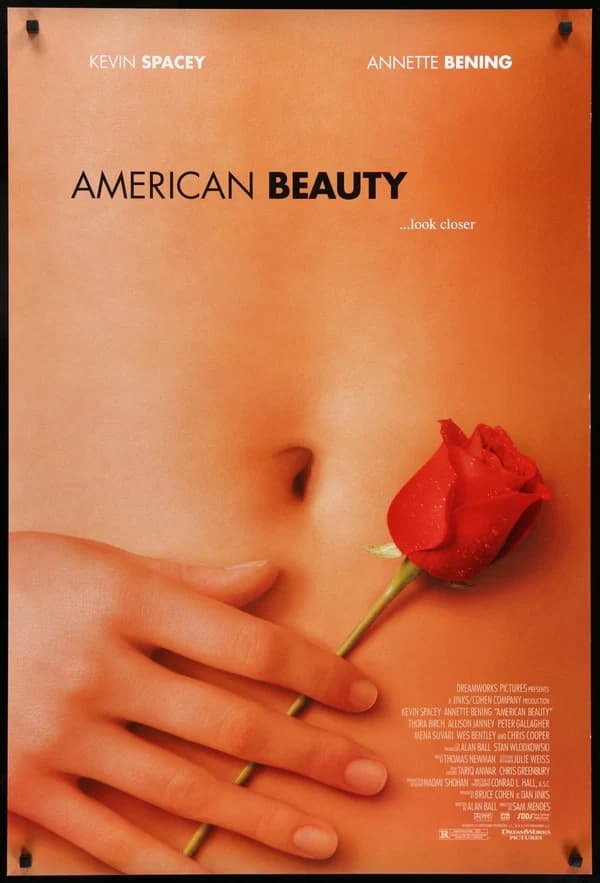
American Beauty
Lester Burnham, suburban rot and a midlife argument that still stings.
1999 // VHS
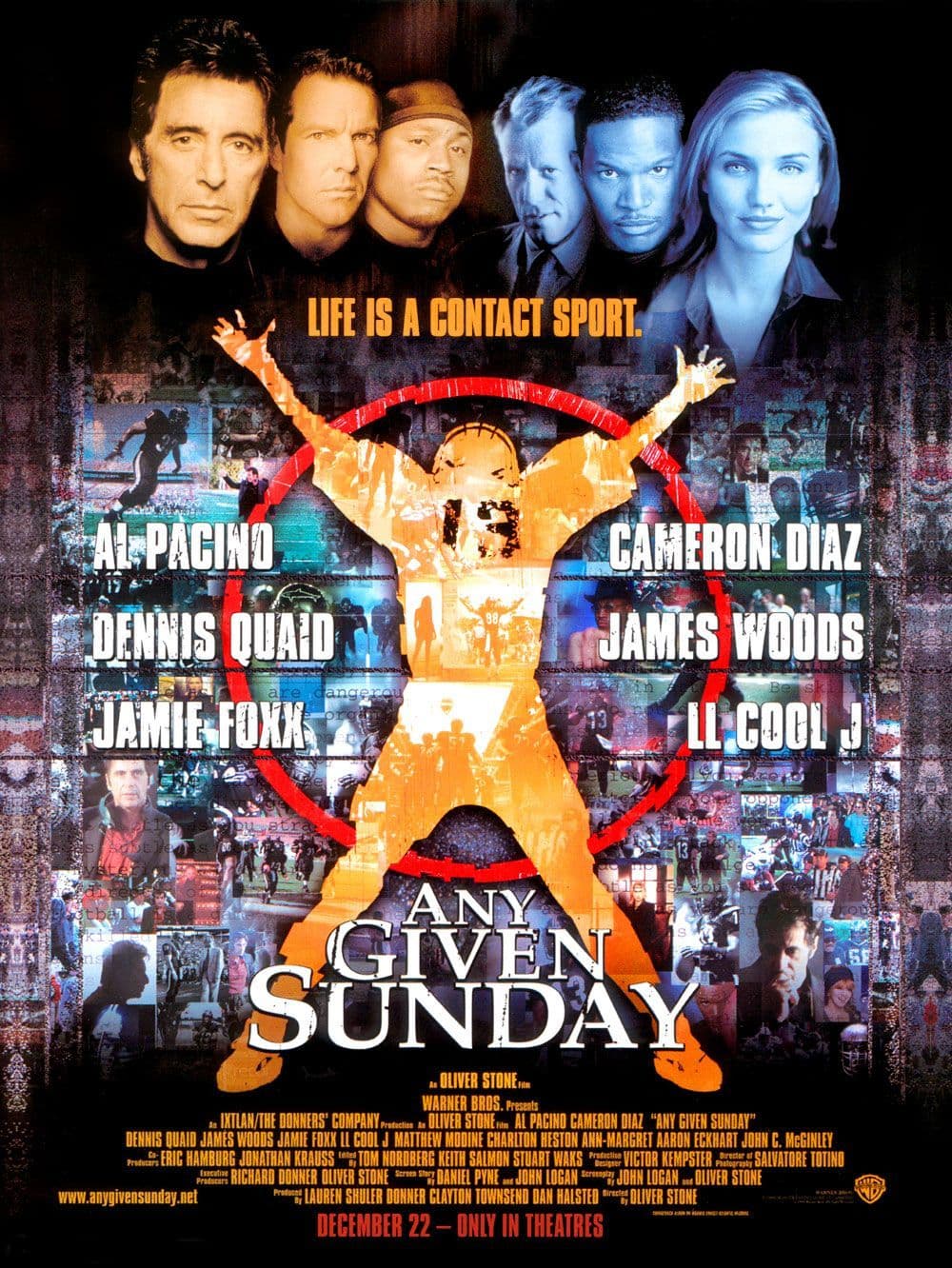
Any Given Sunday
Al Pacino's coach anchors the chaos of a film about football turned into product — loud, messy and oddly persuasive.