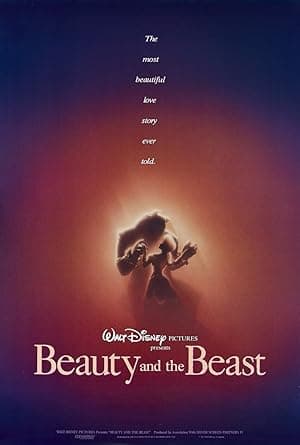
Beauty and the Beast
Bookish bravery, an enchanted rose and a ballroom everyone remembers.
// The setup
PLAYBACK STARTED
There are plenty of reasons to bring up Beauty and the Beast — the songs, the spectacle, that ballroom shot — but it’s Belle who keeps drawing me back. Gary Trousdale and Kirk Wise built a film that makes room for a heroine who reads, refuses the town's easy answers and, crucially, chooses her own path. Watch it with that in mind and the old magic still lands.
THE MOVIE
Belle is still the reason this movie works
At first glance Beauty and the Beast is a fairy tale about a cursed prince, an enchanted rose and a deadline: mend your ways or remain a monster. That plot engine — a supernatural bargain tying physical transformation to moral change — keeps the stakes simple and urgent.
But the movie earns its charge sheet through Belle: a bookish outsider who values reading and independence over the village's small ambitions. She trades her freedom for her father's, and that choice frames everything that follows; the romance is born from agency, not convenience.
Directors Gary Trousdale and Kirk Wise steer the whole thing with a brisk 84-minute runtime, and they stage it so Belle’s curiosity does the heavy lifting. When the visuals and songs click, the film feels less like a spectacle and more like a conversation between two very different people learning to be better.
THE SETUP
The idea that sets Beauty and the Beast in motion
You don't need a long plot summary to see why the central idea works: an enchanted curse forces two people into proximity, and the story measures whether one can genuinely change before time runs out. That ticking-rose premise is tidy, fair and very watchable.
Belle is the practical pivot. She isn’t swept off her feet — she steps into the Beast’s world to save her father, and that exchange turns obligation into the seed of something else. It’s a neat way to make the romance feel earned rather than inevitable.
Musically and visually the film makes its emotional progress explicit. Key moments — the tentative courtship montage and the ballroom waltz — are staged around music and spectacle so the audience can sense the pair getting closer without anyone shouting the ending.
Behind the scenes a substantial story team and a screenplay by Linda Woolverton tightened the structure, which helps the film move confidently from village complaints to castle revelations without getting bogged down in exposition.
THE CHARACTER
Why Belle matters
Belle is the film’s compass. She’s written as a reader and an outsider who’s uninterested in local status or easy marriage, which instantly gives her motives that feel personal rather than plot-driven.
That bookish independence matters because it changes the romance dynamic: Belle isn’t rescued so much as she chooses to stay and test what the Beast might become. Her decisions create the emotional work the Beast must do.
Paige O'Hara supplies the voice of Belle, and the character is staged so that curiosity and quiet stubbornness carry scenes that could otherwise feel sentimental. Belle’s refusal to accept the town’s small-mindedness makes her the clearest moral anchor.
Even the production choices — the way the castle isolates her, the emphasis on reading as a trait — underline that Belle matters not just as a love interest but as a model of independence in a family musical.
THE PERFORMANCE
Why Angela Lansbury's performance matters
One reliable element critics kept returning to at the time was the strength of the vocal cast, and Mrs. Potts is a big part of that. The household servants act as comic guides and small moral centres throughout the film.
Angela Lansbury provided Mrs. Potts’ singing voice, and production accounts note that her recording of the title ballad was captured in a single, definitive take — a neat piece of craftsmanship that the filmmakers kept in the final cut.
That single-great-take story matters because the title song sits at the film’s emotional hub; having a warm, steady vocal for the sequence helps the scene act as both lullaby and moral argument.
So even when the movie swells into spectacle, Lansbury’s contribution ties the emotion back to something human and reassuring.
UNDER THE SURFACE
Beauty and the Beast has more on its mind than the plot suggests
On the surface it’s a romance tied to a curse: love breaks the spell. But that romance is wired to redemption — the Beast must change his behaviour for anything to happen. Love here is explicitly practical: it’s a reward for moral effort, not instant transformation.
The film repeatedly asks us to value inner worth over outer looks. Belle’s willingness to see beyond a monstrous face pushes the audience to make the same judgement, and the story refuses simple prettifying solutions in favour of actual personal growth.
There’s a clear strand of female agency, too. Belle’s choices — to read, to refuse a conventional suitor, to exchange herself for her father — make her active in the plot rather than passive. Her independence is the engine that turns the fairy-tale gears.
Finally, the village’s reaction to the Beast introduces mob mentality and scapegoating: fear flips into aggression, and the film shows how quickly suspicion can harden into blame. It’s a sharp reminder that danger often comes from ordinary people acting together.
THE FILMMAKING
How Beauty and the Beast was put together
One clear technical choice helps define the film: the ballroom sequence, which blends traditional hand-drawn characters with a computer-generated 3D environment and extended camera moves.
That integration was no small thing — the sequence required significant CGI rendering and a multi-year effort inside production to make 2D characters feel at home in a moving, three-dimensional space.
The payoff is emotional: the camera movement around Belle and the Beast sells the sense of an intimate, cinematic moment that feels larger than the metre-wide frame of ordinary animation.
Put simply, the filmmakers used new tools to give an old tale a new kind of sweep, and that combination of craft and invention is part of why the film still sits comfortably alongside big musical set-pieces.
PURE 80S
Beauty and the Beast could not belong to any other decade
Beauty and the Beast arrived at a moment when Disney animation was on the rise again — it’s one of the landmark titles of the Disney Renaissance that followed The Little Mermaid and helped cement animated musicals as mainstream entertainment.
The film’s broader respectability also shifted perceptions: it became the first animated feature to receive a Best Picture nomination at the Academy Awards, which signalled a changing critical appetite for animation as serious cinema.
Those two facts together — musical revival and awards recognition — explain why the movie feels like a 1990s touchstone: it’s both product and proof that animated features were being taken more seriously.
WATCHING IT NOW
What has aged — and what hasn't
Some elements still hold up effortlessly. The central relationship — Belle offering herself, the Beast having to change — still gives the film a moral through-line that reads cleanly to modern viewers.
The staging choices that support that relationship, like the musical montage that quietly marks emotional shifts and the ballroom spectacle, continue to communicate without heavy-handedness.
Technically the blend of hand-drawn animation with then-new digital techniques was a leap at the time and still looks purposeful; the mix of craft and technology helps the film feel cinematic rather than merely illustrated.
As for the wider franchise life, the movie’s characters were used in several follow-ups and additional releases, which shows how the original story provided a solid enough base for further explorations.
THE LEGACY
Why Beauty and the Beast still matters
The film’s awards and reissues are concrete parts of its afterlife: it won Oscars for Best Original Score and Best Original Song and was the first animated feature to be nominated for Best Picture, which changed how people talked about animation.
Beyond trophies, the story proved adaptable: it spawned stage adaptations, screen continuations in the late 1990s and a 2017 live-action remake that explicitly leaned on the 1991 film as its principal source.
Disney has kept returning to the property across formats and years — reissues, special editions and remasters — which says the original film still functions as a usable version of the tale for theatres and home screens alike.
Put together, awards, adaptations and reuse explain why the movie has remained visible: it’s both a milestone and a platform that later versions could build from.
THE VERDICT
Does Beauty and the Beast still hold up?
Yes — and not because of nostalgia alone. The story is tightly constructed: Belle’s decision to protect her father forces the story’s moral engine into motion, and the Beast’s arc is built around the hard work of changing behaviour rather than an instant fix.
The film stages that change with clear, musical beats — the courtship montage and the ballroom — so the emotional rapprochement feels earned without giving away the ending. That economy of storytelling still reads well.
Technically and musically it also deserves respect: the film married hand-drawn character work with new digital techniques to create moments that feel unexpectedly cinematic, and its score and songs received top awards recognition.
If you’re deciding whether to watch it now, go for Belle’s stubbornness and the way the movie asks you to judge people by what’s inside. The spectacle is a pleasure, but the character at the centre is the reason the whole thing still means something.
Share this movie
// Keep watching
More movies from the 90s
If Beauty and the Beast is your kind of movie, there's plenty more on the shelves worth rewinding.
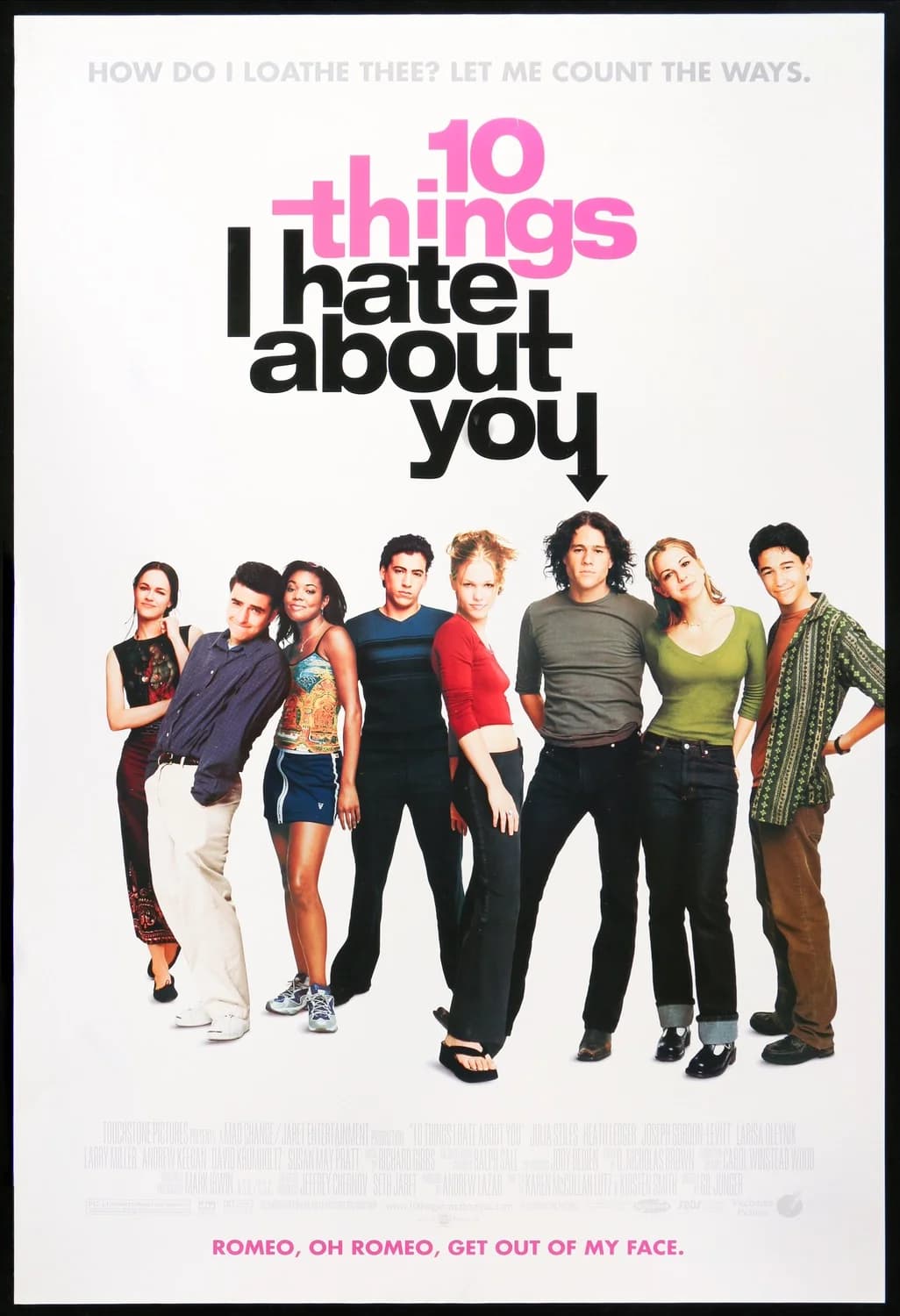
1999 // VHS
10 Things I Hate About You
Sibling rules, a rooftop serenade and one very stubborn Kat — Shakespeare in a school corridor.
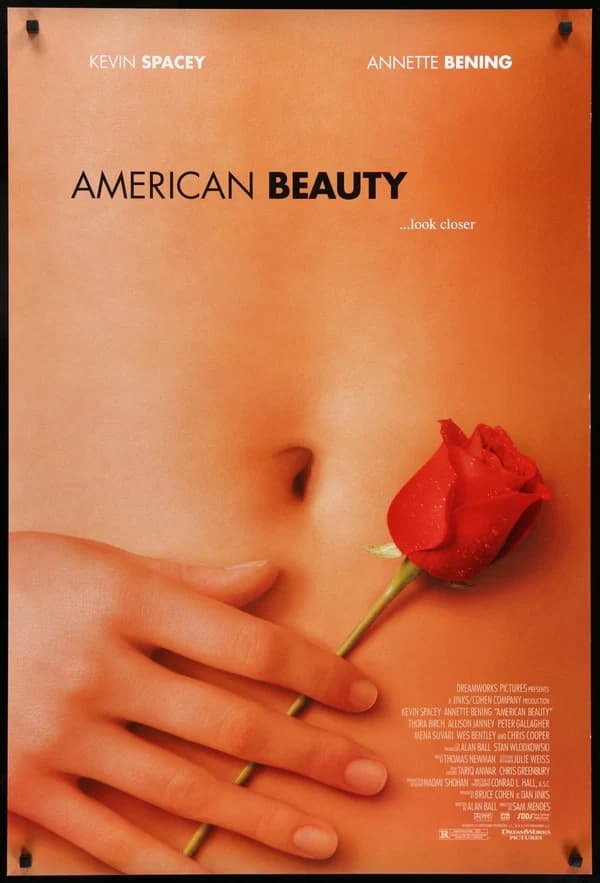
1999 // VHS
American Beauty
Lester Burnham, suburban rot and a midlife argument that still stings.
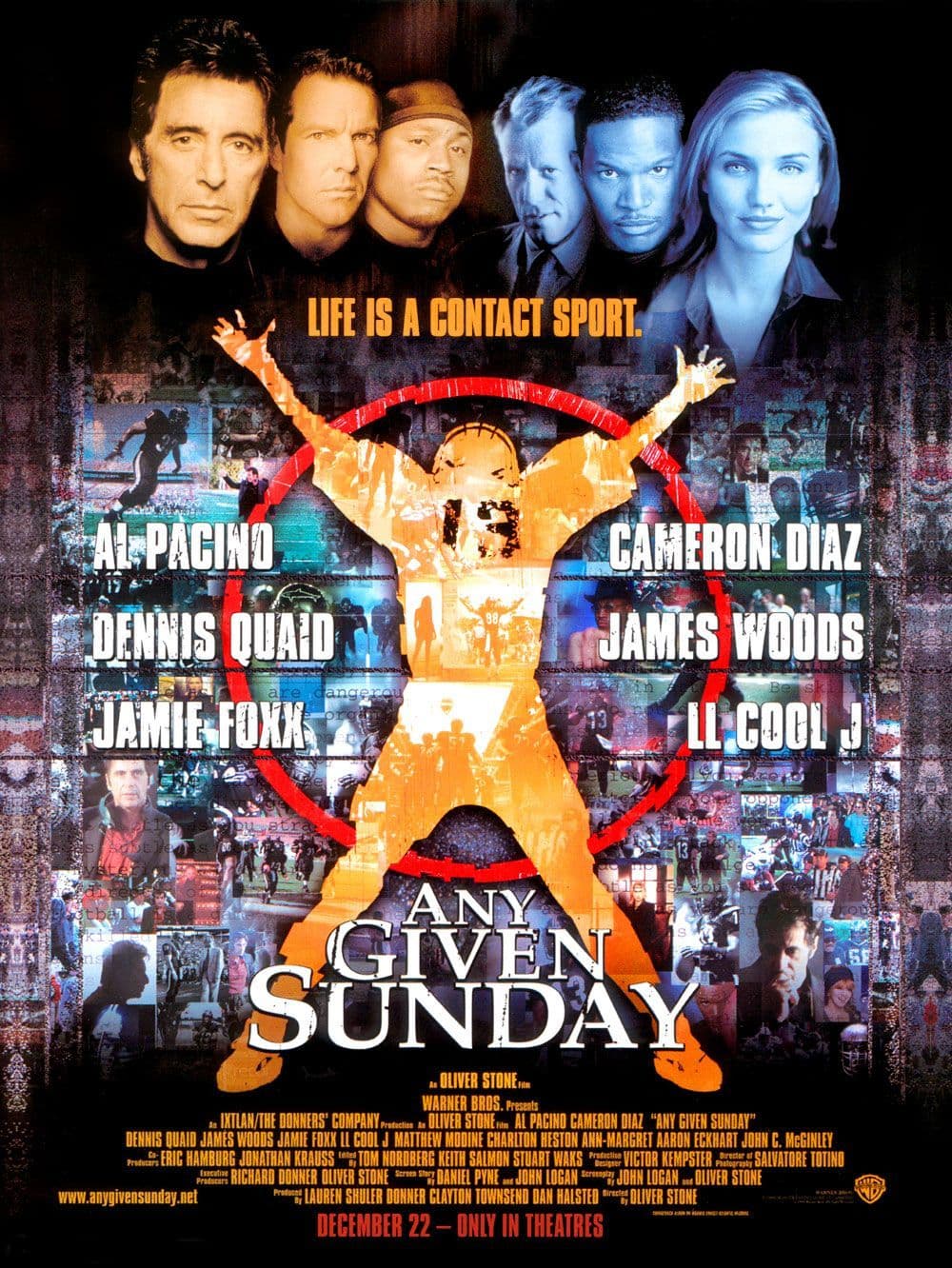
1999 // VHS
Any Given Sunday
Al Pacino's coach anchors the chaos of a film about football turned into product — loud, messy and oddly persuasive.