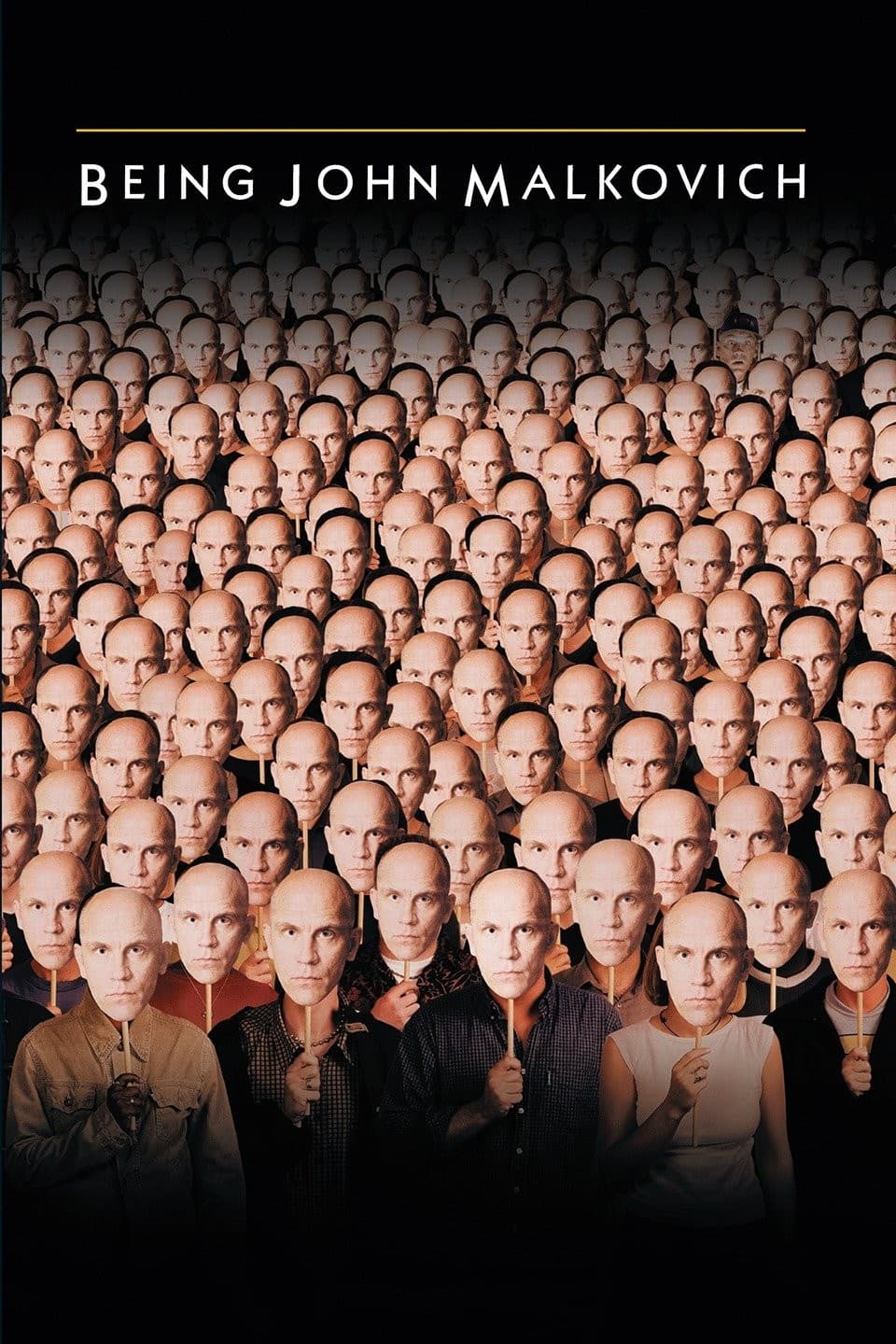
Being John Malkovich
A puppeteer, a secret door and the strangest fifteen minutes of celebrity voyeurism you’ll ever watch.
// The setup
PLAYBACK STARTED
Being John Malkovich still hits like a neat practical joke someone left taped to the spine of mainstream cinema. Spike Jonze and Charlie Kaufman hand you a mad little conceit — a literal doorway into an actor’s head — and then use it to pry open questions about who we are, who we want to be and how grossly that desire can look when turned into a business plan.
THE MOVIE
Craig Schwartz is still the reason this movie works
Remember the moment the film gives you a map to someone else’s skull? That’s Craig Schwartz’s moment. He’s a struggling New York puppeteer who takes a dull filing job on the cramped, fictional '7 1/2' floor and finds a hidden portal straight into the mind of John Horatio Malkovich. It sounds like a joke on paper; on screen it’s the engine for everything that follows.
The portal has rules. You don’t move in forever: whoever squeezes through controls Malkovich’s body for a short, fixed interval before being spat out onto the New Jersey Turnpike. That contraption of a premise keeps the film brisk and strangely formal — the same tiny window, over and over, and each visit changes the people who use it.
But it’s Craig who turns the oddity into a scheme. He’s not content to marvel; he wants recognition and escape, and his selfish choices push the story into darker territory about possession, authorship and the slippery business of being someone else. That yearning — awkward, greedy, oddly human — is what makes the film linger in the mind long after the gag wears off.
THE SETUP
The idea that sets Being John Malkovich in motion
At its simplest the movie is a high-concept device: a doorway to a famous man’s consciousness. But Kaufman’s screenplay doesn’t stop at the novelty. Craig’s discovery becomes the basis for a small, very weird business that ropes in his dissatisfied wife, Lotte, and a scheming co-worker, Maxine. That arrangement turns a surreal prank into a collision of needs and ethics.
The film keeps returning to the same confined office — the 7 1/2 floor — and to the portal’s mechanics. Those physical limits are useful: the doorway makes possession literal and repeatable, so plot shifts hinge on who is inside Malkovich and why.
Because the story relies on possession, role-play and layers of intention, developments often pivot on identity switching. It’s less about solving a puzzle and more about watching personalities rearrange themselves in close quarters.
That blend — an oddball premise handled as a business opportunity, with human rivalries hooked on a surreal device — is why the set-up works. It lets the movie be funny, unsettling and curious all at once without trying to do too much moral homework for the audience.
THE CHARACTER
Why Craig Schwartz matters
Craig isn’t charming so much as oddly sympathetic for the wrong reasons. He’s a puppeteer who can’t get a break, and the portal offers him what he desperately craves: a route out of obscurity and a way to feel powerful. That’s an excellent dramatic seed because it’s selfish in a recognisable way.
His yearning for recognition turns practical. The discovery becomes a scheme — and that is what makes him memorable: he treats the miraculous like a business opportunity, which spirals the story into moral messiness rather than sentimental wonder.
Craig’s behaviour grows more controlling as the film moves on. That escalation matters because the narrative asks us to watch how ordinary grievances — jealousy, failure, loneliness — can become invasive when someone finds a literal way to occupy another life.
It helps that Craig is the character who sets the machine in motion. Without him the portal is an oddity; with him it becomes a story about agency, wanting and the dangers of turning other people into solutions for your own problems.
THE PERFORMANCE
Why Catherine Keener's performance matters
Contemporary attention landed on Maxine for good reason: the role cut through the film’s strangeness and drew industry notice. Catherine Keener was singled out by critics and awards bodies, earning an Academy Award nomination for Best Supporting Actress.
That recognition matters to the movie’s balance. Maxine isn’t just an opportunist; she’s the pivot who complicates Craig’s scheme and gives the story a sharper interpersonal sting. The awards attention is an easy way to register how much her part registered with viewers and critics at the time.
Mentioning the nomination isn’t a substitute for saying what the character does here. Maxine’s presence escalates the story’s ethical stakes by treating the portal as a tool to be weaponised in relationships, and the industry response confirms the part was seen as central.
So when you watch the film again, notice how the plot tightens around that role — the awards list simply records what contemporary coverage and ceremonies acknowledged at once.
UNDER THE SURFACE
Being John Malkovich has more on its mind than the plot suggests
On the surface you get a surreal caper about a doorway into an actor’s skull. Underneath, the film keeps returning to questions of identity and selfhood — what it even means to 'be' someone — by dramatizing literal inhabitation.
Celebrity and voyeurism are baked into the premise. The famous man’s life becomes something to enter, watch and exploit; the narrative treats Malkovich’s body as an object of desire and curiosity, which lets the screenplay interrogate our appetite for celebrity up close.
Control and agency thread through every interaction. The portal hands power to whoever walks through it, and the moral consequences are immediate: the characters use that temporary control to rewrite other people’s lives, and the film asks whether that is ever ethical.
Finally, authorship and creativity lurk in the background. A puppeteer who wants an audience, a co-worker who wants influence, a celebrity whose life is commodified — the movie stages creativity and ownership as contested territories, which keeps it bubbling with ideas beyond the plot’s jokes.
THE FILMMAKING
How Being John Malkovich was put together
One of the film’s quiet strengths is how confined it feels. Production design credits list K. K. Barrett, and the movie leans on compact interiors — especially that 7 1/2 floor — to make the surreal moments pop against everyday office drab.
That contrast matters: the ordinary physical world sharpens the strangeness of the portal. When the screenplay takes us inside Malkovich, those sequences read as deliberate excursions from a cramped reality, and the production choices support that feeling.
The crew list also names Lance Acord (cinematography), Eric Zumbrunnen (editing) and Carter Burwell (score). Those credits signal a deliberate, collaborative approach to giving the film a specific, unified tone — comedic, oddball and a touch uncanny.
Put simply: the movie’s identity emerges as much from its set pieces and compositional restraint as from its central conceit. The physical world keeps the surrealism in check, which lets the ideas come through without drowning the audience.
PRACTICAL EFFECTS
The effects work that gives Being John Malkovich its physical personality
The film credits on-set puppetry teams and marionette construction specialists, which is telling: puppets and marionettes are literal tools in a story about bodies being controlled, so the practical crew aren’t just technicians — they’re part of the metaphor.
Production listings also show special-effects and special-makeup personnel responsible for physical 'Malkovich' masks and related items. Those tangible props anchor the more surreal beats and help the audience accept the bizarreness as physical reality within the film.
That practical foundation is useful because the story often leans on close-up, physical comedy and discomfort. When the idea involves occupying someone else’s body, having real makeup and puppetry on set makes the conceit feel stubbornly material rather than purely conceptual.
So the tactile work of craftsmen — the marionettes, the masks — earns its place in the credits. It’s a neat match of form and theme: the film is about being controlled, and the production literally hands that control to practical hands.
PURE 80S
Being John Malkovich could not belong to any other decade
Landing at the end of 1999, the film arrived squarely during the late-1990s wave of high-concept independent cinema. It premiered at the New York Film Festival on October 1 and opened theatrically in LA and New York on October 29, placing it in that particular indie moment.
That timing matters because the movie feels like a product of the era’s appetite for bold, idea-driven films that could still find mainstream traction. It marked the mainstream arrival of a distinctive voice — Charlie Kaufman’s — into American screenwriting.
Seen against the decade’s taste for quirky, writer-led cinema, Being John Malkovich reads as both perfectly of its moment and a little ahead of it: an oddball art-house title that nevertheless found an audience beyond festival screens.
So its placement at the end of the 1990s isn’t nostalgia; it’s structural. The film participates in that independent-film moment and benefited from an environment that let strange, writerly projects reach wider attention.
THE LEGACY
Why Being John Malkovich still matters
The film’s awards record helps explain its afterlife: it earned three Academy Award nominations — for Spike Jonze as director, Charlie Kaufman for original screenplay and Catherine Keener as supporting actress — and Kaufman later won the BAFTA for Best Original Screenplay.
More than trophies, those honours mark a moment when an unusual, writer-forward film could break into mainstream notice. Kaufman’s screenplay in particular established him as a distinctive contemporary screenwriter and signalled that unusual ideas could carry a commercial film.
Retrospectives and critical surveys often point to this title as the work that introduced both Jonze, in his role as a feature director, and Kaufman, as an original-screenwriter figure, to broader audiences.
Put another way: the movie’s legacy isn’t just that it exists, but that it announced voices who would continue to shape conversations about identity and storytelling in cinema.
THE VERDICT
Does Being John Malkovich still hold up?
Yes — if your taste runs to smart, strange premises handled with a steady appetite for human awkwardness. The film’s central machine — a doorway into Malkovich’s mind that grants temporary control before ejecting entrants onto the New Jersey Turnpike — remains a neat, formally satisfying trick that the screenplay uses to stage moral complications.
The story’s tight geography (that cramped 7 1/2 floor) and repeated possession mechanic keep the film focused. Rather than ballooning into an abstract thought experiment, the narrative makes the portal a practical problem that drives interpersonal rivalries: a business scheme that entangles Craig, his restless wife Lotte and the opportunist Maxine.
Craig’s arc — a frustrated artist who uses a miraculous discovery to try and fix his life — still reads as a credible, messy human move. The questions the movie raises about identity, celebrity and the ethics of inhabiting someone else’s life are sharp enough to survive repeated viewings.
If you haven’t seen it, or it’s been a while, watch it for the idea and stay for the way that idea complicates ordinary human pettiness. Being John Malkovich is still worth the trip down the rabbit hole; it’s a clever, uncomfortable little machine that remembers we are often our own worst puppeteers.
Share this movie
// Keep watching
More movies from the 90s
If Being John Malkovich is your kind of movie, there's plenty more on the shelves worth rewinding.
1999 // VHS
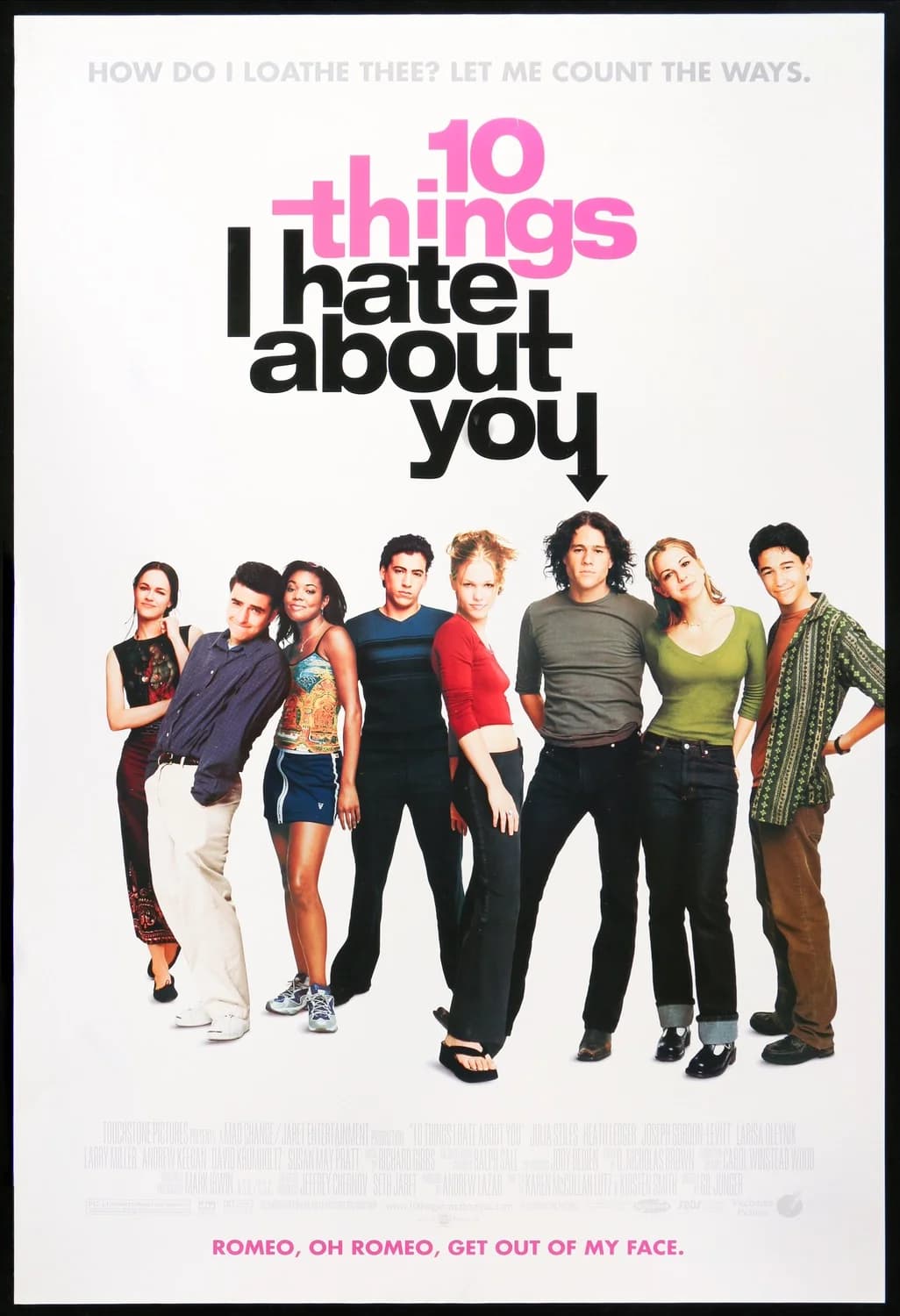
10 Things I Hate About You
Sibling rules, a rooftop serenade and one very stubborn Kat — Shakespeare in a school corridor.

1999 // VHS
American Beauty
Lester Burnham, suburban rot and a midlife argument that still stings.

1999 // VHS
Any Given Sunday
Al Pacino's coach anchors the chaos of a film about football turned into product — loud, messy and oddly persuasive.