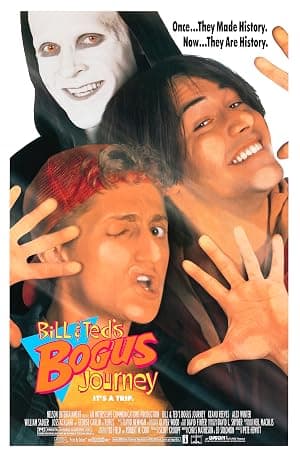
Bill & Ted's Bogus Journey
Friendship, face-offs with Death and a very silly Battle of the Bands — Bill & Ted do the afterlife, and it’s gloriously daft.
// The setup
PLAYBACK STARTED
There are sequels, and then there’s Bill & Ted’s Bogus Journey: a film that takes two likeable idiots, kills them, then sends them on a lunatic tour of the afterlife just to prove how fiercely they believe in one another. It’s directed by Peter Hewitt and refuses to be small-hearted about its own ridiculousness.
THE MOVIE
Bill S. Preston, Esq. (also Granny S. Preston, Esq. and Evil Bill) is still the reason this movie works
If you want the short answer for why people are still talking about Bill & Ted’s Bogus Journey, start with Bill S. Preston, Esq. The film keeps the central duo — Bill and Ted — intact and leans into what made them oddly persuasive: their stubborn, accidental optimism and the comic choices that spring from it. Alex Winter’s Bill is listed in the credits as also playing Granny S. Preston and Evil Bill, which tells you the film is happy to reshape its leads into whatever ridiculousness the plot demands.
That plot demands plenty. A future tyrant called Chuck De Nomolos sends evil robot doubles back in time to erase Wyld Stallyns’ future. When the robots succeed, Bill and Ted wind up in the afterlife and must literally beat Death at games, escape Hell and find a way back to secure their band’s destiny. It’s bonkers — and it’s the kind of high-concept mischief that allows the movie to stretch from slapstick into genuine weirdness.
Peter Hewitt directs a tight, 93-minute turn through all of this, and the film never forgets why it began: Bill and Ted’s belief that their music will somehow unite the world. That faith — and the loyalty between the pair — is what keeps the lunacy from feeling pointless.
THE SETUP
The idea that sets Bill & Ted's Bogus Journey in motion
The engine here is simple and gloriously silly: a future despot wants to stop a utopia and so sends evil robot doubles of Bill and Ted back in time to snuff out the originals. That’s the why of the trouble, and it’s both petty and clever enough to justify several escalating set pieces.
Once the doubles succeed, the movie turns into a road trip through metaphysical bureaucracy. Bill and Ted find themselves confronting Death — not as a brooding figure but as a comic opponent — and the script stages a string of games between them. Win, and they get another shot at life; lose, and the future is erased.
The stakes are therefore both ridiculous and sincere. At one end you have robo-violence and a sci‑fi plot about time travel; at the other, you have the film treating Wyld Stallyns’ music as the causal force that might actually change the world. The film keeps jumping between those tones and, mostly, it makes them play together.
There’s also a mechanical joy to the way the movie stages oppositions: evil robots versus the good robots the boys assemble, a Battle of the Bands where musical destiny is decided, and time travel used repeatedly to untangle De Nomolos’ plot. It’s busy, but the busy is intentional.
THE CHARACTER
Why Bill S. Preston, Esq. (also Granny S. Preston, Esq. and Evil Bill) matters
Bill is not just one half of a comic double-act; he’s the character who lets the movie twist and turn without losing its heart. The script keeps returning to the pair’s bond and Bill’s willingness to stretch himself — whether that means disguises, odd detours into the afterlife, or confronting his own evil double.
The presence of Death as a figure who flips from antagonist to ally matters here. That turn — Death becoming a sympathetic, comic foil and eventual friend to Bill and Ted — reframes the peril as something negotiable. It’s a useful counterpoint to Bill’s constant faith: the world can be deadly, but it’s also open to persuasion.
Family also gets a look-in. The cast list names Ted’s father, Captain Logan, and Bill’s father, Mr. Preston, which tether the characters to ordinary relationships even while the movie cartwheels through high-concept material. Those ties stop their adventures from feeling rootless.
Finally, the fact that the writers who created Bill and Ted on the first film return here keeps the character work consistent. Bill’s array of guises — Granny, Evil Bill and so on — are less vanity exercises and more ways the movie keeps testing what this character can do while staying true to the friendship at its centre.
THE PERFORMANCE
Why William Sadler's performance matters
Contemporaneous coverage and later interviews single out William Sadler’s take on Death. Reporting notes the choices highlighted in that coverage — an accent, physical decisions and a thread of vulnerability — rather than treating the part as an anonymous bit of makeup and scythe work.
That vulnerability is important because Death isn’t a flat menace here. He begins as an obstacle to be outwitted and ends up a character who can be reasoned with. The attention paid to Sadler’s audition and preparation explains why the part reads as a rounded comic figure rather than a throwaway gag.
Put another way: when the Grim Reaper becomes an ally, it’s not only a plot contrivance. The way the role was shaped — the accent, the physical mannerisms and the hints of vulnerability noted in coverage — make that emotional about-face credible within the film’s comic logic.
UNDER THE SURFACE
Bill & Ted's Bogus Journey has more on its mind than the plot suggests
On the surface it’s all pratfalls and time-hopping nonsense, but the movie keeps returning to a handful of ideas. First is friendship and loyalty: Bill and Ted’s faith in each other sustains everything, even after they’re literally dead.
Second is music as social transformation. The whole premise rests on Wyld Stallyns’ future music being the cause of a better world; the film treats that belief seriously enough to build an entire rescue mission around it. That makes the Battle of the Bands less a gag and more a kind of civic duty — absurd, but central to the stakes.
Third, death and the afterlife are played for broad comedic effect. The movie borrows from high art — an on-screen riff on The Seventh Seal — and folds it into slapstick, which keeps the tone unexpectedly nimble: it can be smart and daft in the same breath.
Finally, the text toys with fate versus agency. The characters are told a future exists, and much of the action is about whether that future can be preserved or needs active work. That tension gives the film real propulsion under the jokes.
THE FILMMAKING
How Bill & Ted's Bogus Journey was put together
If you look at the credits, the film’s technical team is compact and experienced. Oliver Wood is credited as cinematographer, David Finfer as editor and David L. Snyder as production designer — names that point to a crew built to balance comic set pieces with the mechanics of genre filmmaking.
Peter Hewitt was directing his first feature, and that sense of a director pushing into different tonal territory shows in how the movie moves from deadpan parody to physical comedy to outright surreal sequences. The credited craftspeople supply the necessary tools to make those shifts readable to the audience.
In short: the film’s identity is as much about the people on the call sheet as about any single trick. The crew credits underline that Bogus Journey was trying to be a properly constructed bit of genre storytelling, even while it leaned heavily on silliness.
PRACTICAL EFFECTS
The effects work that gives Bill & Ted's Bogus Journey its physical personality
A lot of the film’s non-human characters are literal humans in complex guises. The figure Station and several other creatures were performed by physical actors — the credits list performers such as Ed Gale and Arturo Gil alongside costumed and puppeteered elements — which gives those moments a tactile, performative energy.
That same physicality extends to the film’s treatment of Death. William Sadler’s look relied on extensive makeup; reporting and interviews note he contacted a makeup supervisor with big-production experience to achieve an aged appearance for his audition and the shoot.
Taken together, those choices keep the film feeling lived-in. The nonhuman figures are animated by performers rather than only by optical tricks, and the care put into Sadler’s makeup shows the production wanted the Grim Reaper to register as an actual character on screen, not just a paper prop.
It’s the kind of hands-on approach that helps a film like this feel immediate: the oddball creatures and the weary Reaper are someone’s craft, not just a computer effect.
PURE 80S
Bill & Ted's Bogus Journey could not belong to any other decade
Released in 1991, Bogus Journey sits at a transitional moment: it’s a product of the late‑’80s/early‑’90s sequel wave, when studios were happy to crank up the spectacle around familiar characters. That production context — involving houses like Orion and Columbia in various territories — helps explain the film’s mix of broad comedy and larger showpieces.
The movie also extends trends that were current at the end of the 1980s: teen‑buddy comedies that liked to graft rock music onto adventure beats. Bogus Journey keeps the buddy-core of the first film but adds more explicit parody and special‑effects spectacle, taking what was compact in the original and splurging on bigger set pieces.
It feels of its moment because it wants both: to retain the small, character-driven oddness of Bill and Ted while indulging in the kind of theatrical stunts a studio sequel could now afford. That combination is very much of the era when franchises doubled down rather than retreated.
WATCHING IT NOW
What has aged — and what hasn't
The aspect that most clearly survives is its core identity as a teen comedy about friendship. That genre tag is an admission of intent: the film always aimed its energy at a youthful audience that would recognise and root for a duo who believe in one another above all else.
Because the writers of the first film, Chris Matheson and Ed Solomon, returned, the voice of Bill and Ted remains consistent. That continuity helps the jokes land in the right register: the film feels like a grown-up (or at least more ambitious) version of what the pair were in the original rather than a mercenary cash-in.
What ages less well is simply the degree of narrative complexity. The picture piles on devices — evil robots, time loops, afterlife games — and contemporary critics sometimes thought that complexity muddled the simplicity that made the first film charming. If you prefer a leaner comic engine, Bogus Journey can feel overpacked.
But if you’re watching for the relationship at the centre, and for the particular blend of daftness and affectionate loyalty, that still comes through. The emotional throughline hasn’t eroded in the years since.
THE LEGACY
Why Bill & Ted's Bogus Journey still matters
Part of the film’s afterlife comes from its being the middle chapter: it bridges the original’s introduction of the characters and the much later 2020 sequel that reassembled key cast members. That thread of continuity has kept fans returning and curators of the series pointing back to this entry.
Musically, the movie produced a contemporaneous soundtrack that leaned into rock and metal; the credits list contributions from high‑profile players such as Steve Vai and Megadeth on specific songs, which tethered the film to a particular musical moment and an audience outside pure comedy fans.
Finally, the portrayal of Death — a mixture of art‑film reference and broad comedy — is often what people remember. The hybrid approach made the film’s tone distinctive: it’s willing to wink at Bergman and then immediately pull a pratfall. That odd coupling is a large part of what critics and fans return to in discussions of the series’ temperament.
THE VERDICT
Does Bill & Ted's Bogus Journey still hold up?
Yes — with a qualification. If you’re after a crisp, economical comedy, this one can feel overstuffed: evil robots, time travel, afterlife games and a comic riff on The Seventh Seal are a lot to carry in 93 minutes. The film’s appetite for ideas sometimes outpaces its ability to tidy them up.
But if you come for the things the movie actually loves — the loyalty between Bill and Ted, the notion that their music could change the world, and the willingness to have a laugh with big concepts — it still rewards. The Battle of the Bands and the evil‑vs‑good robot set pieces give the story a tangible endpoint, while the afterlife games keep the tone surprising.
William Sadler’s turn as Death, singled out in contemporary coverage for accent, physical choices and a vulnerability that makes the character believable, helps enormously. When the Grim Reaper moves from antagonist to comic ally, the film earns both its jokes and its softer moments.
So should you watch it now? If you’re up for a movie that embraces silliness without being content with mere silliness — one that will kill its heroes and then make them play games with Death in service of a heartfelt if absurd belief in music and friendship — then yes. Bill & Ted’s Bogus Journey still works because underneath the chaos it’s stubbornly loyal to the thing that made the duo matter in the first place.
Share this movie
// Keep watching
More movies from the 90s
If Bill & Ted's Bogus Journey is your kind of movie, there's plenty more on the shelves worth rewinding.
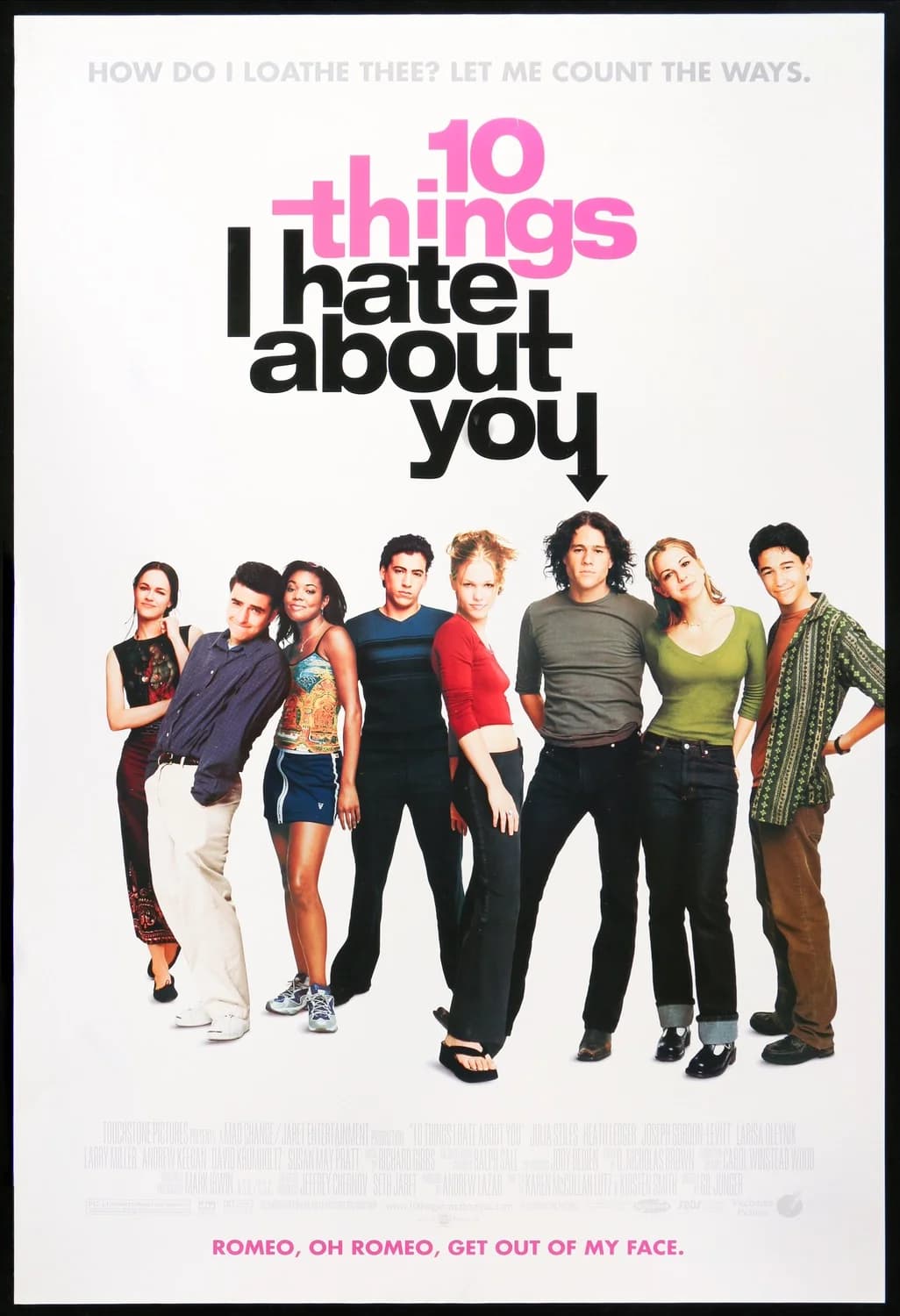
1999 // VHS
10 Things I Hate About You
Sibling rules, a rooftop serenade and one very stubborn Kat — Shakespeare in a school corridor.
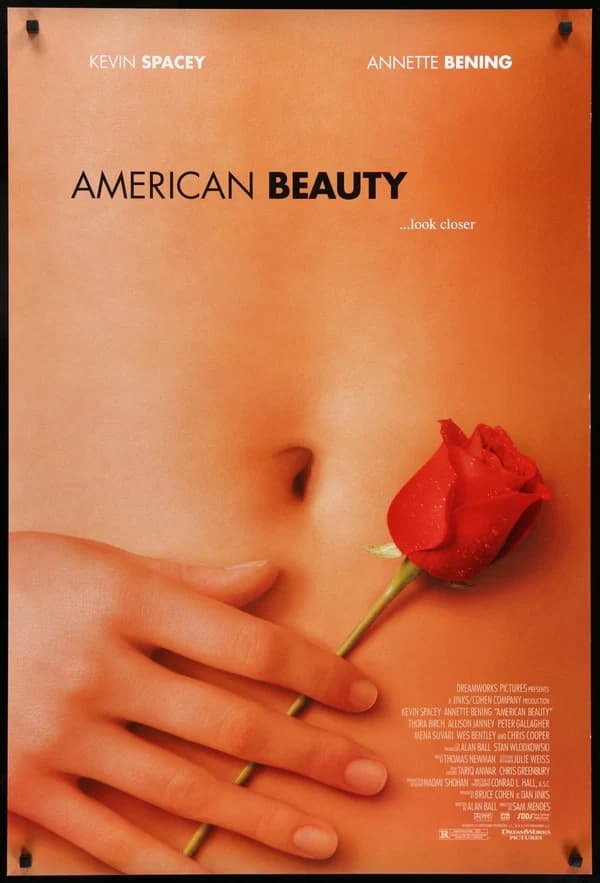
1999 // VHS
American Beauty
Lester Burnham, suburban rot and a midlife argument that still stings.
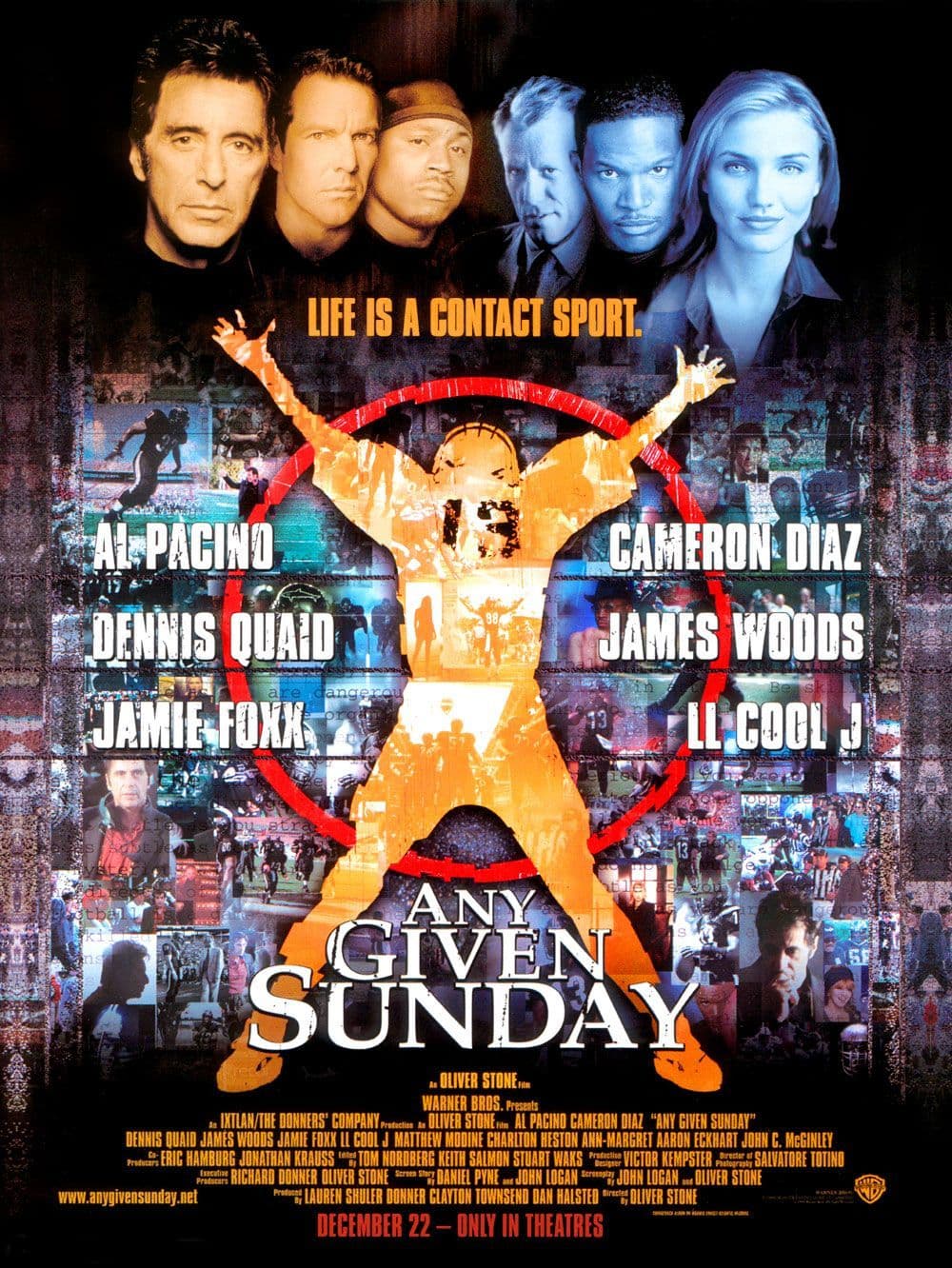
1999 // VHS
Any Given Sunday
Al Pacino's coach anchors the chaos of a film about football turned into product — loud, messy and oddly persuasive.