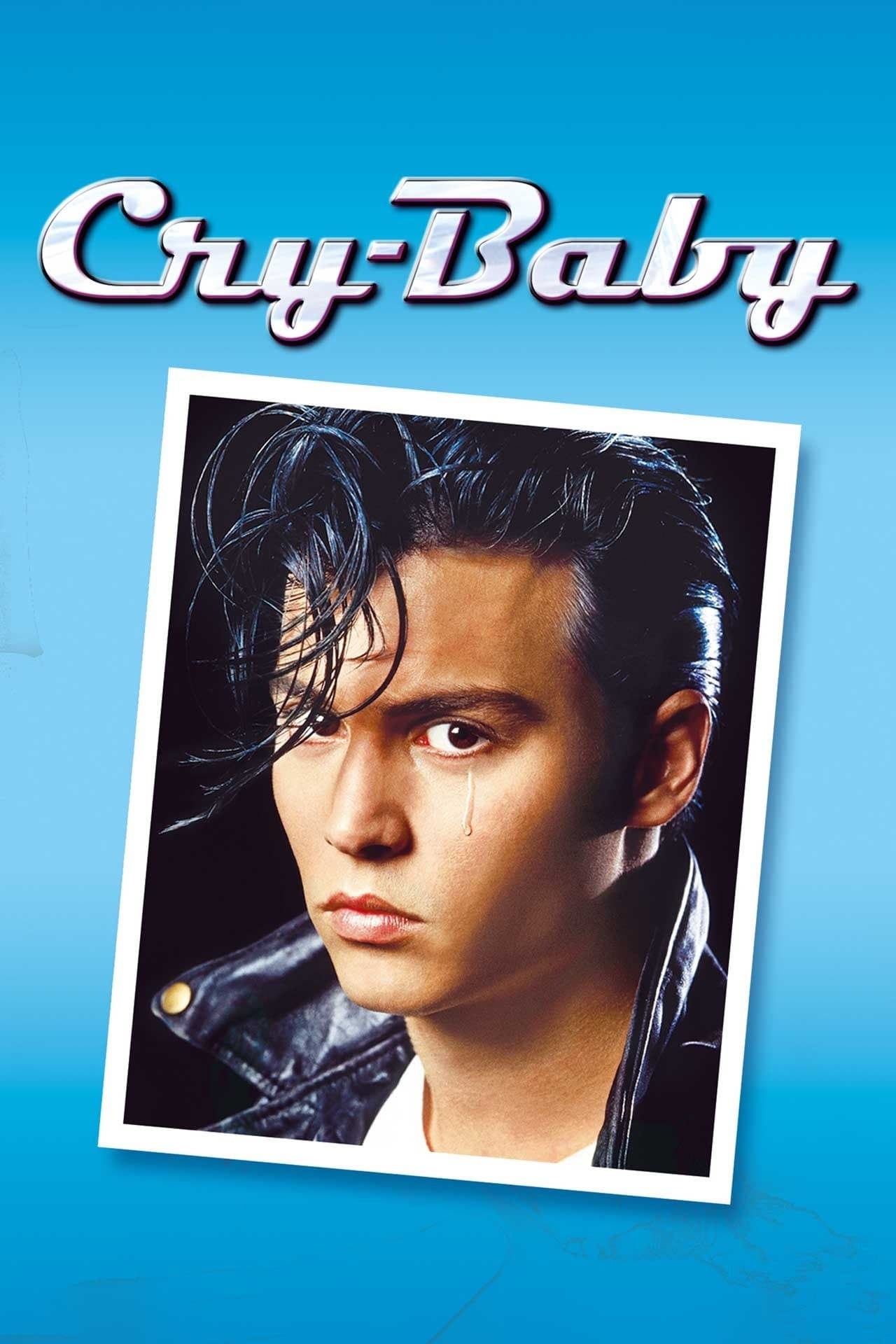
Cry-Baby
Teenage rebellion, a single teardrop and a lot of 1950s cheek — Cry‑Baby remains a small, sharp wedge of John Waters mischief.
// The setup
PLAYBACK STARTED
John Waters' Cry‑Baby is the sort of movie that announces itself with one perfect little flourish: a schoolroom, a syringe, and a single, conspicuous tear. From that instant it sets up a romance that’s as much about identity and class as it is about bad hair and even worse decisions.
THE MOVIE
Wade "Cry‑Baby" Walker is still the reason this movie works
The first image that sticks from Cry‑Baby is oddly small: a school polio vaccine scene where Allison Vernon‑Williams notices Wade "Cry‑Baby" Walker shedding a single, notable tear. It’s a tiny, theatrical moment that tells you everything you need to know about what follows — this isn’t straight nostalgia, it’s a pastiche with a grin.
John Waters sets his film in 1954 Baltimore and then mischievously turns the whole 1950s teen‑rebel package inside out. On the surface it’s a love story between an upper‑class “square” and a leather‑jacketed “drape”, but Waters uses that tidy setup as a playground for riffs on class, performance and teenage identity.
What keeps Cry‑Baby moving — and what keeps people returning to it — is that central figure, Wade 'Cry‑Baby' Walker. He’s presented as a charismatic juvenile delinquent whose single teardrop refers back to family trauma and becomes his defining motif. Put simply: the film is short, sharp and built around a lead you can’t stop watching.
THE SETUP
The idea that sets Cry-Baby in motion
Cry‑Baby runs on a simple, effective engine: class conflict. Baltimore high‑school “Squares” and working‑class “Drapes” are set up as opposing tribes, and Allison’s attraction to Cry‑Baby escalates that rivalry into something wildly theatrical.
Waters organises the film around recurring set‑pieces rather than dense plotting. You get a charm‑school talent show, the Drapes’ Turkey Point swim gatherings, a court sequence that leads to a juvenile training school and, for the finale, a 'chicken' car race. Each of those mechanics does double duty: they move the story forward and give Waters a stage to lampoon the 1950s musical idiom.
The movie uses certain devices again and again — staged musical numbers, talent‑show performances, jailbreak sequences and recurring references to execution and orphanhood — which keeps the tone playful and a little operatic.
Because the setup is tidy and theatrical, the film never feels weighed down. It’s a pastiche that knows what it wants to parody and what it wants to celebrate, and the premise gives Waters enough room to play.
THE CHARACTER
Why Wade "Cry‑Baby" Walker matters
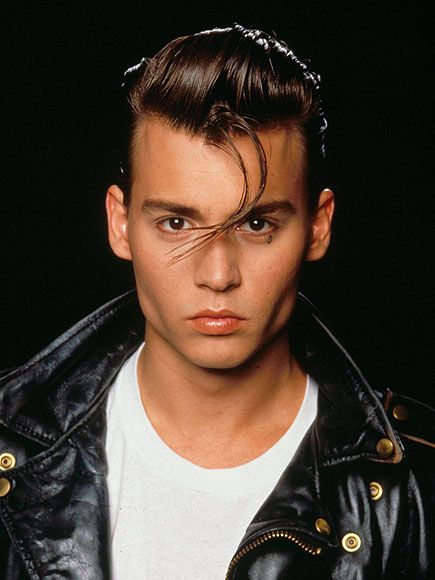
At the centre of Cry‑Baby is Wade 'Cry‑Baby' Walker — Johnny Depp’s lead role. He’s framed as a charismatic juvenile delinquent whose famous single tear points to a troubled past and becomes a shorthand for his whole personality.
Wade matters because he gives the film gravity. The pastiche can be gleefully silly, the musical numbers can be deliberately overcooked, but the story circles back to this one boy who is at once performative and genuinely wounded. That mix keeps the pastiche from sliding into empty mimicry.
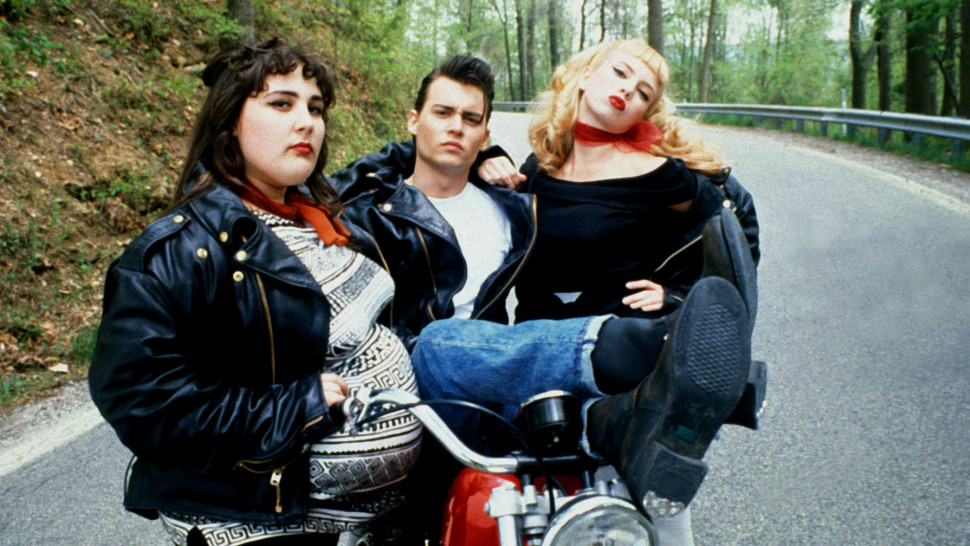
The social antagonists — the archetypal 'square' types, led by characters like Baldwin — exist to bounce off Wade and expose the class tensions at the film’s core. Without Wade’s combination of charm and mystery, the satire would lose its hinge.
Finally, Wade works as the movie’s emotional compass: he’s the reason Allison crosses the divide, and he’s the reason the Drapes claim a kind of dignity. In a short, stylised film, he’s the human fulcrum that holds everything together.
THE PERFORMANCE
Why Johnny Depp's performance matters
Contemporary reviewers singled out Johnny Depp’s central turn as an appealing, charismatic anchor for Waters’ pastiche. That’s an important point: the movie walks a tightrope between parody and sincerity, and the lead needs to keep you invested.
Depp’s presence gives the film a steady centre around which the more outré choices can orbit. When the script leans into theatricality — the staged musical numbers, the jailbreak set pieces — the audience needs a believable reason to care. Reviews at the time suggested Depp provided that reason.
Amy Locane, noted as promising in contemporary responses, fills the opposite role: the square who finds something real on the other side of the social fence. Between them, the romantic throughline lands, even when the rest of the movie is winking at itself.
UNDER THE SURFACE
Cry-Baby has more on its mind than the plot suggests
Under the jokes and the pastiche, Cry‑Baby is about class — the Drapes versus the Squares — and what it costs to cross that invisible line. That tension propels most of the film’s confrontations.
It’s also a movie about teenage rebellion and identity: the choices young people make to belong, to perform, or to carve their own strange path. Waters frames that through 1950s nostalgia and parody, so the rebellion is always a little theatrical.
Performance is another running idea. Talent shows, makeovers and staged numbers are not just comic set‑pieces; they’re moments when characters try on different selves and measure what those selves mean to other people.
Put together, those themes make Cry‑Baby more than a pastiche. It’s a small comedy that asks who gets to be seen, who gets to belong and what defiance looks like when you’re still figuring out who you are.
THE FILMMAKING
How Cry-Baby was put together
A lot of Cry‑Baby’s personality comes from deliberate production choices. Production designer Vincent Peranio is credited with a deliberately artificial, retro look that recreates an exaggerated 1950s atmosphere — the film wears its pastiche on its sleeve.
That design is supported in the credits by cinematographer David Insley and editor Janice Hampton; the team’s job is to keep the comedy sharp and the musical numbers cohesive in a deliberately stylised world.
Waters didn’t try to hide the artifice. The aesthetic choices make the film feel like a stage musical filmed on purpose, which suits a story that depends on performance and spectacle.
In short: the filmmaking is organised to underline tone. When everything is slightly amplified, the characters and their small rebellions come into clearer relief.
PRACTICAL EFFECTS
The effects work that gives Cry-Baby its physical personality
Cry‑Baby relies on practical stunt work for sequences that need real physical energy — the car races, fights and jailbreak scenes credit numerous stunt coordinators and performers, which tells you these moments were handled on set rather than invented in the cutting room.
The musical numbers were staged in a similarly hands‑on way: lip‑syncing, choreography and on‑set vocal and dance coaching are part of the production paperwork, so the musical moments read as rehearsed theatrical pieces rather than spontaneous broadcast performances.
Those choices keep the film tactile. When a car skids or a group launches into a routine, it feels like a group of people committed to an idea, not a digital construct.
All of which suits Waters’ approach: tangible, slightly exaggerated performances in a world that’s purposely theatrical.
PURE 80S
Cry-Baby could not belong to any other decade
Though Cry‑Baby opened in 1990, it’s very much a child of the late 1980s retro revival. AFI identifies the film’s major subjects as class distinction, juvenile delinquents, postwar life and rock and roll — which places it squarely as a 1950s pastiche made at the end of an era that loved looking backwards.
That timing matters. Waters wasn’t nostalgically recreating the 1950s so much as using the decade as a stylistic toolkit, a popular language of doo‑wop, rebellion and neat moral binaries that films of the late‑80s and early‑90s liked to remix.
Cry‑Baby therefore feels like an end‑of‑an‑era throwback: it’s dressed in the past, but its concerns — class lines, youth culture, performing identity — are presented with a modern wink.
Seen that way, Cry‑Baby is less a period piece and more a commentary on how the past gets packaged and sold back to us.
WATCHING IT NOW
What has aged — and what hasn't
Initial box‑office response to Cry‑Baby was modest, but retrospectives and anniversary coverage describe a steady migration into cult territory. That shift matters when you revisit the film: it’s found an audience that appreciates its particular mix of parody and affection.
The elements that survive best are the ones rooted in the story’s simplicity: teenage rebellion and identity are timeless, and the film’s use of musical set‑pieces and talent‑show mechanics still reads as a neat way to externalise character choices.
The pastiche angle — the Grease‑style, 1950s musical riffing that critics picked up on at the time — still gives the film its charm for viewers who enjoy an affectionate send‑up rather than a faithful reconstruction.
If the film falters for some modern viewers, it’s usually because the stylistic exaggerations don’t suit every taste. But for the audience that likes Waters’ brand of affectionate theatre, Cry‑Baby retains a definite personality.
THE LEGACY
Why Cry-Baby still matters
Cry‑Baby’s afterlife is a modest but steady one. The film underperformed at the box office on release, yet later coverage has described it as a cult classic and it’s a frequent stop on retrospectives of Waters’ work.
Its story proved durable enough to inspire a stage musical that premiered in 2007 and reached Broadway in 2008, earning four Tony nominations — a tidy postscript that shows the material translates well to live theatre.
The existence of a director’s cut and subsequent home‑video restorations also indicates a continuing interest in the film’s textures and choices; people wanted a version that included material omitted from the theatrical release.
Taken together, those afterlives explain why Cry‑Baby still gets mentioned: it’s the kind of small, distinctive film that finds an audience over time rather than in the wide, immediate splash of mainstream success.
THE VERDICT
Does Cry-Baby still hold up?
Yes — but with a small, important asterisk. Cry‑Baby works today if you go in for the joke: it’s an affectionate pastiche of 1950s teen‑rebel films that stages a romance between an upper‑class square (Allison) and a leather‑jacketed drape (Wade). If that premise sounds like the sort of thing you’d enjoy being teased about, you’ll probably enjoy the ride.
The film’s central conflicts — class lines and teenage rebellion — still read clearly because Waters keeps the story compact and focused. The charm‑school talent show, Turkey Point gatherings, the juvenile training school and the climactic 'chicken' race are tidy devices that serve both comedy and narrative momentum.
Johnny Depp’s presence as Wade gives the pastiche a believable heart; contemporary reviewers singled him out as an appealing anchor, and that steadiness helps the more theatrical elements land. The result is short, brisk and rarely dull.
So should you watch it? If you like your nostalgia with a theatrical wink and a lead who makes the whole parody feel inhabited, absolutely. Cry‑Baby hasn’t become a mainstream staple, but it’s an enduring little oddity — equal parts tear and grin.
Share this movie
// Keep watching
More movies from the 90s
If Cry-Baby is your kind of movie, there's plenty more on the shelves worth rewinding.
1990 // VHS
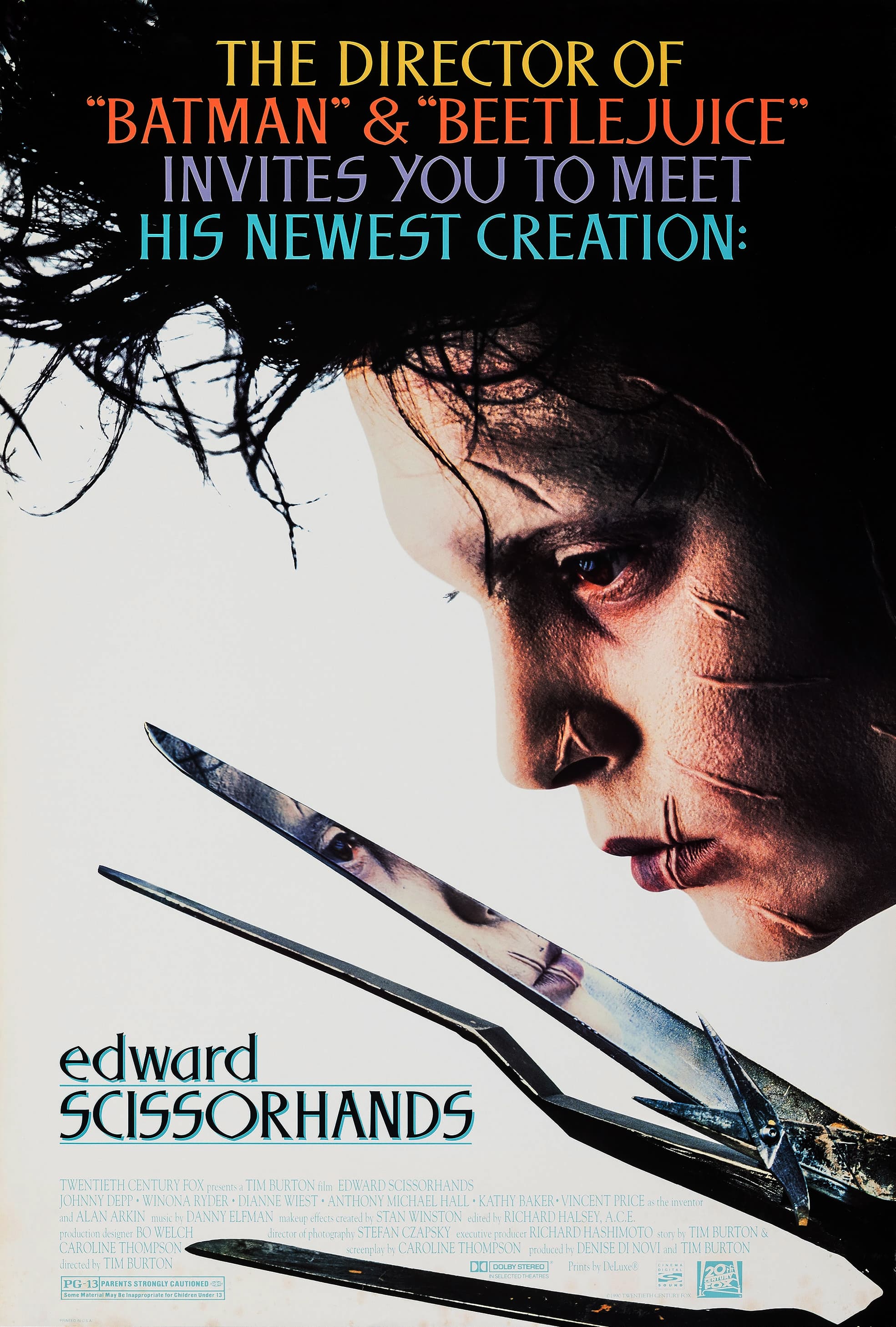
Edward Scissorhands
A fairy tale about a man who can’t quite touch the world — and the neighbourhood that can’t quite handle him.
1990 // VHS
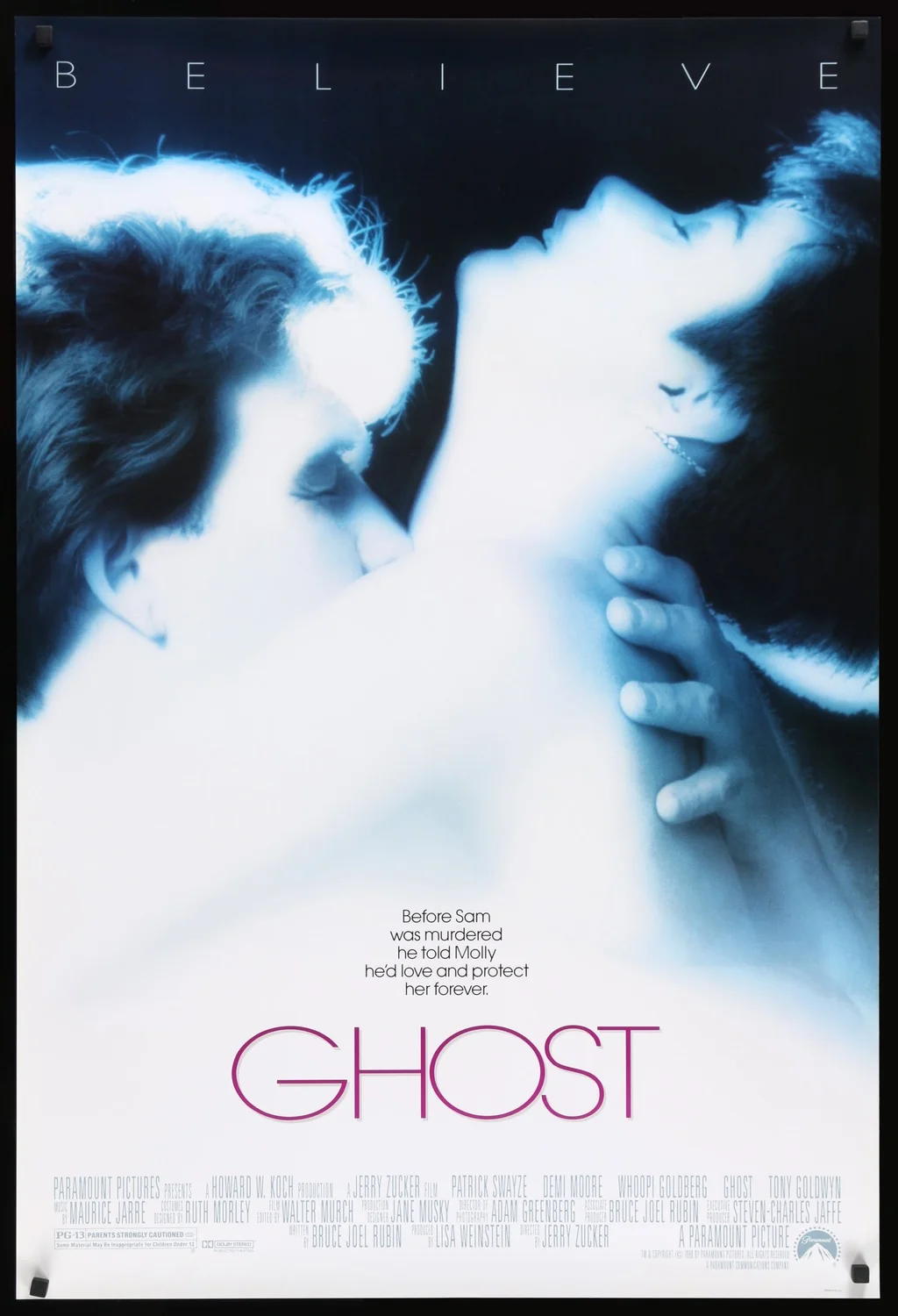
Ghost
A murder mystery disguised as a love story — with a man who won’t stop watching over the person he loves.

1990 // VHS
Total Recall
Memory, muscle and a very faulty holiday package — with Mars on the itinerary.