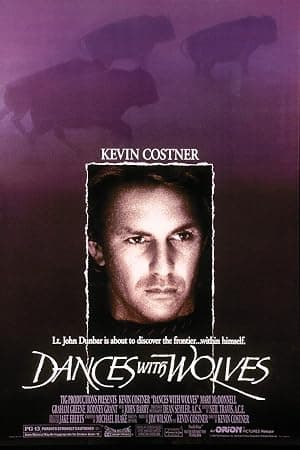
Dances with Wolves
A very long, very earnest frontier love letter — and a movie that still makes you care who Lieutenant Dunbar is.
// The setup
PLAYBACK STARTED
If Dances with Wolves works for you, it’s because Kevin Costner found a hero who is quietly irresistible: a Civil War lieutenant who goes off the map and, in doing so, becomes the machine that makes the film click. It’s a big, slow epic about learning to listen — to a wolf, to a people, to another language — and it still asks the kinds of questions about contact and belonging we like to argue about. Ready for a proper revisit?
THE MOVIE
Lieutenant John J. Dunbar (Dances With Wolves) is still the reason this movie works
There’s a neat, stubborn thing at the heart of Dances with Wolves: a lieutenant who wanders out to a deserted frontier fort and, instead of waiting around for orders, sets about making a life. That Lieutenant John J. Dunbar — played and directed by Kevin Costner on his feature debut — is the practical and emotional engine of the whole picture.
Dunbar’s choices drive the movie in ways that are simple and persuasive: he befriends a wild wolf he names Two Socks, he spends time with a nearby Lakota band, and, crucially, he becomes the outsider who learns the language and customs of another people. Those moves set up a film that is as much about listening and translation as it is about horses and plains.
It’s a long film — 181 minutes — and it wears its genres proudly: war, Western, drama, adventure. But whatever label you pick, you keep coming back to Dunbar. He’s the reason the film can be both an expansive frontier epic and, at times, a small, stubborn human story about someone trying to belong.
THE SETUP
The idea that sets Dances with Wolves in motion
The premise is economical. A Union officer is posted to a remote outpost; the fort has been abandoned, so he makes the place his own and starts living alone at the site. That solitude is where the film begins to earn its quiet power.
From there the story follows Dunbar’s slow immersion into Lakota life: he learns language and customs, forms friendships — including with characters such as Stands With A Fist and Kicking Bird — and becomes woven into the tribe’s day-to-day world. The point is not instant conversion; it’s a gradual exchange of trust and habits.
The film uses that process to dramatise cross-cultural communication. Lakota (and some Pawnee) appears frequently, with English subtitles, so you watch relationships form across a real language boundary rather than simply through plot conveniences.
And because this is also a story about the historical frontier, the integration arc carries tension: as Dunbar grows closer to the tribe, outside pressures from U.S. Army expansion begin to threaten both the people he’s befriended and the life he’s chosen.
THE CHARACTER
Why Lieutenant John J. Dunbar (Dances With Wolves) matters
Dunbar matters because he’s not a walking idea — he’s someone with a private reason for being out on the plains. He’s a Civil War veteran who has stepped away from the army to look for meaning and solitude, and the film spends considerable time on how that search changes him.
That personal search makes him an outsider who becomes a bridge. The story lets him discover another world rather than forcing that discovery on it; his role is to learn and to translate, not to be an instant saviour. That positioning is what keeps the film from being only a spectacle: most of the drama comes from his effort to belong.
He also gives the audience a practical entry point into the Lakota world. Through his conversations and mistakes we watch customs and relationships revealed in real time — the storytelling advantage of an outsider protagonist who is genuinely curious rather than merely heroic.
And, behind the scenes, Dunbar is unusually central: Costner not only played him but directed and co-produced the film, making Dunbar both the narrative and the creative fulcrum of the whole project.
UNDER THE SURFACE
Dances with Wolves has more on its mind than the plot suggests
On the surface it’s an epic about one man’s life on the frontier. Underneath, it’s wrestling with how people meet each other: the slow work of cross-cultural contact, the small acts of translation and misunderstanding that make or break relationships.
There’s also a serious conversation about colonial expansion and displacement. The film places interpersonal warmth and curiosity next to the hard fact that the frontier was a site of expansion that dislocated peoples. That tension — friendship within the context of an expanding state — gives the story a steady ache.
Language itself is part of the theme. The movie makes a visible choice to use Lakota and some Pawnee dialogue, which forces viewers to reckon with what translation can do and what it cannot. It’s a reminder that crossing cultures is not only political but profoundly linguistic.
Finally, the film invites debate about representation and the white-savior framing. It presents a sympathetic window into Native life while using a white protagonist as the primary lens, and that combination is one of the reasons the movie provokes discussion as much as admiration.
THE FILMMAKING
How Dances with Wolves was put together
A large part of the film’s identity is visual. Dean Semler handled principal cinematography, and the production leaned into wide-screen compositions that made the plains feel expansive and immediate — an important choice for a story that spends so much time outside four walls.
That big-frame approach isn’t just decoration; it gives the film its breathing room. The images let the audience watch ritual and routine without being rushed, which suits a movie that frequently trades action for slow, lived-in observation.
The craft around those images was recognised at the time: the film’s technical work earned multiple Academy Award nominations and wins, including honours for cinematography and film editing — markers that contemporary coverage repeatedly highlighted.
All of this came together under Costner’s direction — a commercial star taking on the role of filmmaker — which helped make a long, wide Western into something the mainstream would actually sit through.
PRACTICAL EFFECTS
The effects work that gives Dances with Wolves its physical personality
When the film needs scale it generally builds that scale on location. The buffalo-hunt sequences relied on large herds kept on-site at the Triple U Ranch in South Dakota rather than on optical miniatures.
That meant the production combined trained animals with staged, large-scale movement across the prairie — a physical, hands-on way of creating spectacle instead of compositing it in a lab.
Those choices shape the movie’s texture: the movement of animals and peoples is real and coordinated, which makes the hunts and rides feel like communal events rather than effects-driven set pieces.
In short, whenever the film goes big it tends to do so by organising people and animals on location rather than by faking the crowd in a special-effects suite.
PURE 80S
Dances with Wolves could not belong to any other decade
Released in 1990, Dances with Wolves arrived at a moment when Hollywood was open to a long, revisionist Western that took Native subjects seriously — or at least more sympathetically than had been common. Contemporary coverage linked it to a short cycle of early-1990s films that attempted similar approaches.
Its commercial performance — a major worldwide gross on a modest production budget — made that reception commercially meaningful. A long-form Western pulling decent box-office returns made studios take notice in ways a well-reviewed but quiet film might not have.
As a result, period coverage often places the film at the front of a wave that included titles like The Last of the Mohicans (1992) and Geronimo: An American Legend (1993). That doesn’t mean other filmmakers copied it beat for beat, but the movie’s success did make sympathetic Native portrayals part of early-1990s conversations in Hollywood.
THE LEGACY
Why Dances with Wolves still matters
The film’s immediate reception was unmistakable: twelve Academy Award nominations and seven wins, including Best Picture and Best Director. That level of institutional recognition cemented the movie’s presence in that year’s cultural conversation.
Commercially it was also notable: a substantial worldwide gross on a comparatively small production budget made it a rare big win for a long, self-contained Western at the start of the 1990s.
Beyond trophies and ticket sales, the film’s success helped steer attention toward stories that attempted sympathetic portrayals of Native Americans — and that shift opened space for a short-run cycle of similar mainstream projects. At the same time, the picture generated sustained debate about authorship and representation, which has become part of its afterlife as much as any award or headline.
THE VERDICT
Does Dances with Wolves still hold up?
Yes — but with a careful asterisk. If you come to Dances with Wolves for the sweep and the slow work of a culture-learning story, it still delivers. The premise is straightforward: a Union lieutenant posted to an isolated outpost befriends a wolf, learns Lakota customs and language, and becomes embroiled in the push-and-pull between a tribe and expanding federal forces.
That central relationship — Dunbar’s immersion and the trust he builds with people such as Kicking Bird and Stands With A Fist — is the film’s strongest card. The use of Lakota and some Pawnee dialogue, with subtitles and coaching for cast members, gives the movie a rawness you don’t often get in mainstream historical dramas.
Technically, the film’s long running time and wide-screen photography (Dean Semler’s principal cinematography was repeatedly noted at the time) let it breathe in a way modern, shorter dramas often do not; John Barry’s score and an editing rig recognised by awards further anchor the film’s big-figure ambition.
All that said, the film’s perspective matters to how you watch it now. It openly uses a white protagonist as the primary lens for telling a story about Native life, and that framing — alongside documented mixed responses from Native commentators and preservation histories — means the movie remains as much a conversation starter as a comfortable piece of nostalgia. Go watch it for the plains, the patient listening, and the argument it still insists on having with you.
Share this movie
// Keep watching
More movies from the 90s
If Dances with Wolves is your kind of movie, there's plenty more on the shelves worth rewinding.
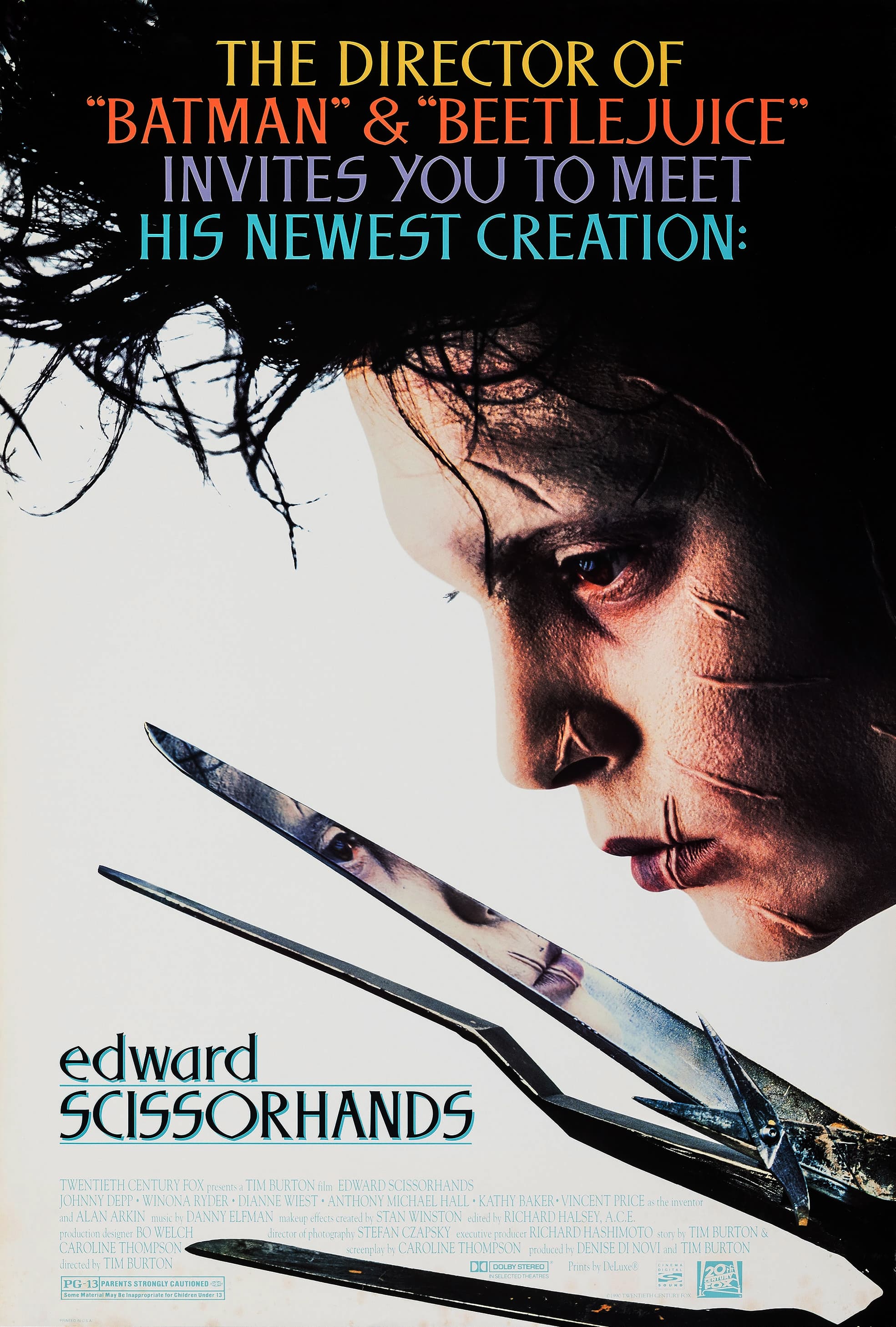
1990 // VHS
Edward Scissorhands
A fairy tale about a man who can’t quite touch the world — and the neighbourhood that can’t quite handle him.
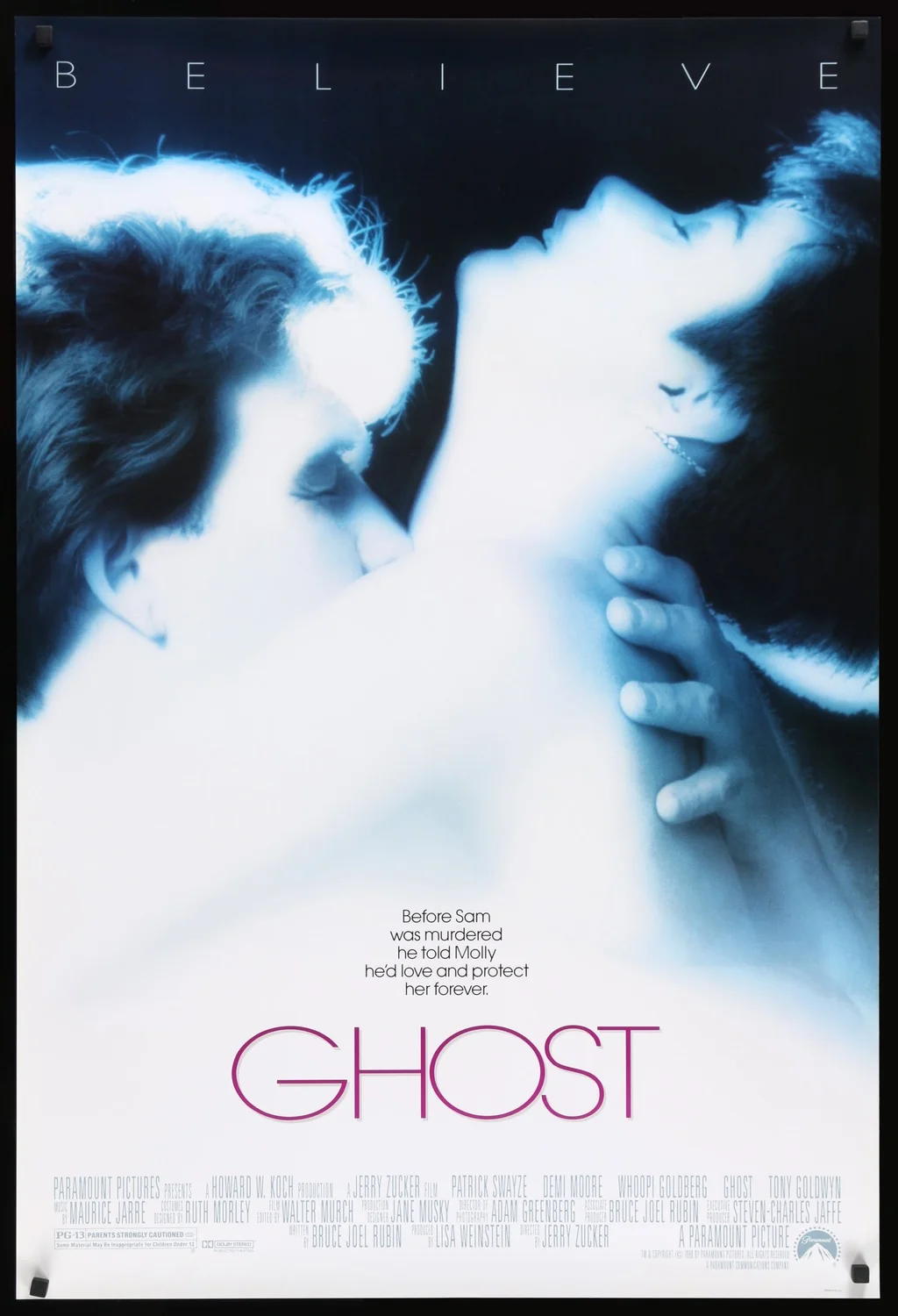
1990 // VHS
Ghost
A murder mystery disguised as a love story — with a man who won’t stop watching over the person he loves.

1990 // VHS
Total Recall
Memory, muscle and a very faulty holiday package — with Mars on the itinerary.