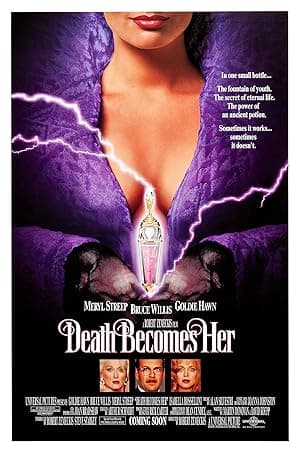
Death Becomes Her
Vanity, vengeance and a potion that refuses to behave.
// The setup
PLAYBACK STARTED
There are films you remember for a single image; Death Becomes Her lodges itself somewhere louder — a pleasure-raid on celebrity, ageing and spite. Robert Zemeckis’s 1992 black comedy pairs two women who refuse to disappear gracefully and then hands them a terrible gift: the chance to keep going, forever.
THE MOVIE
Madeline Ashton is still the reason this movie works
Talk about Death Becomes Her and people quickly land on the potion, the gruesome set-pieces or the visual effects — all fair. But what keeps the film humming is Madeline Ashton: an actress whose fear of getting invisible drives everything that follows.
Her rivalry with Helen — and the man caught between them, Dr Ernest Menville — gives Zemeckis’s film its engine. It’s a satire about women punished by the industry for getting older and about the lengths some will go to avoid that fate.
All of this is wrapped in a 1992 package from Robert Zemeckis: a 104-minute, darkly funny genre mash-up that leaves its central question simmering rather than neatly answered.
THE SETUP
The idea that sets Death Becomes Her in motion
At its heart the picture is simple: two former friends turn into rival obsessives over youth, beauty and the same man. That bitter triangle is the film’s constant return point.
The spark comes in 1978, when Ernest — Helen’s fiancé — leaves her for Madeline. It’s a small, human cruelty that seeds decades of resentment and poor choices.
Years later both women stumble across a mysterious serum that promises permanent youth. The story then becomes less about the miracle itself and more about what people do to keep it, and to use it against each other.
Crucially, the potion isn’t a tidy fix. It brings escalating physical problems — fractures, dislocations and literal holes — and the characters repeatedly try to control, weaponise or escape the consequences.
THE CHARACTER
Why Madeline Ashton matters
Madeline Ashton is not merely a plot device; she’s the motor. As an actress terrified of becoming irrelevant, every decision she makes is threaded through professional anxiety and vanity.
That fear gives her a clarity of purpose you don’t always see in comedies: she’s protecting a career and an image, and the movie uses that obsession to push scenes into nastier, funnier places.
Because the story roots itself in this particular form of insecurity, Madeline’s choices feel logically cruel rather than cartoonish — which keeps the satire biting.
And because the rivalry is personal rather than abstract, her desperation keeps the film honest about how ugly the pursuit of youth can look up close.
THE PERFORMANCE
Why Meryl Streep's performance matters
Contemporary reviewers singled out the leads, and that’s useful shorthand: the film’s energy depends on its principals selling both the satire and the nastiness beneath it.
Noting the praise is not the same as declaring anointing; it simply recognises that critics at the time felt the cast carried the tonal tightrope between comedy and grotesque fantasy.
Put another way: the screenplay gives Madeline sharp edges and the production asks the performer to live there for long stretches — and reviewers flagged that commitment.
That contemporary response helps explain why the movie’s wildest ideas land as often as they do: the leads were the engine critics noticed from day one.
UNDER THE SURFACE
Death Becomes Her has more on its mind than the plot suggests
Beneath the absurdity and the blood, the film is a satire aimed squarely at Hollywood’s obsession with surface. Image-making, celebrity maintenance and the cost of staying young are constant targets.
It’s also a film about ageing and ageism: women who find their job and social worth ebbing are shown chasing a remedy that buys time but not peace.
Vanity and beauty culture are not neutral here; they’re forces that distort choices and relationships, turning private insecurity into public theatre.
And finally, the female rivalry at the film’s core is less about two women being wicked and more about how an industry and a culture set the terms that make them enemies.
PRACTICAL EFFECTS
The effects work that gives Death Becomes Her its physical personality
The movie’s grotesque moments owe as much to hands-on work as to the early CGI that sits alongside them. Animatronics and prosthetic appliances were used to create the physical distortions and body damage.
On set practical methods also fed into the compositing: for instance, some transformation shots required performers to wear masks and move in ways later matched to digital passes.
Those mechanical and makeup techniques were deliberately combined with ILM’s digital compositing to produce the film’s most alarming images — twisted necks and visible holes among them.
The result is a hybrid approach where the tangible awkwardness of puppetry amplifies the digital oddities, giving the comedy a physical bite.
PURE 80S
Death Becomes Her could not belong to any other decade
Landing in 1992, the film sits at a technical inflection point: mainstream features were beginning to pair traditional creature work with ambitious digital compositing.
Industrial Light & Magic’s early experiments with digitally generated skin textures and match-move work gave the movie a particular visual personality that was new for the time.
Tonally, its black-comedy skew on celebrity and cosmetic culture fits the early ’90s, a moment when media commentary on appearance and surgery was becoming more visible.
That blend of technical curiosity and topical satire is what roots the film in its moment rather than leaving it floating as a period pastiche.
THE LEGACY
Why Death Becomes Her still matters
Part of the film’s afterlife is technical: it won the 1993 Academy Award for Best Visual Effects and ILM’s skin-texture and compositing work is regularly discussed as an early example of digitally augmenting human flesh.
That technical achievement fed into a broader industry conversation about what digital effects could do for character work and grotesque comedy alike.
Beyond effects, the film developed a curious cultural life: it has a devoted cult following, found special resonance in LGBTQ+ and drag communities, and even made the leap to a stage musical.
Taken together, those threads explain why Death Becomes Her keeps turning up in conversations — not merely as a novelty, but as a film that combined craft, satire and a memorable central rivalry.
THE VERDICT
Does Death Becomes Her still hold up?
Yes — but with a clear rider. If you’re watching for a tidy moral about immortality, the film won’t hand one to you. It’s happy to show the endless compromises and physical consequences that come with trying to stop time.
What still works is the core triangle: Madeline and Helen’s decades-long feud over Ernest, and how a ‘permanent’ youth serum only magnifies their worst instincts. The film keeps returning to those bodily costs — fractures, dislocations and worse — as a running joke and a running horror.
Contemporary reviewers noted the cast’s efforts, and later coverage highlights the comic chemistry between Streep and Hawn as a reason audiences stayed with the film. That combination of sharp material and committed leads keeps the satire effective.
So watch it for the bitter laughs, the grotesque set-pieces and the way it refuses to offer cosmetic consolation. It’s a darkly funny reminder that when vanity becomes a contest, somebody ends up paying — sometimes literally.
Share this movie
// Keep watching
More movies from the 90s
If Death Becomes Her is your kind of movie, there's plenty more on the shelves worth rewinding.
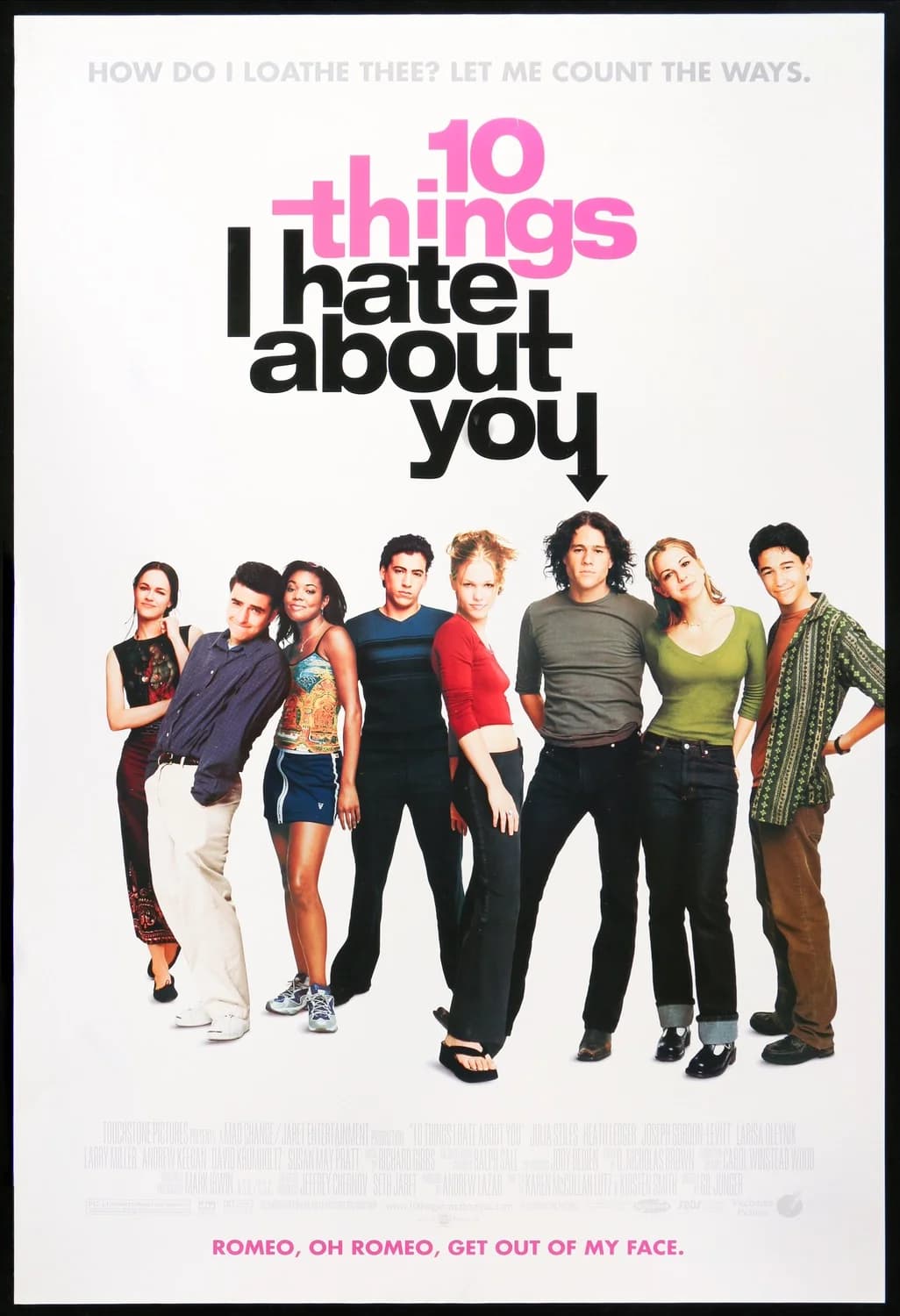
1999 // VHS
10 Things I Hate About You
Sibling rules, a rooftop serenade and one very stubborn Kat — Shakespeare in a school corridor.
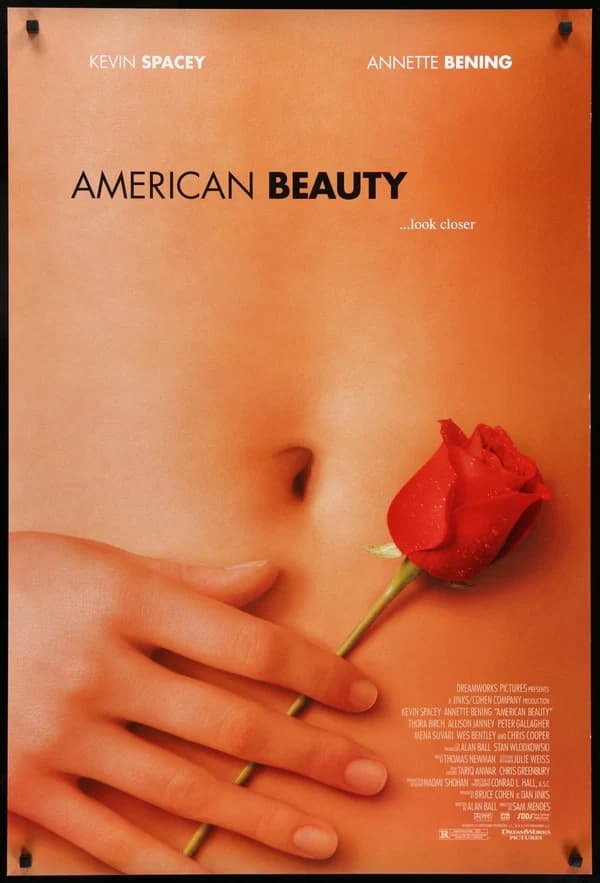
1999 // VHS
American Beauty
Lester Burnham, suburban rot and a midlife argument that still stings.
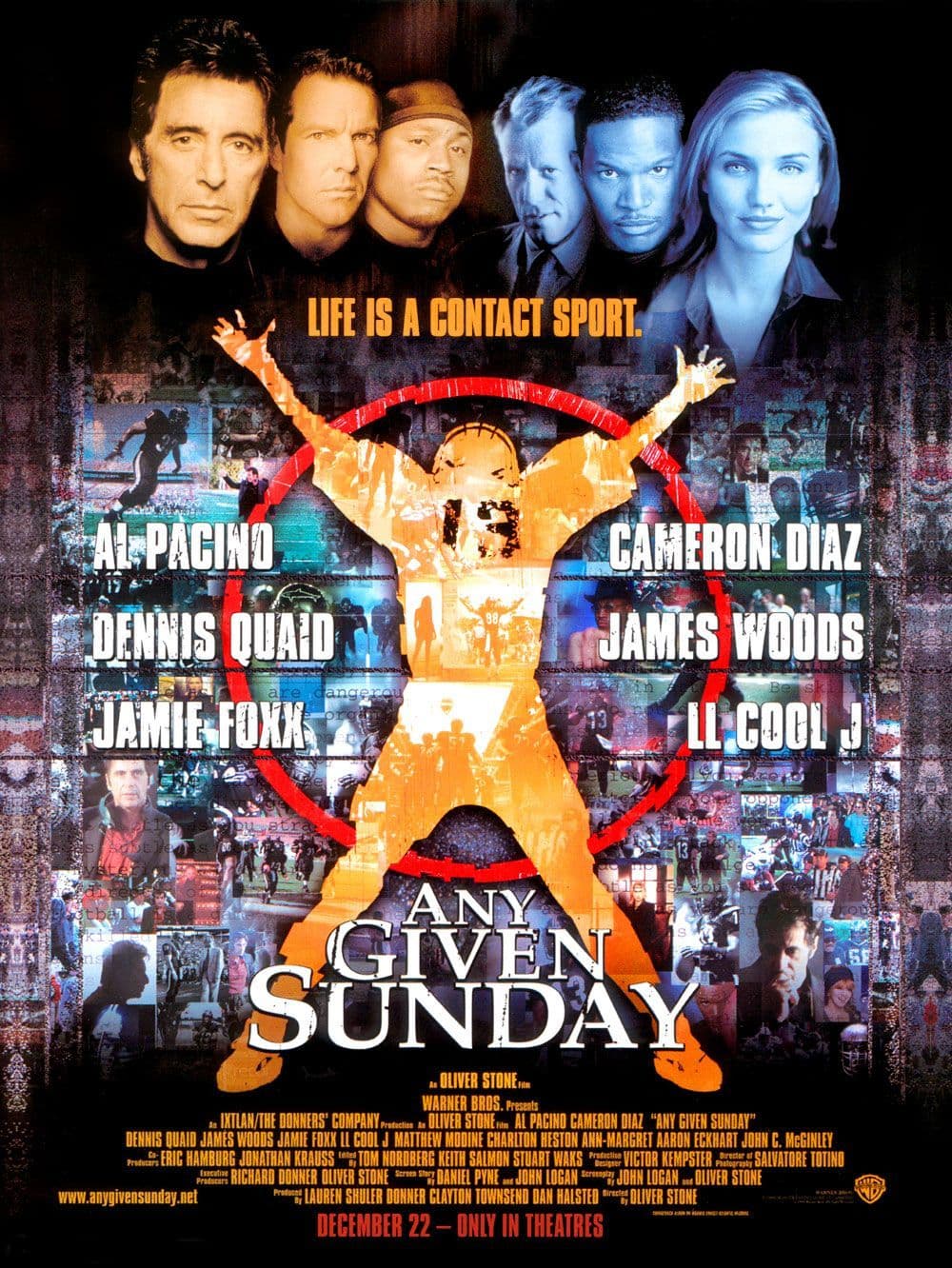
1999 // VHS
Any Given Sunday
Al Pacino's coach anchors the chaos of a film about football turned into product — loud, messy and oddly persuasive.