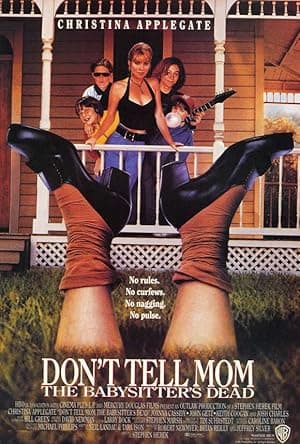
Don't Tell Mom the Babysitter's Dead
A dead babysitter, a sudden promotion and a teenage girl who refuses to panic.
// The setup
PLAYBACK STARTED
Don't Tell Mom the Babysitter's Dead still gets talked about because it attaches a ridiculous premise to a recognisable coming-of-age engine: a 17-year-old who has to grow up overnight. Stephen Herek's 1991 comedy pairs domestic chaos with workplace bluffing, and it’s Sue Ellen 'Swell' Crandell — thrown into responsibility and a Los Angeles fashion house — who keeps the whole thing entertaining.
THE MOVIE
Sue Ellen 'Swell' Crandell is still the reason this movie works
It begins with something blunt and dark: the children’s live-in babysitter suddenly dies just after their mother leaves on a long trip. That grim little engine is the set-up; everything else in the film spins off it.
Instead of ringing home or the police, the siblings conceal the death and only then discover the babysitter had the family’s summer money. That discovery is the practical nudge that forces a teenager to stop resisting adulthood and start improvising a life for six people.
Christina Applegate plays Sue Ellen 'Swell' Crandell, the 17-year-old who wants summer freedom but is shoved into provider mode. It’s this rush-to-maturity — equal parts comic and functional — that keeps people returning to Stephen Herek’s 1991 oddball coming-of-age comedy.
THE SETUP
The idea that sets Don't Tell Mom the Babysitter's Dead in motion
The film’s premise is simple and deliberately odd: the household’s adult supervision disappears and the kids choose secrecy over disclosure. That choice creates an immediate, slightly uncomfortable comic tension — they’re children pretending the grown-up problems don’t exist while those problems loudly exist.
Seventeen-year-old Sue Ellen becomes the de facto head of the household, responsible for feeding and keeping together a messy pack of siblings while she keeps the babysitter’s death under wraps. Practical needs — food, bills, time — turn into story obstacles rather than abstract drama.
A large chunk of the movie is given over to Swell finding paid work in Los Angeles. She ends up at a fashion house and advances by bluffing adult competence; it’s a workplace-ambition thread grafted onto a kids-left-on-their-own set-up.
Structurally the film marries two familiar templates: the children-on-the-loose cycle that supplies the opening’s mischief, and a workplace-fantasy arc that drives the middle of the picture. The mash-up explains both the jokes and the emotional pressure.
THE CHARACTER
Why Sue Ellen 'Swell' Crandell matters
Swell is written as the kind of teenager who wants to coast through summer and is then given no option but to stand up. The plot’s cruelty — losing the family’s money and the adult who looked after them — forces a practical, often unglamorous kind of growth.
She matters because the story measures itself against her improvisation. When the family needs cash and stability, Swell becomes the person who seeks both, and that shift from slack-to-responsible provides the film’s emotional drive.
The adults around her — the absent mother, workplace figures such as the fashion house’s buyer — act as benchmarks and obstacles. They’re less the focus than a measuring stick: how does a teenager perform grown-up choices when the rules are unclear?
Because the picture has been referenced as an early starring vehicle for Christina Applegate, the character reads now as a neat example of an early-90s teen comedy lead: flawed, resourceful and very much at the centre of the film’s tonal experiments.
THE PERFORMANCE
Why Christina Applegate's performance matters
Contemporary critics singled out Applegate’s screen presence. Where the screenplay lets the character slow down, reviewers noticed she could be charming rather than just frantic.
That observation matters because the film depends on the audience believing Swell’s sudden competence — or at least buying her bluff long enough for the plot to move. Moments of stillness or small reaction give the character credibility amid the bigger set pieces.
Seen now, that early role is often noted in retrospective pieces as one of the parts that put Applegate on the map, and the performance is the clearest reason the movie’s strangeness tends to land.
UNDER THE SURFACE
Don't Tell Mom the Babysitter's Dead has more on its mind than the plot suggests
On the face of it the film is a gag-heavy teen comedy. Underneath, it’s chiefly about forced maturation: a teenager given adult tasks and judged on how well she improvises her way through them.
The workplace thread — Swell’s quick climb at a fashion house — taps into the fantasy of instant social mobility. The story treats employment as a gateway to independence and status, a promise that hard luck can be outwitted by cleverness and nerve.
Consumerism sits in the background too. The stolen summer money and the fashion-industry setting frame desire and practicality side by side: material wants are a motive and the fashion world provides a visible goal.
So the film mixes coming-of-age with ambition and the occasional wink at material aspiration: it’s not pretending to be deep, but it does use its jokes to say something about growing up in a world where work and image matter.
THE FILMMAKING
How Don't Tell Mom the Babysitter's Dead was put together
On the production side the movie is straightforwardly commercial. It was photographed using Panavision cameras and played in selected theatres with Dolby Stereo — the sort of technical setup that aimed for clear, bright mainstream presentation rather than stylistic risk.
Cinematography is credited to Tim Suhrstedt and the editing to Larry Bock. Those credits point to a crew built to keep a brisk pace and to service comedy beats rather than call attention to themselves.
The movie’s producers and production companies positioned it as a middlebrow summer comedy: designed to be watchable, unobtrusive and efficient in storytelling, which is exactly what the filmmaking credits imply.
PURE 80S
Don't Tell Mom the Babysitter's Dead could not belong to any other decade
Released in the summer of 1991, the film landed in a particular moment when studios were still leaning on the children-on-their-own premise and the workplace-fantasy plotline that followed many late-80s teen comedies.
Contemporary reviewers tended to place it in that early-1990s commercial cycle, noting how its opening riff on kids left to their own devices echoed familiar templates.
Critics at the time also flagged the movie’s uneven tone — it strives to be both blackly comic and broadly crowd-pleasing — a tension that feels very of its moment, when studios were experimenting with sharper-satire ideas inside mainstream packaging.
Because it follows those conventions closely, the picture reads now as a product of its era rather than an attempt to redefine it.
WATCHING IT NOW
What has aged — and what hasn't
If you watch the film today it mostly reads as a period piece: people now reference it less as a classic and more as an early starring vehicle for Christina Applegate and a tidy example of early-90s teen-comedy formulas.
Modern write-ups tend to see the premise and the fashion-house resolution as era-specific choices — the sort of narrative neatness studios favoured back then. It’s pleasant in a nostalgic way, but rarely surprising.
A practical detail of production — principal photography began in May 1990 in Los Angeles, with an extended location shoot at a private residence in Santa Clarita that served as the Crandell home — helps explain why the film feels domestically focused even when its story reaches for glamour.
Narratively, the central business — Swell finding work after discovering the babysitter had the family's summer money — still makes for a compact, watchable engine: the stakes are plain, and the motion from problem to improvised solution is clear.
THE LEGACY
Why Don't Tell Mom the Babysitter's Dead still matters
The title and the basic premise have stuck in the culture as a recognisable 1991 teen-comedy concept; the film often turns up in pieces recounting Christina Applegate’s early career because it put her front and centre in a leading role.
That ongoing recognition isn’t the same as being a revered classic, but it does mean the movie remains a reference point when people talk about early-90s teen templates.
The story’s afterlife also includes a 2024 theatrical remake/reimagining that explicitly referenced the original premise and gave story credit back to the writers of the 1991 picture, an acknowledgement that the concept still has commercial currency.
THE VERDICT
Does Don't Tell Mom the Babysitter's Dead still hold up?
Yes — but with a very particular rider. If you want a thoughtful reinvention of the teen movie, look elsewhere. If you want a breezy, slightly strange 1991 comedy centred on a teenager suddenly doing the sensible thing badly, this delivers.
Swell’s sudden role as de facto head of the household and her subsequent employment at a Los Angeles fashion house provide a compact, visible through-line: household crisis forces work, and work becomes the testing ground for grown-up behaviour.
Rose Lindsey and other adults act as gatekeepers and obstacles, which gives Swell clear targets to bluff or beat; that setup keeps the film moving even when its tone wobbles. The mixed critical reception at the time reflected that wobble, but it doesn’t erase the film’s small pleasures.
So: watch it for Christina Applegate’s early leading turn, the oddball premise and a confident little fusion of kids-on-their-own and workplace-ambition comedy. It’s not a masterpiece. It is, at times, surprisingly watchable — like a summer plan that almost works because someone refuses to panic.
Share this movie
// Keep watching
More movies from the 90s
If Don't Tell Mom the Babysitter's Dead is your kind of movie, there's plenty more on the shelves worth rewinding.
1999 // VHS
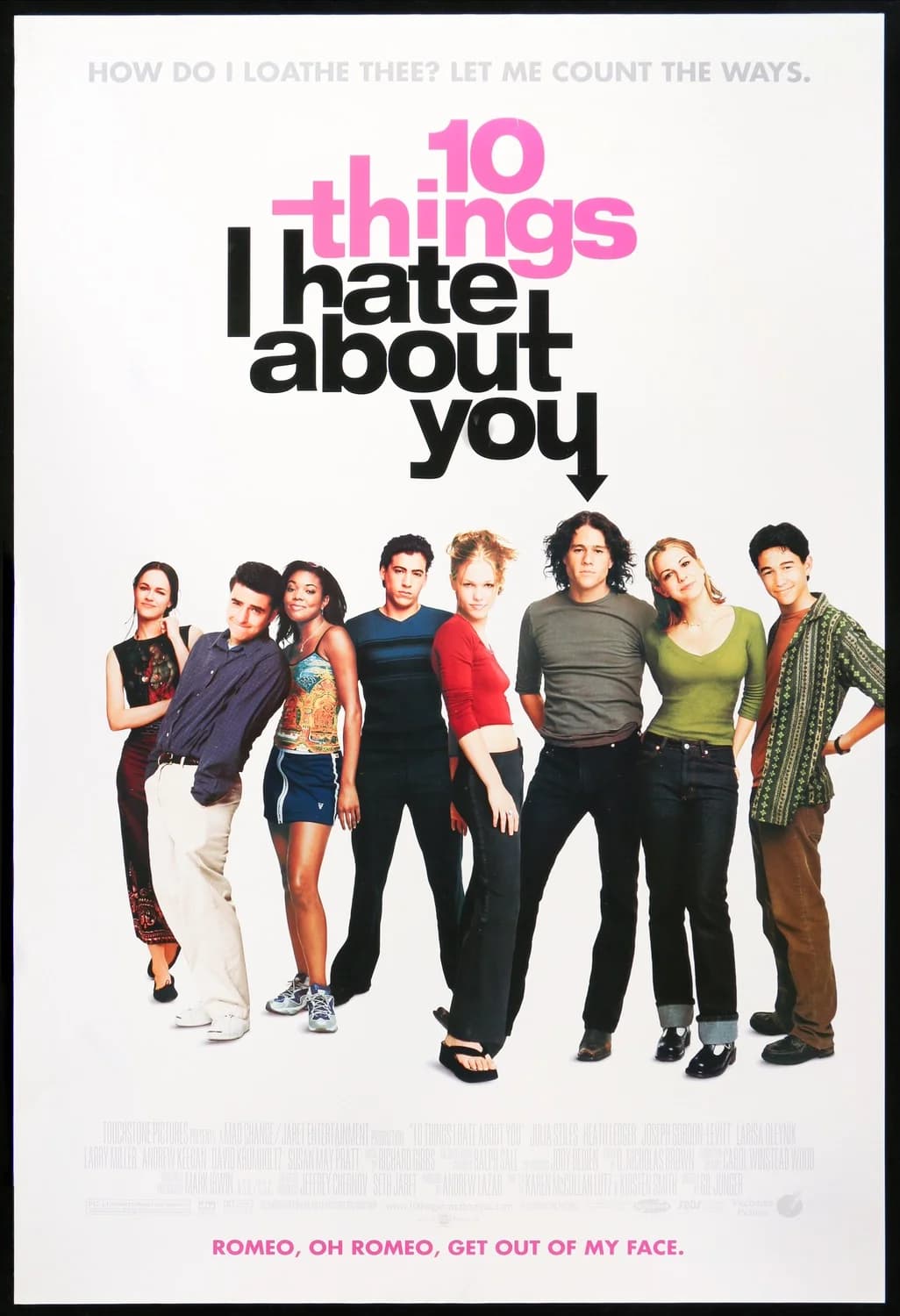
10 Things I Hate About You
Sibling rules, a rooftop serenade and one very stubborn Kat — Shakespeare in a school corridor.
1999 // VHS
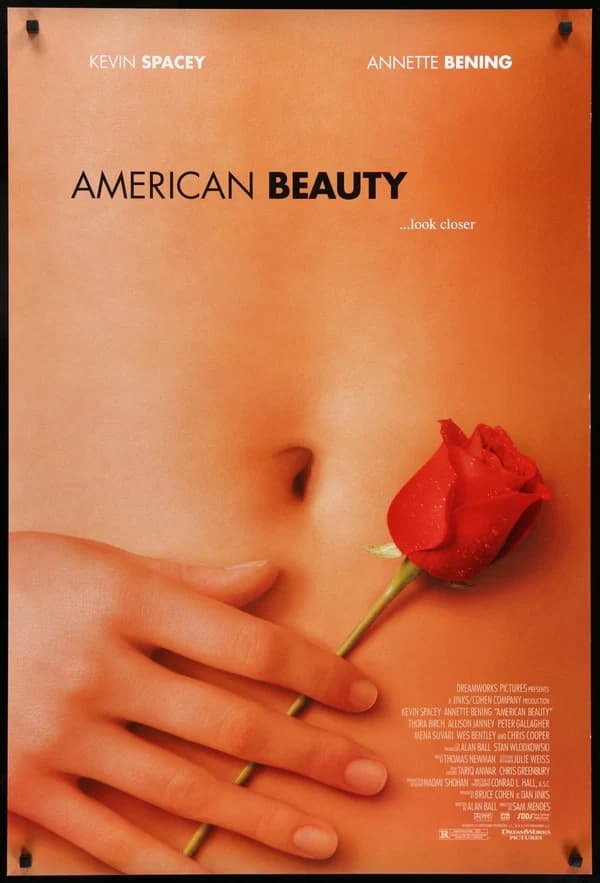
American Beauty
Lester Burnham, suburban rot and a midlife argument that still stings.
1999 // VHS
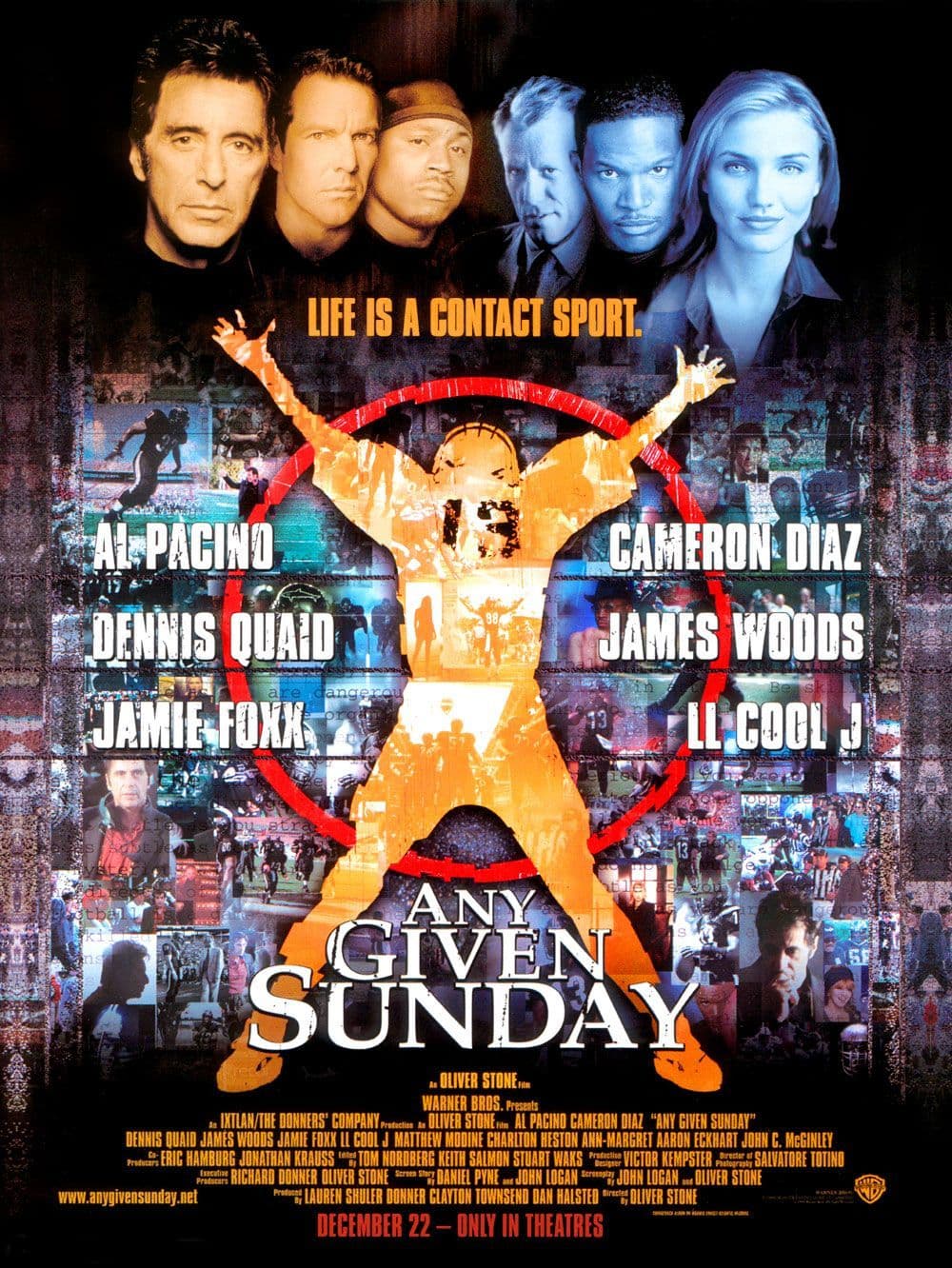
Any Given Sunday
Al Pacino's coach anchors the chaos of a film about football turned into product — loud, messy and oddly persuasive.