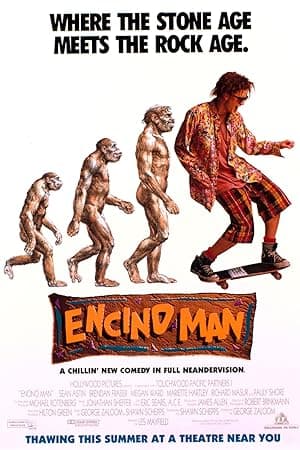
Encino Man
A frozen caveman, a desperate wish to be cool — and one teenager trying not to lose his mates.
// The setup
PLAYBACK STARTED
Encino Man is the sort of daft, aerodynamic comedy that hooks you on a single silly image: two teenagers unearthing a man in a block of ice and deciding to teach him the rules of high school. It's light, loud and unapologetically 1992 — and, crucially, it centres on a kid who isn't ready for the consequences of getting what he wants.
THE MOVIE
Dave Morgan is still the reason this movie works
The first thing to remember about Encino Man is embarrassingly visual: two high-school losers digging a pool and discovering a man frozen in a block of ice. That premise is ridiculous on purpose — and it gives the film permission to be uproarious, stupid and tender in quick succession.
What keeps the whole contraption from collapsing into nonsense is Dave Morgan. He's a painfully awkward teenager whose hunger for popularity and a girlfriend pushes him into decisions that make the story move — thawing a caveman, passing him off as an exchange student, enrolling him at school. The central joke is the prehistoric man learning our suburban rules; the emotional engine is Dave trying to hold on to himself as his world gets upended.
Les Mayfield made his feature debut directing this 88-minute pile-up of comedy set pieces in 1992, and the film wears its genres openly: fantasy, teen, buddy and straight-forward comedy. Brendan Fraser plays the thawed man, Sean Astin is Dave and Pauly Shore is Dave's freewheeling pal — the movie is as much about friendship and social acceptance as it is about time-displacement antics.
THE SETUP
The idea that sets Encino Man in motion
The inciting image is simple and spectacular: find a caveman, thaw him, and try to hide him in suburban California. From there the stakes aren't about survival but about popularity — Link's arrival rearranges the school's social pecking order and that creates the film's central conflict.
A big part of the plot machinery is deception. The boys scheme to present Link as an Estonian exchange student so adults won't ask awkward questions. That cover story allows the film to stage a string of comic set pieces in a recognisably teenage environment while keeping the premise just plausible enough to keep the laughs rolling.
Link's slow cultural acclimation is the other engine. Watching someone who has literally never seen a prom, a biology class or a school cafeteria try to make sense of them supplies both the broad comedy and quieter beats: he doesn't know the rules, and everyone else assumes he does.
The screenplay — credited to George Zaloom and Shawn Schepps, with Schepps also behind the story — opts for clarity. It borrows the time-displacement, culture-clash bone familiar from earlier teen fish-out-of-water comedies, and uses that to examine friendship, loyalty and what being accepted actually costs.
THE CHARACTER
Why Dave Morgan matters
Dave is the emotional fulcrum. Played by Sean Astin, he's not the loud, obnoxious comic lead — he's the kid who wants to be liked and is willing to execute an absurd plan to get there. That hunger for popularity and a girlfriend colours every choice he makes.
Because the central conceit involves hiding Link and enrolling him at school, Dave's wish for normal teenage currency has real consequences. The thawed man changes Dave's social life overnight: suddenly the oddball is followed by crowds and attention that Dave imagined, but didn't necessarily want the way it comes.
Friendship hangs at the heart of Dave's arc. His relationship with Stoney (Pauly Shore's freewheeling best friend) and the way Stoney influences Link creates the tensions the movie needs: loyalty gets tangled with opportunity, and Dave becomes the kid trying to steer events back to something honest.
That tug between keeping a mate and chasing what everyone else has is an old teenage dilemma, but Encino Man stages it in a way that makes Dave feel recognisably human — not just a device for jokes, but the person who has to live with their choices.
THE PERFORMANCE
Why Pauly Shore's performance matters
Contemporary critics weren't shy about disliking Encino Man, and Pauly Shore's turn as Stanley 'Stoney' Brown was singled out. On their May 30, 1992 episode Gene Siskel and Roger Ebert both gave the film a 'thumbs down'; Siskel called out Shore's performance specifically while Ebert labelled the picture dreary and uninteresting.
That blunt critical reaction matters because Stoney is more than background colour: he's the catalyst for Link's outsider energy and the informal cultural guide who nudges events into chaos. If audiences found that approach grating, it helps explain some of the early backlash.
Equally, the criticism helps situate how the film was understood at the time — as a teen movie leaning on a recognisable MTV-friendly comedian to sell its humour — which is important context when assessing its tone and ambitions.
You don't need to decide whether Shore 'works' for the character to see why his presence shapes the movie: he pushes Link in directions Dave wouldn't, and that tension is central to the story.
UNDER THE SURFACE
Encino Man has more on its mind than the plot suggests
On its face Encino Man is a fish-out-of-water comedy: a prehistoric man learning to react to modern suburban life. But beneath the pratfalls is a familiar teenage problem — what you lose when you chase acceptance.
The film pairs that culture-clash premise with friendship and loyalty. Dave's choices are tests, not just for him but for his friendships: do you protect your mate, or do you reach for the social life you've always wanted? Those tensions give otherwise broad set pieces a little emotional pull.
At the same time it's a coming-of-age story dressed in slapstick. Popularity and romantic desire are the pressures that reveal character — the laughs arrive from Link's confusion, but the film's quieter beats come from the way those laughs force the protagonists to make real decisions.
Read that way, Encino Man isn't just about teaching a caveman how to behave at school; it's about how adolescence measures identity against who you choose to stand with.
THE FILMMAKING
How Encino Man was put together
Encino Man keeps the filmmaking straightforward and functional: it wants to move at pace, land a gag, then move on. The credits give a useful map of who handled the technical work — cinematography was by Robert Brinkmann and J. Peter Robinson is credited as the composer.
Those choices underline the movie's intention. A concise running time and a clear visual-and-musical team help the film stay lean; it's built to get audiences laughing and then hand the reins back to the story rather than dwell on style.
Les Mayfield was directing his first feature, and that economy of approach is consistent with a director figuring out how to let big, simple ideas run without overcomplicating them.
In short: the names in the credits reflect a production aimed at efficiency — a teen comedy with the technical crew lined up to support quick pacing and broad appeal.
PURE 80S
Encino Man could not belong to any other decade
Released in May 1992 by Hollywood Pictures with Buena Vista distribution, Encino Man sits squarely in the early-1990s wave of youth-focused comedies. It was positioned — and marketed — toward teenagers who were already comfortable with MTV-style celebrities and fast, joke-driven pictures.
That placement explains a lot about the film's energy and casting: it trades heavily on the kind of broad, personality-led humour that resonated with young audiences of the moment, and it was aiming to be a summer crowd-pleaser rather than a slow-burn indie.
Comparisons at the time (and since) to earlier fish-out-of-water comedies like Bill & Ted come from that shared premise of time-displacement and culture clash, not from a wish to imitate tone verbatim.
Put simply: Encino Man belongs to an era when teen comedies were expected to be loud, obvious and instantly digestible — and its packaging makes sense once you remember that context.
WATCHING IT NOW
What has aged — and what hasn't
Today the film mostly survives as a 1990s nostalgia piece and a cult curiosity. Contemporary retrospectives increasingly treat it as part of that era's teen-comedy programming, noting how it fits the period's appetite for personality-led laughs and broad premises.
One of the reasons it still gets attention is Brendan Fraser's Link: later coverage often points to his physical presence and the way the role made him a recognisable, exuberant screen figure — material that translators into repeat viewings for many fans.
The movie's core elements — a teen-centred story about friendship and acceptance, plus the simple fantasy hook of a caveman in suburbia — still read clearly. If you watch it now you can see exactly what it set out to do and why some audiences responded warmly.
That doesn't mean every beat lands for modern tastes. But as a time capsule of early-'90s teen comedy and as a showcase for certain cast members who later became discussion points, Encino Man remains an oddly watchable artefact.
THE LEGACY
Why Encino Man still matters
Encino Man did what it needed to do at the box office: on a modest budget it became a commercial success, grossing roughly $40.7 million domestically. That financial footprint helped secure a place for the film in early-'90s teen-comedy conversation.
The looseness of the world it builds — a caveman who can be passed off as a student and then referenced in other comedian-led films — is reflected in Brendan Fraser briefly reprising Link in two Pauly Shore vehicles, which suggests a playful, shared continuity rather than a big franchise plan.
There was even further continuation: a made-for-television sequel, Encino Woman, aired in 1996, proving the basic premise had legs beyond the original film.
Finally, the movie crops up regularly in retrospectives and cast-focused pieces — particularly when people trace Brendan Fraser's early roles or when discussions turn to cult favourites from that period. It's not high art, but it endures in a specific, affectionately remembered corner of '90s cinema.
THE VERDICT
Does Encino Man still hold up?
Yes — with a significant asterisk. If you sit down expecting subtlety, you will be disappointed. Encino Man is built around one high-concept gag (two outcasts thaw a caveman, teach him to be an exchange student and enroll him at school) and it runs that gag through a string of set pieces and adolescent dilemmas.
What works is the emotional simplicity: Dave Morgan, a socially awkward teen played by Sean Astin, is a recognisable centre because his choices feel true to that particular kind of teenage insecurity. Link's physicality and unfamiliar behaviour make Dave suddenly popular — and that popularity forces him to choose between friendship and aspiration.
The film also wears its flaws plainly. Critics at the time were blunt — Siskel and Ebert both gave it a thumbs down, with Siskel singling out Pauly Shore — and some of the broad comedy and clichés still jar for modern viewers.
But there's a reason it keeps being watched: it's short, it makes the premise visible fast, and it puts the friendship question at its heart. If you enjoy early-'90s teen comedies and can tolerate an obvious, personality-driven comic engine, Encino Man is worth a watch as a light, nostalgic diversion.
Share this movie
// Keep watching
More movies from the 90s
If Encino Man is your kind of movie, there's plenty more on the shelves worth rewinding.
1999 // VHS
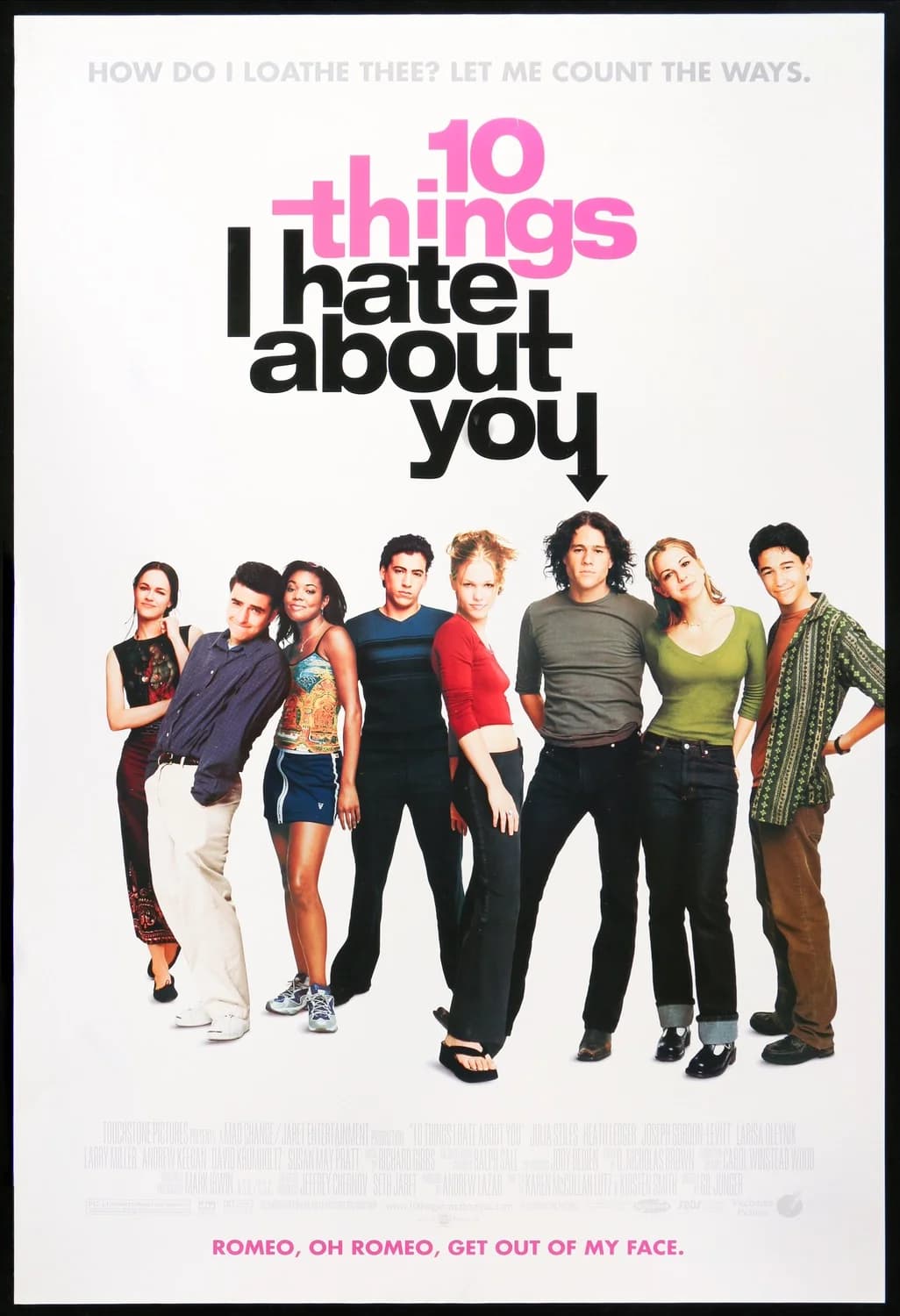
10 Things I Hate About You
Sibling rules, a rooftop serenade and one very stubborn Kat — Shakespeare in a school corridor.
1999 // VHS
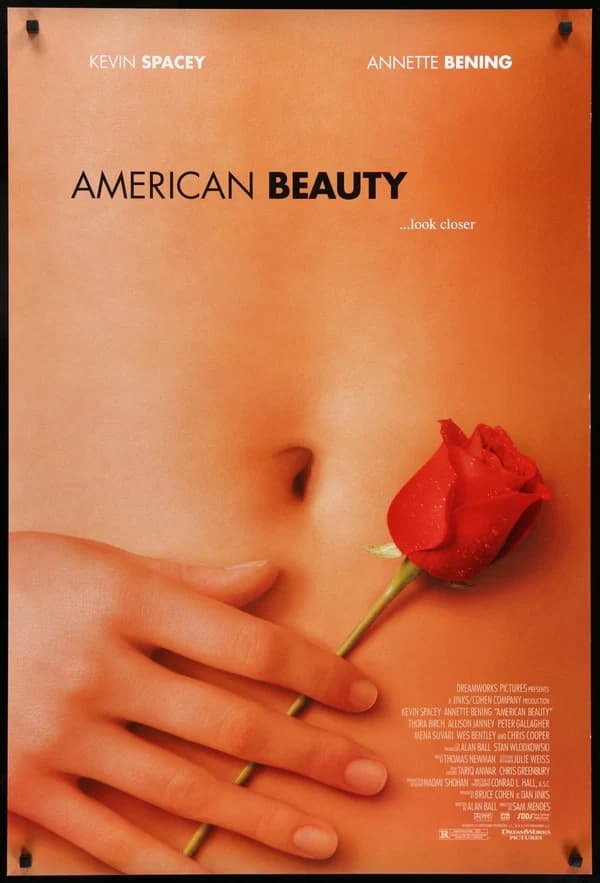
American Beauty
Lester Burnham, suburban rot and a midlife argument that still stings.
1999 // VHS
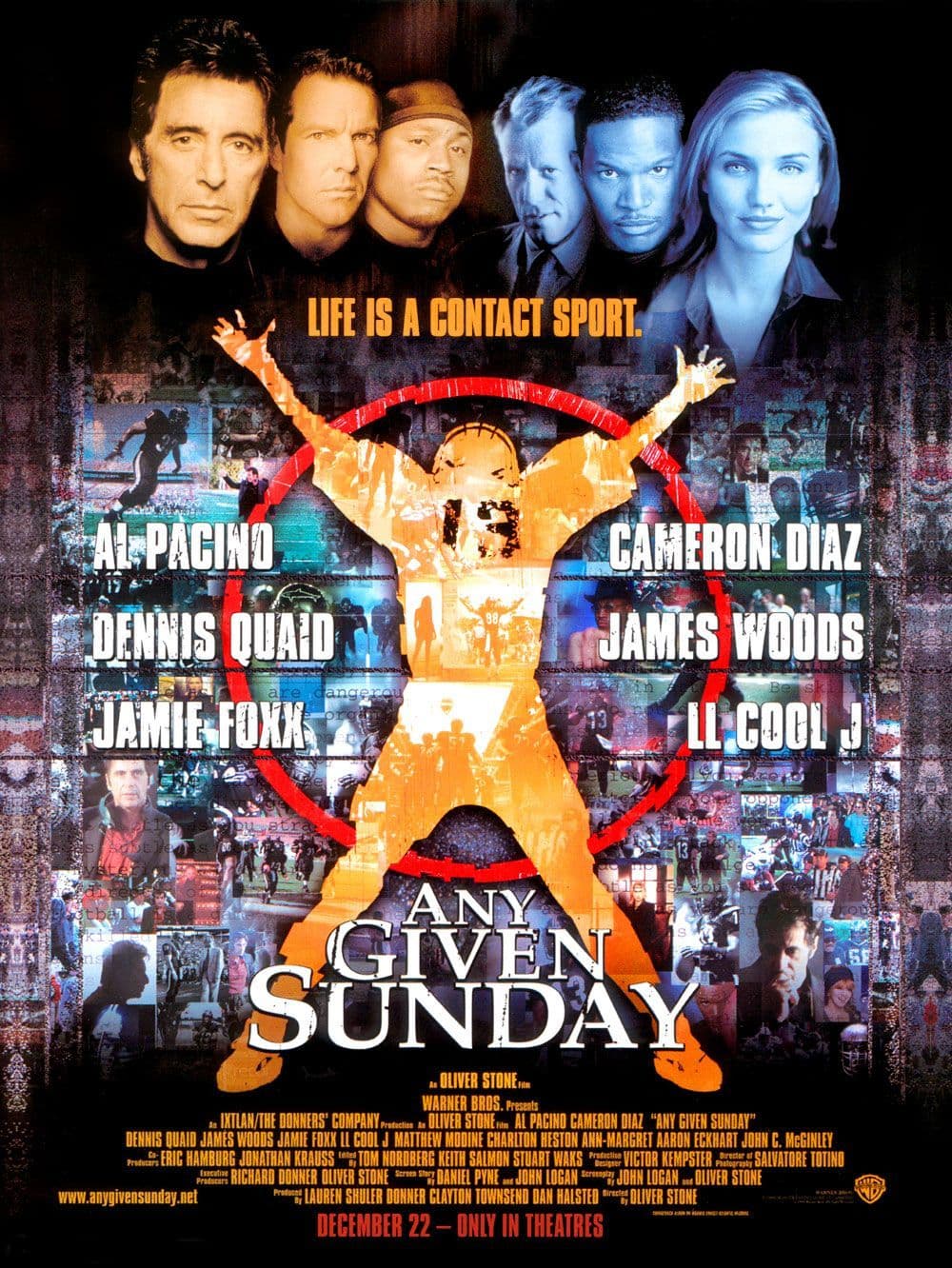
Any Given Sunday
Al Pacino's coach anchors the chaos of a film about football turned into product — loud, messy and oddly persuasive.