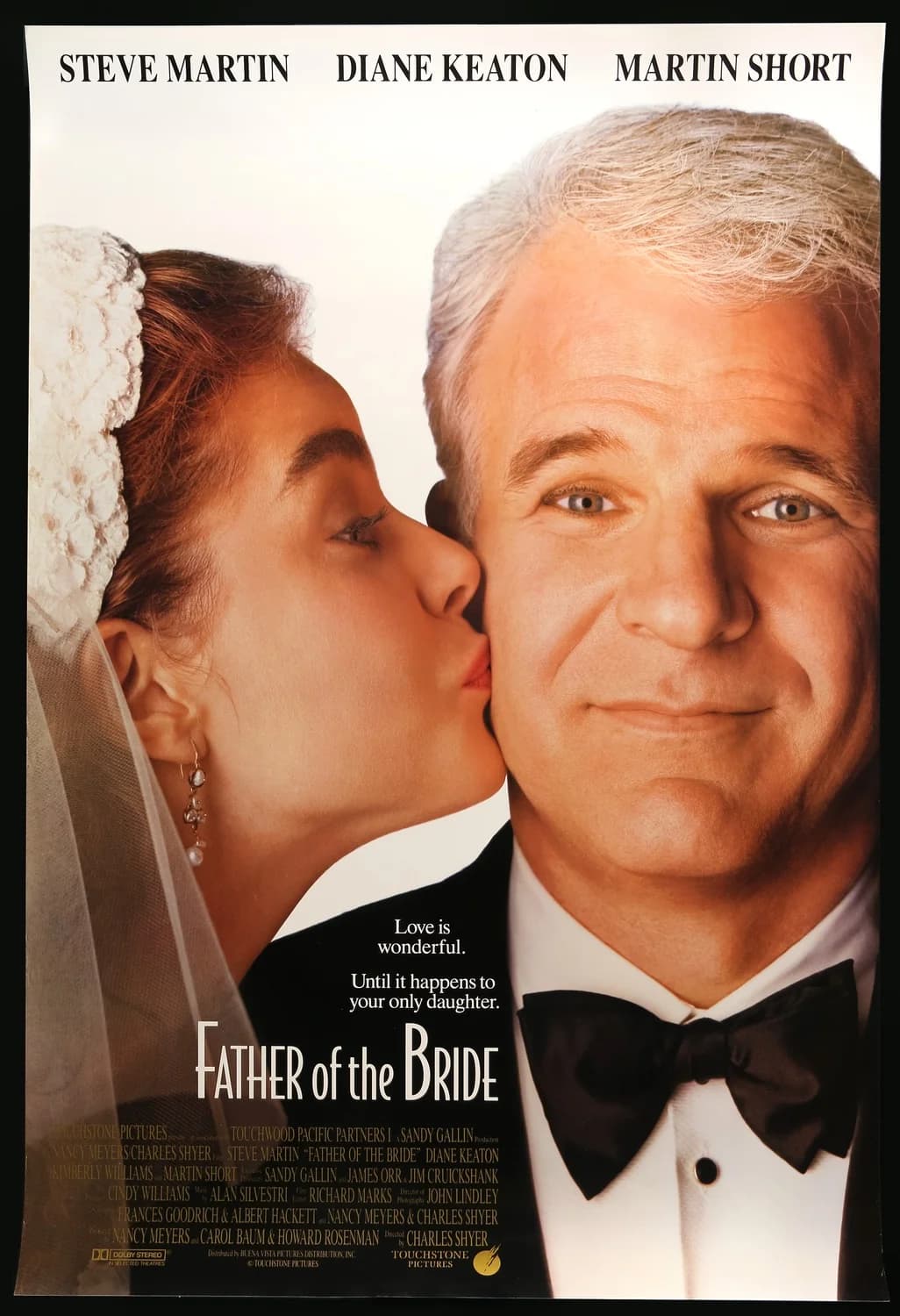
Father of the Bride
A wedding film that’s really a one-man panic about letting go.
// The setup
PLAYBACK STARTED
This is a film about a wedding, yes — but it’s George Stanley Banks losing his grip. Steve Martin’s bewildered dad is the engine that turns a reasonable family story into a warm, occasionally frantic comedy worth revisiting. Charles Shyer keeps the picture lean and tidy; the real pleasure comes from watching a comfortable life wobble and — slowly — reassemble.
THE MOVIE
George Stanley Banks is still the reason this movie works
Father of the Bride is, on the surface, a tidy romantic comedy about a daughter getting married. But the film is carried — and often saved — by George Stanley Banks, the middle-class shoe-company owner who narrates the chaos that follows Annie’s engagement. Steve Martin plays that man, and the movie lets his anxiety set the tone.
The inciting spark is wonderfully simple: Annie comes home and announces she’s engaged, and George’s neat world starts to wobble. From there the film stages a series of escalating domestic crises — logistics, relatives, and a very flamboyant wedding consultant — all of which force George to confront what it means to let his daughter go.
Charles Shyer directs the 1991 remake with an eye for rhythm rather than reinvention: this version openly reworks the 1950 original for a contemporary audience while keeping the story’s heart — parental loss, family friction and the spectacle of a modern wedding — front and centre.
THE SETUP
The idea that sets Father of the Bride in motion
Keep it short: a grown daughter returns home engaged, and her father’s comfortable identity is suddenly under threat. That premise is straightforward, which is exactly why it works — it hands the film a clear comic problem and an emotional question to play with.
George narrates the events, so the film is arranged as a string of escalating set pieces seen through his panicked perspective. Wedding-planning logistics and family meetings become plot mechanics that keep the comedy moving without needing darker surprises.
A flamboyant wedding consultant and the arrival of in-laws amplify the stress; the film leans on these external pressures to expose the real conflict, which is generational and emotional rather than procedural.
Because the story refuses to complicate itself with needless turns, it can focus on the argument at its centre: how do parents survive the moment a child crosses into adult life?
THE CHARACTER
Why George Stanley Banks matters
George is not merely a setup for jokes; he’s the emotional fulcrum. As a comfortably middle-class businessman, his sense of self is tied up in order, predictability and family roles — all of which the engagement throws into disarray.
That’s the neat trick: the film allows us to laugh at his frantic attempts to control everything while still understanding the ache beneath it. Annie’s move into adulthood and occasional doubts force him to reckon with her independence, and the comedy often slides into a genuine, quieter worry about loss.
The presence of a putative outsider — Bryan, the prospective son-in-law — helps sharpen the family friction. He’s amiable but unfamiliar, which is precisely the kind of change that accelerates George’s panic.
Crucially, George’s trouble isn’t villainous or petty; it’s recognisable. The movie makes him memorable because his anxiety is human and specific rather than a cartoonish temper.
THE PERFORMANCE
Why Steve Martin's performance matters
Contemporary critics singled out Steve Martin’s central comic turn as a primary source of the film’s humour, and that response makes sense given how the movie is structured around George’s point of view. The role requires someone who can sell small catastrophes as genuinely destabilising.
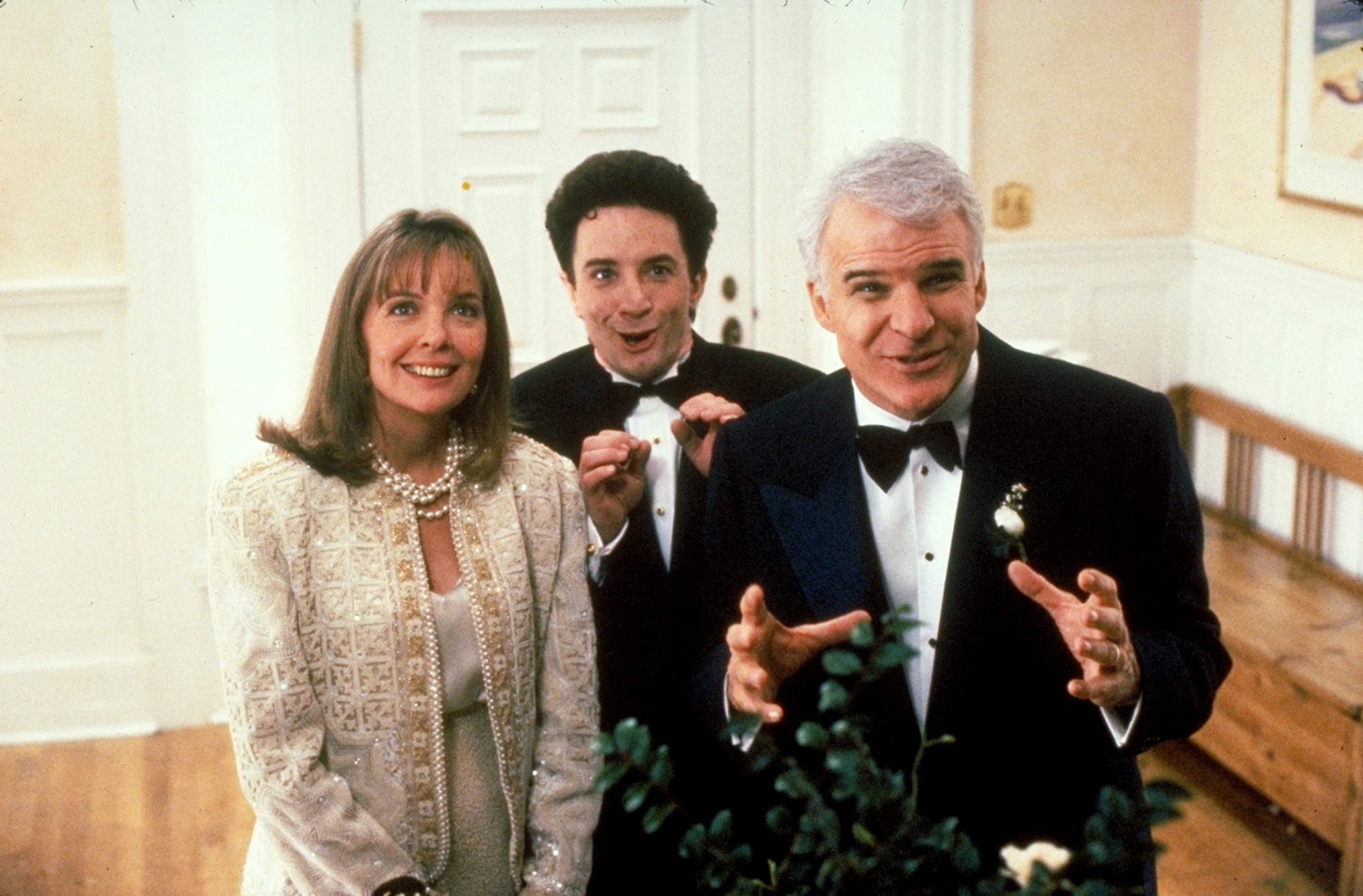
Martin was also a driving creative force during development, pushing for Nancy Meyers and Charles Shyer to rework the screenplay — which explains why the film’s tone sits comfortably between zany moments and domestic warmth.
So the performance matters on two levels: it supplies the comic engine, and it shaped the film’s overall choices during development. Without that pairing, the film would feel like a competent remake rather than the specifically Steve Martin vehicle it became.
That alignment — actor, material and development influence — is why the character reads so clearly as the film’s centre.
UNDER THE SURFACE
Father of the Bride has more on its mind than the plot suggests
Under the wedding tulle and scheduling headaches the movie is quietly about letting go and parental loss. It frames a familiar rite of passage — marriage — as the moment a child leaves the family’s orbit, and it refuses to pretend that’s painless.
Family and generational conflict supply most of the film’s friction. The comedy springs from differences in expectation: who does what, who pays for what, and whose past gets brought to the surface during a two-day event.
There’s also a clear eye on the wedding industry and spectacle. The film treats the ceremony as something that can balloon out of control — a business of appearances that exacerbates George’s anxieties.
Finally, marriage here is more than romance; it’s a social threshold. The film stages that transition as both comic and meaningful, which is why the small moments of sincere negotiation between parents and child feel earned.
THE FILMMAKING
How Father of the Bride was put together
The film’s crew quietly underpins its accessible tone. John Lindley handled the cinematography, Richard Marks did the editing, and Sandy Veneziano provided production design — a combination that keeps the movie professionally polished without ever calling attention to itself.
That production polish matters because the screenplay is organised around George’s increasing agitation; the camera and edit have to be steady enough to let the comedy land and then pull back when the scenes ask for a quieter beat.
Those production credits also explain why the movie feels like a studio family comedy — competent, clean and engineered to let the actors and situations do the work.
In short, the filmmaking choices are unobtrusive by design, giving the film an easy watchability that suits its seasonal, family-friendly aims.
PRACTICAL EFFECTS
The effects work that gives Father of the Bride its physical personality
Much of the movie’s texture comes from ordinary, physical production choices rather than spectacle. The wedding scenes were realised with large practical production-design elements — a constructed reception tent and an on-site bridal showroom — which give the film a tangible sense of scale.
There’s also a memorable swimming-pool sequence that involved two Doberman pinschers; the scene required multiple takes and careful choice of a Malibu estate so the animals could be accommodated safely and effectively.
These practical efforts matter because the film’s comedy often depends on physical beats and the logistics of staging a large event. When a scene hinges on a dress, a tent or a pair of dogs, having those elements present and real keeps the humour immediate.
So although it’s not an effects-heavy movie, its practical production work creates the physical world in which the characters collide.
PURE 80S
Father of the Bride could not belong to any other decade
The 1991 remake deliberately updated the 1950 original to reflect early-1990s attitudes, especially around gender roles and contemporary pop-culture references, which gives it a distinct period flavour beyond mere set dressing.
Steve Martin’s casting followed the persona he’d developed through the late 1980s, and he also influenced the creative team by advocating for Meyers and Shyer to rewrite the script — that combination helped steer the film toward a broader, more modern comic tone.
Finally, Touchstone Pictures released and financed the movie within the early-1990s studio ecosystem that often looked to remake classics for modern audiences, so the project fits comfortably into that commercial pattern.
All of this means the film feels of its moment: updated attitudes, a star-driven sensibility and a studio aiming for dependable family entertainment.
WATCHING IT NOW
What has aged — and what hasn't
The movie still plays well as a warm, family-friendly comedy — it’s the kind of reliable holiday-season watch that programming blocks and retrospectives keep returning to because it pleases crowds without demanding much from them.
The central family conflict — parents learning to release a child — remains emotionally relatable, and that simple core is what preserves the film’s appeal for many viewers today.
As a family picture, its strengths are its clarity and straightforwardness: if you want complication or radical rethinking of family dynamics, this isn’t the film. If you want a comfortable, well-made comedy about change, it still does the job.
Put another way: the film’s dependable crowd-pleasing qualities have aged into a durable oddment — not essential cinema, but pleasant and often effective in its modest aims.
THE LEGACY
Why Father of the Bride still matters
The film’s straightforward legacy is pragmatic: it was commercially successful and that success directly produced Father of the Bride Part II in 1995, with many of the same cast returning to the family business.
It’s also part of a longer franchise lineage — a contemporary restaging of a 1950 original and one of several later remakes — which keeps the story in circulation whenever a new generation considers the wedding comedy template.
There’s also a creditable professional touch: the composer received industry recognition for the film’s soundtrack work, which underlines how the production aimed for a polished, crowd-pleasing package.
So the movie matters less as a revolutionary text than as a well-made, market-savvy family picture that proved durable enough to justify sequels and reboots.
THE VERDICT
Does Father of the Bride still hold up?
Yes — but with a specification. If your bar is a warm, comfortably organised comedy about family upheaval, it remains a satisfying watch. The movie’s heart is George’s struggle to accept Annie’s decision, and the picture structures its humour around his voice and perspective.
The use of intermittent first-person voice-over keeps the film firmly rooted in George’s point of view, turning wedding-planning logistics, a flamboyant consultant and awkward in-law meetings into opportunities to observe his slow loosening-up.
Nina functions as a pragmatic counterweight, steering the decisions and cushioning George’s anxieties; and Franck, the intrusive wedding consultant, is the catalytic comic force who amplifies the sense of spectacle and loss.
So should you watch it now? If you want a neat, character-driven comedy about letting go and family friction — led by Steve Martin as a distinctly flustered father — then yes. It’s not a revelation, but it’s an amiable, well-constructed reminder that a wedding movie can be as much about the father as the bride.
Share this movie
// Keep watching
More movies from the 90s
If Father of the Bride is your kind of movie, there's plenty more on the shelves worth rewinding.
1999 // VHS
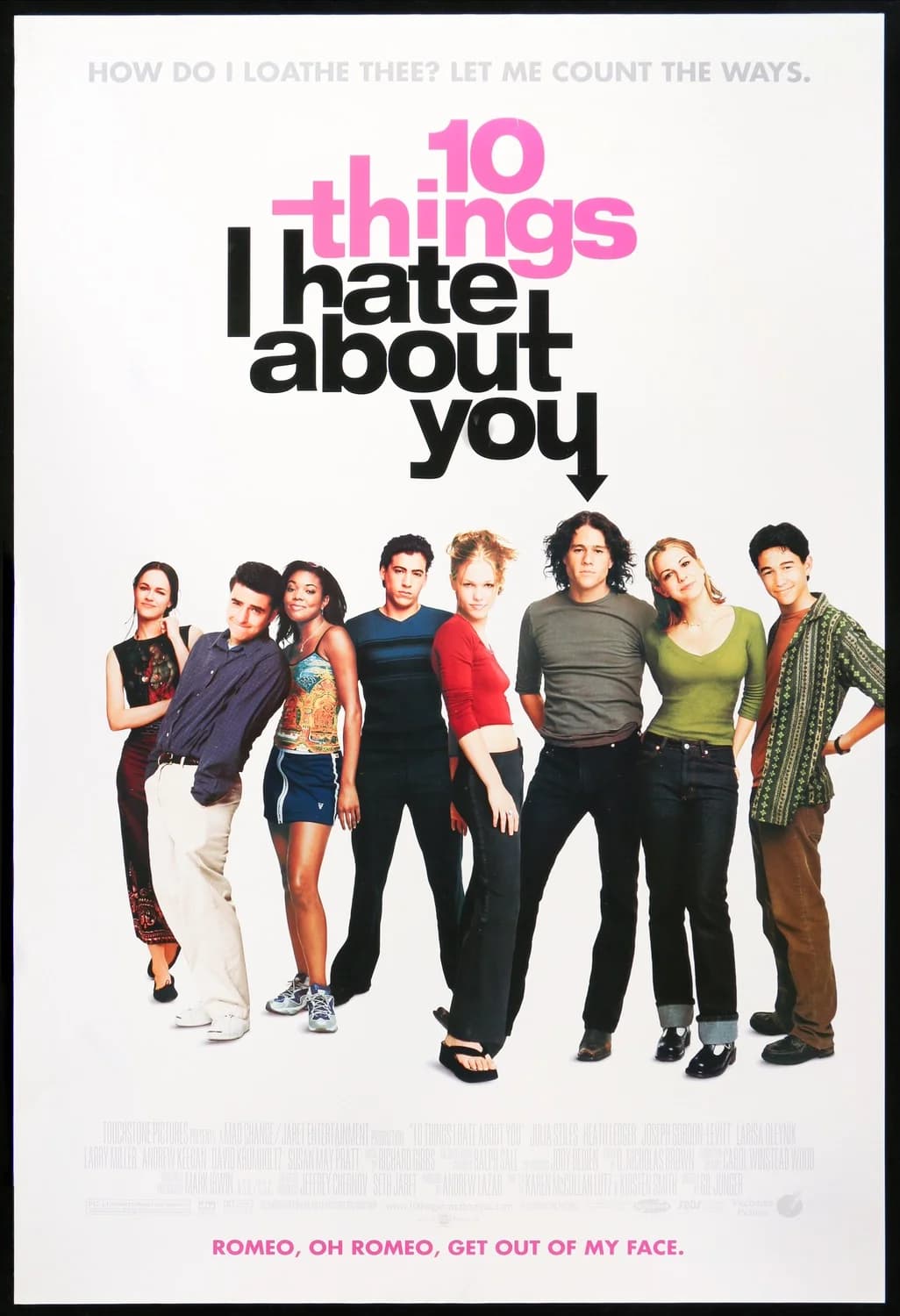
10 Things I Hate About You
Sibling rules, a rooftop serenade and one very stubborn Kat — Shakespeare in a school corridor.
1999 // VHS
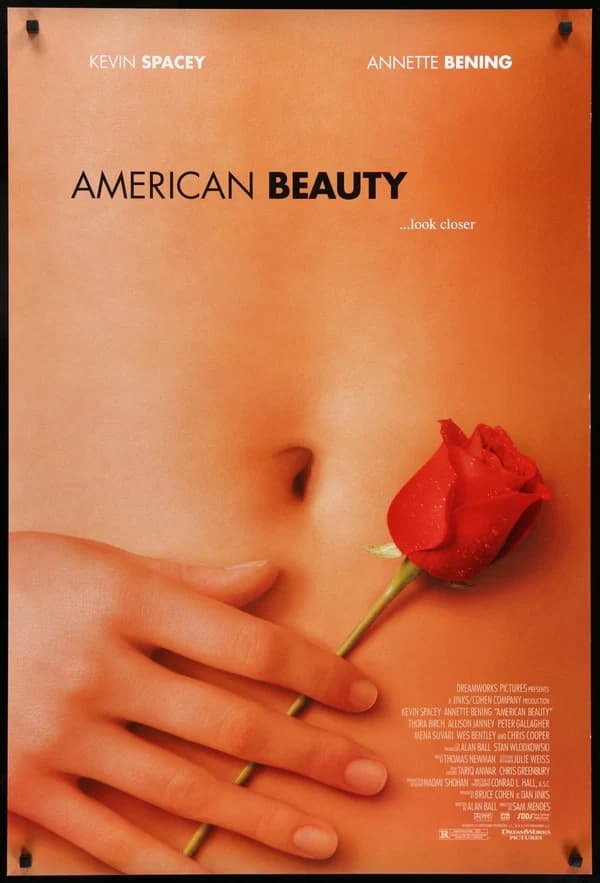
American Beauty
Lester Burnham, suburban rot and a midlife argument that still stings.
1999 // VHS
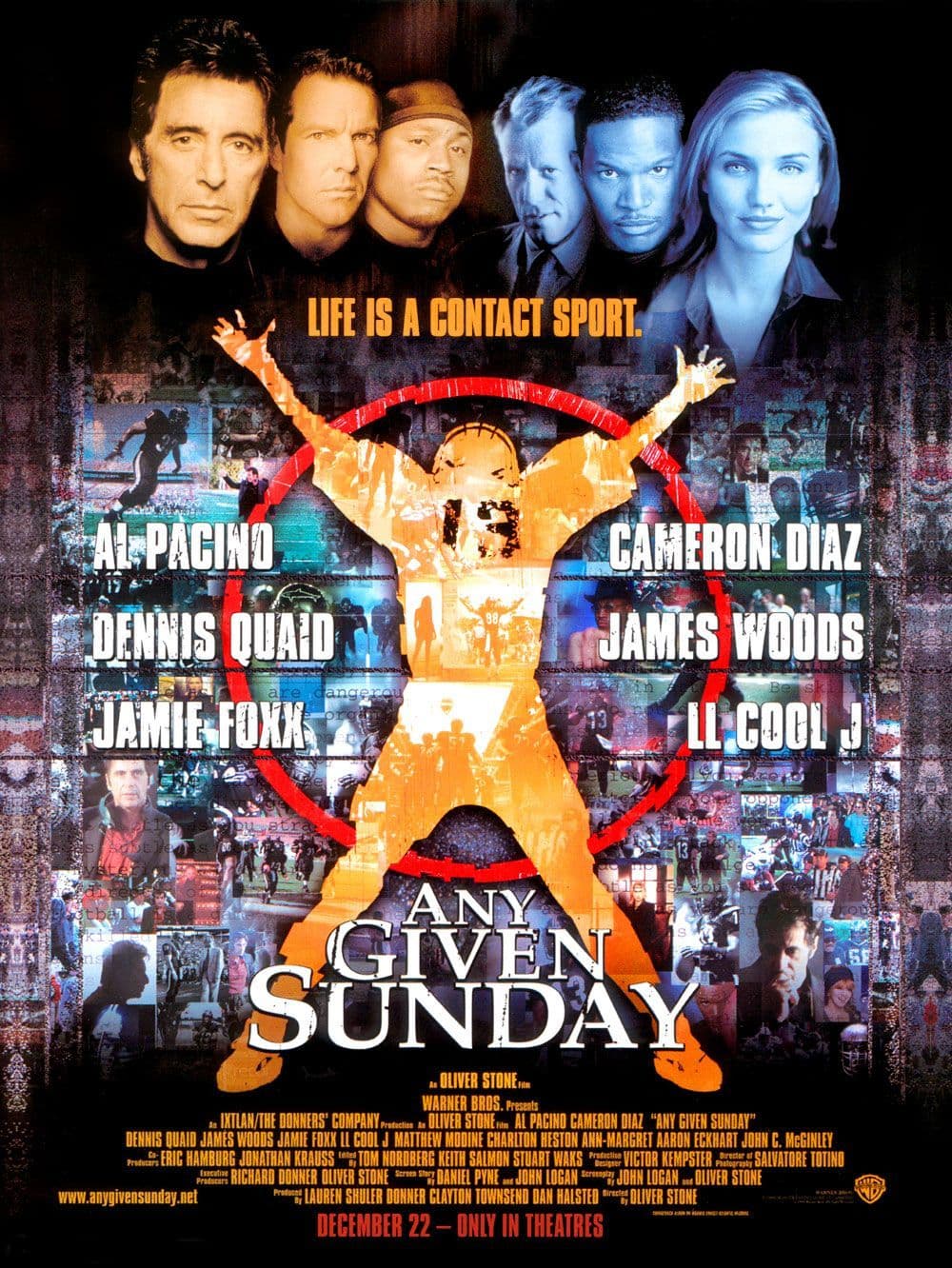
Any Given Sunday
Al Pacino's coach anchors the chaos of a film about football turned into product — loud, messy and oddly persuasive.