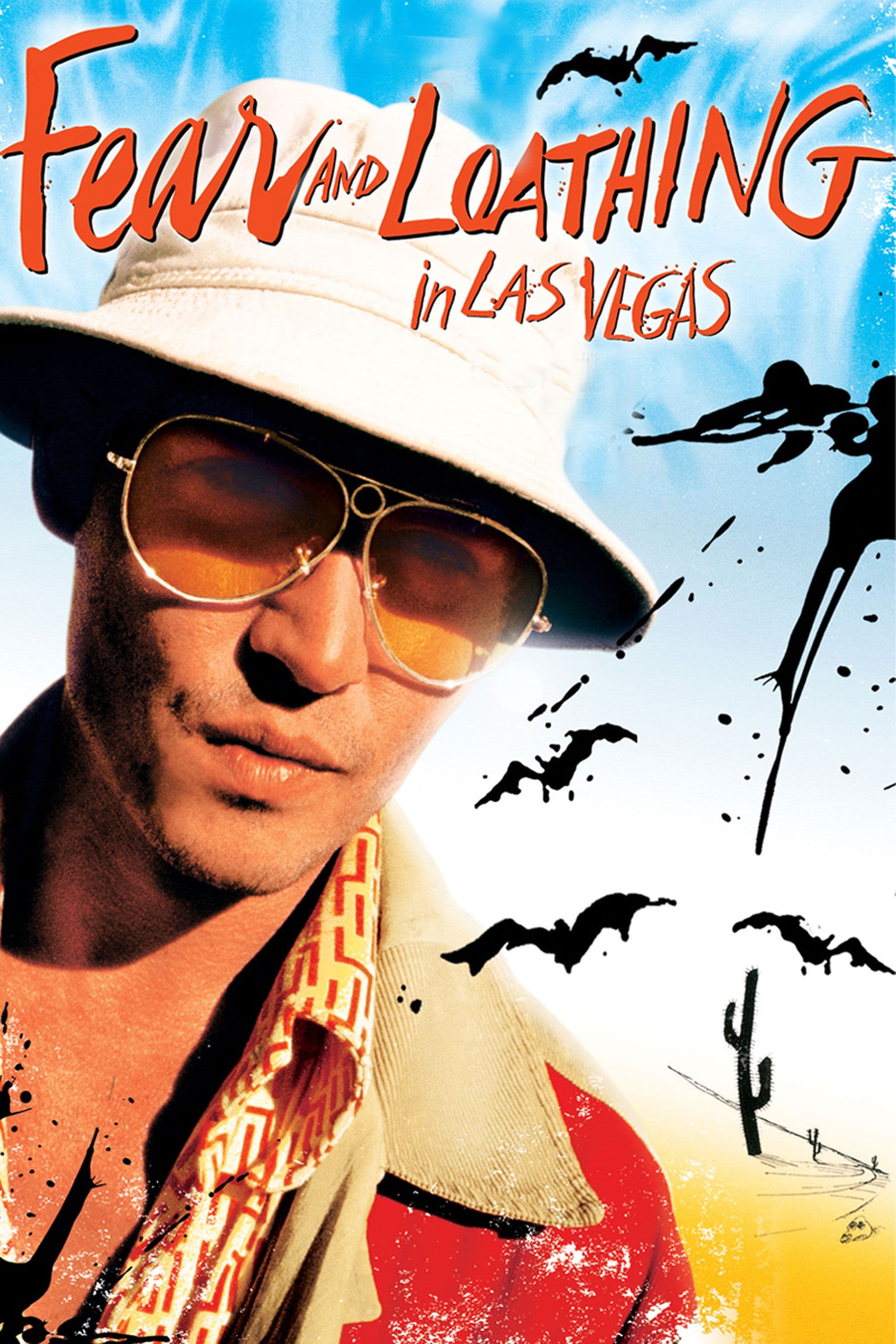
Fear and Loathing in Las Vegas
A road trip into America’s cracked mirror — and Raoul Duke is driving.
// The setup
PLAYBACK STARTED
There are films you remember for a handful of images; Fear and Loathing in Las Vegas tends to lodge in people as a single personality. Raoul Duke — a journalist on an assignment that quickly derails into a drug-fuelled odyssey — gives the whole thing its teeth. Terry Gilliam’s 1998 take on Hunter S. Thompson’s book still feels like a dare: watch it and see how far the world can blur before the joke collapses into something corrosive.
THE MOVIE
Raoul Duke is still the reason this movie works
What keeps people talking about Fear and Loathing in Las Vegas isn't a set-piece or a line of dialogue — it's Raoul Duke himself, a reporter whose brief, professional mission melts into a chaotic personal freefall. The film begins with an assignment — cover the Mint 400 motorcycle race — and then hands Duke and his partner a suitcase full of excuses to dissolve reality into mania.
Terry Gilliam brought Hunter S. Thompson’s 1971 book to the screen in 1998, turning that premise into a 118-minute trip that leans as much on black comedy and buddy‑movie rambles as it does on outright hallucinatory phantasmagoria. Johnny Depp plays Duke opposite Benicio del Toro’s Dr. Gonzo, and their road together is the film’s animating engine.
Under that noisy surface there’s a clear set of concerns: the failure of 1960s counterculture, the idea of the American Dream as something wrecked rather than fulfilled, and the brittle performance of gonzo journalism — the blurred line between reporting and spectacle. Put those ingredients together and you get a movie that asks to be argued about as much as watched.
THE SETUP
The idea that sets Fear and Loathing in Las Vegas in motion
The story gives you something simple to hold on to: a reporter and his lawyer drive from Los Angeles to Las Vegas supposedly to cover a race. That press‑job is the narrative pretext — a practical ticket for two men to be out in the world together.
But the film doesn’t stay obedient to journalism. Once the protagonists begin ingesting multiple drugs the trip becomes episodic, a succession of increasingly deranged incidents that feel less like reportage and more like an unravel.
Gilliam makes that collapse literal. The film relies on Duke’s voice-over and a battery of visual tricks — morphs, optical shifts, altered lenses — so what you’re seeing is often his perception rather than a stable, external reality.
The set-up works because it’s honest about that switch: the assignment exists only to deliver these two men into situations where their subjective experience takes over the movie’s logic.
THE CHARACTER
Why Raoul Duke matters
Raoul Duke is not a blank, suffering protagonist you’re meant to sympathise with at every turn. He’s a semi‑autobiographical stand‑in for Hunter S. Thompson: ostensibly a journalist, essentially a spectacle-maker who courts self-destruction.
That duality — public assignment versus private ruin — is what makes Duke memorable. He’s performing reportage while collapsing into the very excess he claims to observe, and the film keeps making space for both impulses to coexist uneasily.
His relationship with Dr. Gonzo feeds into that: they’re codependent, enabling each other’s worst instincts while travelling deeper into moral and physical degeneracy. Duke matters because the film never treats him as only noble or only monstrous; he’s something in between, and it’s fascinating to watch the balance slide.
Johnny Depp prepared for the role in ways that tied him to Thompson’s life and possessions, which reinforces Duke’s identity as a curiously specific literary ghost rather than a generic drunk journalist.
THE PERFORMANCE
Why Johnny Depp's performance matters
There’s a specific, documented response to Depp’s work in the film: Hunter S. Thompson himself praised Depp’s portrayal, and critics both at the time and in later appraisal singled out Depp alongside Benicio del Toro.
That’s useful because the film depends on its central figures to make a dizzying script coherent. When the narration slips into delirium you still need an anchor — and informed reactions from Thompson and critics suggest Depp’s take supplies that anchor for many viewers.
Put plainly: the film asks a lot of its lead, and existing commentary credits Depp with giving the role a distinctive, committed shape that helps the movie hold together.
UNDER THE SURFACE
Fear and Loathing in Las Vegas has more on its mind than the plot suggests
Strip away the hallucinations and the film is preoccupied with a handful of ideas: the collapse of the 1960s counterculture and the feeling that the ideals of that era have curdled into something hollow.
Linked to that is the film’s bleak reading of the American Dream — not a promise fulfilled but a ruin to be toured and catalogued. Las Vegas, in this telling, is less a playground than an evidence room.
There’s also a reflexive angle about journalism itself. Gonzo reporting — flamboyant, self‑involving reportage — is on display as a technique and a problem; the film stages how performative reporting can blur fact and spectacle.
Underpinning all of this is the human tether: the codependent friendship between Duke and Gonzo. Their mutual enabling makes the themes personal rather than abstract; moral degeneracy isn’t only a headline, it’s a mode of companionship.
THE FILMMAKING
How Fear and Loathing in Las Vegas was put together
One easy way to miss Gilliam’s authorship is to treat the film as pure chaos. It’s not: Gilliam and cinematographer Nicola Pecorini put a deliberate visual grammar under the delirium.
The production favoured a saturated, wide‑angle aesthetic — choices that push the world slightly out of joint so that normal scenes can feel charged or off‑kilter.
That visual method matters because the film’s subject is perception itself. When the camera is already asking you to distrust what you see, the later optical and narrative flips land with greater force.
In short: the filmmaking isn’t an indulgence. It’s the scaffolding that makes the story of unreliable perception legible.
PRACTICAL EFFECTS
The effects work that gives Fear and Loathing in Las Vegas its physical personality
Rather than leaning wholly on digital trickery, the filmmakers blended in‑camera wide‑angle compositions with optical techniques to sell the hallucinations.
That catalogue included morphs, flares and shifting depth of field — physical and optical tools that bend the image without simply pasting a CGI warp on top.
Production reporting also documents the choice of hardware and film stock used to reach the look: Arriflex cameras with Zeiss prime lenses and Kodak 250D stock, contributors to the film’s saturated tone.
Those technical choices are practical in the literal sense: they create a tactile, immediate image world that helps the viewer feel the strangeness rather than watch it from a distance.
PURE 80S
Fear and Loathing in Las Vegas could not belong to any other decade
Putting a deliberately anachronistic, early‑1970s story into a 1998 release slot made the film feel oddly untethered to immediate trends — and that was part of the point.
In the late 1990s marketplace Gilliam’s anti‑mainstream sensibility and the film’s refusal to tidy Thompson’s combustible voice into a comfortable package produced a sharply divided response.
That polarisation is, in its own way, a period detail: the film arrived when audiences and critics had less patience for that kind of sensational, purposely abrasive work.
So while it’s not a ’90s fashion statement, the movie’s reception is coloured by the decade that released it — a late‑90s context that amplified its outsider status.
WATCHING IT NOW
What has aged — and what hasn't
If you sit down today the film’s ability to visualise drug states still registers. Retrospectives and home‑video supplements repeatedly point to the movie’s continued strength in making those subjective experiences visible.
The framing also holds up: that back‑and‑forth between outward events (race, casinos, conventions) and internal hallucination is still an effective structural engine for a film about perception versus reality.
That continued attention shows up in how the movie has been preserved and presented: Criterion issued a home‑video package with commentary and features, signalling that there’s an audience that wants to revisit and study it.
All of which is to say: the film’s oddness hasn’t dated into irrelevance. It remains a piece that rewards viewers curious about how cinema can report on delirium rather than simply describe it.
THE LEGACY
Why Fear and Loathing in Las Vegas still matters
The film premiered at Cannes and reached a wide theatrical audience in May 1998, which means its polarised reception played out on a relatively large stage rather than inside cult obscurity.
Over time that polarisation softened into a different kind of attention. Criterion’s home‑video release — complete with commentary from Hunter S. Thompson — and the film’s steady presence in cinephile discussion have helped it settle into a cult status.
The movie’s production history also refuses to be tidy: the writers‑credit dispute and Gilliam’s public defence of his approach recur in conversations about the film, which keeps its behind‑the‑scenes life as part of its legacy.
Together these elements explain why it still turns up in discussions: it’s a film whose afterlife includes both the work itself and the arguments the film provoked.
THE VERDICT
Does Fear and Loathing in Las Vegas still hold up?
Yes — with a rider. If you’re interested in a film that stages unreliable perception, tests the limits of performative journalism, and uses character to interrogate the collapse of a countercultural dream, this is a richly peculiar experience worth seeking out.
Gilliam’s alternation between outward reportage (the race, the casinos, the narcotics convention) and interior delirium is the film’s structural trick; once you see that as the point, much of the movie’s excess reads as deliberate engineering rather than random indulgence.
The central figures matter for the same reason: Raoul Duke is a semi‑autobiographical funnel for Thompson’s voice, and contemporary and later commentary singled out Depp and del Toro as key to making that voice work on screen. That’s not an objective seal of greatness, but it’s evidence the performances helped the concept survive contact with the camera.
So, should you watch it today? If you want a tidy moral or a comfortable comedy, this isn’t your film. If you want cinema that still dares to be ugly, funny, unnerving and formally adventurous about perception and the wreckage of an ideal — then absolutely.
Share this movie
// Keep watching
More movies from the 90s
If Fear and Loathing in Las Vegas is your kind of movie, there's plenty more on the shelves worth rewinding.
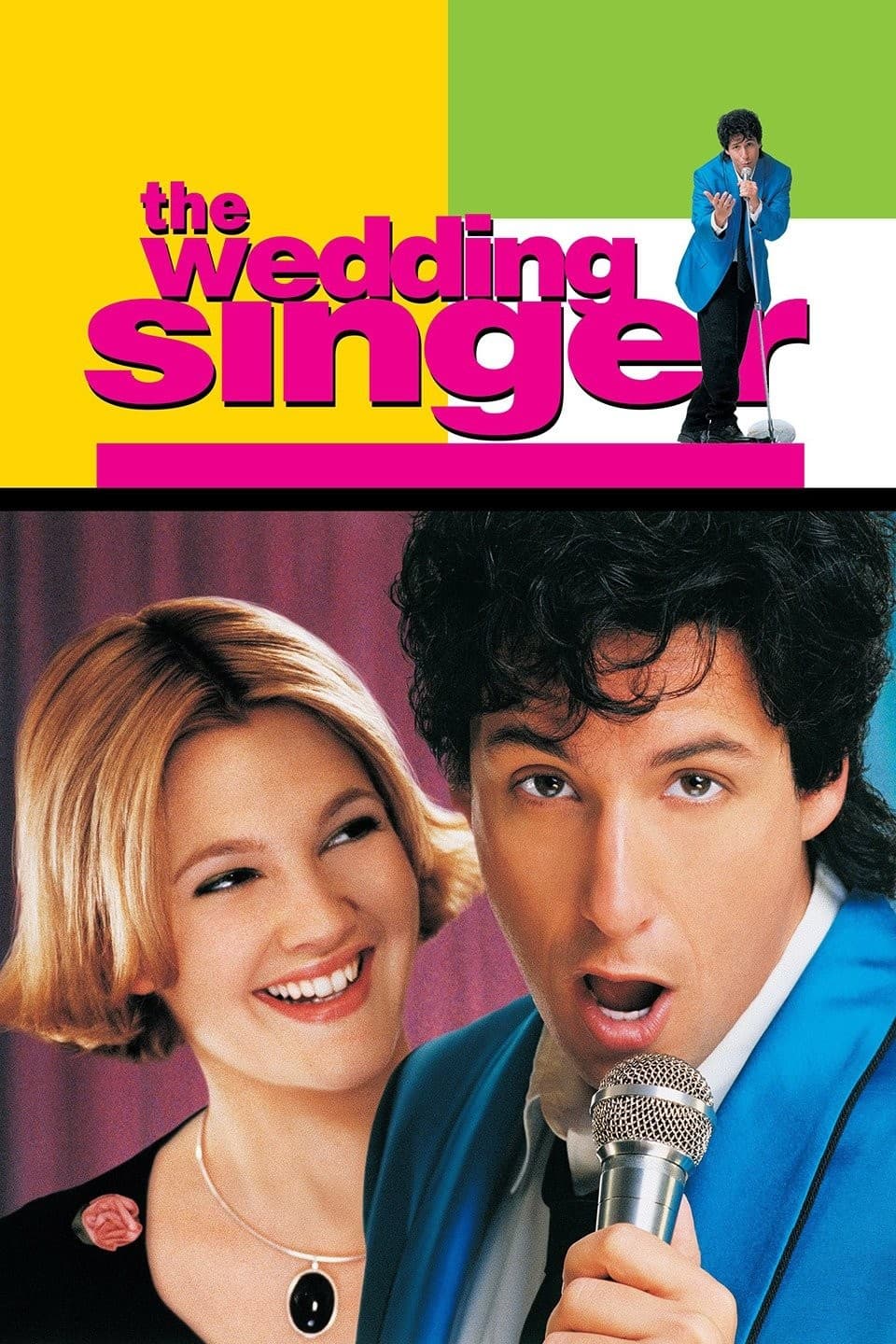
1998 // VHS
The Wedding Singer
A love story wrapped in 1980s pop — and carried by one very earnest wedding crooner.
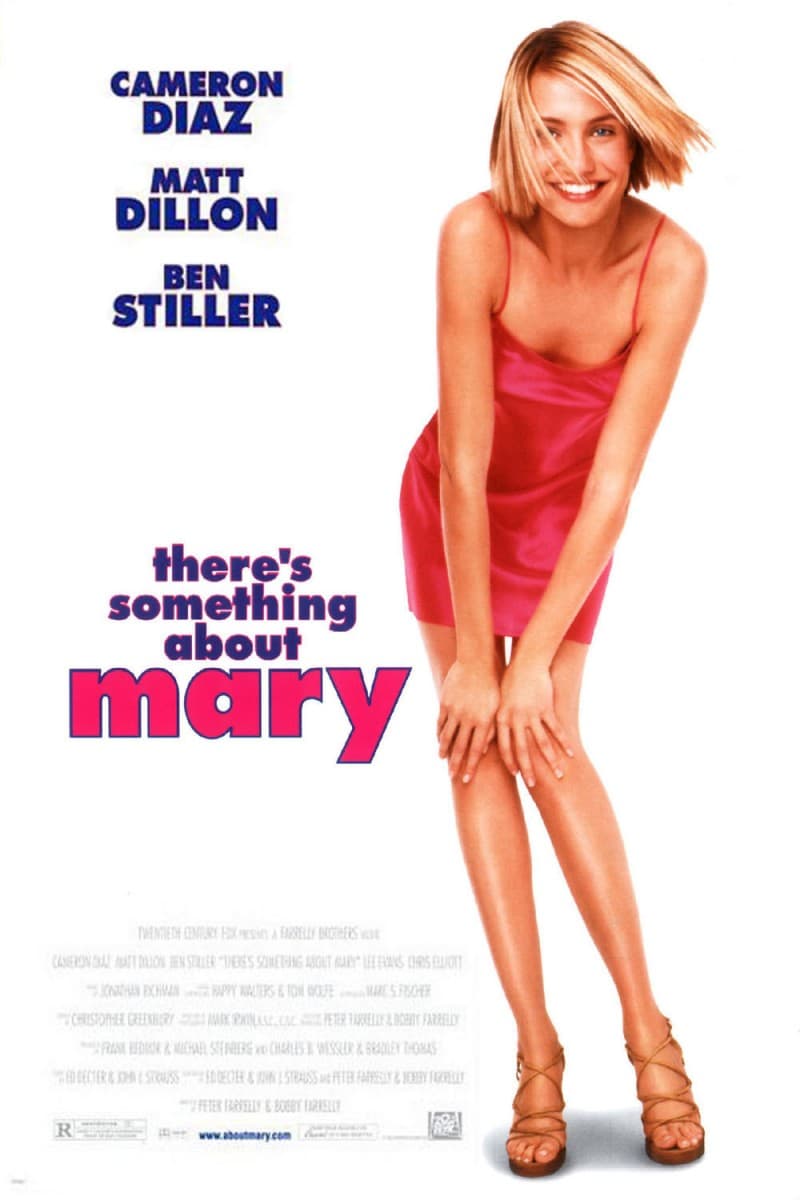
1998 // VHS
There's Something About Mary
Romantic obsession, awkward masculinity and a hair‑gel gag you can't unsee.
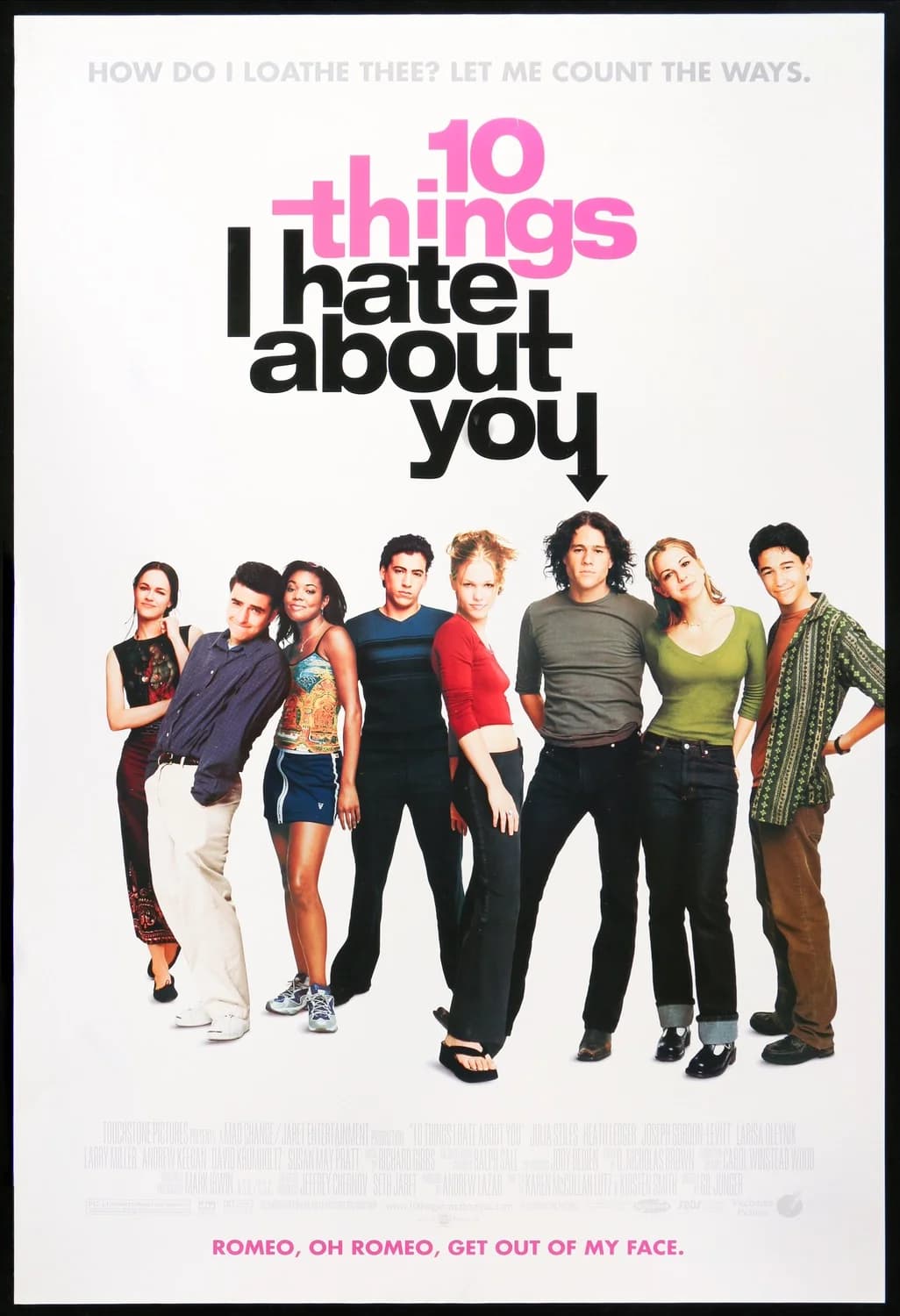
1999 // VHS
10 Things I Hate About You
Sibling rules, a rooftop serenade and one very stubborn Kat — Shakespeare in a school corridor.