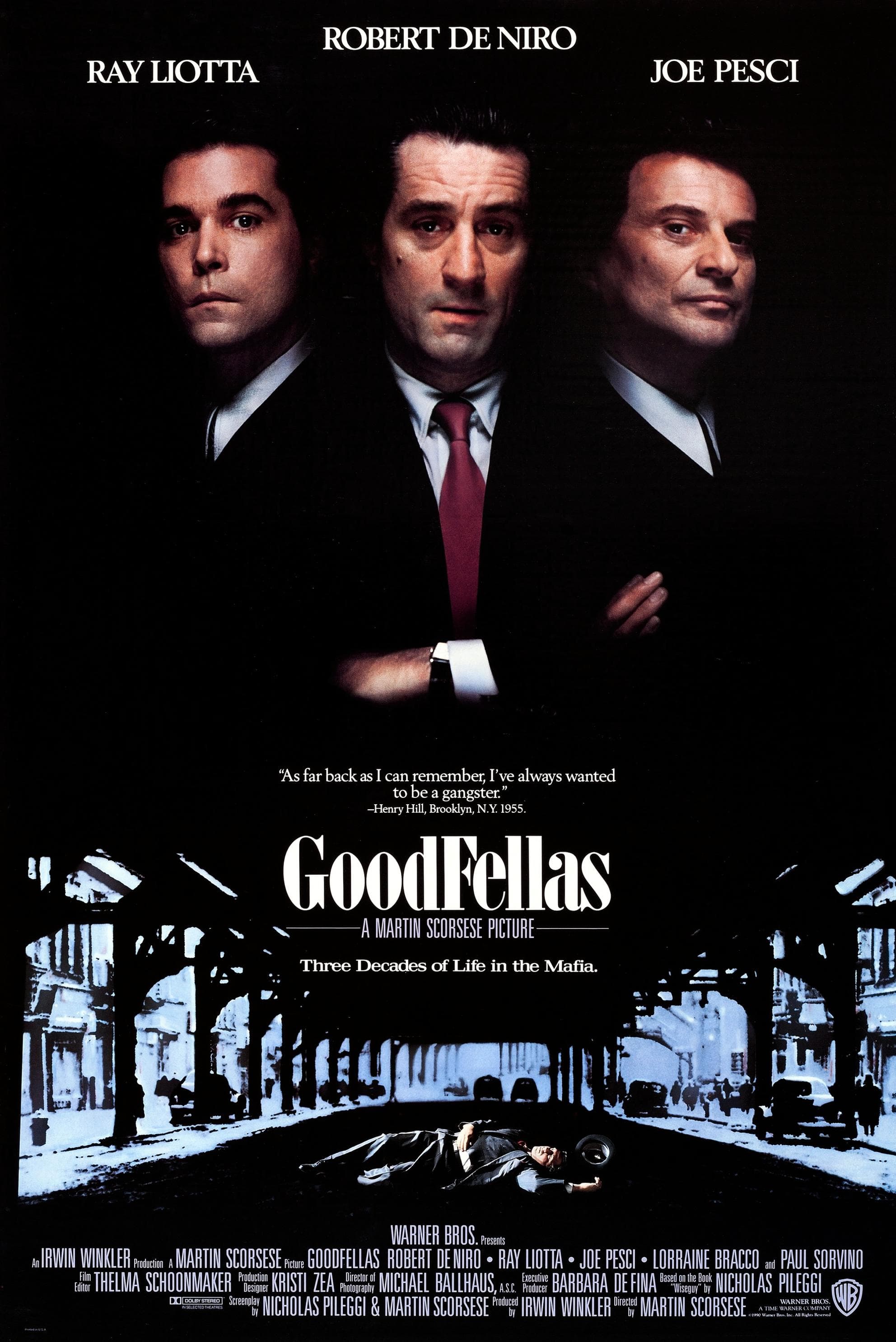
Goodfellas
Henry Hill, Scorsese’s appetite for story and the pretty cost of a life lived on the make.
// The setup
PLAYBACK STARTED
Goodfellas feels like being let into a loud, dangerous living room and then realising you don’t know who’s laughing. It’s Henry Hill’s voice — nostalgic, persuasive and slightly dishonest — that steers you through three decades of small triumphs and bigger mistakes. Martin Scorsese turned Nicholas Pileggi’s reporting into a film that thrills in the moment and then refuses to let you enjoy the bill.
THE MOVIE
Henry Hill is still the reason this movie works
Goodfellas is organised around a single, insistent perspective: Henry Hill’s. The picture follows him from a kid fascinated by local gangsters into decades of mob life, and that personal route — adapted from Nicholas Pileggi’s Wiseguy — is what gives the whole thing its clear spine.
That spine is mostly a running voiceover. Henry narrates much of the film, and his retelling is not neutral: he justifies, glosses and remembers in ways that make the criminal life sound attractive until the cracks appear. A few interjections from Karen Hill stop the nostalgia from going totally unchecked.
Martin Scorsese stages a lot of the seduction with specific flourishes — the Copacabana sequence is the obvious example — and Ray Liotta’s casting keeps the focus locked on Henry as both storyteller and unreliable guide.
THE SETUP
The idea that sets Goodfellas in motion
At its simplest: the film traces Henry Hill’s climb and tumble inside New York organised crime. It’s not a neat career ladder so much as a sequence of episodes — jobs, parties, betrayals — drawn directly from Pileggi’s reporting and the recorded interviews with Hill.
The movie tells most of that story through Henry’s first-person voice, which keeps us close to his pleasures and his rationalisations. That personal narration gives the film a confessional tone: we’re listening to someone explain his choices, not getting an impartial history lesson.
What drives the narrative is a central contradiction. The life pays in status, cash and a rush of belonging; the price is paranoia, violence, addiction and fractured loyalties. Goodfellas stages both sides so the thrills feel earned and the costs land hard.
Even the film’s reputation for toughness comes with a production footnote: an execution scene initially troubled the rating board and was edited before the movie received its R certificate, which is a reminder that the film balances explicitness with storytelling control.
THE CHARACTER
Why Henry Hill matters
Henry is the film’s doorway. Because the story is filtered through his voice, every moral compromise is heard as a remembered justification: the glamour of the life is always being explained back to us by someone who benefited from it.
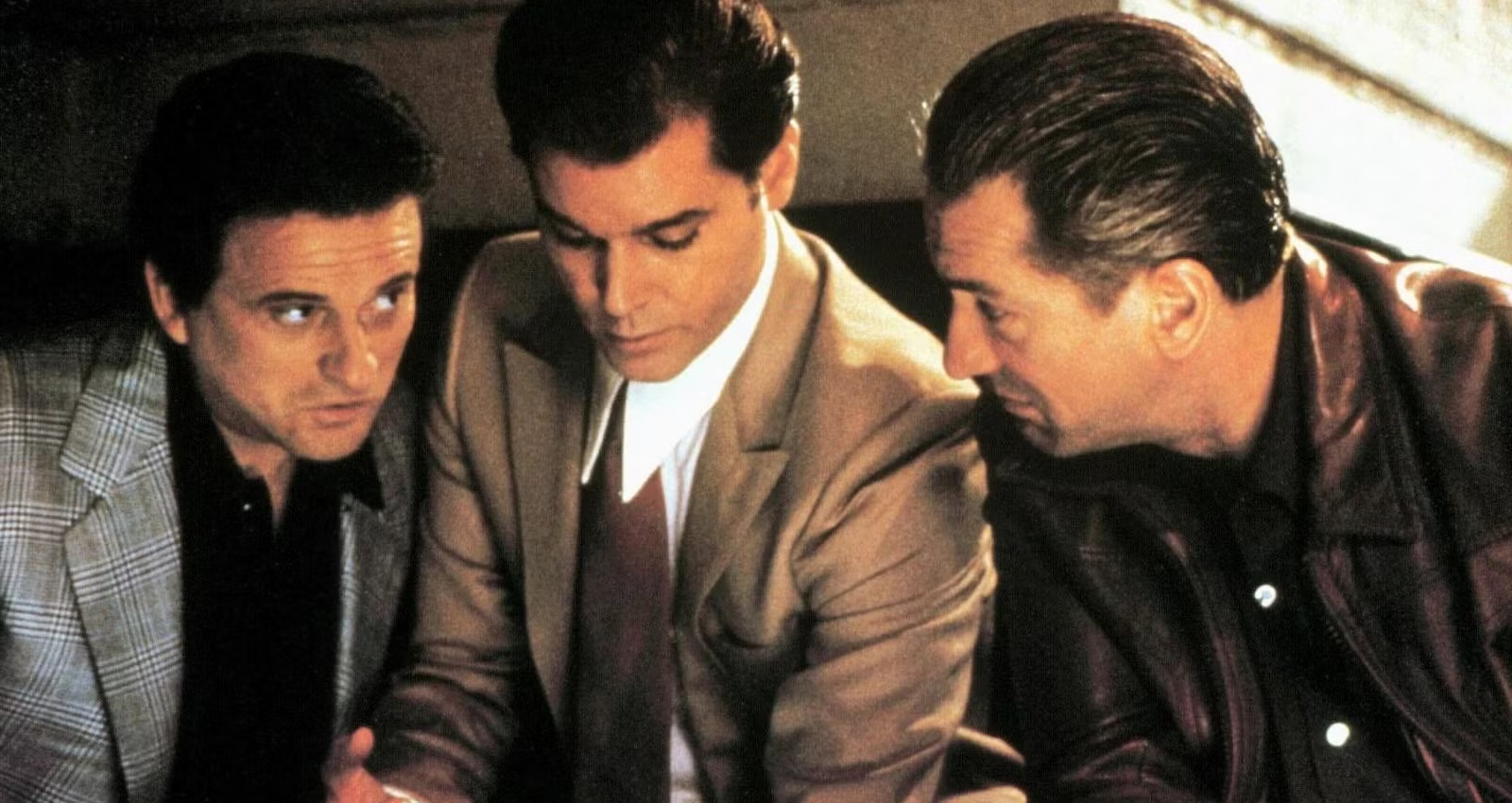
That makes Henry an unreliable narrator in the best possible way — vivid, persuasive and occasionally self-deceptive. He’s not just a participant; he’s the vantage point from which the audience experiences the pull and the eventual rot of the lifestyle.
A practical detail underlines that choice: Ray Liotta prepared for the role by studying tape-recorded interviews between Pileggi and the real Henry Hill, which helped anchor the film’s insistently confessional tone.
UNDER THE SURFACE
Goodfellas has more on its mind than the plot suggests
On the surface it’s about jobs, scores and the next big heist. Underneath it’s a study in ambition and its price: the characters chase status and cash until their relationships and sense of safety start to corrode.
That corrosion ties directly into loyalty and betrayal. The gang is a family that keeps its own records — favours, debts, offences — and once that ledger starts to tilt the only currency left is violence and paranoia.
Scorsese also plays with the tension between glamor and banality. The movie spends as much time on mundane humiliations and petty jealousies as it does on the flashier crime set pieces, which slowly removes romance from the lifestyle.
Finally, memory and period identity are woven through the soundtrack and episodic structure: songs and set pieces mark time, while the confessional narration constantly reminds you you’re hearing a personal recollection, not an objective chronicle.
THE FILMMAKING
How Goodfellas was put together
Goodfellas wears its craft without apologising for it. The photography and editing credits are part of that language: Michael Ballhaus is the director of photography on the record and Thelma Schoonmaker is the principal editor, which tells you the film had heavyweight collaborators shaping its look and pace.
One widely noted sequence makes the point: the Copacabana scene was shot as a single long tracking/Steadicam take that carries you straight into the glamour of the night. Pulling that off required temporary alterations on set to create a continuous path for the camera — the kind of staged ingenuity that delivers a storytelling payoff.
Editing choices also mattered in shaping the film’s rhythm. Production notes record that the director-editor collaboration extended into post-production in ways that influenced the final timing and structure of the picture.
PRACTICAL EFFECTS
The effects work that gives Goodfellas its physical personality
A frank production note: a particularly violent execution scene originally earned the film an X rating, and practical makeup and optical elements for that sequence were trimmed to reduce explicitness before the final R rating was secured.
Beyond staged effects, the film relied on location work to sell its episodes. Filming took place on-site across New York and New Jersey, and Kennedy Airport locations were used to represent the spots where the airline heists occur — a commitment to real locations rather than studio doubles.
PURE 80S
Goodfellas could not belong to any other decade
Although it opened in 1990, Goodfellas sits on the cusp of the decade and helped define how the 1990s would look back at organised crime. Its mixture of period detail and intimate reportage became a template for later storytellers.
That template shows up in television as well as cinema: the film is frequently referenced in discussions about the decade’s gangster revival and named by later creators as an important touchstone for shows that wanted to be both grand and domestic about crime.
THE CONNECTIONS
Where Goodfellas fits in
Goodfellas is part of Scorsese’s long interest in Italian-American street life; critics and institute records commonly group it with films like Mean Streets because they share director, setting and preoccupations.
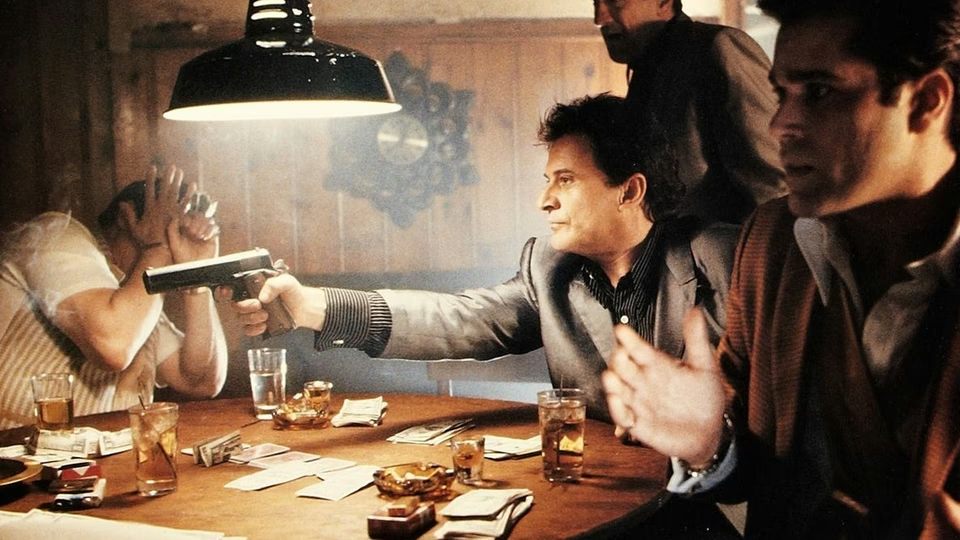
It also sits comfortably alongside Casino (1995), another Scorsese study of organised crime that uses similar period obsession and overlapping cast and crew. Pairing the two makes editorial sense when you want to see how Scorsese reshaped the gangster story twice.
Robert De Niro’s presence connects Goodfellas to earlier Scorsese collaborations too — their work together across multiple projects is a through-line in both filmographies.
THE LEGACY
Why Goodfellas still matters
The film’s awards run and institutional recognition mark it out: it attracted multiple major nominations and Joe Pesci won the Academy Award for Best Supporting Actor, and the film was later preserved in the U.S. Library of Congress National Film Registry.
Those honours are part of a larger afterlife. Filmmakers and TV creators have pointed to Goodfellas when explaining how they wanted to tell organised-crime stories with a new mix of intimacy and episodic scale.
That influence isn’t just talk: several cast members later appeared in The Sopranos, and the series’ creator has identified Goodfellas as a formative reference, which helps explain how the movie’s approach migrated from film to long-form television.
THE VERDICT
Does Goodfellas still hold up?
Yes. Goodfellas remains worth watching because it isn’t a museum piece: it’s a lived account shaped into a movie. The film follows Henry Hill over three decades and uses his first-person narration and Pileggi’s reporting to give us an intimate, sometimes dishonest map of that life.
That intimacy matters because the film refuses to stay on one register. It shows the pull of money and status alongside the creeping costs — paranoia, addiction and broken loyalties — so the glamour never plays as an endorsement but as something argued for from inside the story.
Technically and structurally it still registers: episodic set pieces and temporal markers — music and specific episodes like the airline heists and the Copacabana sequence — keep the decades distinct and the storytelling propulsive. The presence of characters such as Jimmy Conway as mentor and Karen Hill as both participant and commentator gives the story necessary counterweight.
If you’re curious about gangster films beyond glamour and cliché, this is still the one to start with. It shows you the life, lets the narrator sell it, and then hands you the bill. That kind of moral squeeze is rare, and it’s why Goodfellas hasn’t gone away.
Share this movie
// Keep watching
More movies from the 90s
If Goodfellas is your kind of movie, there's plenty more on the shelves worth rewinding.
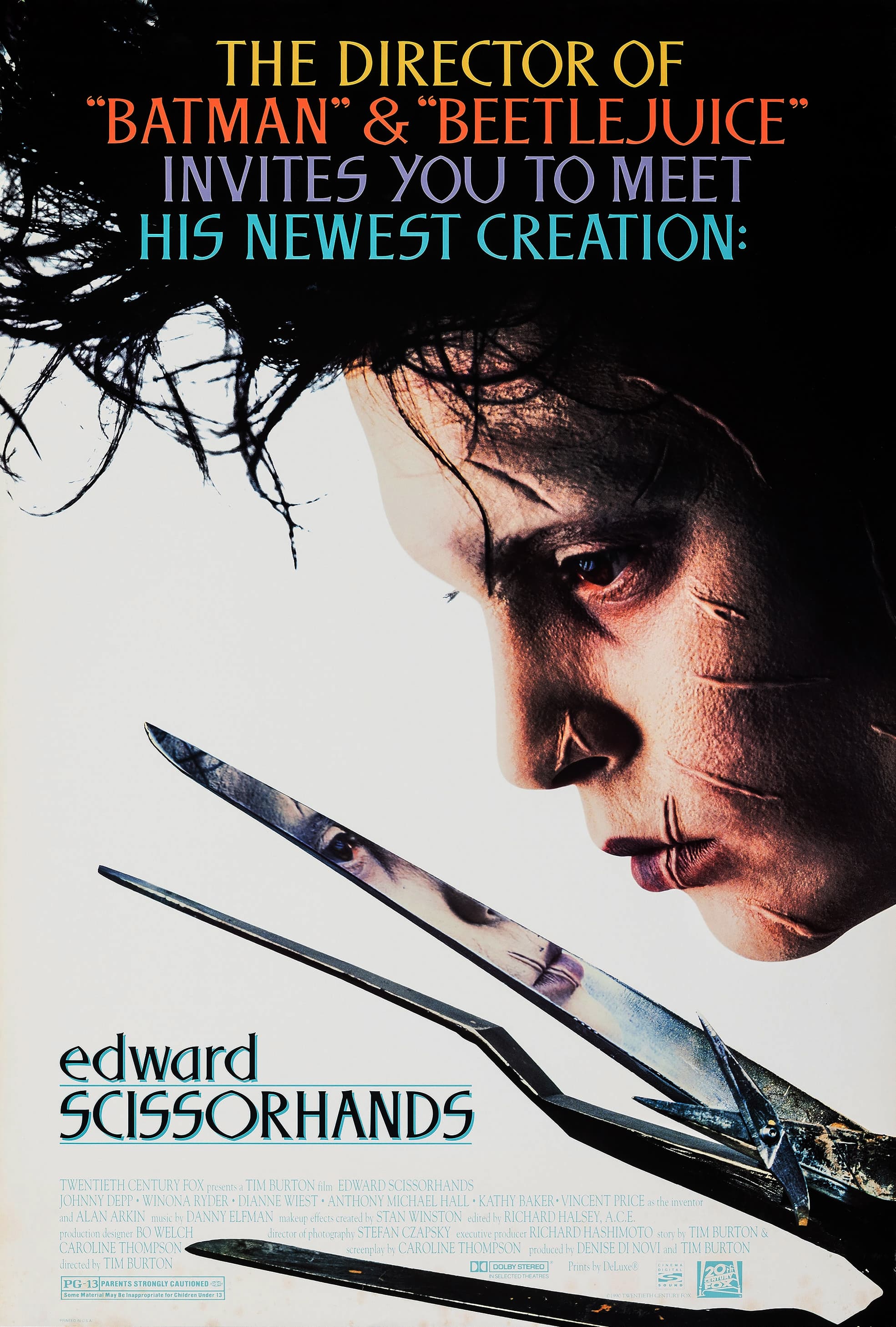
1990 // VHS
Edward Scissorhands
A fairy tale about a man who can’t quite touch the world — and the neighbourhood that can’t quite handle him.
1990 // VHS
Ghost
A murder mystery disguised as a love story — with a man who won’t stop watching over the person he loves.
1990 // VHS
Total Recall
Memory, muscle and a very faulty holiday package — with Mars on the itinerary.