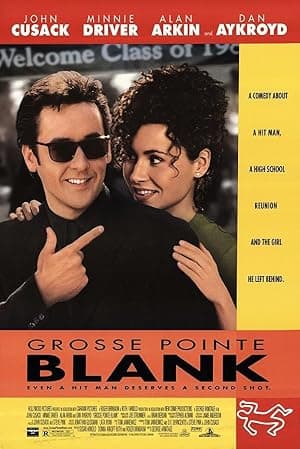
Grosse Pointe Blank
A hitman’s midlife crisis, a high-school reunion and a soundtrack that remembers everything for him.
// The setup
PLAYBACK STARTED
Grosse Pointe Blank is the kind of film that sneaks up on you: it’s ostensibly a dark comedy about a professional killer doing 'one last job', and then it keeps returning its attention to the awkward, embarrassing business of being human. Directed by George Armitage and anchored around Martin Q. Blank, it pairs violence with a very particular kind of nostalgia — the sort that only hits at reunions and on old mixtapes.
THE MOVIE
Martin Q. Blank is still the reason this movie works
What keeps people coming back to Grosse Pointe Blank isn’t the murder set pieces or the cheeky genre mix — it’s the particular puzzle at the movie’s centre: Martin Q. Blank, a professional hit man who flies back to his hometown to do a contract and attend his ten-year reunion. That setup sounds daft on paper. On screen, it becomes oddly human.
Blank arrives as the competent outsider you’d expect, but the film is quietly interested in what happens when competence meets doubt. The drama isn’t only about who he kills; it’s about why he keeps doing it and whether any of it fits the life he thinks he wants.
George Armitage directs with a steady hand that lets the film wobble between comedy, action and romance without collapsing into one note. And the soundtrack — an intelligent mix of an original Joe Strummer score and curated 1980s-era tracks — turns memory into atmosphere, which is remarkably useful when you’re spending a lot of time at a high-school reunion.
THE SETUP
The idea that sets Grosse Pointe Blank in motion
At its simplest, the film pairs two very different obligations: a hit that needs doing and a reunion that’s impossible to ignore. That double booking — ‘one last job’ and ten-year-itch nostalgia — gives the movie its forward motion without turning it into a straight thriller.
The internal tug-of-war matters: Martin’s professional life collides with a private reckoning. He’s trying to reconnect with Debi, the girl he left at prom, while also navigating the arrival of rival killers who treat their trade as a unionised, petty world of rivalries and protocol.
Structurally, the film uses reunion scenes, flashback beats and a carefully chosen roster of 1980s tracks to make memory feel like a plot device. The music isn’t window dressing — it’s how the characters remember who they were, which changes the way every ordinary small-town ritual looks.
And while George Armitage is the director, the film’s tone is the result of a collaboration: the screenplay credits include Tom Jankiewicz, D. V. DeVincentis, Steve Pink and John Cusack, which helps explain the blend of comic asides and sharper moral questions running beneath the jokes.
THE CHARACTER
Why Martin Q. Blank matters
Martin Q. Blank could easily have been a punchline: a hit man with a name like a midlife crisis. Instead, the character works because the film refuses to let him be only one thing. He’s skilled, efficient and bizarrely professional — and yet he’s visibly asking himself whether that’s enough.
That inward questioning is the film’s heartbeat. The story keeps nudging Martin back into ordinary life — high-school friends, parents, ex-girlfriends — which places his odd career in embarrassing, domestic frames where it no longer looks glamorous.
Making Martin the hinge between violent professionalism and suburban normality allows the movie to examine identity without lecturing. The reunion forces comparisons: who he was, who he is, who he might become.
There’s also a tonal through-line that connects Grosse Pointe Blank to other work in the filmmakers’ orbit: participants later linked the movie to the spirit of films like War, Inc., which shares cast and a similar tonal pitch. That same mixture of levity and darkness runs through Martin’s choices.
THE PERFORMANCE
Why John Cusack's performance matters
Contemporary reviewers pointed to John Cusack’s central turn as one of the film’s engines, and that’s a useful floor to build from. The consensus at the time treated his presence as a stabiliser for a script that hops between tones.
That means Cusack becomes the measure by which the film balances dark jokes and genuine unease. Without making broader claims about technique, it’s fair to say that he’s the character the story keeps returning to when the stakes feel ambiguous.
Because the material asks Martin to be both a professional and a man out of time, the performance serves as a connective tissue: it’s how the audience follows the film from comic set piece to quieter conversation.
In short: much of the movie’s tonal confidence depends on the central performance being a reliable point to return to — something critics at the time also noticed.
UNDER THE SURFACE
Grosse Pointe Blank has more on its mind than the plot suggests
Under the jokes and the shootings the film keeps circling a few simple ideas: identity, returning home and whether the choices that define you can be undone. The hit-man conceit is a dramatic shortcut to those questions — it accelerates the moral reckoning.
Returning home in this movie isn’t triumphant. It’s awkward. Reunions are theatrical excuses for people to measure themselves against their past selves, and the film uses that in a neat way: the more ordinary the ritual, the more ridiculous Martin’s profession looks.
Music and nostalgia do the heavy lifting of memory. The curated 1980s tracks and Joe Strummer’s original score are not just background; they’re the way characters hear their younger lives. That gives the reunion sequences a double meaning: fun on the surface, freighted underneath.
Finally, the film is frank about the banality of violence: it presents killing as a job with petty rivalries and bureaucratic tics. That contrast — between everyday small-town rituals and ordinary professional brutality — is where a lot of the film’s uneasy humour comes from.
THE FILMMAKING
How Grosse Pointe Blank was put together
If you want to describe how the film is assembled without getting technical about every camera move, start with the credits. Jamie Anderson is listed as director of photography, Brian Berdan as editor and Stephen Altman as production designer. Those are the people who shape the film’s look and rhythm.
Editor Brian Berdan’s role is a quiet but essential one: a movie that switches between comedy, action and quieter domestic scenes needs editing that can change gears without popping the audience out of the story.
On the production-design front, Stephen Altman’s work is what lets small-town rituals and reunion sets feel convincing enough to make the more absurd elements — a hit man in his old school gym, for example — register as both commonplace and strange.
Those credits explain why the film feels like a coherent blend rather than a mishmash: the technical crew provide the scaffolding that allows the script’s tonal leaps to land.
PURE 80S
Grosse Pointe Blank could not belong to any other decade
Released in 1997, the film sits neatly inside a particular 1990s lane: studios and indies were gleefully mixing genres and leaning hard on nostalgia for the previous decade. Grosse Pointe Blank does both — it’s a rom-com/hitman movie that uses 1980s music as emotional shorthand.
That soundtrack strategy — combining an original Joe Strummer score with punk, new-wave and ska tracks from the 1980s era — reflects a common 1990s trick: use familiar pop to make adult characters feel tethered to their youth.
The timing of its release places it among other reunion-flavoured movies of the period. The industry moment was one in which studios were willing to let comedy and darker material coexist in mainstream releases.
Put simply: the film would read differently outside the late 1990s, because the decade’s appetite for genre-melting and carefully curated pop nostalgia is baked into the way the story is told.
WATCHING IT NOW
What has aged — and what hasn't
A lot of what keeps Grosse Pointe Blank watchable today is structural rather than cosmetic. Its mix of dark humour and genre blending is representative of a strain of 1990s indie-studio crossover films, and that particular tone still feels familiar in modern 'hitman-as-antihero' comedies.
The film’s core question — what happens when you return home and are forced to measure yourself against your past — is stubbornly timeless. Reunion scenes still sting and embarrass in the same way they did on first viewing.
Where the movie dates itself is mostly in its specific cultural references and the particular songs that signal the characters’ youth; but those are also what many viewers enjoy. The music functions as memory, and memory is allowed to be both flattering and unforgiving.
Overall, the elements that age best are the ones tied to character and theme rather than fashion or fleeting cultural jokes. The ‘returning home’ story still has teeth.
THE LEGACY
Why Grosse Pointe Blank still matters
One practical sign that the film left a mark is its soundtrack: it reached the Billboard 200 and even prompted a second volume of associated songs. That’s a neat, concrete legacy — people bought these records because the music mattered to how the film felt.
On a tonal level, the movie is often named in critics’ and fans’ lists of notable 1990s black comedies. It’s the sort of film that journalists and retrospectives tend to return to when discussing that blend of humour and darkness.
There’s also the informal succession line: participants have publicly linked War, Inc. to this film, and coverage of both often treats them as cousins — not sequels, but showing a similar sensibility.
Between a commercially successful soundtrack and steady references in later writing about 1990s dark comedy, Grosse Pointe Blank has an afterlife that’s modest but tangible.
THE VERDICT
Does Grosse Pointe Blank still hold up?
Yes — with qualifications. If you’re drawn to movies that wedge serious questions about identity into the middle of a genre exercise, this one still pays dividends. The premise — a hit man returning to his hometown for a job and his ten-year reunion — remains a clever way to force character and comedy into collision.
The film’s central conflicts — Martin’s existential doubts, the reappearance of Debi, and the professional threats embodied by characters like Grocer — still create a satisfying push-and-pull between personal stakes and external danger. That framing keeps the plot compact and purposeful.
A big part of what helps the film land is its tonal balance. Contemporary reviewers singled out John Cusack’s central turn as a key reason the movie managed to hold together, and that steadiness matters when the script moves from party-room awkwardness to punch-ups and paranoia.
If you watch now, expect a movie with sharp structural ideas, a soundtrack that does emotional bookkeeping, and a willingness to treat violence as ordinary work. It isn’t flawless, but it’s honest about what it wants to be: a dark comedy that remembers people before it remembers bullets.
Share this movie
// Keep watching
More movies from the 90s
If Grosse Pointe Blank is your kind of movie, there's plenty more on the shelves worth rewinding.
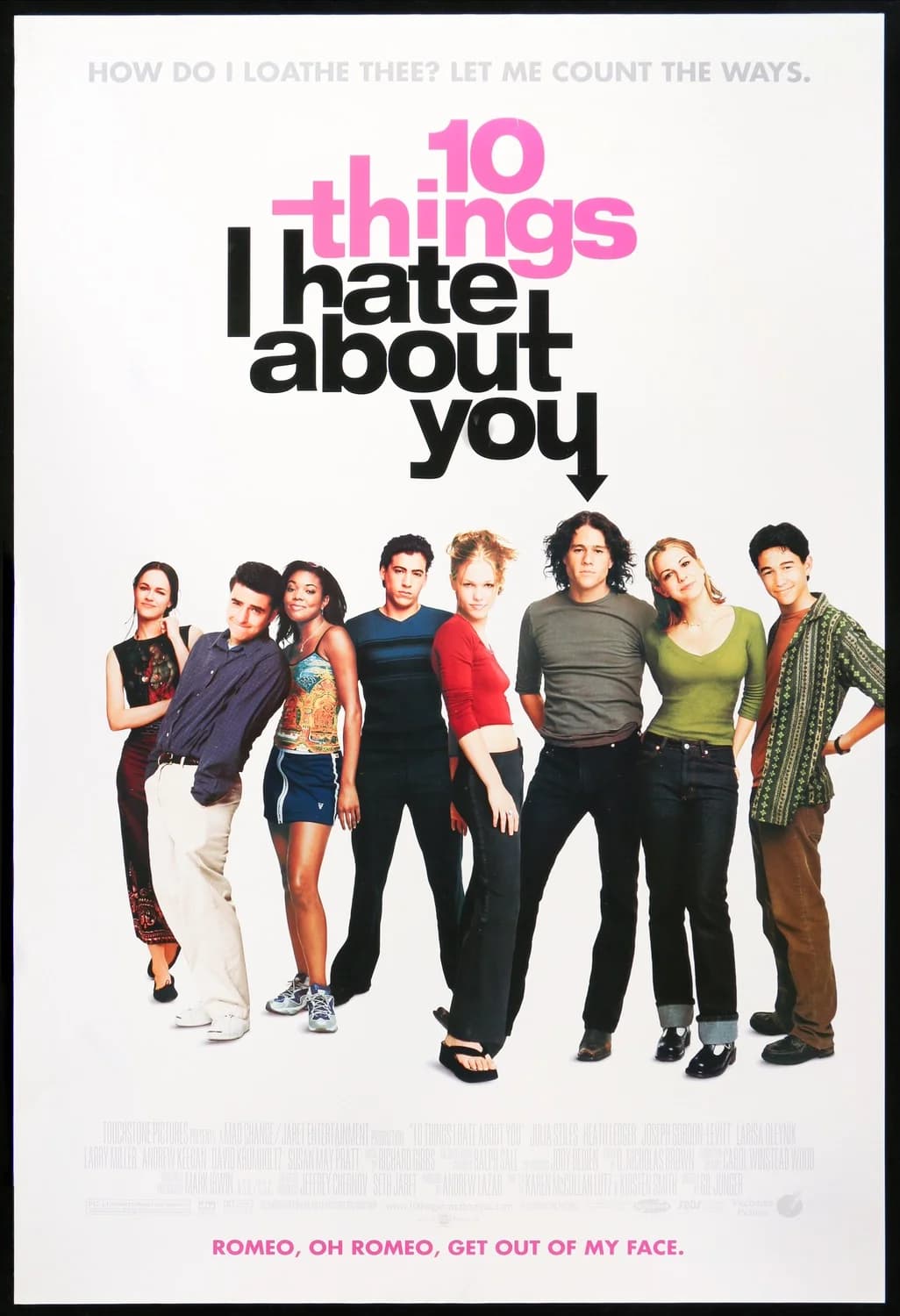
1999 // VHS
10 Things I Hate About You
Sibling rules, a rooftop serenade and one very stubborn Kat — Shakespeare in a school corridor.
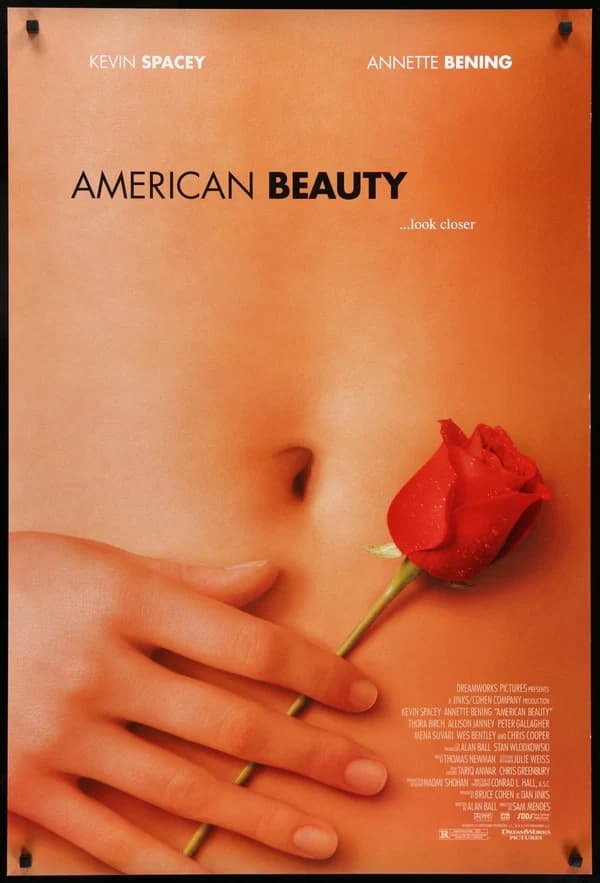
1999 // VHS
American Beauty
Lester Burnham, suburban rot and a midlife argument that still stings.
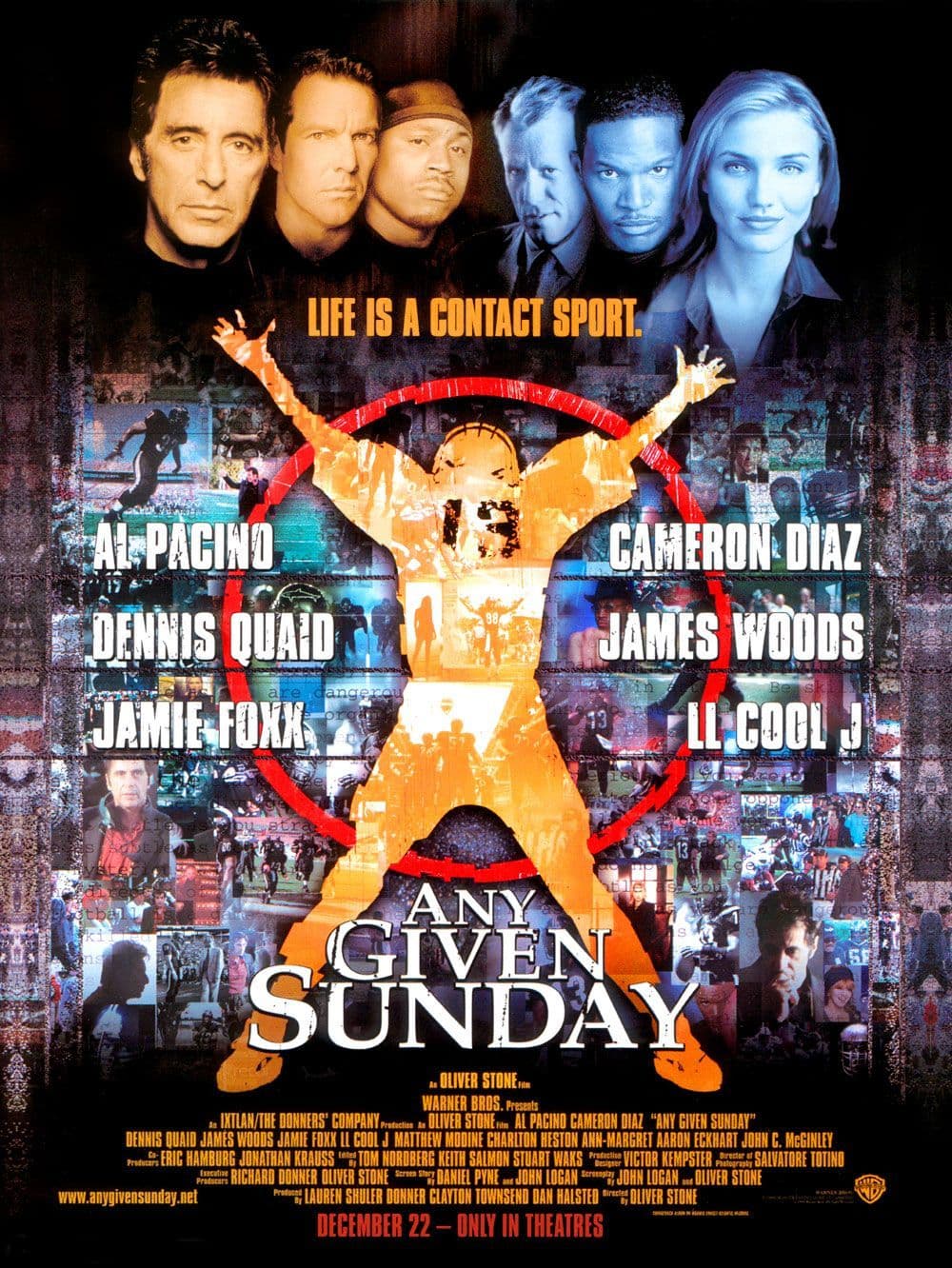
1999 // VHS
Any Given Sunday
Al Pacino's coach anchors the chaos of a film about football turned into product — loud, messy and oddly persuasive.