Hackers
A film about teenagers who treat computers like motorbikes — loud, dangerous and worth the risk.
// The setup
PLAYBACK STARTED
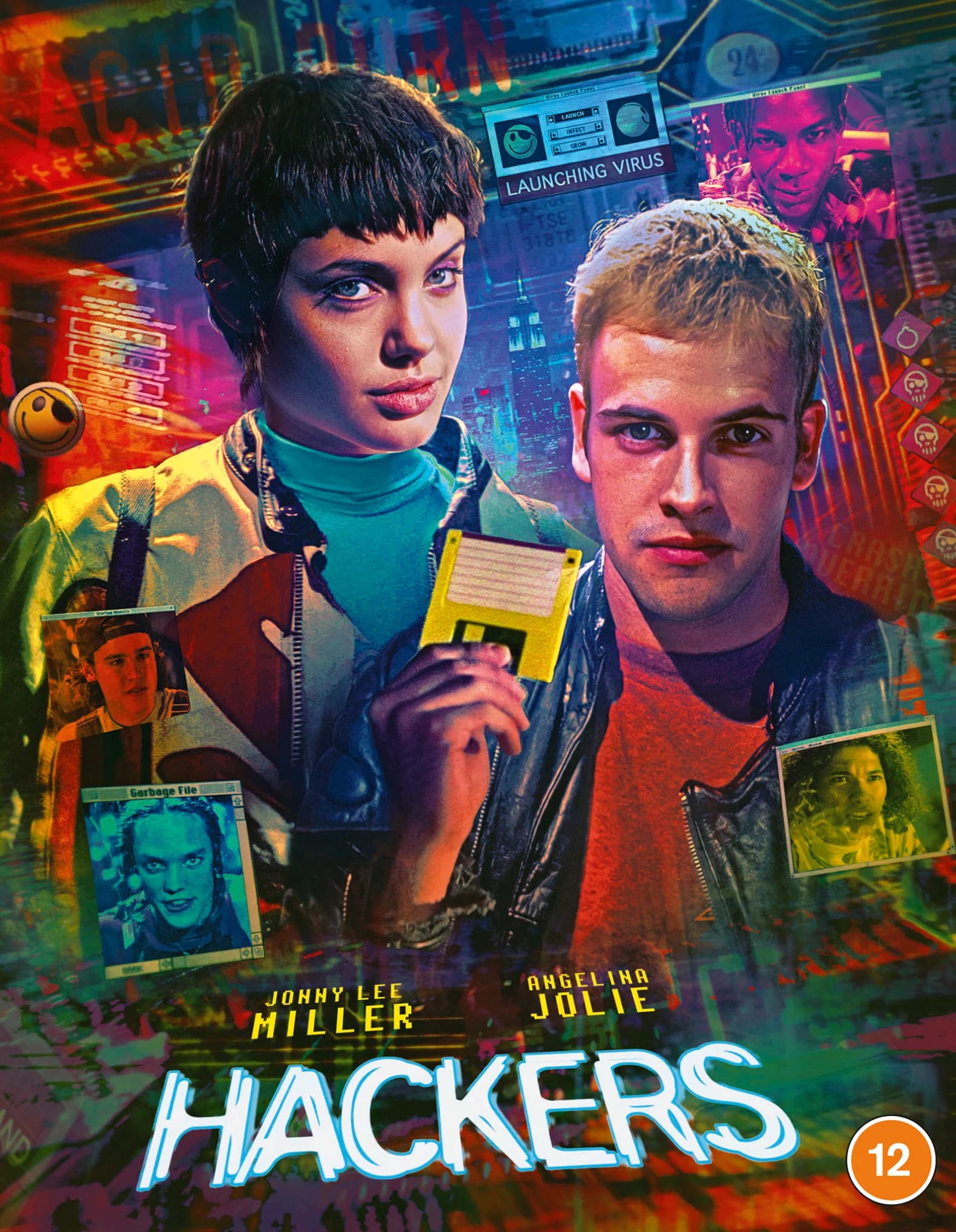
If you remember Hackers at all, you probably remember the feel before the story: a neon rush of confidence, a computer world that looks like a nightclub and one kid trying very hard to be anonymous while still being himself. Directed by Iain Softley and anchored by the exiled prodigy Dade Murphy, it’s a movie that still wants to be about belonging as much as it is about breaking into supercomputers.
THE MOVIE
Dade Murphy (Zero Cool / Crash Override) is still the reason this movie works
Hackers starts with a neat trick: instead of opening on a corporate boardroom or a villain monologue, it opens on a kid being hauled into the legal system. Eleven-year-old Dade 'Zero Cool' Murphy is prosecuted for crashing systems, stripped of his keyboard privileges and told he can't touch a computer until he's eighteen. That enforced absence becomes the first half of his personality — a prodigy with a scar, someone who has to rediscover what he lost.
On his 18th birthday the plot hands him an opportunity. Now using the handle 'Crash Override', Dade relocates to New York, bumps into other teenage hackers and finds himself dragged into a corporate conspiracy after a novice's break-in hits the wrong machine. The story sets up a simple but effective engine: a banned genius trying to stay invisible while still doing what he does best.
That engine is why Iain Softley's film still gets talked about. It isn’t just the neon or the soundtrack; it’s having a central character whose past punishment and desire for anonymity give stakes to every keyboard stroke. Jonny Lee Miller plays that part — a young hacker shaped more by a lost childhood than by adolescent swagger — and the movie rides on the push-and-pull between secrecy and belonging.
THE SETUP
The idea that sets Hackers in motion
The film keeps its premise tidy. The immediate spark is a young, inexperienced hacker — Joey Pardella — who pokes into the wrong corporate computer and leaves behind an unfinished file. That single mistake becomes the loose thread that pulls the teenage crew into something much larger.
The incomplete file is used as planted evidence to make the teens look responsible for a destructive program, and once that framing exists the story becomes a clear contest: a group of young hackers versus the person with the most to hide.
On the other side is a corporate security officer and master hacker known as 'The Plague', who deliberately unleashes a worm to conceal embezzlement and shift blame. That villainy turns the movie into a classic setup — kids forced to clear their names by out-hacking someone whose job, and character, is all about control.
Mechanically, Hackers gives itself some distinctive rules: identities live in handles and aliases, face-to-face meetings still happen in public spaces, payphones are small plot devices, and the film stages hacking as stylised virtual spaces. Those choices keep the action fast and the stakes human — it’s less about equations and more about who belongs to whose world.
THE CHARACTER
Why Dade Murphy (Zero Cool / Crash Override) matters
Dade is the plot’s emotional lever. We meet him as the kid who broke the rules and paid — legally banned from computers until adulthood — and then watch him try to carve out a life that keeps the best of his old self intact without falling back into the reckless behaviour that got him in trouble.
That history gives his decisions weight. He isn't a blank-slate teenager looking for thrills; he’s a young person carrying an imposed exile and, with it, a quiet need to reconnect with a community he was forced away from.
The movie funnels most of its choices through Dade: anonymity versus visibility, solitary skill versus team loyalty, avoidance versus responsibility. Those are boring-sounding stakes in the abstract, but on screen they become the reason the action feels personal rather than procedural.
Casting aside any talk of screen-by-screen technique, the character’s set-up — ex-con, prodigy, masked by handles — makes him the sensible axis for a film that wants to be both a teen picture and a techno-thriller.
UNDER THE SURFACE
Hackers has more on its mind than the plot suggests
At first glance Hackers reads like a rug pulled from a corporate server: a neat anti-corporate setup where the kids are the underdogs and the company is the faceless threat. But beneath that is a preoccupation with how identity is forged inside a subculture — how screen-names, rituals and shared references become the social glue for outsiders.
It’s also a film about youthful rebellion that wants to be about belonging. The hackers are troublemakers and community members at the same time; their rule-breaking is partly performance and partly an attempt to belong to a world that understands them.
The anti-corporate thread is straightforward: a company uses technology to hide financial wrongdoing, and the narrative asks who you trust when institutions have both power and secrecy. The conspiracy gives the teens a moral reason to break the rules, which is narratively convenient but also emotionally sensible.
Finally, the movie plays with the border between virtual and physical reality. Online handles, meetups and operations in the real world blur into one another, making the film less about code and more about how technology reframes identity and territory.
THE FILMMAKING
How Hackers was put together
One big reason Hackers feels like a time capsule is the way it chose to look and move. Andrzej Sekuła is credited as director of photography and contemporary reviewers singled out the film's iridescent, highly stylised cinematography. The camera and the lighting don’t aim for documentary grit; they aim for mood.
Production designer John Beard helped turn abstract digital ideas into physical places. The sets and wardrobe deliberately translate online concepts into tangible images — glossy spaces that give the film an almost tactile version of cyberspace rather than trying to show literal screens and code.
The editorial approach supports that energy. Editing credits go to Christopher Blunden and Martin Walsh, and critics at the time praised the brisk, cut-driven pacing. The film moves quickly from scene to scene, which suits a story about small, fast minds outpacing larger institutions.
Finally, there’s a hybrid of locations: New York exteriors sit alongside U.K. studio production. That mix makes the movie feel both rooted and constructed, which is appropriate for a film that’s literally staging digital fantasy in the real world.
PRACTICAL EFFECTS
The effects work that gives Hackers its physical personality
Hackers chooses to represent hacking with theatrical, physical techniques rather than realistic terminal screens. The movie uses in-camera lighting, projection and production design to create visual metaphors for what’s supposed to be happening on a modem or a server somewhere.
That decision keeps viewers inside a stylised experience; the film never tries to be a manual for code, it wants you to feel what a hack is rather than read it. The projections and lighting turn lines of data into shapes and colours that register emotionally.
Because those are in-camera and on-set choices, they make the virtual feel hand-built. The results are deliberately artificial — that’s the point — and they give the movie a theatrical personality that matches its youthful cast.
Read another way: Hackers asks you to buy into a visual shorthand. If you accept that shorthand, the film’s abstract effects become part of its charm rather than a distraction.
PURE 80S
Hackers could not belong to any other decade
Hackers emerged at a moment when mainstream interest in the internet and hacker communities was surging. The production drew on contemporary sources like 2600: The Hacker Quarterly and the era's public fascination — and concern — with high-profile prosecutions.
Critics and later writers placed it squarely in a mid-90s wave of 'cyberspace' films: some tried to be serious thrillers, while others — like Hackers — favoured stylised, youth-oriented takes on the same anxieties.
The soundtrack cements the period. Populated with electronic and club artists of the moment and later reissued multiple times, the music ties the film to mid-90s club and electronica culture and the way that scene folded into mainstream ideas about technology.
Because it was researched with input from actual early-1990s hacker communities and used real-world handles and references, the film wears its era on its sleeve while trying to pay some respect to the people it depicts.
WATCHING IT NOW
What has aged — and what hasn't
Seen as a teen picture, Hackers still carries the energy of youthful rebellion and belonging. Its central cast are young people trying to find their place and that sense of discovery — and mischief — translates across decades.
The film sits comfortably in the mouse-to-myth lineage that starts with WarGames: young protagonists use computer intrusions to trigger consequences far bigger than themselves. That DNA makes Hackers feel like part of a continuing conversation about technology’s social impact.
Plot devices such as the Gibson supercomputer and the Da Vinci virus remain the film’s story engine: they are clear, dramatic hooks that put teenagers and institutions on a collision course. They might feel schematic, but they keep the movie focused on the chase.
Put simply, the emotional building blocks — youth, exclusion, skill, mischief — are resilient. They’re the reasons the film can still be entertaining even when its specifics read like period detail.
THE LEGACY
Why Hackers still matters
Hackers developed a cult following in the decades after release. That following has kept the film in the conversation, pushed anniversary interviews and given the movie a life beyond its initial reviews.
The soundtrack’s multiple reissues have helped, too. For many people the music is the quickest route back to the film’s particular atmosphere — a reminder that the movie was as much about a cultural moment as it was about crime or technology.
Filmmakers and commentators have often pointed to Hackers as a formative, if deliberately stylised, depiction of hacker culture. It’s cited not because it’s a documentary but because it captured a mood and a look that later nostalgia kept returning to.
Put another way: Hackers matters less as a literal primer on hacking and more as a cultural artifact that shaped how film and popular memory imagine the 1990s cyberworld.
THE VERDICT
Does Hackers still hold up?
Yes — with qualifications. If you come looking for a documentary about network security you’ll leave disappointed; contemporary critics already flagged thin plotting and questions about technical realism. The film’s pleasures are elsewhere: it’s about a banned prodigy returning to his world, the social rituals of a subculture, and a clear-cut anti-corporate opposition that gives the teenagers a purpose.
If you enjoy a movie that prioritises personality over precision, Hackers is rewarding. The story mechanics — handles and aliases, face-to-face meetups and payphone calls, and the central MacGuffins of the Gibson supercomputer and the Da Vinci virus — keep the plot moving and give the teens an urgent, concrete goal.
Visually and aurally it still works on its own terms: the cinematography and production choices create a glossy, stylised environment and the soundtrack ties the whole thing to a mid-90s club/electronica moment. Those elements make watching it a specific experience rather than a bland nostalgia trip.
So should you watch it? If you want a neat time capsule that remembers why youth and technology together once looked like a revolution, yes. If you want a finely argued thriller of corporate procedure and forensic realism, not so much. Hackers is most truthful as a portrait of belonging disguised as a techno-thriller — and for that reason it’s still worth the screen time.
Share this movie
// Keep watching
More movies from the 90s
If Hackers is your kind of movie, there's plenty more on the shelves worth rewinding.
1995 // VHS
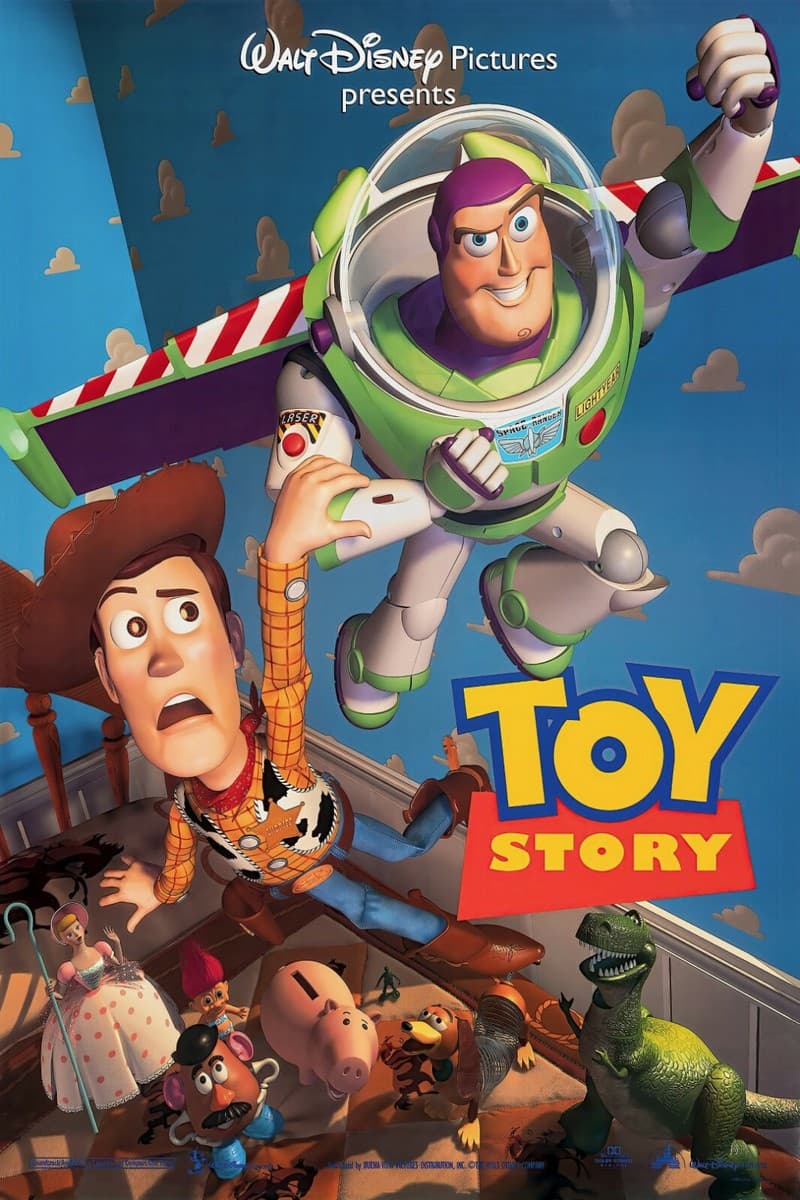
Toy Story
A pull‑string cowboy, a deluded space ranger and a small, very particular war over being loved.
1999 // VHS
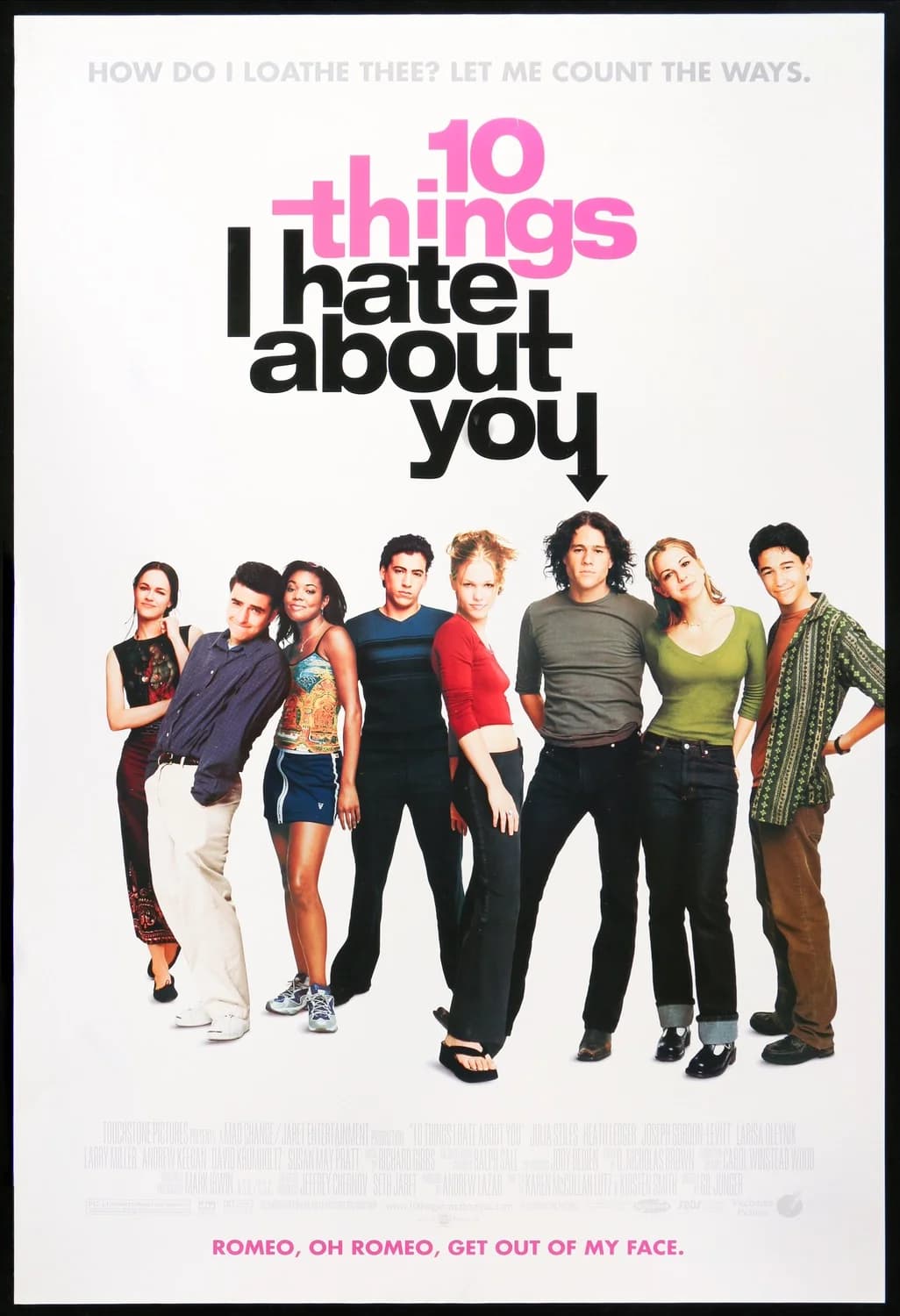
10 Things I Hate About You
Sibling rules, a rooftop serenade and one very stubborn Kat — Shakespeare in a school corridor.
1999 // VHS
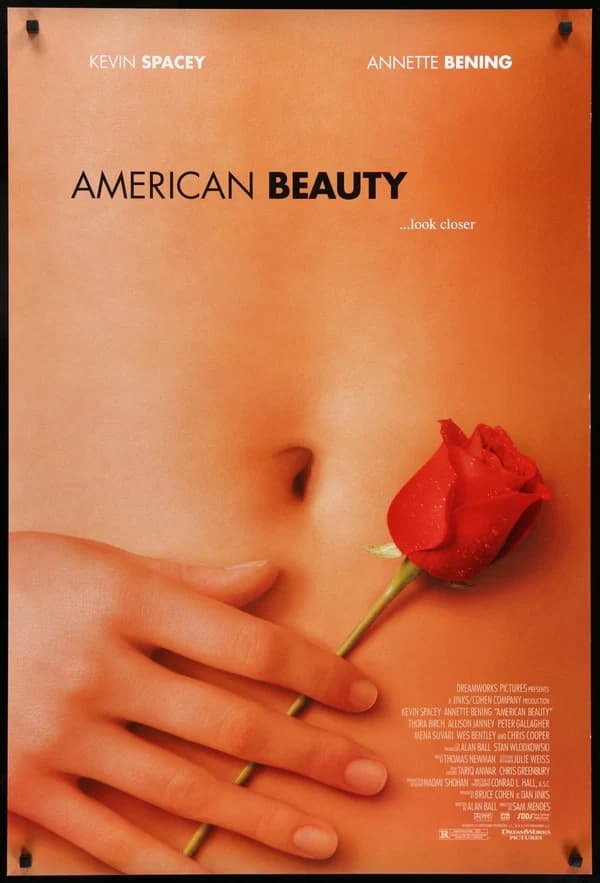
American Beauty
Lester Burnham, suburban rot and a midlife argument that still stings.