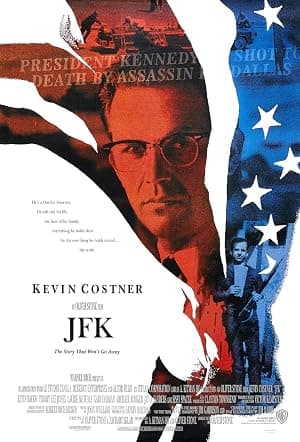
JFK
One prosecutor’s obsession against the official story — and a movie that dares you to decide which to trust.
// The setup
PLAYBACK STARTED
Oliver Stone’s JFK is less a tidy whodunnit and more a cinematic dare: follow Jim Garrison as he refuses the neat answer handed down by history and makes a very public meal of doubt. It’s long, occasionally furious and unapologetically theatrical — and that combination is exactly why people keep coming back to it.
THE MOVIE
Jim Garrison is still the reason this movie works
If you remember one thing from JFK it will probably be that the film is organised around a single stubborn idea: Jim Garrison will not accept the Warren Commission’s answer. That refusal — not a parade of flashy reveals — is the engine that drives Oliver Stone’s film.
Stone hands the story to Garrison and asks us to keep up. The New Orleans district attorney reopens the assassination, leaning into suspicion and procedure until every archival clip and courtroom flourish becomes part of his method of questioning the public story of Dallas, November 22, 1963.
That set-up makes the film feel less like a conventional thriller and more like an extended cross-examination. Kevin Costner’s Garrison stands at the centre of it all, and Stone’s 1991 film uses dramatized reconstructions, documentary-style inserts and archival material to turn doubt into a kind of cinematic evidence.
THE SETUP
The idea that sets JFK in motion
At its simplest the film follows New Orleans district attorney Jim Garrison as he reopens the investigation into President Kennedy’s assassination. That choice gives Stone a clear throughline: one man versus an official narrative.
The public murder in Dallas and the Warren Commission’s conclusion that Lee Harvey Oswald acted alone provide the historical hinge. Stone uses that hinge not to retell every detail but to give Garrison a reason to pick apart what was presented as settled fact.
From there the movie arranges evidence and testimony — archival clips, reconstructions, courtroom scenes — so that the viewer experiences the investigation as a process rather than a tidy solution.
It’s a neat premise because it turns procedure into drama: the prosecution’s hunt, and the act of insisting that things be questioned, becomes the story’s tension.
THE CHARACTER
Why Jim Garrison matters
Garrison is the movie’s compass. He’s not presented as a flawless hero but as an obsessive prosecutor whose certainty that there was a conspiracy shapes everything he does. That single trait makes him dramatically interesting — stubbornness turns into purpose.
Because Stone frames the film from Garrison’s point of view, the audience learns to think in prosecutorial terms: timelines, witnesses, patterns. The film’s investigative structure mirrors Garrison’s mind; his suspicion becomes a way of organising the whole picture.
You can dislike Garrison’s certainty and still admit it’s narratively useful. The film needs someone who will not stop asking uncomfortable questions, and that insistence is what keeps the sprawling material coherent.
Finally, the screenplay’s roots in Garrison’s own book and contemporary research mean the character isn’t an invention so much as a theatricalised version of the man who actually pushed the case into the public arena.
THE PERFORMANCE
Why Kevin Costner's performance matters
Contemporary responses singled out the ensemble but kept coming back to Costner as the film’s anchor. That’s an important, limited fact: reviewers noticed his centrality.
What that means for viewers is practical. The movie sprawls — a towering running time, multiple strands — and it needs a focal point. Costner’s Jim Garrison provides that focal point, a named place to land when the film’s shifts threaten to scatter attention.
Acknowledging that anchoring role keeps the conversation honest: the movie is built around a figure who pulls contested material into a single throughline.
So whether or not you find every claim persuasive, Costner’s presence helps hold the film together when Stone pushes into argumentative and archival territory.
UNDER THE SURFACE
JFK has more on its mind than the plot suggests
On one level JFK is a detective story; on another it’s a film about how we make history. The movie is fascinated by the act of contesting received truth — how evidence is gathered, presented and interpreted.
Conspiracy and institutional distrust are everywhere: Stone isn’t merely dramatizing an alternative explanation, he’s interrogating the reliability of institutions that claim to produce the ‘official’ story.
That sits beside an interest in law as theatre. Garrison’s prosecution treats evidence as performance — witnesses, cross-examination, the staging of facts — and the film loves the idea that courtroom ritual can rewrite public memory.
Finally, the film is mindful of how media and memory shape national trauma. It mixes archival footage and reconstructions to show that what we remember is always an edited version of events, and that editing is political.
THE FILMMAKING
How JFK was put together
If the movie feels like a collage, that’s on purpose. Editing is a storytelling tool here: Joe Hutshing and Pietro Scalia’s cuts shape the argument as much as any piece of dialogue, letting the film jump between reconstruction and archive with a persuasive rhythm.
That lateral montage — the way images and clips are set against one another — is how Stone translates scepticism into cinema. The editing doesn’t just clarify the case; it stages doubt.
Robert Richardson’s cinematography also gives the film its character; the work was recognised at the 1992 Academy Awards. Paired with on-location shooting in Dallas and New Orleans, the production reconstructs early 1960s environments so the dramatized sections sit comfortably alongside the archival material.
In short, the film’s identity comes from the way direction, camera work and editing combine to make argument feel cinematic rather than merely expository.
PRACTICAL EFFECTS
The effects work that gives JFK its physical personality
Stone refuses to rely on digital trickery; instead the film uses archival footage, recreated period material and optical composites to make past and present coexist on screen.
That approach matters because it blurs the boundary between documentary and drama. When a recreated home-movie sequence is composited into archival images, the result reads as evidence even when it’s constructed.
One obvious example is the Zapruder-like home-movie material: recreations and composited inserts are used deliberately to merge documentary sources with dramatized scenes.
The net effect is tactile: the film asks you to accept reconstructed moments as part of the visual record, and that choice pushes the viewer into a more active relationship with the material.
PURE 80S
JFK could not belong to any other decade
JFK sits squarely in Oliver Stone’s early-1990s political phase. It’s part of a string of films from that moment in which Stone turned presidential history into a public argument on film.
That placement is meaningful. The movie isn’t interested in detached archival study; it wants to persuade, to provoke debate and to be discussed in institutional settings — museums and retrospectives picked up on that aspect of Stone’s political filmmaking.
Released in 1991, the film felt like a culmination of Stone’s appetite for cinematic intervention in history: take contested narratives, dramatize them vividly, and invite the public back into a dispute.
Seen this way, JFK is a product of its moment not because of style alone but because of its willingness to treat cinema as a forum for political argument.
THE LEGACY
Why JFK still matters
The film’s technical craftsmanship has been repeatedly recognised: it won Oscars for cinematography and film editing, a reminder that however contentious its argument, it was made with distinctive cinematic skill.
But the lasting conversation around JFK is about something else — its provocation. At release it generated mainstream controversy over accuracy, composite characters and sources, and it pushed public debate about the assassination and the release of classified material.
Stone and the production leaned into that debate: the documented screenplay and research volume published in 1992 shows they wanted the film to live as a piece of research as much as a drama.
Even the existence of a Director’s Cut and the film’s continued presence in discussions of cinema and persuasion underline that JFK is treated as more than a movie: it’s a filmed argument people still return to when they want to talk about evidence, doubt and how history is told.
THE VERDICT
Does JFK still hold up?
Short answer: yes — but with a health warning. JFK remains compelling because it’s less interested in offering a neat answer than in making you think about how answers are made. Garrison’s investigation, and the way the film stages it, still pulls you into argument.
Stone assembles his case through dramatized scenes, archival footage and documentary-style inserts; the result is persuasive in the sense that it makes you engage with evidence rather than passively accept a tidy official story.
That doesn’t settle the historical debate — the film openly draws on Garrison’s own book and other contemporary research — but it does succeed as a piece of persuasion: the movie is designed to unsettle received wisdom and to place the burden of proof back onto institutions.
If you’re prepared for a long, partisan and occasionally theatrical experience, JFK remains worth watching. It’s a film that asks you to judge the evidence yourself, and that insistence is a rare thing in political cinema.
Share this movie
// Keep watching
More movies from the 90s
If JFK is your kind of movie, there's plenty more on the shelves worth rewinding.
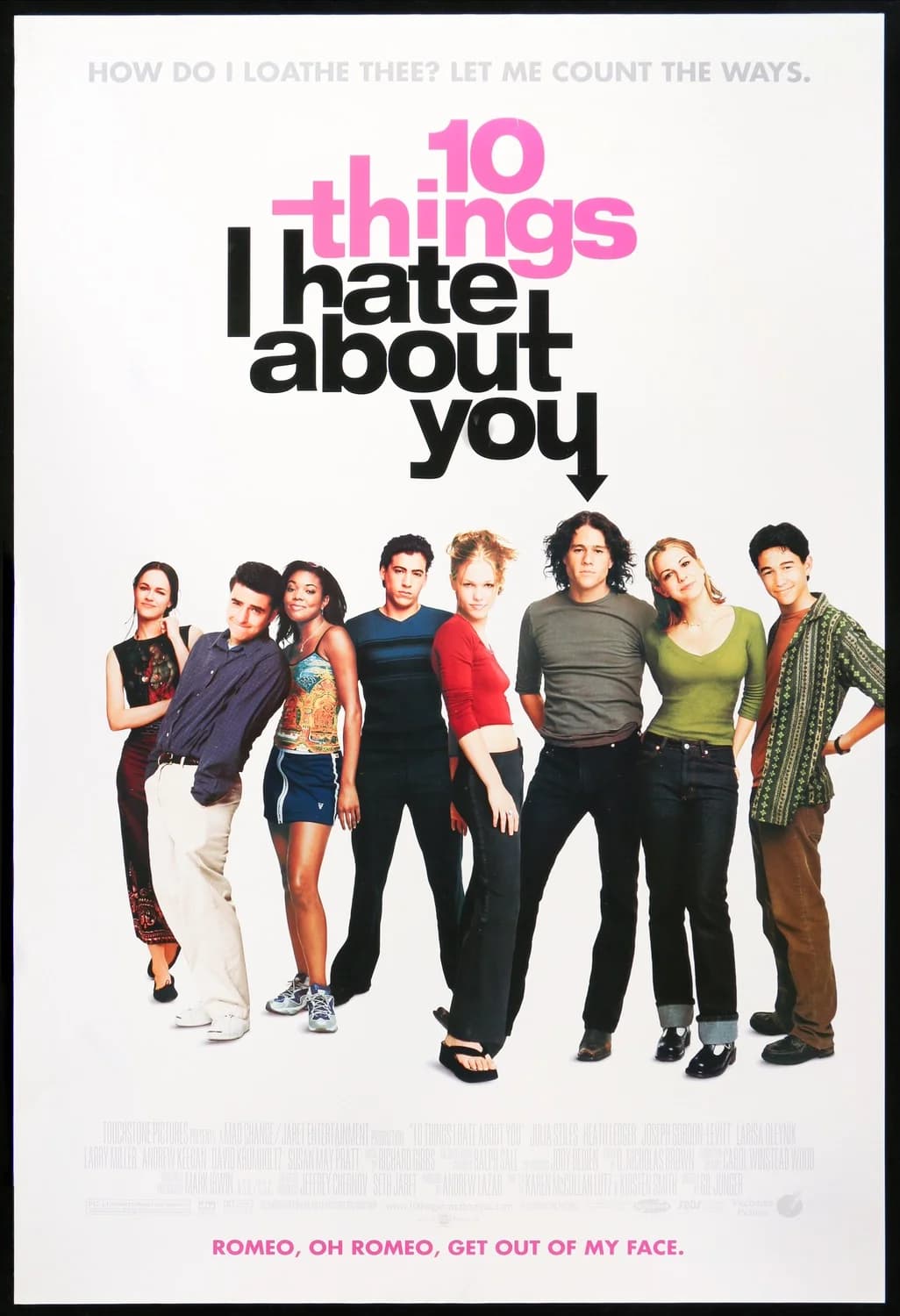
1999 // VHS
10 Things I Hate About You
Sibling rules, a rooftop serenade and one very stubborn Kat — Shakespeare in a school corridor.
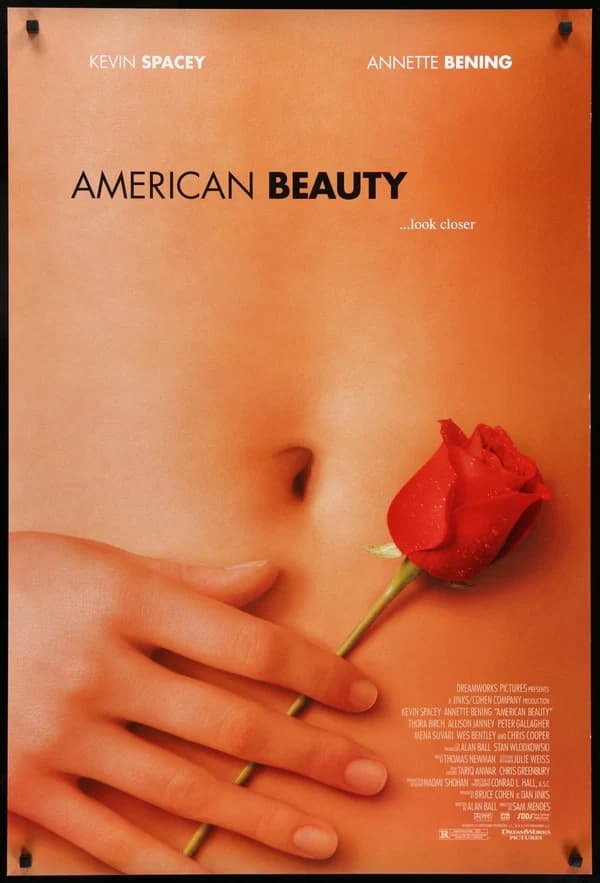
1999 // VHS
American Beauty
Lester Burnham, suburban rot and a midlife argument that still stings.
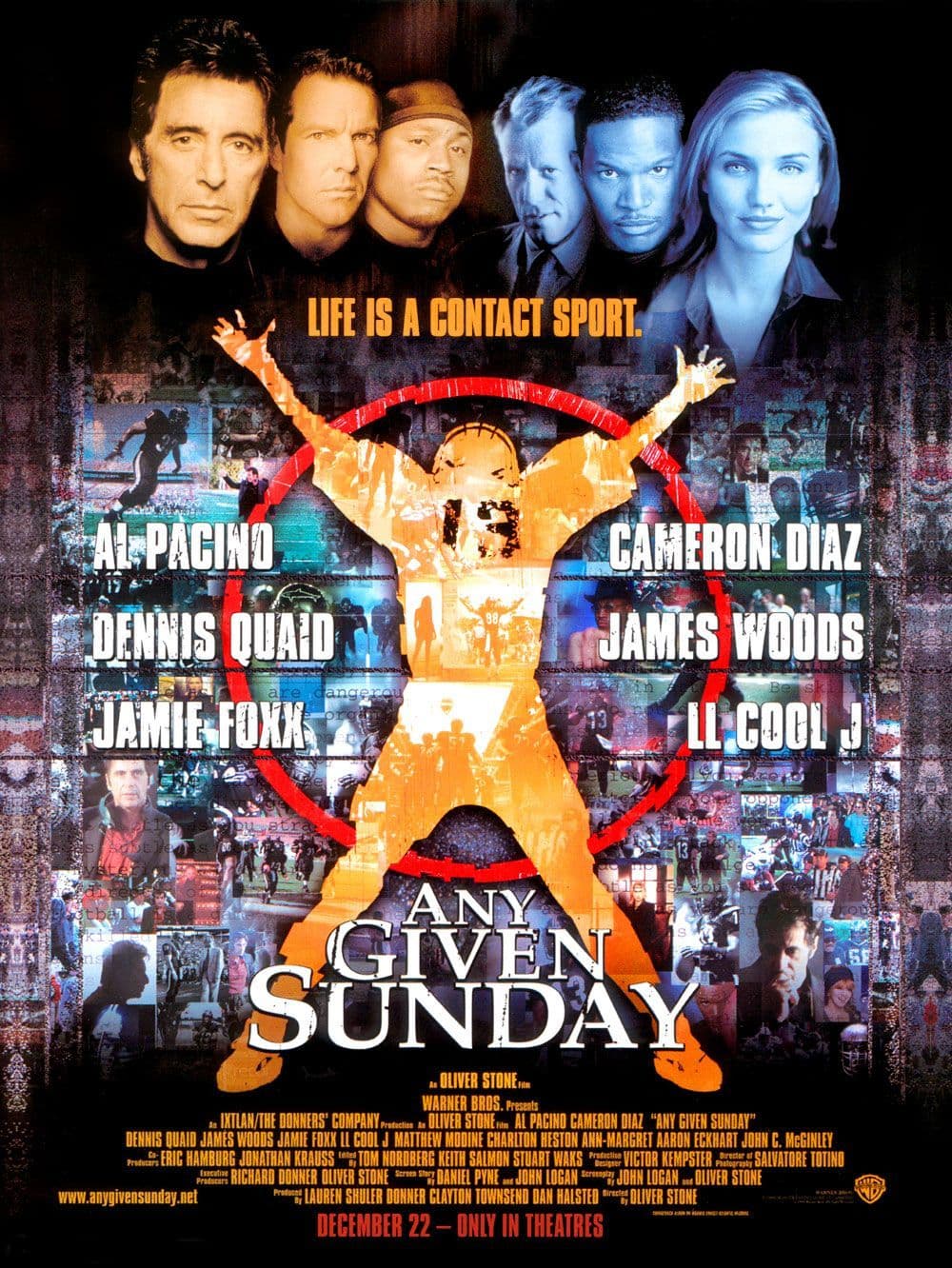
1999 // VHS
Any Given Sunday
Al Pacino's coach anchors the chaos of a film about football turned into product — loud, messy and oddly persuasive.