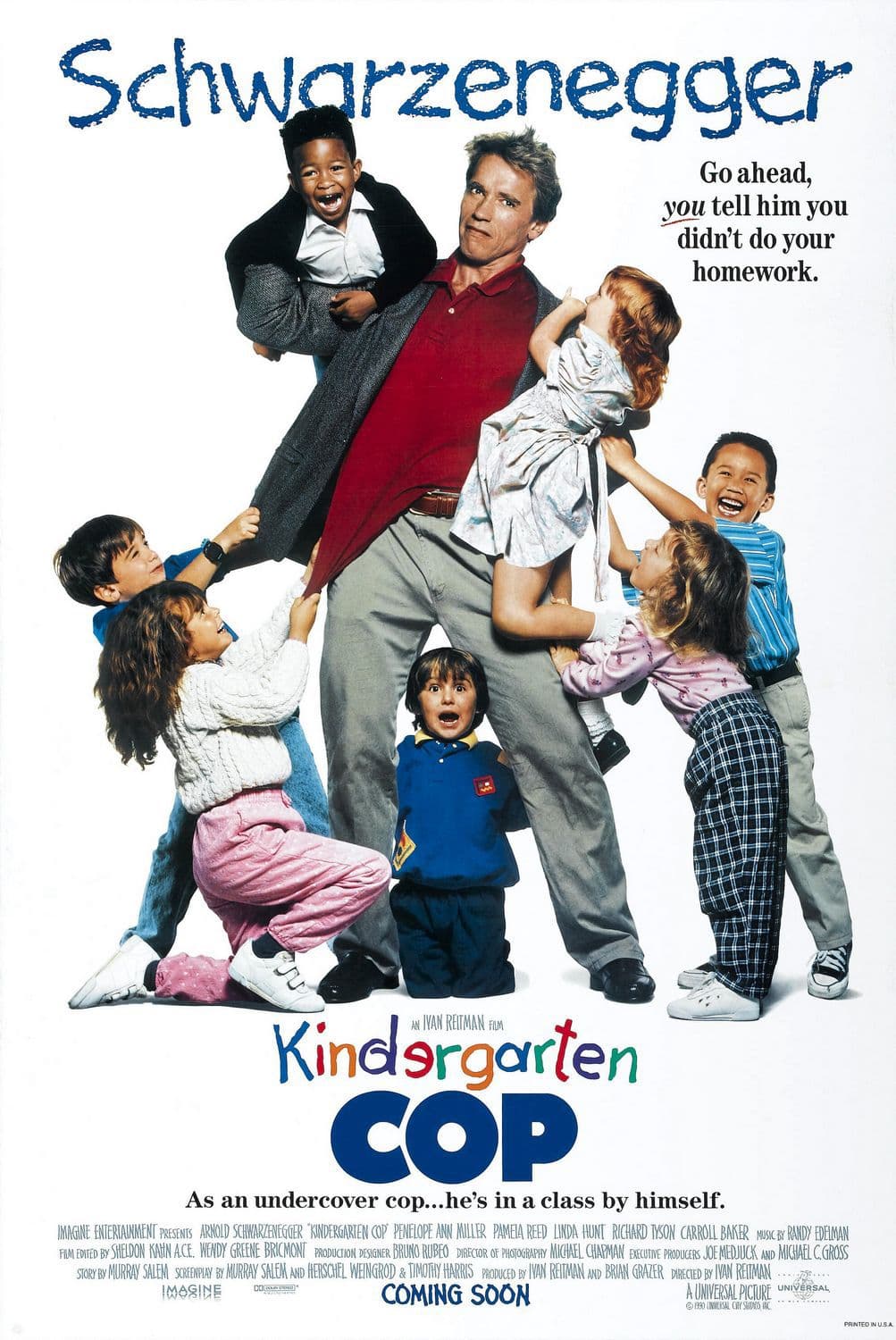
Kindergarten Cop
A gun-toting cop, a glue stick and the slow undoing of a hard man.
// The setup
PLAYBACK STARTED
Kindergarten Cop isn't a straight action film pretending to be polite; it's an action star learning patience, one glittery craft at a time. Ivan Reitman's film pins a tough Los Angeles detective—Detective John Kimble—into a classroom where the case is child protection and the clues come in finger paint.
THE MOVIE
Detective John Kimble is still the reason this movie works
There are plenty of selling points to name when someone mentions Kindergarten Cop—Arnold Schwarzenegger in a cardigan is a headline, naturally—but what keeps the film from being a one-joke conceit is that its premise actually asks a proper question of the central figure. Detective John Kimble is sent undercover as a kindergarten teacher to find and protect the young son of a violent criminal; it’s not a gag that runs out, it’s a pressure cooker that tests him.
That test is essentially about two things: what happens when a hard-edged Los Angeles detective is shoved into domestic life, and how a macho action-star persona can be coaxed into something softer without losing its spine. The film balances classroom chaos with a real police investigation, so the comedy sits beside stakes rather than replacing them.
Ivan Reitman directs, and the movie’s timing—110 minutes of leaning into both the family-friendly and the thriller elements—helped present Schwarzenegger as the so-called 'kinder, gentler' version of himself without pretending he’d stopped being an action presence.
THE SETUP
The idea that sets Kindergarten Cop in motion
The engine is straightforward and wonderfully practical: Kimble’s partner is doing an undercover teacher gig when something interrupts it, and Kimble takes over the classroom. From there the movie divides its time between the daily business of keeping a bunch of five-year-olds alive and the ongoing hunt for a dangerous criminal.
What makes the arrangement sturdy is that both halves matter. The classroom scenes aren’t filler; they’re the cover for an investigation whose centrepiece is protecting a child tied to Cullen Crisp, a ruthless figure from the criminal side of the story.
The film deliberately switches gears. Domestic school set pieces sit beside scenes of genuine threat, and at one point the action relocates from the city to a smaller coastal town, moving the confrontation into a different atmosphere and testing the undercover premise.
That balance—comic fish‑out‑of‑water material paired with a legitimate cop plot—keeps the premise from collapsing into a single gag.
THE CHARACTER
Why Detective John Kimble matters
Kimble matters because the movie asks him to change jobs without changing who he is. The plot literally drops an LAPD detective into a classroom and then watches how that displacement makes him reassess what strength looks like when the stakes involve children, not baddies.
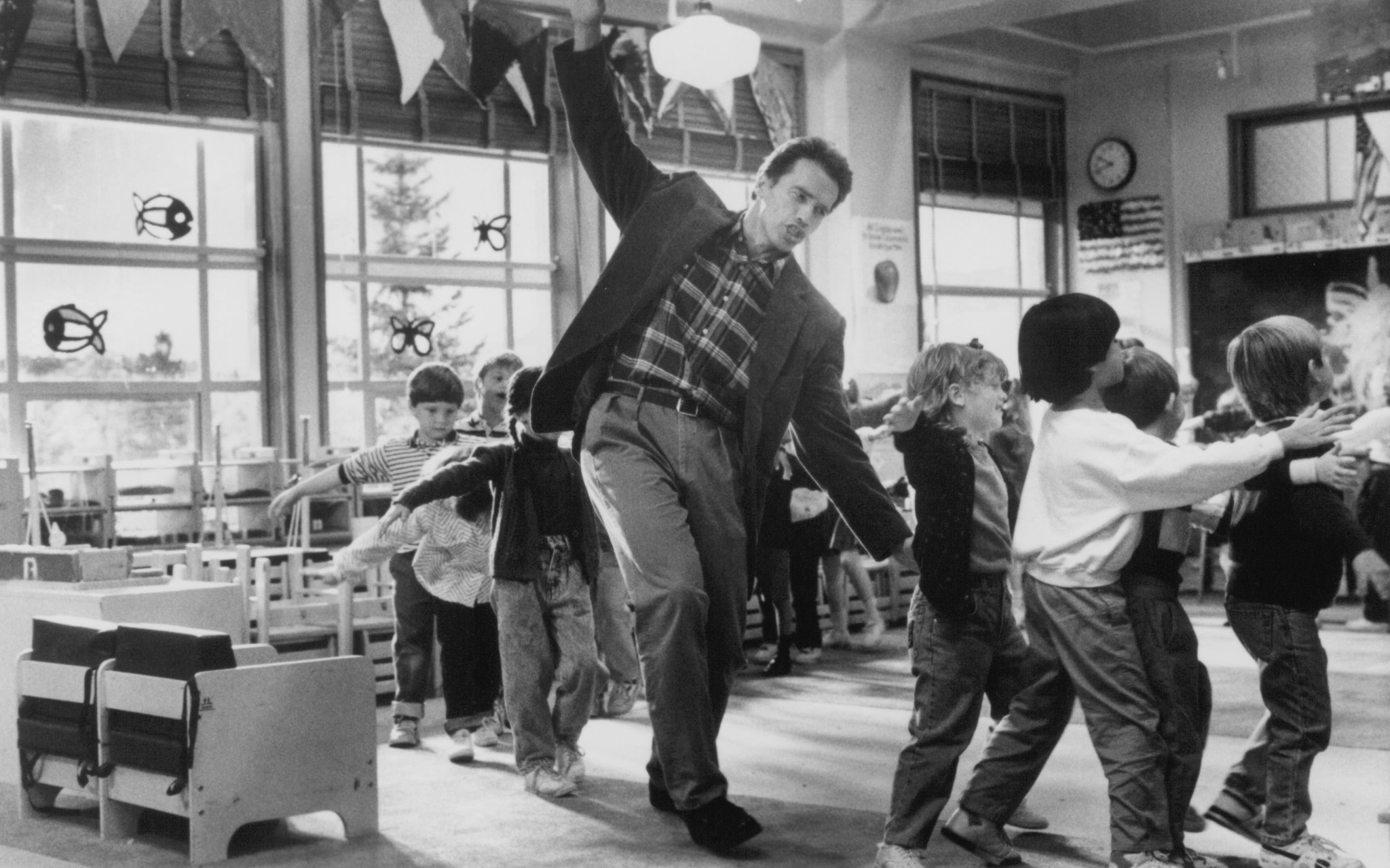
He’s the film’s through-line: someone toughened by police work whose undercover role forces him to practice patience, tenderness and domestic tasks he would usually treat as incidental. That friction is where most of the comedy, and surprisingly a lot of the emotional business, comes from.
The story also plants a domestic anchor in Joyce, a fellow teacher whose parenting role connects into the investigation. That connection gives Kimble a non-police mirror—someone who can model the domestic life the film nudges him towards.
Finally, the character sits naturally within the film’s family genre. The film wants you to accept that a man shaped by violence can be reshaped by responsibility; Kimble is the movie’s experiment in parenthood and what fatherhood might mean for a professional fighter of crime.
UNDER THE SURFACE
Kindergarten Cop has more on its mind than the plot suggests
On the surface it’s a fish‑out‑of‑water comedy: a cop in a classroom. Below that, the film is quietly testing how a traditional action-hero masculinity adapts to domestic life. That domestication is not a punchline so much as a project the movie undertakes with consistent curiosity.
Parenthood and fatherhood thread through the choices Kimble makes. The investigation’s goal—finding and protecting a child—turns the usual cops-and-crooks stakes into something resembling parental responsibility.
The undercover premise magnifies the theme. Being a teacher isn’t an identity Kimble can fake for long; it forces small, believable adjustments. Fish‑out‑of‑water moments become the mechanism by which the film explores what a protector looks like when protection means preserving childhood rather than punishing criminals.
Ultimately the film is as concerned with the safety of kids as it is with the oddness of an action hero in a playground. That concern steers its tone between comedy and genuine, if occasionally blunt, seriousness.
THE FILMMAKING
How Kindergarten Cop was put together
The credits tell a clear story of a mainstream production marrying action and comedy crafts. Michael Chapman is credited as the cinematographer, and the film’s editing team includes Sheldon Kahn and Wendy Greene Bricmont.
Those names are reminders that Kindergarten Cop was assembled by professionals comfortable in both genres—the people cutting and shooting it had experience making movement readable and comedy rhythm work alongside tension.
Ivan Reitman’s direction sits over that crew as a steadying hand: the film’s shifting tone—between classroom warmth and a police investigation—depends on those technical choices remaining cohesive.
Taken together the credits underline that Kindergarten Cop was designed as a hybrid picture: an action-comedy with family appeal that required craftspeople who could bridge those needs.
PURE 80S
Kindergarten Cop could not belong to any other decade
Kindergarten Cop arrived at the point where big action stars were being reframed for broader audiences. This was the late-80s/early-90s habit of taking established tough-guy names and handing them scripts that softened the brand slightly—family-friendly, but still carrying an action backbone.
Arnold’s turn in this film fitted that trend neatly: the picture emphasised a more genial public persona without erasing his action-world credibility. The result reads like a period piece in personality: the movie understands that audiences would accept a softer Arnold, provided the old muscle remained visible.
It’s a transitional curiosity of mainstream Hollywood casting rather than a novelty. The compromise—keep the hero recognisable while nudging him toward domestic scenes—became a durable formula during that moment.
As a piece of the era, Kindergarten Cop shows how studios repackaged star personas for family markets while still chewing on action-movie pleasures.
WATCHING IT NOW
What has aged — and what hasn't
A lot of the classroom comedy remains pleasantly harmless: the chaos of small children, the absurdity of a cop trying to teach nursery rhymes, and the film’s willingness to linger on those moments still plays as crowd-pleasing in the right company.
At the same time, reviewers and later guides have noted a structural dissonance: the film pairs that family-friendly material with explicit violent scenes and adult themes. Those moments—integral to the protection-of-child storyline—can feel jarring if you approach the movie purely as a family film.
So whether the movie holds up depends on expectation. If you’re expecting a straightforward family comedy you’ll be surprised by how often the story returns to serious, even brutal, stakes. If you accept from the start that it’s a hybrid—family plus thriller—the film’s tonal switches are more forgivable.
The film’s premise has had a long tail: a standalone follow-up arrived in 2016, showing the idea still has mileage even if the later project chose a different lead and format.
THE LEGACY
Why Kindergarten Cop still matters
Part of the film’s afterlife is simple: it did well enough commercially at the time to cement Schwarzenegger’s ability to cross into comedic and family material. That career pivot is a practical legacy rather than a lofty one—this picture proved the formula could work.
The movie also endures because its premise is oddly clean and resilient: a hard guy in a soft job turns out to be a neat way to examine masculinity and responsibility while still delivering a familiar genre mix.
Finally, the fact that the concept was used again years later—on a very different scale and with another lead—suggests the picture left a workable template if not an unassailable myth.
So its legacy is less about changing cinema and more about demonstrating a comfortable commercial path for an action star to broaden his audience.
THE VERDICT
Does Kindergarten Cop still hold up?
Yes—mostly. If you come for the curious central idea (a hard-edged detective undercover as a kindergarten teacher) and for the way that idea forces a character to rethink domestic life, the film still rewards. It balances classroom set pieces with a police investigation about protecting a child, and that tension gives the movie an emotional spine it could have lacked.
Be clear about what you’re getting: this is a hybrid picture. It moves from gentle, family-oriented moments into explicit violent confrontation and even relocates its stakes to a small coastal town for the finale. Those shifts mean it’s not a pure children’s film—parents should be prepared for adult themes alongside the slapstick.
It’s also a product of its moment—directed by Ivan Reitman, released in 1990 and running a tidy 110 minutes—bridging action and family cinema in a way that made sense for its star and its time. That combination still rings true when the premise is allowed to breathe.
So watch it if you like the idea of an action hero being domesticated without losing the plot; watch with caution if you expect unalloyed family entertainment. In short: it’s worth a revisit, provided you know which two films—cop thriller and classroom comedy—are sharing the screen.
Share this movie
// Keep watching
More movies from the 90s
If Kindergarten Cop is your kind of movie, there's plenty more on the shelves worth rewinding.
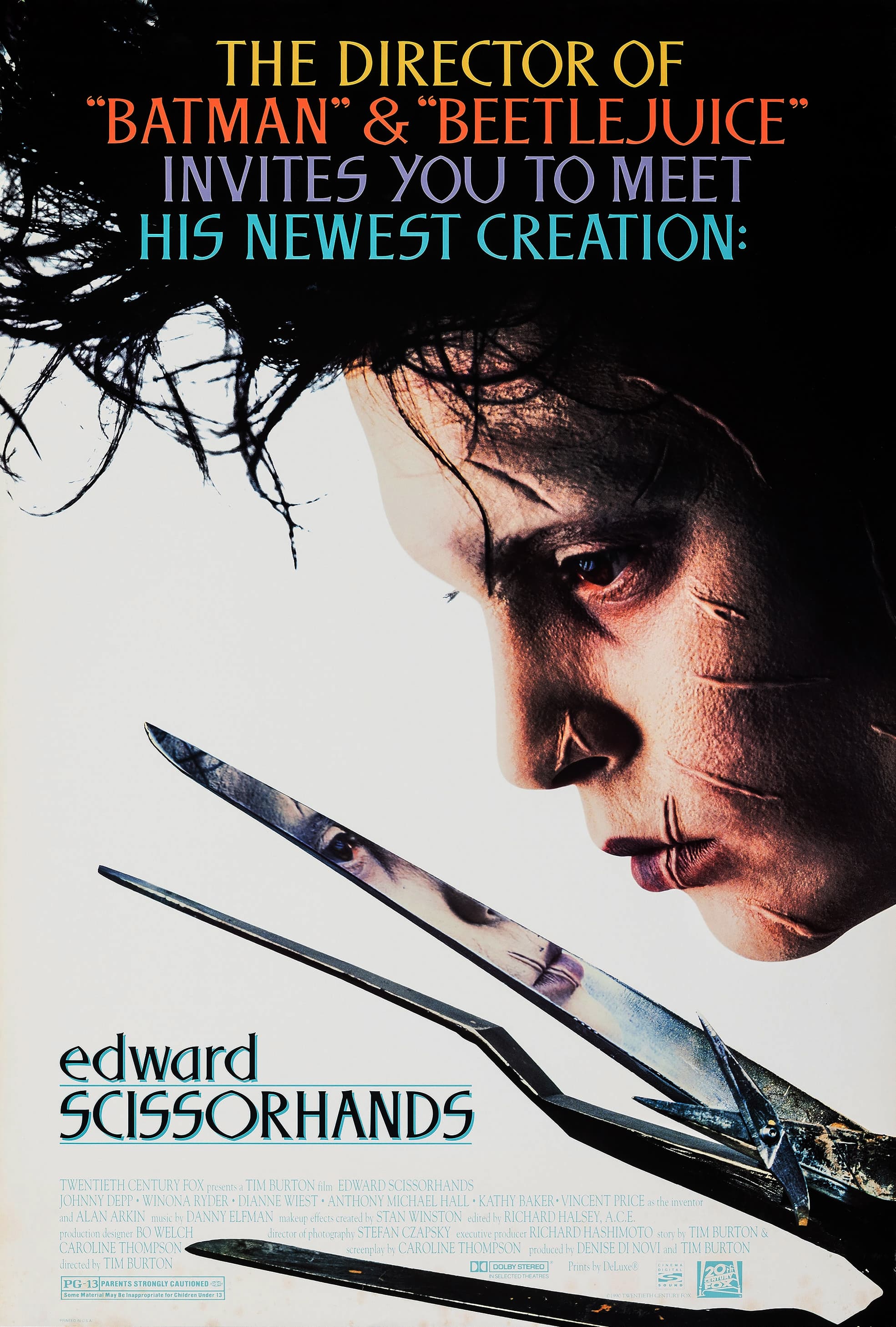
1990 // VHS
Edward Scissorhands
A fairy tale about a man who can’t quite touch the world — and the neighbourhood that can’t quite handle him.
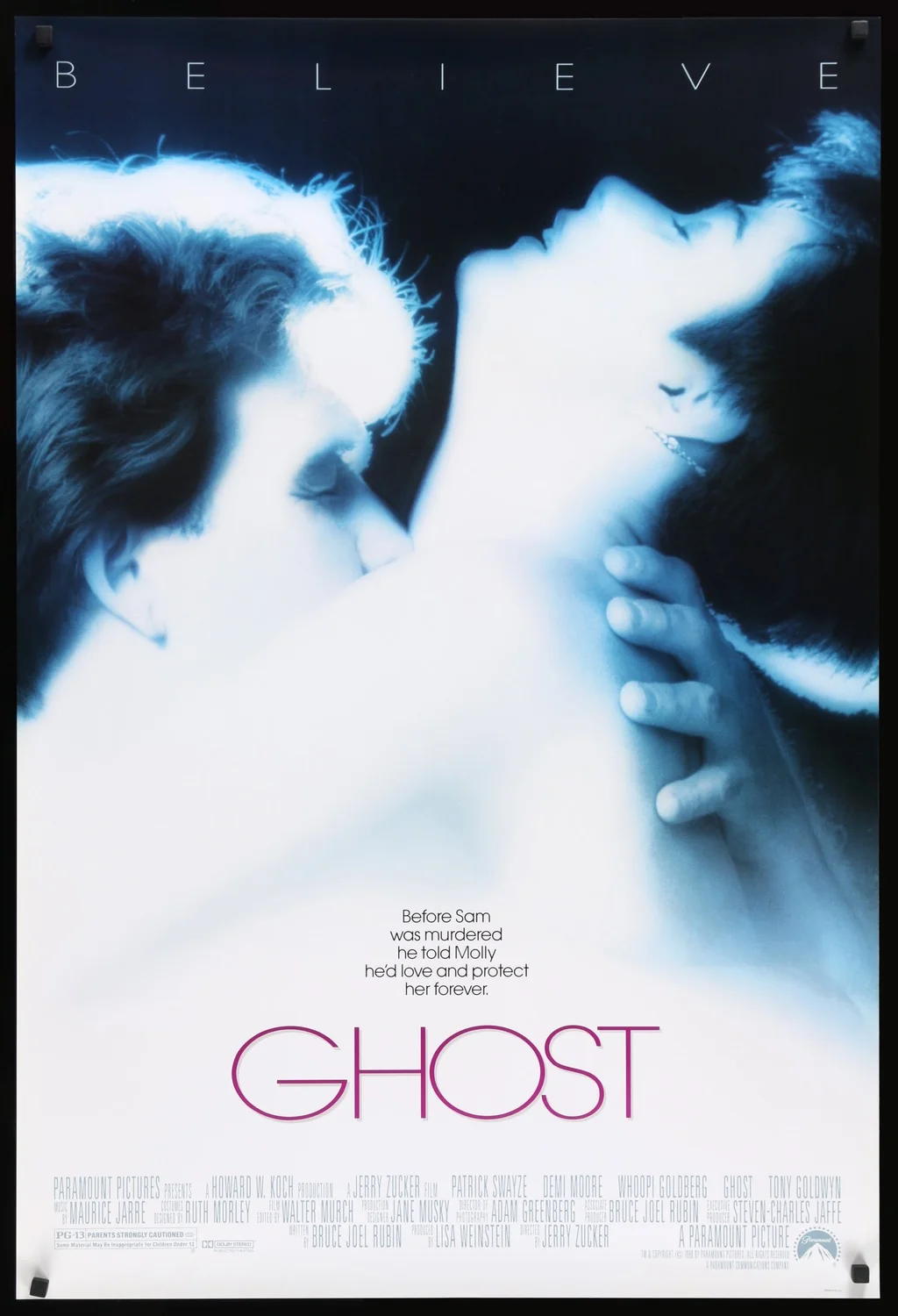
1990 // VHS
Ghost
A murder mystery disguised as a love story — with a man who won’t stop watching over the person he loves.

1990 // VHS
Total Recall
Memory, muscle and a very faulty holiday package — with Mars on the itinerary.