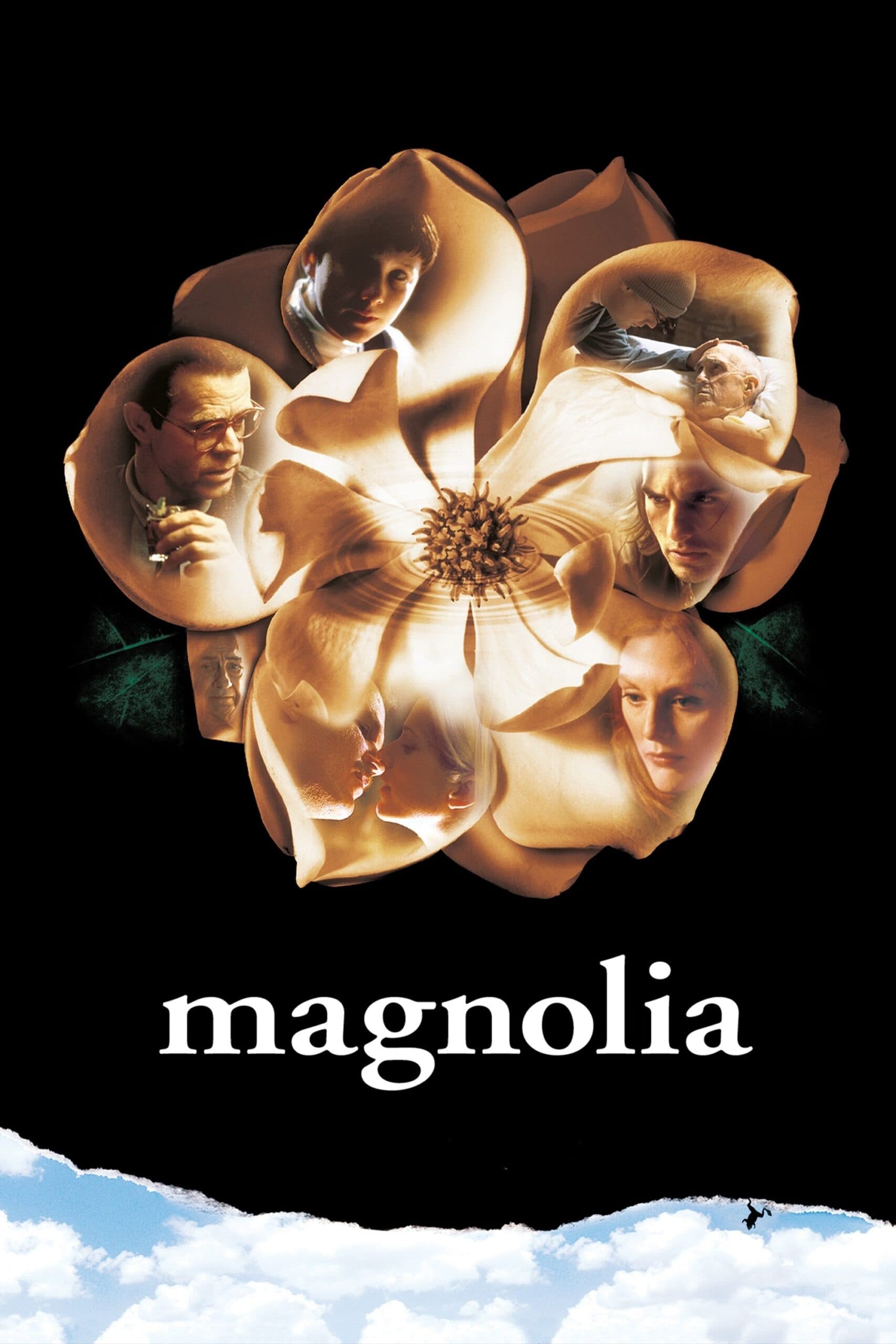
Magnolia
A crowded, furious day in the San Fernando Valley — and one self-help guru who won't let his past be quiet.
// The setup
PLAYBACK STARTED
Magnolia still feels like the sort of film that announces itself: large, messy, moral and utterly specific. Paul Thomas Anderson piled people, secrets and coincidences into one long day, then refused to let the quiet ones stay quiet. It's a movie you revisit when you want to argue about whether life hands out meaning or the other way round.
THE MOVIE
Frank T. J. Mackey is still the reason this movie works
If you remember one thing about Magnolia, you probably remember noise: the press of voices, the feeling that decisions are being made and unmade all at once. Paul Thomas Anderson stages the film as a single-day mosaic in which strangers, relatives and former strangers keep tripping over each other's lives until those collisions start to look like design rather than accident.
At the centre of several threads is a dying television mogul who asks his nurse to find his estranged son — and that request is the pebble that sets many other ripples moving. Then there’s Frank T. J. Mackey: a hard-sell, showmanish self-help celebrity whose loud public routine papered over a history of being abandoned and hurt.
That contrast — the camera’s appetite for grand, often surreal set-pieces and the intimate, unglamorous ache behind some of its loudest characters — is why Magnolia still feels worth revisiting. It throws coincidence into the mixing bowl and watches what happens when people try to read a pattern into the mess.
THE SETUP
The idea that sets Magnolia in motion
Magnolia's basic organising trick is simple: load the frame with a dozen people and let the city’s coincidences rearrange them. Anderson compresses family ties, past promises and random accidents into roughly a single day in the San Fernando Valley so that small choices acquire the weight of disasters.
One of the clearest through-lines begins with a dying television magnate asking his nurse to track down a son he left behind. That request initiates travel, confrontation and the resurfacing of long, painful absences.
Running alongside is the televised quiz-show thread, which follows a young champion whose humiliation on the program sends shockwaves out through other lives. The quiz show isn’t just spectacle; it’s a way to show how media environments can make private pain performative.
Those pieces — family, fate, public spectacle — are the engine. The film doesn’t spoon-feed a tidy moral; it sets people loose in the same space and watches how meaning is either invented or discovered.
THE CHARACTER
Why Frank T. J. Mackey matters
Frank T. J. Mackey is the movie’s loudest aperture into its quieter obsessions. Played by Tom Cruise, he’s presented as a brash self-help salesman — a pickup-artist celebrity who traffics in bravado and simplified formulas for being a man.
But the film keeps reminding you that the show is not the same thing as the person. Mackey’s public persona is an elaborate defence against a history of abandonment and family rupture, and that mismatch is what gives his scenes their bite.
Anderson treats Frank not as a symbol but as an effect: how a particular type of macho theatre can hide old damage while also reshaping other people's days. The production even filmed a full-length infomercial for him and used it as a real promotional piece, which underlines how seriously the movie takes the idea of media-as-character.
He matters because he’s both noise and wound — the kind of figure that forces the film to ask whether performance can ever be a substitute for repair.
THE PERFORMANCE
Why Tom Cruise's performance matters
Contemporary critics flagged Tom Cruise’s turn as unexpected — a stretch away from the star’s familiar image at the time. The attention the role received matters because it reframed what the audience might bring to a character already built as spectacle.
That conversation about the performance is actually useful for the film: it forces viewers to separate the man in the media from whatever is left when the microphone goes quiet.
The production choices around the character — including a complete infomercial shot for the movie’s promotional life — make the role feel like an experiment in public persona. The performance was, in short, talked about because it complicated how people thought of the actor.
Whether you love every moment of it or not, that friction between star and role is a structural feature of the film rather than a mere casting novelty.
UNDER THE SURFACE
Magnolia has more on its mind than the plot suggests
On the surface Magnolia is a set of intersecting stories. Beneath that surface it’s arguing — loudly and sometimes awkwardly — about whether life’s odd convergences are meaningful or merely cruel coincidence.
The film keeps returning to abandonment and the long-term effects of bad parenting: the people who show up in Anderson’s Valley mostly carry histories they can’t leave at the door. Reconciliation is possible, but it’s messy and rarely instantaneous.
Mourning and the care required at the end of life are another running thread. A man on his deathbed asking for what he failed to secure in life sets a moral motion that pulls in nurses, ex-lovers and estranged children.
And then there is media: quiz shows, infomercials, public confession — Anderson asks what happens when private suffering is refitted for entertainment. The search for connection becomes harder when the platforms that bring people together also make pain performable.
THE FILMMAKING
How Magnolia was put together
Anderson builds Magnolia as a travelling carnival of scenes: long takes and elaborate camera moves shuttle us from character to character so the film reads less like separate short stories and more like a single organism with many lungs.
Robert Elswit served as director of photography, and the production tuned the visual palette — the greens, browns and off-whites the movie favours — so the Valley feels cohesive across very different interiors and moods.
There’s a deliberate piece of old cinema folded into the film too: Anderson shot a short period prologue with a hand-cranked, Pathé-style camera to give one sequence the look of an earlier time. It’s a quick flourish that signals Anderson’s willingness to play with form.
All of these choices make the film feel composed rather than accidental: crowded, yes, but arranged in a way that keeps you from losing the sense of who’s connected to whom.
PRACTICAL EFFECTS
The effects work that gives Magnolia its physical personality
The film’s most notorious moment — frogs falling from the sky — was achieved by mixing hands-on prop work with post-production visual effects. That combination keeps the sequence tactile while allowing it to swell into something larger than a single set piece.
On set, practical frog props were produced and staged by Steve Johnson’s XFX Group; Industrial Light & Magic supplied additional visual-effects support in post to make the spectacle read as large and oddly literal.
The mix is telling: Anderson wanted the event to feel physically present to actors while still carrying a surreal, almost biblical resonance that visual effects could help amplify.
So the frogs aren’t purely a digital trick or merely a prop gag — they’re both, and that blending is part of the film’s personality.
PURE 80S
Magnolia could not belong to any other decade
Released at the tail end of the 1990s, Magnolia sits squarely in the indie sensibility of the period: songs and songwriters do real structural work in the script. Anderson wrote the screenplay around Aimee Mann’s music and used those songs as recurring emotional touchstones.
That musician-driven approach to scoring and structure was a late-90s indie habit — a way of letting popular song do the heavy lifting for tone and theme.
Magnolia’s crowded, interlocking stories also place it alongside a strand of 1990s American films that reworked ensemble and mosaic forms, films that treated coincidence and media environments as engines of drama rather than mere backdrop.
There’s an earnestness to that era’s storytelling that Magnolia shares: a sense that melodrama can be a tool for honesty, even when it’s awkward or excessive.
WATCHING IT NOW
What has aged — and what hasn't
The film’s basic architecture — a mosaic of interrelated characters encountering one another through coincidence and media — still reads as a bold storytelling choice. The structure rewards patience: it asks you to sit with people rather than zip past punchlines.
Some production moves, like the full-length infomercial filmed for the Frank T. J. Mackey character and actually aired during the film’s release window, underline how seriously Anderson treated the media elements. That trick still reads as a smart bit of world-building rather than a gimmick.
Where viewers might divide today is the movie’s appetite for melodrama and coincidence. The late-90s willingness to court large emotional swings and improbable connections still feels deliberate; whether you find it moving depends on how comfortable you are with a film that insists on feeling, loudly.
But the emotional through-lines — abandonment, the ache of late-life reckonings, the pressure of being made into spectacle — continue to land because they’re about people trying to be less alone, and that’s a fairly durable subject.
THE LEGACY
Why Magnolia still matters
For better or worse, Magnolia arrived with a lot of conversation attached. It picked up multiple Academy Award nominations — including one for Aimee Mann’s 'Save Me' — and that recognition kept discussion of the film in the public sphere beyond its release week.
Its cast received particular notice: Tom Cruise earned a Best Supporting Actor nomination, and Julianne Moore received recognition from the National Board of Review in 1999 that cited her work in the film.
Beyond awards, Magnolia continues to appear in later 'best of' lists and retrospectives and often appears in discussions about Paul Thomas Anderson’s career and late-1990s American cinema. Part of its legacy is simply that it’s a film people keep returning to when they talk about that moment in independent filmmaking.
Whether remembered for its ambition, its embroiled tonal choices or its sheer scale, Magnolia remains a film that invites argument — and that ongoing conversation is part of why it matters.
THE VERDICT
Does Magnolia still hold up?
Yes — but with a health warning. Magnolia is not a polite companion film; it wants your attention for a very long time (it runs 189 minutes) and it delights in piling coincidence on coincidence until you decide whether that piling is mystical or theatrical.
If you respond to films that assemble many lives into a single, noisy day, and if you don’t mind a director leaning into melodrama to ask real questions about abandonment, care and the costs of spectacle, Magnolia will still land hard.
Some sequences — the televised quiz-show thread with its young champion, or the surreal frog convergence — will either thrill or exasperate you. They’re meant to be disruptive, and that rupture is part of the point: these are moments that change people’s immediate circumstances, not just neat cutaways.
So should you watch it today? Absolutely, if you have patience and a taste for ambitious emotional experiments. If nothing else, the film still rewards arguing about it — and that’s a pretty good definition of a movie that keeps its life beyond the closing credits.
Share this movie
// Keep watching
More movies from the 90s
If Magnolia is your kind of movie, there's plenty more on the shelves worth rewinding.
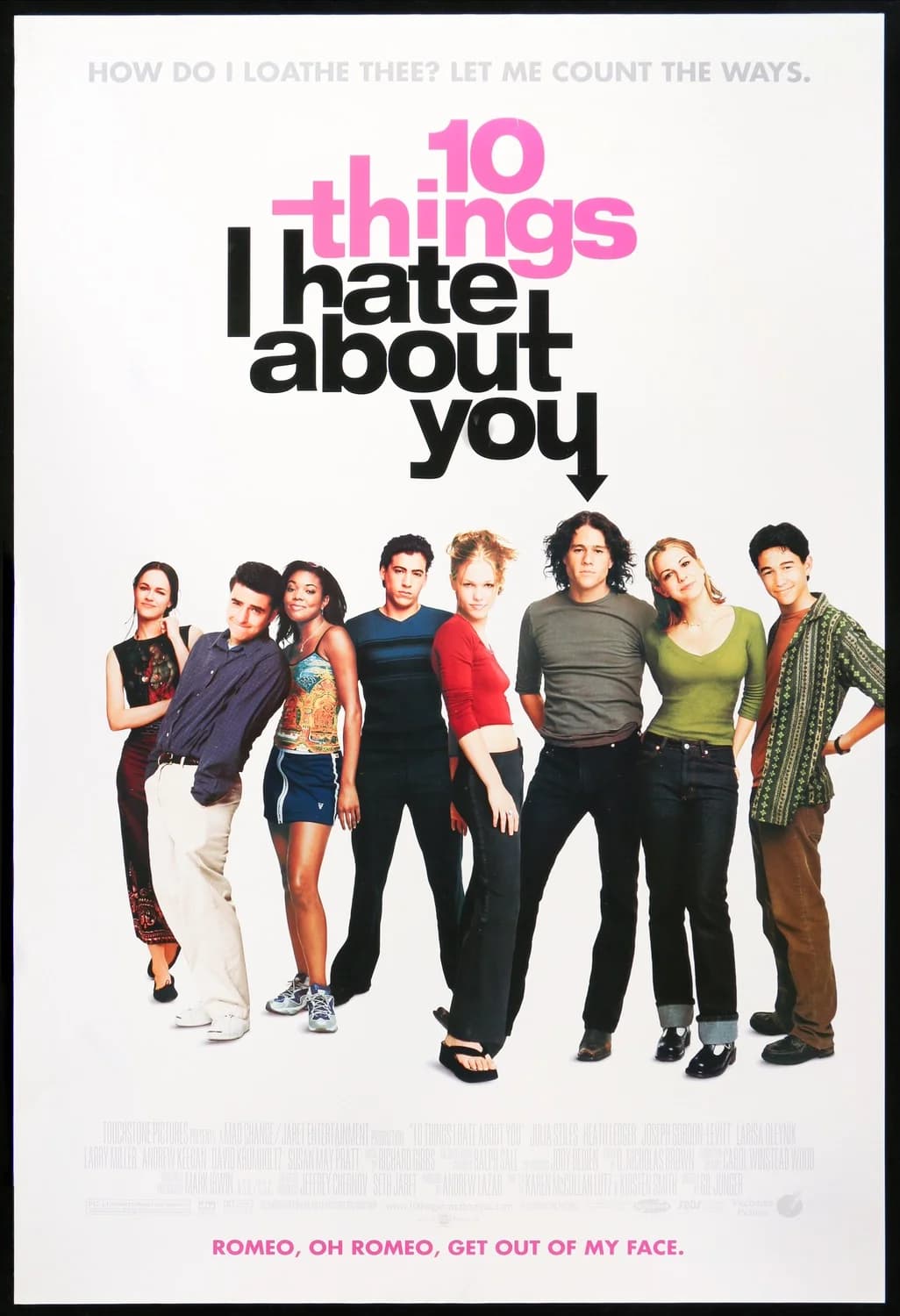
1999 // VHS
10 Things I Hate About You
Sibling rules, a rooftop serenade and one very stubborn Kat — Shakespeare in a school corridor.
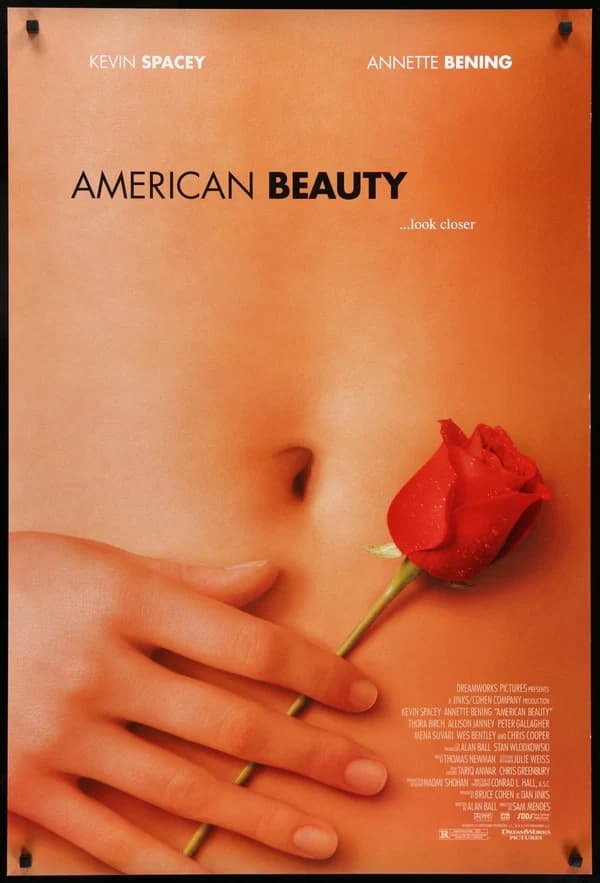
1999 // VHS
American Beauty
Lester Burnham, suburban rot and a midlife argument that still stings.
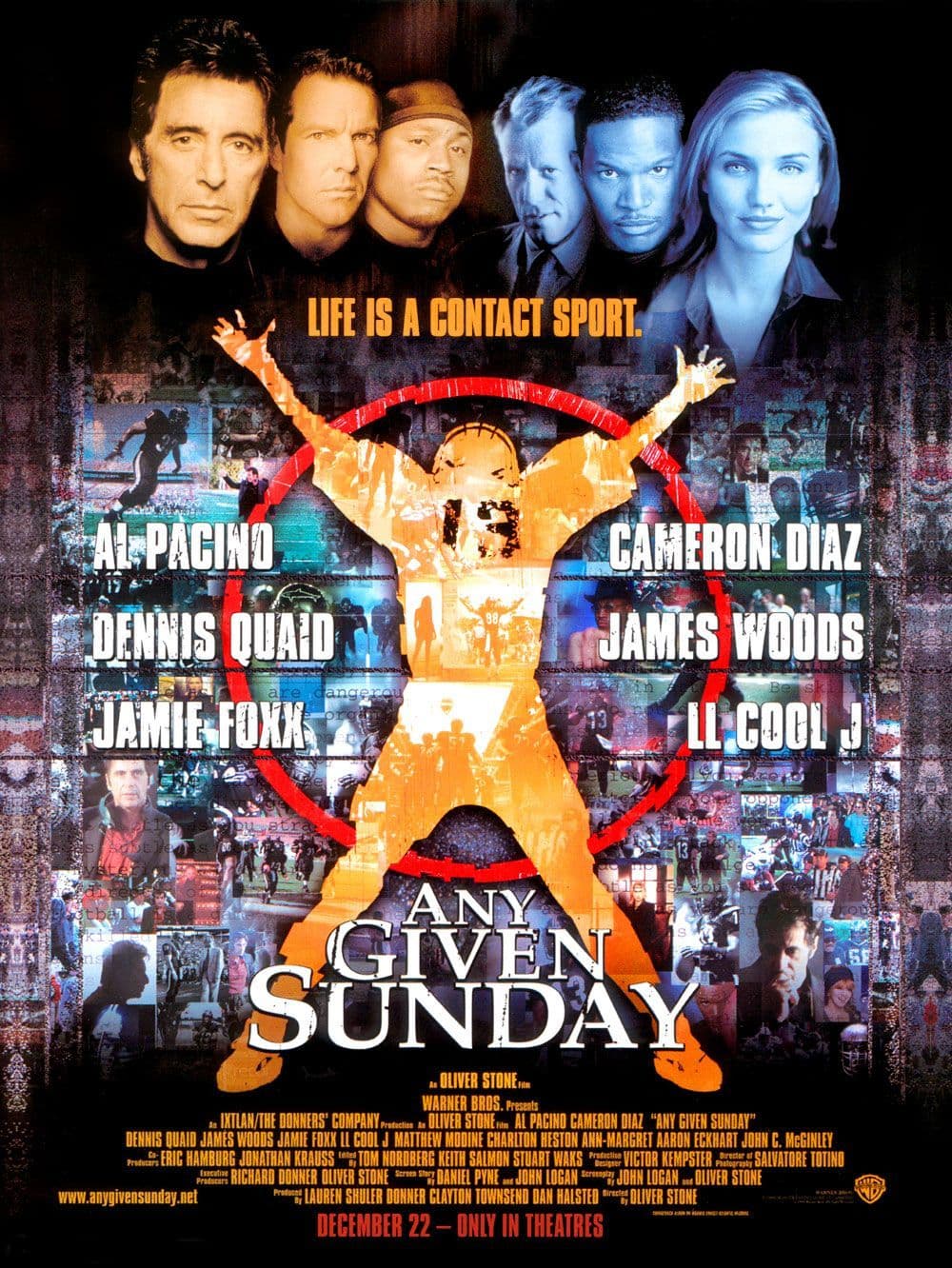
1999 // VHS
Any Given Sunday
Al Pacino's coach anchors the chaos of a film about football turned into product — loud, messy and oddly persuasive.