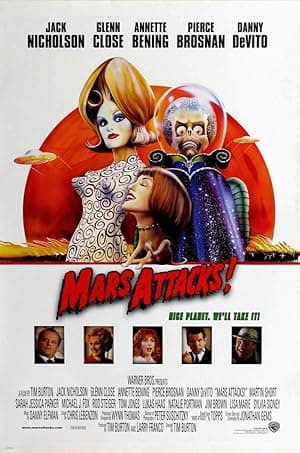
Mars Attacks!
A gleefully terrible invasion — and a president who treats panic like press coverage.
// The setup
PLAYBACK STARTED
Mars Attacks! is the sort of movie that still starts arguments: part B-movie send-up, part studio spectacle, and very much a Tim Burton party where the invite list is Hollywood’s A-team. It’s worth coming back to because, beneath its giddy gore and retro jokes, the film hangs on a couple of very specific choices — chief among them the idea of a publicity-first presidency that treats alien catastrophe like a PR problem.
THE MOVIE
President James Dale / Art Land is still the reason this movie works
There are two quick ways to summarise why people still talk about Mars Attacks!: it’s an ensemble alien-invasion comedy in which little green visitors arrive claiming peace and promptly go about slaughtering and experimenting on people, and it’s a Tim Burton film that frames all that carnage as an exercise in spectacle and spin.
The moment the aliens first land — a public, televised contact in Pahrump, Nevada — sets the tone. What looks like a diplomatic encounter is treated perfunctorily and misread; that fast conversion from handshake to horror is the story’s engine. It’s neat and acidic: the joke is that bodies pile up because everyone keeps responding in the same shallow way they always respond — with press lines and photo-ops.
At the centre of it all is President James Dale, who’s presented as an ineffectual, PR‑minded commander-in-chief. That personality choice gives the film somewhere to land; rather than just another invasion picture, Mars Attacks! becomes a satire of institutions and media spectacle — and yes, it’s one of Tim Burton’s stranger rides from 1996.
THE SETUP
The idea that sets Mars Attacks! in motion
The film doesn’t try to build a single hero’s arc. Instead its engine is a simple manoeuvre: a public first-contact that is misread and quickly becomes violent. That single misstep — staged for maximum broadcast value — is what flips ordinary life into an absurd survival puzzle.
From there the action splits. On one side you have the political apparatus in Washington: the President and his advisers trying to make sense of broadcast catastrophe. On the other, you get a scattershot of civilian stories in places like Las Vegas and Kansas. The movie treats the alternation between official spin and private panic as part of its architecture rather than a distraction.
The Martians themselves operate as a storytelling device. Their squeaky voices and inscrutable behaviour are not just visual jokes; they’re plot mechanics — baffling language, grotesque experiments, and an odd Achilles’ heel that the screenplay uses to get the plot moving.
Visually and practically, the Martians were realised through Industrial Light & Magic’s character work, a choice that helped the film sell its stranger beats without relying on stop-motion puppetry.
THE CHARACTER
Why President James Dale / Art Land matters
Jack Nicholson is credited as President James Dale / Art Land, but the point isn’t to praise a star turn so much as to explain why those two connected figures give the film shape. The President is written as a publicity‑first leader: someone whose instinct is to manage optics rather than the messy business of command. That choice turns political decision-making into a source of dark comedy.
Having Nicholson also appear as Art Land — a show-business type with ties to the Las Vegas strand — lets the film draw a neat comparison between Washington spin and entertainment excess. Art and Barbara Land’s subplot sits beside the invasion like a mirror, showing how personal crisis and showbiz spectacle look almost identical under pressure.
So the character matters because he’s the fulcrum. The government keeps answering extraordinary events with ordinary PR gestures, and that repeated mismatch feeds the film’s satire and many of its funniest, most uncomfortable moments.
Lastly, the duality of president-and-showman helps tie together the movie’s disparate locations, so the film never feels like random incidents but rather like interconnected scenes on the same theme.
UNDER THE SURFACE
Mars Attacks! has more on its mind than the plot suggests
On the face of it, the movie is a parody of 1950s sci‑fi — a retrofuturist pastiche that delights in old-school tropes. But peeling back a layer reveals something sharper: it’s satirising the machinery that turns catastrophe into spectacle. That satire is aimed at politicians, pundits and publicity agents who treat crisis as another broadcast segment.
The film’s structure — deliberately constructed like an Irwin Allen-style disaster ensemble — means whole classes of people can be presented as caricature without the audience feeling cheated. The ensemble approach makes the satire feel systemic rather than personal: it’s not just one bad official, it’s a system responding in predictable, performative ways.
Then there’s the absurdism built into the first-contact scenario. The Martians are ridiculous, menacing and unpredictable, and that mixture allows the film to be alternately ludicrous and lethal. It’s a tone that wouldn’t work if Burton and Jonathan Gems had aimed for subtlety; the extremity is deliberate.
Taken together — parody, ensemble disaster plotting, political and media satire, and absurd first-contact beats — Mars Attacks! is a comedy that keeps nudging you until the laughs look a bit ugly. That’s the point.
THE FILMMAKING
How Mars Attacks! was put together
Behind the carnival of ideas were some steady production choices. Peter Suschitzky was the cinematographer, Chris Lebenzon handled the editing, and Wynn Thomas is credited with production design — names that point to a disciplined craft on the crew side.
That craft matters because the movie walks a fine line: it wants to homage 1950s B-movies while also functioning as a large‑scale studio picture. The technical team’s job was to make the film look like a polished parody rather than a rough pastiche, and those crew credits are evidence of a deliberate production approach.
Tim Burton’s direction and the film’s technical framework keep the tone consistent across wildly different set pieces and locations, which is no small feat for an ensemble disaster film.
Put simply: the film needed competent hands to pull off its tonal balancing act, and the listed cinematographer, editor and production designer are part of what makes that possible.
PRACTICAL EFFECTS
The effects work that gives Mars Attacks! its physical personality
Mars Attacks! might look like a stop-motion throwback, and for a while that’s exactly what Tim Burton planned. Early in production there was work developed under stop‑motion supervision — the intention was to give the Martians a tactile, old-fashioned movement.
That plan changed. The production ultimately moved to computer animation for the Martians, with Industrial Light & Magic brought in to animate and composite the characters into live-action plates. The switch reflects a production decision to use the then-maturing digital tools to realise creatures that still needed to feel part of Burton’s retro world.
The result is a hybrid temperament: the Martians behave like B‑movie monsters, but their motion and integration into crowded set pieces are the product of mid‑90s digital character work.
That combination — a stop‑motion idea turned into digital execution — is one of the reasons the film looks both deliberately old-fashioned and of its moment.
PURE 80S
Mars Attacks! could not belong to any other decade
Even though it sends up 1950s movies, Mars Attacks! is very much a 1990s studio picture. Its ensemble 'disaster' approach was explicitly modelled on 1970s disaster films, and that model appealed in the mid‑90s when big, high‑concept, effects‑driven films with star ensembles were common.
The production’s move away from stop‑motion toward CGI also places the film in its era. By the mid‑1990s digital character animation was maturing and being adopted across major studio projects — Mars Attacks! is part of that technological shift.
Finally, the movie’s afterlife as a curious, re-evaluated title in Burton’s filmography fits a 1990s pattern where genre experiments didn’t always land on first release but found later audiences. That slow reassessment is an unglamorous but genuine part of how some 90s films aged.
THE LEGACY
Why Mars Attacks! still matters
Around the film’s release a tie-in paperback novelisation by Jonathan Gems landed alongside the movie, a piece of merchandising that reminds you how studio pictures were packaged as experiences in the 1990s.
In later years Mars Attacks! has been treated as a cult and genre curiosity inside Tim Burton’s body of work; retrospectives often return to it when discussing Burton’s fondness for mid‑century sci‑fi forms. That status isn’t the same as mainstream dominance, but it’s the reason the film keeps turning up in conversations about oddball studio films of the era.
The movie also picked up recognition within genre-award circles and has been part of critical re-evaluations that take a softer view than some contemporary reviewers did. Put together, those follow-ups explain why Mars Attacks! has a life beyond its opening week.
THE VERDICT
Does Mars Attacks! still hold up?
Short answer: yes — if you understand what you’re signing up for. It’s an ensemble, large-scale alien-invasion comedy that treats first contact as a televised spectacle that goes horribly wrong. The film’s central mechanism — a misread, public diplomatic encounter — keeps returning in different guises, so the tone never drifts into anything simple or cosy.
The film works best when it leans into that premise: alternating between Washington’s spin and ordinary people’s attempts to survive creates a pleasingly chaotic architecture. The screenwriter Jonathan Gems and Burton deliberately built the story like an Irwin Allen disaster picture, which explains the many intersecting strands instead of one hero’s journey.
Another practical piece that helps is the Martians as story mechanics: their distinct voices and behaviour are not just visual gags but plot devices, from baffling experiments to the peculiar vulnerability that drives late scenes. And crucially, Jack Nicholson’s double billing as President James Dale and Art Land gives the film a recurring focus — a character whose publicity-first instincts keep complicating every emergency.
If you want tidy satire or a single emotional centre, Mars Attacks! will feel uneven. But if you like black comedy that keeps pushing the joke until it makes you uncomfortable, and you enjoy an off-kilter ensemble dispatched with style, it’s still worth watching. It’s not nostalgia bait; it’s a deliberately strange studio film that remembers how to be mean and funny in the same breath.
Share this movie
// Keep watching
More movies from the 90s
If Mars Attacks! is your kind of movie, there's plenty more on the shelves worth rewinding.
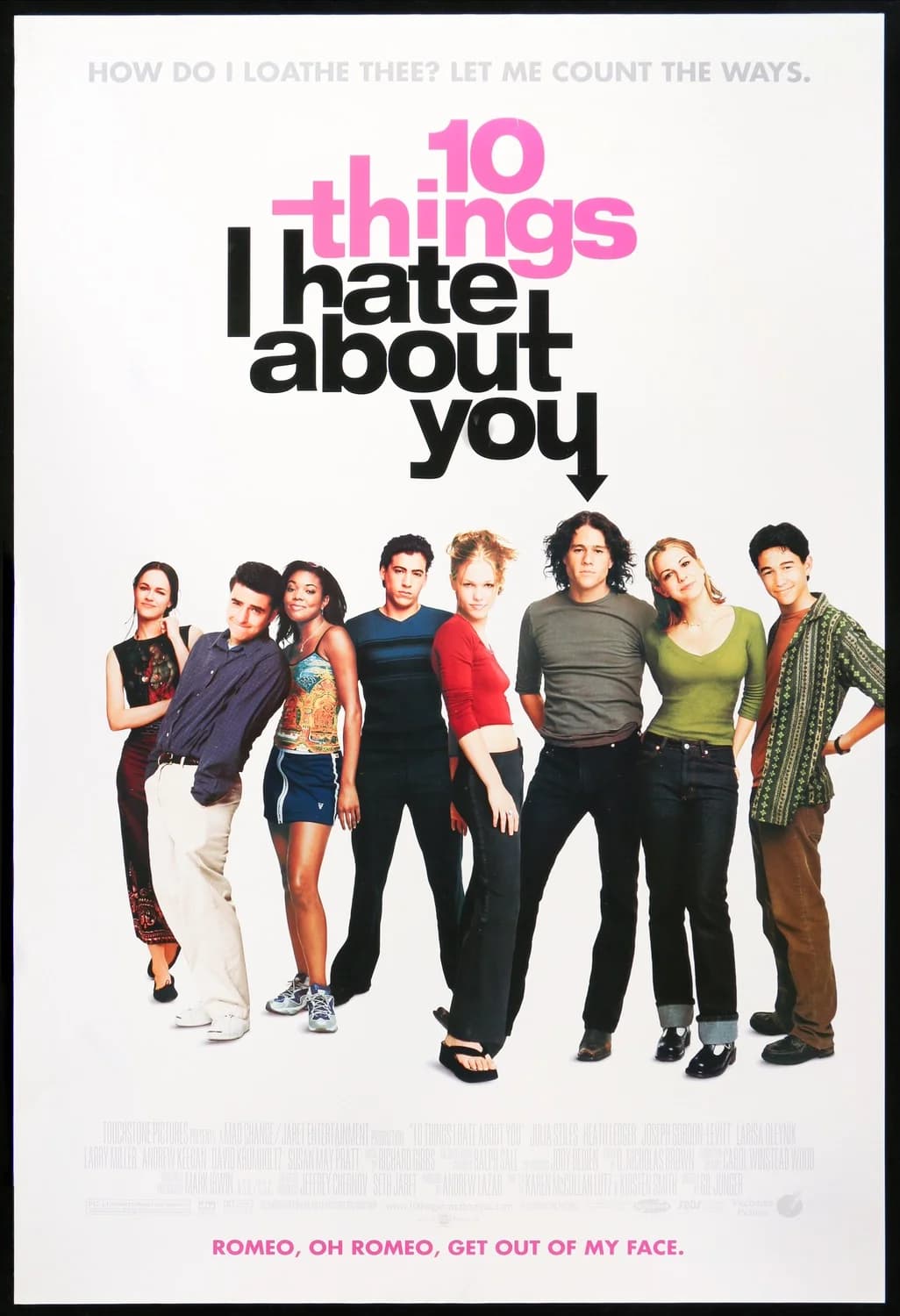
1999 // VHS
10 Things I Hate About You
Sibling rules, a rooftop serenade and one very stubborn Kat — Shakespeare in a school corridor.
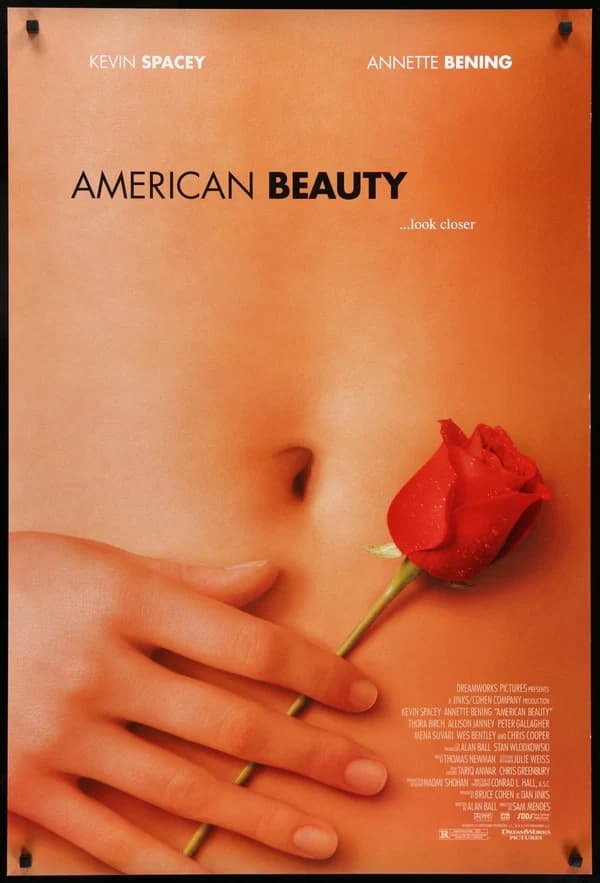
1999 // VHS
American Beauty
Lester Burnham, suburban rot and a midlife argument that still stings.
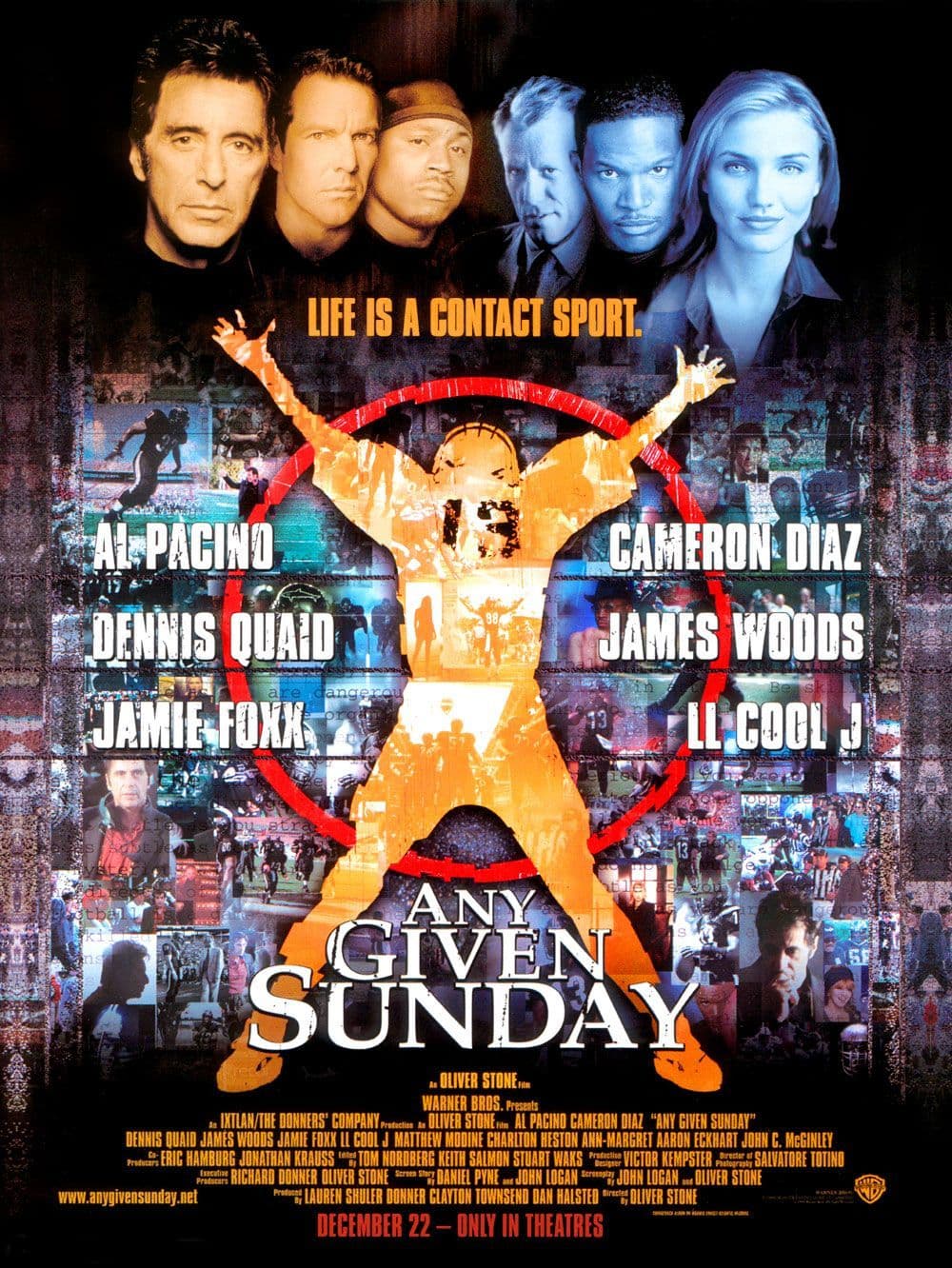
1999 // VHS
Any Given Sunday
Al Pacino's coach anchors the chaos of a film about football turned into product — loud, messy and oddly persuasive.