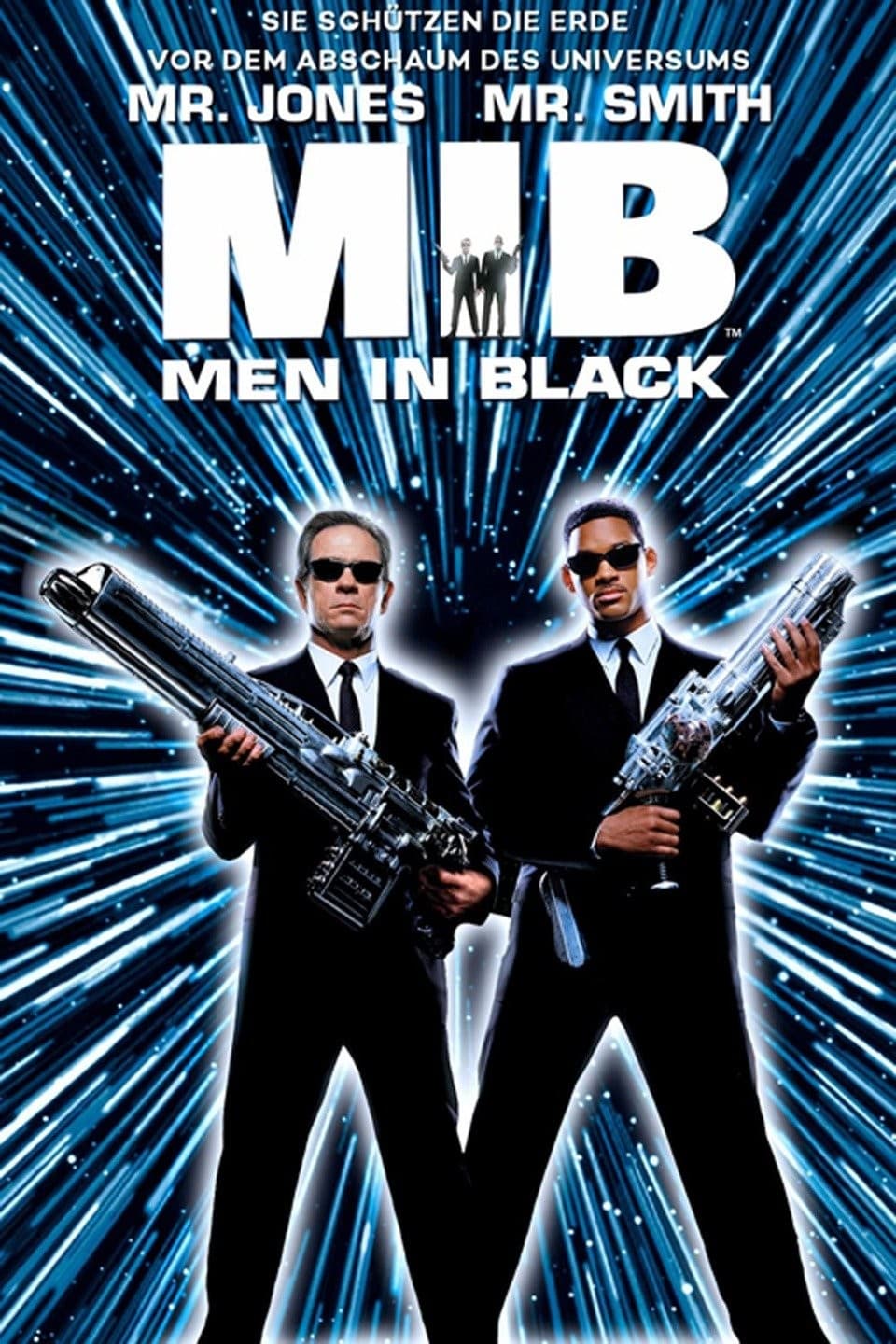
Men in Black
Taciturn mentors, neuralyzers and a very small galaxy.
// The setup
PLAYBACK STARTED
Men in Black still kicks off like a midnight secret: minimal fuss, maximum weirdness. Barry Sonnenfeld’s 1997 odd-couple who-dunnit pairs a taciturn agent with a fast-learning NYPD recruit and turns the logistics of secrecy into a running gag with stakes. Revisit it for the pleasures of the pairing — and for the way the film treats hidden knowledge as both bureaucracy and moral puzzle.
THE MOVIE
Kevin Brown / Agent K is still the reason this movie works
Men in Black is built around a simple engine: a secret organisation policing extraterrestrials living undercover on Earth. That premise lets the film alternate between procedural briskness and genuinely odd set-pieces without losing its footing.
At the centre of that engine is the moment an NYPD officer apprehends an alien and gets recruited by Agent K — James Darrell Edwards III becomes Agent J — which is the movie’s way of importing a streetwise outsider into a closed, highly organised world.
Tommy Lee Jones’s Kevin Brown, Agent K, is written and positioned as the taciturn mentor who isn’t aiming for a long-term buddy partnership so much as testing and preparing a successor. That relationship — secrecy managed as institutional work, succession handled as an operational necessity — is the film’s repeating human note, and the reason the movie still rewards a rewatch.
THE SETUP
The idea that sets Men in Black in motion
The film moves because people who shouldn’t know are trying to know. The MIB protect their secrecy with a memory-erasing device and run from a highly stylised underground headquarters, and the plot mostly plays out as investigation, undercover work and set-piece confrontations.
What everyone is actually racing for is smaller and stranger than you’d expect: a tiny, immensely powerful object described as a miniature galaxy. That object is the MacGuffin that draws rival alien interests — and puts Earth on the clock.
So the story lets you flick between street-level police procedural — an officer who’s good at spotting disguised aliens — and a broader interstellar race. The trade-off between local craft and cosmic consequence keeps the stakes immediate and oddly intimate.
THE CHARACTER
Why Kevin Brown / Agent K matters
Agent K matters because he supplies the film with a stable centre. The plot invites spectacle — aliens, gadgets, chases — but K is the practical measure against that: he’s the one who has to turn chaotic encounters into contained procedures.
His function in the story is explicit: he recruits and judges a successor. That succession plotline makes K less of a romanticised mentor and more of an institutional figure doing a job with long-term consequences.
The contrast with Agent J — a fast-learning, streetwise outsider who notices what the organisation has normalised — is what gives K shape. Without that outsider perspective, K’s decisions would feel managerial; with it, they register as moral choices made inside a system.
THE PERFORMANCE
Why Tommy Lee Jones's performance matters
Contemporary critics consistently pointed to the pairing of Tommy Lee Jones and Will Smith as central to the film’s tone. That’s important because the movie trades on the tension between K’s reticence and J’s brashness.
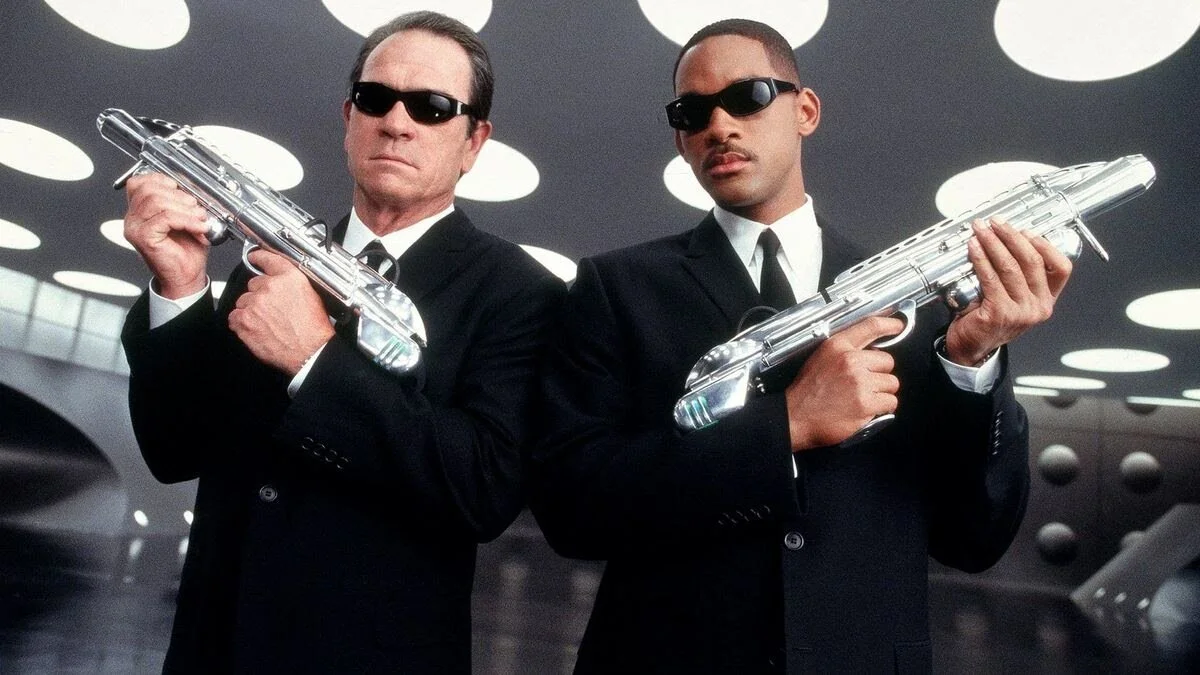
Jones’s part is written to be the quiet fulcrum: not the loud comic turn, but the straight line around which the comedy and action can orbit. The chemistry with his counterpart is what lets the film feel like a compact buddy picture even when the set-pieces expand.
UNDER THE SURFACE
Men in Black has more on its mind than the plot suggests
Beneath the aliens-and-gadgets, Men in Black keeps returning to the cost and logistics of keeping people in the dark. Secrecy here isn’t just espionage theatre; it’s an administrative project with moral weight.
That links closely to mentorship and succession: the film isn’t just pairing two cops for laughs, it’s showing how knowledge is handed on — what gets preserved, what gets erased, and who is trusted with the ledger.
Urban anonymity and assimilation is another quietly recurring idea. New York, in the film, is full of people who could be other things — a useful condition for an organisation that relies on camouflage and impulse. It’s also why the small human relationships gain force amid spectacle.
Which brings us back to the balance the movie wants: spectacle versus human relationships. The set-pieces deliver thrills, but the film keeps checking those thrills against the small human decisions that make secrecy tolerable or not.
THE FILMMAKING
How Men in Black was put together
One of the film’s more surprising pleasures is its production design. Bo Welch conceived the Men in Black headquarters with a 1960s airport/modernist influence, which gives the organisation a cool, institutional feel rather than a futurist kitsch.
That touch — a deliberately restrained, designed headquarters — helps sell the idea that this is a functioning bureaucracy, not just a secret lair. Even small choices about how the organisation looks contribute to the film’s tone of absurd professionalism.
PRACTICAL EFFECTS
The effects work that gives Men in Black its physical personality
The creature work in Men in Black was firmly rooted in practical techniques: Rick Baker’s team produced prosthetic maquettes, animatronics and puppets that give the film a tactile strangeness.
Those physical models didn’t stay purely analogue. Many of Baker’s maquettes were digitised and animated by ILM to make mobile CGI versions, and the production blends animatronics, puppetry and digital work across its creature scenes.
Some of the larger set-pieces were reworked in post-production and expanded with digital effects resources, but the film’s physical creatures keep a hand-made presence that anchors the more extravagant moments.
PURE 80S
Men in Black could not belong to any other decade
Men in Black arrived in the mid-1990s, when summer blockbusters leaned on big effects and broad marketing. The film sits comfortably in that era: a well-resourced tentpole with cross-promotional hooks and merchandise potential.
It’s also an Amblin-era production — Parkes and MacDonald produced it in association with Amblin Entertainment — which places it among the Spielberg‑executive‑produced tentpoles of the decade.
Technically, the production exemplifies the period’s hybrid approach to effects: practical creature work married to digital augmentation rather than wholesale replacement, which is very much a mid‑90s solution to big-screen weirdness.
WATCHING IT NOW
What has aged — and what hasn't
A number of the film’s strengths have held up: its production design still reads as deliberate, the creature work retains a pleasing tactile quality, and the chemistry between the two leads keeps the bigger set-pieces honest.
That last point matters: the movie’s recurring tension between spectacle and human relationships is why many of its moments feel less disposable than the effects themselves. When the film chooses the small, human beat over the big show, it ages better.
So, while some spectacle will always mark a film to its era, the elements that rely on design, practical technique and the central pairing are the pieces most likely to survive repeated viewings.
THE LEGACY
Why Men in Black still matters
The film’s craft received concrete recognition: it won the Academy Award for Best Makeup and earned nominations in Art Direction and Original Score, which underlines how seriously the production treated its physical world.
Men in Black also became a multimedia property — two direct sequels, an animated TV series, merchandise and a later stand‑alone film — showing the story’s capacity to lodge itself in popular entertainment beyond the single movie.
And on a marketing level, Will Smith’s title song tied the film to the charts, giving it a pop-cultural footprint that helped the movie travel outside cinemas and into wider awareness.
THE VERDICT
Does Men in Black still hold up?
Yes — with a small, specific caveat. Men in Black still works because it keeps its human choices simple and clear: a secret organisation policing aliens, an outsider cop recruited into that world, and a race to secure a tiny but planet-threatening object. Those tidy mechanics let the film balance comedy, action and a surprisingly domestic sense of duty.
Central to that balance is the mentor-successor dynamic: Agent K is explicitly testing and preparing Agent J rather than settling into a forever partnership, and the outsider perspective of J is what lets the audience see how the organisation actually functions.
The movie’s production choices — a carefully designed headquarters, a blend of practical creature work and digital augmentation, and a willingness to treat the MIB as a functioning bureaucracy — keep it from dissolving into mere effects exhibition.
If you want a breezy, 98-minute hybrid of buddy-cop energy, clever practical creatures and a premise that treats secrecy as both comedy and consequence, Men in Black still does the job. And it does so on the terms it sets from the first scene: businesslike, slightly bemused, and quietly human.
Share this movie
// Keep watching
More movies from the 90s
If Men in Black is your kind of movie, there's plenty more on the shelves worth rewinding.
1999 // VHS
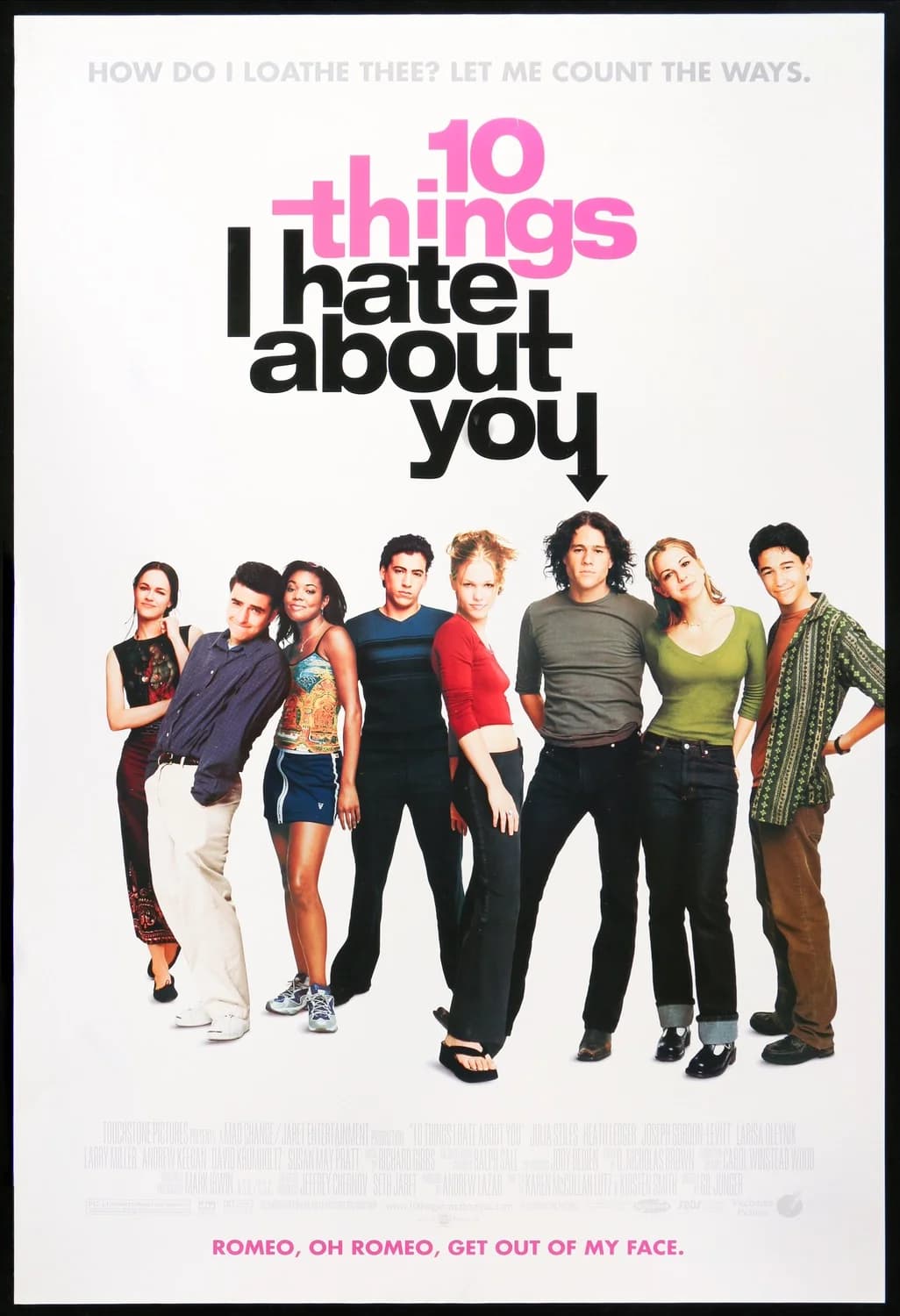
10 Things I Hate About You
Sibling rules, a rooftop serenade and one very stubborn Kat — Shakespeare in a school corridor.
1999 // VHS
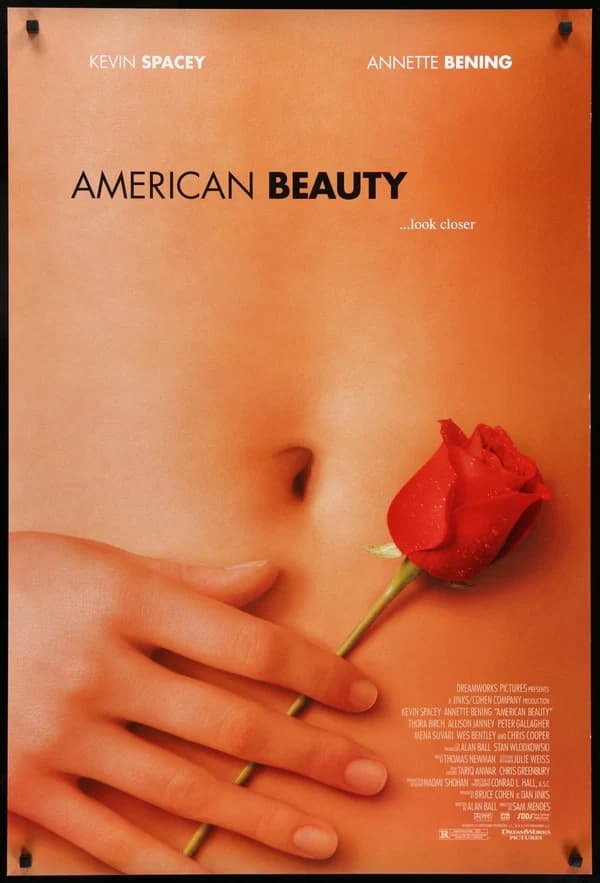
American Beauty
Lester Burnham, suburban rot and a midlife argument that still stings.
1999 // VHS
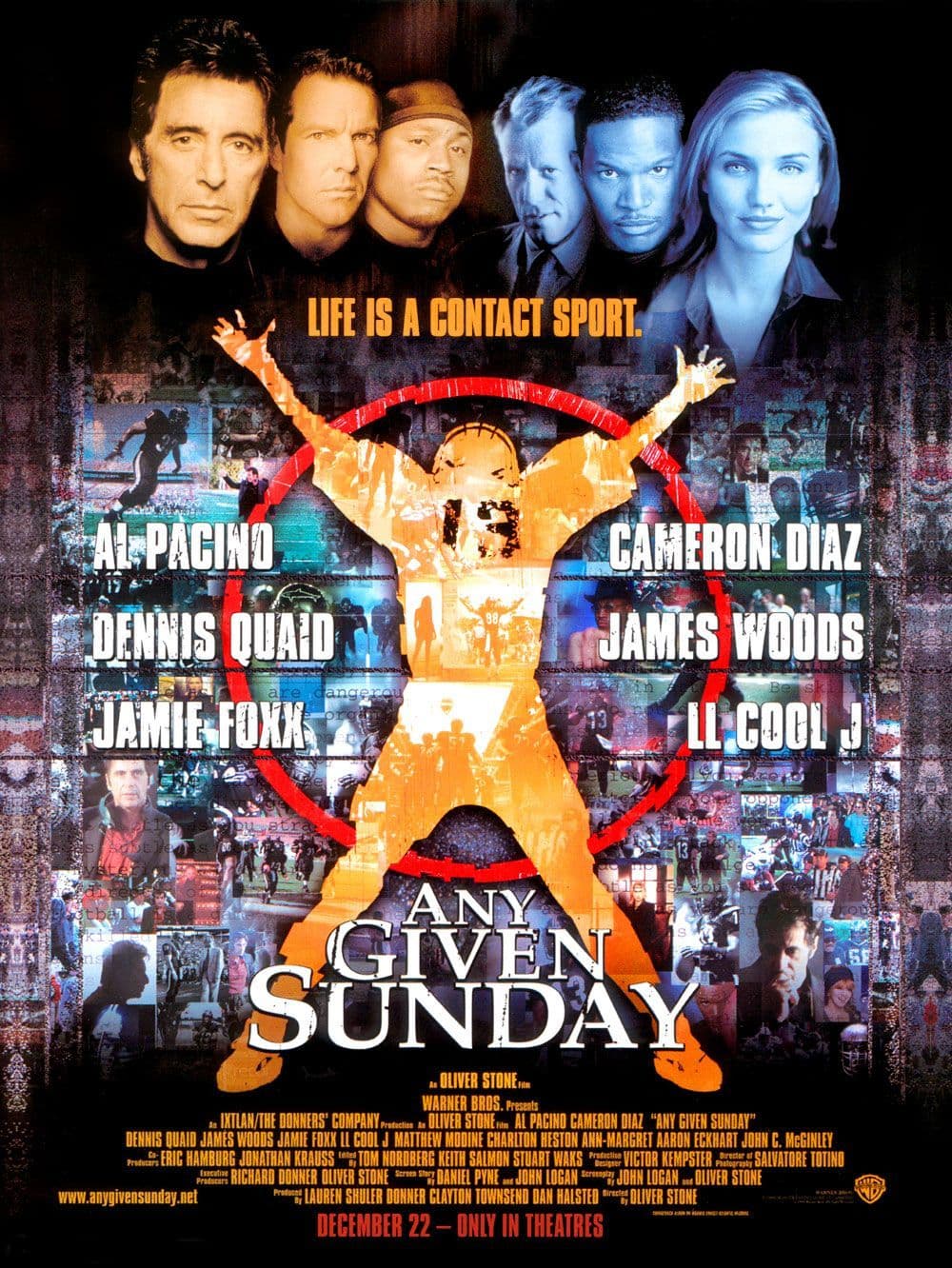
Any Given Sunday
Al Pacino's coach anchors the chaos of a film about football turned into product — loud, messy and oddly persuasive.