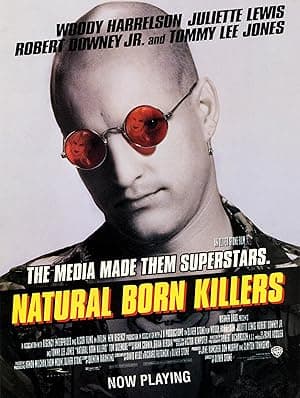
Natural Born Killers
A love story dressed as a crime spree — and a TV camera that can’t look away.
// The setup
PLAYBACK STARTED
Natural Born Killers still grabs attention because it’s about more than bodies on the road: it’s about how the cameras turn criminals into celebrities. Oliver Stone’s 1994 shock-wave pairs a magnetic murderous couple with a media culture that wants them on-air, and the result is noisy, dangerous and impossible to ignore.
THE MOVIE
Mickey Knox is still the reason this movie works
People still talk about Natural Born Killers because it centres on a figure who practically dares the world to look at him. Mickey Knox is the engine: a charismatic, impulsive killer whose life and relationship with Mallory push the story forward and keep it bristling with danger.
But Stone’s film isn’t interested in quiet psychology; it stages a match between two forces — two people driven by damage and a tabloid machine that turns them into celebrity. Wayne Gale’s television show hails the pair as must‑see spectacle, and that constant glare is what makes the film feel urgent rather than merely lurid.
That combination — a murderous couple on the run, a hungry media, and a director willing to shout the whole thing at you — is why the film from 1994 still gets argued over. It’s loud, messy and very deliberate about who it wants us to watch.
THE SETUP
The idea that sets Natural Born Killers in motion
At its simplest, the film follows Mickey and Mallory Knox — two young people who grew up badly and then go on a cross‑country spree of murder that becomes a national spectacle. You get the sense early on that their pasts explain why they do what they do, even if the movie refuses to let that be the only thing you think about.
This was a curious script journey: the story credit goes back to Quentin Tarantino, but by the time filming began Oliver Stone and other writers had reshaped the screenplay into something with a very different voice. That odd origin helps explain why the film feels part outlaw romance, part media satire.
Stone frames the pair’s crimes not just as a criminal odyssey but as material for broadcast: news shows and late‑night TV treat them like a ratings event. That choice makes the setup less a whodunnit and more a problem: what do we do when entertainment and violence start feeding each other?
So the premise works because the film gives us both the people committing the acts and the society cheering from the stands. It’s a tidy enough idea to hold a messy, noisy movie together.
THE CHARACTER
Why Mickey Knox matters
Mickey Knox is not background decoration. He’s the plot’s locomotive — charismatic in the way danger sometimes is, impulsive in the way people with nothing to lose can be. The film sets him up as someone whose past and relationship with Mallory explain, if not excuse, his behaviour.
His partnership with Mallory is crucial: they’re lovers and co‑conspirators, each carrying damage from childhood abuse that binds them together. That pairing turns what could be a series of disconnected crimes into a grim, intimate road story.
Mickey’s importance is partly structural. The film’s action tends to orbit him: his choices, his temper, his relationship with Mallory force other characters and the media to react. That friction is where the movie spends most of its energy.
And because the leads are at the centre of both the violence and the spectacle, Mickey serves as the audience’s point of collision with the film’s bigger questions — about blame, fascination and where sympathy gets misplaced.
UNDER THE SURFACE
Natural Born Killers has more on its mind than the plot suggests
On the surface it’s a crime road movie. Underneath it’s mostly about spectacle: how television and tabloid culture can create notoriety where once there was only violence. The film keeps returning to the idea that the camera doesn’t simply document — it amplifies.
Closely tied to that is the question of glamorisation. Stone piles visual and editorial tricks around the killings so that the viewer is forced to consider whether the film is celebrating what it shows or condemning the appetite that wants to watch.
Abuse and trauma are also central, particularly in the way Mallory’s backstory is used to explain her involvement. The movie doesn’t reduce everything to childhood alone, but it repeatedly connects past damage to present brutality.
Finally, there’s an argument about celebrity: the couple become famous through notoriety, and the film is interested in how society turns criminals into media personalities — and then, perversely, rewards that transformation.
THE FILMMAKING
How Natural Born Killers was put together
Part of why the movie feels like a fever dream is the edit. Hank Corwin and Brian Berdan stitch together narrative scenes with fake news inserts and bursts of pop‑culture imagery so the whole thing reads like a broadcast gone feral. That rapid‑fire cutting never lets the audience settle.
Cinematography and visual treatment do a similar job. Robert Richardson and the editors mix film stocks, colour grading and even animation to fracture what you’re seeing. The images are meant to feel slippery — memories, fantasies and headline footage pushed through the same machine.
Those choices are not cosmetic. They shape how you read the story: sometimes you’re watching the couple, sometimes you’re watching a mediated version of them, and the film delights in how those two views collide.
In short, the filmmaking is purposely abrasive. It’s designed to make the spectator conscious of being a spectator — to make looking part of the film’s point.
PRACTICAL EFFECTS
The effects work that gives Natural Born Killers its physical personality
The film’s more brutal moments rely on real‑world make‑up and prosthetics to give weight to wounds and battered bodies. Crediting specialists like Matthew W. Mungle shows the production wanted those injuries to read as physical, not just digital shorthand.
That practical approach extends to the staged action — everything from chases to the prison sequences was treated as choreography, with dedicated stunt coordinators and performers on hand. Those sequences feel planned and controlled, even when they’re meant to look chaotic.
Using physical effects and carefully staged stunts keeps the movie anchored when the editing and visual treatments try to pull it apart. There’s a tactile sense to the violence that the production credits point to.
So while the film plays like visual collage, much of the brutality you see was realised the old fashioned way: make‑up, prosthetics and trained stunt crews doing the heavy lifting.
PURE 80S
Natural Born Killers could not belong to any other decade
There’s a distinct 1990s media energy to the film: it borrows music‑video editing and MTV‑style collage to make a feature feel like a TV culture critique. That blend of quick cuts and music sensibility was very much of its era.
The movie also landed at a moment when conversations about media violence and tabloid television were heated. Natural Born Killers arrived into that debate and made those arguments part of its texture, not merely its marketing.
Because of that timing, the film didn’t exist in a vacuum — it stepped into whatever arguments were already happening about whether television was feeding aggression and whether sensational coverage created copycats.
All of which is to say: the film wears its decade on its sleeve. Its techniques and the cultural arguments it engages are firmly rooted in the mid‑1990s moment when images and ratings felt like they could shape behaviour.
THE LEGACY
Why Natural Born Killers still matters
Part of the film’s afterlife is the conversation it kept having with the culture that received it. It premiered into controversy: some commentators linked real‑world crimes to the movie, and the legal battles that followed — including a wrongful‑death suit — ultimately ended with the courts dismissing claims that the film directly incited violence.
That public row matters because it forced viewers and journalists to ask hard questions about representation, responsibility and imitation. Natural Born Killers became more than entertainment; it became a test case for media ethics debates.
The film also drew attention for its soundtrack curation — Trent Reznor assembled the commercially released collection, which worked as a noisy companion piece to the on‑screen collage and helped the movie feel like an era‑specific cultural artefact.
Finally, the Venice Film Festival recognition — including the Pasinetti Award for Juliette Lewis — shows the film provoked strong reactions on both sides of the Atlantic. It was the kind of picture that made people respond, not look away.
THE VERDICT
Does Natural Born Killers still hold up?
If you watch it now, don’t expect subtlety. Natural Born Killers is deliberately in‑your‑face about its premise: a traumatised couple on a notorious killing spree whose story is gobbled up by televised spectacle. That bluntness is part of its point — and part of why it still lands for some viewers.
The film’s structure deliberately blurs fiction and media: staged news inserts, faux television segments and episodic set pieces keep reminding you that these crimes are also showbiz. If you find that bracing and provocative, the film still has teeth.
The presence of characters like the Navajo man, and moments that force remorse, show Stone offering more than pure sensationalism; the movie keeps returning to the damage behind the violence and the ways fame rewrites culpability. It’s messy, but it’s trying to hold multiple ideas in play.
So should you watch it? Yes — if you can take a movie that wants to fight with you. It doesn’t comfort, and it doesn’t neatly resolve its questions, but as a provocation about media, celebrity and violent spectacle, it remains a film that insists on your attention.
Share this movie
// Keep watching
More movies from the 90s
If Natural Born Killers is your kind of movie, there's plenty more on the shelves worth rewinding.
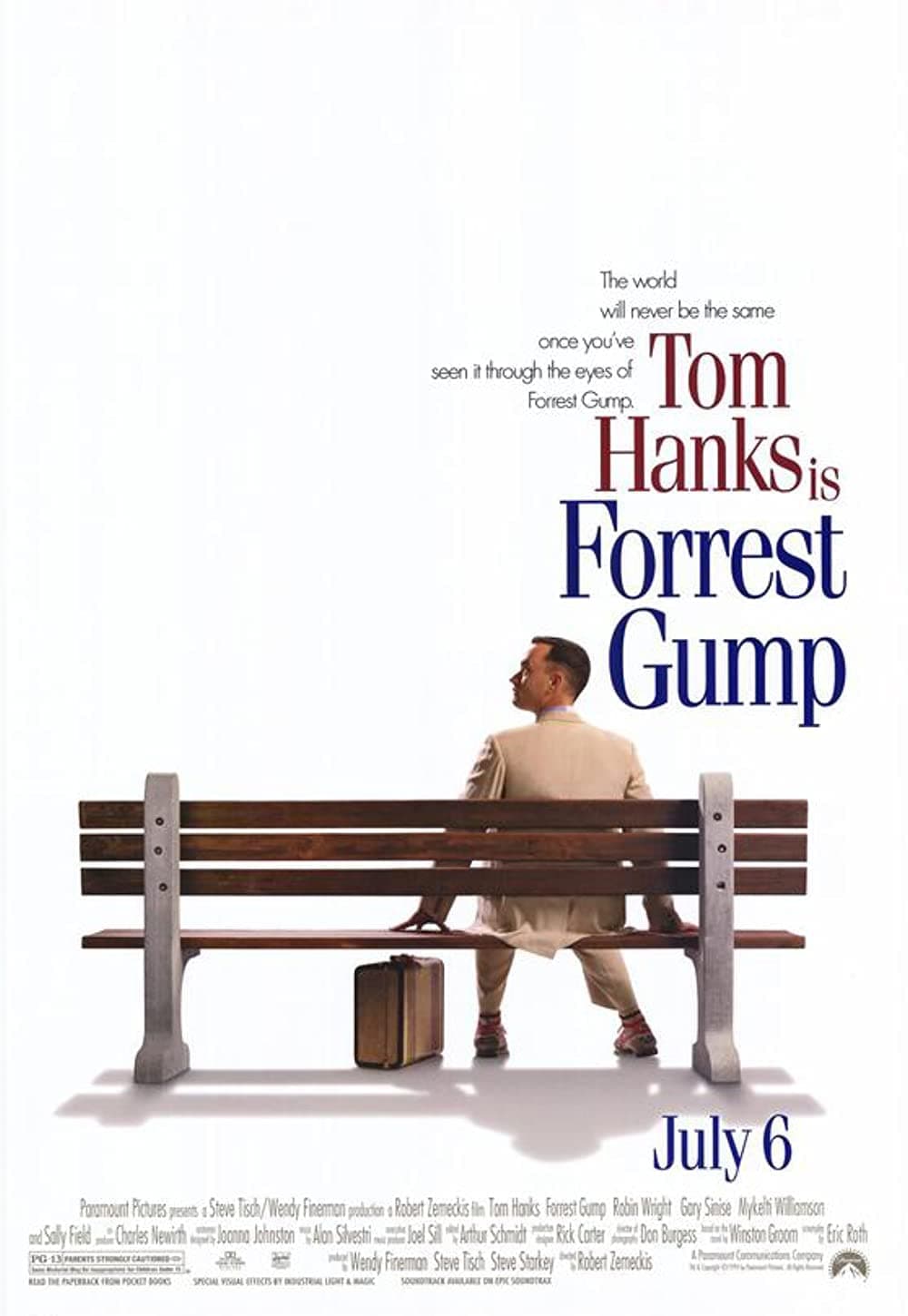
1994 // VHS
Forest Gump
A man on a bench who refuses to make history anything more complicated than a story worth telling.
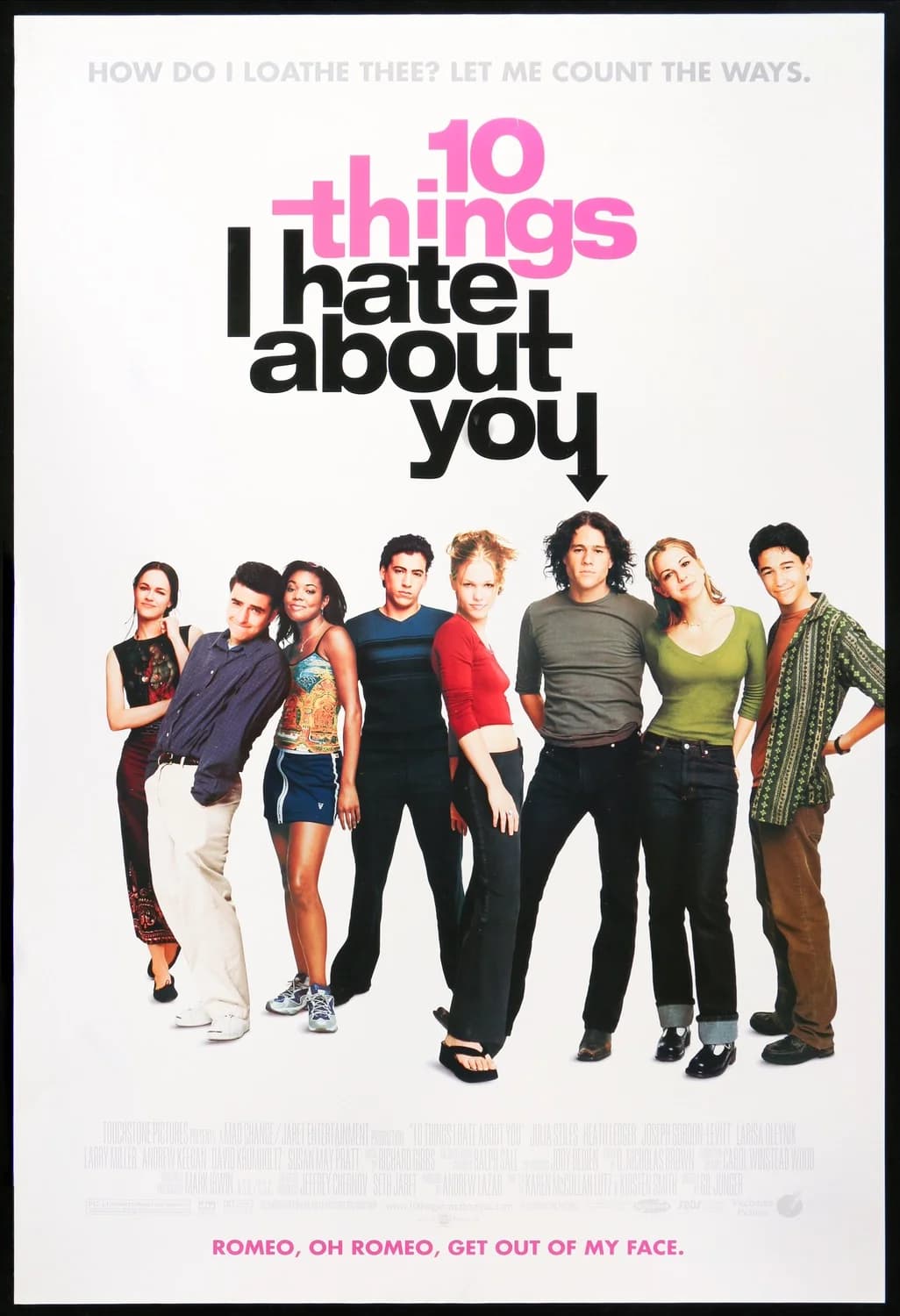
1999 // VHS
10 Things I Hate About You
Sibling rules, a rooftop serenade and one very stubborn Kat — Shakespeare in a school corridor.
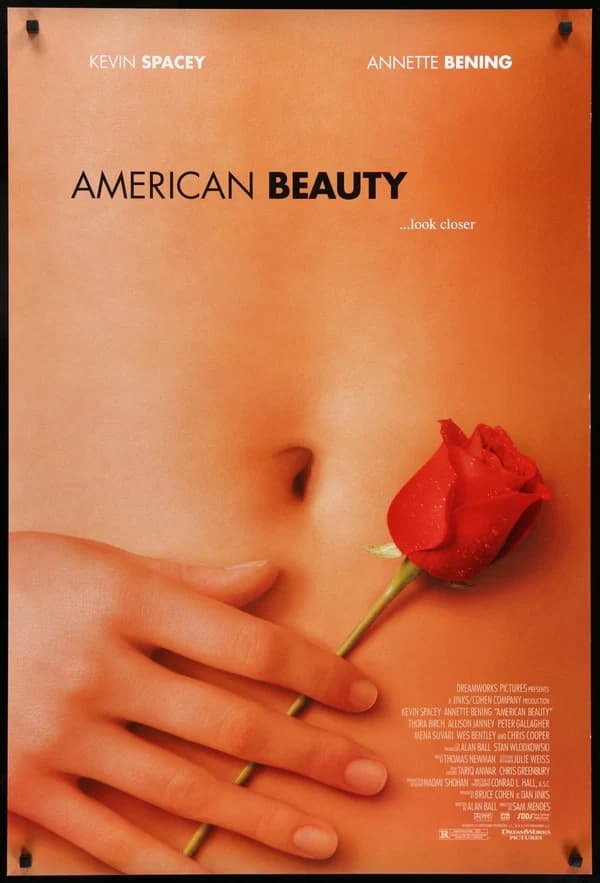
1999 // VHS
American Beauty
Lester Burnham, suburban rot and a midlife argument that still stings.