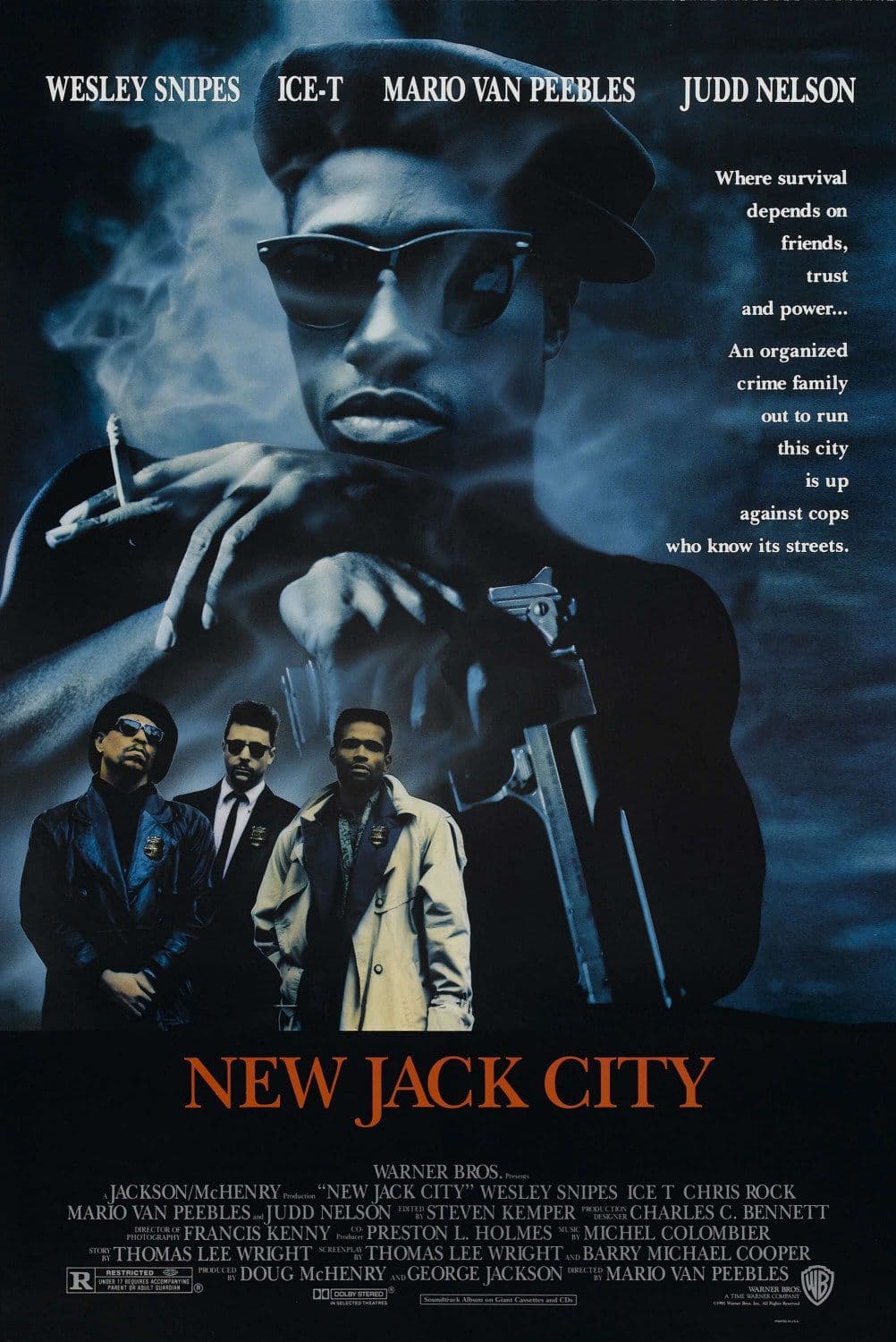
New Jack City
A portrait of ambition, spectacle and the moral mess that follows a drug empire.
// The setup
PLAYBACK STARTED
There are movies with villains you remember and movies that remember you. New Jack City is the former — and Nino Brown is the reason. Mario Van Peebles’s early‑90s crime drama throws a flamboyant drug lord, two undercover cops and a city in crisis into a tight hundred minutes, and the argument it stages about power, profit and identity still sparks.
THE MOVIE
Nino Brown is still the reason this movie works
New Jack City isn’t an ensemble exercise dressed up as a crime picture; it’s built around a single, loud principle — Nino Brown. He’s a Harlem drug lord who builds a crack‑cocaine empire and runs his operation like a business that taxes everything in its path.
That empire forces the story into a neat, brutal dynamic: guys in suits selling an addicted neighbourhood a one‑way ticket to collapse, and two police officers who try to get inside and stop it. Scotty Appleton and Nick Peretti become the film’s counterweight by going undercover, and the moral friction of that setup gives the plot its teeth.
Mario Van Peebles directed the picture and, in a brisk 100 minutes released in 1991, New Jack City throws the crack epidemic and its social fallout into the foreground rather than letting it be wallpaper. It’s loud, focused and unapologetically about power, spectacle and what a community pays for both.
THE SETUP
The idea that sets New Jack City in motion
At its simplest, the film sets two systems against one another: the growth of an organised drug business and the attempt to dismantle it. That conflict is straightforward by design — it lets the movie move fast and concentrate on the consequences.
The inciting image is structural rather than personal: a market for crack cocaine swells and a criminal organisation uses neighbourhood space — including a housing project — as a fortified distribution point. From there, every escalation feels like a logical step in the economics of violence.
Those consequences are what justify the undercover mechanics. Scotty Appleton and Nick Peretti don police uniforms in public but spend the bulk of the story inside the operation, and the infiltration idea keeps the audience close to both the moral compromises and the practical risks.
It’s worth noting the screenplay credits: Thomas Lee Wright and Barry Michael Cooper wrote the film, with Wright providing the original story. The writing keeps the engine simple — rise, spread, confrontation — and lets characters and spectacle fill the cylinder.
THE CHARACTER
Why Nino Brown matters
Nino Brown is not background menace. The film presents him as flamboyant and ruthless — someone who treats monopoly and showmanship as the same thing. That combination makes him a figure you can’t ignore; he’s always performing power, not merely wielding it.
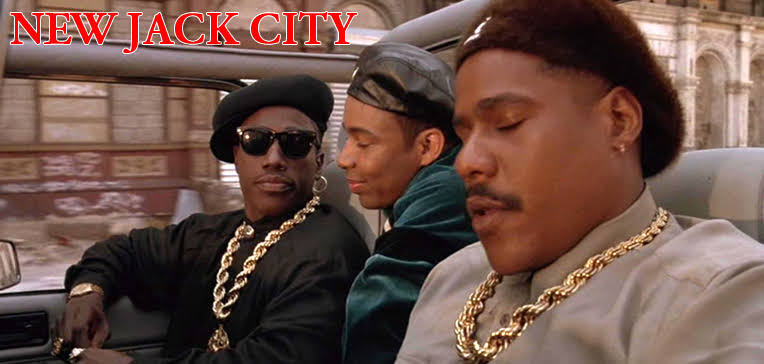
Because the movie frames the crack era as the enabling context for that rise, Nino feels like a product of the times and the business he runs. He isn’t just a street‑level thug; he’s a kingpin with strategy and spectacle on his side.
That matters to the rest of the cast because Nino’s presence forces other characters into choices. Scotty Appleton’s undercover role, for example, carries ethical pressure precisely because he’s operating inside a network built by someone who prizes domination over anything else.
Finally, the casting fact is plain: Wesley Snipes plays Nino Brown. The film leans on the character as its axis, and everything — plot and theme alike — rotates around the chaos he manufactures.
THE PERFORMANCE
Why Wesley Snipes's performance matters
Contemporary coverage singled out Wesley Snipes’s portrayal of Nino Brown for attention, and that fact is telling: the role demanded to be noticed. Critics and industry commentators repeatedly referenced the part in their early responses to the film.
There’s also a concrete industry nod: Snipes won an NAACP Image Award for the role. That kind of recognition matters because it records how audiences and institutions reacted at the time, not just how fans remember the movie now.
All of which means the film’s centrepiece — its villain — arrived with a degree of critical weight. The attention given to the performance helped fix Nino Brown in the public conversation about the film.
So it’s sensible to treat the acting evidence as part of why the picture registers: the character is prominent on the page, and the performance was consistently noticed when New Jack City first circulated.
UNDER THE SURFACE
New Jack City has more on its mind than the plot suggests
On the surface it’s a crime picture about a kingpin and the cops trying to stop him. Underneath that, the movie keeps returning to the crack epidemic and the trade that fuels both wealth and devastation in urban neighbourhoods.
There’s a clear narrative of ascent and collapse: the film tracks the rise and fall of a drug lord whose success is built on short‑term profit and long‑term community harm. That arc gives the story a moral cadence — boom, then bust.
The undercover aspect isn’t just a thriller device; it creates persistent moral ambiguity. The officers who infiltrate the network come to terms with how close they can get to the very crimes they're supposed to prevent, and that pressure is the movie's uneasy centre.
Finally, the film gestures at larger conditions — urban poverty and systemic neglect — as the terrain where gang culture and spectacle can take root. New Jack City treats those forces as context rather than background noise, which gives its crime story a civic weight.
PURE 80S
New Jack City could not belong to any other decade
New Jack City arrived at the start of the 1990s — it premiered at Sundance in 1991 and opened nationally that March — and it slots neatly into the early‑90s wave of urban 'hood films that got mainstream attention at the time.
Critics and scholars commonly group it with other city‑focused pictures from that moment because they share a willingness to put Black urban life and the consequences of drug‑era violence at the centre of their stories.
Part of that grouping comes down to personnel and perspective: Barry Michael Cooper’s writing (shared across similar projects) gave a distinctive voice to several films concerned with the drug era, and Mario Van Peebles’s directorial turn places New Jack City inside that conversation.
Put simply: this was a moment when certain stories found a mainstream opening, and New Jack City is very much a product of that historical moment — both in subject and in the way it chose to tell it.
THE LEGACY
Why New Jack City still matters
For one practical reason, it reached a lot of people: the film grossed in the tens of millions domestically and ranked among the top‑grossing independent pictures of 1991. That breadth of audience kept the conversation going beyond niche circles.
Beyond box office, New Jack City has kept a presence through retrospectives, anniversary pieces and stage adaptations that explicitly reference it. Those returns show that the film remains a touchpoint for discussions about that era of storytelling.
Academically and critically, the film is repeatedly referenced when people chart the short‑lived commercial visibility of Black urban dramas in the early 1990s. It’s part of a moment that scholars and critics still return to when mapping representation and industry trends.
So its continued relevance is twofold: it was seen widely at the time, and it keeps being a useful example in conversations about how the period handled urban crime, drugs and cinematic spectacle.
THE VERDICT
Does New Jack City still hold up?
Yes — if you’re interested in a compact, energetic take on the rise and fall of a drug lord and the policing methods used to stop him. The film’s central conflict — an organised drug business versus undercover police infiltration — is plain, potent and keeps the story on a clear line.
It helps that the picture is anchored around a figure the film presents as flamboyant and ruthless; Wesley Snipes plays Nino Brown, and contemporary attention (including an NAACP Image Award) shows the performance landed with viewers and critics when the film premiered.
New Jack City also matters because it treats the crack epidemic and urban neglect as more than backstory. That context gives the action stakes beyond spectacle: it’s about communities transformed by market forces they didn’t control, and the policing choices those conditions invite.
If you’re after a tidy recommendation: watch it for the tension between showmanship and consequence, and for a movie that captures a specific early‑90s conversation about drugs, power and policing. It’s not a neutral picture — it never pretends to be — but it’s a clear, forceful example of the kind of urban storytelling that dominated that moment.
Share this movie
// Keep watching
More movies from the 90s
If New Jack City is your kind of movie, there's plenty more on the shelves worth rewinding.
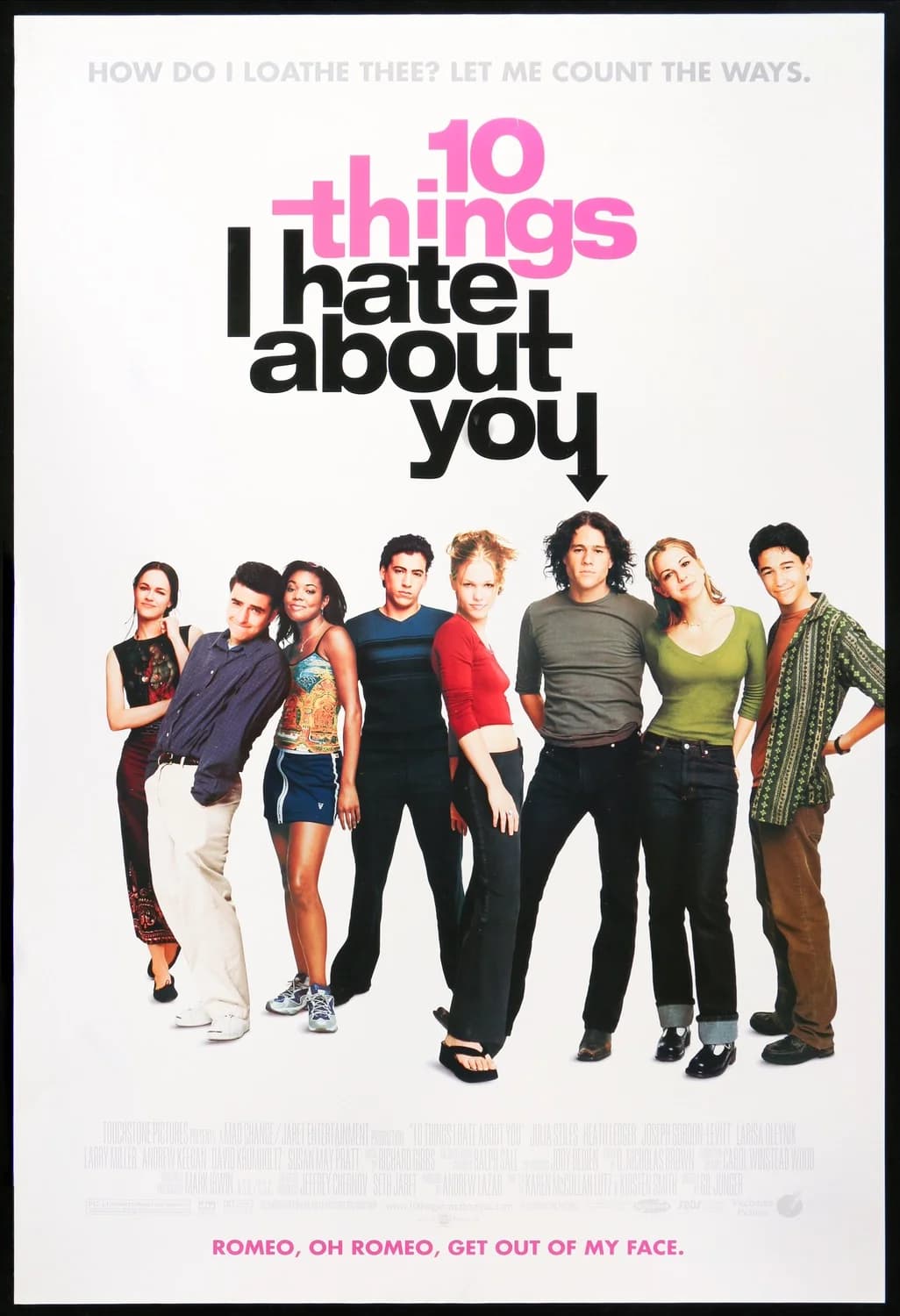
1999 // VHS
10 Things I Hate About You
Sibling rules, a rooftop serenade and one very stubborn Kat — Shakespeare in a school corridor.
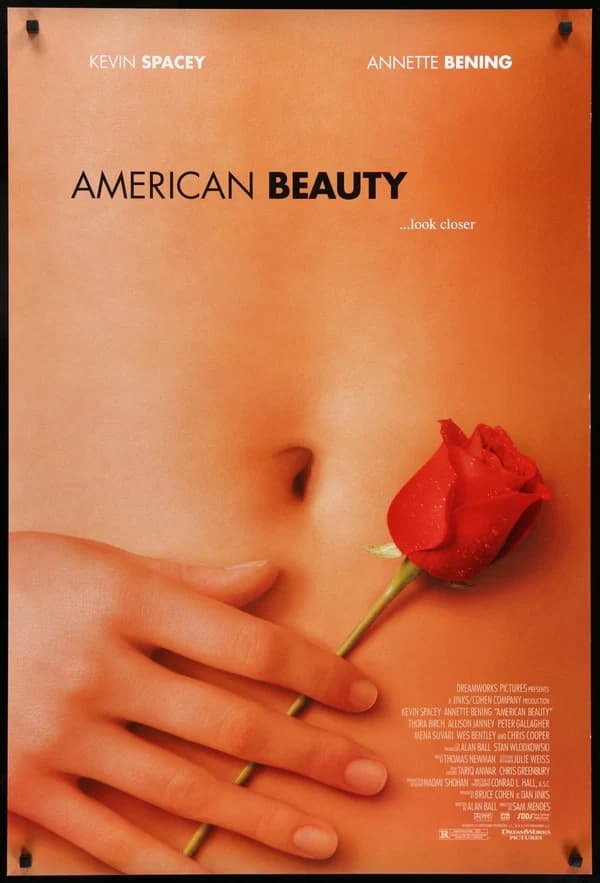
1999 // VHS
American Beauty
Lester Burnham, suburban rot and a midlife argument that still stings.
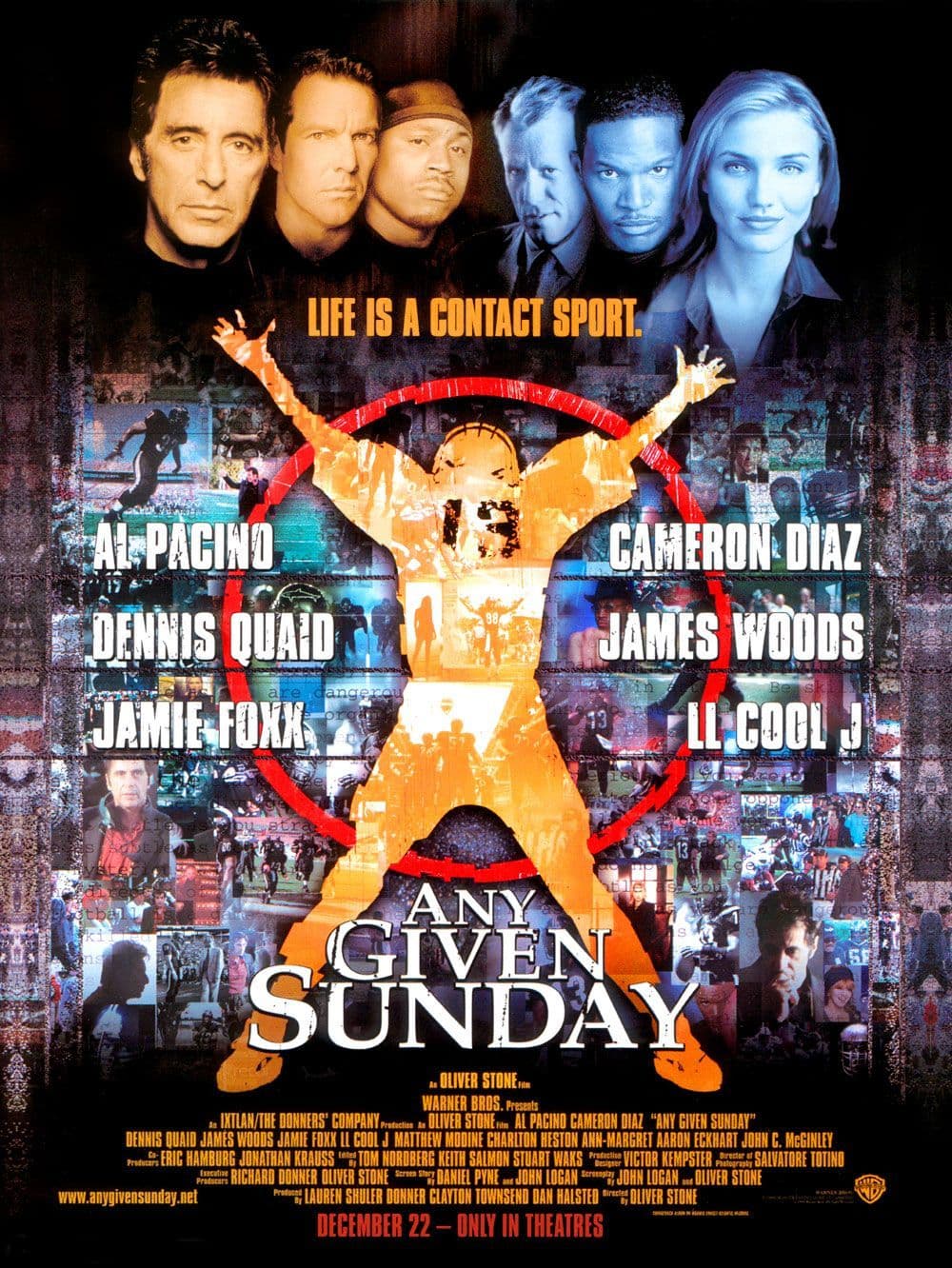
1999 // VHS
Any Given Sunday
Al Pacino's coach anchors the chaos of a film about football turned into product — loud, messy and oddly persuasive.