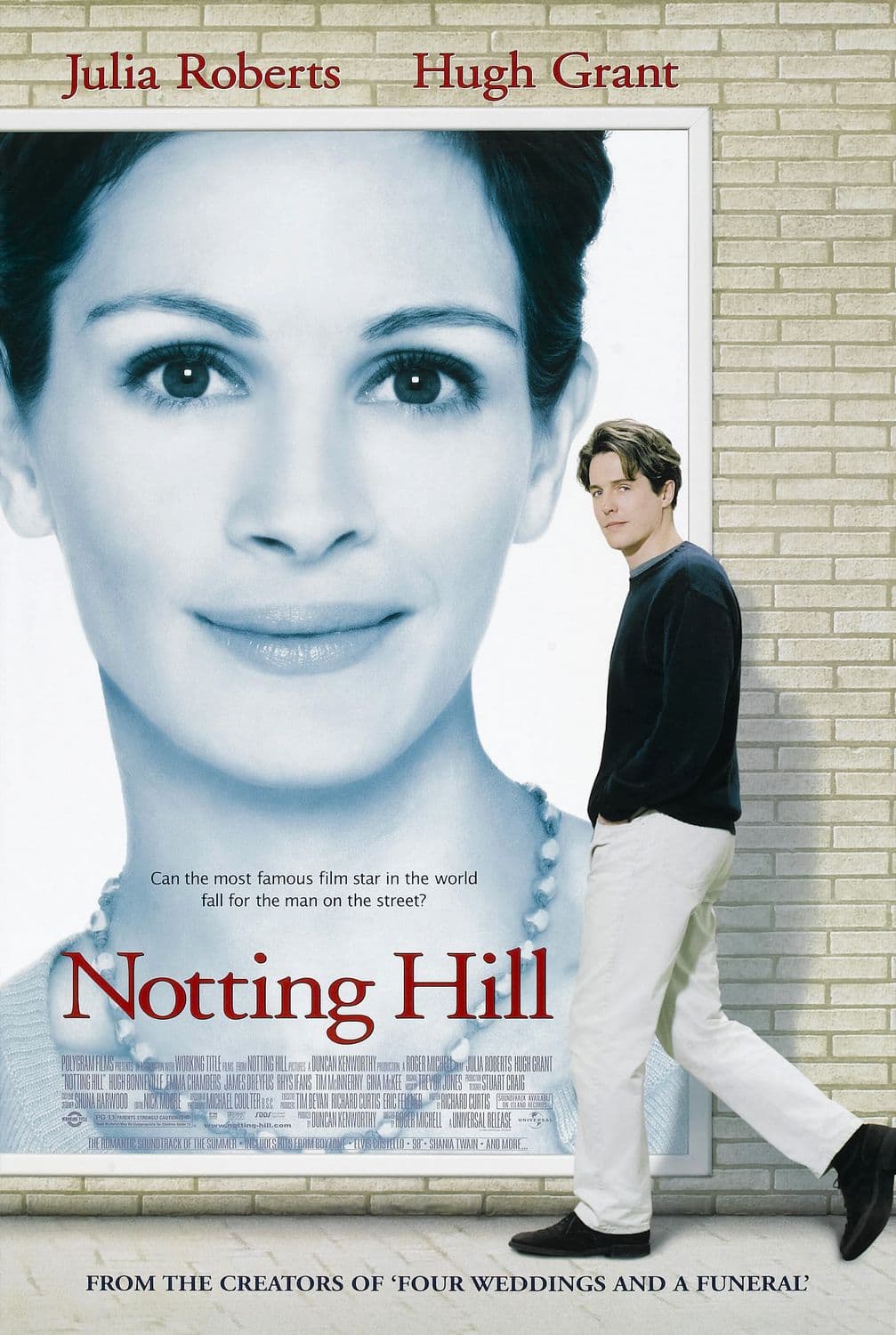
Notting Hill
A travel bookshop, a movie star and a very British wobble — Notting Hill still trades in ordinary people meeting impossible fame.
// The setup
PLAYBACK STARTED
A famous actress walks into a tiny West London shop and changes an ordinary man's life. Notting Hill wears that impossibly simple setup like a charm: it's a rom-com that keeps returning, repeatedly, to the friction between private life and public spectacle. Roger Michell and Richard Curtis made something that looks like a fairy tale but hangs its heart on everyday awkwardness.
THE MOVIE
William Thacker is still the reason this movie works
Notting Hill opens with a deceptively modest idea: a travel-bookshop owner meets a superstar who wanders in by chance. That single, awkward encounter — a famous American actress buying into William’s unremarkable world — supplies the story’s engine.
What keeps the film honest is its leading figure. William Thacker is written and played as a diffident, self-effacing everyman whose ordinary life sits in obvious contrast with Anna Scott’s global fame. The comedy and the stakes both come from that gap.
Roger Michell directs the whole thing with a steady hand: the film pitches the spectacle-versus-privacy problem as a romantic comedy and, crucially, makes William the point of sympathy through whom the audience judges celebrity life.
THE SETUP
The idea that sets Notting Hill in motion
At its heart, the film is simple: William Thacker runs a travel-bookshop and, by pure chance, meets Anna Scott, a movie star. That single awkward chat in the shop starts the whole affair and lets the story do what rom-coms do best — place two different worlds in a small space and watch the sparks and misfires.
From there the conflict is straightforward and sensible: can a relationship survive when one half of it is constantly watched? The film keeps returning to the difficulty of building privacy when media attention and public curiosity will not leave you alone.
Curtis’s screenplay uses comic set-pieces to dramatise that pressure. Mistaken identities, a notorious press-junket sequence and other interruptions are not just gags; they are plot tools that dramatise how publicity repeatedly intrudes on something fragile.
Outside those headline moments, the film is careful to surround William with a close-knit ensemble — eccentric flatmates, a loud sister — characters who provide both warmth and embarrassment, and who remind us that ordinary life continues even when celebrity knocks at the door.
THE CHARACTER
Why William Thacker matters
William Thacker matters because he is the awkward, ordinary counterweight to Anna’s impossible fame. He’s built as a diffident, self-effacing type — the sort of person who worries about how to behave in life’s small humiliations — and that temperament shapes almost every scene he’s in.
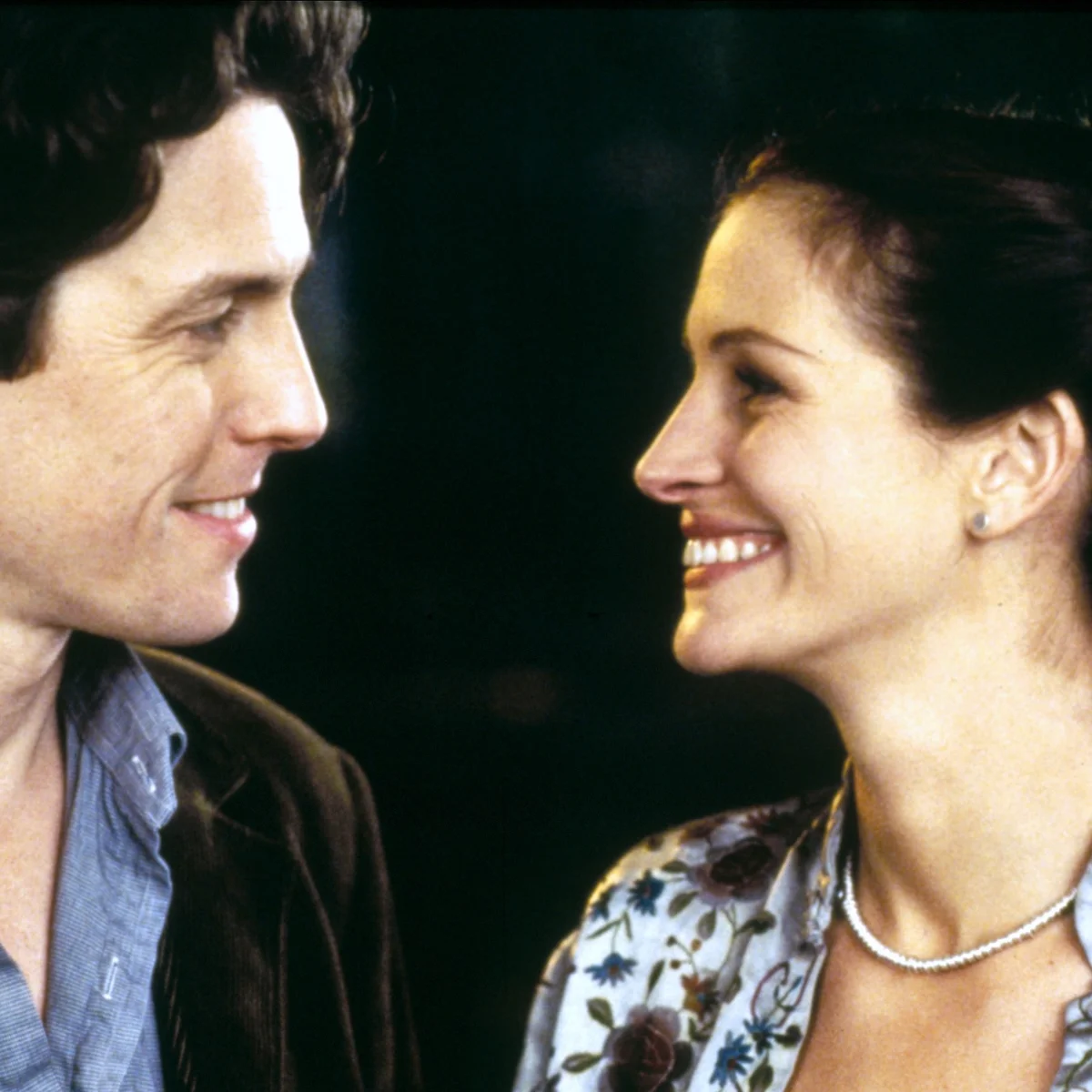
That quality makes the romance feel plausible: the film isn’t selling sudden stardom or delusion so much as two people trying to find a private life within the public noise. William’s doubt and small embarrassments are the emotional measuring stick for how difficult that is.
The supporting characters are carefully chosen to underline those pressures. His sister supplies comic warmth and the familiar domestic scramble of matchmaking; friends, agents and press handlers exist to test whether William and Anna can bridge her world and his.
Put simply, the movie would be a different, thinner thing without a lead who feels like a normal bloke trying to stay upright while the world tilts around him.
THE PERFORMANCE
Why Hugh Grant's performance matters
The film hinges on two central performances: Hugh Grant as William Thacker and Julia Roberts as Anna Scott. That casting choice makes the whole conceit believable — a recognisable American star opposite a modest London bookseller.
Given how the story lives in quiet reactions and small embarrassments, the fact that Grant fills the lead role gives the movie a consistent centre: its plot sprinkles celebrity around, but the viewpoint is very much William’s.
UNDER THE SURFACE
Notting Hill has more on its mind than the plot suggests
On the surface Notting Hill is a romantic comedy, but it keeps drifting back to questions about fame versus privacy. The relationship at its core is constantly endangered by publicity — the film’s jokes about tabloids and press intrusion point to a real emotional problem.
That links to a related idea: ordinary life versus celebrity. The movie delights in the small rituals of domestic life precisely because those rituals are the thing fame threatens to swallow. It’s a film that wants us to care about quietness.
There’s also an Anglo–American tension running beneath the romance. The pairing of a globally famous American actress and a humble London bookseller produces a cultural contrast that the movie uses lightly but persistently.
Finally, there’s a sense of romantic fate and chance — that a single awkward meeting can alter the course of ordinary life. The film trades in that gentle improbability without pretending it’s anything other than what it is: a rom-com’s version of luck.
THE FILMMAKING
How Notting Hill was put together
The movie feels lived-in because of some very deliberate production choices. Michael Coulter, credited as director of photography, favours a soft, naturalistic look that lets the London streets and interiors breathe rather than scream for attention.
Stuart Craig’s production design mixes on-location street sequences with carefully constructed interiors so the neighbourhood feels authentic. That balance makes Notting Hill the sort of place you can imagine actually being one's local.
Editor Nick Moore keeps the film’s pace measured. Montage is used to show time passing and the relationship’s inevitable ups and downs, so the film rarely feels rushed even when it’s juggling comic set-pieces and quieter moments.
All together, these choices stop the movie from becoming a glossy celebrity fantasy; instead it keeps the focus on ordinary life and the particular textures of the neighbourhood where the story happens.
PURE 80S
Notting Hill could not belong to any other decade
Notting Hill sits squarely in the late-1990s wave of British romantic comedies that found international audiences. Produced by Working Title and PolyGram, it’s part of that moment when British rom-com sensibilities were especially exportable.
The film reunites Richard Curtis and Hugh Grant, which ties it to the comic tone and sensibility audiences had come to expect from their previous collaborations. There’s a particular late-90s rhythm to the humour and storytelling here.
It also belongs to an era of romantic comedies that worried about modern publicity and commerce. The narrative’s preoccupation with tabloid intrusion and the difficulties fame creates reflects how relationships were being imagined on screen at the time.
Put simply: Notting Hill feels of its moment because it mixes a locally specific British comic voice with a wider, global rom-com language that was very much of the late 1990s.
THE LEGACY
Why Notting Hill still matters
On release the film became a huge international success and was widely reported as the highest-grossing British film of its time. That reach helped make it a touchstone for late-90s romance on screen.
It also earned mainstream recognition: multiple awards nominations and a BAFTA Audience Award for Most Popular Film in 2000 speak to how broadly the movie resonated with audiences.
Rhys Ifans’s performance as Spike drew particular attention and functioned as a breakout moment, raising his profile afterwards.
The soundtrack likewise received notice and even won Best Soundtrack at the Brit Awards in 2000, underlining how the film’s music became part of its public identity.
THE VERDICT
Does Notting Hill still hold up?
Yes — with a caveat. If you come for a tidy rom-com about improbable meetings, the inciting image of Anna Scott walking into William’s travel-bookshop still lands. The story’s pleasures are simple and honest: the awkward first conversation, the tiny domestic embarrassments, the comic interruptions that test the couple’s privacy.
Where the film scores is in keeping the conflict personal. The central problem — how two people build a private life under constant public scrutiny — remains persuasive because the script treats publicity as a real obstacle, not just a punchline.
It helps that the movie is anchored by its lead pair: William is the viewpoint we trust, and the ensemble around him (from his sister to his flatmates to intrusive press handlers) keeps the stakes grounded in ordinary life. Those choices make the romance feel like it belongs to a neighbourhood as much as to a headline.
So if you want a late-1990s romantic comedy that remembers to be about people as well as fantasy, Notting Hill still worth watching. It’s not a flawless miracle of the genre — but it’s an affectionate, well-crafted example of what those films aimed to do at their best.
Share this movie
// Keep watching
More movies from the 90s
If Notting Hill is your kind of movie, there's plenty more on the shelves worth rewinding.
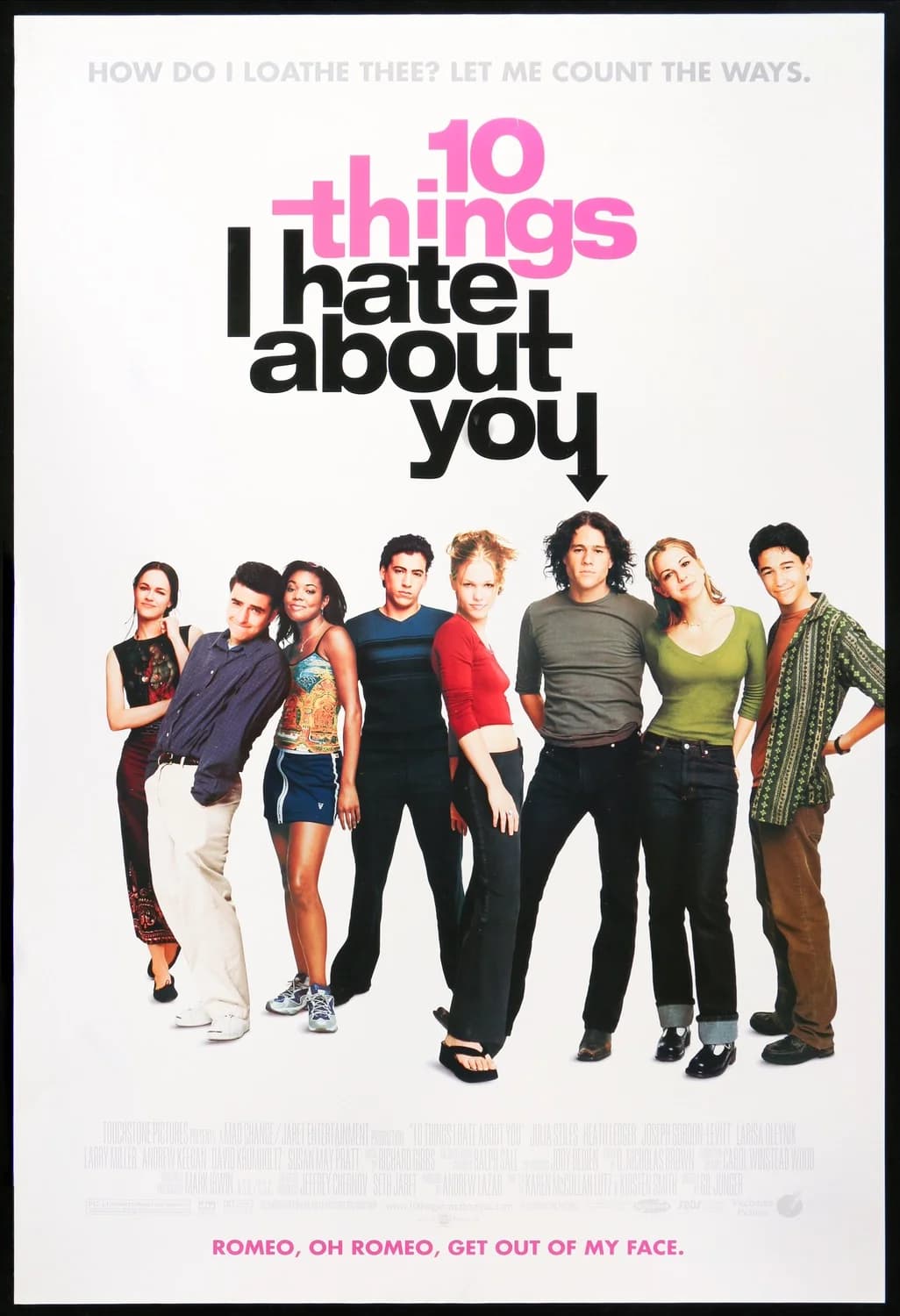
1999 // VHS
10 Things I Hate About You
Sibling rules, a rooftop serenade and one very stubborn Kat — Shakespeare in a school corridor.
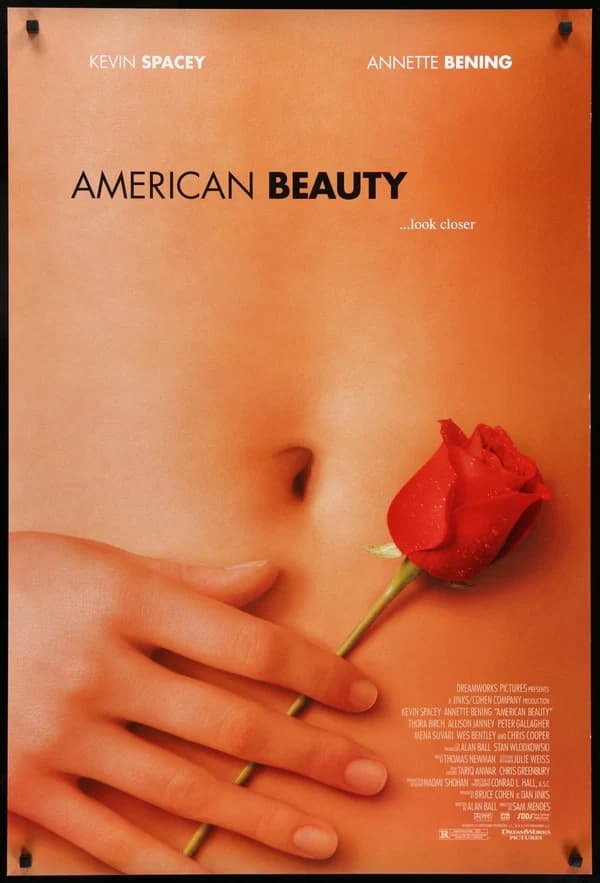
1999 // VHS
American Beauty
Lester Burnham, suburban rot and a midlife argument that still stings.

1999 // VHS
Any Given Sunday
Al Pacino's coach anchors the chaos of a film about football turned into product — loud, messy and oddly persuasive.