Problem Child
A catalogue of domestic mayhem, held together by one man’s stubborn attempt at fatherhood.
// The setup
PLAYBACK STARTED
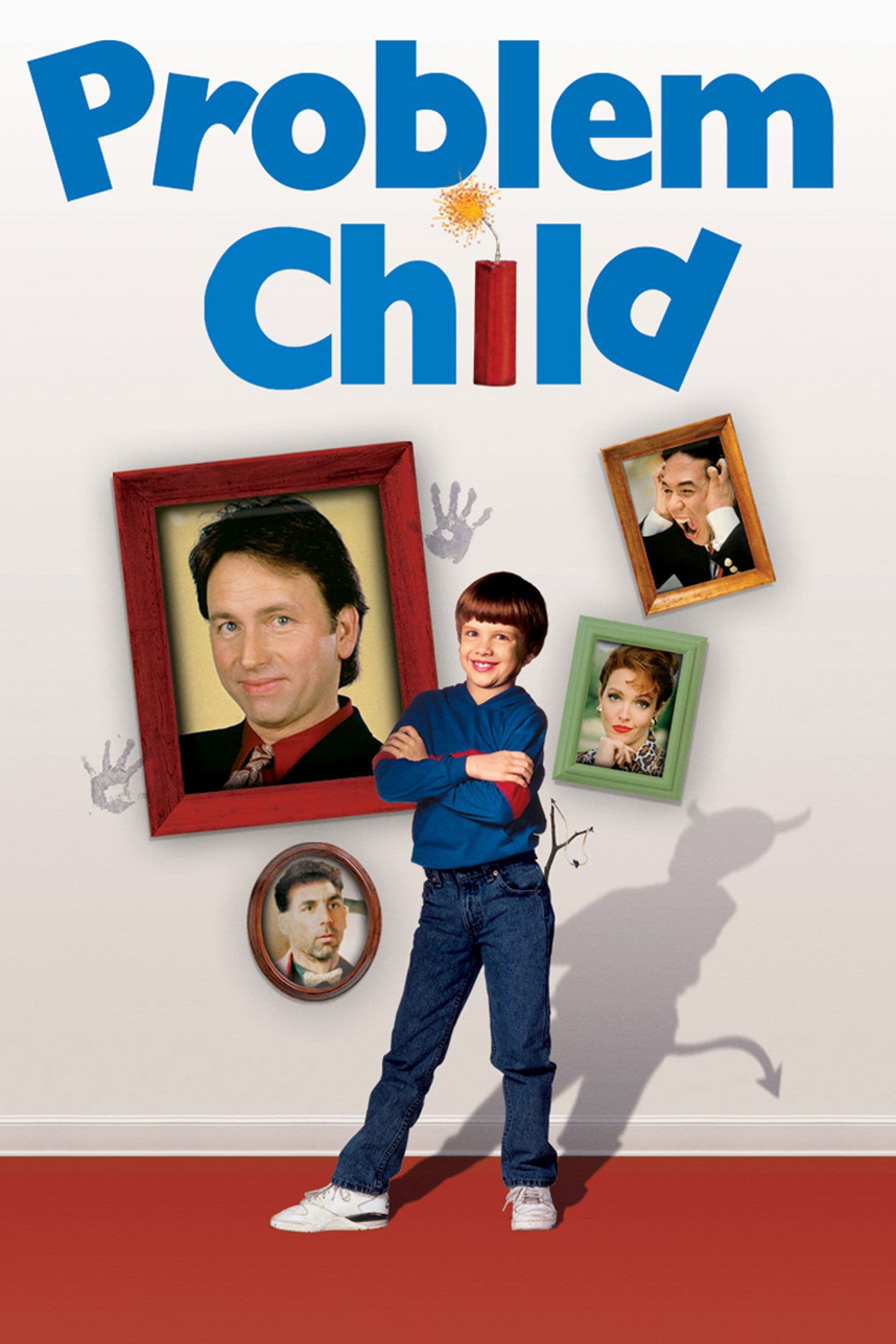
Problem Child still lands in conversations because it commits to a very specific comic idea: parents who desperately want a child meet a child who refuses to behave. Dennis Dugan’s debut squeezes that collision into a spry 81 minutes and never lets the chaos cool.
THE MOVIE
Benjamin "Ben" Healy Jr. is still the reason this movie works
If you remember one thing about Problem Child, remember Ben Healy: a well-meaning man who wants to be a father and, just as importantly, wants to prove himself to his overbearing dad. That personal wish is what keeps the film’s mayhem from feeling entirely nihilistic—there’s a human knot at the centre of the jokes.
The set-up is blunt and simple. Ben and his social‑climbing wife adopt a seven‑year‑old nicknamed Junior, a child who has been shunted from home to home and whose misbehaviour escalates in a string of pranks and set pieces that the film narrates—partly—through Junior’s own voiceover.
Dennis Dugan directed the picture as his feature debut and, in less than an hour and a half (81 minutes, to be precise), Problem Child delivers a compact blast of black comedy: loud, speedy and opinionated about what parenthood looks like when it doesn’t go to plan.
THE SETUP
The idea that sets Problem Child in motion
At its most basic, the film is built around an improbably combustible domestic arrangement: a couple wants a child; the child wants to wreck the house. That friction provides an engine for gags rather than a sentimental arc.
Complicating the family chaos is a recurring subplot: Junior corresponds with a convicted murderer known as the 'Bow‑Tie Killer', a thread that drags the Healy household into genuinely darker territory and keeps the laughs uncomfortably skewed.
The movie was shaped in the editing room and the screening room as well. A notably poor first preview led to roughly two weeks of reshoots—new scenes, a birthday sequence among them—and a retooled ending, so the version most people know is the film after those fixes.
The writers saw the film as a sharper reply to a run of pictures where children 'teach' adults; Problem Child sits in that late‑80s/early‑90s conversation but pushes the family‑as‑battlefield idea towards black comedy.
THE CHARACTER
Why Benjamin "Ben" Healy Jr. matters
Ben Healy matters because he’s the moral ballast. The film’s comedy leans into cruelty and disruption, and without someone who earnestly wants fatherhood the whole thing could feel gleefully mean for its own sake.
What gives the stakes weight is straightforward: Ben isn’t just after a child for the warmth of it—he’s also trying to prove himself to his domineering father, Big Ben. That explains why he keeps backing into chaos instead of cutting and running.
Because much of the movie satirises family‑film conventions, Ben also functions as the figure those conventions are measured against—the patient, slightly embarrassing husband who thinks love (and perseverance) will fix everything.
That role is the glue. Take away Ben’s sincerity and the pranks become hollow; with it, they become a comic trial by fire for a man trying, unintentionally, to become the dad he never had.
UNDER THE SURFACE
Problem Child has more on its mind than the plot suggests
Under the slapstick and the pranks sit a few clear ideas: adoption and the messy responsibilities that come with parenting. The film keeps returning to what it actually means to take a child into your life when the child itself resists fitting in.
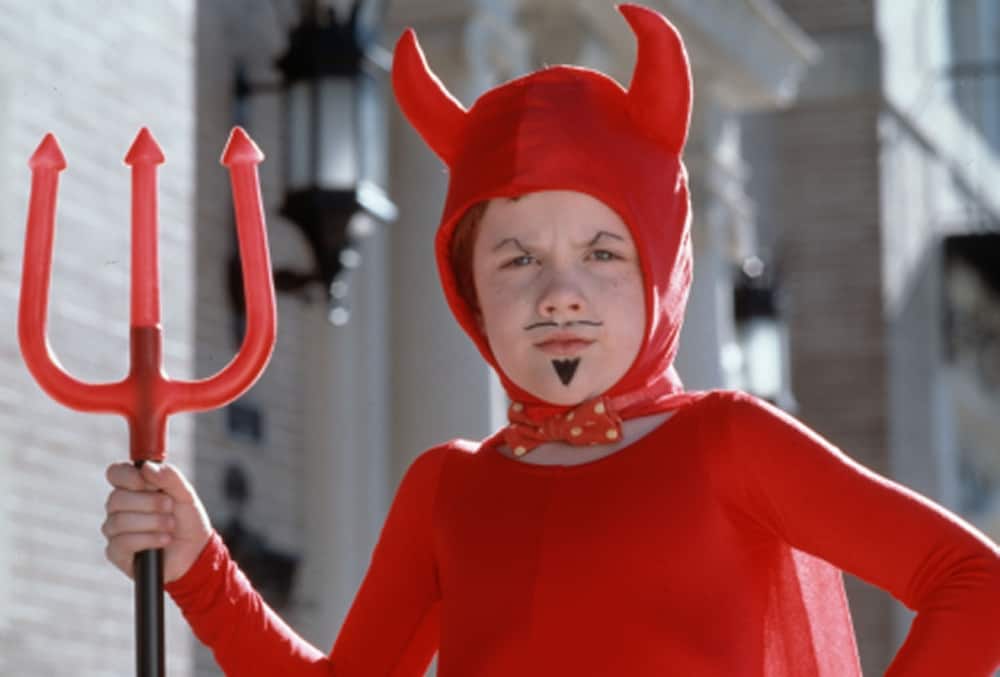
It’s also a piece of black comedy that delights in domestic chaos. The jokes are often about order collapsing—meals ruined, reputations endangered, social standing embarrassed—which makes the humour feel pointed rather than cosy.
Finally, the film reads as a satire of the family movies that came just before it. Where many of those films showed children gently guiding grown‑ups to wiser lives, this one upends that setup and pushes it into uncomfortable, comic extremes.
Put together, those concerns mean Problem Child is less a harmless family frolic and more an experiment: how awkward and uncomfortable can family comedy get while still being funny?
THE FILMMAKING
How Problem Child was put together
Problem Child is a film assembled by a small, practical crew. Peter Lyons Collister handled photography, a trio of editors (including Daniel P. Hanley) shaped the pace, and Miles Goodman provided the musical backdrop.
Those credits matter because the movie’s identity rests on speed and timing: short runtime, quick gags and an editing rhythm that rarely lets a joke breathe for too long.
Dennis Dugan, on his first feature, leaned into that compactness—he was directing pieces of set‑piece comedy and trusting the technical team to stitch them into a continuous, brash whole.
Mentioning the crew isn’t trivia; it’s the reminder that this was made as a tight, commercial comedy with experienced hands behind the camera and in the cutting room.
PRACTICAL EFFECTS
The effects work that gives Problem Child its physical personality
The production used trained animals on set—there’s documented coverage of a named wrestling bear—and for riskier gags the crew relied on prop or fake animals to double the stunts.
The American Humane Association reviewed the production’s animal handling and judged it acceptable, though one publicity image (a cat in a dryer) sparked public complaint at the time.
Beyond animals, the credits list special‑effects and visual teams and the film includes staged stunts and stunt‑vehicle sequences, which is to say the picture mixes practical creature work and physical stuntcraft rather than hiding everything in the edit.
Those choices give the film a tactile quality: the messy chaos on screen often has a literal, hands‑on component behind it.
PURE 80S
Problem Child could not belong to any other decade
The film belongs to a very particular late‑80s/early‑90s conversation: movies where children upset grown‑up lives and, in doing so, reveal hypocrisies and anxieties. The writers framed their script as a darker reply to that trend.
Problem Child takes that premise and sharpens its edges—satirising the genre’s tendency to tidy up adult flaws with a child’s wisdom by instead making the child an agent of chaos.
That satirical impulse is what ties the film to its moment. It’s not just about one family being discombobulated; it’s responding to a group of films that believed children could and should fix adult problems.
Seen this way, Problem Child is of its era because it answers those same cultural questions—about parenting, responsibility and social image—with less patience and a lot more bite.
WATCHING IT NOW
What has aged — and what hasn't
Contemporary and retrospective coverage tends to call the film mean‑spirited and thin on comic invention, while noting that audiences at the time were more forgiving—the picture received a notably positive CinemaScore grade from moviegoers.
The elements that feel freshest are the basic concept and the shorthand premise: a harassed would‑be dad facing escalating mischief still has a primitive, immediate comedic logic.
Where modern viewers are likeliest to balk is the tone—unapologetic black comedy that sometimes crosses into cruelty doesn’t sit easily with everyone now, and that sharpness is exactly the quality critics later flagged.
The film’s early cultural visibility—enough that a scene turns up in another high‑profile film soon after release—shows how quickly it made a noise, even if that noise remains divisive.
THE LEGACY
Why Problem Child still matters
Problem Child remains visible largely because it was commercially successful—earning significantly more than its modest production budget—and that success funded sequels and a short‑lived cartoon.
The franchise angle matters: the film didn’t disappear after its theatrical run; it multiplied into two sequels and TV adaptations, with at least one performer (Gilbert Gottfried) sticking with the character across those entries.
The production’s rocky early screening and the decision to reshoot and retool the ending also became part of the film’s story, giving it a post‑release life in trade and retrospective coverage.
Finally, its image turned up elsewhere very quickly: a clip appears in a major director’s next film, which is a neat sign that Problem Child had, for all its detractors, enough cultural footprint to be noticed in other corners of Hollywood.
THE VERDICT
Does Problem Child still hold up?
Short answer: it depends what you want from a family comedy. If you expect warmth and gentle lessons, Problem Child will grate; if you’re willing to endure a streak of meanness in exchange for brisk, often audacious set‑pieces, there’s something to be gained.
The movie is compact—81 minutes—and constructed around a simple engine: a hopeful man (played by John Ritter) who wants to be a father, an image‑conscious wife, and a seven‑year‑old whose misbehaviour escalates into pranks and an unexpectedly dark criminal subplot. That combination gives the film momentum, if not subtlety.
Be warned: contemporary critics observed that the cast could be overwhelmed by the film’s volume and tone, and the production itself adjusted the picture after a very poor first preview, adding reshoots and a reworked ending. The director’s approach—encouraging ad‑libbing—keeps the texture loose and occasionally raw.
If you’re curious about a brash little black comedy from 1990 that refuses to smooth its edges and you don’t mind laughing with a wince, it’s worth a watch. If you prefer your family films consoling, this one will likely be more of a historical curiosity than a comfort watch.
Share this movie
// Keep watching
More movies from the 90s
If Problem Child is your kind of movie, there's plenty more on the shelves worth rewinding.
1990 // VHS
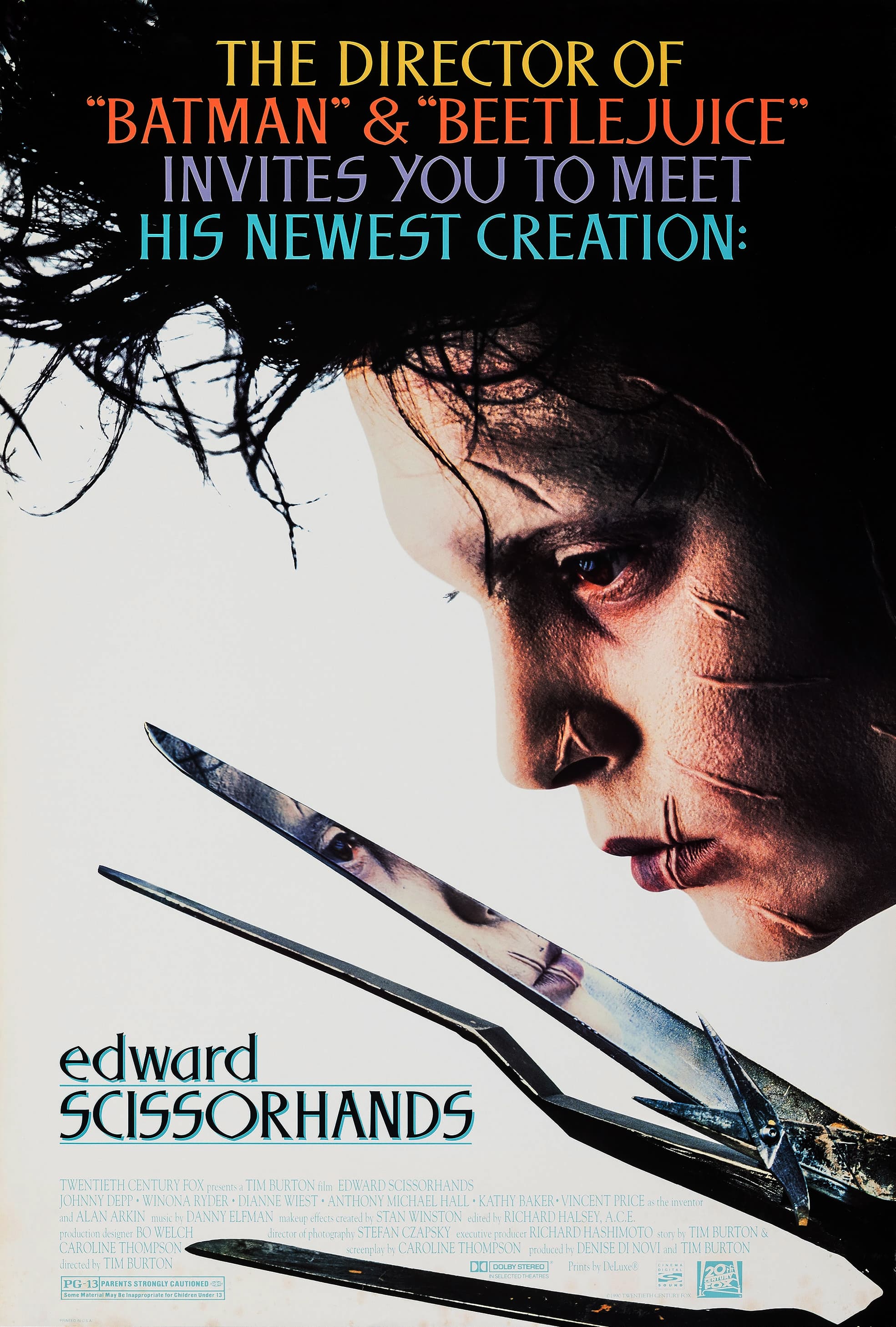
Edward Scissorhands
A fairy tale about a man who can’t quite touch the world — and the neighbourhood that can’t quite handle him.
1990 // VHS
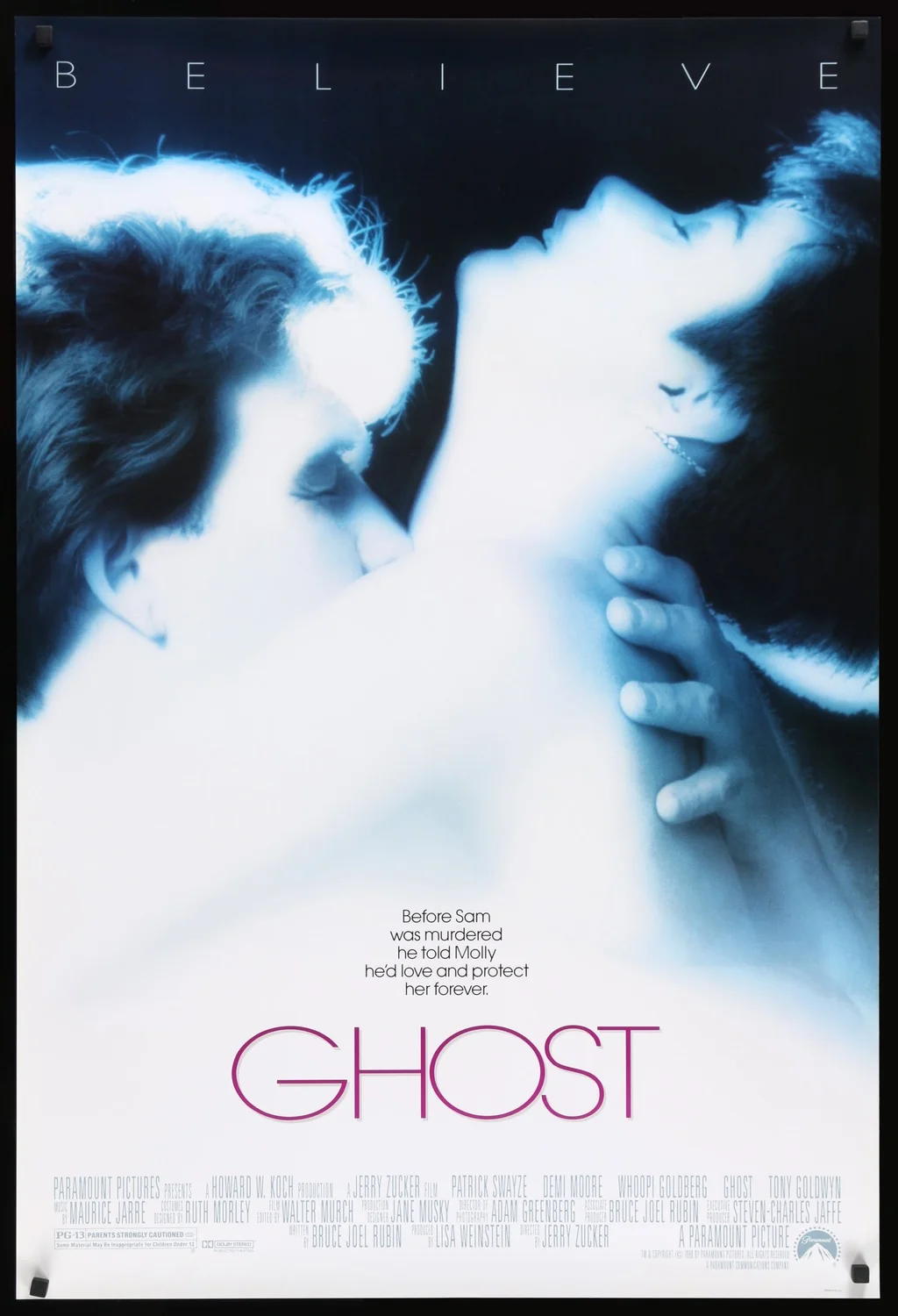
Ghost
A murder mystery disguised as a love story — with a man who won’t stop watching over the person he loves.

1990 // VHS
Total Recall
Memory, muscle and a very faulty holiday package — with Mars on the itinerary.