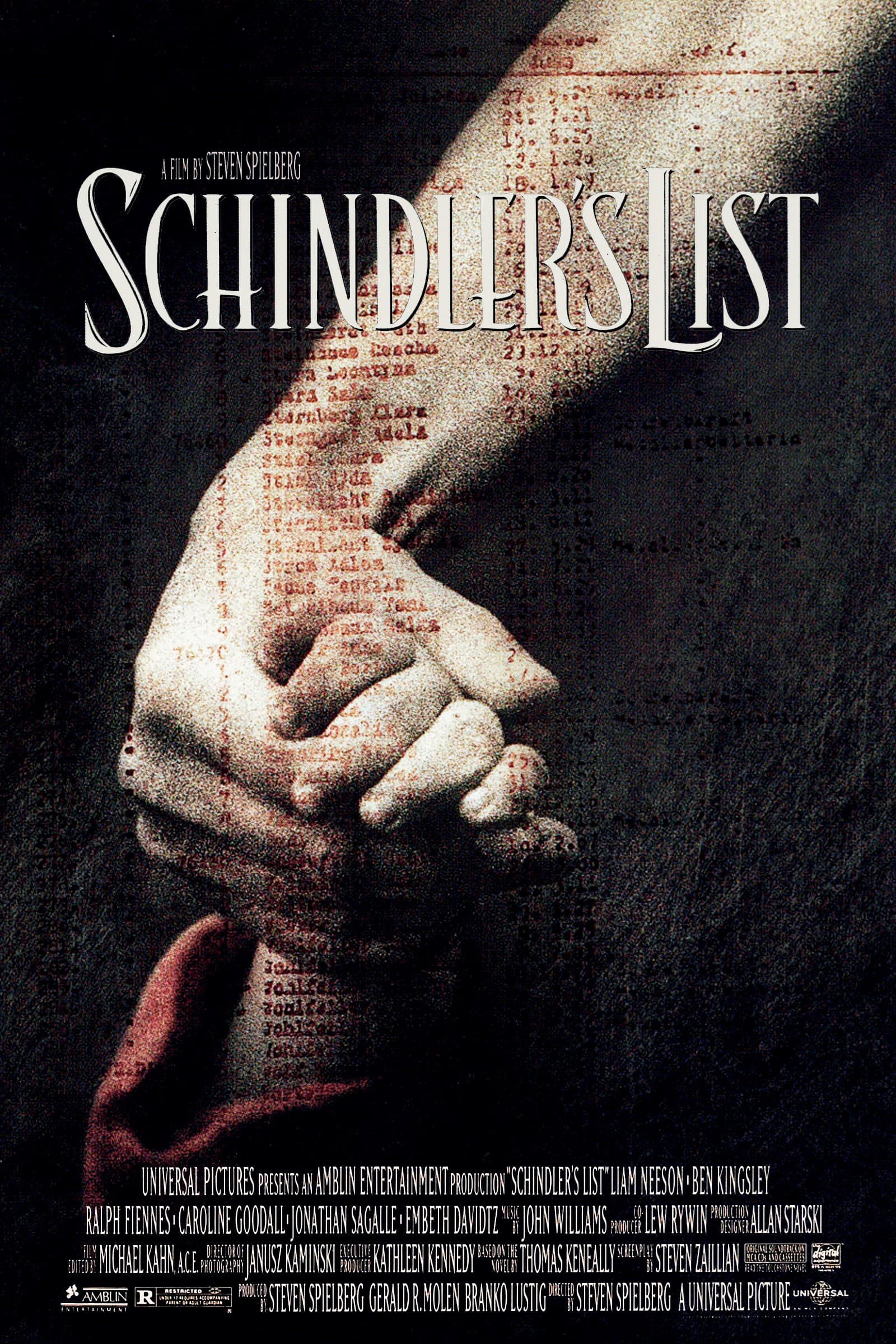
Schindler's List
A businessman who keeps a list — and keeps changing the kind of man he is.
// The setup
PLAYBACK STARTED
There are films that show history, and then there are films that make you feel how history arrived in a room and refused to leave. Schindler's List is the sort of movie that sits on both sides: a portrait of Oskar Schindler's unexpected conversion, and a ledger of violence and survival that keeps nudging you back into the present. It’s Steven Spielberg at his most deliberately serious — and it's worth revisiting to see why the moral argument still stings.
THE MOVIE
Oskar Schindler is still the reason this movie works
The first fact you remember — and the fact that keeps tugging the film forward — is simple: this is a movie about a man arriving in Kraków who slowly turns from profiteer into protector. That shift is not theatrical window-dressing; it is the engine of the whole film.
Spielberg stages that transformation against an event so brutal it redraws Schindler’s priorities in an instant: the liquidation of the Kraków ghetto. The violence he witnesses is the pivot; it turns calculation into conscience, or at least into something trying to be conscience.
Liam Neeson plays the man at the centre, and Spielberg holds him there for nearly three hours, letting the portrait of a charismatic, morally ambiguous industrialist become the place we go to think about redemption, culpability and what it costs to try to undo crimes made by others.
THE CHARACTER
Why Oskar Schindler matters
What makes Schindler memorable is tension. He is not a saint with a ledger; he is a salesman with charm who discovers a better line of work. The movie makes that morally awkward transformation the point of attention.
Because he starts from profit, every decent thing he does feels hard-won rather than inevitable. That friction — the film refusing to grant him easy absolution — is what keeps the story honest.
He matters because the film asks the viewer to stay with someone who keeps surprising us. Schindler's change of heart isn't a curtain-drop moment; it's a series of small, costly decisions that the film refuses to let us forget.
THE PERFORMANCE
Why Liam Neeson's performance matters
Contemporary reviewers singled out Neeson among several notable performances, and the film hinges on the audience believing Schindler is both charming and complicated.
That credibility is crucial: if you don't buy that he can move through those moral states, the central arc collapses. The fact that critics named Neeson alongside Ralph Fiennes and Ben Kingsley shows how the casting supported the movie's heavy lift.
So what Neeson brings — according to the period response — is the very thing the screenplay needs: someone who can be liked and yet still surprise us into respect.
UNDER THE SURFACE
Schindler's List has more on its mind than the plot suggests
On the surface the film follows one man's efforts to save workers. Underneath, it is repeatedly asking sharper questions: how do ordinary systems — paperwork, lists, classifications — become tools of extermination, and how can those same instruments be turned toward survival?
Redemption sits at the film's heart, but it's complicated. Schindler's good acts arrive after profit, and the movie refuses tidy moral bookkeeping. That ambiguity is the point: it is easier to narrate heroism than it is to dramatise the slow, compromised choices that lead to it.
The film also throws responsibility back at the viewer. By showing the mechanisms of dehumanisation and the habits of bystanders, it nudges an audience to consider who acted and who watched — a question that still feels uncomfortable.
Finally, memory and testimony frame everything. The story is not offered as a closed moral answer but as a kind of witness, a way of keeping names and faces from slipping into abstraction.
THE FILMMAKING
How Schindler's List was put together
Spielberg didn't film this as a generic studio picture. He and his team worked in Poland and built a large replica of the Plaszów camp to stage the film's most harrowing moments. That decision anchors the movie in physical places rather than abstract sets.
Janusz Kamiński handled the cinematography and Michael Kahn the editing — two crafts that shape how the story breathes. The choices behind the camera keep the film looking like an act of remembrance rather than a period costume drama.
Those production decisions — location, reconstruction, and the crew choices — give the film its particular identity. They make it feel like something made with the specific task of testimony in mind.
PRACTICAL EFFECTS
The effects work that gives Schindler's List its physical personality
A big part of the film's physical power comes from tangible construction: a detailed replica of the Płaszów forced-labour camp — with barracks and watchtowers — was built near the original site.
Those sets, combined with period-accurate dressing and large numbers of extras, let Spielberg stage mass scenes — deportations, ghetto life — with a scale and specificity that reads as real rather than cinematic shorthand.
The result is that the film feels materially anchored; big scenes are built from physical pieces and crowds rather than being suggested or implied.
PURE 80S
Schindler's List could not belong to any other decade
The film sits in the early 1990s moment when large-scale Holocaust remembrance and educational projects were prominent. Shooting in Poland and including survivors in the film's epilogue tie it to that period's appetite for public acts of memory.
It also began life as an adaptation of Thomas Keneally's 1982 novel, turned into a screenplay by Steven Zaillian — a literary-to-screenline that felt very much of its time, when prestige adaptations sought to make history visible to wide audiences.
Put simply: Schindler's List is of the early '90s because it shares that era's seriousness about confronting the past on a national and international stage.
THE LEGACY
Why Schindler's List still matters
The film's continued visibility owes something to recognition it received early on: it won multiple major awards at the 1994 Academy Awards, and institutions have repeatedly included it on lists and rankings of important American films.
Beyond trophies and lists, Schindler's List has a practical afterlife: it has been used extensively in educational screening programs and has been reissued and released across home-video formats to reach successive audiences.
Those two facts together explain its staying power: the movie occupies both critical space and classroom space, so it keeps being watched not just for reputation but as an instrument of remembrance.
THE VERDICT
Does Schindler's List still hold up?
Yes. The film remains essential viewing because its main commitments — dramatising Schindler’s arrival in Kraków, the ghetto liquidation that changes him, and the bureaucratic power of a list that can mean life or death — are not cinematic tricks but moral problems that reward attention.
The movie makes two practical promises and keeps them: it shows how paperwork and influence can be weaponised, and it shows how those tools can, in a narrow way, be turned to protect people. Those are hard, specific things to dramatise, and Schindler's List keeps the focus on them.
It also links the drama back to real lives. The epilogue with surviving Schindler Jews visiting his grave pulls the story away from tidy hero-worship and into testimony — reminding viewers that what they watched is connected to living memory.
If you plan to watch it today, go for the moral complication and the work it asks of you. It's heavy, slow and unrelenting in places — deliberately so — and it still makes the case that a single list can be the difference between being counted and being erased.
Share this movie
// Keep watching
More movies from the 90s
If Schindler's List is your kind of movie, there's plenty more on the shelves worth rewinding.
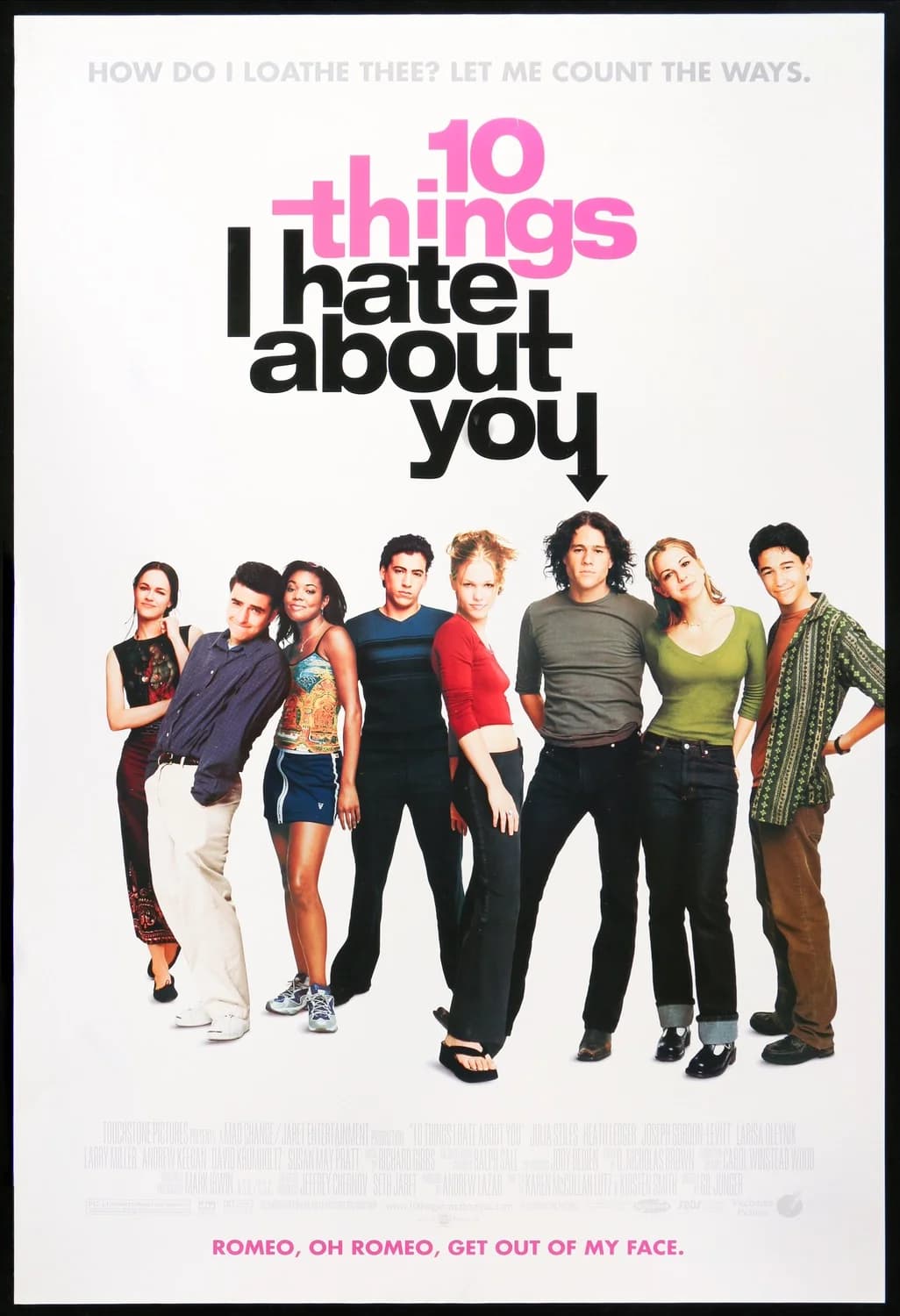
1999 // VHS
10 Things I Hate About You
Sibling rules, a rooftop serenade and one very stubborn Kat — Shakespeare in a school corridor.
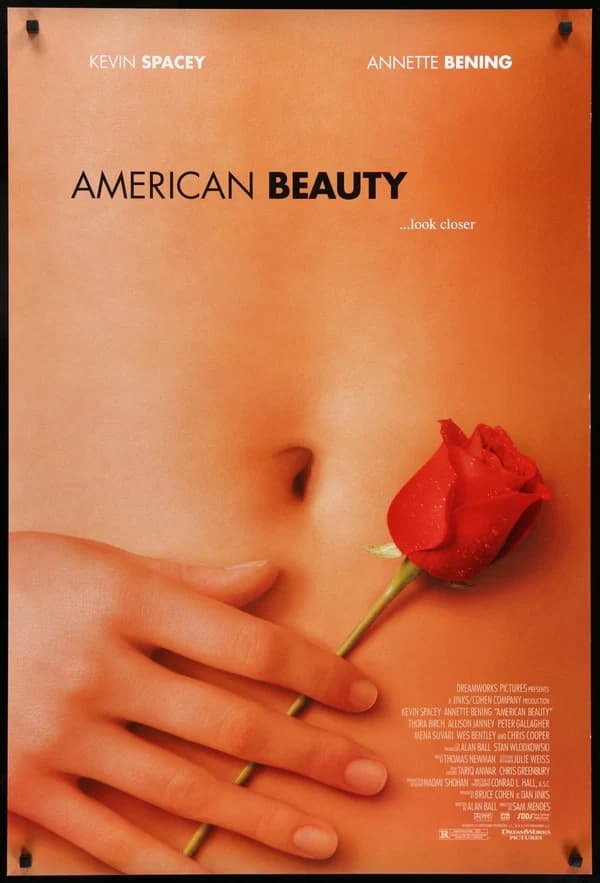
1999 // VHS
American Beauty
Lester Burnham, suburban rot and a midlife argument that still stings.
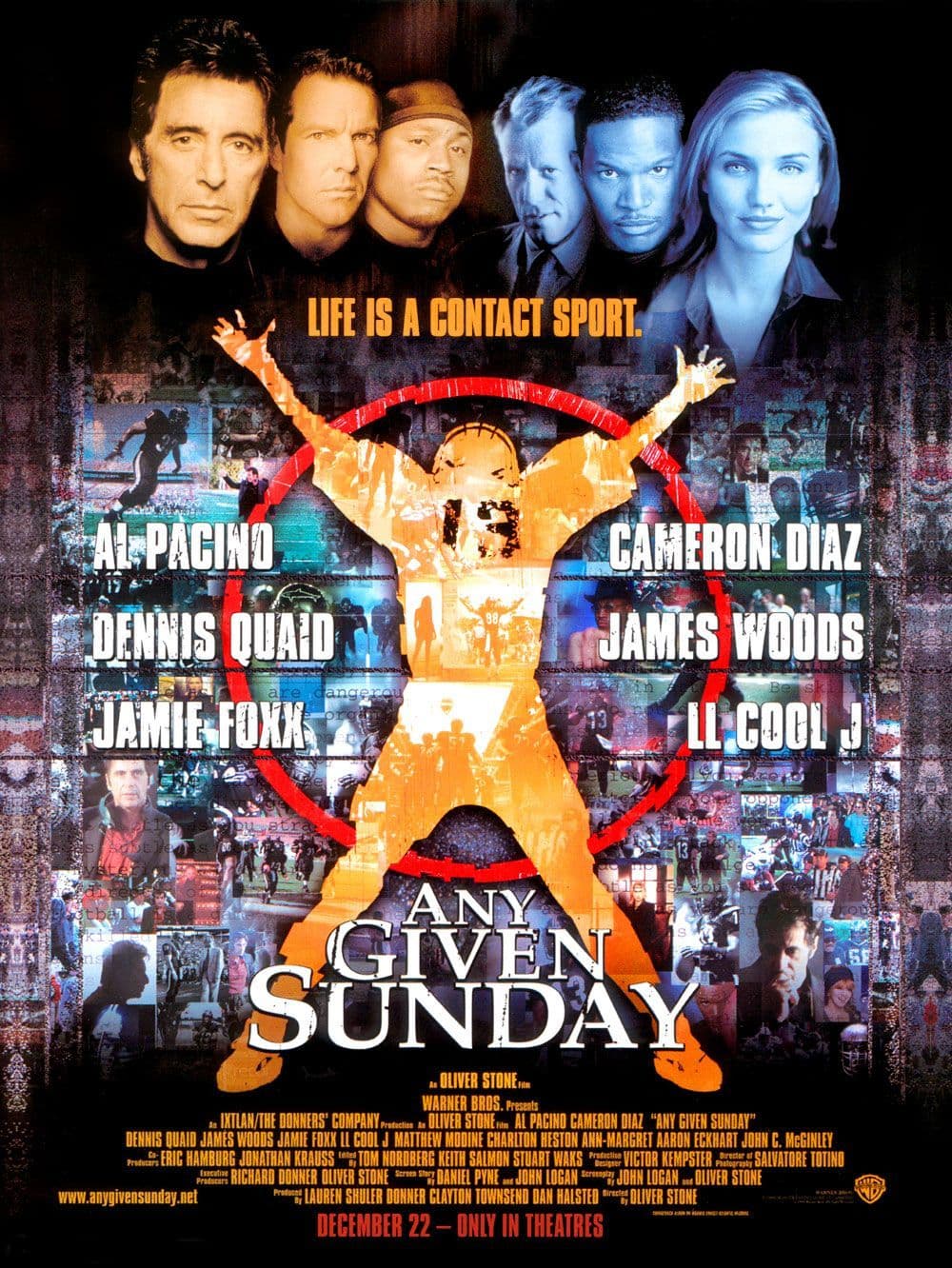
1999 // VHS
Any Given Sunday
Al Pacino's coach anchors the chaos of a film about football turned into product — loud, messy and oddly persuasive.