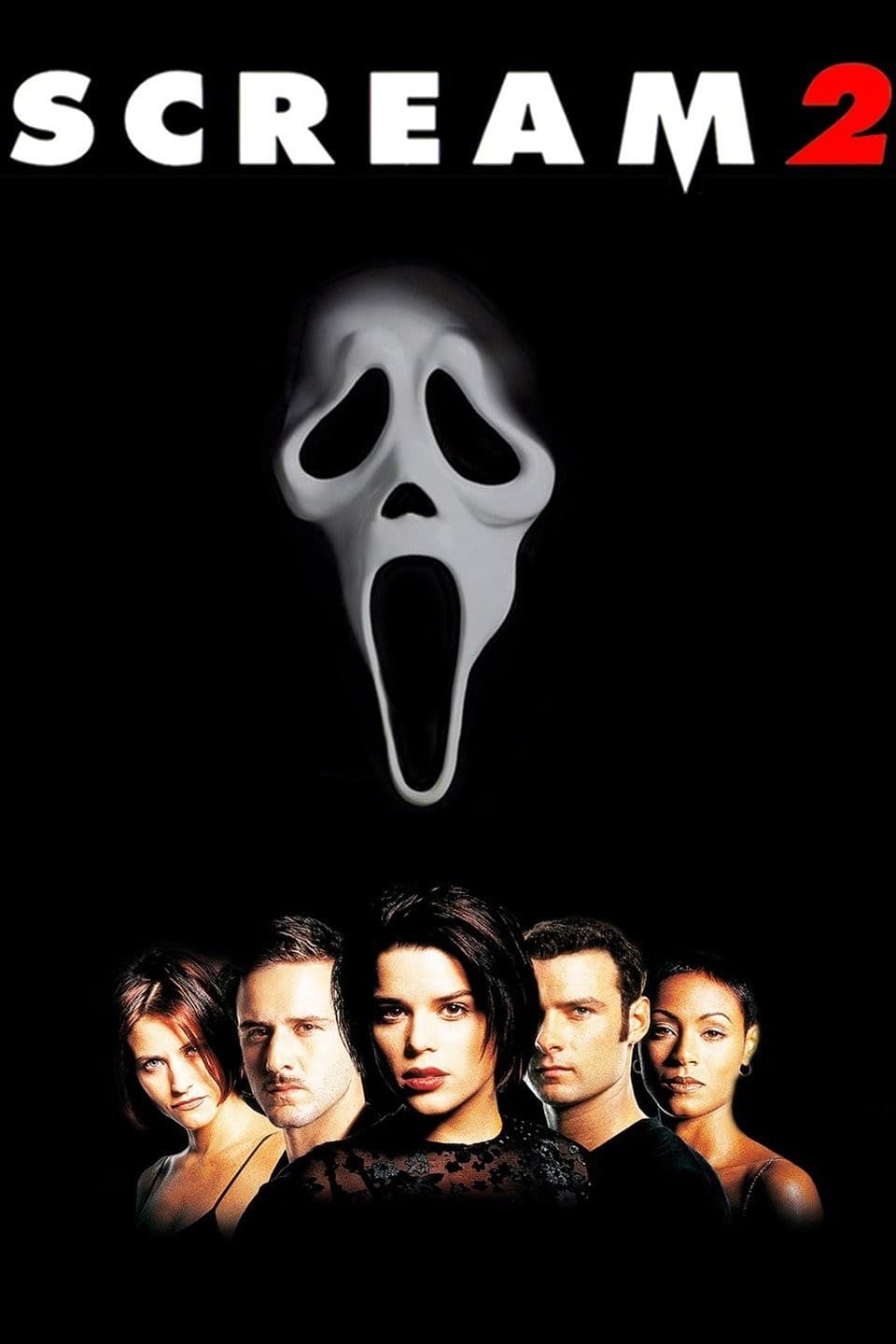
Scream 2
A sequel that remembers who mattered: survivors, not set-pieces.
// The setup
PLAYBACK STARTED
Scream 2 returns to Sidney Prescott in college, but it never forgets that the point of a sequel is to keep the people—not just the scares—alive. Wes Craven and Kevin Williamson double down on self-aware horror, opening with a cinema screening that turns a movie-within-the-movie into a public crime scene. It's clever, loud and oddly concerned with what trauma looks like when it goes mainstream.
THE MOVIE
Sidney Prescott is still the reason this movie works
If you remember one image from Scream 2, it's probably not a clever murder set-piece so much as Sidney Prescott trying—again—to pass for normal. The film picks up roughly a year after the Woodsboro murders with Sidney now at Windsor College and the original survivors attempting to move on.
Craven wastes no time reminding us that this sequel knows its own rules: it opens with a public preview screening of Stab, the in-universe film about the original killings, and that screening becomes a crime scene when two audience members are murdered. That choice makes the whole film a conversation about fiction and real fear, framed through the bookends of a cinema and a college campus.
And while Scream 2 enjoys being self-referential—winking at horror clichés and sequel expectations—its engine is simple and character-led. Neve Campbell returns as Sidney, supported by the returning trio that includes David Arquette's Dewey and Courteney Cox's Gale, and the film keeps circling back to what the survivors have to live with once the headlines move on.
THE SETUP
The idea that sets Scream 2 in motion
Scream 2 opens the sequel problem plainly: the original killings have been turned into a film, the media circus is in full swing, and the survivors are trying to continue their lives in public. That's the practical setup—Sidney at Windsor College, surrounded by the noise of fame and speculation.
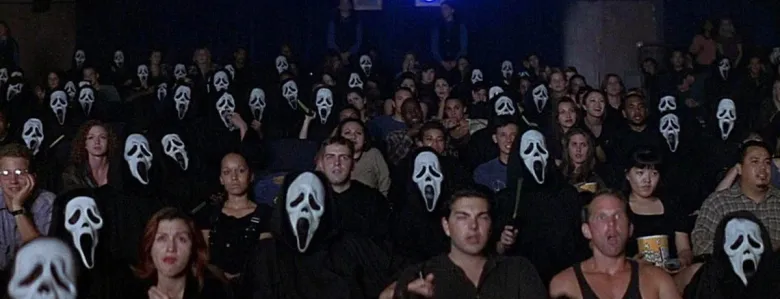
The screenplay uses the film-within-a-film device and relentless media coverage to blur the line between on-screen fiction and off-screen reality. That blurring isn't just a clever joke; it becomes the mechanism that spreads suspicion among characters and keeps the mystery alive.
Because the original cast are still survivors rather than blank-slate protagonists, the movie doesn't have to reinvent stakes. Instead it tightens them: these are people with history, and every new threat forces them to reckon with what happened before.
In short: it's a college-set whodunit grafted onto a sequel that knows how sequels change audiences—the past keeps following the present, and the present can't escape being watched.
THE CHARACTER
Why Sidney Prescott matters
Neve Campbell's Sidney remains the movie's anchor. The story literally continues her life: she's at Windsor College, not because college is a plot device but because the film wants her back in an ordinary setting that's been made extraordinary by attention and fear.
Sidney is not a blank scream-queen; she's the person who has to accept that survival is not an endpoint. The film keeps returning to how being known for a horror story changes daily life—how proximity to a headline complicates trust and privacy.
Because Scream 2 is a direct continuation of the first film, Sidney brings baggage. The sequel explores the friction between trying to be normal and being repeatedly pulled back into an investigation, a movie and the court of public opinion.
That focus on Sidney means the sequel's pleasures are personal rather than purely mechanical: it asks what someone does after surviving an extraordinary event, and it lets that question shape the mystery rather than the other way around.
THE PERFORMANCE
Why Liev Schreiber's performance matters
Contemporary reviewers noticed that Scream 2 beefed up its supporting cast, and Variety specifically pointed to Laurie Metcalf and Liev Schreiber as notable additions. That kind of attention matters because the sequel's game is not only guessing who is behind the mask but also deciding who the audience should care about.
Bringing in new, attention-grabbing characters widens the field of suspicion; it gives the whodunit more suspects and the returning characters people to react to. Naming certain cast members as standouts in reviews underlines that the film's ensemble choices were part of its appeal.
The presence of recognisable new faces—actors who could be allies or red herrings—helps sustain the film's balance between mystery plotting and the emotional residue the survivors carry.
So when critics singled out supporting players, it wasn't just praise for casting: it was a note that Scream 2's added personalities genuinely affected how the story unfolded.
UNDER THE SURFACE
Scream 2 has more on its mind than the plot suggests
On the surface, Scream 2 is a slasher mystery set on a college campus. Underneath it keeps nudging at bigger ideas: it's notably concerned with meta-commentary about horror and sequels—how genre stories comment on themselves and how audiences are complicit in the spectacle.
Equally central is the question of trauma and what comes after survival. The movie repeatedly returns to characters' attempts to rebuild ordinary lives while public attention keeps reopening the wound.
Media sensationalism and celebrity are also threaded through the plot. By turning the original murders into a film-within-the-film and staging killings in public spaces, the screenplay examines how tragedy becomes entertainment and how that transformation complicates justice and empathy.
Finally, Scream 2 uses its whodunit structure to probe identity—who can be trusted, who benefits from notoriety, and how suspicion migrates through a community when everyone is looking for a culprit.
PURE 80S
Scream 2 could not belong to any other decade
Scream 2 was greenlit and rushed into production within a year of Scream's success, which reflects the 1990s studio habit of quickly following up breakout hits. That hurry shaped everything from casting to how the story was put together.
Its December 1997 wide release placed it among the late-90s wave of teen-orientated horror sequels aimed at bringing back the crowd that loved the first film. The timing made it a glossy, big-stakes follow-up rather than a low-key indie affair.
The production's quick turnaround also explains the film's casting pattern: the use of many television stars and recognisable young actors mirrors 1990s Hollywood strategies for youth-targeted genre movies.
Put simply: Scream 2 wears the decade on its sleeve not through fashions or music cues here, but through the business decisions and casting instincts that produced it.
THE LEGACY
Why Scream 2 still matters
Scream 2 didn't end the story: it led directly to Scream 3 (2000), making it a necessary link in the franchise rather than an optional detour. That continuity is part of why the film remains part of franchise discussions.
Its production and release—especially the rapid turnaround, the publicity around a script leak and its box-office performance—are regularly mentioned when people talk about how 1990s studios handled sequels. The movie is an example of a moment when Hollywood learned to treat a hit as a property to be expedited.
Marco Beltrami's score also continued his work with the franchise and has been included in discussions and retrospectives about the series' sound. The music thus helped give Scream 2 a consistent aural identity within the ongoing saga.
Taken together, these elements—franchise continuation, the production story and the soundtrack's place in franchise retrospectives—are why Scream 2 keeps turning up in conversations about the series and the era.
THE VERDICT
Does Scream 2 still hold up?
Short answer: yes, when you watch it for the reasons the filmmakers had in mind. Scream 2 picks up the story a year after Woodsboro with Sidney at Windsor College, and because the film centres survivors instead of spectacle, it earns room to be clever without losing its emotional anchor.
The opening Stab screening that turns murderous is a neat way of restating the series' central worry—that horror cinema and real terror can feed each other—and the film-within-a-film device keeps the mystery threaded through questions of fame and media attention.
Production pressure did shape the film—the script leak and the rushed schedule resulted in rewrites during filming and pages being withheld from the cast—but those constraints didn't strip the sequel of purpose. It remains a whodunit that forces returning characters to confront past trauma while handing the audience a meta-aware puzzle.
If you want a sequel that still feels engaged rather than merely replicating scares, Scream 2 is worth revisiting. It reminds you that the sequel's job isn't only to top the kills; it's to carry its people forward. And in a franchise that keeps returning to the same survivors, that passing on of narrative responsibility is the squeal that matters most.
Share this movie
// Keep watching
More movies from the 90s
If Scream 2 is your kind of movie, there's plenty more on the shelves worth rewinding.
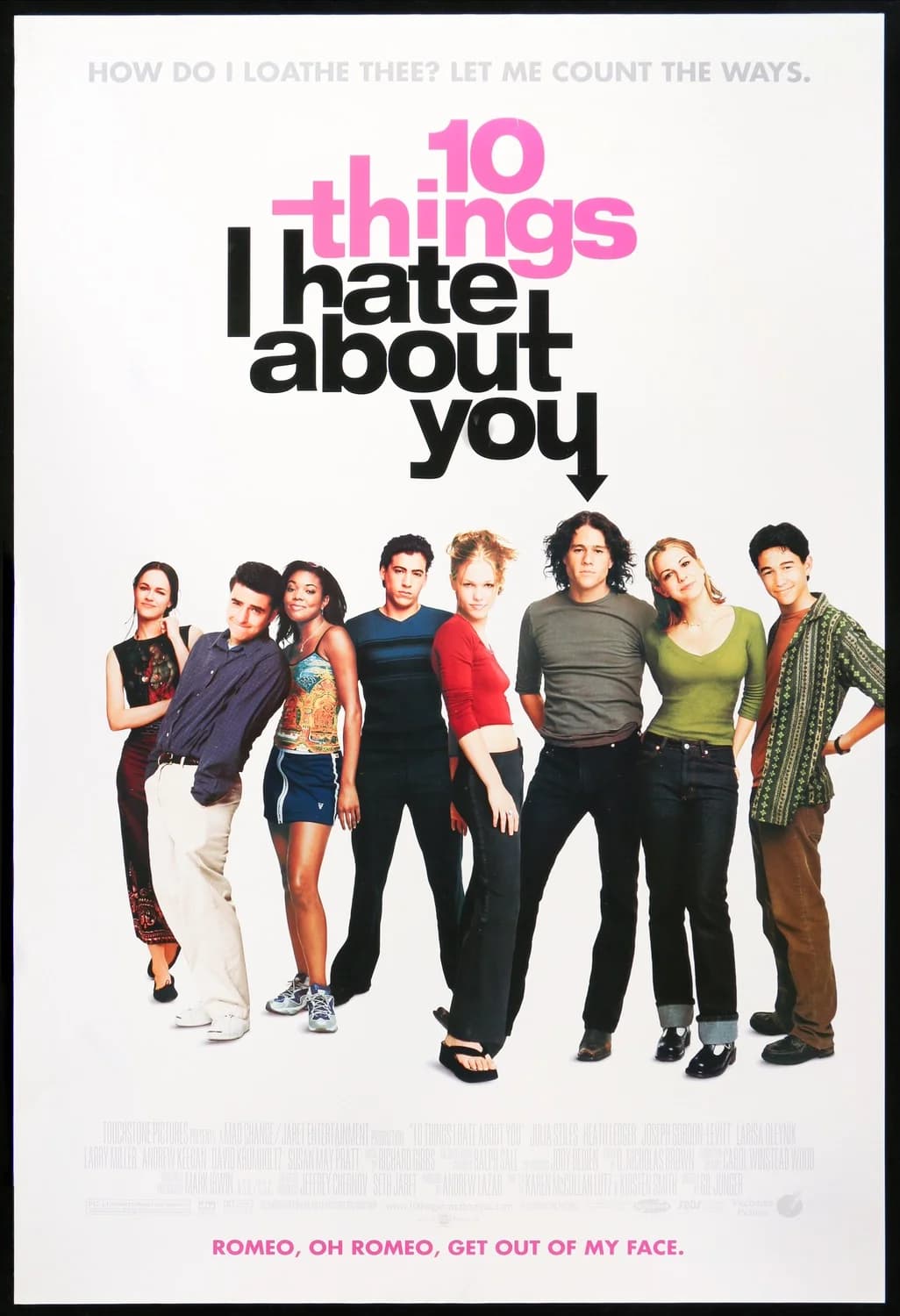
1999 // VHS
10 Things I Hate About You
Sibling rules, a rooftop serenade and one very stubborn Kat — Shakespeare in a school corridor.
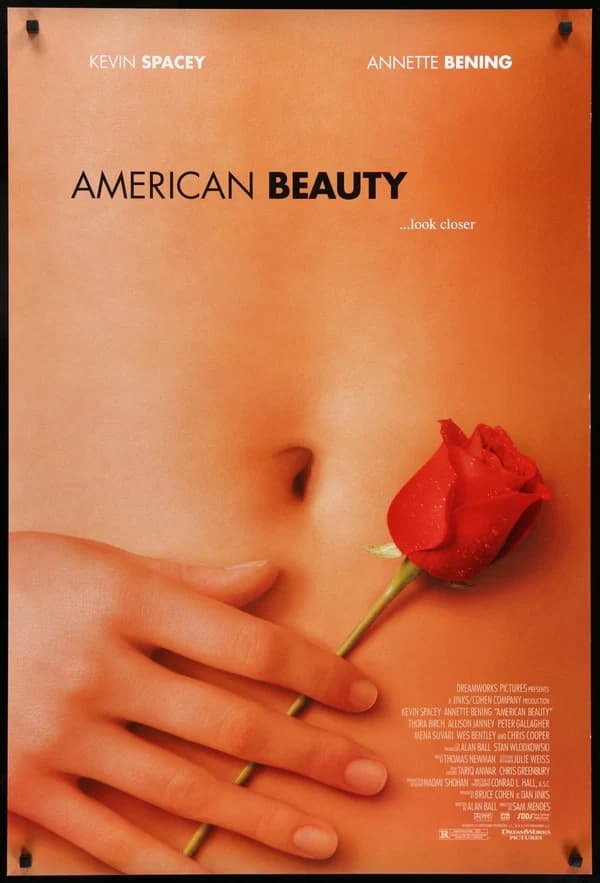
1999 // VHS
American Beauty
Lester Burnham, suburban rot and a midlife argument that still stings.
1999 // VHS
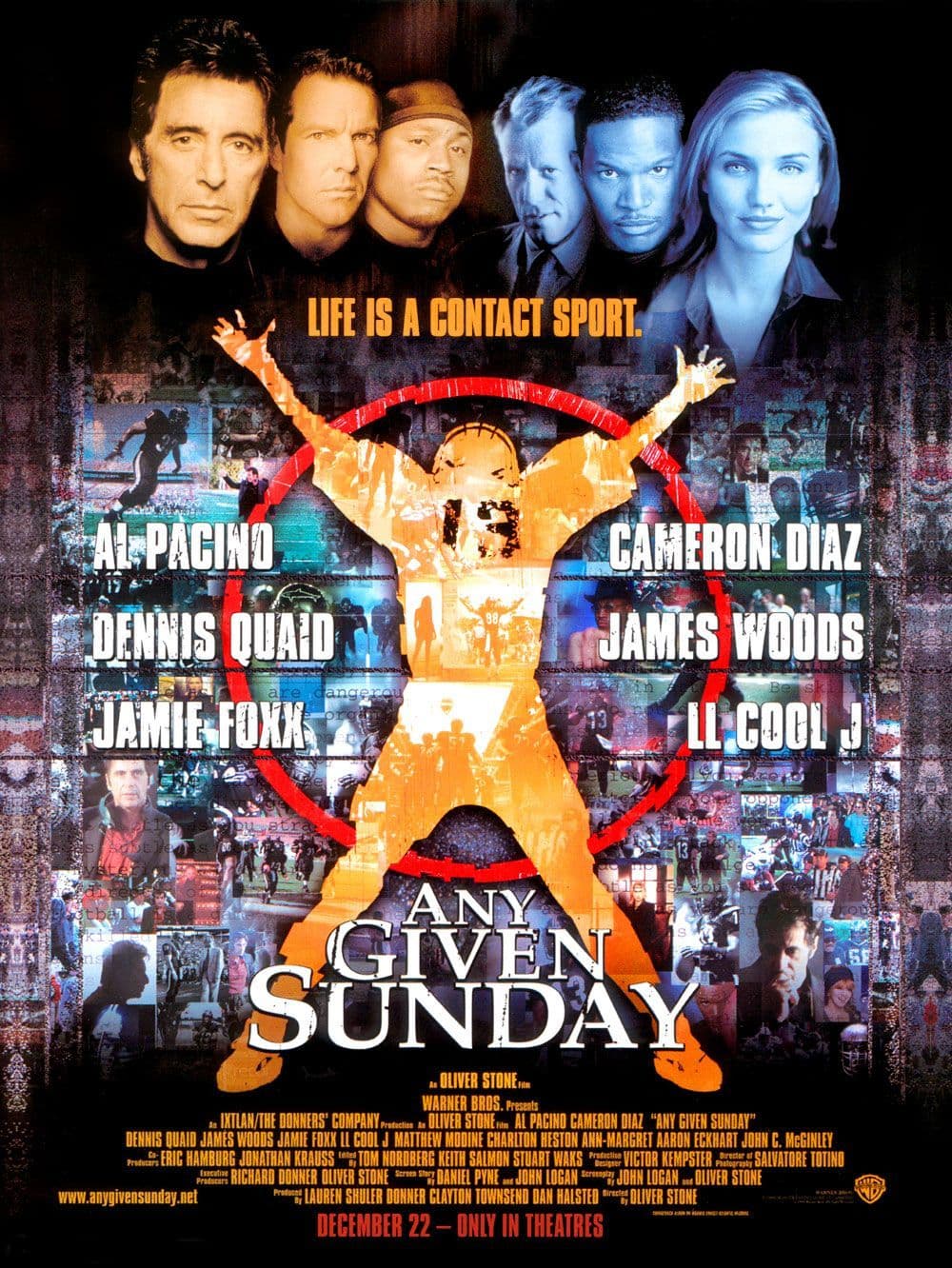
Any Given Sunday
Al Pacino's coach anchors the chaos of a film about football turned into product — loud, messy and oddly persuasive.