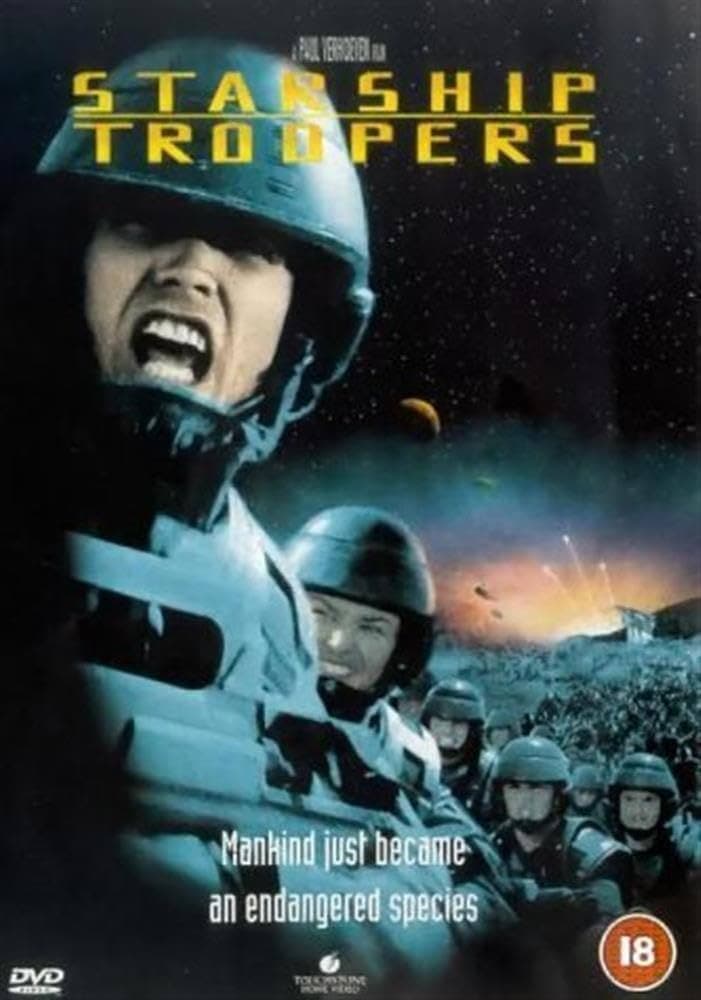
Starship Troopers
A blockbuster that looks like a recruitment film and reads like a dare.
// The setup
PLAYBACK STARTED
Paul Verhoeven’s Starship Troopers is the kind of 90s sci‑fi that still makes you squint and ask, ‘Is it celebrating this, or laughing at it?’ The answer lives in Johnny Rico — an ordinary schoolkid who signs up to follow a crush and ends up threaded through a movie that keeps cutting to cheery propaganda. It’s noisy, brazen and strangely clever about how spectacle sells obedience.
THE MOVIE
Johnny Rico is still the reason this movie works
What keeps Starship Troopers from collapsing under its own brass and blood is how it starts small. Johnny Rico is introduced as a popular high‑school athlete who enlists largely to follow Carmen — a perfectly ordinary motivation, which matters because it gives the whole film someone human to orbit.
Around that human core Verhoeven builds a machine: cheerfully jaunty in‑world commercials and propaganda segments keep interrupting the story, making the Federation’s militaristic culture feel like a media ecosystem you can’t escape. Those interruptions are not decoration — they’re the point.
And yes, the film is loud and long (129 minutes of it), directed by Paul Verhoeven and fronted by Casper Van Dien as Johnny Rico. But what makes viewers still talk about it isn’t the runtime or the explosions; it’s the way a small, believable personal motive sits inside an increasingly absurd public story.
THE SETUP
The idea that sets Starship Troopers in motion
At its most basic the film follows Johnny Rico, a recent high‑school graduate who signs up for the Mobile Infantry to stay close to his girlfriend and is quickly swept into a full‑scale war against giant Arachnids. That tidy, almost domestic reason for enlisting is a neat trick: it makes the leap into interstellar conflict feel less like destiny and more like a messy life choice gone very wrong.
Structurally the movie keeps switching gears. One moment it’s teen rom‑com‑adjacent — prom, mates, social pressure — the next it’s boot camp and then explicit combat. Those juxtapositions are deliberate: the softer scenes anchor character and the harder ones show what the society does with recruits.
The screenplay borrows names and some set pieces from Robert A. Heinlein’s novel, but it deliberately drops the book’s powered armour suits and reshapes parts of the story. That decision tightens the film into something grittier and less gadget‑led.
So the setup works because the personal and the political are braided: Rico’s private reasons get pulled into a national project, and the movie uses that tug to ask who profits from sending people to war.
THE CHARACTER
Why Johnny Rico matters
Casper Van Dien’s Johnny Rico matters because he behaves like a normal person dropped into an extraordinary machine. He’s introduced as a popular athlete whose enlistment is as much about adulthood and social standing as it is about patriotism — immediately readable and, crucially, believable.
That believability gives the film a doorway. Rico isn’t an unshakeable hero or a cartoon villain; he’s a kid whose private life — notably his relationship with Dizzy Flores, a classmate who later joins the Mobile Infantry — tracks him from schoolyard choices into frontline consequences.
Because Rico starts from ordinary motives, the escalation feels meaningful. The film follows him from recruit to combat soldier, and along the way his personal connections keep the larger war from becoming an abstract idea on a screen.
Finally, the filmmakers kept some of the novel’s character names and broad set pieces but omitted the powered armour that defined Heinlein’s version. That change nudges the film away from bright science‑fantasy and into a register where the characters’ humanity (and confusion) is more exposed.
UNDER THE SURFACE
Starship Troopers has more on its mind than the plot suggests
If you watch closely the movie is less interested in alien biology than in how states sell war. Those in‑world propaganda and news segments are everywhere, which turns the film into a study of propaganda and state media — cheerful, slick pieces that normalise enlisting and heroism.
There’s a persistent current of militarism and jingoism, presented so brightly that it starts to look performative. The film leans into that performance, which is why its satire of authoritarian aesthetics feels surgical rather than accidental.
Part of the satire works by dehumanising the enemy to an almost cartoonish degree. The Arachnids are literal monsters, and the film shows how easy it becomes to reduce living beings into targets once the state’s messaging takes hold.
Underneath all of this is a subversion of the traditional coming‑of‑age‑through‑service idea: instead of neat maturity through military trials, the story makes service messy, costly and morally ambiguous — and it asks whether ‘growing up’ is worth the price the Federation demands.
THE FILMMAKING
How Starship Troopers was put together
Visually the film leans toward a bright, glossy look. Jost Vacano was the cinematographer, and the production deliberately used polished design and stylised uniforms and architecture to give the world an authoritative, almost official feel.
That stylisation matters because it makes the propaganda segments look like genuine broadcast pieces; the world appears cohesive and self‑justifying, which strengthens the satirical sting when things go wrong.
Editing plays a structural role too. The film uses steadier, classical cuts for the propaganda inserts and then switches to quicker, sharper cutting for combat — a rhythm that tells you when the movie is explaining and when it’s immersing you in chaos. Editors on the project include Mark Goldblatt and Caroline Ross.
Those choices — the glossy production surfaces and contrasting edit rhythms — are not just style points. They are how Verhoeven makes the Federation feel like a working media state, and how the film signals you to take the cheerfully packaged messages with a pinch of salt.
PRACTICAL EFFECTS
The effects work that gives Starship Troopers its physical personality
The Arachnids and much of the creature work were led by Tippett Studio under Phil Tippett, while Sony Pictures Imageworks handled many of the larger digital spaceship shots. ILM and Boss Film also contributed as the production’s needs expanded.
The movie deliberately mixed approaches. Creature animation and design sat alongside practical creature work; the credits list animatronics designers, model makers and prosthetic artists, which gave the bugs a tactile presence in many scenes.
Miniatures and physical models were used for some ship effects, and the action relied on a sizeable stunt team with Vic Armstrong coordinating practical stunts. Those physical elements anchor the film when the camera gets close to messy, dangerous choreography.
In short, the production pulled from legacy practical techniques and newer CGI workflows at once, which helped the film feel both immediate and large‑scale.
PURE 80S
Starship Troopers could not belong to any other decade
Arriving in 1997, the film sits in the middle of a transition: Hollywood was still learning how to blend legacy practical craft with the new CGI ambitions that became mainstream after Jurassic Park. Starship Troopers’ pipeline reflected that — part old school, part cutting edge.
That technical hybridity is more than trivia. It lets the movie stage both intimate, physical monsters and broad, digital spectacles, so the film can flip from character beats to fleet battles without changing tone completely.
The late‑90s marketplace also mattered. The film joined a crowded field of tentpoles, and contemporary coverage often noted how marketing pushed the action angle harder than the satire. That tension — what the film sells you versus what it actually does — influenced its initial reception.
So the movie feels like a 1997 picture: ambitious about digital scale, dependent on practical know‑how, and arriving into an audience that was still learning how to read a blockbuster that was trying to be clever as well as loud.
THE LEGACY
Why Starship Troopers still matters
Part of the film’s afterlife is simply practical: it established a franchise, spawning two live‑action direct‑to‑video sequels and two later animated feature entries, plus a 1999 animated TV series. The world had more stories to tell, and others picked them up.
On the awards front the film’s effects work received an Academy Award nomination for Best Visual Effects — a concrete nod to the scale and ambition of the creature and digital work assembled for the project.
Beyond franchise and accolades, Starship Troopers keeps turning up in conversations about political satire in science fiction. Its deliberate use of in‑world propaganda and its aesthetic decisions give critics and fans a clear shorthand to talk about how genre can critique state power.
There have also been multiple attempts and announcements about remakes or reboots over the years, which is a roundabout way of saying the original still looks like something worth revisiting — for better or worse.
THE VERDICT
Does Starship Troopers still hold up?
Yes — but with a rider. The film’s ongoing strength lies in how it uses the propaganda inserts and the contrast between teenage life and frontline combat to make its point. Those structural choices are still sharp: they force you to ask whether you’re watching a recruitment pitch or a critique of recruitment.
Johnny Rico’s simple, recognisable motives — joining to follow Carmen, to prove himself — give the satire a human pulley. The movie follows that personal thread through larger battles and squad missions, so the politics never feel abstract; they keep tugging on real relationships.
Technically the film assembled a lot of talent: Tippett Studio, Sony Imageworks and other vendors blended creature work and digital shots, and the effects were strong enough to earn an Academy Award nomination. That ambition still reads on screen — it’s a spectacle that remembers to be a satire.
So should you watch it today? If you want a straight war movie, you’ll come away frustrated. If you’re curious about a blockbuster that deliberately dresses its critique in shiny uniforms and upbeat broadcasts, it remains a rewarding, sharp piece of genre mischief — a film that looks like a pep rally and feels, insistently, like a warning.
Share this movie
// Keep watching
More movies from the 90s
If Starship Troopers is your kind of movie, there's plenty more on the shelves worth rewinding.
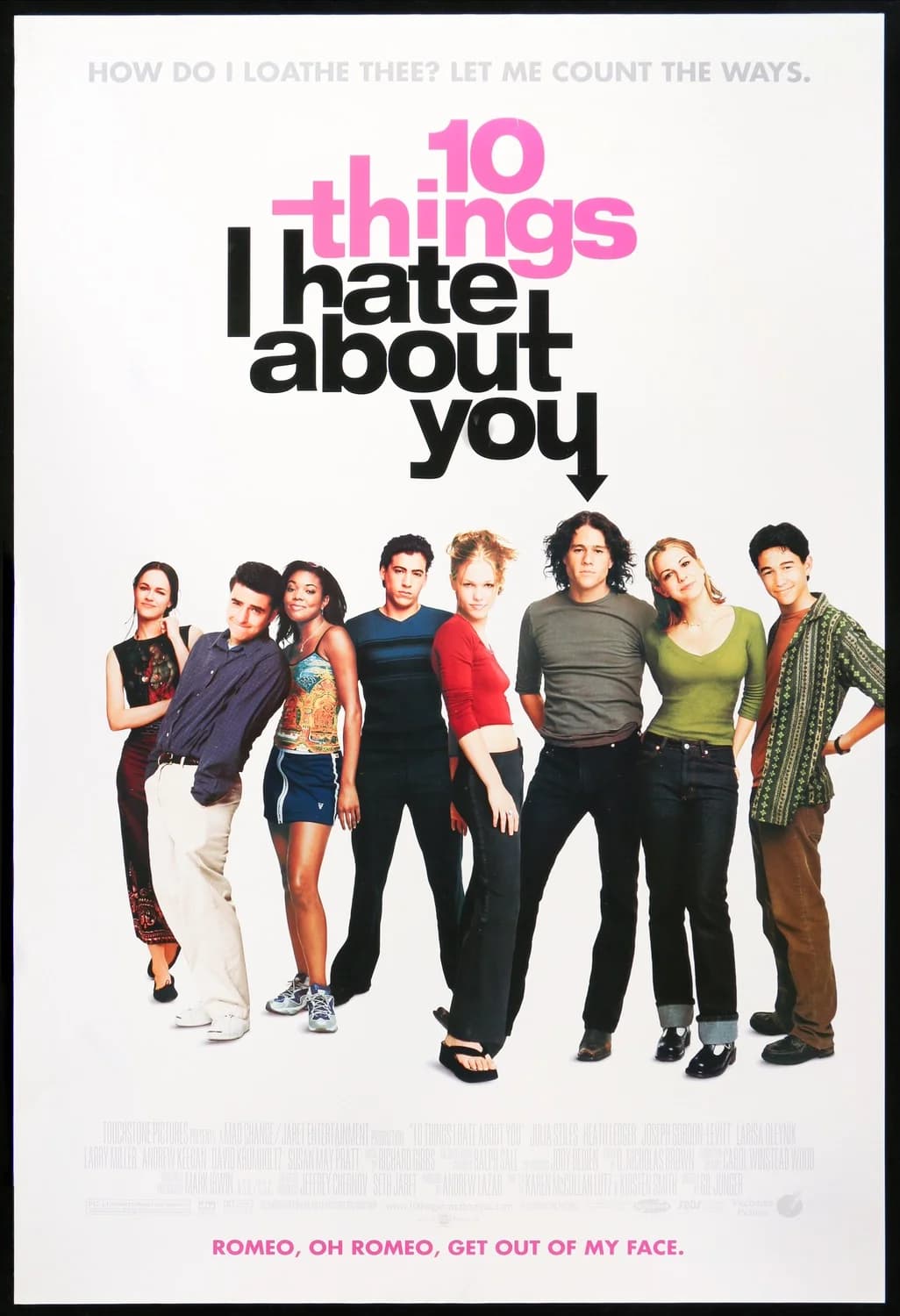
1999 // VHS
10 Things I Hate About You
Sibling rules, a rooftop serenade and one very stubborn Kat — Shakespeare in a school corridor.
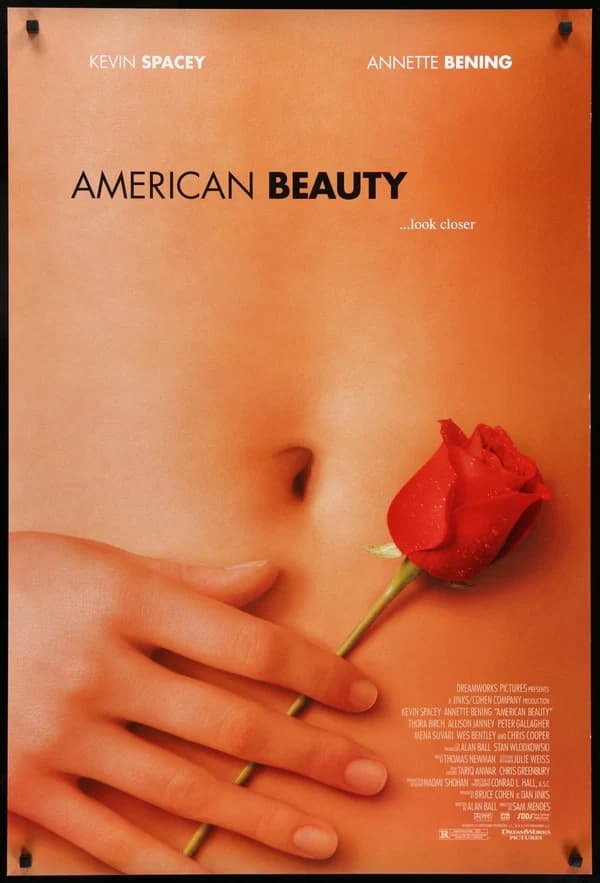
1999 // VHS
American Beauty
Lester Burnham, suburban rot and a midlife argument that still stings.
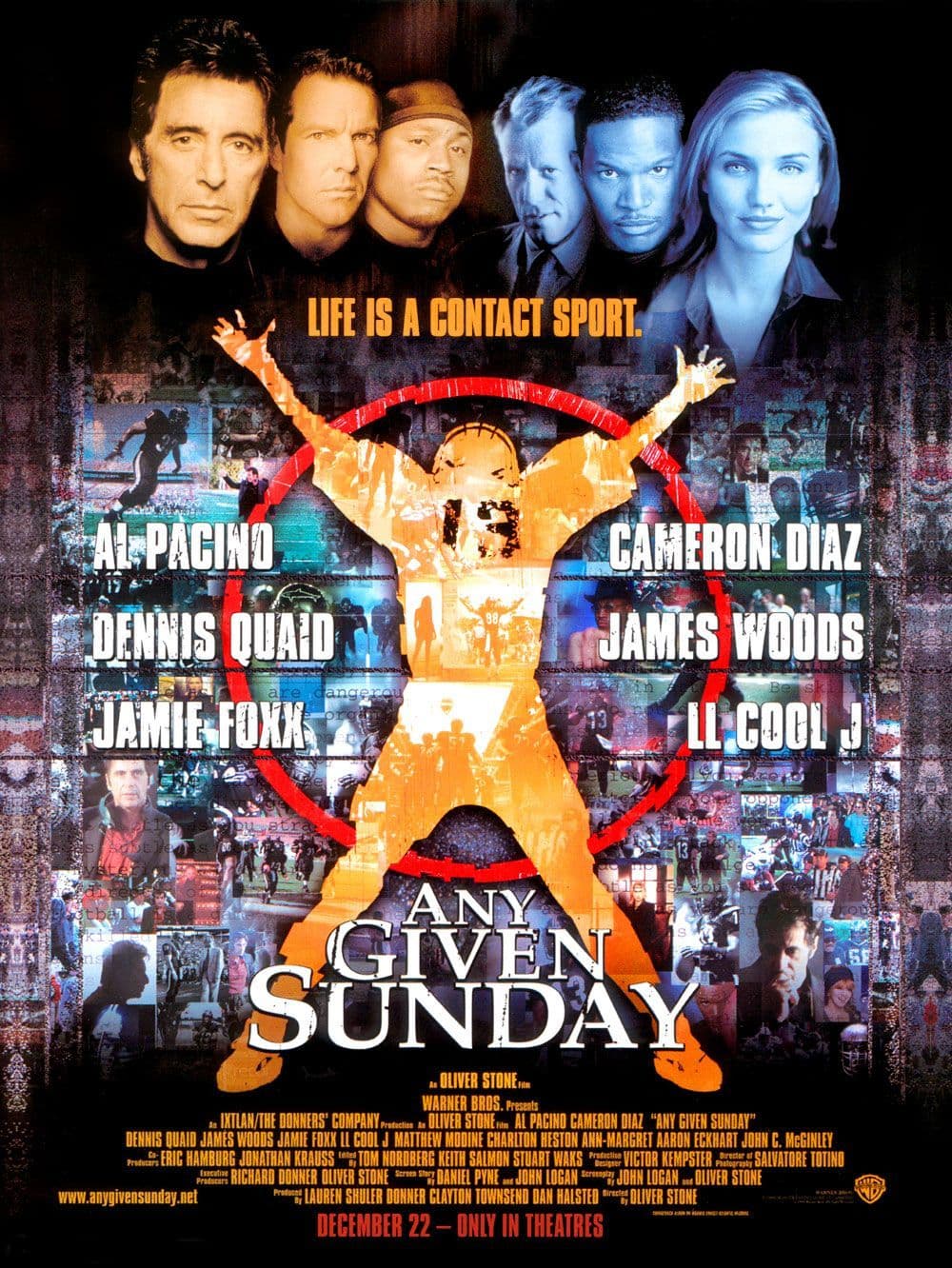
1999 // VHS
Any Given Sunday
Al Pacino's coach anchors the chaos of a film about football turned into product — loud, messy and oddly persuasive.