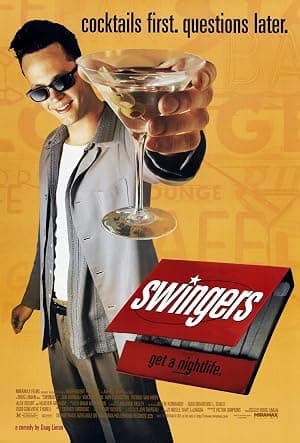
Swingers
Mates, missed chances and a lot of cheap confidence — Swingers is still about the friends who shove you back into life.
// The setup
PLAYBACK STARTED
Swingers hangs on one painfully familiar figure: a bloke who can't stop thinking about his ex. Jon Favreau's Mike is the kind of recent heartache that turns daily life into a rehearsed disaster, and his pals — led by Vince Vaughn's Trent — decide the only cure is the L.A. nightlife. Directed by Doug Liman and shot in 1996, the film packages that personal mess into a tight, 96-minute comedy-drama that still feels like a late-night conversation you want to stay for.
THE MOVIE
Mike is still the reason this movie works
People still talk about Swingers because at its centre it has a recognisable human problem: a guy who won't let go. Mike's moving from New York to Los Angeles wasn't a fresh start so much as a pause button that never quite got released.
That stuckness is what pushes the plot. Trent and the rest of the crew keep dragging him back into clubs and parties — not to plaster over the grief, but to try and re-teach him how to live with appetite. It makes the film feel less like an instruction manual for single life and more like a long, slightly messy rescue mission.
Doug Liman directs the whole thing in a brisk 96 minutes, and Jon Favreau and Vince Vaughn provide the specific chemistry that turns a set of nights out into something emotionally legible. Male friendship is the engine here — both the support and the performance.
THE SETUP
The idea that sets Swingers in motion
At its simplest, Swingers is about a bloke who can't move on and the nights out that try to fix him. Mike's persistent preoccupation with his ex becomes the film's inciting problem — not a mystery to solve, but a state to change.
The solution the film offers is social: Trent and the circle stage one attempt after another to rebuild Mike's confidence. Bars, clubs, a house party and eventually a road trip to Las Vegas become the tools of that experiment.
Because many sequences take place in actual L.A. venues, the nightlife doesn’t feel like a set-piece invented for laughs — it feels like a world the characters inhabit. The string of nights out reads as a deliberately patterned strategy rather than random hangovers.
That set-up works because the stakes stay human-sized: the film is less about scoring dates than about whether Mike can want something other than the past.
THE CHARACTER
Why Mike matters
Mike is not simply sad; he's a particular kind of stuck. He came to L.A. with ambitions and then kept tripping over the same emotional obstacle. That combination — career hope tangled with unresolved attachment — makes him more interesting than a generic comeback story.
What gives the movie movement is that his friends treat his recovery as a group project. Trent is the loud plan-maker and coach, the one who offers bravado as a prescription. Rob and the rest fill in the practical and comic pieces of the plan.
Secondary figures — from Charles to Lorraine and Nikki — are not just dates on a bingo card. They're catalysts who prod Mike back toward wanting something for himself rather than for the memory of someone else.
So Mike matters because the film's emotional throughline rides on his decisions. If he simply shrugged and moved on, Swingers would be a different film. Instead, the story is about how mates, environments and small humiliations pull him back into life.
THE PERFORMANCE
Why Jon Favreau's performance matters
Contemporary reactions treated Swingers as a breakout moment for both Vince Vaughn and Jon Favreau. Critics at the time singled out Favreau not just for being on-screen but for turning his own writing into his performance presence.
That writer-star presence matters because it blurs the line between the character's voice and the film's tone; Mike feels like a part of the movie's grammar rather than a separately constructed lead.
The practical upshot is that the film's emotional beats land with a kind of insider familiarity: the scenes that ask Mike to stumble and then try again feel calibrated to a writer who knows the rhythm of those mistakes.
So the attention Favreau received at the time helps explain why the role reads as integral to Swingers' identity — he isn't only the protagonist, he helped shape how the story speaks.
UNDER THE SURFACE
Swingers has more on its mind than the plot suggests
On the surface it's a comic romance about nights out. Underneath, Swingers is preoccupied with what male friendship actually does when one of the group is on the floor. Friendship operates here both as therapy and theatre — pep talks, humiliation, coaching and celebration in equal measure.
Dating culture in the film is presented as performative. The games and routines of nightlife are less about authenticity and more about rehearsed moves that supposedly manufacture confidence. That performative masculinity is part of the comedy, but it's also a critique: confidence often feels like an outfit you put on for the room.
Career ambition is another steady hum. Mike didn't come to L.A. only to find romance; he arrived chasing work. The overlap of romantic failure and professional desire gives his recovery a double edge — he's not just getting back to dating, he's trying to get back to wanting to be somebody.
Finally, the period's swing-music revival sits in the background like a cultural mood. The film taps into that nostalgia and lounge revival as a kind of stylistic frame, a way of setting tone without turning the movie into a period exercise.
THE FILMMAKING
How Swingers was put together
A lot of Swingers' feel comes from the way it was shot: the production deliberately kept extra lighting to a minimum in active club scenes and sometimes used real patrons as backgrounds. That choice gives the movie a lived-in, almost documentary edge.
Doug Liman doubled as director of photography, which compressed the film's creative roles but also created a direct throughline between the staging and the camera's point of view. Stephen Mirrione is credited as the editor, tying the improvised nights into a coherent rhythm.
The production worked on a shoestring, extensively using short ends and low-budget practices. Rather than hiding that fact, the film folds its limitations into a sense of immediacy — you can feel the unpredictability of real nights out.
All of this matters because the form supports the story: the rough edges and ambient crowds make the social experiments feel real instead of constructed.
PURE 80S
Swingers could not belong to any other decade
Swingers sits comfortably in the mid-1990s partly because of the swing-music revival that coloured the era. That retro-lounge mood gives the film a particular soundtrack and social atmosphere that feels anchored to a specific cultural itch of the decade.
It also exemplifies a 1990s indie pathway: an inexpensive film made outside the studio system, sold to a larger indie distributor (Miramax) and then built an audience through limited theatrical runs and home video. The route it took to viewers is part of why it became a reference point for small, personality-driven comedies.
Put together, the musical nostalgia and the film's distribution story tie Swingers to its moment. It isn't a film that could have happened the same way in 1986 or 2006 — both the cultural mood and the business environment were particular to the 1990s.
THE LEGACY
Why Swingers still matters
One clear reason Swingers keeps getting mentioned is the way it served as an early career breakthrough for several people: Jon Favreau, Vince Vaughn, Heather Graham and Ron Livingston all gained attention from the film, and Doug Liman's directing career got a major boost.
Vince Vaughn's emergence helped him move into higher-profile studio opportunities, and Favreau's writer-star presence became a talking point in contemporary coverage. The film's success put its cast and director on people’s radars.
The production also earned industry recognition — Liman won the MTV Movie Award for Best New Filmmaker after Swingers — and the soundtrack and certain lines of dialogue moved beyond the film into wider circulation.
Between soundtrack sales, bits of catchphrase-level dialogue and its place on retrospective indie-film lists, the movie's continuing cultural footprint is built as much from those scattered pieces as from any single seismic influence.
THE VERDICT
Does Swingers still hold up?
Yes — mostly. Swingers still functions because its central problem is simple and human: Mike hasn't stopped living in the past, and the film is essentially a record of the people and nights that try to drag him back into the present. That emotional throughline is clear from the first answering-machine meltdown to the final attempts to restart his life.
The structure — a string of nights out, a house party and a road trip to Las Vegas — keeps the stakes small and immediate. Because much of it was filmed in real L.A. locations with documentary-style shooting in crowded venues, the social pressure and the humiliation feel authentic rather than staged.
It helps that the film is compact: at 96 minutes it doesn't overstay its welcome, and the combination of Favreau's writer-star energy and Vaughn's breakout presence (both noted at the time) gives the movie the kind of personality that survives repeat viewings.
If you want a tidy romantic manual, this isn't it. But if you're after a brisk, character-led comedy-drama about friendship as a practical — and sometimes painfully crude — cure for heartache, Swingers still does the job.
Share this movie
// Keep watching
More movies from the 90s
If Swingers is your kind of movie, there's plenty more on the shelves worth rewinding.
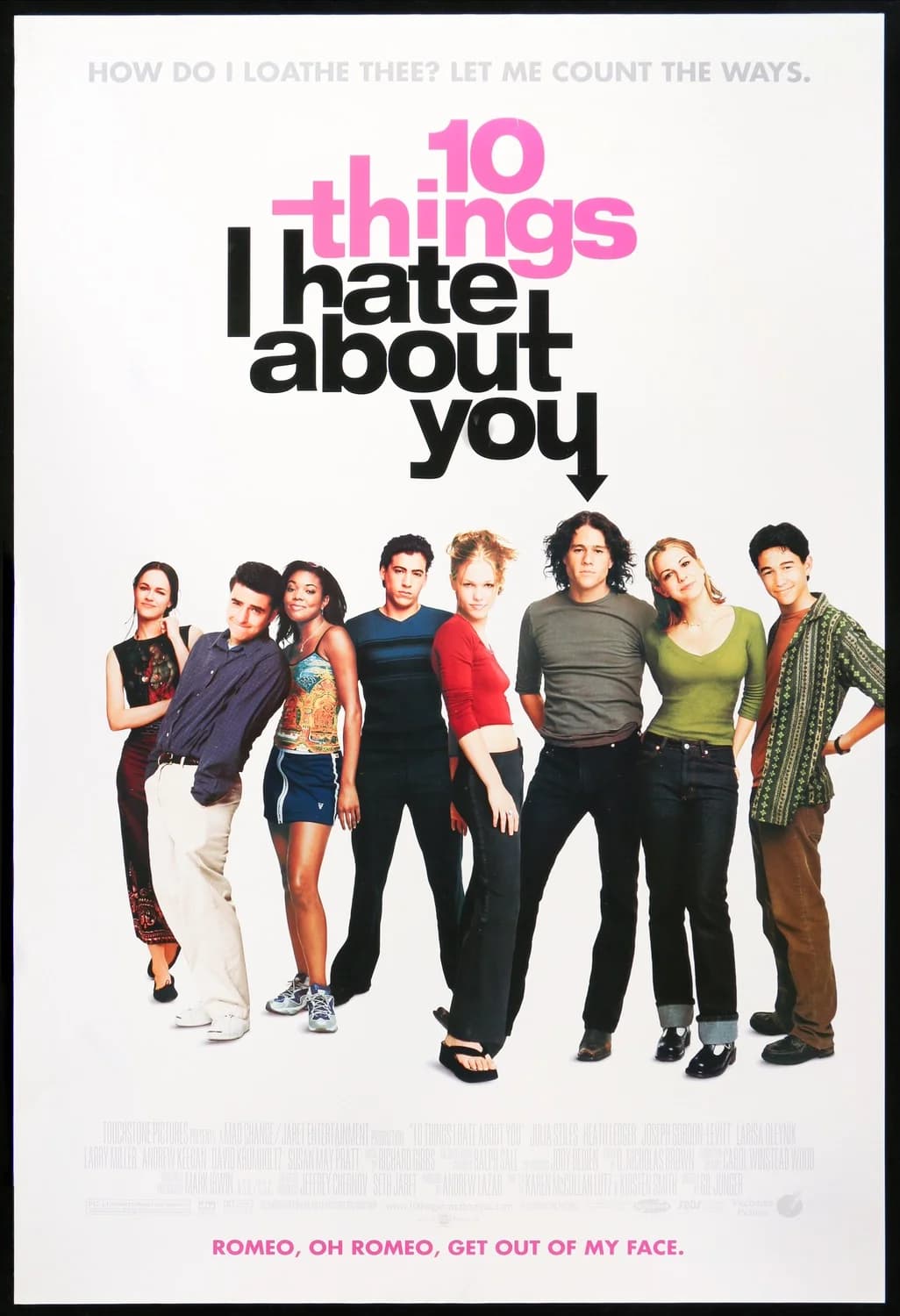
1999 // VHS
10 Things I Hate About You
Sibling rules, a rooftop serenade and one very stubborn Kat — Shakespeare in a school corridor.
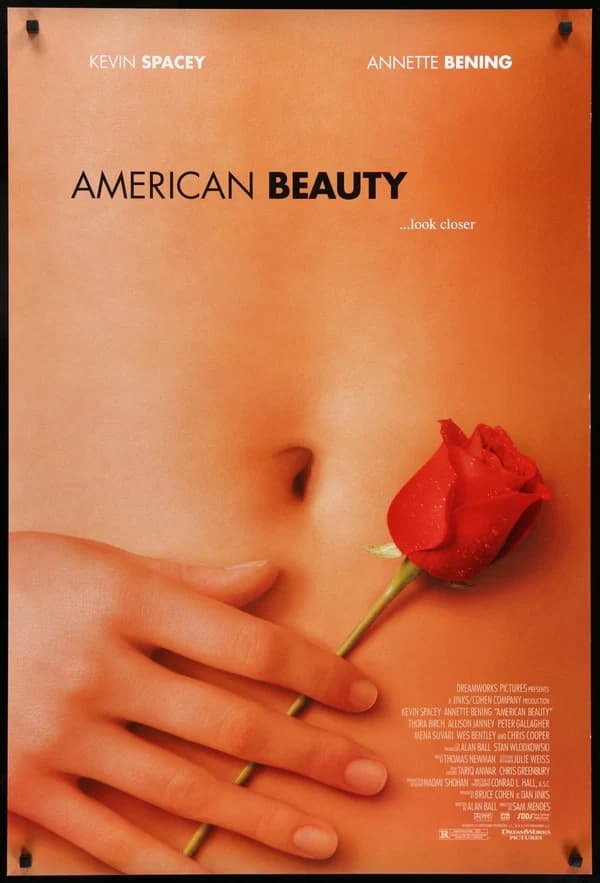
1999 // VHS
American Beauty
Lester Burnham, suburban rot and a midlife argument that still stings.
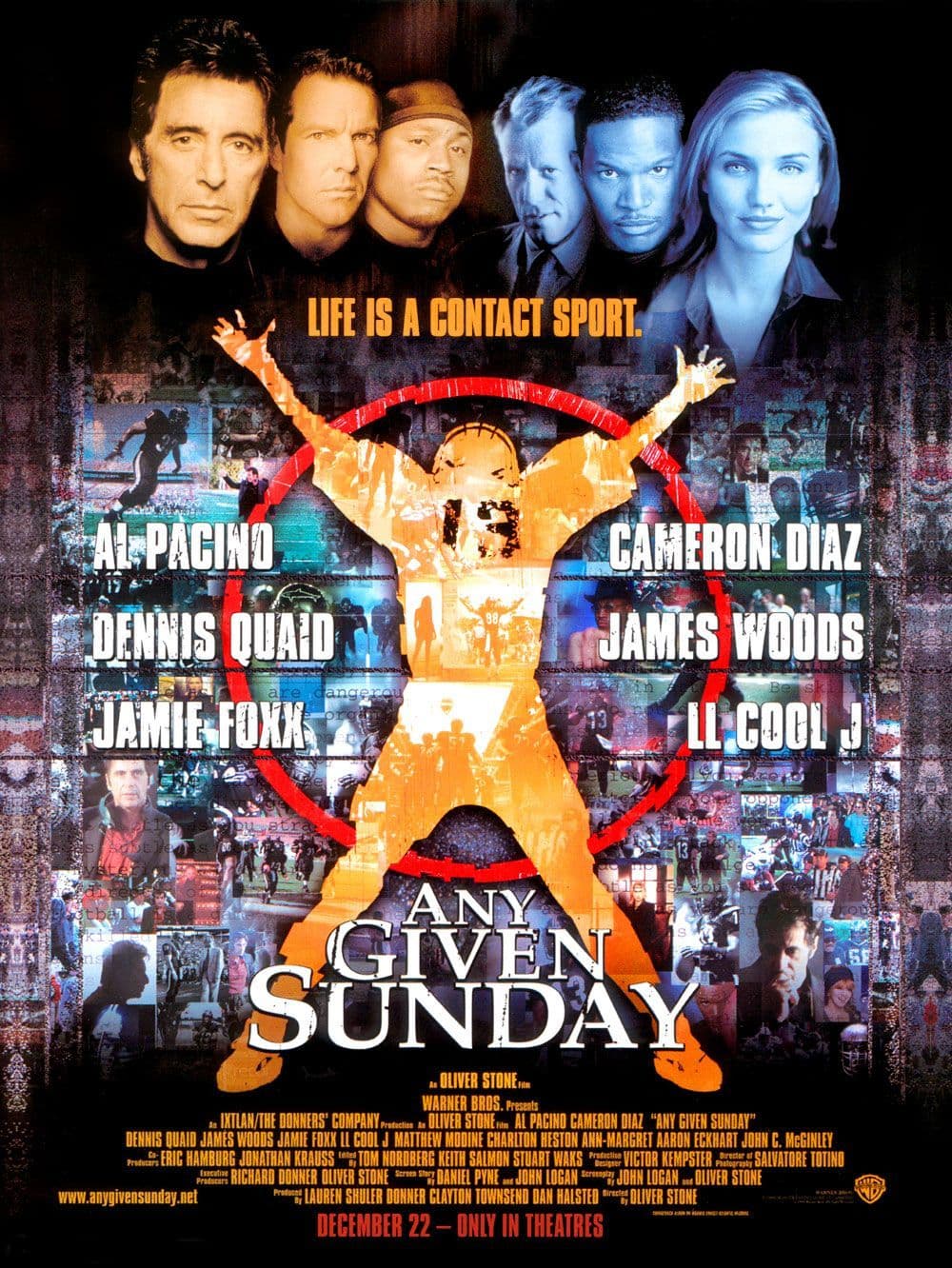
1999 // VHS
Any Given Sunday
Al Pacino's coach anchors the chaos of a film about football turned into product — loud, messy and oddly persuasive.