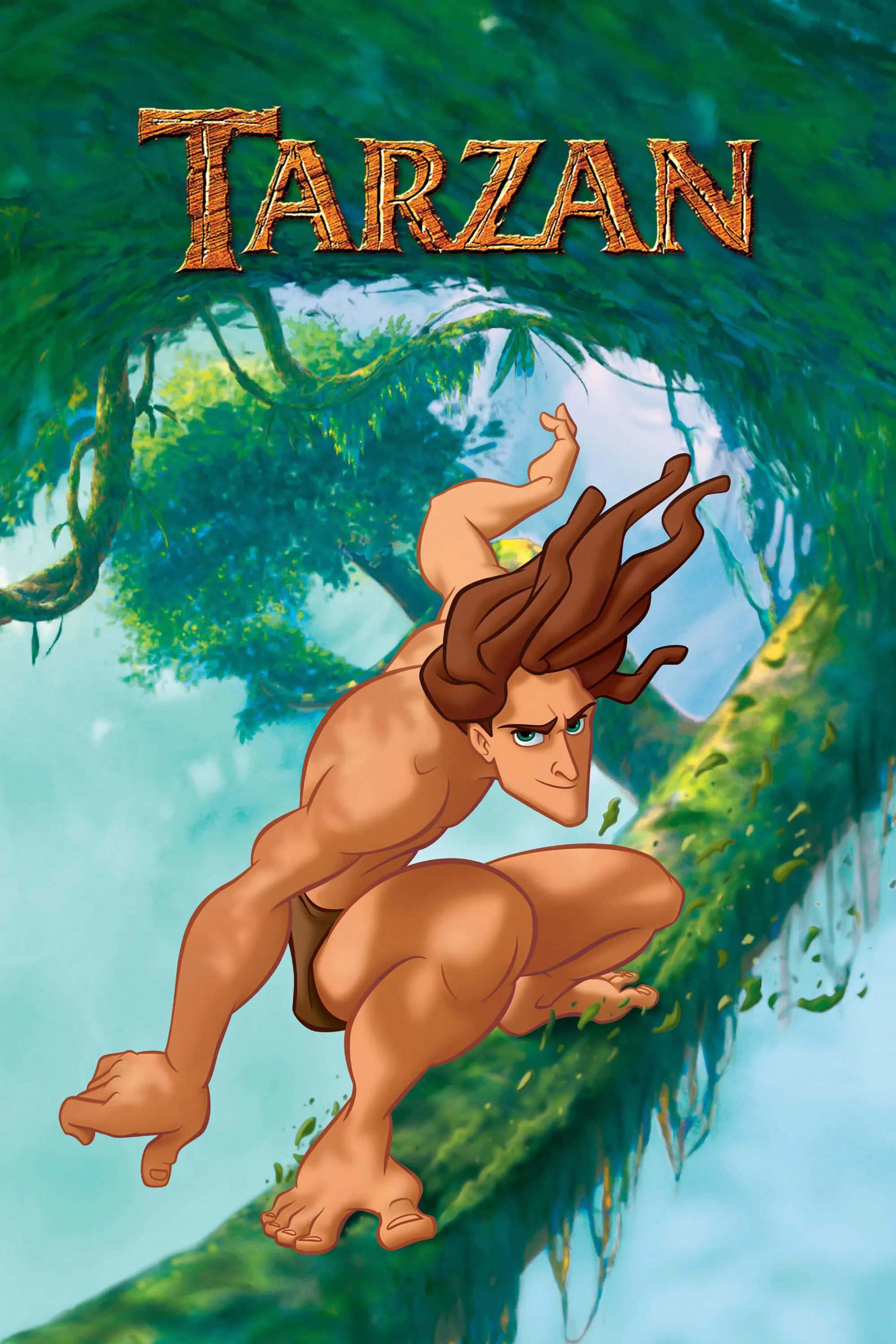
Tarzan
A coming-of-age in the canopy: family, belonging and a very particular kind of loyalty.
// The setup
PLAYBACK STARTED
Tarzan still grabs you because it keeps its focus tight: a human raised by apes, a curious outsider, and the awkward, loud arrival of civilisation. Chris Buck and Kevin Lima steer the whole thing like a neat, energetic jungle sprint — short, soulful and stubbornly affectionate.
THE MOVIE
Tarzan (adult) is still the reason this movie works
This Tarzan is, first and foremost, a story about someone who doesn’t quite belong. A human child raised among gorillas grows up into a self-taught, physically adept outsider; that tension between the ape family and the wider human world is the film’s heartbeat.
The arrival of an expedition — most importantly Jane Porter and the hunter William Clayton — forces that tension into the open. Suddenly curiosity, loyalty and the question 'where do I belong?' aren’t abstract ideas but urgent, personal decisions for one man swinging between worlds.
It helps that the film keeps things brisk. Running at 88 minutes, Chris Buck and Kevin Lima deliver a clearly shaped family adventure that knows what it wants to be: a coming-of-age about identity, adoption and the tug-of-war between nature and civilisation, scored around pop songs that act like a narrator rather than characters breaking into song.
THE SETUP
The idea that sets Tarzan in motion
At its most basic, Tarzan begins with a simple but potent premise: a human child orphaned and raised by a gorilla family. That single switch — human in ape-raised shoes — is all the story needs to start shaking loose questions.
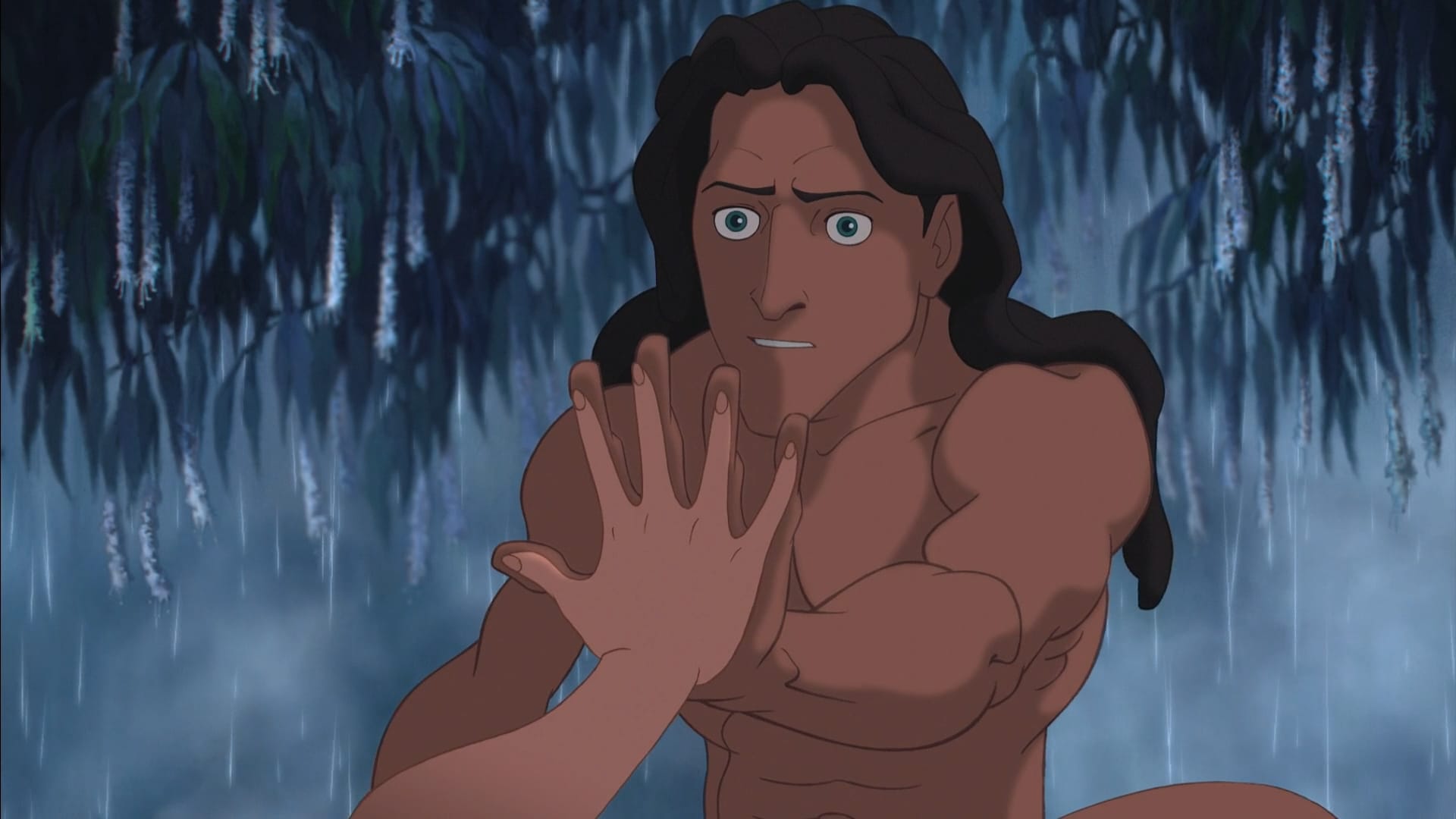
The plot keeps the mechanics straightforward. There’s a time jump from baby to adolescent, and we watch Tarzan learn language cues, tools and social differences once people appear in his life. Those learning scenes are the coming-of-age beats: curiosity meets instruction, and identity begins to reconfigure.
Then the visitors arrive. Jane Porter and the rest of the expedition aren’t just plot devices; their presence forces Tarzan to choose. He must reconcile where he came from with what he might become.
The setup works because it turns a large idea into a handful of intimate moments: growing up, being taught, being shown a different world, and deciding which world to walk into.
THE CHARACTER
Why Tarzan (adult) matters
Tarzan matters because the movie is shaped around his choices rather than around spectacle. He’s written as someone who has learned from the jungle — physically capable, curious about people, and torn between two loyalties.
That tension is not left abstract. The adoptive mother–child bond with Kala is foregrounded early and continually steers Tarzan’s decisions. Kala’s reassurance is the emotional anchor; she’s the reason his loyalties are complicated rather than simple.
Tony Goldwyn supplies the adult speaking voice, with Alex D. Linz providing Tarzan as a child. The film keeps Tarzan recognisably human while letting his upbringing define the way he moves through the world.
Finally, the filmmakers used new production tools during the movie’s making to put hand-drawn characters into deeper three-dimensional jungle spaces; the result is a Tarzan who feels like he belongs to a lived-in world, which helps when all the story’s questions are about belonging.
THE PERFORMANCE
Why Tony Goldwyn's performance matters
The production notes say Goldwyn’s readings brought an instinctive, animal-like quality that the filmmakers used when shaping Tarzan’s spoken voice. That casting choice isn’t trivia; it connects the vocal identity to the character’s upbringing.
It’s also worth separating the shouting from the speaking. Brian Blessed supplied the famous Tarzan yell, while Goldwyn is the speaking presence that carries the film’s dialogue and choices.
So what Goldwyn contributes is a spoken centre for Tarzan: the voice the audience follows when the character must choose between tribes.
That spoken centre matters because the movie’s emotional beats hinge on Tarzan’s internal decisions rather than on external spectacle alone.
UNDER THE SURFACE
Tarzan has more on its mind than the plot suggests
Beneath the vines and swinging sequences, the film keeps returning to the same cluster of questions: who are you if your upbringing isn’t your blood, and what counts as a family? Identity and belonging are not side notes; they’re the plot engine.
Coming-of-age is handled in straightforward, generous strokes: Tarzan learns language, tools and social roles from the visitors, and each new skill nudges him toward a different future. Those learning scenes make the abstract theme concrete.
Family and adoption are explicit here: Kala isn’t a plot accessory, she’s the emotional bedrock that complicates Tarzan’s curiosity. The story asks whether blood alone defines loyalty — and then refuses an easy answer.
There’s also the nature-versus-civilisation axis. The expedition represents another way of living, and Tarzan’s curiosity about it is sincere; the film stages the conflict so that your sympathies can sit with more than one side at once.
WATCHING IT NOW
What has aged — and what hasn't
Technically, Tarzan left a footprint. The production developed a 3D painting and rendering approach to place hand-drawn figures into painterly, three-dimensional jungle backgrounds. That technique still reads as a clear technical step rather than a gimmick.
The film’s focus on belonging and family feels straightforwardly honest; those themes don’t rely on fashions of the moment, so they remain easy to watch now.
Phil Collins’ songs are used as an audio-narration device, which gives the movie a particular 1990s personality — pop songs carrying the emotional commentary rather than characters breaking into number. That choice still shapes the film’s tone for modern viewers.
And on the character side, having a named supervising animator for the adult Tarzan meant the central figure’s animation was carefully shepherded; that concentrated attention helps the emotional beats land even when you watch the film more than once.
THE LEGACY
Why Tarzan still matters
One simple, measurable piece of legacy is the music: Phil Collins’ 'You’ll Be in My Heart' won the Academy Award for Best Original Song, and the film’s soundtrack also took home a Grammy for Best Soundtrack Album. That musical recognition kept the movie talking about its emotional intentions.
On the technical side, the 3D painting technique developed for the film was reused and adapted by Disney in later productions and is often cited in histories of animation from the late 1990s. It helped make a hand-drawn film look more layered without surrendering its drawn characters.
Practically speaking, Tarzan’s world lived on in television and home-video strands: a spin-off series and two direct-to-video follow-ups meant the film’s characters and stories continued to have a presence after the cinema run.
Even the film’s settings turned up elsewhere in Disney’s universe: the Deep Jungle was later included as a playable location in the Kingdom Hearts video-game series, which is a neat little footnote to how the movie’s world kept getting used.
THE VERDICT
Does Tarzan still hold up?
Yes — but with a small rider. Tarzan still functions as a compact, emotionally honest family adventure about identity and belonging. The adoptive bond with Kala is established early and gives the story a clear emotional motive, and Kerchak’s mistrust provides the necessary pressure that pushes Tarzan toward decisions.
The film is concise in its storytelling: a jump from youth to adult, learning scenes with Jane and the visitors, and choices that feel consequential. Tony Goldwyn’s casting was chosen in part because his readings offered an instinctive, animal-adjacent quality the filmmakers wanted in the adult voice — a useful ingredient for a character caught between tribes.
On the practical side, the movie’s technical experiments — the painted three-dimensional jungle backgrounds and the decision to use Phil Collins’ songs as audio narration — still give it a distinctive texture that separates it from both older hand-drawn Disney fare and the later, fully CGI features.
So if you’re revisiting Tarzan now, expect a well-focused family film: short, emotionally direct and shaped by clear thematic choices about who you are and where you belong. It’s not flawless, but it still swings.
Share this movie
// Keep watching
More movies from the 90s
If Tarzan is your kind of movie, there's plenty more on the shelves worth rewinding.
1999 // VHS
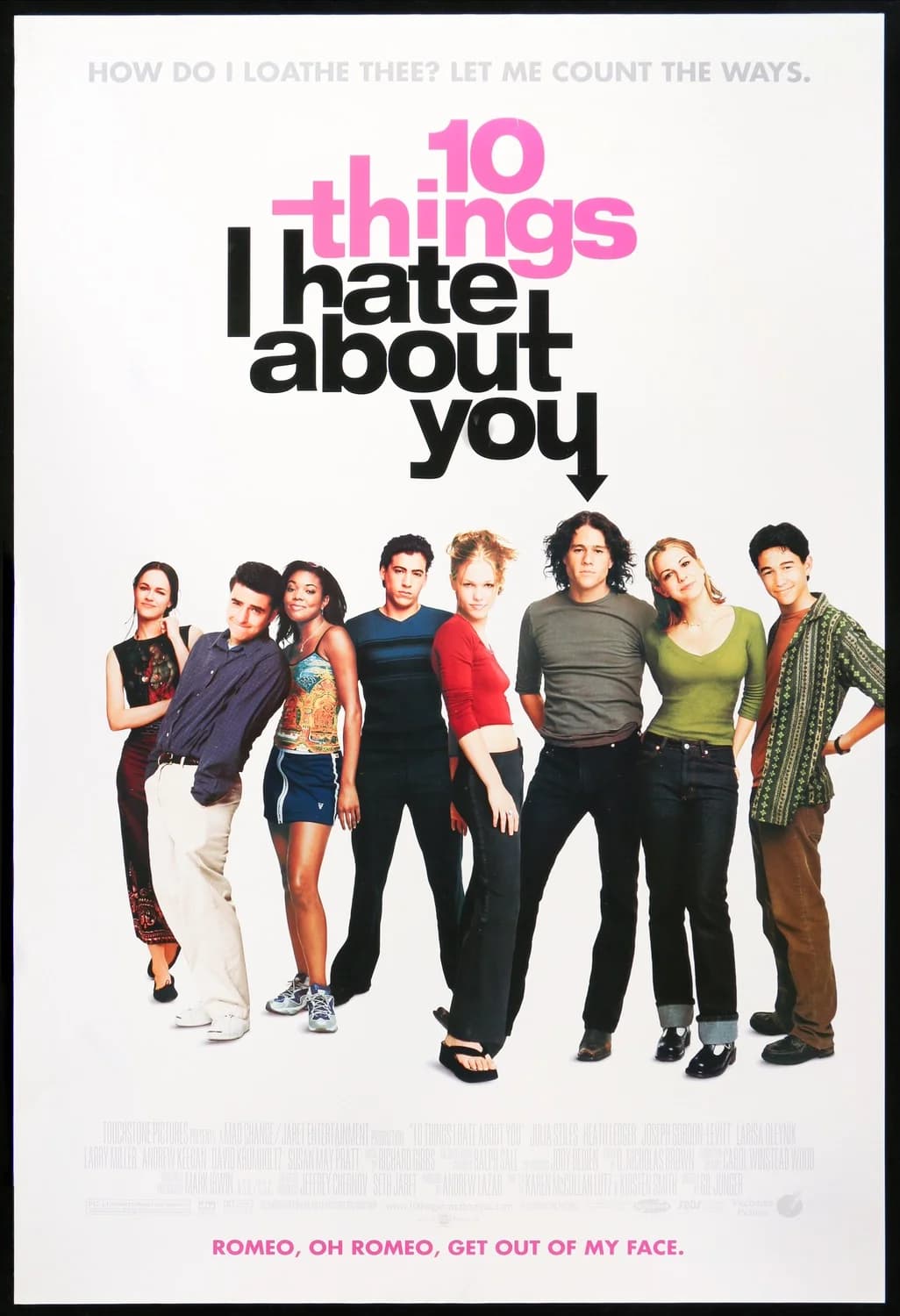
10 Things I Hate About You
Sibling rules, a rooftop serenade and one very stubborn Kat — Shakespeare in a school corridor.
1999 // VHS
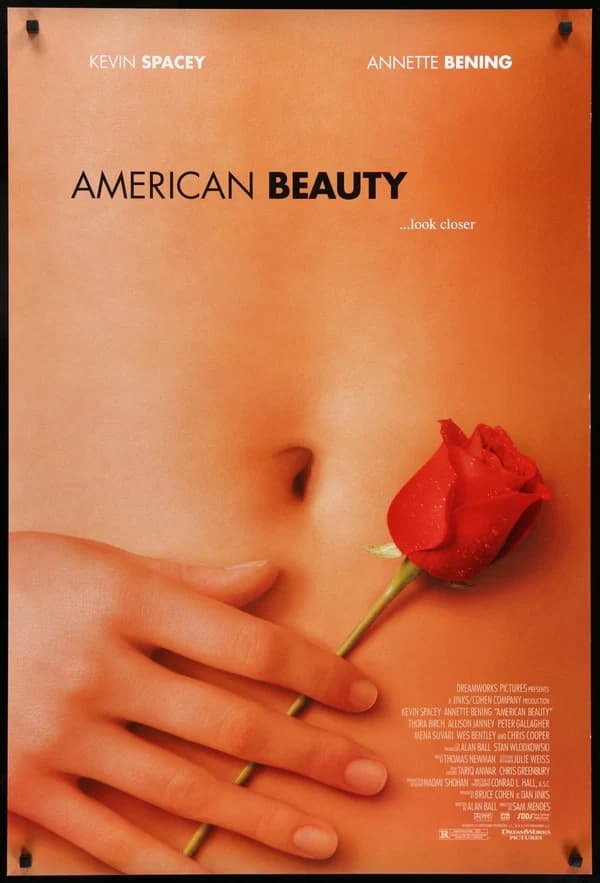
American Beauty
Lester Burnham, suburban rot and a midlife argument that still stings.
1999 // VHS
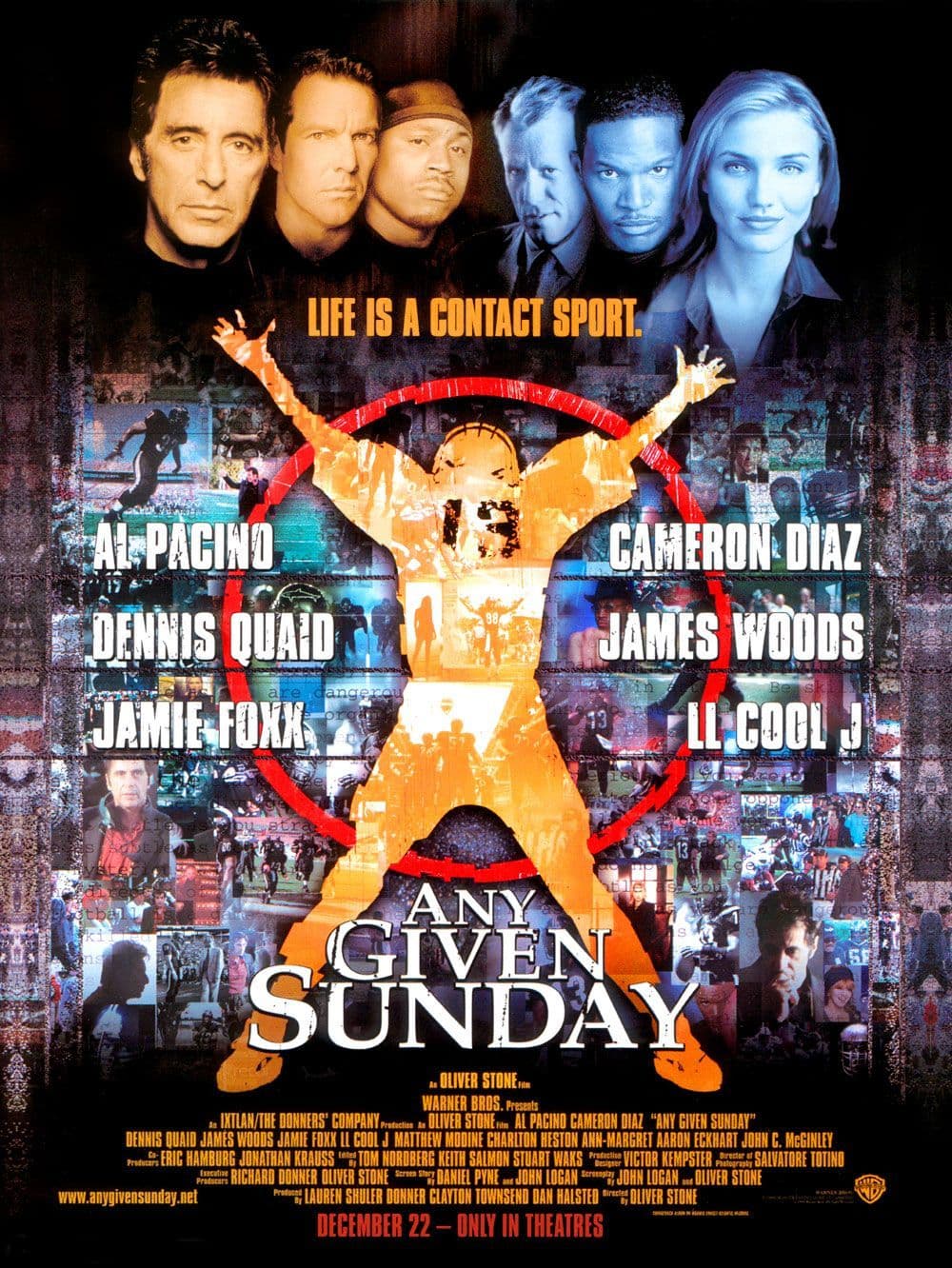
Any Given Sunday
Al Pacino's coach anchors the chaos of a film about football turned into product — loud, messy and oddly persuasive.