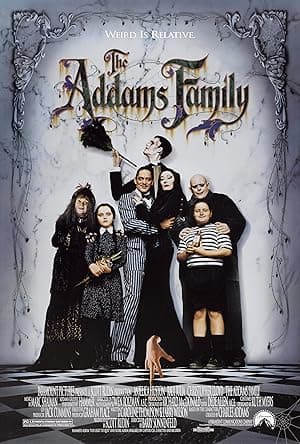
The Addams Family
Morticia holds the family together — and that’s the secret weapon this film still has.
// The setup
PLAYBACK STARTED
You don’t need to have watched The Addams Family a dozen times to know where your eyes go: Morticia. The 1991 big-screen take turned a bunch of delightfully oddball cartoon relatives into a family movie with a taste for the macabre, a central mystery about a returned Uncle Fester, and a lot of practical craft to sell the oddness. It’s a film that leans on family loyalty as its engine — and on Morticia as its steady hand.
THE MOVIE
Morticia Addams is still the reason this movie works
If you can picture one image from The Addams Family that explains the whole film, it’s not the house falling apart or the hand crawling along the table. It’s Morticia occupying a room like she built it to hold sorrow, jokes and ritual. The movie’s centre — emotionally and narratively — is the household's reaction to a man presented as Gomez’s long-lost brother returning after a quarter-century away.
That arrival is the engine. A supposed Fester turns the family’s routines upside-down and forces questions about who belongs and how you prove it. The plot leans into imposture and a con aimed at the family vault, but the emotional beats are about whether the Addamses accept a stranger who claims to be one of their own.
Barry Sonnenfeld made his leap to feature directing here, and the picture runs a brisk 100 minutes of comedy, supernatural touches and black humour. The result is a film that wears its macabre celebration and outlandish family loyalty like a kind of oddball domestic code — and Morticia is the person who keeps everyone following it.
THE SETUP
The idea that sets The Addams Family in motion
At its simplest, the film asks: what happens when the Addamses are told a lost relative has come back? The story opens with the family — an eccentric, macabre aristocratic household — being told that Uncle Fester has returned after 25 years gone. That return is the inciting incident; everything that follows comes from the household having to react.
The film doesn’t initially rely on supernatural miracles to explain the man’s presence. Instead, it leans on identity and imposture. The supposed Fester can’t remember key details, and that blank space creates suspicion and emotion in equal measure.
That doubt sets up the central conflict: outsiders are plotting to impersonate Fester to get at the Addamses’ hidden vault and fortune. So the movie becomes part family drama, part caper — a con aimed squarely at the heart of a household defined by devotion to lineage and ritual.
To keep the mystery moving, the film uses recognisably domestic tools — seances, home movies and memory — as tests of belonging. Those mechanisms keep the story focused on whether family is a matter of blood, behaviour or the stories you tell about each other.
THE CHARACTER
Why Morticia Addams matters
Morticia is the family’s emotional anchor. When the stranger arrives claiming to be Fester, it’s Morticia’s steadiness and domestic authority that set the tone for how the household will respond. In a story about imposture, she is the quiet gauge of truth: she holds the rituals and memories the family uses to recognise itself.
That role matters because the film’s central dilemma isn’t only whether the con will succeed; it’s whether a family set up around peculiar traditions can be bribed or fooled. Morticia keeps those traditions alive. Her loyalty is not sentimental — it’s procedural, a catalogue of family rites that both protect and define the Addamses.
Anjelica Huston plays Morticia, and the character’s importance is reflected in the attention the movie gives her as mediator and stabiliser. The production also made specific practical choices to shape her on-screen presence — for instance, documented wardrobe and makeup techniques were used on principal cast members to achieve particular looks.
Put simply: remove Morticia’s measuring stick and the film loses its spine. She’s the person who makes the household’s weird rules feel like rules rather than mere eccentricity.
THE PERFORMANCE
Why Anjelica Huston's performance matters
There’s a sensible reason the industry noticed this Morticia: Anjelica Huston received a Golden Globe nomination for her portrayal. That kind of recognition points to how central the role was to the film’s identity and how the part was staged within the movie.
The nomination is helpful evidence without being a verdict in itself. It tells you the part is written and presented as a lead role with emotional weight — not a decorative sidestep — and that the film leaned on Morticia to carry scenes that ask the audience to take the family’s codes seriously.
So when you watch the movie now, keep an eye on how often the camera and the script return to Morticia as a stabilising force. The Golden Globe nod is less a label and more a clue about how the film treated the character.
UNDER THE SURFACE
The Addams Family has more on its mind than the plot suggests
Beneath the jokes about the macabre, the film keeps returning to family loyalty. The Addamses are set up as a unit whose rules and rituals are the currency of belonging; the arrival of a possible imposter makes those rules visible.
Identity and imposture drive the narrative in a literal sense — someone claims to be Fester — but they also operate emotionally: the movie asks whether the shape of belonging is decided by memory, behaviour, or simple willingness to accept someone as family.
The film also delights in subverting domestic norms. Much of the comedy comes from treating typical family situations — the return of a relative, domestic authority, inheritance anxieties — through a macabre lens. That inversion is where the picture finds its black-comic energy.
And yes, there’s an unapologetic celebration of the macabre. The film uses gothic touches and ritualised oddness to make the Addamses’ love for one another feel surprisingly ordinary within their world. It’s a family movie that chooses to be strange on purpose.
THE FILMMAKING
How The Addams Family was put together
The film’s personality is a production choice as much as a script decision. The production built large physical sets — including a custom façade for the Addams mansion — and shot extensive interiors on studio stages. That kind of construction gives the movie a tactile, physical feel that supports the family’s eccentric domestic life.
The credits show an interesting behind-the-scenes handoff: Dede Allen and Jim Miller share editing credits, and Owen Roizman was credited as cinematographer even though camera personnel changed during the shoot. Those shifts help explain why the movie sometimes feels like different departments were trying alternative approaches.
Contemporary critics picked up on this: many responses praised the cast and production design while pointing out the screenplay’s unevenness. Put another way, the film often looks and feels like a carefully made object even when the script doesn’t always land every beat.
That combination — striking physical craft paired with a slightly wobbly screenplay — is part of the film’s texture. It’s what makes the Addams world convincing and, at times, curiously lopsided.
PRACTICAL EFFECTS
The effects work that gives The Addams Family its physical personality
A chunk of the movie’s character comes from old-fashioned, hands-on solutions. Thing — the disembodied hand — is realised through practical puppetry and on-set hand performance; Christopher Hart is credited as the hand performer. That practical approach keeps the character immediate and oddly believable as a household member.
Similarly, Morticia’s look was achieved using practical wardrobe and makeup techniques on set; production accounts describe elastic straps used to shape her eye angle. Small, physical tricks like that matter because they ground the film’s stylisation in real, human presence.
Even the family vault and its protections were built as large physical set pieces: booby-trap mechanisms and stage-built effects rather than purely optical tricks. The result is a movie where the macabre feels constructed and touchable — which suits a story about a family that treats the grotesque as ordinary.
Those choices give the film a mechanical generosity: you can tell the crew made things happen in front of the camera rather than just pointing at a screen and waving hands at post-production magic.
PURE 80S
The Addams Family could not belong to any other decade
The Addams Family is an early-1990s example of a big-studio adaptation taking a classic property and treating it as a mainstream theatrical event. Turning a cartoon-and-TV property into a star vehicle was very much the business model of the time.
The casting strategy reflects that era too: established film actors sit alongside a breakout child performer — Christina Ricci — which was a common studio formula for mixing adult star appeal with a youth-market draw. That blend gives the film a cross-generational energy that feels of its moment.
So while the film’s gothic humour is timeless in tone, its shape — a studio tentpole built around familiar IP and a careful casting mix — is very much early 1990s studio cinema.
WATCHING IT NOW
What has aged — and what hasn't
Restorations and anniversary 4K releases have nudged people back to the film, and those releases often highlight extended material (for example, the 'Mamushka' sequence) and the film’s practical craft. When you watch a restored print, the physicality of the sets and the hands-on effects stand out in a way that earlier home formats sometimes softened.
The movie’s central idea — family loyalty inside an eccentric household — still reads clearly. The story’s focus on belonging, memory and ritual doesn’t depend on contemporary slang or gimmicks, so those thematic bones remain intact.
Where it shows its age is the script’s unevenness, which contemporary critics frequently noted. The film can feel lopsided: brilliant in designed details, less consistent in pacing and tone. Restorations make the surfaces clearer; they don’t rewrite the screenplay.
Still, for viewers drawn to practical production craft and a recognisably odd family tale, the film’s strengths are easier to appreciate now because the physical work is more visible in modern home editions.
THE LEGACY
Why The Addams Family still matters
The film’s immediate legacy is practical: it spawned a direct sequel in 1993 with the same creative team, creating a short-lived but clearly defined early-90s Addams cycle.
On a commercial and archival level, the picture’s home-media restorations and anniversary reissues have kept it visible; those releases have helped the movie remain part of mainstream awareness of the franchise rather than slipping into obscurity.
The movie’s production story — the visible struggles and the eventual triumphs of the design work — features in accounts of Barry Sonnenfeld’s early career and in discussions about studio filmmaking in that period. In other words, it matters as both a piece of franchise entertainment and as a milestone in a director’s development.
That combination — a recognisable family brand, an immediately watchable production, and a documented production history — is why people still circle back to this version of the Addamses.
THE VERDICT
Does The Addams Family still hold up?
Yes — with a caveat. If you want a tight, perfectly balanced comedy, the screenplay’s patchiness will frustrate you. But if you’re after a film that takes a strange family seriously and dresses that seriousness in lavish, tactile design, it still delivers.
The premise — a household confronted by a man claiming to be a long-lost Fester and the con that threatens their vault — gives the movie a clear dramatic spine, and the use of seances, home movies and booby-trap set pieces keeps the plot moving in ways that reward attention.
Crucially, Morticia anchors the picture. Anjelica Huston’s casting and the attention paid to the role (including a Golden Globe nomination) means the film always has a centre to return to when plot contrivances wobble. Gomez’s longing for family and the household’s loyalty are the emotional currency the film spends, and they mostly buy what the movie needs.
So watch it for Morticia, the family mechanics, and the production craft. Don’t expect a flawless script. But do expect a distinctive, hands-on piece of studio filmmaking that still has something to say about belonging — and which wears its oddness like a family uniform.
Share this movie
// Keep watching
More movies from the 90s
If The Addams Family is your kind of movie, there's plenty more on the shelves worth rewinding.
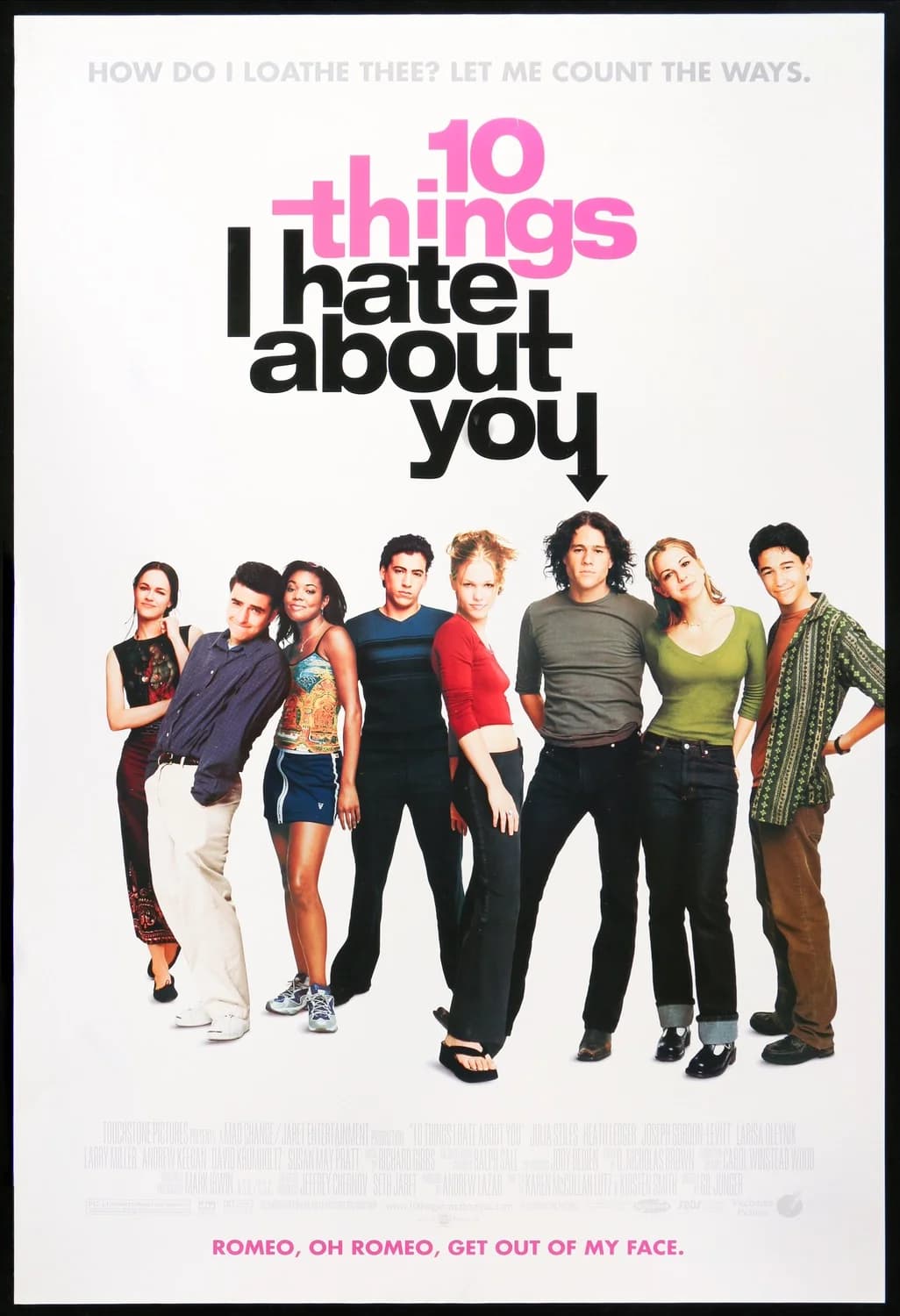
1999 // VHS
10 Things I Hate About You
Sibling rules, a rooftop serenade and one very stubborn Kat — Shakespeare in a school corridor.
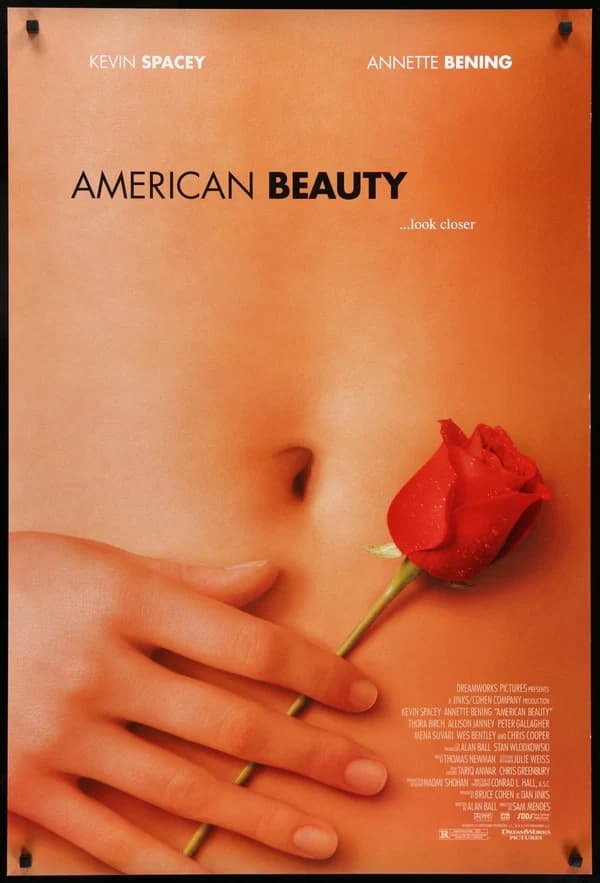
1999 // VHS
American Beauty
Lester Burnham, suburban rot and a midlife argument that still stings.
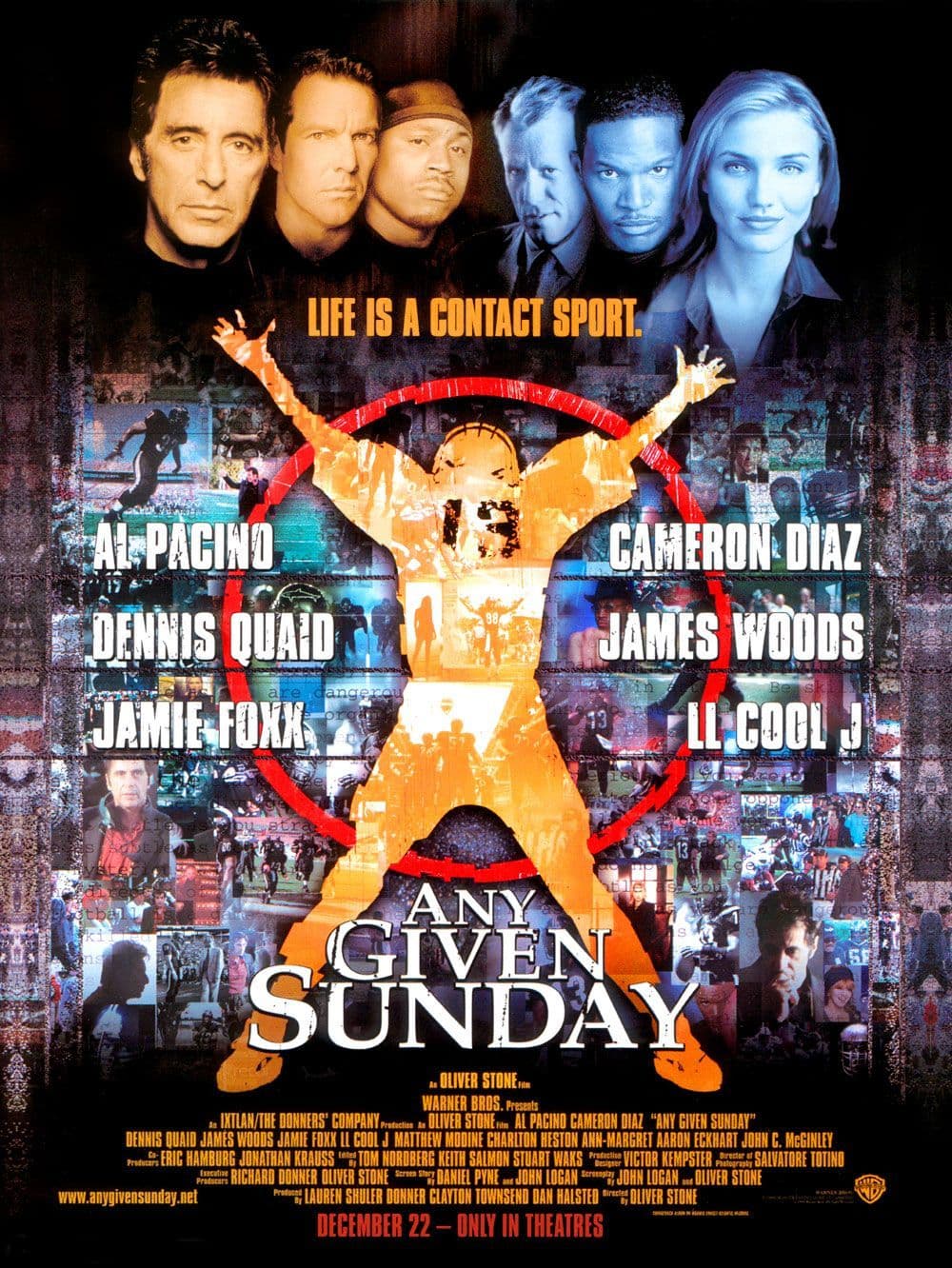
1999 // VHS
Any Given Sunday
Al Pacino's coach anchors the chaos of a film about football turned into product — loud, messy and oddly persuasive.