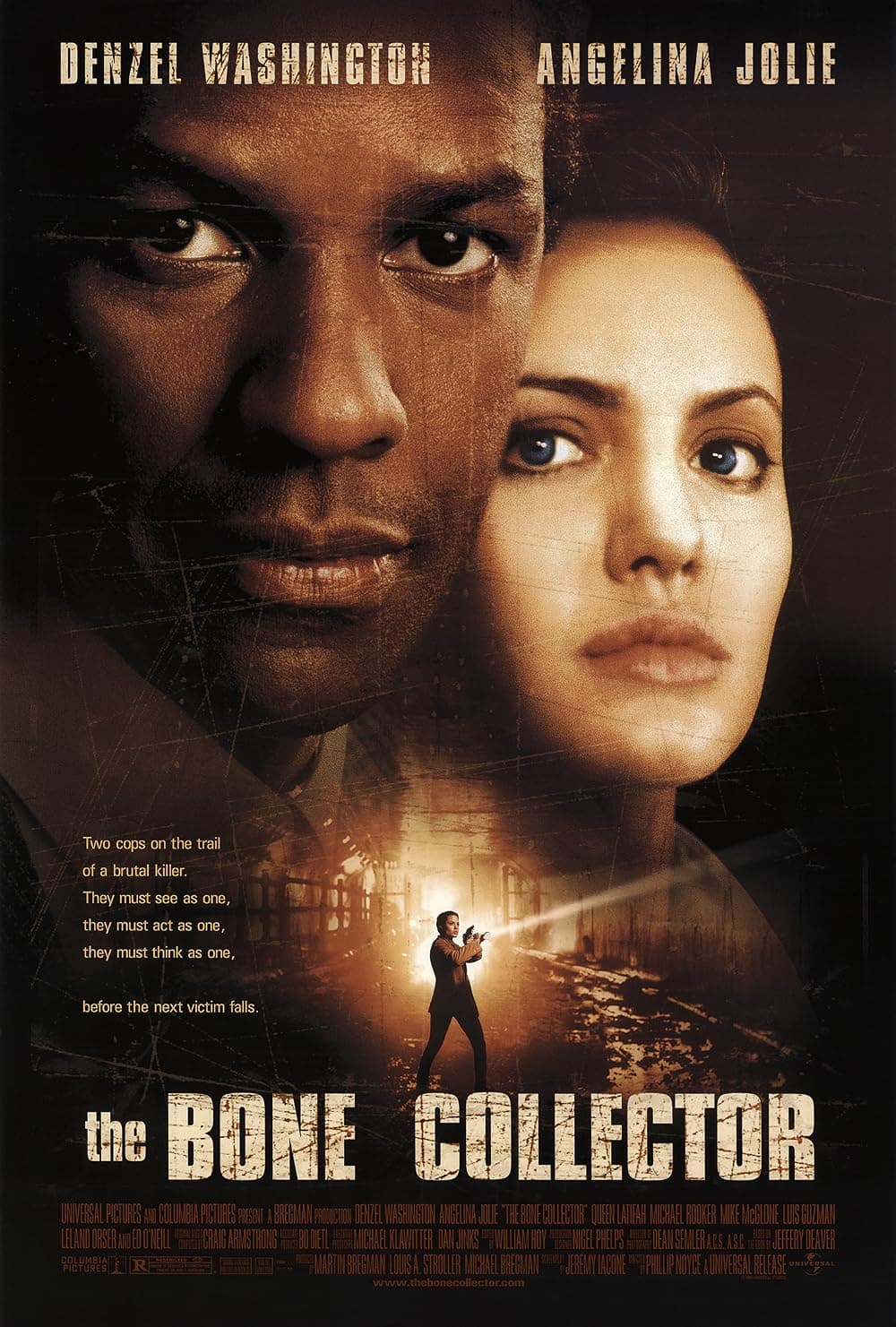
The Bone Collector
A brilliant mind trapped in a body, a rookie in the street — and a city full of things you don't see coming.
// The setup
PLAYBACK STARTED
The Bone Collector isn't just another late-90s serial-killer thriller; it's the one where the detective who solves the case does it from a bed, through a headset and a network of helpers. Phillip Noyce stages the odd couple of a paralysed forensic genius and a mobile rookie against a New York that hides violence in plain sight.
THE MOVIE
Lincoln Rhyme is still the reason this movie works
There’s a particular image you remember from The Bone Collector: the main detective confined to a hospital bed, not sidelined but running the show. Lincoln Rhyme is quadriplegic, immobile in body but very much active in mind, directing an investigation from computers, assistants and a headset.
That setup gives the film its personality. Rhyme needs someone who can move — enter Amelia Donaghy, the rookie patrol officer who becomes his eyes and hands on the street, carrying out what he sees from a distance. The pairing turns a procedural into a partnership where authority and mobility trade places.
Directed by Phillip Noyce and released in 1999, the movie leans into a visually textured, clue-driven version of the serial-killer thriller, one critics picked up as having the same rain-slick, puzzle-first mood that defined several big 1990s examples.
THE SETUP
The idea that sets The Bone Collector in motion
The story kicks off with a taxi-related abduction and torture that reads less like an isolated crime and more like the first piece of a pattern. That early brutality signals that this is a hunter-and-puzzle case rather than a one-off robbery gone wrong.
Amelia Donaghy, a rookie cop, is thrown into that hunt as the field agent for Lincoln Rhyme. She does the legwork — unspooling scenes, picking up physical clues — while Rhyme assembles the logic from his apartment using his small support team and technology.
The film makes those discoveries feel architectural: each gruesome scene offers a clue, and the investigation moves by fitting those pieces together. Contemporary responses noted how the movie foregrounds puzzle-like evidence as its engine.
That structure works because it keeps the tension both clinical and immediate. There’s the intellectual challenge of reading clues and the bodily risk of sending Amelia into places the city would just as soon keep quiet about.
THE CHARACTER
Why Lincoln Rhyme matters
Lincoln Rhyme isn't memorable because he's a heroic cop in the conventional sense. He's memorable because the film builds an unusual central proposition: a forensic mastermind whose body won't cooperate but whose mind is intact and lethal at solving puzzles.
He runs investigations from home — computers, a headset, assistants — and that domestic command post becomes the film’s control room. The constraint of immobility gives his expertise a sharper edge; authority is relocated from boots-on-the-ground to who can read the evidence.
The dynamic between Rhyme and Amelia mixes professional mentorship with an emotional angle. Critics noted that the relationship provides the film's through-line: it's as much about teaching and trust as it is about catching a killer.
As the primary screen version of Jeffery Deaver’s material, this Rhyme is the centrepiece: the plot is often built to showcase how his brain works against a city that routinely hides violent acts behind ordinary moments.
THE PERFORMANCE
Why Denzel Washington's performance matters
Contemporary critics regularly pointed to Denzel Washington's central turn as a stabilising force. In a film that trades on forensic puzzles and lurid set-pieces, having a dependable anchor matters.
That attention matters for a simple reason: when the plot leans on clues and atmosphere, viewers need someone to follow. Critics suggested Washington provided the film with that focus, keeping audience investment from drifting when the story obliges Amelia to be the one facing danger.
Put another way, his presence made the procedural stakes feel less like genre mechanics and more like a human problem to be solved.
Which is useful, because the movie depends on you caring about the person calling the shots as much as the person doing the running.
UNDER THE SURFACE
The Bone Collector has more on its mind than the plot suggests
On the surface it’s a crime puzzle. Underneath, one of the movie’s persistent questions is what authority looks like when the person who knows more can’t move. Disability and agency is not window-dressing here; it reframes who gets to lead and how knowledge is exercised.
That tension shapes the mentor–protégé setup. The film is less interested in glorifying lone-ranger heroics and more in showing how teamwork rearranges power: the senior detective supplies the logic, the rookie supplies the reach.
There’s also a running sense of urban anonymity and hidden violence. Ordinary acts — catching a cab, crossing a street — become potential threats; the city can be a place where the smallest ordinary decision exposes someone to danger.
Finally, the procedural fascination with physical clues gives the movie a forensic epistemology: it asks how we know what we think we know, and how meaning is extracted from objects and scenes. The chase is as much about insight as it is about speed.
THE FILMMAKING
How The Bone Collector was put together
Phillip Noyce stages the picture as a conversation between bedside analysis and on-the-ground work. The editing and production choices keep flipping perspective so investigations feel like shared intelligence rather than solitary intuition.
Dean Semler is credited as director of photography, and the visuals lean into a dark, rain-slicked palette with varied camera setups to give texture to scenes that could otherwise feel claustrophobic. That texturing is what lets the city seem both lived-in and unknowable.
Nigel Phelps's production design matters here: the film moves between institutional interiors and more subterranean crime locations, and the setwork helps sell the idea that the city contains layers — public faces and private depths.
William Hoy as editor ties those elements together, keeping the procedural pieces moving while allowing enough breathing room for the central relationship to develop.
PURE 80S
The Bone Collector could not belong to any other decade
Released in 1999, the film lands at the tail end of a late-1990s surge in serial-killer and forensic-leaning thrillers. It shares the era’s appetite for grim urban atmospheres and puzzle-first plotting.
It’s an adaptation of Jeffery Deaver’s 1997 novel, which places it in the period trend of turning forensic-thriller bestsellers into studio pictures — the kind of material Hollywood thought would make a reliable mainstream thriller.
Casting Denzel Washington in the lead also reflects the decade’s casting instincts: late-90s studio thrillers often leaned on a major star to anchor what might otherwise be abstruse procedural material.
All of that combines to make the movie feel of its time: it’s squarely in the moment when mysteries favoured meticulous clue-work and a bleak city as the default backdrop.
THE LEGACY
Why The Bone Collector still matters
As the main feature adaptation of Jeffery Deaver’s Lincoln Rhyme novels, The Bone Collector established a screen version of those characters that later adaptations would approach from different angles.
Its afterlife is modest but concrete: the property resurfaced on television in 2020 with a separate series that reworks the same material for a different format.
More tangibly for film fans, the movie received a director-approved 4K scan from the original camera negative and a home-video reissue by Kino Lorber, which has brought renewed archival attention to the picture.
That kind of reclamation suggests the film still has an audience worth servicing — not because it rewrote the genre, but because its particular combination of central character, procedural mechanics and period tone retains interest.
THE VERDICT
Does The Bone Collector still hold up?
Yes — with caveats. If you watch it for the cerebral oddness of a quadriplegic detective running a timed, clue-driven hunt through New York, and for the way the film stages a mentor–protégé partnership, it’s still satisfying. The central premise — Rhyme working from bed while Amelia acts on his instructions — remains a neat dramatic engine.
Denzel Washington’s presence helps; contemporary critics flagged his role as a stabilising element that keeps attention tied to the investigation even when scenes lean into gruesome tableau or timed set-pieces. The relationship between Rhyme and Amelia provides the film’s emotional through-line, though some reviewers found the romantic notes sentimental or clumsy.
The movie is a product of its moment — a late-90s procedural that revels in physical clues, a dark urban mood and the idea that ordinary city life can conceal lethal threats. If that blend appeals, the film still delivers what it promises: a puzzle you can follow and central characters worth following it for.
So should you watch The Bone Collector today? If you want a thriller built around a forensic brain operating at a distance, anchored by a clear mentor–protege dynamic and a star in the centre, then yes. It’s not flawless, but its premise — and the way it keeps the detective’s expertise active even when his body is not — makes it worth the time.
Share this movie
// Keep watching
More movies from the 90s
If The Bone Collector is your kind of movie, there's plenty more on the shelves worth rewinding.
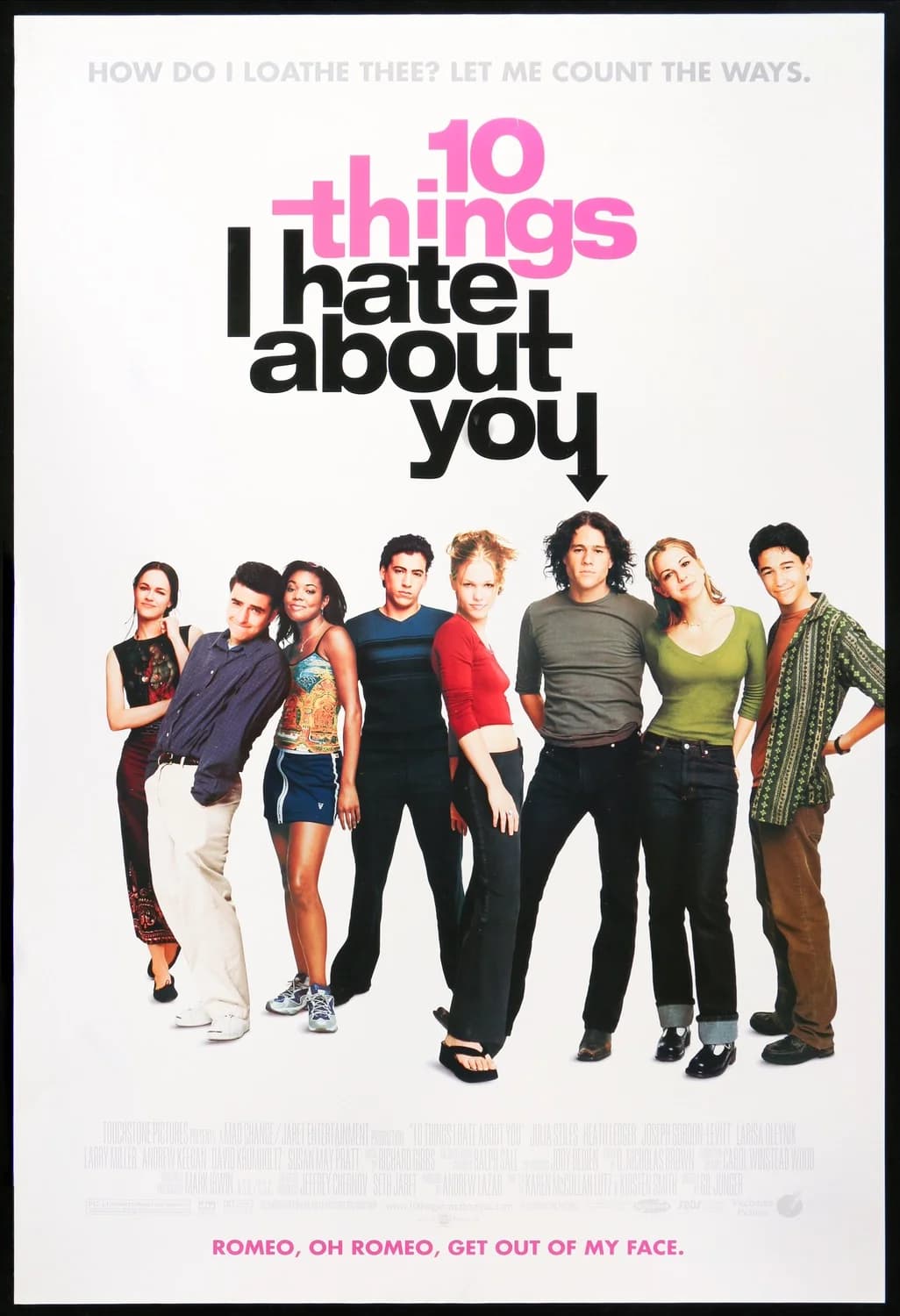
1999 // VHS
10 Things I Hate About You
Sibling rules, a rooftop serenade and one very stubborn Kat — Shakespeare in a school corridor.
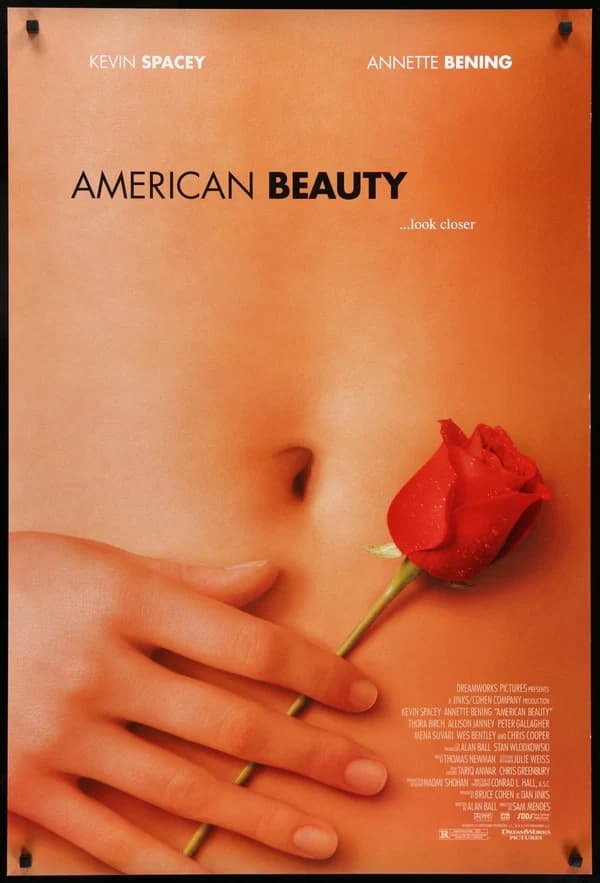
1999 // VHS
American Beauty
Lester Burnham, suburban rot and a midlife argument that still stings.
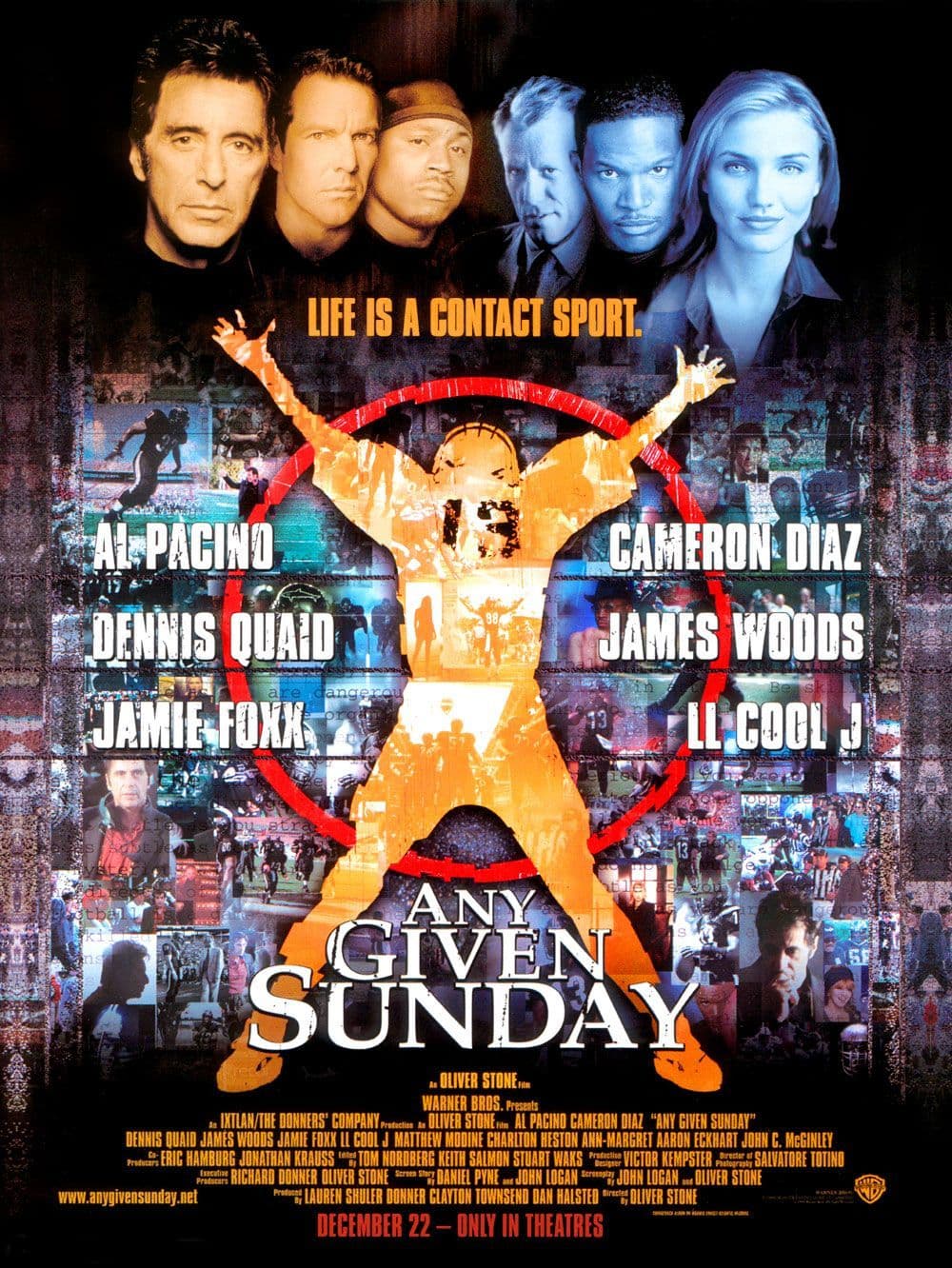
1999 // VHS
Any Given Sunday
Al Pacino's coach anchors the chaos of a film about football turned into product — loud, messy and oddly persuasive.