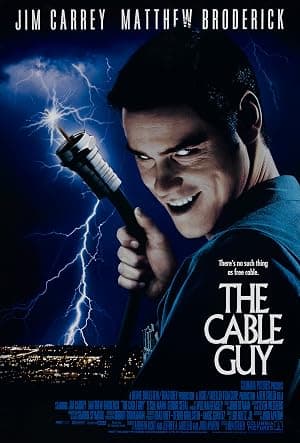
The Cable Guy
A friendship assembled from TV habits, awkwardness and one too many channels.
// The setup
PLAYBACK STARTED
If you remember The Cable Guy at all, you probably remember being unsettled. It’s the Jim Carrey picture that decided slapstick wasn't enough and turned an evening of folly into something sharper — and stranger. Revisit it now and you'll find a movie about loneliness, manufactured companionship and the weird power of television to teach people how to be family.
THE MOVIE
Chip Douglas (credited as the Cable Guy) is still the reason this movie works
At its most basic, The Cable Guy is the story of a man who won't let go. A lonely, eager cable installer inserts himself into the life of a new customer and keeps pushing when the customer tries to step back.
That one small exchange — a one-off favour to get extra channels — is the spark that propels the installer’s persistent attempts at friendship, and the whole film turns on how far that insistence can go before it becomes dangerous.
What makes the film worth revisiting is how it stitches those beats to a late-20th-century hunger for connection. Chip's idea of family is shaped by television sitcom models; he’s trying to manufacture a chosen family from what he’s watched. Ben Stiller directs the whole 96-minute ride, and he leans into comedy that can flip, at any moment, into something darker.
THE SETUP
The idea that sets The Cable Guy in motion
The set-up is pleasingly simple: a service worker meets a customer and, after a one-off accommodation, decides the customer should be part of his life. That simplicity lets the film zero in on what goes wrong when friendliness is forced.
The conflict escalates cleanly. The installer's intrusive attempts at intimacy and control start as awkwardness and then begin to threaten the customer's job, romantic life and personal safety.
To keep that escalation interesting, the screenplay rides a series of set pieces — workplace embarrassments, a public confrontation and spectacle — that move the tone from broad comedy into a satiric psychological thriller.
The filmmakers were explicit about the approach: the story acts as a satiric inversion of familiar psycho-thriller tropes, which is why it feels part comedy, part warning.
THE CHARACTER
Why Chip Douglas (credited as the Cable Guy) matters
Chip is the movie’s gravity. On paper he’s a simple figure — an intrusive cable installer — but the important bit is where his behaviour comes from: television. He fashions friendship from sitcom scripts and chases the family he’s been taught to expect.
That media-shaped idea of companionship makes him fascinatingly unnatural; he isn’t just lonely, he’s lonely with a handbook. That handbook tells him how to act, how to perform closeness, and when those performances fail the results are uncomfortable and, occasionally, frightening.
Chip's arrival in the protagonist's orbit is enabled by other people, too: a friend who normalises teasing and pushes the lead toward the meeting that opens the whole story. The supporting family members and a brother are small but useful anchors for how ordinary social life responds to Chip's escalation.
Because the film is a black comedy, Chip is not a cardboard stalker; he’s someone shaped by cultural instruction, which is why he remains the figure you remember after the set pieces blur.
THE PERFORMANCE
Why Jim Carrey's performance matters
Contemporary response to Jim Carrey’s turn split critics. Some found the performance and the film’s darker tone undermined its comic aims — a point Roger Ebert made when he described the turn as increasingly unsettling.
That unsettling quality is the key question for viewers: is Carrey’s style here a misstep or an intentional choice that pushes the film into satire? At the time, opinions were divided; some reviewers defended the intent and ambition even while others felt the balance never quite settled.
So the performance matters less as a simple triumph or failure and more as a deliberate tilt. It changes how you watch scenes that might otherwise be comfortable and asks you to sit with the awkwardness rather than laugh it off.
If you approach the film expecting nothing but broad, easy laughs, that tilt can feel like a betrayal. If you accept a darker, satirical tone, the same qualities look like the point.
UNDER THE SURFACE
The Cable Guy has more on its mind than the plot suggests
Beneath the set pieces, the film runs on a few simple obsessions: loneliness, the lessons we take from media, and how public spectacle erodes private boundaries.
Loneliness and the hunger for friendship give Chip his engine; he isn’t simply malicious, he’s eager. That eagerness becomes tangled with the media habits that teach him what family looks like — he’s acting the part rather than improvising a life.
Because the movie borrows the shape of a thriller, it also becomes a satire of those tropes. You get the language of psycho-thrillers but turned inside out: the threat is social ugliness and manufactured intimacy rather than anonymous violence.
Finally, there’s the idea of boundaries and spectacle. The story keeps bringing private life into public spaces and showing how television-shaped behaviour can make that exposure feel both performative and unmoored.
THE FILMMAKING
How The Cable Guy was put together
The film’s construction is a team effort: Lou Holtz Jr. supplied the screenplay, Robert Brinkmann handled cinematography, Steven Weisberg edited, and John Ottman composed the score.
Those credits point to a deliberate mixing of tones. A single screenplay and a consistent editing strategy are what make the movie jump from comedy to satire to thriller beats without feeling entirely accidental.
Ben Stiller, directing, steers those elements toward a film that wants to unsettle as much as it entertains. The choices of collaborators underline that ambition: this was not a lightweight studio comedy sewn together on autopilot.
Taken together, the credits explain why the picture feels like a hybrid: its parts were chosen to carry both laughable moments and sharper satiric aims.
PURE 80S
The Cable Guy could not belong to any other decade
The movie arrived in the mid-1990s, a moment of rapid cable expansion and rising anxieties about media saturation. That context is not window-dressing; it’s the thing the joke keeps coming back to.
Chip’s imagination is a cable-shaped imagination: what he wants is modelled after the TV families and sitcom solutions that filled living rooms as channels multiplied.
The film’s industry context also mattered. The screenplay attracted competitive studio interest during development, and Jim Carrey’s high fee for the picture — widely reported at the time — made the film part of late-90s conversations about star pay and studio risk.
Those production and cultural facts anchor the movie in its decade: it’s a satire designed and marketed in a moment when television’s reach felt like a social force.
WATCHING IT NOW
What has aged — and what hasn't
Some modern commentators have softened toward The Cable Guy, reading it now as an early take on parasocial relationships and media saturation — ideas that feel even more relevant in our streaming era.
The film’s focus on loneliness and the hunger for manufactured companionship still resonates. The central collision between the installer and his reluctant customer remains a compact study of how cultural scripts can warp human connection.
Framing the story as a satiric inversion of psycho-thriller tropes gives the film a protective logic: the tonal shifts are intentional, and once you accept that, certain jarring moments start to make sense rather than feel like mistakes.
And the basics hold up on a character level: the dynamic between the two leads — an intrusive, media-trained newcomer and a man trying to keep to a low-drama life — still reads clearly.
THE LEGACY
Why The Cable Guy still matters
The Cable Guy arrived as a divisive release and later found a second life with a cult following; that uneasy reception is part of its afterlife.
It also sits in career conversations: the picture gets referenced when people talk about Jim Carrey’s shift into darker or more serious territory rather than just broad comedy.
Industry coverage later picked over the production as well; Carrey’s headline salary for the film was widely discussed in trade coverage and became a touchpoint in talks about star pay.
Between its tonal gamble and the business around it, the film endures as something people keep returning to — not because everyone agrees it’s flawless, but because it has interestingly stretched the expectations of what a star comedy could be.
THE VERDICT
Does The Cable Guy still hold up?
Yes — if you’re willing to accept a black comedy that deliberately refuses to play safe. The film is built on a brisk premise (an installer who refuses to accept a polite refusal) and channels that into escalating set pieces that move from workplace embarrassment to public spectacle.
That structural escalation — and the way it threatens Steven’s job, love life and safety — is still gripping. The tonal swings are intentional: the movie borrows the language of psychological thrillers and turns it into satire rather than pure suspense.
But fairness requires a caution: contemporary critics were mixed, and some, notably Roger Ebert, found Jim Carrey’s turn increasingly unsettling in a way that undermined the comic aims. If you go in expecting a straightforward Carrey broad-comedy, you’ll be surprised in ways that might annoy you.
If you’re curious about films that mess with genre, or you want a 1996 picture that thinks about how media teaches people to connect, give it a watch. It’s not comfortable, and it isn’t always neat — but it still asks interesting questions about loneliness, manufactured friendship and the consequences of performing intimacy.
Share this movie
// Keep watching
More movies from the 90s
If The Cable Guy is your kind of movie, there's plenty more on the shelves worth rewinding.
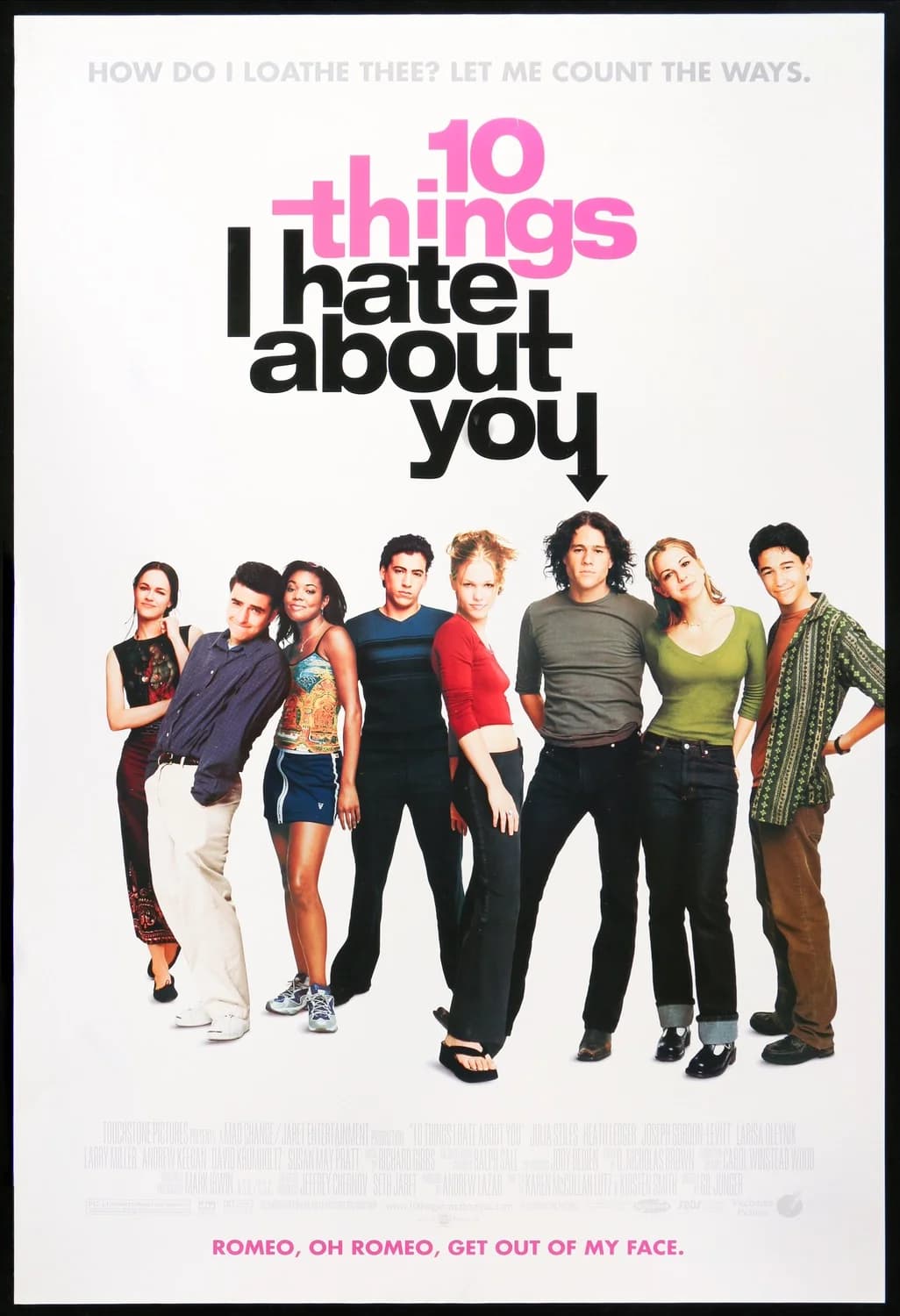
1999 // VHS
10 Things I Hate About You
Sibling rules, a rooftop serenade and one very stubborn Kat — Shakespeare in a school corridor.
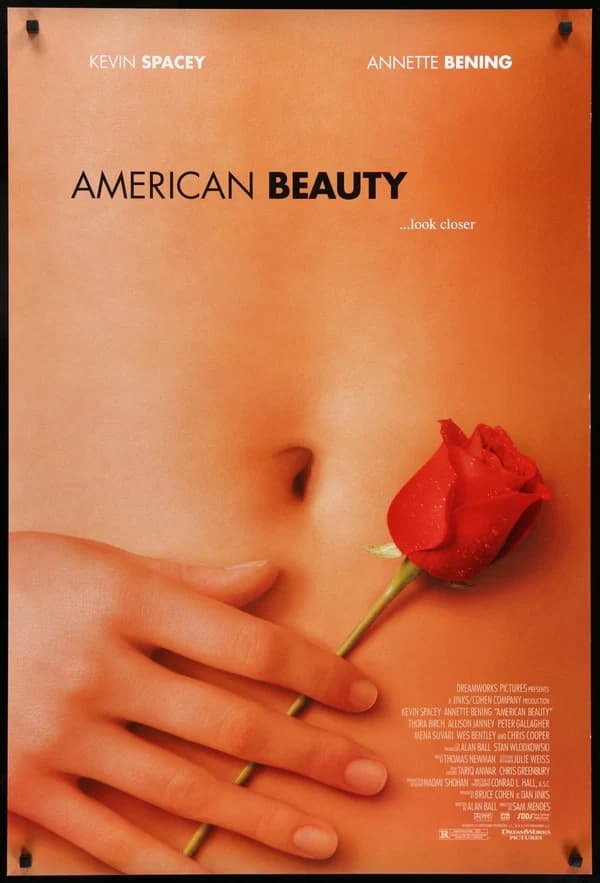
1999 // VHS
American Beauty
Lester Burnham, suburban rot and a midlife argument that still stings.
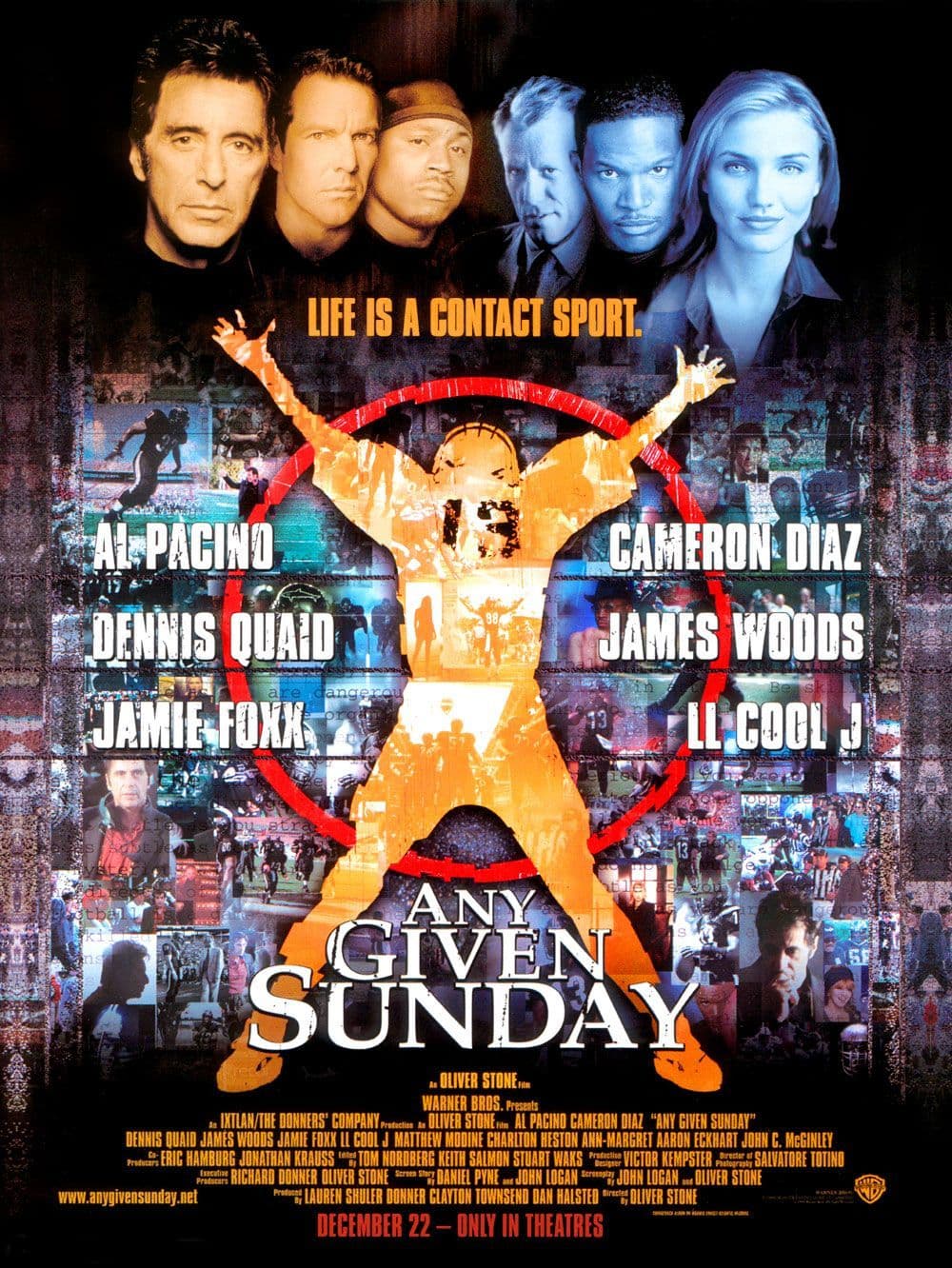
1999 // VHS
Any Given Sunday
Al Pacino's coach anchors the chaos of a film about football turned into product — loud, messy and oddly persuasive.