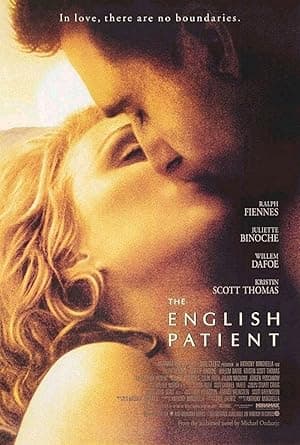
The English Patient
Maps, memories and a love that refuses to stop being a problem.
// The setup
PLAYBACK STARTED
There’s a film that asks you to sit with a man who can’t remember himself and, through the fragments he keeps, builds an entire private world worth caring about. Anthony Minghella’s The English Patient does this in grand, sometimes maddeningly patient strokes — and if you haven’t seen it since the 90s, it still has the nerve to make time feel like a character.
THE MOVIE
Count László de Almásy is still the reason this movie works
The English Patient asks you to meet a man who’s mostly ash and memory. We first encounter a badly burned stranger in a wartime field hospital, and the film stitches his life together not with a tidy résumé but with fragments — objects, flashes, shivered recollections — until a portrait of a life emerges.
That patchwork approach is Anthony Minghella’s deliberate move: the movie adapts Michael Ondaatje’s novel by refusing straightforward chronology and letting the past bleed back into the present. The inciting disaster is a plane crash in the North African desert that leaves the central figure physically destroyed and disoriented; what follows is an unravel-and-reassemble of identity.
At the centre of all this is Count László de Almásy, an elegant cartographer whose life had been folded around a forbidden love. The film’s heartbeat comes from that pursuit — a private map of desire that ends up redrawing who he thinks he is.
THE SETUP
The idea that sets The English Patient in motion
This isn’t a film that gets moving with car chases or a neat twist. Its premise is simple: a man’s splintered past is revealed against the quiet life of a monastery hospital, and those revelations carry consequences that go beyond private grief.
What structurally makes the story work is its device of small objects as memory keys. Almásy keeps a preserved copy of Herodotus where trinkets and mementos trigger episodes of memory, each item nudging the narrative into another flashback and another piece of the puzzle.
Those desert-spanning flashbacks — the travels, maps and the illicit relationship with Katharine Clifton — are deliberately placed against the cramped, domestic routines of the monastery: nurses, a sapper, an intelligence man. The contrast keeps the film emotionally anchored while the past keeps widening.
And then there’s the arrival of David Caravaggio, a Canadian intelligence operative whose presence shifts the monastery’s gentle rhythms into a subplot of investigation and retribution. It’s a smart pivot: private passion colliding with wartime politics.
THE CHARACTER
Why Count László de Almásy matters
Almásy isn’t memorable because he’s larger than life; he’s memorable because the film makes his life feel internally coherent even after it’s shattered. He’s introduced as an elegant, multilingual cartographer — someone whose work is literally about naming and ordering places — and that tendency to organise is what he tries to do with his own shattered identity.
The movie frames his primary motivation in plain, human terms: the pursuit and preservation of an illicit love. That love acts like a geological fault line under everything he does. It reshapes his loyalties, his travels and, eventually, how he answers the question of who he is.
Presenting him as the ‘English patient’ only after revealing the layers of his past lets the film probe questions of identity without sitting on a single, definitive answer. One moment he’s a mapmaker tracing deserts; the next he’s a man clinging to tokens that insist he once mattered.
Which, in narrative terms, is why he still holds the film together: the story isn’t just about what happened to him, it’s about how the memory of a single relationship can become the engine of a whole life.
UNDER THE SURFACE
The English Patient has more on its mind than the plot suggests
On the surface it’s a romance wrapped in wartime consequences. Underneath, it’s a meditation on memory and identity: who we are is what we carry, and the film keeps asking how reliable those carriers — letters, maps, the objects in a book — actually are.
Forbidden love is the obvious engine. But the film treats that love as more than melodrama; it’s the choice that forces moral and political reckonings. The personal and the geopolitical are braided, so private longing becomes implicated in larger wartime results.
War and imperialism aren’t background noise here. The desert journeys, colonial-era travel and the way borders are moved and redrawn make the setting more than pretty scenery; it’s the world that made those choices possible and meaningful.
And amid all this, care and mercy—small acts inside the monastery—offer a counterpoint. While memory and landscape expand outward, the hospital’s quiet tenderness keeps the story humane.
THE FILMMAKING
How The English Patient was put together
Minghella’s adaptation choice is crucial: rather than smoothing the novel into a single timeline, he keeps the fragments. The film’s elliptical, non-chronological editing allows memories to intrude on the present, which is how the book’s fractured narrative survives the move to screen.
John Seale’s cinematography gives those flashbacks a scale — the desert sequences are presented with a sweep that turns landscape into character. The film’s visual ambition carried recognition in the form of top awards for its photography.
Walter Murch’s edits and sound work help the whole thing hang together. The film stitches memory and presence through careful assembly, and Murch’s contributions — including using new digital tools in the film’s construction — were part of why the movie felt technically assured.
Finally, production design matters: the monastery and the desert both feel constructed with care, and the art direction won praise and awards. Those theatres of action — one intimate, one vast — are where the film stages its moral puzzles.
PRACTICAL EFFECTS
The effects work that gives The English Patient its physical personality
The film’s physical choices are quietly important because they make the injury and the world around it feel convincing. Prosthetic makeup for the severe burn effects was handled with input from Jim Henson’s Creature Shop, a practical solution that anchors the central figure’s condition.
Beyond makeup, the production’s commitment to shooting in real desert locations and building practical monastery sets gives the film a tactile quality. Those on-location desert shoots and hands-on set work help the film sell both its vastness and its intimacy.
It’s easy to overlook such craftsmanship inside an awards-season triumph, but these are the details that stop the movie from feeling like abstract pageantry and keep it feeling inhabited.
When a burned man mutters about a past life, you believe both the wound and the memory because the physical world around him feels lived-in.
PURE 80S
The English Patient could not belong to any other decade
This is very much a 1990s prestige project. Its life as a Miramax-presented film — a specialty distributor that championed arthouse-scale stories — places it squarely in that era’s independent/arthouse ecosystem.
Miramax picking up worldwide rights late in preproduction and folding the movie into a serious awards push is emblematic of how the decade’s distributors could turn literary adaptations into awards-season contenders.
That awards-season prominence became part of the film’s story: it wasn’t just a film people talked about for the narrative, but for how it was positioned and received in mid-90s cinema conversations.
So while its subject matter reaches back decades, its life as a prestige picture and the way it was presented to audiences belong to the 1990s moment.
THE LEGACY
Why The English Patient still matters
Part of the film’s continued conversation-starter status comes from its awards haul: it won nine Academy Awards, including Best Picture and Best Director, which cemented its place in 1990s awards history.
It also arrived as a high-profile screen adaptation of Michael Ondaatje’s novel, and that translation from page to screen generated a lot of critical and scholarly attention — not just to the film but to Ondaatje’s work as a novelist worth watching.
Institutions and retrospectives have kept returning to the film in lists and programmes, which is how it continues to be present in English-language film histories and discussions.
Put simply: it matters because it sits at the intersection of literary adaptation, awards-era prestige and a director who shaped several intense, character-driven films in the decade.
THE VERDICT
Does The English Patient still hold up?
Yes — if you want to be led by mood, memory and a story that trusts silence as much as speech. The film’s structure, which interleaves a dying man’s flashbacks with life in a field hospital, still rewards patient viewing: it asks you to assemble the man from what he kept, and that is a satisfying task.
The central moral knot — Almásy’s illicit affair with Katharine and the wartime consequences that follow — gives the film its necessary bite. Those choices ripple out in ways that keep the romance from being mere romance; the film insists the private is political.
Technically and artistically it carries weight: the director’s non-linear adaptation is supported by award-recognised photography, editing, production design and score, which together keep the film feeling deliberate rather than indulgent. The running time is long at 162 minutes, but the film fills that time with material that matters.
So should you watch it now? If you like films that favour reflection over quick payoff, that centre on a man trying to recover himself through objects and memory, you’ll find it worth the time. It’s a film that asks you to read maps as you watch — and, if you let it, it redraws the territory of what a love story can do.
Share this movie
// Keep watching
More movies from the 90s
If The English Patient is your kind of movie, there's plenty more on the shelves worth rewinding.
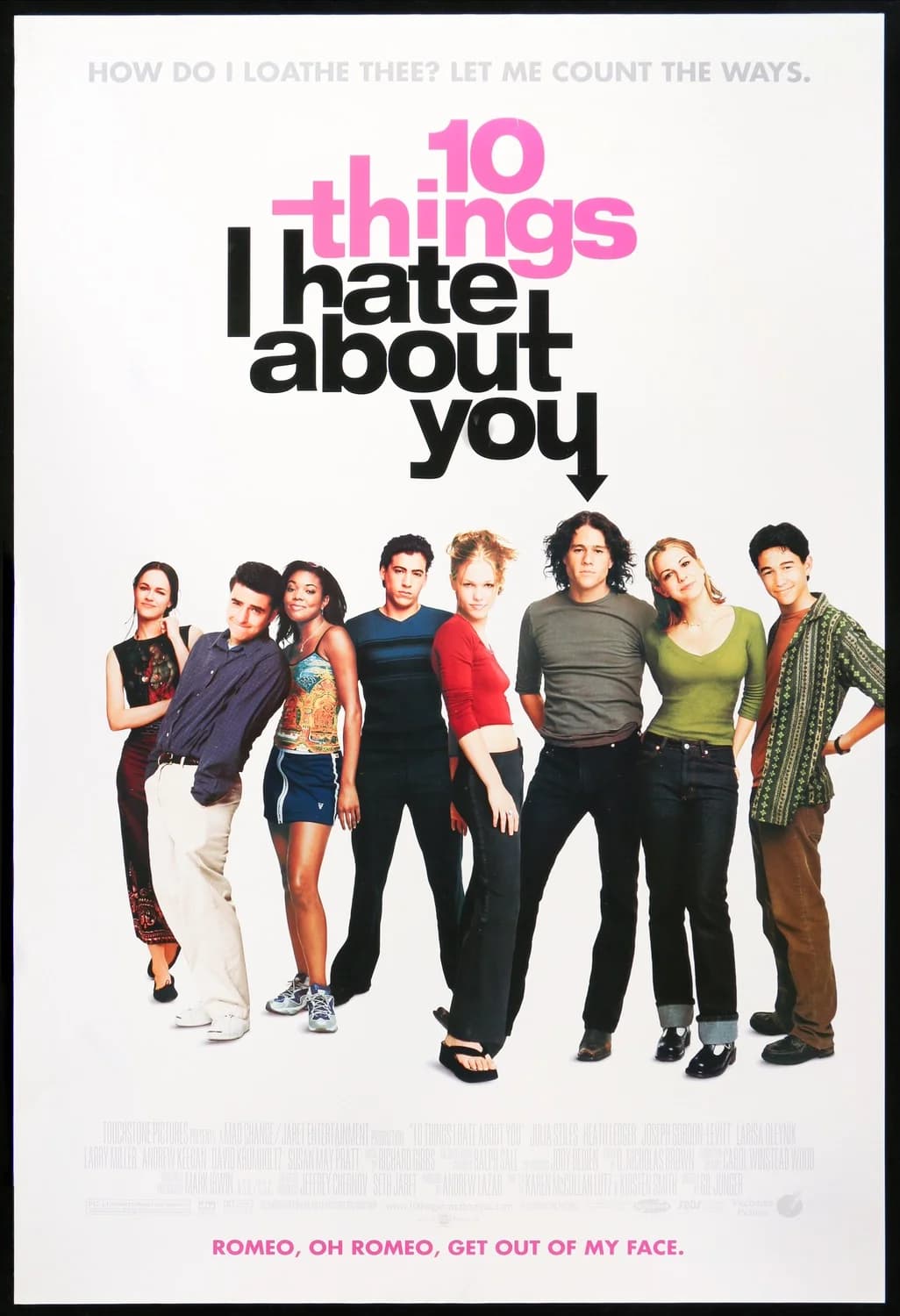
1999 // VHS
10 Things I Hate About You
Sibling rules, a rooftop serenade and one very stubborn Kat — Shakespeare in a school corridor.
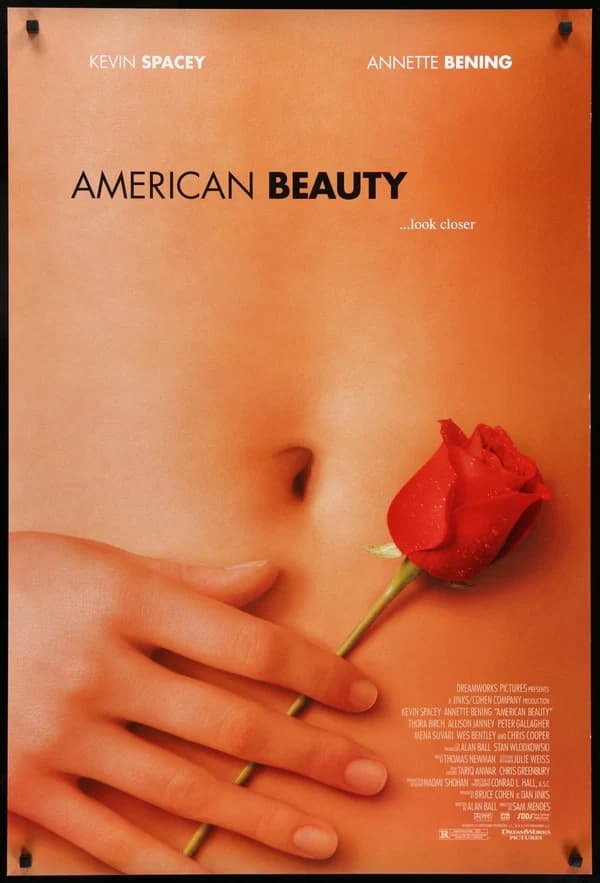
1999 // VHS
American Beauty
Lester Burnham, suburban rot and a midlife argument that still stings.
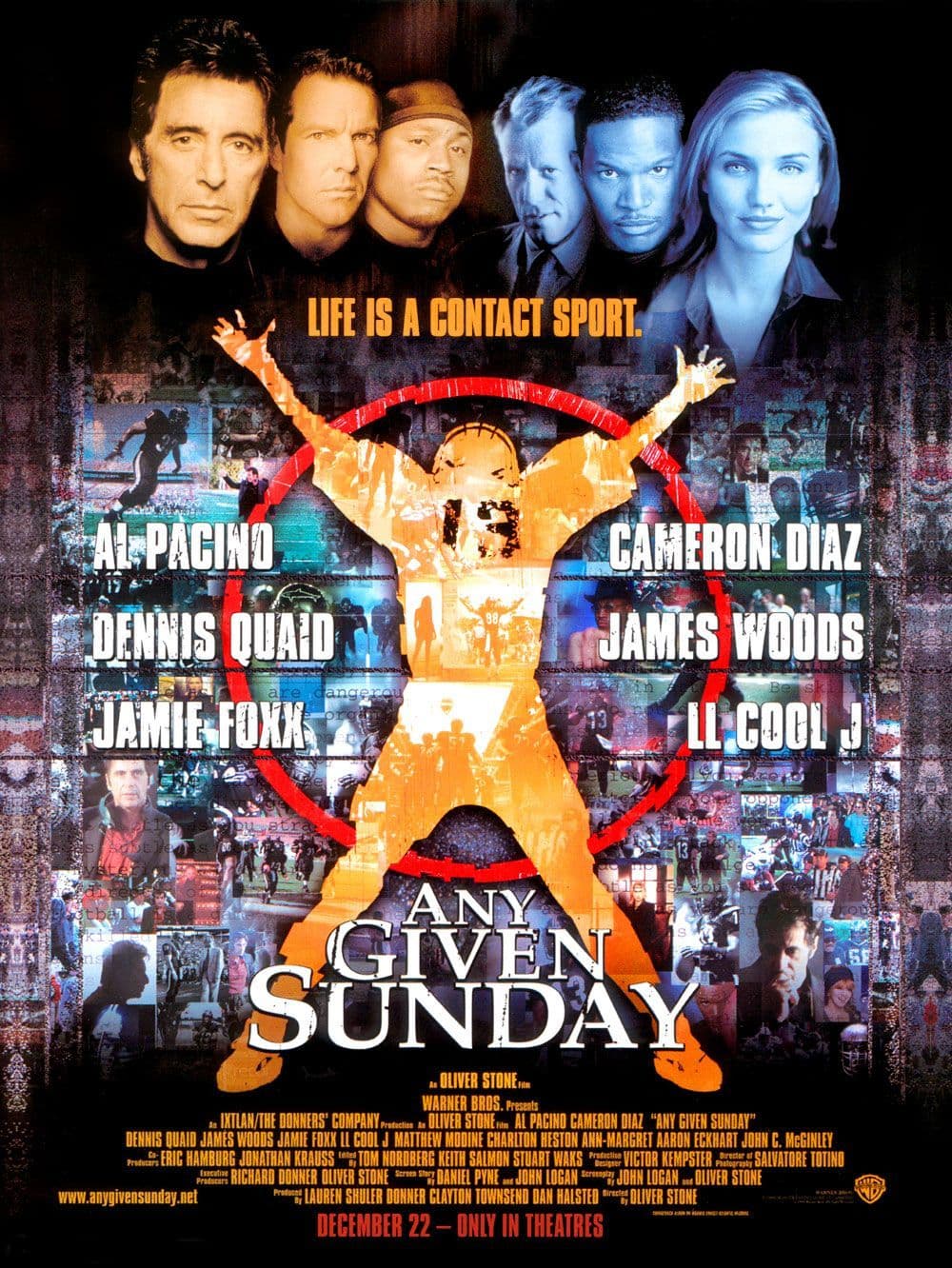
1999 // VHS
Any Given Sunday
Al Pacino's coach anchors the chaos of a film about football turned into product — loud, messy and oddly persuasive.