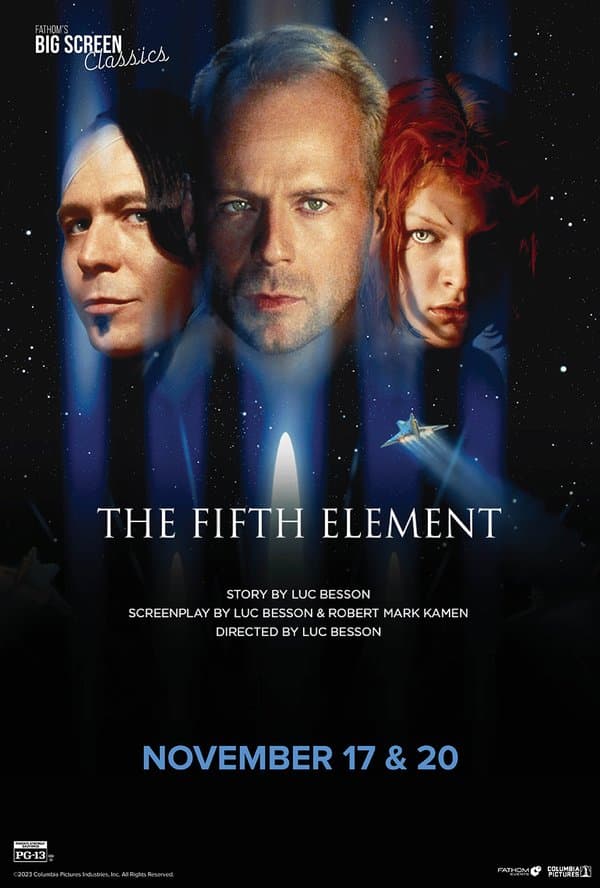
The Fifth Element
A pop-opera of space, love and chaotic style — and Korben Dallas is the quiet heartbeat in the middle of it all.
// The setup
PLAYBACK STARTED
Luc Besson built a science-fiction playground where opera, advertising and pulp adventure crash into each other. The Fifth Element still gets talked about because it has a proper centre — a pragmatic taxi-driver pulled into a cosmic emergency — and everything else spins around him with gleeful excess.
THE MOVIE
Korben Dallas is still the reason this movie works
You remember the film starting big: ancient aliens, an existential threat and a countdown ticking toward catastrophe. That mythic opening sets the bar — this isn’t just another space chase; it’s a classical good-versus-evil story dressed up as pop science fiction.
Then the film makes a simple, mischievous decision. The rescued, reconstructed humanoid who turns out to be the 'Fifth Element' escapes and, almost immediately, falls into a flying taxi. That collision — cosmic destiny meeting everyday transport — is the movie’s neatest trick.
Bruce Willis’s Korben Dallas arrives as a retired special-forces major who now drives that taxi. His pragmatic, reluctant-hero energy is the grind against which Luc Besson lets everything else whirl: opera, couture, gaudy spectacle and a lot of very loud enemies.
THE SETUP
The idea that sets The Fifth Element in motion
The engine of the story is very straightforward: a cosmic force of Evil is on its way and the planet needs the Fifth Element plus four elemental stones to stop it. That countdown gives the film momentum and a tidy goal.
Rather than a single McGuffin, the plot is a collection hunt — the stones are scattered, guarded or hidden, and one of them is even tied into an interstellar diva’s performance. It’s very much an adventure built from retrieval set-pieces.
What keeps the film from becoming pure treasure-hunt mechanics is how it alternates pulpy sequences — think flying-taxi chases and a showy luxury space-liner episode — with quasi-religious exposition from Father Cornelius about the Elements’ lore.
At the centre of that movement is Leeloo, the resurrected humanoid identified as the Fifth Element. Her presence turns a genre quest into something that feels both mythic and oddly intimate.
THE CHARACTER
Why Korben Dallas matters
Korben Dallas isn’t a demigod or a chosen-one archetype. He’s a bloke who used to be in the military and now ferries people around in a flying taxi. That ordinariness is the movie’s anchor.
What makes him memorable is what he brings to the chaos: a pragmatic reluctance. He’s pulled, almost against his will, into a planet-saving mission and his sensible reactions stop the film becoming self-parody.
Because he’s positioned as a straight line through the story, the louder elements — the couture, the operatic moments, the villainous scheming — have somewhere to bounce off. That contrast is why the spectacle has shape.
It helps that the film is explicit about who he is: Bruce Willis plays Korben Dallas, and the story keeps returning to him as the practical point of view while everyone else performs around that centre.
UNDER THE SURFACE
The Fifth Element has more on its mind than the plot suggests
On the surface it’s a countdown-action movie, but underneath it stages a simple moral drama: good versus evil presented in almost mythic terms. The cosmic threat is deliberately elemental — straightforward enough to be understood between set-pieces.
Crucially, the film turns love into an active force. It isn’t a metaphorical afterthought; human connection is presented as the decisive, redemptive power that matters to the outcome.
Then there’s the movie’s appetite for spectacle and media culture. From a flamboyant radio-turned-celebrity to an opera that holds part of the plot, the film treats media as both entertainment and narrative device — something that can amplify drama and distract in equal measure.
Finally, the story toys with otherness and integration. The resurrected Fifth Element is literally an outsider, and the film’s drama asks, in its own noisy way, how something alien becomes part of a world that didn’t expect it.
THE FILMMAKING
How The Fifth Element was put together
A lot of the film’s personality comes from how it looks. Thierry Arbogast’s photography was singled out at home — the cinematography won a César — and that polish gives even the daftest sequences a committed visual logic.
Production design is equally central. Dan Weil led a team that drew on European comic-art concepts to build dense, multi-layered cityscapes and vertical staging; the future feels crowded and deliberately designed rather than anonymous.
That combination — high-gloss cinematography and a distinctively European production design — is what makes the movie feel like a Luc Besson picture: stylised set-pieces with a particular visual rhythm.
Those choices aren’t just decoration. They create a stage where both spectacle and intimacy can happen within the same frame, from street-level chases to grand, operatic moments.
PRACTICAL EFFECTS
The effects work that gives The Fifth Element its physical personality
The film used three distinct teams to get physical: mechanical and pyrotechnic effects, creature prosthetics and visual effects were each handled by specialists so the world feels materially lived-in.
To sell those vertical city vistas and the flying-taxi chases the production mixed miniatures and physical models with bluescreen photography and early digital compositing — it’s a hybrid approach rather than a single trick.
Creature and prosthetic effects were deployed for the film’s non-human designs and mercenaries, which helps the alien elements feel tactile rather than entirely manufactured on a screen.
All of this adds up to a production that favours physicality: explosions, models and creatures give weight to scenes that might have been flimsy if executed only with digital techniques.
PURE 80S
The Fifth Element could not belong to any other decade
Although it premiered in 1997, the film sits squarely in the 1990s moment when big, effects-driven summer entertainments were the thing — except this was an ambitious French-financed production trying for global scale.
That cross-border ambition matters. With an international cast and U.S. distribution, the movie positioned itself as a European picture with worldwide reach, not a domestic art-house oddity.
At the same time it kept a distinctively European design sensibility. The visual approach and production choices place it among the era’s large-scale entertainments, but with a look and swagger that refuse to be purely Hollywood.
In other words: it’s of its time economically and technologically, but it still wears a continental design stamp.
THE LEGACY
Why The Fifth Element still matters
For a European-financed film it reached an unusual scale internationally, and that commercial footprint helped it stick around in people’s heads as more than a one-season curiosity.
The industry recognized its craft too: the production picked up major César awards for directing, cinematography and production design, and its visual-effects work won a BAFTA for special visual effects.
Beyond trophies, the combination of bold design, memorable set-pieces and hybrid effects built a long-term popular afterlife. It’s the sort of movie that resurfaces in discussions about 1990s VFX and stylised production design.
Put simply: awards and distinctive visual choices helped the film move from a big summer picture into a lasting pop-culture touchstone.
THE VERDICT
Does The Fifth Element still hold up?
Yes — but with a caveat. The film’s mix of pulpy set-pieces and mythic exposition is never shy. If you like your science fiction loud, theatrical and decisively non-subtle, it still delivers in spades.
What anchors the spectacle is the simple dramatic spine: Leeloo’s escape that drops her straight into Korben Dallas’s path and a ticking crisis that requires the elemental stones to be reunited. That structure gives the noise a purpose.
Critics at the time noticed that the movie needed a human centre; one review singled out Korben Dallas as providing life and depth to the proceedings. The practical decision to make him an everyman-turned-reluctant-hero is precisely what keeps the film working.
So watch it for the production design, the hybrid effects and the gleeful genre mash-up — and stay for the strange little human story at its core. It’s a big, brash space opera that still remembers to hold your hand when the choir starts.
Share this movie
// Keep watching
More movies from the 90s
If The Fifth Element is your kind of movie, there's plenty more on the shelves worth rewinding.
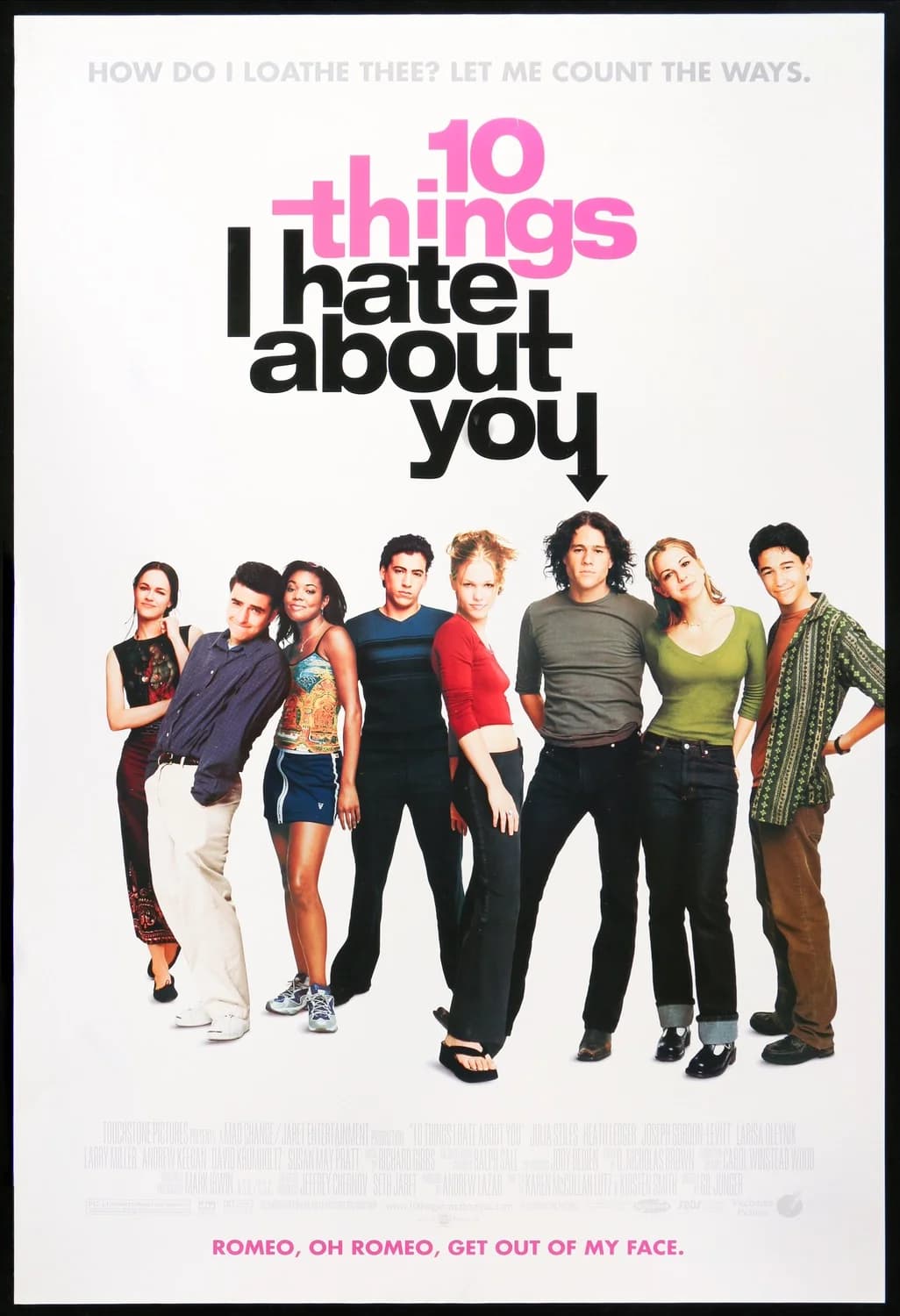
1999 // VHS
10 Things I Hate About You
Sibling rules, a rooftop serenade and one very stubborn Kat — Shakespeare in a school corridor.
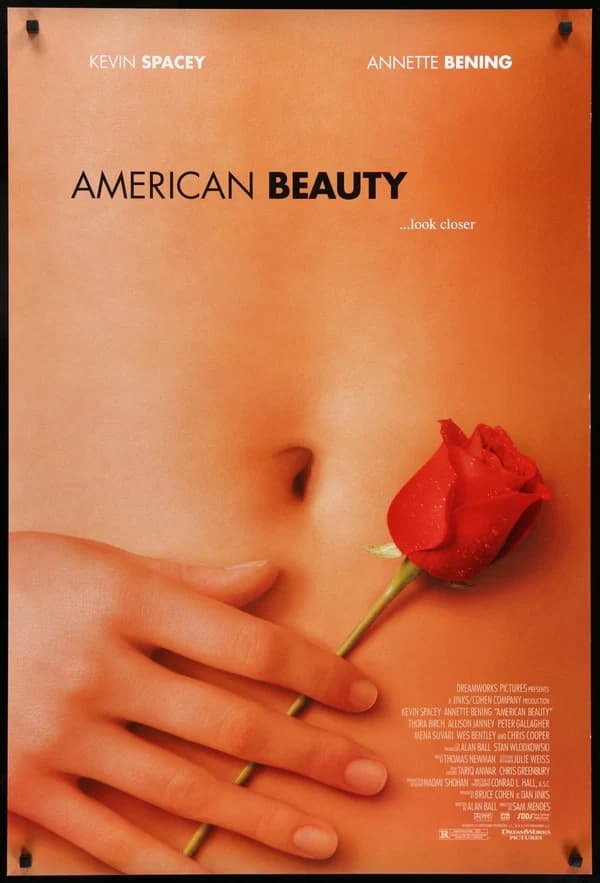
1999 // VHS
American Beauty
Lester Burnham, suburban rot and a midlife argument that still stings.
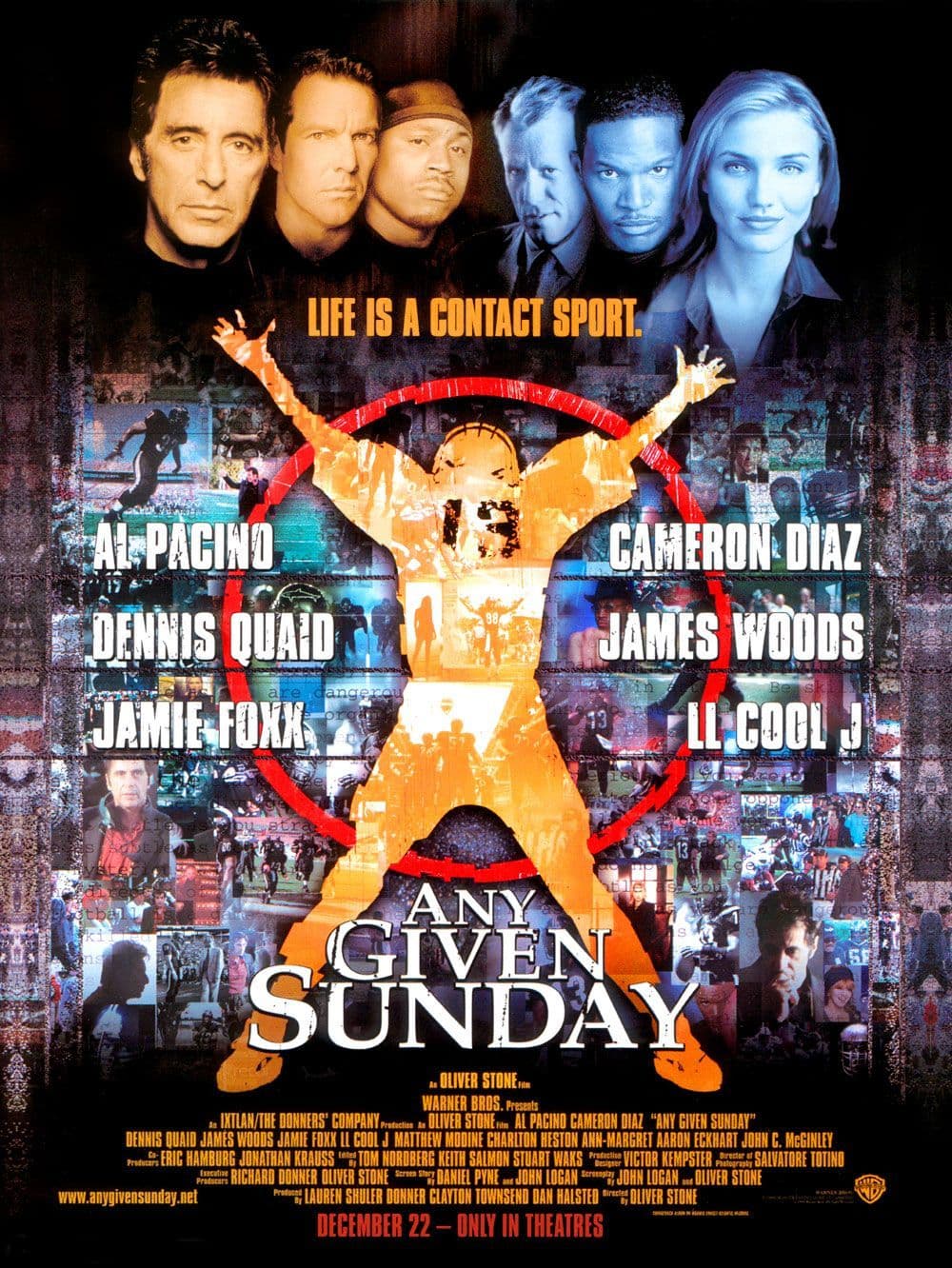
1999 // VHS
Any Given Sunday
Al Pacino's coach anchors the chaos of a film about football turned into product — loud, messy and oddly persuasive.