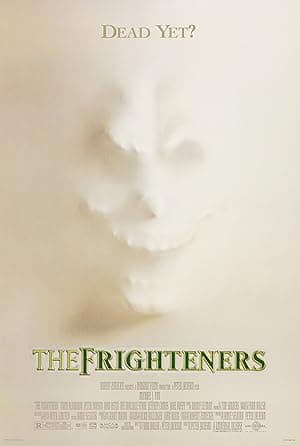
The Frighteners
Guilt, ghosts and a conman who actually sees the dead — Peter Jackson's offbeat haunted-house caper that still refuses to be tidy.
// The setup
PLAYBACK STARTED
Talk about The Frighteners and the conversation always circles back to Frank Bannister: a fraudster with a real sight, a grief he can't shake and a small army of spectral accomplices. It's a mid-90s oddball — part horror, part black comedy, very Peter Jackson — that stages cartoonish scares around a surprisingly stubborn moral centre.
THE MOVIE
Frank Bannister is still the reason this movie works
You could describe The Frighteners as a ghost comedy with a serial-killer subplot and a lot of digital trickery, but that would make it sound like a checklist. The honest shorthand is simpler: it’s Frank Bannister’s movie. He’s a widowed former architect who, after his wife's traumatic death, can see and talk to the dead — and he makes a living staging hauntings and charging people to clear them.
That setup gives Peter Jackson a character who’s two things at once: a showman exploiting grief and someone carrying genuine trauma. The film keeps those two truths in tension — Frank’s public fraud masks an ability no one else has, and that tension is what gives the jokes and scares something to bounce off.
Around him are the gears that make the picture feel both playful and strange: ghostly partners who double as comic relief and visual-effects challenges, a genre smorgasbord that dips into comedy, horror, mystery and thriller beats, and a director (Peter Jackson) following a darker art-house turn with a decidedly studio-sized project.
THE SETUP
The idea that sets The Frighteners in motion
At the practical heart of the film is a tidy gimmick: Frank stages hauntings with the help of three ghosts and then charges the living to 'solve' the problem. That mechanic gives the movie an easy way to switch between broad comedy and the logistics of its visual effects work — ghosts as props and partners.
Trouble arrives when a Grim Reaper–like presence begins killing living townspeople by inducing sudden heart failure and leaving victims marked with sequential numbers. The violence is real, the stakes much higher, and the narrative pivots from cons to a proper mystery as Frank finds himself implicated.
That implication matters. The plot sets up a procedural dynamic: Frank must both try to stop the killings and answer to law enforcement suspicion. It turns his hustling trade into an inconvenient liability — someone who pretends to talk to the dead is suddenly the prime suspect when the living start dropping dead.
Jackson and Walsh also use a near-death device — a medically induced slow-heart state — as a plot tool to probe the line between life and death. It’s a practical way for the story to explore spirit agency without resolving every supernatural question up front.
THE CHARACTER
Why Frank Bannister matters
Frank is memorable because he’s contradictory in ways that keep the movie interesting. On paper he’s a confidence man: a charlatan who stages hauntings and sells peace of mind. But he’s also someone carrying a traumatic past and a real gift. That tug-of-war — profiteer vs. haunted survivor — is what the film keeps returning to.
You can follow the plot as a mystery or a string of comic set-pieces, but the emotional weight is always Frank’s need to atone. His guilt and search for redemption give his borderline cynical trade a believable human cost: he isn’t just making money, he’s trying to live with a loss that never stopped talking to him.
The living characters matter to that balance. Lucy Lynskey functions as Frank’s moral anchor and practical ally; as a physician she becomes crucial to the movie’s later turns and the device-driven exploration of life and death.
And then there are the ghost assistants — Cyrus, Stuart and the Judge — who aren’t background effects. They act as comic counterpoint and real partners in Frank’s schemes, which forces the story to treat effects-driven characters as part of the principal cast rather than throwaway spooks.
UNDER THE SURFACE
The Frighteners has more on its mind than the plot suggests
Under the jokes and the set-piece scares the movie is quietly preoccupied with guilt and the search for redemption. Frank’s hustle is easier to forgive if you see it as someone fumbling toward atonement rather than pure cynicism.
That theme ties neatly to the film’s repeated interest in exploitation versus sincerity. Frank’s staged hauntings are an explicit exploitation of other people’s grief — he charges for resolution — while the Reaper’s attacks are plainly genuine harm. The contrast keeps the audience wary: which is worse, a con that comforts or a supernatural cruelty that destroys?
The Frighteners also enjoys tugging at the seam between life and death. By introducing a medically induced near-death state as a plot device, the story asks what responsibilities come with seeing the dead and whether the living can safely meddle with the border between worlds.
Finally, there’s a recurring friction between truth and performance. Frank’s public persona is a performance that hides a real sight; the film toys with the idea that pretending can both heal and deceive, depending on who wears the mask.
THE FILMMAKING
How The Frighteners was put together
Contemporary critics tended to praise the film’s direction and its effects while grumbling that Jackson sometimes leaned too heavily on those effects at the expense of tonal control. In other words, people admired the ambition even when they felt the movie didn’t always know which hat to wear.
That criticism — tonal unevenness paired with technical bravado — is useful rather than dismissive. It explains why the picture can feel exhilarating in one scene and a touch overcooked in the next: the filmmaker is juggling comedy, horror and procedural beats, and the balance occasionally slips.
Seen another way, those choices are the film’s personality. Jackson was moving from intimate, serious work into a broader, effects-forward mode, and the seams of that transition are visible on screen.
PRACTICAL EFFECTS
The effects work that gives The Frighteners its physical personality
Weta — then a recent startup in the effects world — supplied a mixture of CGI, scale models and prosthetic makeup to realise the film’s ghosts and some set work. It wasn’t an either/or approach: practical techniques sat alongside computer work.
The production deliberately filmed actors and ghost performances as separate elements and composited them in post. That recurring technique shaped how scenes were staged: ghosts were treated as discrete pieces that could be moved, layered and mixed with live action in post-production rather than being simple camera tricks.
For the film’s Reaper creature the crew experimented with physical approaches — puppet and costumed-man tests — before largely settling on computer animation for the final forms. The process shows the team trying different practical routes before choosing the solution that best served the story and the available tech.
All of that contributes to the movie’s tactile personality: it’s not pure CGI fantasy nor purely analogue trickery, but a hybrid that was typical of mid-90s genre filmmaking trying to stretch new digital tools while keeping practical craft involved.
PURE 80S
The Frighteners could not belong to any other decade
This is a very mid-90s film in one key respect: it was Peter Jackson’s first major Hollywood-financed studio picture, arriving at a moment when digital visual effects were moving from novelty to central storytelling tool.
It asked a lot of its effects house. Contemporary reports put the workload at roughly 570 VFX shots — an unusually large number for a genre picture of that era — and it became a significant early project for Weta’s digital team.
That combination — an auteur moving into studio scale plus a small effects company pushing into heavy digital work — captures a transitional moment in 1990s cinema where taste for ambitious, effects-driven genre projects was growing.
In short: The Frighteners sits at a crossroads, both a product of its time and an example of the era stretching its technical and narrative ambitions.
THE LEGACY
Why The Frighteners still matters
One practical reason The Frighteners is still talked about is its role in Weta’s story. The film expanded the company’s digital staff and experience, a formative step that helped the studio scale up for later projects.
It also collected genre nominations at awards bodies — recognising its special effects, makeup and music — and has maintained a modest cult following with periodic critical reappraisals. It never became a blockbuster legend, but it kept a foothold where enthusiasm matters.
There’s a showbiz footnote worth mentioning: Universal moved the theatrical release into a July 19, 1996 summer slot after seeing an early cut, which meant production and post schedules were adjusted to meet that window. It’s the sort of studio decision that shows how the film was being positioned as a summer genre play.
THE VERDICT
Does The Frighteners still hold up?
Yes — but with a rider. The Frighteners remains worth watching for the particular marriage of character and concept it builds around Frank Bannister: a widower who actually sees ghosts, who employs spectral partners to stage hauntings, and who must confront a very real, very lethal supernatural force that starts killing townspeople in sequence.
That central mystery — a Grim Reaper–like entity causing sudden heart failure and marking victims — gives the story real teeth and creates a procedural tension where Frank is both sleuth and suspect. The use of a near-death device to probe the boundary between life and death gives the film a concrete way to explore its looser metaphysical ideas.
Technically and historically it’s interesting too: a 1996 studio picture directed by Peter Jackson that leaned heavily on visual effects (a heavy workload for its time) and showcased Weta’s growing ambitions. Contemporary response was mixed-to-positive, with praise for direction and effects alongside notes about tonal unevenness — criticism that still explains some of the film’s jagged pleasures.
If you like your genre films a little messy, adventurous and populated by characters who aren’t all one thing, The Frighteners still pays off. It’s a haunted-house caper with a serious heart — or at least a very haunted one — and it’s worth revisiting for the way it lets a showman try to buy his own absolution while everyone else argues over the bill.
Share this movie
// Keep watching
More movies from the 90s
If The Frighteners is your kind of movie, there's plenty more on the shelves worth rewinding.
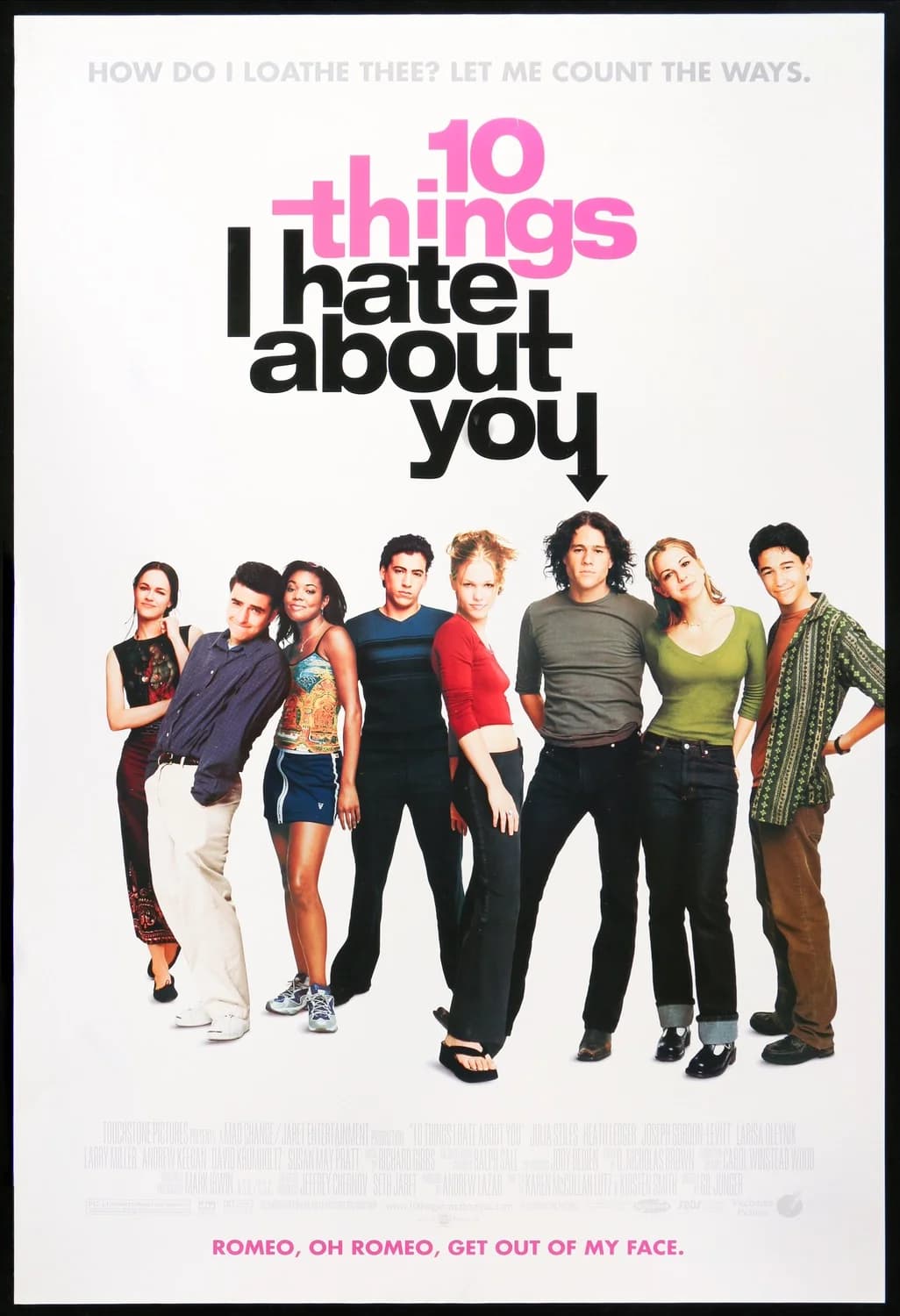
1999 // VHS
10 Things I Hate About You
Sibling rules, a rooftop serenade and one very stubborn Kat — Shakespeare in a school corridor.
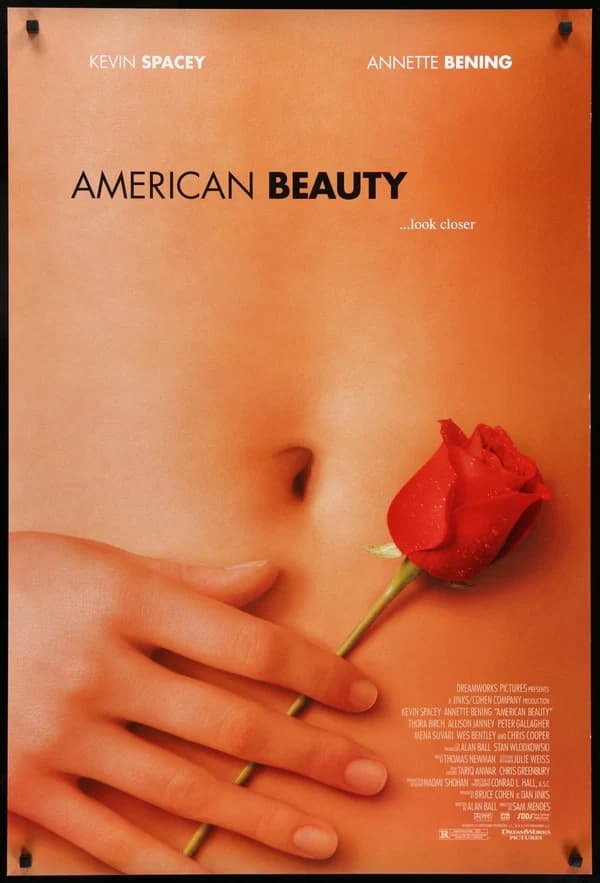
1999 // VHS
American Beauty
Lester Burnham, suburban rot and a midlife argument that still stings.
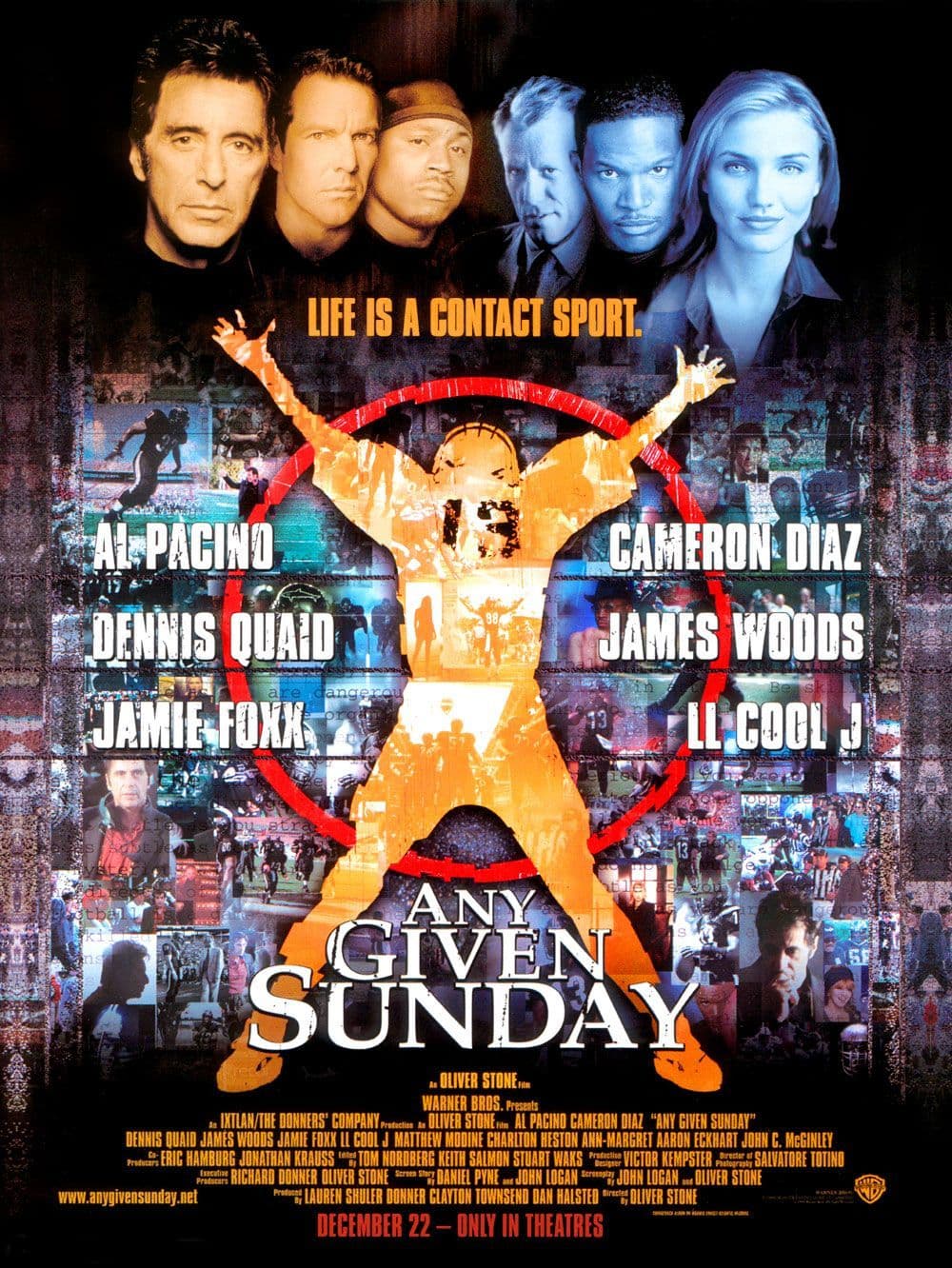
1999 // VHS
Any Given Sunday
Al Pacino's coach anchors the chaos of a film about football turned into product — loud, messy and oddly persuasive.