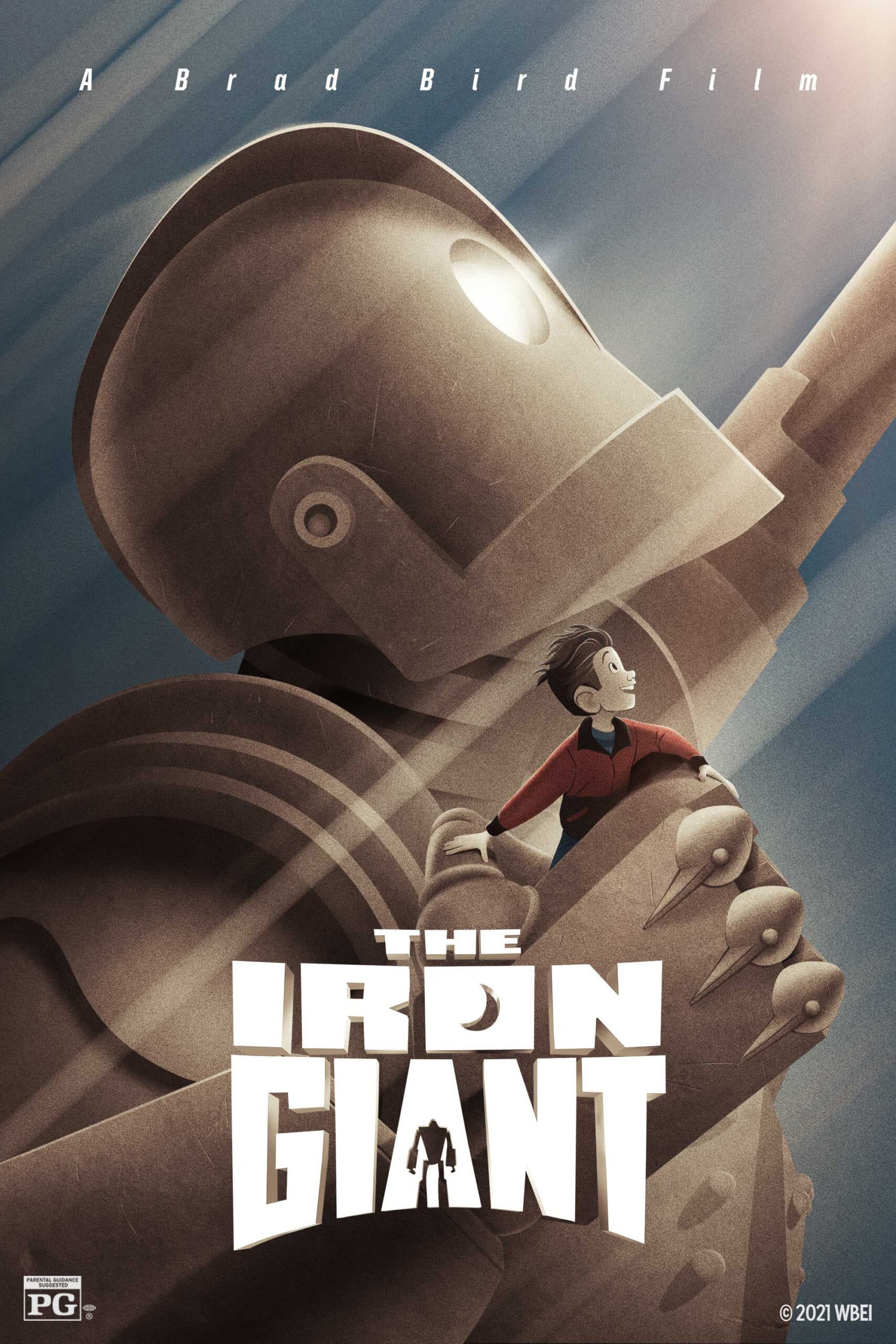
The Iron Giant
A boy teaches a giant to be human — and asks the rest of the world to behave like one.
// The setup
PLAYBACK STARTED
There are fistfuls of reasons people keep returning to The Iron Giant: the Cold War as backdrop, the thrilling idea of a giant robot in a small town, the clever blend of hand-drawn characters with a CGI colossus. But the smartest answer is simpler — it’s Hogarth Hughes. The nine-year-old’s curiosity and decency steer the whole picture, and that friendship still makes the film worth watching.
THE MOVIE
Hogarth Hughes is still the reason this movie works
The film drops us into October 1957, when an enormous metal being from space falls near the little coastal town of Rockwell, Maine. That is the incident that gets everything moving, but it’s not what the movie is about.
What the movie is about is a curious nine-year-old called Hogarth Hughes discovering the Giant and, crucially, choosing to try to understand him. Hogarth’s empathy is the engine: he teaches the robot how to be human as much as he learns from it.
Brad Bird’s direction keeps that human connection at the centre. The Iron Giant is a short, lean eighty-six-minute film that treats identity and moral choice — the idea that the Giant’s nature is what he decides to be — as its emotional backbone.
THE SETUP
The idea that sets The Iron Giant in motion
At its simplest the plot sets up a triangle: Hogarth and his adult ally Dean shelter and humanise the Giant, while Kent Mansley and the U.S. government react with suspicion and escalating force. That clash — friendship versus institutional paranoia — supplies the movie’s tension.
The film refuses to drown the Giant in exposition. We see what he does: an appetite for metal, the uncanny ability to mend himself, curiosity about people. Those practical details are the storytelling shorthand that lets the relationship carry the emotional weight.
Keeping the Giant’s origins vague is a deliberate move. The film borrows its seed from Ted Hughes’s novel but focuses the screen story on the boy–robot bond rather than an exhaustive backstory.
Credit on the page goes to Tim McCanlies for the screenplay and to Brad Bird for the story — that division helps explain why the picture feels both tightly plotted and intimately focused on character.
THE CHARACTER
Why Hogarth Hughes matters
Eli Marienthal’s Hogarth is the practical heart of the film: a kid who leans toward curiosity and sympathy rather than fear. Those qualities aren’t decorative — they actively teach the Giant how to behave.
Hogarth’s decisions move the story. When he hides, explains, or scolds, he’s not just being cute: he’s modelling human behaviour for a creature that learns by imitation. That’s why the Giant’s moral learning reads as believable rather than invented.
Hogarth also anchors the coming-of-age thread. The film uses his friendship with the robot as a series of small moral lessons, where the boy’s choices register as real growth.
And the presence of his mother, Annie, keeps Hogarth tethered. She’s the worried practical parent in the background, reminding us Hogarth’s actions have adult consequences even in a family film.
THE PERFORMANCE
Why Vin Diesel's performance matters
Vin Diesel’s casting as the Giant was noticed from the start. Contemporary reviewers singled out the voice work as an important part of the film’s appeal, and the ensemble casting received praise.
That matters because the Giant’s voice is a framing device: it’s sparse, resonant and set against a child’s chattiness. The contrast helps sell the Giant as something both enormous and oddly vulnerable.
The broader point critics made was about the ensemble. The decision to surround the Giant’s voice with a strong group of supporting parts gave the film emotional texture beyond its central gimmick.
So, when you watch, listen to how the voice choices shape tone. Criticism at the time identified the cast as a clear strength — and that remains a persuasive claim.
UNDER THE SURFACE
The Iron Giant has more on its mind than the plot suggests
On the surface it’s an adventure about a boy and a robot. Deeper down the film keeps asking: is identity inherited or chosen? The Giant repeatedly faces that question, and the movie answers by emphasising choice.
Set in 1957, the film makes institutional fear a character in itself. Kent Mansley and the government apparatus translate Cold War suspicion into real danger for anything unfamiliar — including a benign robot.
The friendship between Hogarth and the Giant doubles as a moral curriculum. Hogarth’s patient insistence that the Giant can be more than a weapon is the film’s way of showing how a child’s ethics can be sharper than an adult’s reflexes.
And that anti-weaponization line is explicit: the story makes clear that power without choice is dangerous, and that nonviolence must be chosen and taught — not simply assumed.
THE FILMMAKING
How The Iron Giant was put together
Brad Bird ran the show with a storyboard-led approach, using digital tools as a planning method. The work had the feel of a director who sketches everything out and then translates those sketches into animation choices.
The Giant didn’t arrive fully formed on paper: early design work came from people like Joe Johnston, while Mark Whiting provided production-design oversight. Those contributions helped settle the Giant’s silhouette and the picture’s visual logic.
Using storyboards as a core planning device kept the film narratively tight. You can see the benefit on screen: scenes read clearly because they were thought through in sequence long before animation began.
In short, the film’s structure comes from methodical planning — a careful route from idea to finished scene under Bird’s direction.
PRACTICAL EFFECTS
The effects work that gives The Iron Giant its physical personality
The Giant is a CGI creation while the human characters are hand-drawn, but the team worked deliberately to collapse that gap. The production developed pipeline and shading techniques specifically so the robot wouldn’t look like a foreign element on the page.
Animators deliberately put the Giant onto 'twos' at times — a traditional animation rhythm — and introduced a subtle line-wobble to the CGI. Those decisions make the robot read as part of the same hand-crafted world as the drawn people.
The effect is practical in the sense of careful craftsmanship: it’s not the raw novelty of CGI that matters but the choices made to make it feel familiar to traditional animation.
The result is a Giant that behaves as if he belongs in the same frame as Hogarth and Dean, which helps the emotional beats land without the audience being distracted by a jarring visual mismatch.
PURE 80S
The Iron Giant could not belong to any other decade
This is a late-1990s film made at a moment when Warner Bros. Feature Animation was under commercial pressure. That context mattered: the studio’s precarious position shaped how the film was produced and how tightly the team had to defend their creative choices.
Being a 1999 production helps explain some of the film’s lean economy and why its storytelling choices — short runtime, focused relationships — feel purposeful rather than indulgent.
The era also meant the film was swimming against a tide of industry uncertainty about how to balance traditional techniques with new digital tools, which helps explain the hybrid animation approach.
So while the story is set in the 1950s, the film’s personality is very much a product of its late‑1990s production circumstances.
WATCHING IT NOW
What has aged — and what hasn't
The movie’s reputation has grown over time. Retrospective coverage, re-releases and home‑video play helped reappraise a picture that did only modest business in cinemas at first.
The reason for that reappraisal is straightforward: the central friendship and the message that ‘you are what you choose to be’ remain emotionally clear. Those elements still hit because they are built into the characters, not tacked on as slogans.
Commercially, the film’s original theatrical run was modest, but later home‑video and revival screenings expanded its audience — which is part of why it feels more visible now than it did at the box office.
Even the 2015 Signature Edition, with a small amount of newly supervised animation, served to remind viewers that this is a film people want to revisit rather than forget.
THE LEGACY
Why The Iron Giant still matters
Part of the film’s afterlife owes to how it has been rediscovered. A supervised Signature Edition and one‑off screenings helped bring it back into conversation, complete with a few newly animated moments.
Critically and publicly the film has been reappraised on home video and through retrospectives, and it often appears in pieces that treat it as a modern animated classic — a status driven more by steady appreciation than by a big opening weekend.
The commercial story matters to that legacy. Its modest theatrical performance left the film to build reputation slowly through television, video and revival screenings rather than through immediate mainstream success.
So the film’s place in people’s minds is the product of gradual rediscovery: it matters because viewers kept returning to the friendship at its centre and found it worth recommending to others.
THE VERDICT
Does The Iron Giant still hold up?
Yes. The Iron Giant remains a compact, emotionally honest family film whose central relationship still feels immediate. Hogarth’s curiosity and empathy — the choices he makes for the Giant — are the film’s unshakable anchors.
The plot’s mechanics (the Giant’s metal appetite and self‑repair, Hogarth’s attempts to humanise him, and the government’s paranoid response) still produce legitimate tension without cluttering the story. The film knows what it’s about and doesn’t waste time.
At eighty‑six minutes, it’s lean where modern features can be indulgent. That brevity keeps the emotional beats sharp and prevents the film’s themes from becoming preachy.
If you’re deciding whether to watch: go for the friendship first and the spectacle second. The Iron Giant still asks the useful question — who do you choose to be? — and it answers with far more heart than noise.
Share this movie
// Keep watching
More movies from the 90s
If The Iron Giant is your kind of movie, there's plenty more on the shelves worth rewinding.
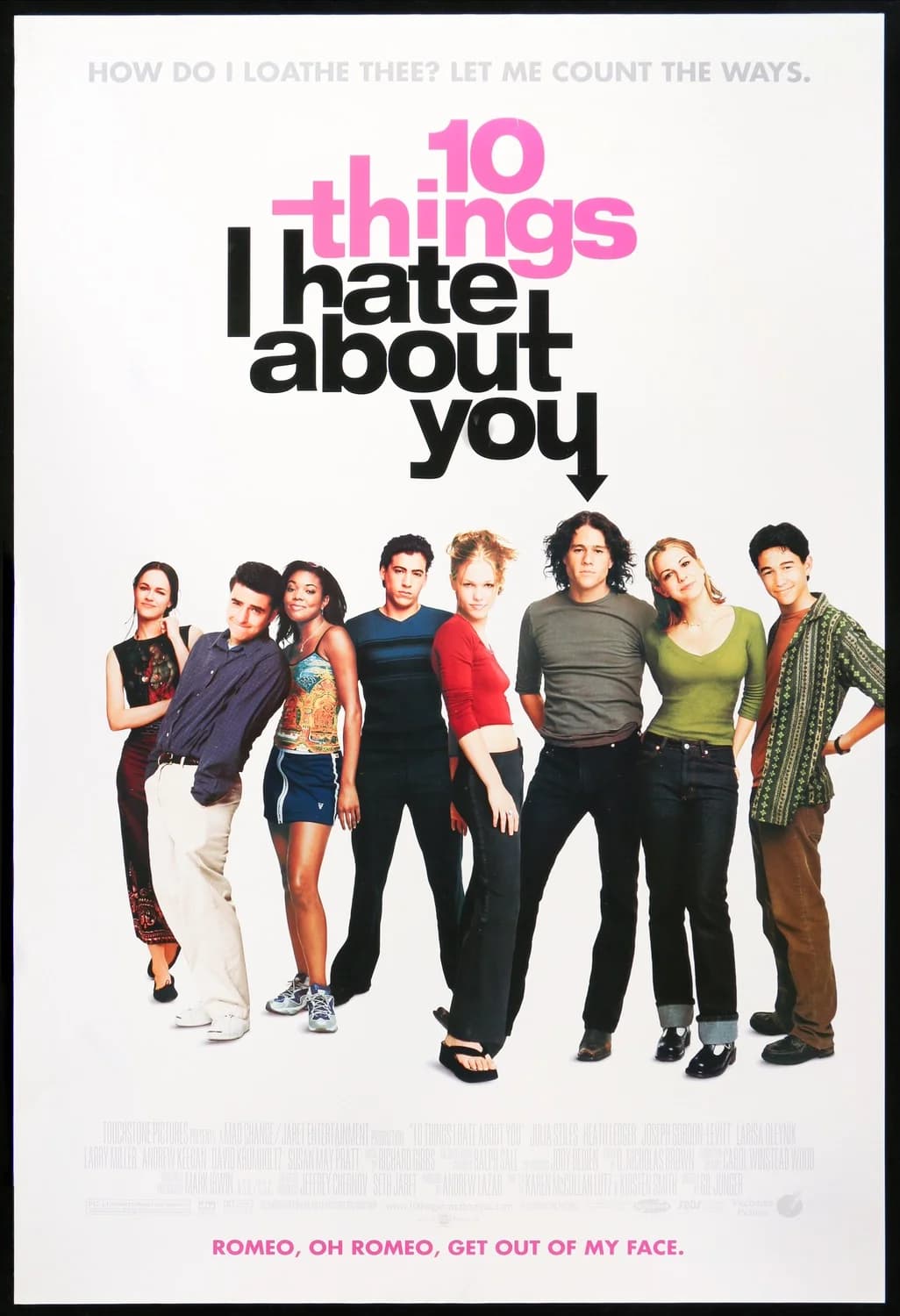
1999 // VHS
10 Things I Hate About You
Sibling rules, a rooftop serenade and one very stubborn Kat — Shakespeare in a school corridor.
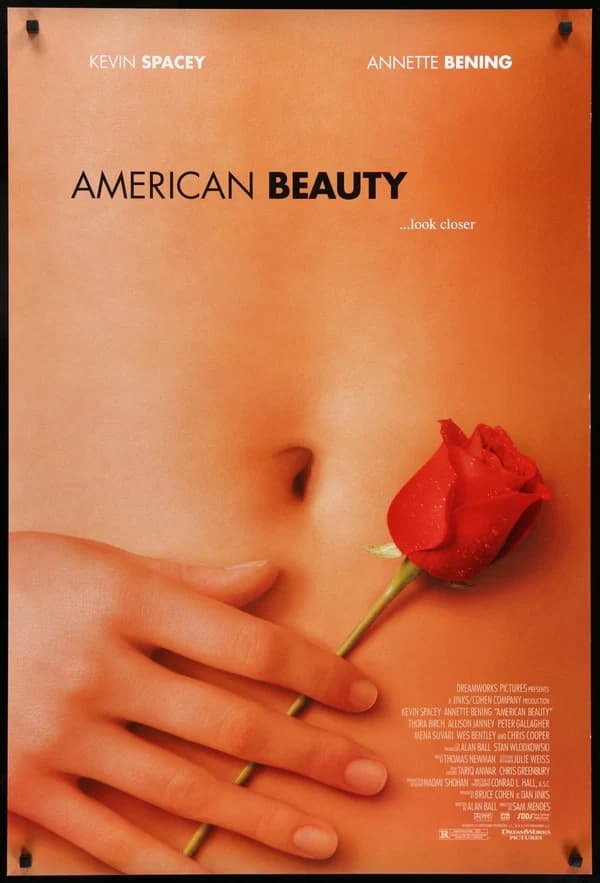
1999 // VHS
American Beauty
Lester Burnham, suburban rot and a midlife argument that still stings.
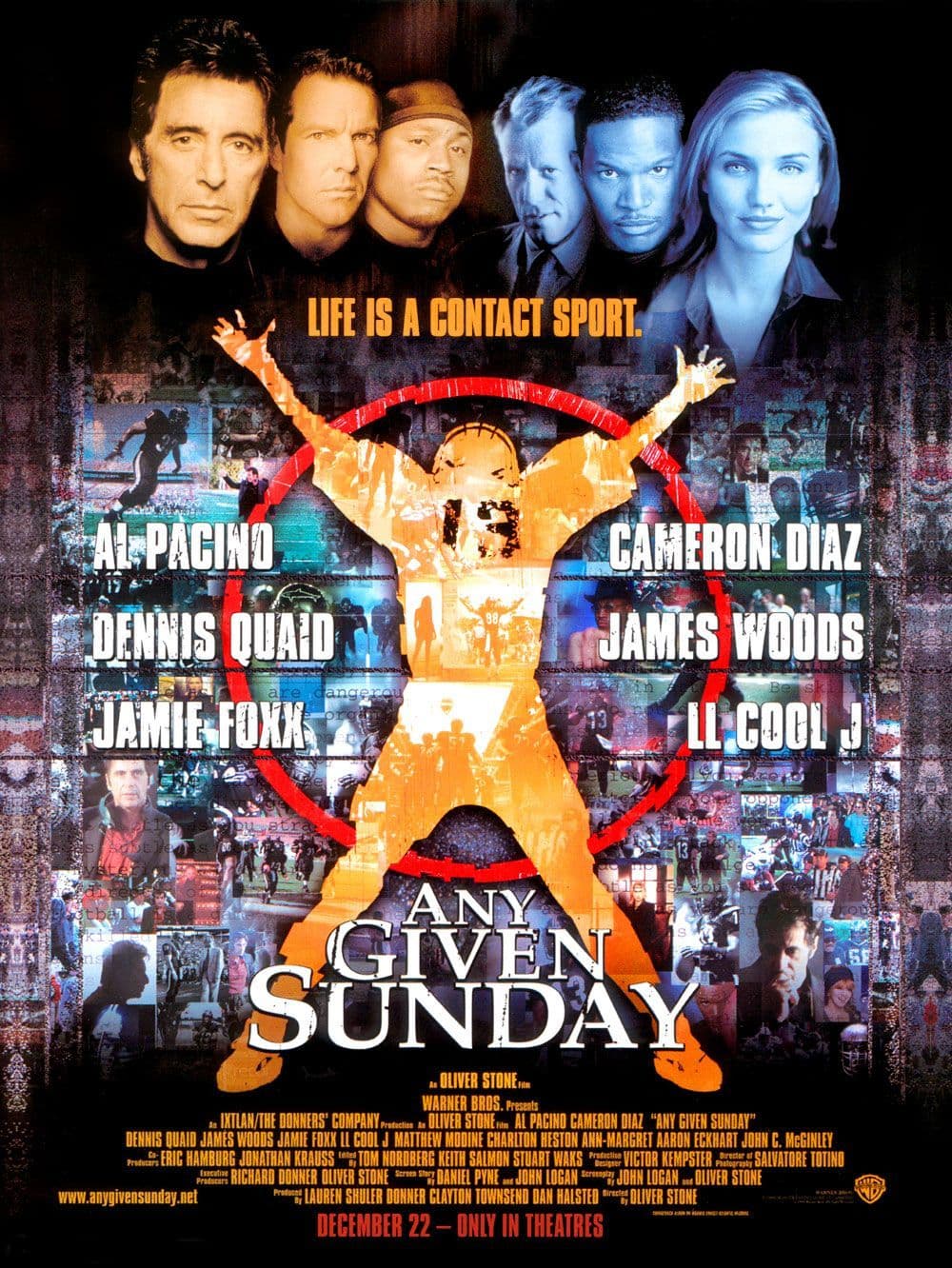
1999 // VHS
Any Given Sunday
Al Pacino's coach anchors the chaos of a film about football turned into product — loud, messy and oddly persuasive.