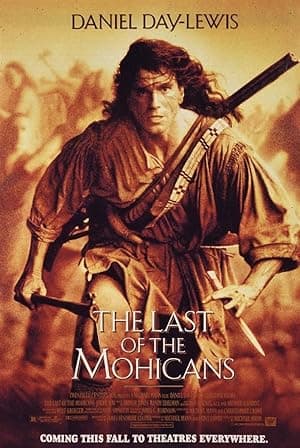
The Last of the Mohicans
A frontier romance, a personal revenge plot — and Hawkeye standing between two worlds.
// The setup
PLAYBACK STARTED
There are movies you remember for a shot, a tune or a single performance; Michael Mann’s The Last of the Mohicans keeps coming back to one figure. Hawkeye — Nathaniel Poe — is the movie’s pivot: a man adopted into Mohican life who ends up escorting the Munro sisters through a war that unravels whole communities. Watch it again and you realise Mann built an old-fashioned rescue story around questions of belonging, loss and justice, then dressed it in some of the best cinematography and music of the early 1990s.
THE MOVIE
Hawkeye / Nathaniel Poe is still the reason this movie works
Forget talk of sweeping epics for a moment: what sticks from The Last of the Mohicans is a man who belongs to two worlds and is forced to choose one. The film follows Hawkeye — Nathaniel Poe — and the Mohican men as they shepherd Colonel Munro’s daughters through territory riven by war, and that split identity sits at the movie’s emotional centre.
That split means the action never feels like spectacle for spectacle’s sake. The rescue-and-escape structure is driven by an ambush that pushes Cora and Alice Munro into Hawkeye’s care, and every pursuit or siege that follows tests where loyalties land.
Michael Mann directed the 1992 film, and he turned this historical melodrama into something immediate: a compact, 112-minute fusion of romance, personal justice and wartime displacement where one character’s choices hold everything together.
THE SETUP
The idea that sets The Last of the Mohicans in motion
At its simplest: it’s 1757, the French and Indian War is tearing the frontier apart, and a destroyed British escort leaves two sisters vulnerable. That single violent moment launches the whole film — and hands Cora and Alice over to Hawkeye and the Mohicans for protection.
From there Mann and the screenplay stitch together military pressure and personal vendettas. The wider war — British and French forces with Native allies — looms constantly, but it’s Magua’s private revenge against Colonel Munro and his family that personalises the stakes.
Rather than a continuous chase, the film moves between set-pieces — pursuits, ambushes, river and fort sequences — each one forcing the small group into a new scrape and ratcheting up both military and intimate tension.
The screenplay leans on Cooper’s novel but also acknowledges the 1936 film’s structure for some of its beats, so the story feels like a reworking that keeps the basic rescue arc while sharpening the movie’s cinematic momentum.
THE CHARACTER
Why Hawkeye / Nathaniel Poe matters
Hawkeye is the film’s fulcrum because he makes the abstract idea of cross-cultural belonging into something lived and consequential. He isn’t a symbol on a hill: he’s a frontiersman adopted into Mohican life, and that adoption puts him between duty to a people and ties to his birth culture.
That split explains why his relationship with Cora Munro matters beyond romance. Their connection becomes a test of how someone can belong — or fail to — when nations and identities are being redrawn by war.
It’s also why the rescue story feels charged: Hawkeye isn’t just escorting two vulnerable women through the woods. His choices in that fight reveal where allegiance and compassion eventually land.
As a character, he turns a period adventure into a moral hinge: you watch the action, but you stay for the consequences of belonging in a world being displaced by colonial conflict.
THE PERFORMANCE
Why Daniel Day-Lewis's performance matters
Contemporary reviews and publicity made a point of Daniel Day-Lewis’s committed, low-key physicality in the role. That matters here because Hawkeye is less a talker and more a presence whose choices are read in posture and action.
Those notices also highlighted his screen presence and the chemistry reported with Madeleine Stowe. In a film that relies on tight emotional turns between a small cast, that chemistry is what lets the romance feel like a credible tug on both characters’ loyalties.
Describing the performance as important isn’t the same as turning it into a museum piece: the point is pragmatic. The role needed an actor who could make silence loud, and the coverage at the time singled that out.
Put simply: the way Hawkeye is played gives the story someone believable to carry its conflicts — personal and political — through the movie’s set-pieces.
UNDER THE SURFACE
The Last of the Mohicans has more on its mind than the plot suggests
Under the muskets and river chases, the film keeps returning to displacement — the idea that colonial conflict doesn’t only redraw borders but ruins whole communities and ways of living. That sense of loss threads through every pursuit and fallback.
Cross-cultural belonging is the other quiet engine. Hawkeye’s adoption into Mohican life and his romance with Cora make questions of identity intimate: can loyalty be chosen, inherited or earned when the world is collapsing around you?
Then there’s revenge. Magua’s personal vendetta pushes the plot’s momentum and gives the larger war a face. Personal justice here is a counterpoint to military justice; it turns national conflict into very human, very raw resentment.
Taken together the movie’s themes give its melodrama some moral weight: it’s not just who survives the siege, but what surviving means when people and places are being erased.
THE FILMMAKING
How The Last of the Mohicans was put together
A large part of the film’s personality comes from Dante Spinotti’s cinematography: contemporary critics singled it out and Spinotti’s work was later recognised with a BAFTA for Best Cinematography.
That visual reputation fed into praise for production design and music at the time. Reviewers didn’t treat the look and sound as mere decoration; they saw them as core components that made the film feel immediate and cinematic.
Those production choices aren’t accidental. The film wears its period as a backdrop for very modern filmmaking instincts — clean, composed frames and a score that gives the action emotional momentum.
The result is a movie that reads like a director’s version of a historical epic: the technical craft repeatedly redirected attention back to the characters and the stakes they face.
PRACTICAL EFFECTS
The effects work that gives The Last of the Mohicans its physical personality
The film’s tactile quality owes a lot to real, physical work on set: large-scale battle staging and stunt work were executed on location with built forts and village sets, including a Fort William Henry set near Chimney Rock Park.
That on-location staging makes the action feel grounded — the river sequences and sieges sit inside actual spaces rather than being hinted at in a studio backlot.
Makeup and prosthetic work were also part of the production’s texture; that department earned BAFTA recognition, which is worth noting because these choices shape how the film’s wounds and ageing are read on camera.
All of this means the movie’s physical personality comes from craftsmen making convincing worlds under pressure, not from clever camera tricks alone.
PURE 80S
The Last of the Mohicans could not belong to any other decade
Released in 1992, the film joined an early-1990s run of large historical pictures that re-examined frontier and Indigenous narratives for mainstream audiences — a cultural moment often discussed in the wake of earlier hits that brought such stories back into the commercial spotlight.
It’s very much a studio-era event picture of the time: A-list names, location shooting and an emphasis on cinematic spectacle were the tradecraft of early-1990s epics, and Mann’s production fits squarely in that pattern.
That context matters because the film’s ambitions — to be both intimate melodrama and wide-screen war movie — make more sense when you remember how studios were packaging history as event cinema then.
Seen this way, The Last of the Mohicans is a product of its moment: a film that uses 1990s production values to tell an 18th-century story in a way that contemporary audiences recognised as big cinema.
WATCHING IT NOW
What has aged — and what hasn't
If you watch The Last of the Mohicans today, the things you’ll most often hear singled out are the cinematography and the music: modern retrospectives and home-video coverage continue to praise those elements, and aggregator scores show the film still earns critical approval.
That polish helps the movie survive the passage of time: strong visuals and a gripping score can carry a film even when other aspects feel of their moment.
At the same time, some commentators and educator guides point out the film’s loose relationship to Cooper’s novel and flag anachronisms or historical simplifications, so if you prize strict accuracy, this isn’t the adaptation for you.
Where the movie remains effective is in its themes — cross-cultural belonging and romance — which still read as emotionally direct even when the period detail invites closer scrutiny.
THE LEGACY
Why The Last of the Mohicans still matters
The film’s craft is part of its legacy: it won the Academy Award for Best Sound and at the BAFTAs picked up awards including Best Cinematography and Best Make-up, concrete acknowledgements of the production values critics loved.
There’s also an afterlife in home-viewing: a Director’s Expanded re-edit appeared on later home video releases, which suggests there remained an appetite to revisit and slightly reframe Mann’s cut for audiences after the cinema run.
Musically the movie lives on in soundtrack conversations too — Dougie MacLean’s tune ‘The Gael’ is closely associated with the film’s main theme in later soundtrack releases and remains one of the most recognised pieces from the score.
Between the awards, the expanded cut and the soundtrack's profile, The Last of the Mohicans has kept a steady presence in discussions about early-1990s historical filmmaking.
THE VERDICT
Does The Last of the Mohicans still hold up?
Yes — with qualifications. The film is a compact, well-made 112-minute drama that uses a clear rescue-and-escape premise to explore displacement, belonging and revenge, and it does so around a central figure whose divided identity gives the story its charge.
If what you’re after is spectacle and a tightly focused emotional core, Mann’s film still delivers: repeated set-pieces — pursuits, ambushes, river and fort sequences — keep the momentum brisk, and the technical work (sound, cinematography and music) remains a pull.
If you measure a film by historical fidelity, you’ll find simplifications and borrowings from earlier screen versions; the screenplay knowingly adapts Cooper while leaning on the 1936 film for structure. That’s not a fatal flaw, but it does mean the movie is better seen as an interpretation than a documentary.
So watch it for Hawkeye and the way his loyalties drive the plot; watch it for the look and the sound. Leave behind the expectation that it will settle every question about the period — instead enjoy a movie where character, landscape and music still tug in the right directions.
Share this movie
// Keep watching
More movies from the 90s
If The Last of the Mohicans is your kind of movie, there's plenty more on the shelves worth rewinding.
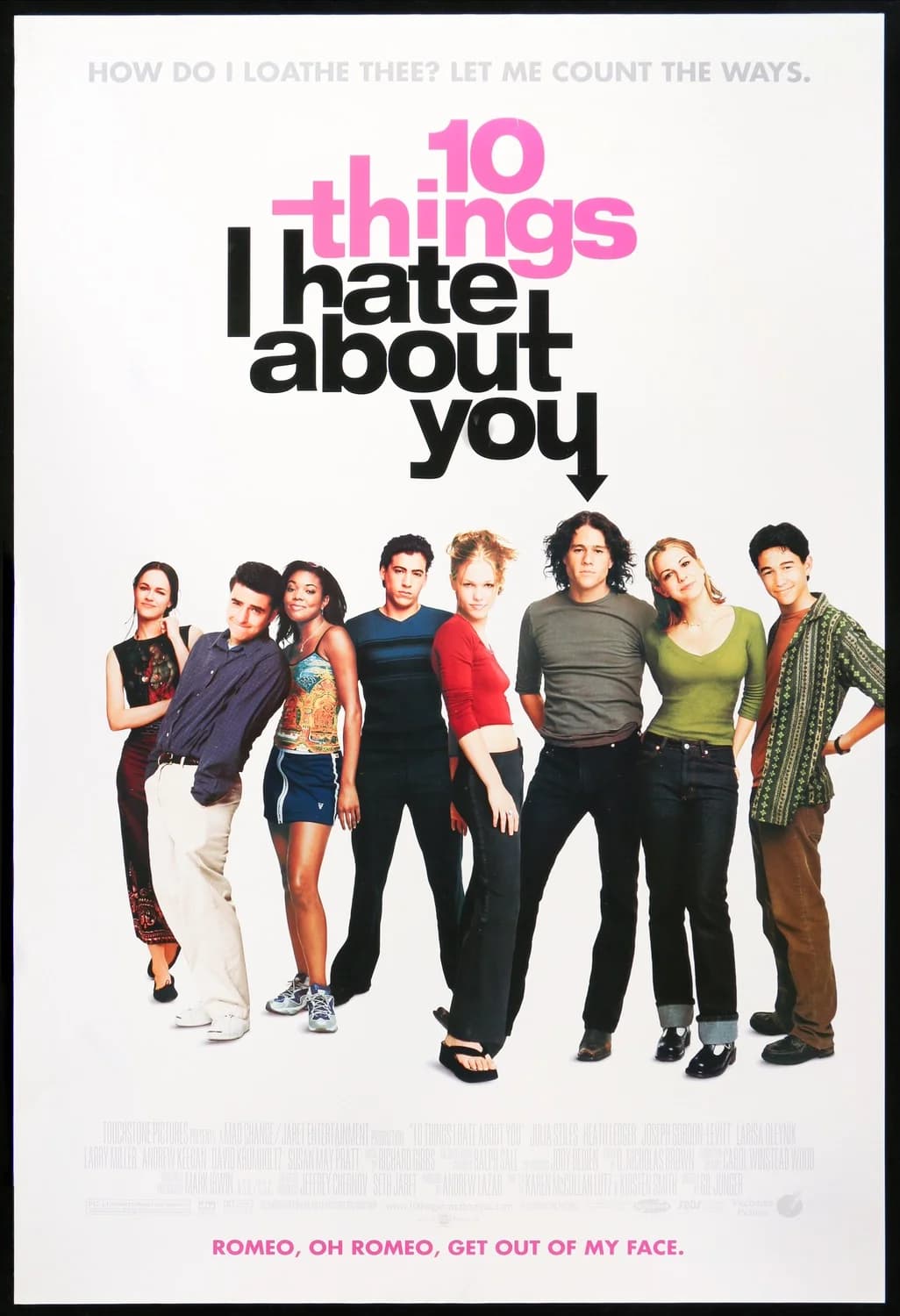
1999 // VHS
10 Things I Hate About You
Sibling rules, a rooftop serenade and one very stubborn Kat — Shakespeare in a school corridor.
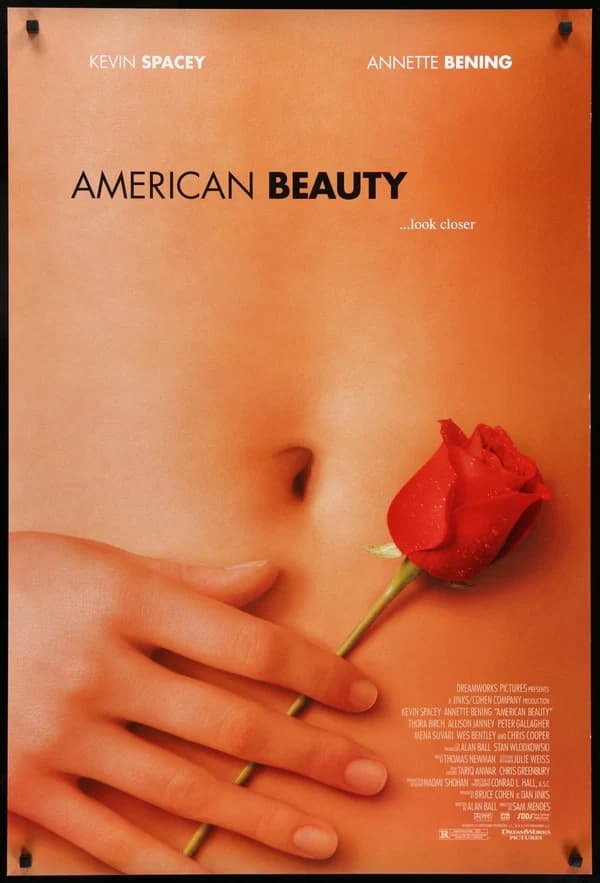
1999 // VHS
American Beauty
Lester Burnham, suburban rot and a midlife argument that still stings.
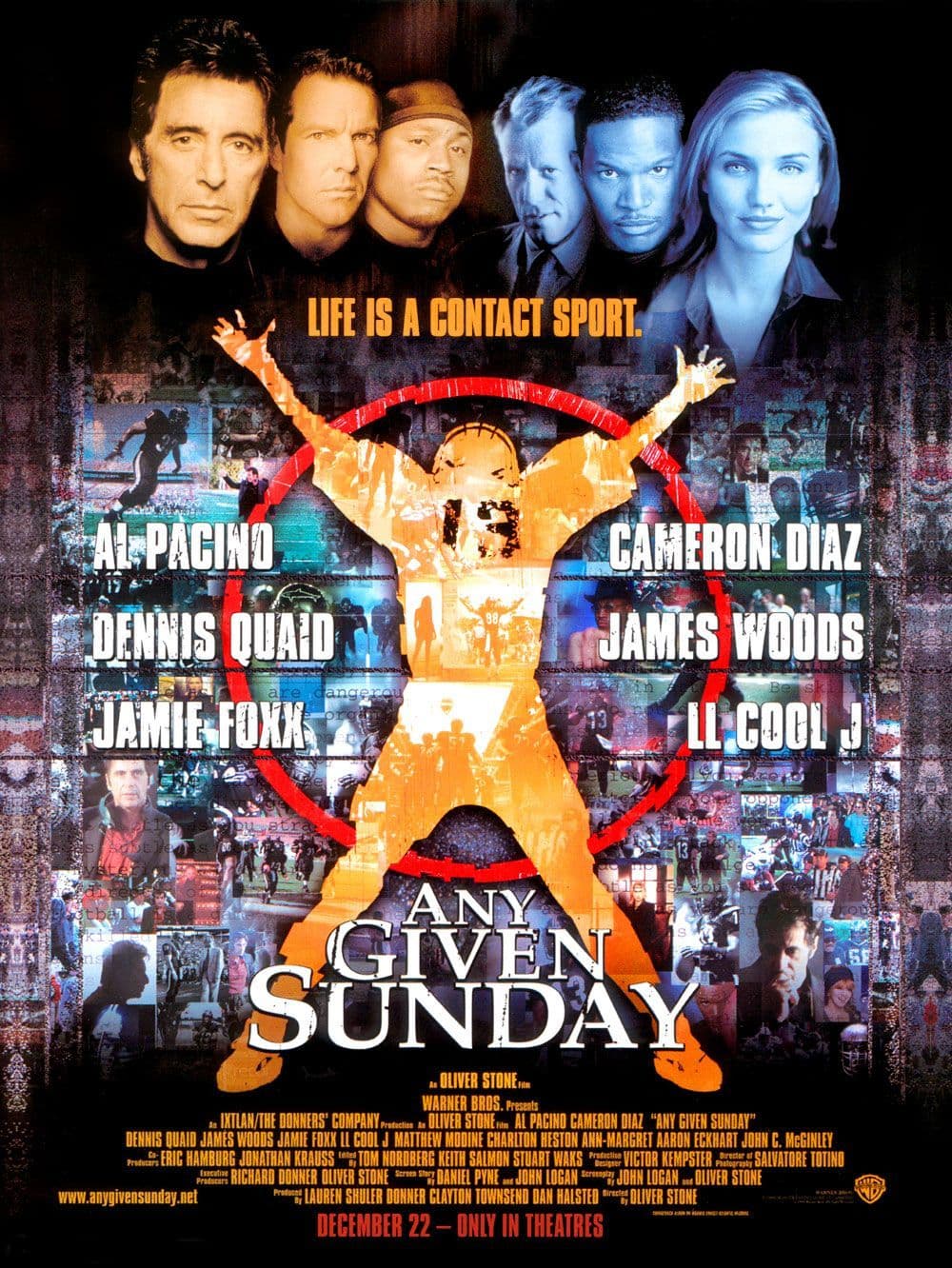
1999 // VHS
Any Given Sunday
Al Pacino's coach anchors the chaos of a film about football turned into product — loud, messy and oddly persuasive.