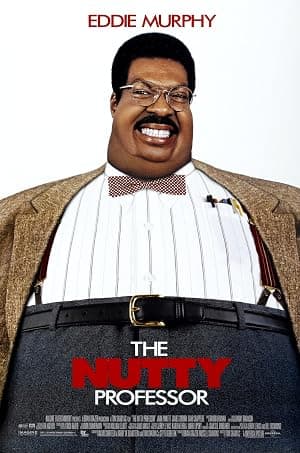
The Nutty Professor
A crowd-pleasing shape-shift: comedy, prosthetics and one very complicated personality.
// The setup
PLAYBACK STARTED
If you remember only one thing about The Nutty Professor, it’s probably the dinner-table chaos — and not just because the meal descends into full-blown farce. The 1996 remake funnels all its energy into one idea: what happens when a shy, brilliant man invents a way to change himself and discovers the result isn’t just a smaller body but a whole other person. Tom Shadyac stages that conceit like a party trick with consequences, and the movie never stops watching how Sherman and Buddy answer the question of who gets to be ‘real’.
THE MOVIE
Sherman Klump / Buddy Love / Lance Perkins / Cletus 'Papa' Klump / Anna Pearl 'Mama' Jensen Klump / Ida Mae 'Granny' Jensen / Ernie Klump, Sr. is still the reason this movie works
The Nutty Professor is, at its simplest, a comedy about a kindly, morbidly obese college chemistry professor who builds a serum to lose weight. That compact setup — brains, embarrassment and a DIY solution — is a neat hook, but the film’s real interest lies in the person who pops out the other side: Buddy Love, the extroverted, aggressive alter ego who arrives the moment Sherman decides he’s had enough humiliation.
Sherman’s urge is unmistakably human: he’s intelligent, shy and decent; he wants to be seen differently because he fears public humiliation and wants a shot at romance. Testing the serum after an embarrassing date with Carla sparks a Jekyll-and-Hyde dynamic that drives the whole movie — one man, two answers to the same problem.
Tom Shadyac directs the whole thing at a brisk 95-minute clip, and Eddie Murphy’s many parts — Sherman, Buddy and a scatter of Klump relatives — turn the film into a kind of personality playground. It’s the central trick and the central reason people still talk about The Nutty Professor: the movie trusts that its joke about identity can hold more than a gag.
THE SETUP
The idea that sets The Nutty Professor in motion
You don’t need a thesis to enjoy the setup: after an awkward date with Carla Purty, Sherman takes a shortcut. He tests his serum on himself and, abruptly, his body changes — and so does his behaviour. The transformation is immediate and dramatic, but it doesn’t simply swap fat for confidence; it brings Buddy Love, a version of Sherman that behaves in ways Sherman never would.
That split is the engine. The film frames its central problem not as the invention itself but as Sherman trying to manage a result that won’t be managed. The serum’s effects are unstable: it’s a quick fix with quick consequences.
So the plot stays compact and readable. The audience is invited to watch a man wrestle with the thing he made — and with a louder, meaner self who wants to stick around.
THE CHARACTER
Why Sherman Klump / Buddy Love / Lance Perkins / Cletus 'Papa' Klump / Anna Pearl 'Mama' Jensen Klump / Ida Mae 'Granny' Jensen / Ernie Klump, Sr. matters
What makes Sherman memorable is how plain his wish is. He’s clever but guarded; the serum is born from wanting to be un-guarded without being ridiculed. The movie keeps returning to that modest, recognisable ache — not to score cheap sympathy, but to set the stakes for what Buddy represents.
Buddy Love matters because he’s the argument Sherman never voiced. He’s loud, sexually confident and willing to bulldoze the rules Sherman has lived by. That opposition is the film’s Jekyll-and-Hyde heartbeat: two versions of the same longing using wildly different manners.
And then there are the Klump relatives. Playing Sherman and several family members turns the household into a set piece about how family conversation shapes self-image. The meals and quarrels aren’t just jokes: they remind the audience that Sherman’s life sits inside a network of affection and expectation.
All of this only works because the production treated the characters as parts of one comic anatomy. Murphy plays the lot; Rick Baker’s prosthetics and the decision to shoot each Klump role separately make the family feel like a single, complicated organism rather than a cheap sketch.
UNDER THE SURFACE
The Nutty Professor has more on its mind than the plot suggests
Beneath the pratfalls and mugging lies a cluster of simple, human questions: who are you when no one is watching, and who do you become when you learn you can perform a different self? The movie stages identity as something that can be put on and taken off — a literal transformation that lets it ask whether confidence purchased from a bottle counts as authenticity.
Body image and self-acceptance buzz through the film without turning it into a lecture. Sherman’s experiment is motivated by shame and desire, and the movie keeps reminding us that changing an exterior doesn’t automatically rewrite the internal conversation.
There’s also the science angle: a formula intended to solve a very specific, personal problem spirals into unintended consequences. That’s the comic engine — invention as a fast lane to trouble — and it keeps the stakes both physical and moral.
At the far end of it all sits performance versus authenticity. Buddy isn’t just a physical makeover; he’s a louder performance of masculinity. The film invites you to laugh at the spectacle while nudging you to notice the cost when the performance starts to feel compulsory.
THE FILMMAKING
How The Nutty Professor was put together
The film’s practical choices are obvious in its staging. Production design and camera coverage were planned around the one-actor-many-roles trick: scenes like the family dinner were never shot as a single, chaotic performance but assembled from separate takes so Eddie Murphy could inhabit each person in turn.
That approach changes everything about how the movie feels. It converts what could be a sketch into a constructed world where timing and eye-lines are carefully matched so the family can feel like a real, dysfunctional unit.
Tom Shadyac’s direction keeps the pace light and the mechanics invisible. The filmmaking decision to build scenes to accommodate multiple solo performances is what lets the film keep its focus on character beats rather than on the plumbing of the trick.
PRACTICAL EFFECTS
The effects work that gives The Nutty Professor its physical personality
Rick Baker’s shop built the movie’s physical vocabulary. The prosthetic fat suits and facial appliances are the tools that let one performer read as a family of people rather than a series of sketches.
Baker’s process began with full life casts of Murphy and moved into sculpting and fabrication — foam-rubber/spandex suits with liquid bladders designed to simulate believable jiggling bulk. That’s not decoration; it’s how the Klumps breathe and move on screen.
Those suits came with a cost. Murphy typically spent multiple hours in the makeup chair on Klump days, which in turn dictated a shooting rhythm: the production filmed one Klump-family role per day and later composited the takes to create scenes like the dinner sequence.
So when the film sells the gag that the Klumps are a family, you can trace it back to the patient, physical work behind the masks — and to the choice to combine those performances into single moments.
PURE 80S
The Nutty Professor could not belong to any other decade
This is a 1990s remake in the clearest sense: it takes Jerry Lewis’s 1963 premise and refashions it around a modern, star-driven comedian. The result is less about echoing Lewis than about using Eddie Murphy as the engine for a mid-90s studio comedy.
Contemporary coverage framed the film as a commercial comeback of sorts for Murphy — a return to the big studio vehicle where a single star carries the film. That slot in the market mattered in 1996: audiences expected a comic lead to keep the entire machine ticking.
Because it’s built around that star machinery, the picture wears its decade in its casting and its appetite for crowd-pleasing set pieces rather than in a manifesto about the age. It’s a product of its time that knows what kind of laughs it was meant to buy.
THE LEGACY
Why The Nutty Professor still matters
The movie’s afterlife rests on a few tidy facts. First, it’s an authorised reworking of a Jerry Lewis property, which gives it an explicit connection to a classic comic premise while re-casting the idea for a new performer and moment.
Jerry Lewis’s involvement didn’t end with a byline: he received an executive-producer credit on the remake and on the subsequent sequel, underlining the project’s lineage and the filmmakers’ desire to acknowledge the source.
And the film spawned a direct sequel in 2000, meaning the producers and audience found enough in the concept to extend the story. Together, these elements explain why the 1996 Nutty Professor remains a touchpoint in conversations about star vehicles, prosthetic make-up and comic remakes.
THE VERDICT
Does The Nutty Professor still hold up?
Yes—if your yardstick is a big, crowd-pleasing comedy that hinges on one sturdy idea. The Nutty Professor is compact (95 minutes), clear about its setup and frank in its pleasures: a shy, intelligent man invents a serum that rapidly reduces his weight, but the result is not a neat cure; it brings an aggressive alter ego called Buddy Love who complicates everything.
The film works because it keeps the conflict tight. Sherman is motivated by romantic desire and fear of humiliation; Carla Purty’s reactions push him into choices that feel human rather than cartoonish. The central problem — controlling a temporary effect that starts to dominate his life — remains straightforward and watchable.
Technically, the movie earns its keep. Scenes that show Murphy as multiple Klump-family members (notably the dinner sequence) were shot by having him perform each role separately and combining the takes through compositing and trick photography, and the prosthetic work that turns a single performer into a household comes from a careful, labour-intensive process.
So should you watch it today? If you want a neatly constructed comedy about identity, body image and the price of performative confidence — served as a star vehicle and practical-effects showcase — The Nutty Professor still rewards the watch. It’s a movie that asks whether changing the outside ever quiets the argument inside, and it answers by making both versions of the man impossible to ignore.
Share this movie
// Keep watching
More movies from the 90s
If The Nutty Professor is your kind of movie, there's plenty more on the shelves worth rewinding.
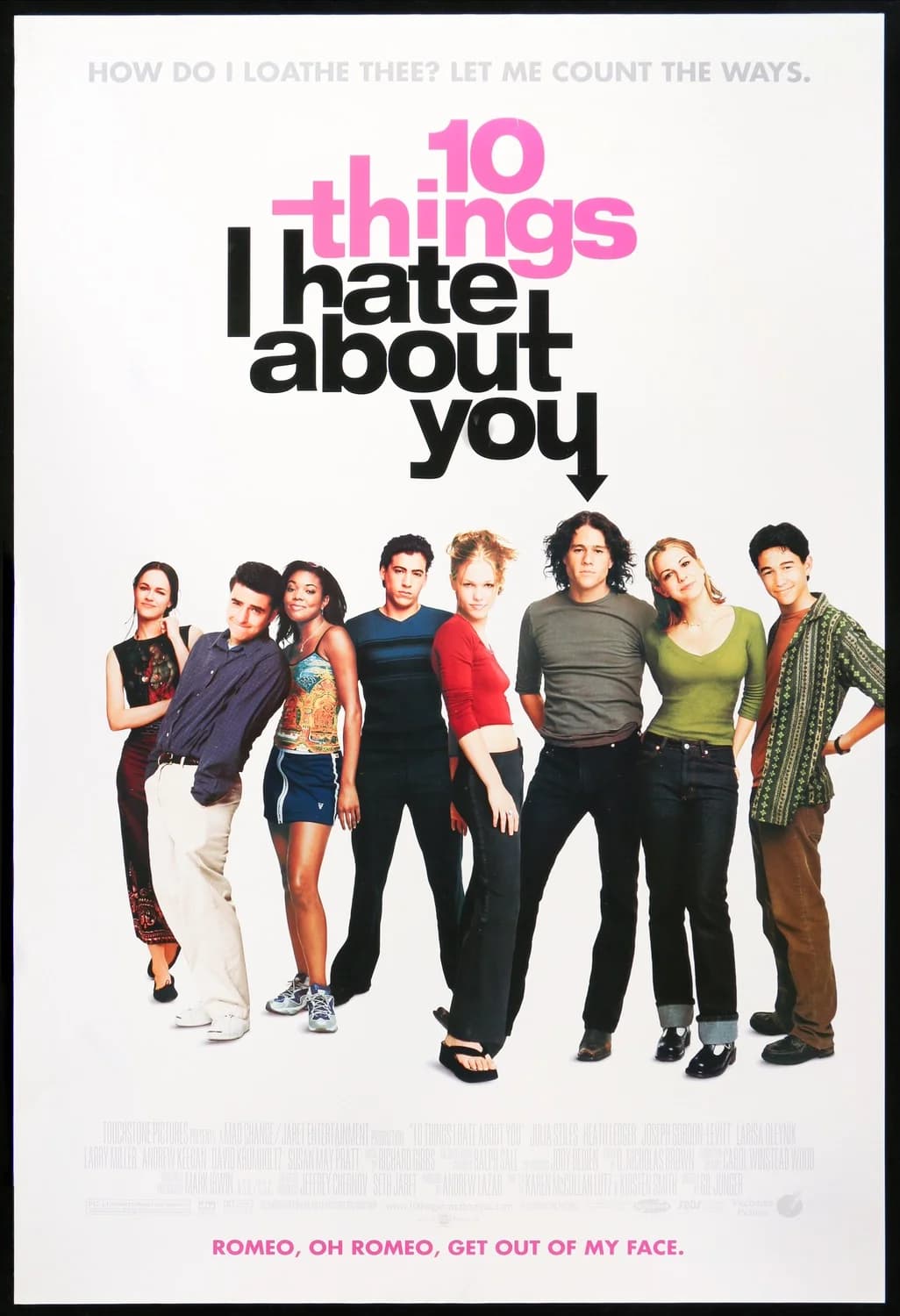
1999 // VHS
10 Things I Hate About You
Sibling rules, a rooftop serenade and one very stubborn Kat — Shakespeare in a school corridor.
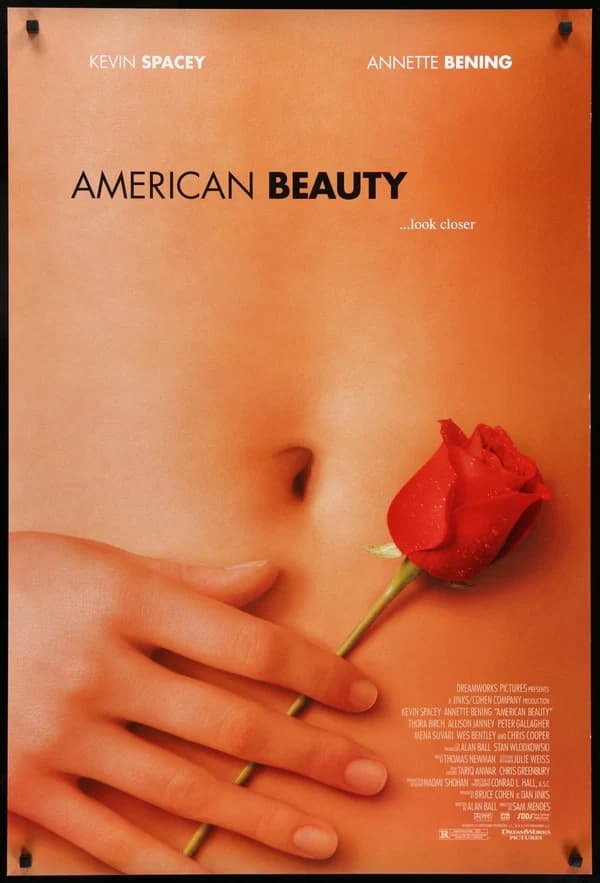
1999 // VHS
American Beauty
Lester Burnham, suburban rot and a midlife argument that still stings.
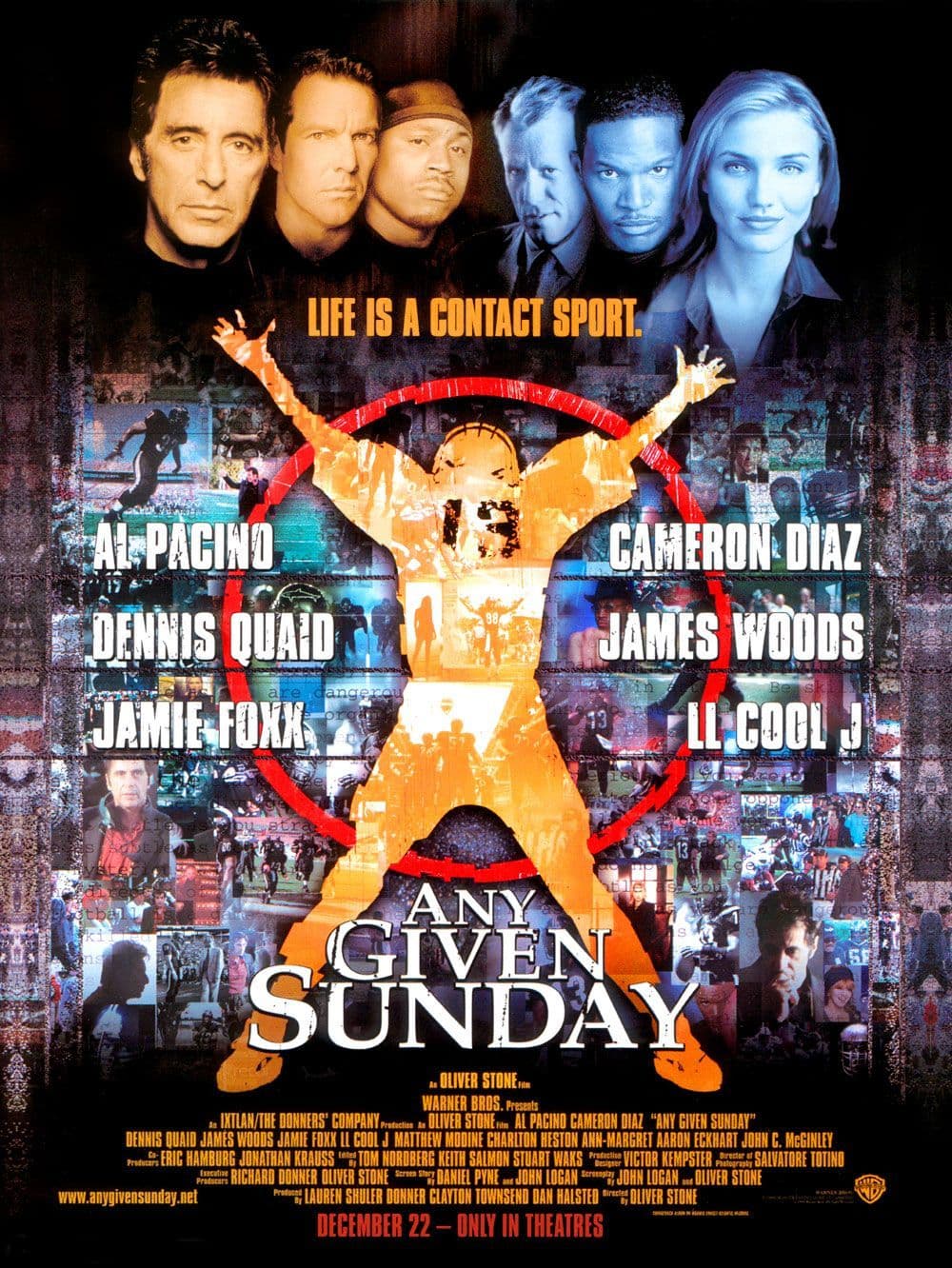
1999 // VHS
Any Given Sunday
Al Pacino's coach anchors the chaos of a film about football turned into product — loud, messy and oddly persuasive.