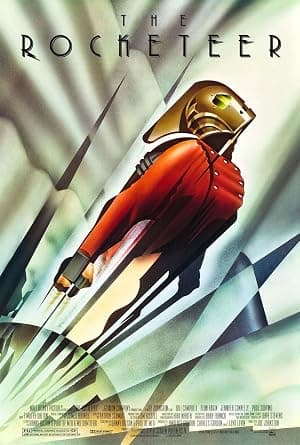
The Rocketeer
A bloke, a rocket pack and a stubborn refusal to grow up — The Rocketeer still flies on charm.
// The setup
PLAYBACK STARTED
The Rocketeer trades on a simple, irresistible idea: strap a man to a rocket and send him into 1930s Hollywood. Joe Johnston’s period adventure pairs that toy-box thrill with a sincere love of Art Deco serials, and it’s the mixture of hand-built detail and a hero who wants nothing more than to fly that keeps the film sparky decades on.
THE MOVIE
Cliff Secord / The Rocketeer is still the reason this movie works
People still talk about The Rocketeer because the image is that pleasingly ridiculous kind of shorthand: a stunt pilot in 1938 who finds a prototype rocket pack and, rather than hand it over, becomes a flying, masked oddball. That single, gorgeous notion — flight as both fun and responsibility — is the film’s engine.
Joe Johnston built the picture around that engine. The rocket pack lands in Cliff’s life after a frantic shootout at an airfield, which leaves the device hidden until he finds it and has to decide what to do next. Those opening moments turn a pulpy premise into a personal choice: keep the toy, or hand it to people who want it for darker reasons.
Around that choice, the movie layers a clear affection for 1930s serials and Art Deco style, a cast of supporting eccentrics and a ticking sense of public spectacle. It runs a brisk 108 minutes, and in an era of superhero origin stories, The Rocketeer still feels like the sort of small, analogue experiment that likes its gadgets visible and its hero properly human.
THE SETUP
The idea that sets The Rocketeer in motion
At heart the setup is chestnut-simple and hugely serviceable: Cliff Secord, a stunt pilot in 1938 Los Angeles, finds a rocket pack that allows a man to fly. That discovery is the plot’s fulcrum — a private find that immediately becomes public property in everyone’s imagination.
Complication arrives fast because the device isn’t just a neat toy. Multiple groups — from organised crime to the FBI, from a movie star with his own agenda to outright Nazi agents — all want the pack. The converging interest keeps Cliff moving between the private life he values and the increasingly public, dangerous role the pack forces on him.
Crucially, the film uses Hollywood itself as part of the setup: a film set, celebrity stardom and real historical figures act as mechanisms to raise the stakes. That allows the story to shift neatly between small personal favors and larger, serial-style setpieces without ever feeling less than purposeful.
So the setup works because it’s tidy in concept but noisy in application: one man’s toy becomes everyone’s prize, and that tension is the film’s constant drumbeat.
THE CHARACTER
Why Cliff Secord / The Rocketeer matters
Cliff Secord is the sort of lead who keeps the movie honest. He’s a stunt pilot first and a reluctant hero second; his love of flying and his loyalty to friends — and to Jenny — are straightforward, readable motives that explain why he hides and learns the rocket pack instead of doing the sensible thing.
That mixture of ordinary devotion and extraordinary opportunity gives him texture. He isn’t trying to be a symbol; he’s trying not to lose the people he cares about, and that makes his choices feel grounded even when he’s airborne.
Billy Campbell plays the role of Cliff, and the movie is arranged so the character’s practical instincts — he wants to protect Jenny and keep doing what he loves — are the things that move the plot. In a family-friendly adventure, that kind of clear, human compass matters more than cleverness.
Put simply: The Rocketeer works because its central figure gives the film somewhere to land. The jet pack is a toy; Cliff is the reason it feels like a responsibility.
UNDER THE SURFACE
The Rocketeer has more on its mind than the plot suggests
There’s the surface pleasure — Art Deco glamour, serial-dramatics and the sheer visual of someone in a chrome helmet cutting across the sky — but the film nudges at a few sturdier ideas underneath. For one, it’s a coming-of-age told in miniature: an ordinary man transformed by an extraordinary opportunity and the responsibilities that come with it.
It’s also quietly interested in celebrity versus what’s real. Hollywood isn’t just a backdrop; it’s the place where public personae get manufactured, and the film uses that to contrast easily-made stardom with the private, sometimes clumsy bravery of Cliff.
Technology and responsibility is another thread: the rocket pack is alluring and dangerous in equal measure, and people’s appetite for power becomes a way to ask who should control such inventions. That tension keeps the action honest rather than merely gadget-driven.
All of these themes sit behind the adventure without smothering it — they’re the film’s small moral scaffolding rather than a lecture, which is why the movie still has something to give beyond its pretty production values.
THE FILMMAKING
How The Rocketeer was put together
The production leaned hard on period authenticity. Jim Bissell’s production design worked from creator Dave Stevens’ reference material to build Art Deco sets and props that feel carefully chosen rather than slapped-on nostalgia.
Cinematography and photographic choices were part of that trick. Hiro Narita and Joe Johnston dialled in low-contrast techniques and used anamorphic lenses to suggest an older film look while making room for all the effects work the story needs.
Industrial Light & Magic supplied the heavy lifting on visual effects, handling miniature work, composites and second-unit action that needed to match the live-action plates. That collaboration meant the film could swing between small, tactile set pieces and larger model-driven spectacle without losing cohesion.
The result is a movie that reads like a lovingly restored serial: the craft is visible and deliberate, and it helps the film sell the fantasy without pretending it’s more modern than it is.
PRACTICAL EFFECTS
The effects work that gives The Rocketeer its physical personality
A lot of the film’s charm comes from tangible, physical choices. ILM’s model shop built a very large zeppelin miniature and filmed pyrotechnic destruction plates at a decommissioned air base — moments that read as properly big on screen because they were shot with actual fire and debris.
For the flying sequences, ILM used stop-motion and go-motion armatures for an in-flight Rocketeer puppet, compositing that animation into live-action aerial plates. It’s a deliberately analogue approach that asks the viewer to accept craft over polish.
The air-circus sequence leans on the physical world as well: hundreds of extras and restored vintage aircraft were staged or flown to create the period spectacle. Those crowds and machines give the film a grounded texture that CGI often finds hard to match.
Taken together, these practical techniques give the movie a fizzy, mechanical personality — you can see the joins, and that’s part of the point.
WATCHING IT NOW
What has aged — and what hasn't
Seen today as a family adventure, The Rocketeer’s strengths remain obvious: its production design and period detail still read as carefully made, and that particular vintage charm holds up better than many era-pieces that rely on cheap shorthand.
Contemporary critics called out those exact strengths when the film was new; they praised the design, the sense of period and a handful of supporting players, while also pointing to a thinness at the centre — a criticism that hasn’t vanished entirely with time.
That thinness matters less if you approach the film on its own terms: it’s an affectionate pastiche with clear emotional beats, not an exhaustive study of its themes. As a family film it trades complexity for clarity, which will please some viewers and frustrate others.
In short: the look and the setpieces age well; if you want dense character work or modern moral ambiguity, this isn’t the place to find it.
THE LEGACY
Why The Rocketeer still matters
The Rocketeer didn’t spawn a trilogy. The filmmakers and studio once imagined follow-ups, but plans were shelved after the film underperformed at the box office.
Nonetheless the film developed a cult following. Retrospectives tend to return to the same touchstones: the production design, James Horner’s pastiche-ready score and the visible practical work from ILM.
It also received genre recognition: a Hugo nomination and multiple nods at the Saturn Awards, including recognition for costume work. Those honours underline that while the movie wasn’t a mainstream smash, it found respect within the fan and genre communities.
Joe Johnston’s continued association with period superhero material — his later work in the same vein gets mentioned alongside The Rocketeer — helps keep the film in circulation when people talk about retro takes on the form.
THE VERDICT
Does The Rocketeer still hold up?
Yes — with a caveat. If you want a lean, affectionate period adventure where the pleasures are tactile and the ideas are clear, The Rocketeer still delivers. The climactic setpieces — the pursuit beats and the zeppelin sequence that mix on-location stunt work with large-scale miniatures — are the kinds of sequences that reward a viewer who enjoys craft that’s visible rather than invisible.
The story’s engine is simple and effective: Cliff finds a rocket pack, and because multiple parties want it, he’s forced to move between private life and a public role. That central tension keeps the film moving, and the presence of characters like Peevy — Cliff’s mechanic and mentor who adapts the pack and worries about its dangers — gives the plot practical and moral ballast.
The ensemble helps the film along. Contemporary and later coverage often pointed to the supporting casting as a highlight; those elements give the story colour even where the lead character’s arc is deliberately straightforward. Jenny’s connection to Hollywood keeps the film plugged into its serial-and-celebrity motifs rather than letting it drift into pure gadget-show.
So watch it for the sets, the score, the visible effects and the uncomplicated pleasure of a man learning how to be brave. It won’t convince viewers looking for modern complexity, but as a piece of period-minded, family-friendly pulp it still earns its wings.
Share this movie
// Keep watching
More movies from the 90s
If The Rocketeer is your kind of movie, there's plenty more on the shelves worth rewinding.
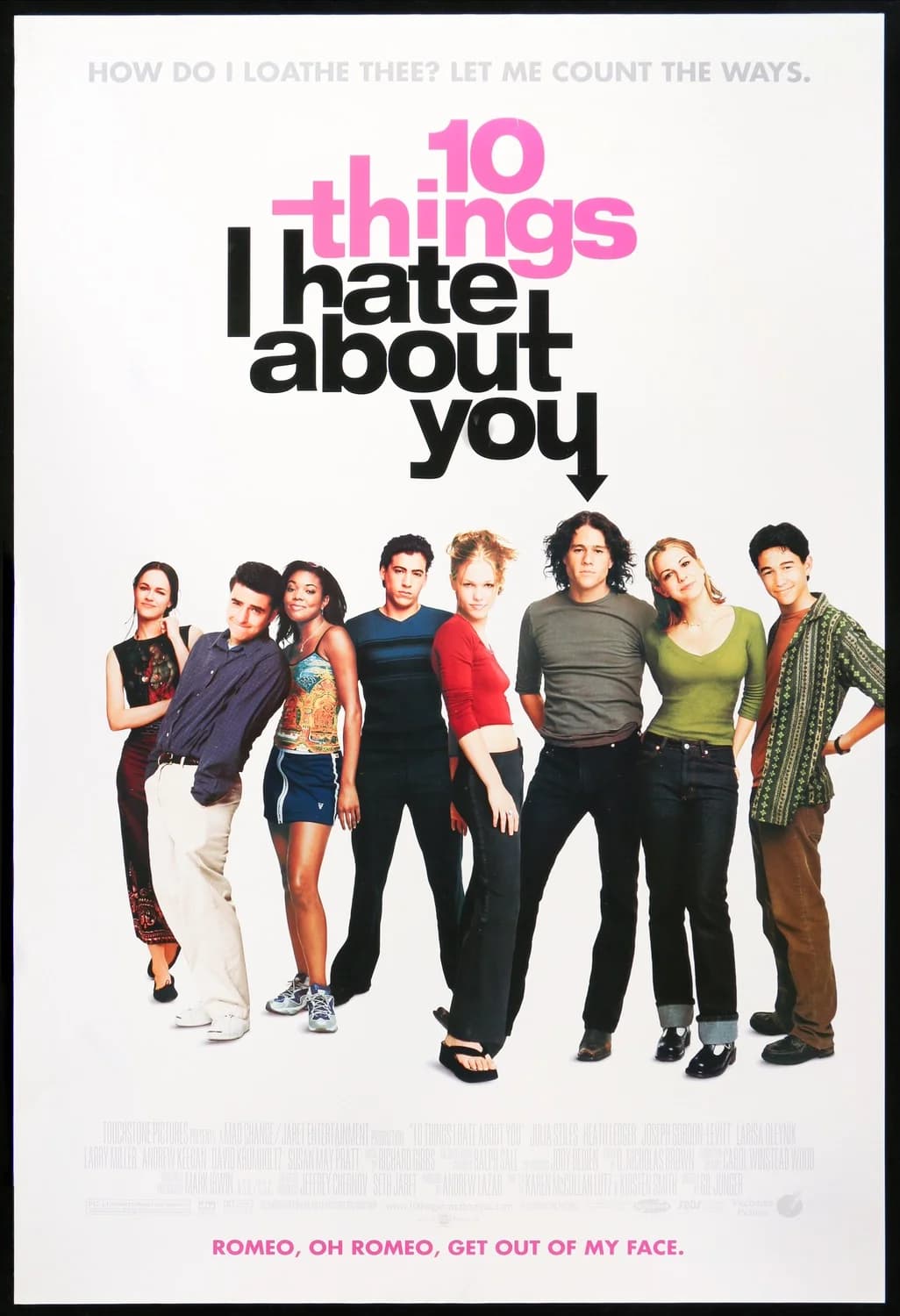
1999 // VHS
10 Things I Hate About You
Sibling rules, a rooftop serenade and one very stubborn Kat — Shakespeare in a school corridor.
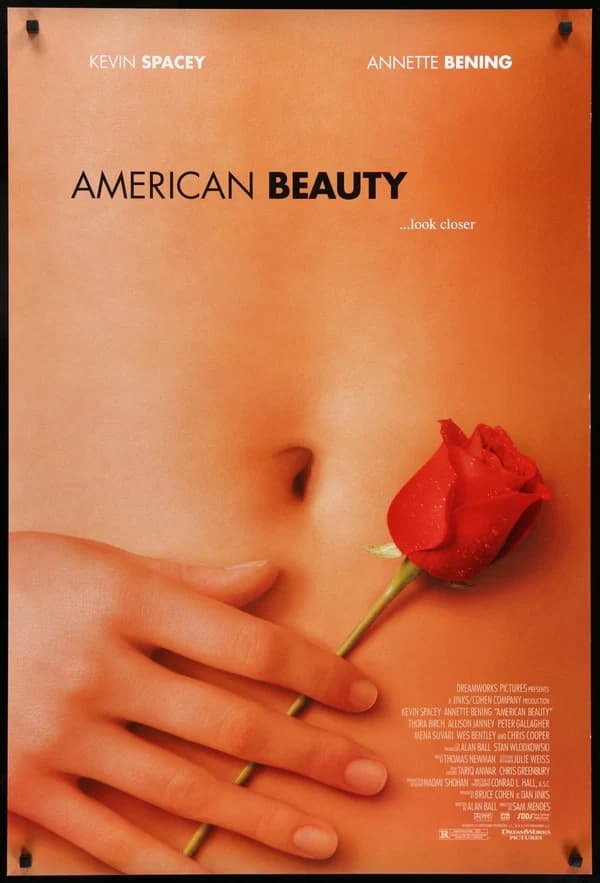
1999 // VHS
American Beauty
Lester Burnham, suburban rot and a midlife argument that still stings.
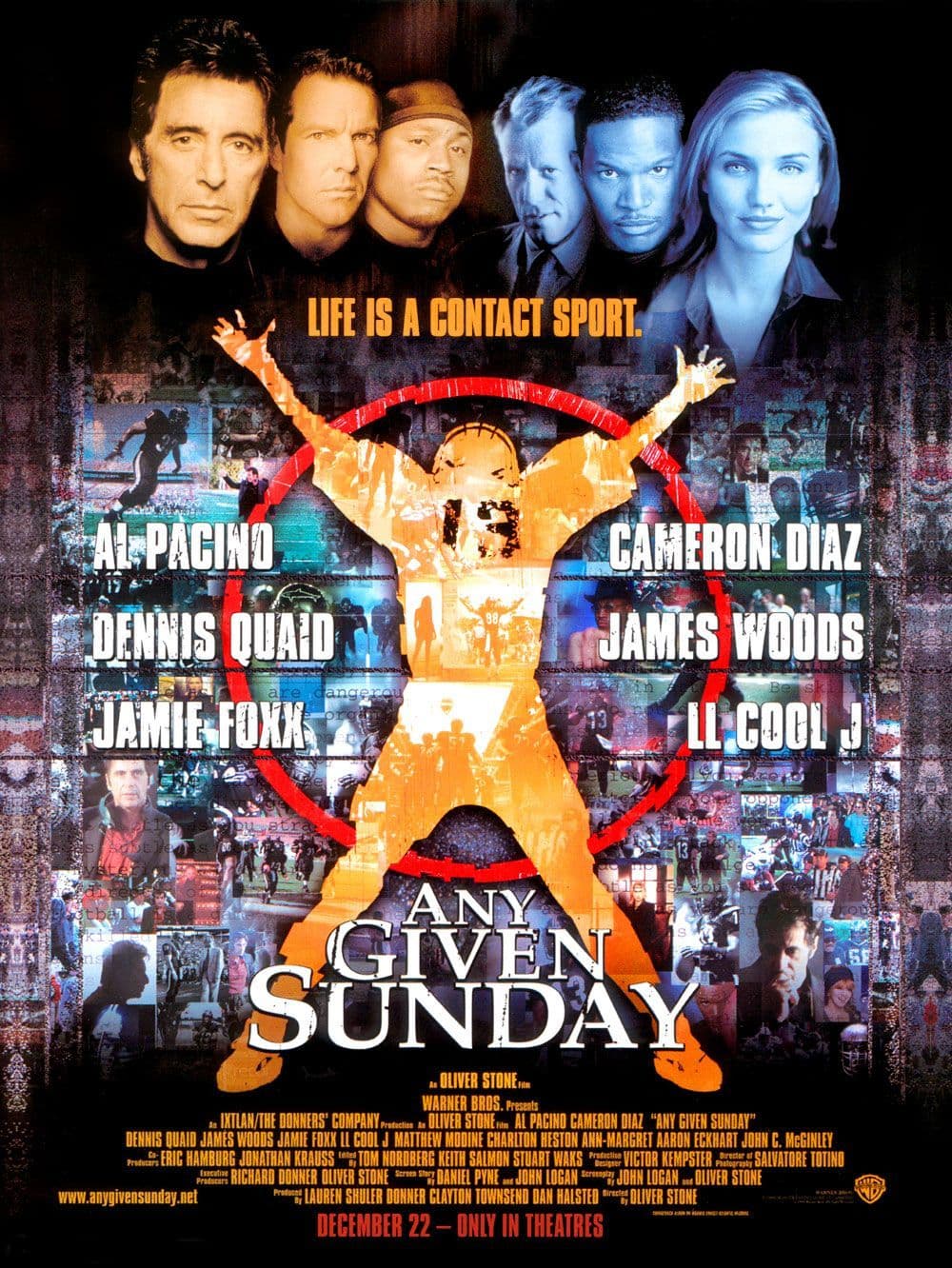
1999 // VHS
Any Given Sunday
Al Pacino's coach anchors the chaos of a film about football turned into product — loud, messy and oddly persuasive.