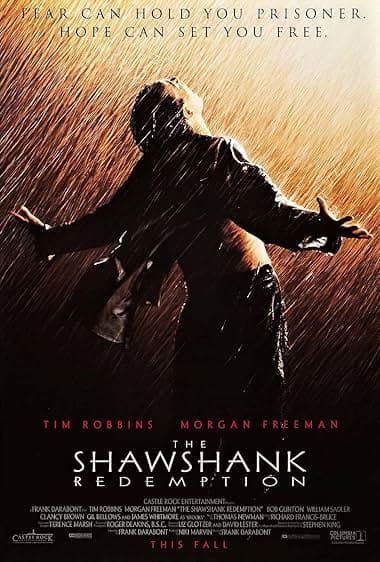
The Shawshank Redemption
A slow-burning story of friendship, ledger books and stubborn hope.
// The setup
PLAYBACK STARTED
There’s a particular kind of movie confidence in The Shawshank Redemption: it trusts a quietly stubborn man, a steady narrator and a long timeline to do the heavy lifting. Frank Darabont’s 1994 adaptation turns Andy Dufresne’s small, stubborn actions into something unexpectedly huge.
THE MOVIE
Andy Dufresne is still the reason this movie works
If you’ve seen The Shawshank Redemption recently, you probably remember one thing above all: Andy Dufresne. A convicted banker who arrives at Shawshank and keeps his head down, he becomes the quiet hinge the whole story swings on.
Frank Darabont adapted Stephen King’s novella and didn’t turn it into a thriller. Instead he built a character study around a friendship—Andy and Ellis Boyd 'Red' Redding—that shapes the film’s point of view and gives the story its emotional ballast.
What makes Andy worth watching is straightforward: he’s a reserved, educated man who survives by holding on to hope and using the particular tools he has—his knowledge of numbers—to carve out safety and influence inside a dehumanising system.
THE SETUP
The idea that sets The Shawshank Redemption in motion
The Shawshank Redemption starts with a simple narrative engine: a banker, convicted and sent to prison in 1947, tries to survive. That basic premise gives the film room to examine time, slow change and the small negotiations people make to stay alive.
The friendship between Andy and Red isn’t an accessory; it’s the frame. Red’s voice guides us and gives the film a moral anchor—someone who watches Andy and gradually understands what keeps him going.
One recurring mechanism is practical: Andy’s financial know-how. It’s used inside the prison to secure him relative safety, but it also draws him into moral compromise when the authorities begin to exploit his skills for their own ends.
When the film first opened critics praised the restrained, character-centred approach at its heart—an approach that relies less on incident and more on how people change across years.
THE CHARACTER
Why Andy Dufresne matters
Andy matters because he refuses to become what the prison expects. He’s not loud or heroic in a conventional sense; he’s reserved and methodical, and that makes his choices feel all the more significant.
As a banker, he brings a specific set of tools—numbers, paperwork, a patient attention to detail—that change how other people treat him and change the opportunities available to him inside Shawshank.
The friendship with Red is where you see Andy from the outside. It’s through that relationship that the film measures what Andy keeps and what he risks, and the friendship also explains why other inmates give him space to be himself.
Put simply: Andy is memorable because his small acts—reading, counting, quietly refusing to surrender hope—become the film’s language for survival and eventual restoration.
THE PERFORMANCE
Why Tim Robbins's performance matters
Contemporary reaction singled out Tim Robbins’s restrained turn as central to the film’s emotional pull. Critics often pointed to that quiet control as one of the movie’s strengths.
That restraint matters because the story doesn’t need a showy performance. Andy’s survival strategy is internal and patient; a performance that underlines rather than overwhelms lets the film breathe.
Robbins’s approach gives the audience room to read what Andy is thinking and to watch small, cumulative changes over time—exactly the thing Darabont’s story relies on.
So when critics described the performance as a key part of the emotional core, they were noting how well the acting matched the film’s deliberate pace and moral temperament.
UNDER THE SURFACE
The Shawshank Redemption has more on its mind than the plot suggests
At a glance it’s a prison story; look closer and you find a film preoccupied with hope. Not the wilful optimism of cliché, but hope as the thing people use to survive an institutional routine that grinds them down.
Friendship is the film’s practical currency. Bonds between inmates are portrayed less as sentimental closeness and more as mutual dependence—ways to keep a sense of self when the system strips everything else away.
Institutionalisation is another through-line: the movie shows how long stays in prison recalibrate a person’s expectations and make the world outside feel alien. Re-entering freedom isn’t a simple happy ending; it’s a complicated challenge.
Finally, redemption here is personal rather than juridical. The film cares more about what gets restored inside a person than what happens in courtrooms—or the ways those in power skirt responsibility through corruption and piety.
THE FILMMAKING
How The Shawshank Redemption was put together
One simple, verifiable fact anchors this section: Roger Deakins was the director of photography, and his work on the film drew attention and accolades.
That credit matters because Shawshank’s story is patient and observational; the cinematography supports a film that prefers long stretches of quiet development to visual showstops.
Frank Darabont’s direction and Deakins’ camera choices combine to let faces and small actions carry narrative weight, which is exactly the stylistic fit the material needs.
PURE 80S
The Shawshank Redemption could not belong to any other decade
Part of what ties Shawshank to the 1990s is its literary seriousness: it’s a Stephen King adaptation that deliberately steps away from his horror shorthand and into prestige, character-led drama.
That move was part of a broader 1990s pattern where filmmakers mined short literary work for adult drama rather than genre scares, and Darabont’s film sits neatly in that trend.
So while the story itself looks back to mid-century events, the film’s cultural placement—as a classy, long-form adaptation—feels very much of 1994.
WATCHING IT NOW
What has aged — and what hasn't
When people revisit Shawshank, certain things keep turning up in conversations: the lead performances, the real prison location and the way hope and friendship drive the story. Those elements still connect with viewers.
Critics who praised the leads at the time did so because the film’s restrained focus on character over spectacle gives the emotional beats room to land—an approach that still reads well in a streaming-era world hungry for depth.
The physical locations used for the prison continue to matter as well; the Ohio setting remains something audiences point to when they talk about the movie’s authenticity.
Finally, the film’s reputation grew after it left cinemas—awards attention, home video and television repeats helped it find the audience that didn’t appear in its first run, and that afterlife is part of why it still matters.
THE LEGACY
Why The Shawshank Redemption still matters
The film’s awards-season recognition is part of its story: it earned seven Academy Award nominations the year after release, which helped raise its profile beyond the initial box-office response.
Institutions have also canonised it: the American Film Institute included the film on its 10th-anniversary 100 Movies list, a sign that it became part of the conversation about significant American films of its decade.
On a more tangible level, the Ohio State Reformatory—used as the movie’s primary prison location—remains a tourist destination, with local initiatives preserving the film’s shooting sites.
Taken together, the critical attention, institutional acknowledgements and the physical afterlife of the locations explain why Shawshank’s reputation continued to grow after release.
THE VERDICT
Does The Shawshank Redemption still hold up?
Short answer: yes. The film’s patient, decade-spanning timeline lets small character changes accumulate into something meaningful, and that steady build is still persuasive.
At the centre of that persuasion is the relationship between Andy and Red: a friendship that gives the film its point of view and makes the stakes—surviving brutality, resisting institutional pressure—feel human rather than schematic.
Andy’s specific trade—his banking skills—does real narrative work here: they buy him protection and, crucially, entangle him in the warden’s corrupt money-laundering scheme, which raises the moral cost of his survival.
Put another way: if you want a movie that treats hope as an act of defiance rather than empty sentiment, Shawshank still delivers. It’s slow, sure-footed and quietly stubborn in the best possible way.
Share this movie
// Keep watching
More movies from the 90s
If The Shawshank Redemption is your kind of movie, there's plenty more on the shelves worth rewinding.

1994 // VHS
Forest Gump
A man on a bench who refuses to make history anything more complicated than a story worth telling.
1999 // VHS
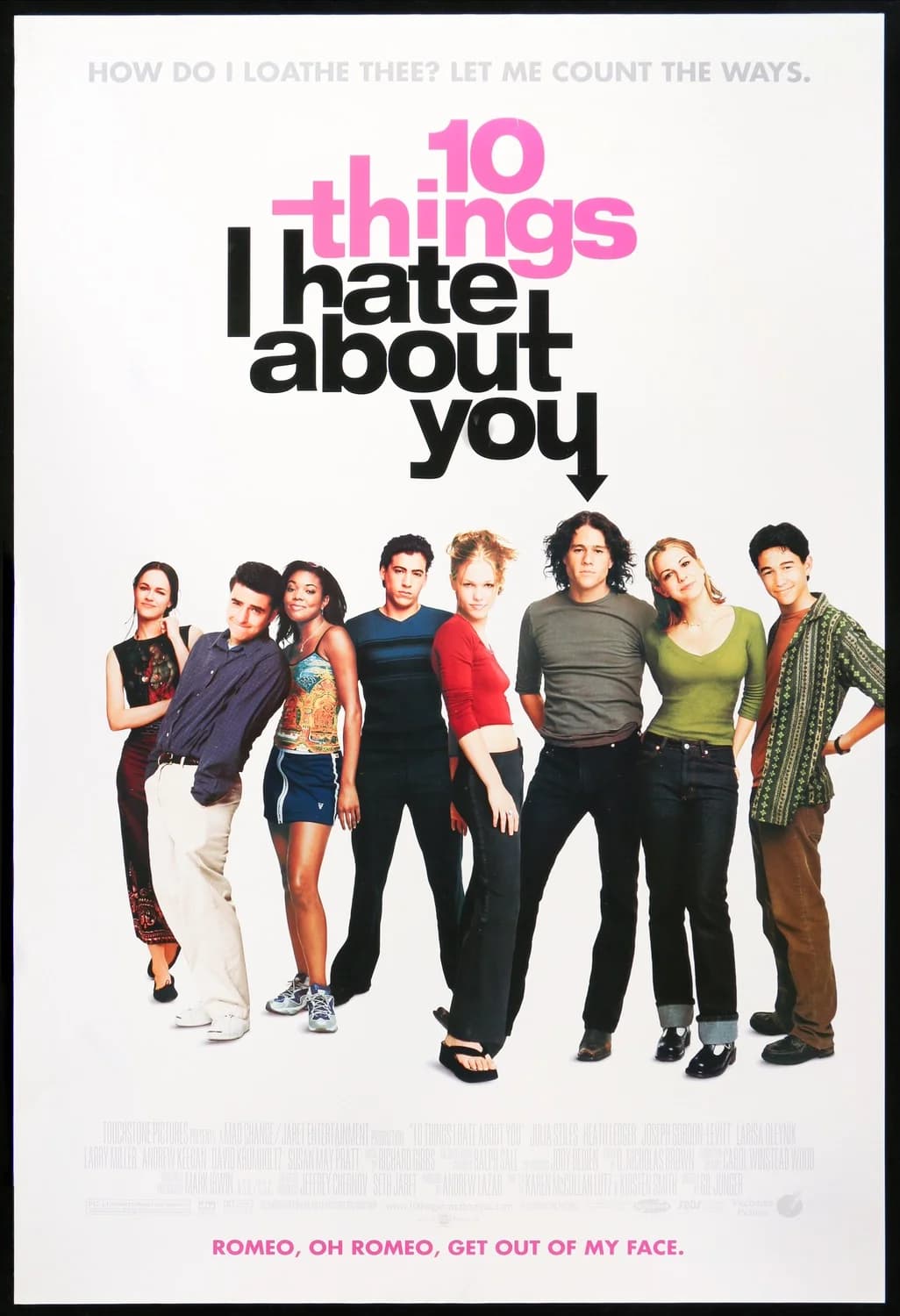
10 Things I Hate About You
Sibling rules, a rooftop serenade and one very stubborn Kat — Shakespeare in a school corridor.

1999 // VHS
American Beauty
Lester Burnham, suburban rot and a midlife argument that still stings.