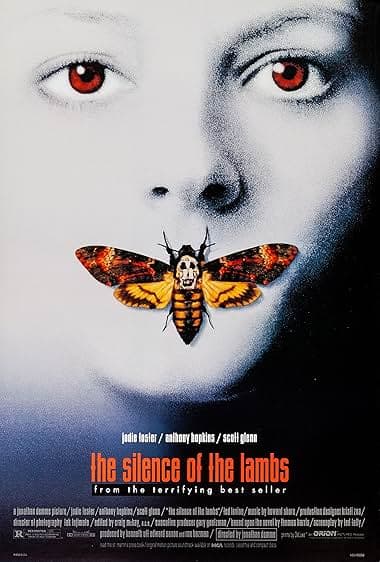
The Silence of the Lambs
Conversation as weapon: Clarice, Lecter and a very dangerous kind of listening.
// The setup
PLAYBACK STARTED
There are thrillers that chase you with sirens and there are thrillers that chase you with questions. The Silence of the Lambs is the latter: a film where an interview room becomes the most dangerous place on screen, and where Clarice Starling's doggedness pushes a procedural into something stranger and colder.
THE MOVIE
Clarice Starling is still the reason this movie works
If someone asks what sticks with The Silence of the Lambs, most of us immediately think of two people in a room — an FBI trainee sent to talk to a convict and a man who talks back in ways that make the rest of the film feel consequential. That assignment — Clarice Starling being sent in to interview Dr. Hannibal Lecter — is the engine that sets everything moving.
The point isn’t just that Lecter knows things; it’s that the exchange of knowledge becomes a currency of power. Clarice is trying to prove herself inside the Bureau while she also carries a private, unresolved trauma that the film keeps returning to. Those two pressures — institutional and personal — meet every time she walks into a room with someone who can read her.
Directed by Jonathan Demme and running just under two hours, the film is built around that urgent, intimate collision. It’s a thriller that wants you listening as much as watching, anchored by Clarice’s task to get from a brilliant, dangerous mind the clues that will help catch Buffalo Bill.
THE SETUP
The idea that sets The Silence of the Lambs in motion
At its simplest: an FBI trainee is assigned to consult with an imprisoned psychiatrist and convicted killer to get help catching another active murderer. That premise keeps the stakes immediate — Clarice’s success could save lives — while giving the film a neat dramatic hook.
What turns the hook into a sustained engine is Lecter’s role. His insight into psychopathy becomes the narrative machine that connects Clarice’s work to the Buffalo Bill investigation; she’s not running a lab so much as conducting a series of conversations that slowly assemble what the Bureau needs.
This structure lets the film combine a procedural hunt with an internal story about a young agent proving herself. The external beats — identification, stakeouts and raids — exist, but the adaptation concentrates action through Clarice’s point of view rather than sprawling into multiple perspectives.
And because so much of the plot advances through interviews and the information traded in them, the movie moves forward without leaning on long forensic set pieces. It’s a thriller that works like a chess match of questions and answers.
THE CHARACTER
Why Clarice Starling matters
Clarice Starling is not a generic tough investigator. She’s introduced as a trainee with something to prove — both to the Bureau and to herself — which keeps the film grounded in one person’s drive rather than an ensemble of technicians.
Her motivation is twofold: professional ambition inside the FBI and a private, unresolved trauma that the film returns to as a formative emotional motor. That combination gives her investigation texture; she is driven by casework and by the need to silence a memory that haunts her.
Her relationship with Lecter reshapes how we see both of them. Lecter serves as an information source and, crucially, a manipulative interlocutor: his curiosity and psychological games change what Clarice learns, and how she learns it.
And because the external threat — Buffalo Bill — is defined by compulsions around transformation and skinning, Clarice’s hunt reads as both an officer’s job and a personal confrontation with a kind of violence that has a very particular, disturbing logic.
THE PERFORMANCE
Why Jodie Foster's performance matters
The film’s attention is concentrated on Clarice Starling in a way contemporaneous coverage noted: this adaptation keeps the audience with her, shaping the story through a single investigative point of view.
That focus is part of why Jodie Foster’s work was singled out; her performance earned the Academy Award for Best Actress, a signal that audiences and critics saw her as central to how the film operates.
Pointing to the Oscar is not a substitute for explanation: what the film and coverage emphasised was that her role anchors the narrative choices. The adaptation trims the novel’s perspectives to keep us closely aligned with a trainee who must both listen and act.
Seen that way, the performance matters less as star turn and more as the stabilising element that lets the movie be both a police procedural and a psychological drama.
UNDER THE SURFACE
The Silence of the Lambs has more on its mind than the plot suggests
Beneath the procedural frame the film is interested in questions of identity and transformation. That comes through most visibly in Buffalo Bill’s compulsions — a grotesque, disturbing attempt at remaking himself — but it’s also threaded through the way other characters present and reshape themselves.
Power and manipulation are constant currencies. The movie stages exchanges where information is withheld, traded or used, and those small transactional dynamics carry heavy weight: a withheld detail can cost lives; a well-placed question can undermine a person.
Gender and institutional authority sit uncomfortably next to each other. Clarice is pushing to prove herself within a male-dominated institution, and the film keeps that friction in play as she navigates handlers, bureaucrats and suspects.
Finally, empathy as an investigative method quietly runs through the film. The conversations Clarice conducts are not just data-gathering — they’re exercises in getting inside other people’s minds, useful both to solving crimes and to understanding the human costs behind them.
THE FILMMAKING
How The Silence of the Lambs was put together
Jonathan Demme’s direction is the obvious organising force — the choice to keep the story tightly drawn around Clarice’s point of view shapes nearly every production decision.
Behind the camera, Tak Fujimoto is credited as director of photography; those credit choices point to a team that wanted the film to feel composed rather than chaotic, and to let the performances and conversations live at the centre.
Editing, too, plays a practical role: Craig McKay is the editor on record, and the pacing of scenes — the way interviews are allowed to breathe and then snap shut — is a deliberate structural move.
Even production design is part of that economy: Kristi Zea is credited as production designer, which signals that the movie’s spaces were assembled to support the close, often claustrophobic exchanges at its core.
PRACTICAL EFFECTS
The effects work that gives The Silence of the Lambs its physical personality
When the film needs something physically unsettling on screen, it tends to reach for real, tangible props rather than shorthand. A good example: the moths that recur through the story weren’t entirely faked.
Production used more than 300 tobacco hornworm caterpillars, and some were fitted with painted body shields to resemble the death’s-head moths that the narrative references. Those small, awkward creatures sit in the frame as concrete, creepy details.
Some of the moths came from academic sources — a number were supplied by the University of North Carolina — which underlines how the production treated these elements as practical problems to be solved, not just symbolic decoration.
It’s a modest but telling choice: the film’s unease often comes from what’s present and tangible, not from digital gloss or facile horror tricks.
PURE 80S
The Silence of the Lambs could not belong to any other decade
Released in early 1991, the film arrived at a moment when mainstream cinema was willing to let psychological serial-killer stories reach wide audiences. Its commercial and critical success made it one of the earliest, high-profile examples of that trend in the new decade.
That placement matters: the film sits comfortably between the 1980s’ experiments with serial-killer procedurals and a 1990s appetite for darker, character-driven thrillers.
There’s also a direct line back to earlier screen adaptations of the same source material. Manhunter from 1986 adapted Thomas Harris’s work first, occupying a related procedural space and establishing that this terrain could be filmed in more than one register.
Put simply: The Silence of the Lambs is of its moment in the way it marries mainstream reach with an appetite for the disturbing and psychologically precise.
THE LEGACY
Why The Silence of the Lambs still matters
Part of its lasting presence comes from awards recognition: the film won the five major Academy Awards — Best Picture, Director, Actor, Actress and Adapted Screenplay — a rare sweep that marks how seriously it was taken at the time.
Its selection for preservation by the U.S. Library of Congress in 2011 formally recognises the film as culturally, historically or aesthetically significant, which cements its afterlife beyond the usual review-cycle chatter.
It also launched a franchise of screen adaptations and continuations of Harris’s novels, which kept the Lecter story in public circulation long after the original release — a commercial and narrative afterlife that has kept the characters discussed and reworked.
Those facts don’t make the movie untouchable, but they explain why it continues to be revisited: awards, preservation and sequels have all helped preserve interest in the original film.
THE VERDICT
Does The Silence of the Lambs still hold up?
Yes — if you’re drawn to thrillers that trust conversation and character rather than spectacle. The film’s central conceit (Clarice consulting Lecter to catch Buffalo Bill) keeps the stakes clear, and the decision to drive the adaptation through her point of view gives the whole thing a tight, compelling focus.
Its structural choices still feel purposeful: Lecter’s cryptic cooperation is the narrative mechanic that propels the investigation, and the movie concentrates investigatory beats — identification, stakeouts and a raid — around Clarice rather than scattering the story across many viewpoints.
The themes hold up, too. Power and manipulation, gender and institutional pressure, identity and transformation, and the idea of empathy as an investigative method are woven into how the characters speak and act, not tacked on as afterthoughts.
If you haven’t seen it, watch it for the way it makes listening feel dangerous; if you have seen it, it’s worth a rewatch to remember that its scares often arrive in the pause between questions. Clarice Starling is still the reason it works — she is the lens that makes a procedural into a small, surgical thriller.
Share this movie
// Keep watching
More movies from the 90s
If The Silence of the Lambs is your kind of movie, there's plenty more on the shelves worth rewinding.
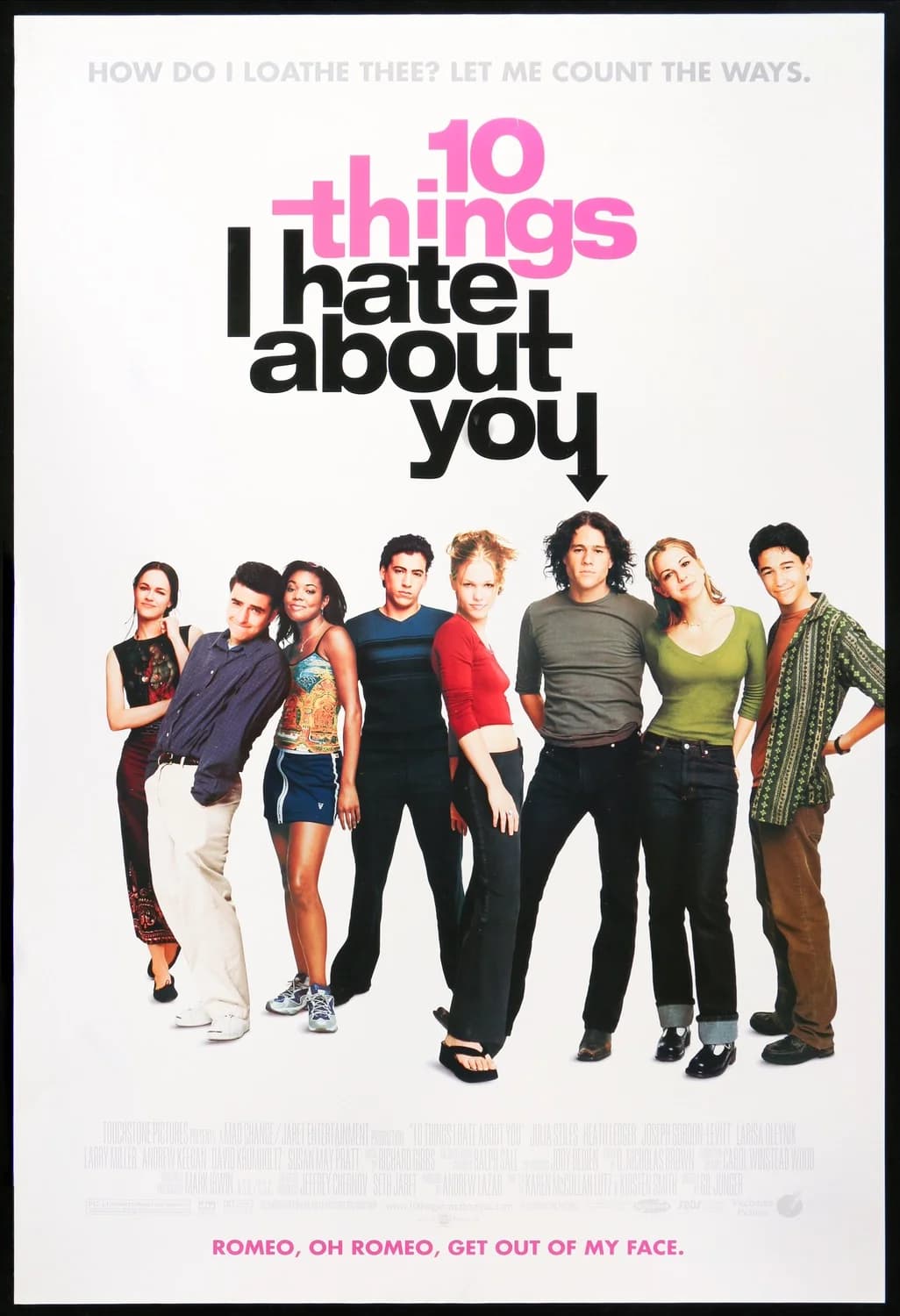
1999 // VHS
10 Things I Hate About You
Sibling rules, a rooftop serenade and one very stubborn Kat — Shakespeare in a school corridor.
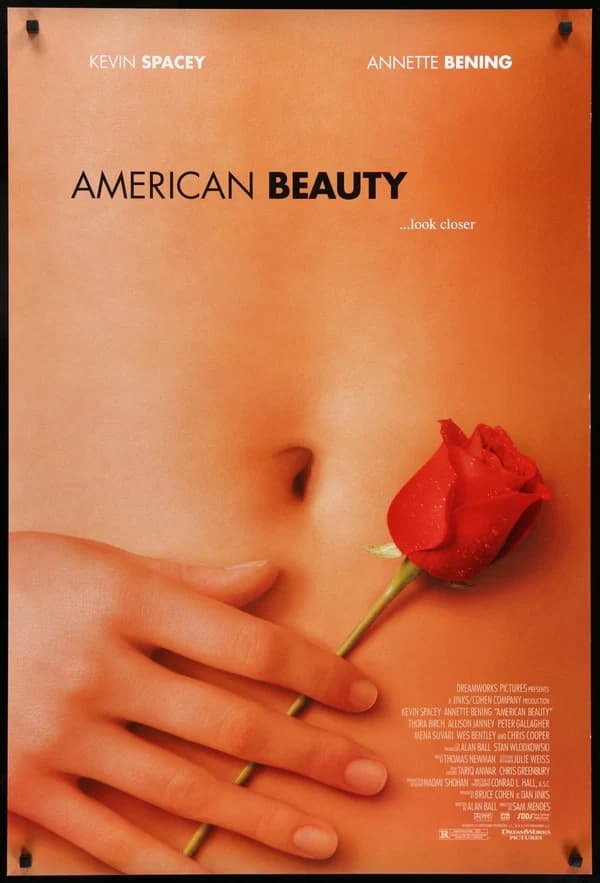
1999 // VHS
American Beauty
Lester Burnham, suburban rot and a midlife argument that still stings.
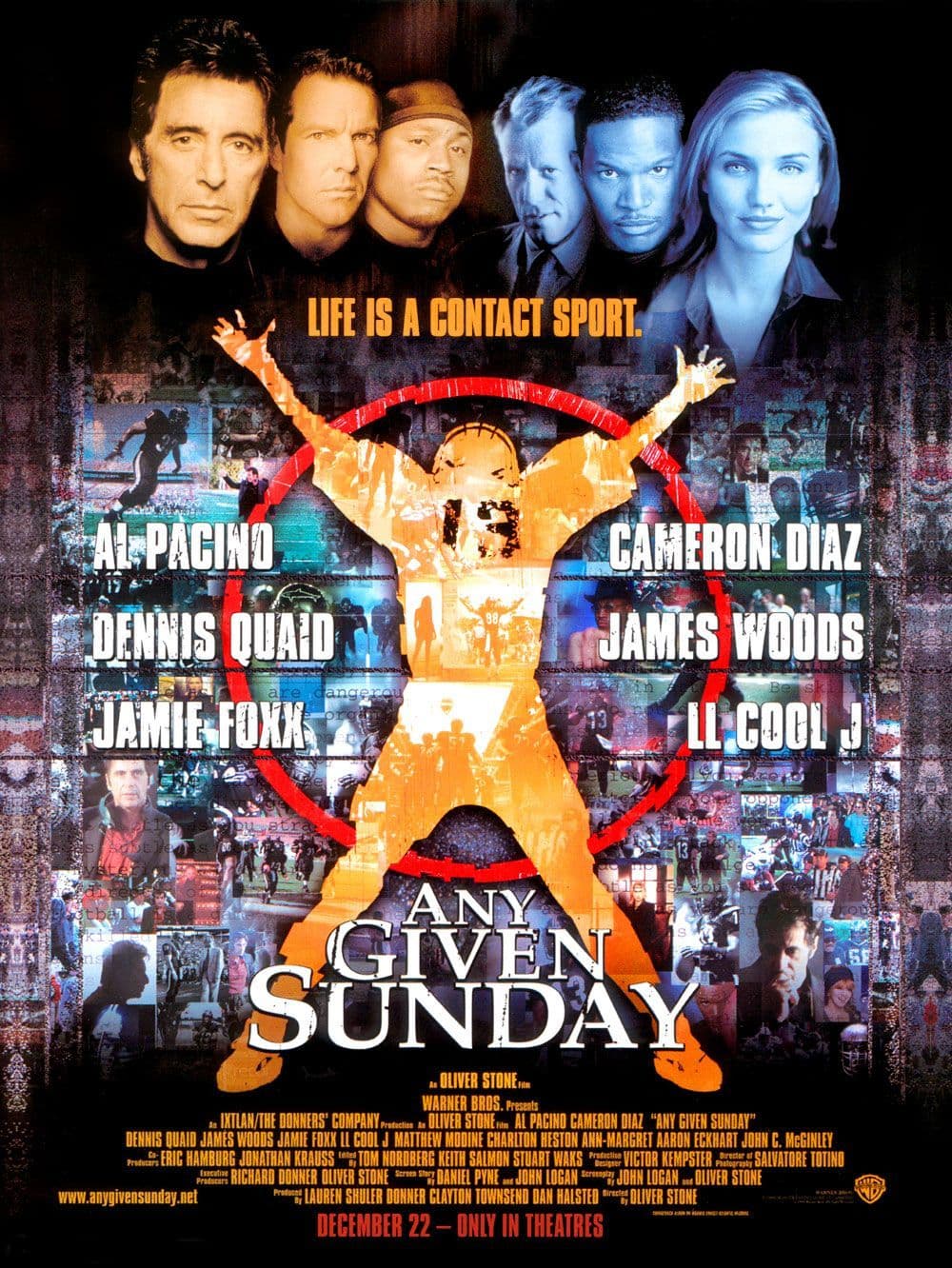
1999 // VHS
Any Given Sunday
Al Pacino's coach anchors the chaos of a film about football turned into product — loud, messy and oddly persuasive.