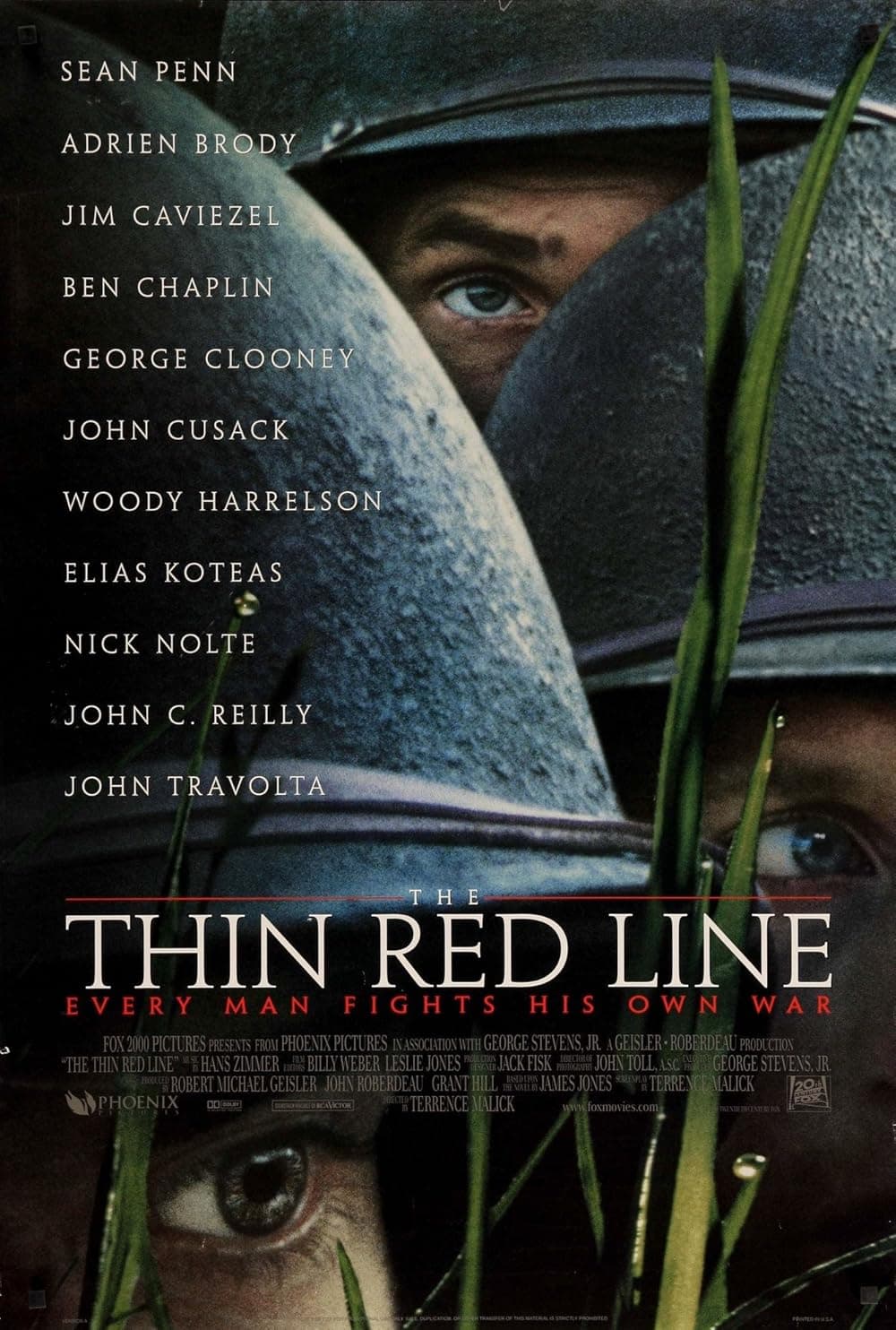
The Thin Red Line
A war movie that listens — and the soldier who makes it listen.
// The setup
PLAYBACK STARTED
Terrence Malick’s The Thin Red Line isn’t an ordinary battlefield picture. It’s the kind of film that stops to watch leaves fall, then goes back to watching men try not to die — and it's Pvt. Witt who turns those two things into a single, stubborn question.
THE MOVIE
Pvt. Robert 'Witt' Wittaker (credited as Pvt. Witt) is still the reason this movie works
There are two obvious ways to make a World War II film: you can make battle into spectacle, the camera as a hammer; or you can make battle into a mirror, and let people watch themselves in it. The Thin Red Line chooses the mirror. It’s an ensemble movie — a mosaic of small, often fragmentary episodes — and out of that many-voiced structure one quietly reflective figure keeps pulling the frame back to the human scale.
That figure is Private Witt. He’s not the loudest man on screen. He’s not the one giving orders or issuing the film’s pithiest lines. What he provides, repeatedly, is a way of seeing — a persistent, nature-oriented outlook that returns again and again amid the chaos, so that the island itself and the men on it start to talk to each other.
Put plainly: The Thin Red Line remains worth revisiting because it resists the usual single-hero mechanics, gives space to interior thought, and uses Witt’s presence to connect the film’s combat vignettes to a set of moral and spiritual questions. That combination is why people still talk about it.
THE SETUP
The idea that sets The Thin Red Line in motion
At its most straightforward the film follows members of C Company as they join the fight for a strategically important island during the Guadalcanal campaign. But ‘following’ here is deliberately loose: the film doesn’t march you down a single plotline so much as arrange moments — a nervy patrol, a flashback, a soldier’s private rumination — into a larger, stitched-together experience.
A primary storytelling device is voice-over. Malick uses interior monologues from various soldiers to fill those stitches: associative reflections, questions about mortality, and observations that often drift toward the natural world. That running commentary is more than narration; it organises how we understand the film’s episodes.
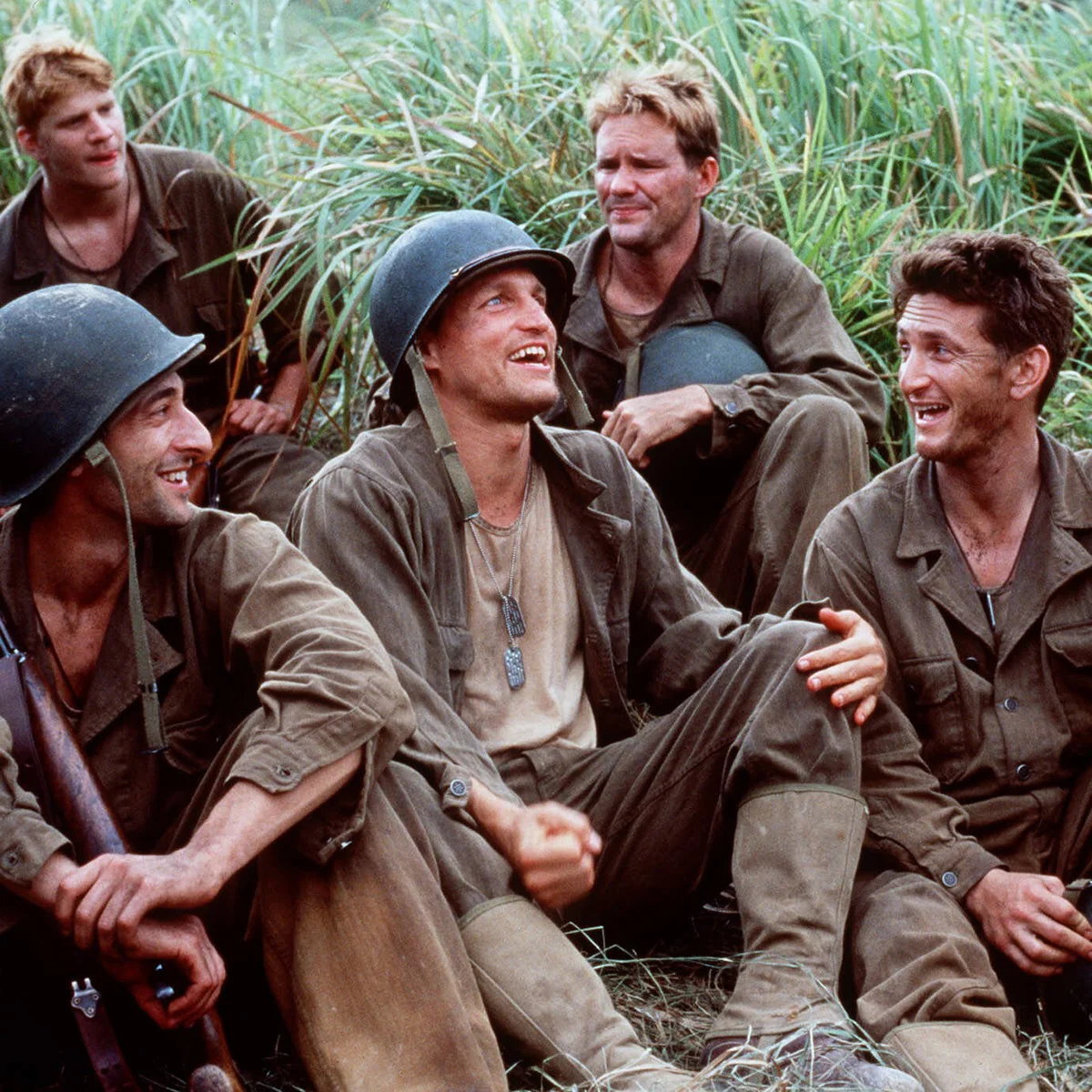
Structurally, present-tense combat sits beside flashbacks and domestic or island-life scenes. The effect is to give short, concentrated scenes room to breathe, so character detail can accumulate without forcing the film into conventional linear storytelling.
That uneven, philosophical approach is exactly why the setup works for this film: it’s less interested in a single heroic arc than in how moments and impressions add up to something like meaning.
THE CHARACTER
Why Pvt. Robert 'Witt' Wittaker (credited as Pvt. Witt) matters
Witt matters because he’s the film’s recurring quiet centre. Jim Caviezel’s Pvt. Witt is the soldier who keeps stepping forward with a private logic: nature matters, life matters, and the presence of beauty on an island full of killing is a question you can’t simply look past.
In a movie assembled from fragmentary episodes and interior voice-over, Witt becomes a touchstone. His reflections pop up across different scenes, and those returns give the film a thread to hold on to — the moral reflex that balances out the battle footage and the strategising.
Think of him as the film’s listening post. While others enact conflict and command, Witt’s outlook keeps returning the camera to small things — a leaf, a bird, a quiet thought — and that repetition makes the big moments feel less like spectacle and more like consequences.
That recurring presence is why Witt is memorable: not because he dominates the plot, but because he quietly reshapes how you experience everything around him.
THE PERFORMANCE
Why Nick Nolte's performance matters
Among the many faces in Malick’s mosaic, critics singled out a few supporting portrayals as especially fully drawn — Nick Nolte’s Lt. Col. Gordon Tall being one of them. That kind of recognition matters in a film with a sprawling cast, because it helps the ensemble feel anchored.
A supporting role that registers, even intermittently, gives the larger structure weight. When a figure like Tall feels realised, the moments around him — command decisions, weary exchanges, the fog of leadership — gain texture without requiring a conventional protagonist.
In other words, having carefully realised supporting players makes the film’s episodic design pay off: each small, believable presence adds human detail to the larger meditation on combat.
So the fuss around Nolte is less about star turns and more about how specific supporting performances supply the movie with palpable centres of gravity.
UNDER THE SURFACE
The Thin Red Line has more on its mind than the plot suggests
The film keeps returning to one clear pairing: the island’s teeming, indifferent natural life against the human business of killing. That contrast — nature versus war — is not decorative. It’s a persistent counterpoint that reframes violence as something that happens on, and to, a living world.
Alongside that, spirituality and existential thinking thread through the voice-overs. Soldiers wonder about mortality and meaning; the film stages these questions without pretending to deliver neat answers. It’s less sermon than a series of private stares.
Because Malick foregrounds interior thought, the movie privileges individual psychological response over tactical explanation. We feel how men remember, how they grieve, and how the costs of violence accumulate in small moments rather than in battle maps.
Taken together, those elements make the film feel like a meditation: a war movie that keeps getting pulled back to questions about life, memory and what the world is doing while humans fight.
THE FILMMAKING
How The Thin Red Line was put together
A lot of the film’s character comes from how it was made. John Toll’s cinematography is repeatedly described as luminous and painterly — the sort of photography that lingers on light filtering through foliage and finds detail in the island’s natural life. Those images are not incidental; they’re structural.
Malick’s editing process was extensive: the film we saw was reworked from a much longer initial cut. That prolonged shaping in post allowed the movie’s episodic rhythm — the stops and starts, the flashes of memory and the recurring voice-over — to be balanced into a single, deliberate experience.
Production design under Jack Fisk used practical, on-location environments rather than studio constructs, which gives the island sequences a physical weight you can feel. The use of real settings and many extras means the battle moments sit in a concrete world, even when the film’s focus is lyrical.
Put together, these choices — photography that looks for light, meticulous editing, and solid on-location production — create the particular identity that people mean when they talk about Malick’s return to form.
PRACTICAL EFFECTS
The effects work that gives The Thin Red Line its physical personality
The film’s battle sequences were staged on location with hundreds of extras and substantial practical setwork in the Queensland rainforests and on beaches. That scale of on-location staging gives many scenes the genuine bustle and confusion of a large engagement.
Technical choices on set emphasised cinematography and practical production over digital trickery: principal photography used Panavision cameras and lenses, and the production leaned on photographic craft rather than on post-production magic.
That combination — a wide cast of extras, tangible sets and heavy reliance on the camera’s eye — keeps the film grounded even when its mood turns inward.
So when Malick chooses a close, reflective moment in the middle of a battle, the physical production behind it prevents the reflection from feeling detached or purely decorative.
PURE 80S
The Thin Red Line could not belong to any other decade
The Thin Red Line announced Terrence Malick’s return after roughly a twenty-year break from feature filmmaking, and that timing mattered. It reintroduced his lyrical approach to an audience and a market that in the late 1990s was occasionally willing to fund ambitious auteur projects.
The film’s production itself— a studio-financed, art‑film scale effort from Phoenix Pictures with distribution through 20th Century/Fox 2000 — illustrates that late-90s moment when studios sometimes backed director-driven films that weren’t strictly commercial in shape.
That institutional willingness, plus Malick’s reappearance, gives the movie a particular 1990s resonance: it’s a major-studio movie that behaves like a personal, museum-sized meditation.
So while the film isn’t a period piece, its existence — and the way it was made and released — says something about the turn-of-the-millennium film landscape.
THE LEGACY
Why The Thin Red Line still matters
The film’s pedigree is plain in its awards and critical attention: it earned multiple major nominations and prizes, including seven Academy Award nominations and the Golden Bear for Best Film at the 1999 Berlin International Film Festival. That level of recognition helped secure its place in late-20th-century cinema conversation.
Ongoing preservation and scholarly interest are signalled by a director‑approved restoration and a Criterion Collection Blu-ray/DVD release with a new 4K transfer supervised by Terrence Malick and John Toll. That level of care tells you this is a movie people wanted to keep looking at closely.
Beyond trophies and restorations, the film’s particular blend of philosophical voice-over, ensemble episodes and painterly imagery has continued to be discussed in critical and scholarly writing about war cinema and Malick’s body of work.
Put another way: it matters because it keeps inviting reappraisal. People still want to argue about what it’s doing and why its choices were worth taking.
THE VERDICT
Does The Thin Red Line still hold up?
Yes — if your appetite for war cinema is patient and reflective. The Thin Red Line isn’t a conventional single‑protagonist story; it’s an ensemble mosaic of episodic vignettes arranged around a central amphibious assault. That shape allows the film to prioritise internal life and moral questioning over blow-by-blow operational detail.
If you respond to voice-over as a structural choice, the film delivers: interior reflections from various soldiers knit together the present-tense combat with flashbacks and quiet moments, offering a portrait of how men remember, grieve and try to find meaning amid violence.
At the heart of that approach is Witt — the quietly spiritual soldier whose outlook keeps clashing with the more embittered world-weariness of men like First Sergeant Welsh. That contrast is where the movie gets its human friction; the quieter, interior scenes give the battle sequences emotional consequence.
So watch it for the questions it asks rather than the answers it hands you. If you want a war film that measures cost in small, haunted moments and is willing to let nature and silence speak, The Thin Red Line still has something to offer.
Share this movie
// Keep watching
More movies from the 90s
If The Thin Red Line is your kind of movie, there's plenty more on the shelves worth rewinding.
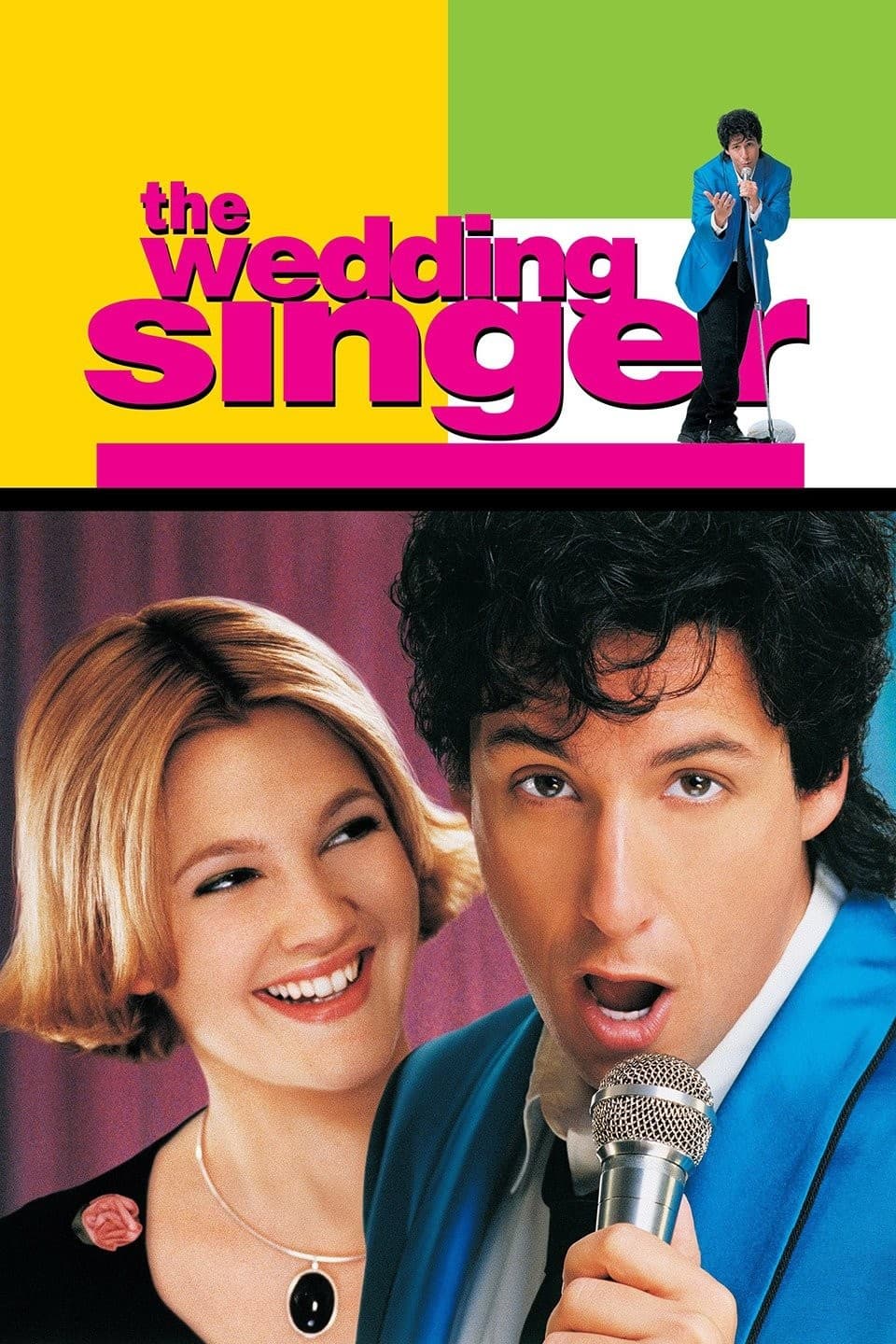
1998 // VHS
The Wedding Singer
A love story wrapped in 1980s pop — and carried by one very earnest wedding crooner.

1998 // VHS
There's Something About Mary
Romantic obsession, awkward masculinity and a hair‑gel gag you can't unsee.
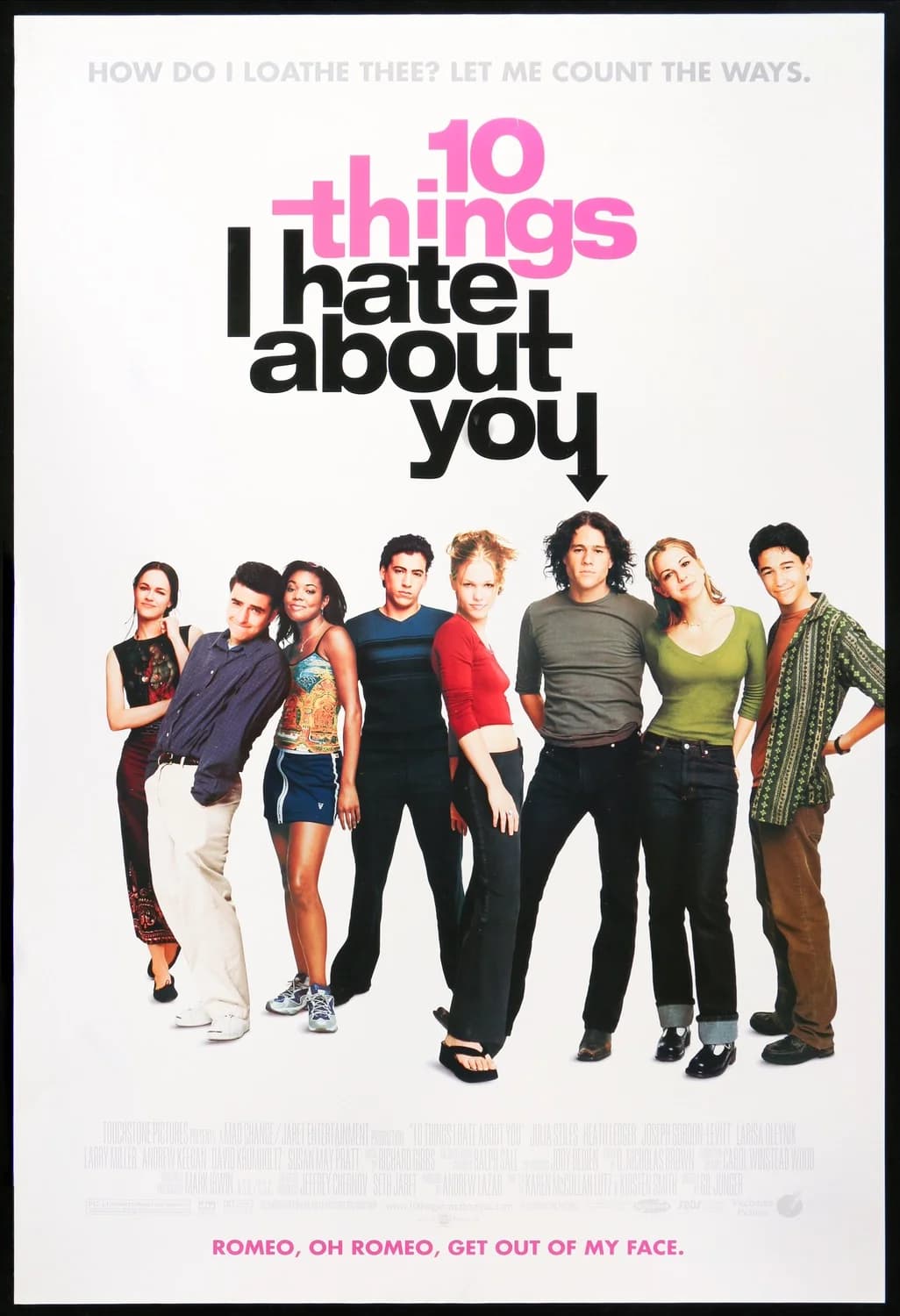
1999 // VHS
10 Things I Hate About You
Sibling rules, a rooftop serenade and one very stubborn Kat — Shakespeare in a school corridor.