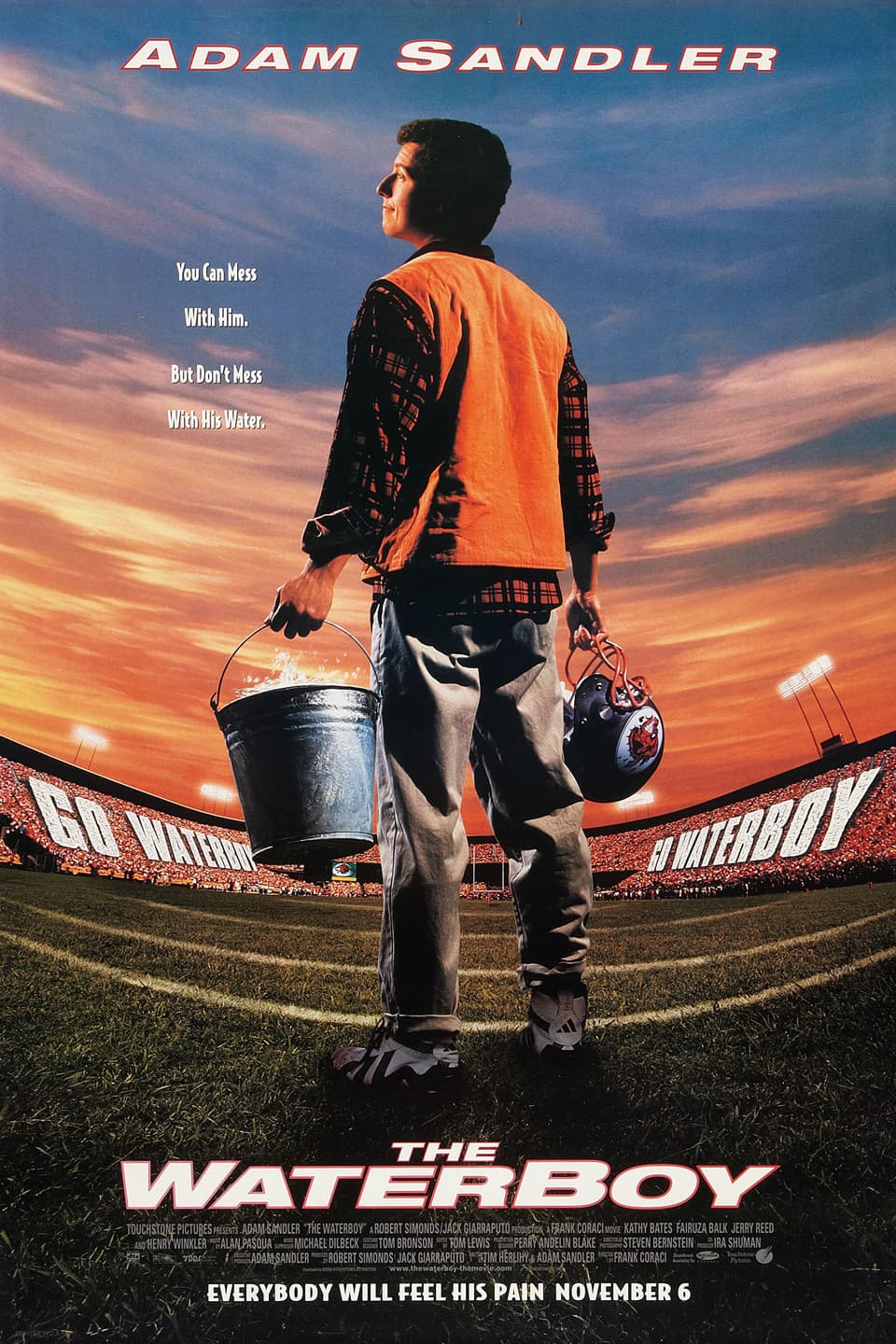
The Waterboy
A loud, silly, affectionate underdog — and Bobby Boucher is still the loudest reason to watch.
// The setup
PLAYBACK STARTED
You know the gag: an overprotected, stuttering grown man pours water for college football players and then proceeds to tackle people into next week. The Waterboy is that gag stretched into 90 minutes of sticky, baritone comedy, directed by Frank Coraci and carried by Adam Sandler's peculiar lead. Revisit it for Bobby Boucher more than the plays; he's the oddball engine that keeps everything moving.
THE MOVIE
Bobby Boucher is still the reason this movie works
There’s a simple, stubborn truth at the heart of The Waterboy: you’re there for Bobby Boucher. He’s a 31‑year‑old water‑distribution engineer who should, by every measure, be invisible to a college football team — but he isn’t. He gets humiliated, he stutters, he obeys his mother without question and, crucially, he has sudden, terrifying bursts of tackling ability when pushed too far.
That strange mix — social naivety and surprising violence — gives the film its comic rhythm. Frank Coraci directed the whole thing in 1998 and Adam Sandler plays Bobby; Kathy Bates turns up as his overprotective mother, Helen “Mama” Boucher, and Fairuza Balk appears as Vicki, the childhood crush who nudges Bobby toward independence.
The movie is short and punchy — ninety minutes of high‑concept silliness that leans into sports comedy and mother–son dynamics. If you remember one thing about The Waterboy, let it be that it’s built around an utterly peculiar central figure rather than around any single gag or set‑piece.
THE SETUP
The idea that sets The Waterboy in motion
The plot is straightforward on purpose: Bobby gets fired from the top team he waters and drifts into an unpaid job with the downtrodden Mud Dogs. That switch — from invisible courier of coolers to the odd new thing in a second‑rate locker‑room — is the film’s engine.
What gives the story some bite is the tug of war Bobby lives in. On one side is a chance to belong and to excel on the field; on the other is his domineering, religious mother who forbids him from playing. That domestic control supplies most of the emotional friction the comedy needs.
There’s also a very tidy obstacle built into the sport‑movie mechanics: eligibility. The film adds a fake‑transcript problem that forces Bobby to study for and pass a GED if he wants to keep playing, which lets the story stop for a moment of earnestness amid the jokes.
It’s a neat, functional setup: an outsider stumbles into opportunity, resists family control, and must clear a practical hurdle if he’s going to stay on the team — all the familiar beats of an underdog sports comedy, with Bobby’s eccentricities doing the heavy lifting.
THE CHARACTER
Why Bobby Boucher matters
Bobby isn’t memorable because he’s clever or slick; he’s memorable because he’s peculiar and consistent. He’s defined by social naivety, a pronounced stutter and an almost childish deference to his mother — traits that the film returns to again and again to get laughs and to create tension.
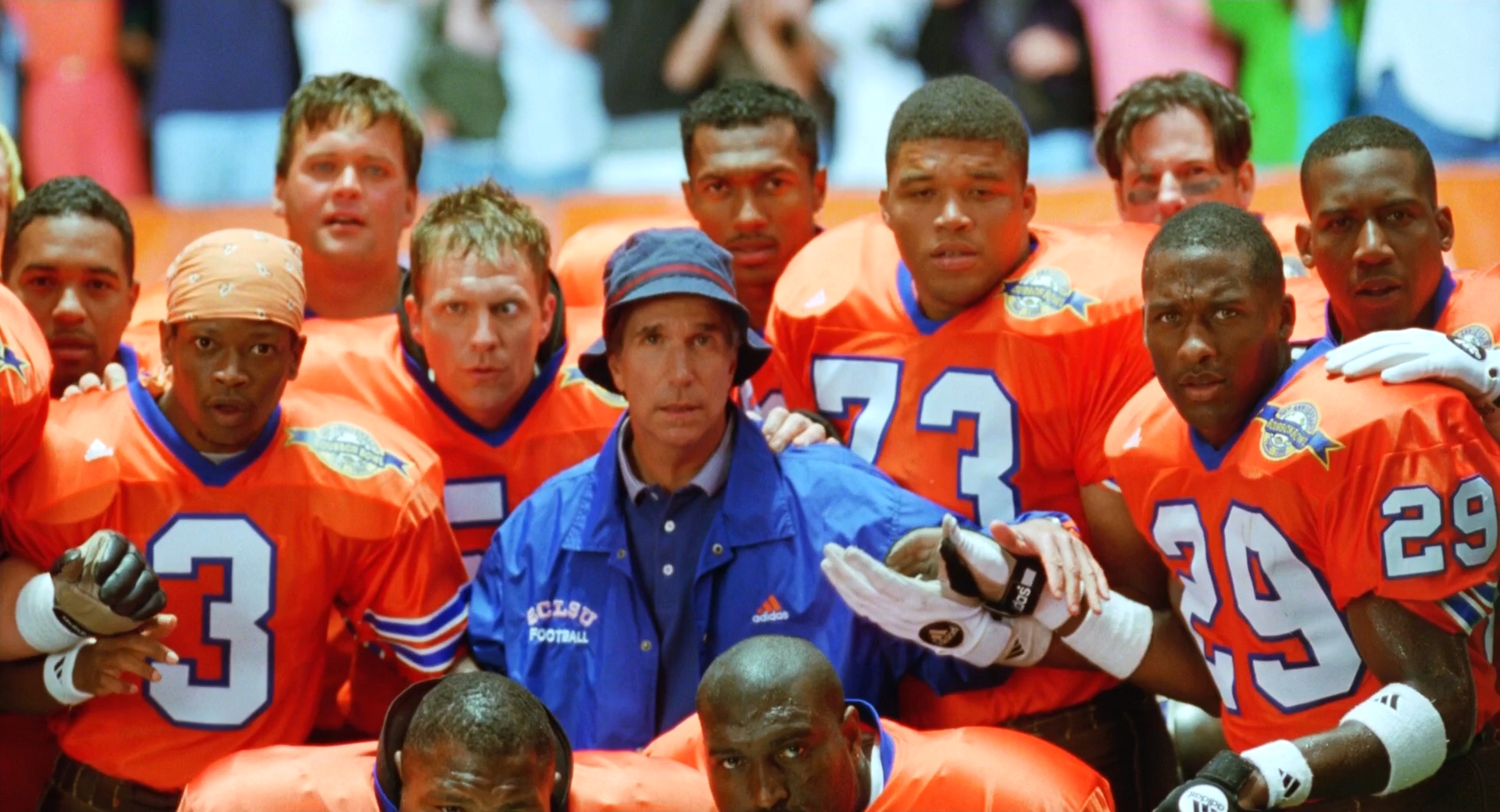
That dependence on Mama is no throwaway joke. Helen’s overprotectiveness is the film’s primary emotional obstacle: she shapes Bobby’s world, limits his independence and gives the movie a moral centre to push against. The comedy often follows from Bobby trying to reconcile what he wants with what she allows.
Vicki, the childhood crush, works as a proper catalyst: her presence gives Bobby a straightforward, human reason to test himself and attempt something different. Meanwhile teammates such as Derek help slot Bobby into the Mud Dogs’ locker‑room culture so the audience can see him belong without losing the comic oddness that defines him.
Put simply: the film exists because Bobby is a character worth watching. Everything else — the football, the cameos, the season — orbits him.
THE PERFORMANCE
Why Adam Sandler's performance matters
Sandler’s Bobby is a deliberate, attention‑grabbing choice. Not everyone liked it — Roger Ebert, for one, singled out the character’s voice and mannerisms as especially grating — and that criticism is part of the film’s reception history.
Yet the performance also earned mainstream validation: Sandler won the 1999 MTV Movie Award for Best Comedic Performance even as he picked up a Golden Raspberry nomination for Worst Actor. That split says something useful: the role divides opinion because it’s so specific and unvarnished.
So whether you find Bobby funny or annoying comes down to tolerance for a very particular comic style. The part was always meant to be an acquired taste; evidently a lot of people acquired it.
UNDER THE SURFACE
The Waterboy has more on its mind than the plot suggests
Under the slapstick and the tackling, the film keeps returning to mother–son dependence. Helen’s control is not just a comic prop; it’s the pressure that forces Bobby either to stay small or to grow, and that conflict makes the jokes land with a little extra weight.
There’s also the underdog story at work: an outsider who’s mocked but who finds a way to be valuable. The Mud Dogs are the usual ragged team in need of a miracle, and Bobby’s arrival is the classic redemption mechanism of the sports movie.
The film toys with performative masculinity as well. A lot of the humour comes from placing a non‑typical “tough” figure at the centre of football culture and watching the locker‑room rituals bend around him. That tension between appearance and ability feeds both the comedy and the character beats.
Finally, humiliation is never purely mean‑spirited here; it’s comic humiliation that the movie then balances with resilience. Bobby is knocked down, publicly embarrassed, and keeps showing up — and that repetition makes his successes feel earned in the movie’s terms.
THE FILMMAKING
How The Waterboy was put together
Frank Coraci directed the picture, and the production credits list Steven Bernstein as the director of photography and Tom Lewis as editor. Those are compact, studio‑comedy credits: a director with a clear comic lead, a photographer to capture it, and an editor to keep the jokes moving.
That trio’s job here is modest and specific: the film needs to present Adam Sandler’s peculiar lead clearly and to cut between the set‑pieces and the quieter mother–son scenes without losing pace. Coraci’s direction, supported by Bernstein and Lewis, serves that exact purpose.
There’s nothing showy on display; the filmmaking choices are functional rather than decorative, which is precisely what the film requires to keep its broad tone intact.
PURE 80S
The Waterboy could not belong to any other decade
The Waterboy arrived in November 1998 at a moment when Adam Sandler was a reliable box‑office draw and broad studio comedies still played for mass audiences. The film opened at number one and even set a November opening‑weekend record at the time — proof that the late‑90s market loved this brand of loud, simple comedy.
It also embraced a familiar 1990s habit: stuffing the cast with celebrity sports cameos and leaning on sportscasting figures to sell the gag. That kind of cross‑promotion — pop comedy rubbing shoulders with the world of football — felt particularly of its era.
So yes, the movie wears its moment on its sleeve. It’s a late‑90s product: commercial, slightly shameless about its crowd‑pleasing instincts, and reliant on celebrity appearances to give the football world some texture.
THE LEGACY
Why The Waterboy still matters
The film’s afterlife is partly commercial fact: it opened to roughly $39.4 million and went on to a substantial domestic gross, making it one of the higher‑earning studio comedies of 1998. That kind of success keeps a film around in conversation longer than a modest flop would.
There’s also a mixed awards footnote that has become part of the movie’s story: Sandler won an MTV Movie Award for Best Comedic Performance while simultaneously being nominated for a Razzie for Worst Actor. It’s a neat encapsulation of The Waterboy’s split reception.
Beyond numbers and trophies, the film turned into a recurring referent in sports and pop‑culture writing: commentators and columnists use Bobby’s story and certain character beats as shorthand in discussions of athletes, coaches and comic mainstreamesque moments. And the film hasn’t been completely shelved by its star — Sandler said in 2022 he’d be open to a sequel, which suggests the property still matters to those involved.
So its legacy is a mix of commercial heft, contested critical opinion and an ongoing presence in pop‑culture conversation rather than a tidy, singular reputation.
THE VERDICT
Does The Waterboy still hold up?
Short answer: yes — if you go in for its particular brand of comedy. The Waterboy is a film that rests almost entirely on one stubborn conceit: Bobby is socially awkward, intensely loyal to his mother and capable of violent athletic outbursts when provoked. The movie builds its season‑long arc — the Mud Dogs’ run toward the Bourbon Bowl — around that conceit and the conflicts it produces.
That central conflict — Bobby’s desire to play versus his mother’s prohibition — gives the film a surprising emotional throughline amid the absurdity. There are practical story hurdles too: being fired, joining the Mud Dogs, and even the fake‑transcript problem that forces Bobby to earn a GED so he can keep playing. All of that keeps the comedy grounded in a recognisable sports‑movie structure.
If you dislike Sandler’s vocal mannerisms, you’ll find the lead grating; critics at the time noted the same split of opinion. If you’re willing to ride the specific joke, though, the performances, the season arc and the mother–son tension combine into a satisfying, fast ninety minutes.
So should you watch it? If you want a sentimental underdog dressed up as broad farce, yes. If you prefer comedies that aim for subtlety, maybe not. But The Waterboy remains worth a viewing for Bobby alone — an oddball figure who refuses to be background noise, and who turns a simple sports joke into something larger than a single punchline.
Share this movie
// Keep watching
More movies from the 90s
If The Waterboy is your kind of movie, there's plenty more on the shelves worth rewinding.
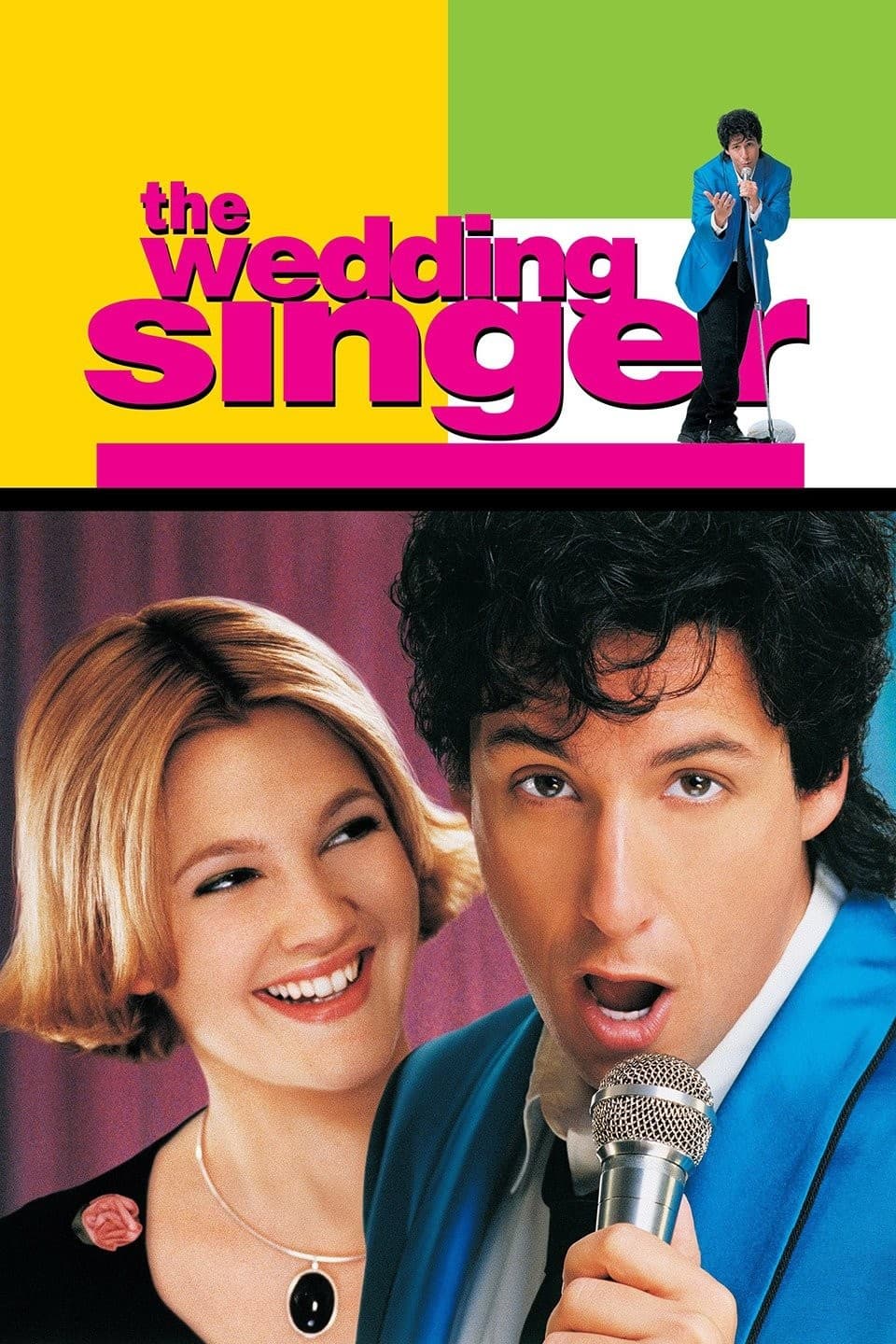
1998 // VHS
The Wedding Singer
A love story wrapped in 1980s pop — and carried by one very earnest wedding crooner.
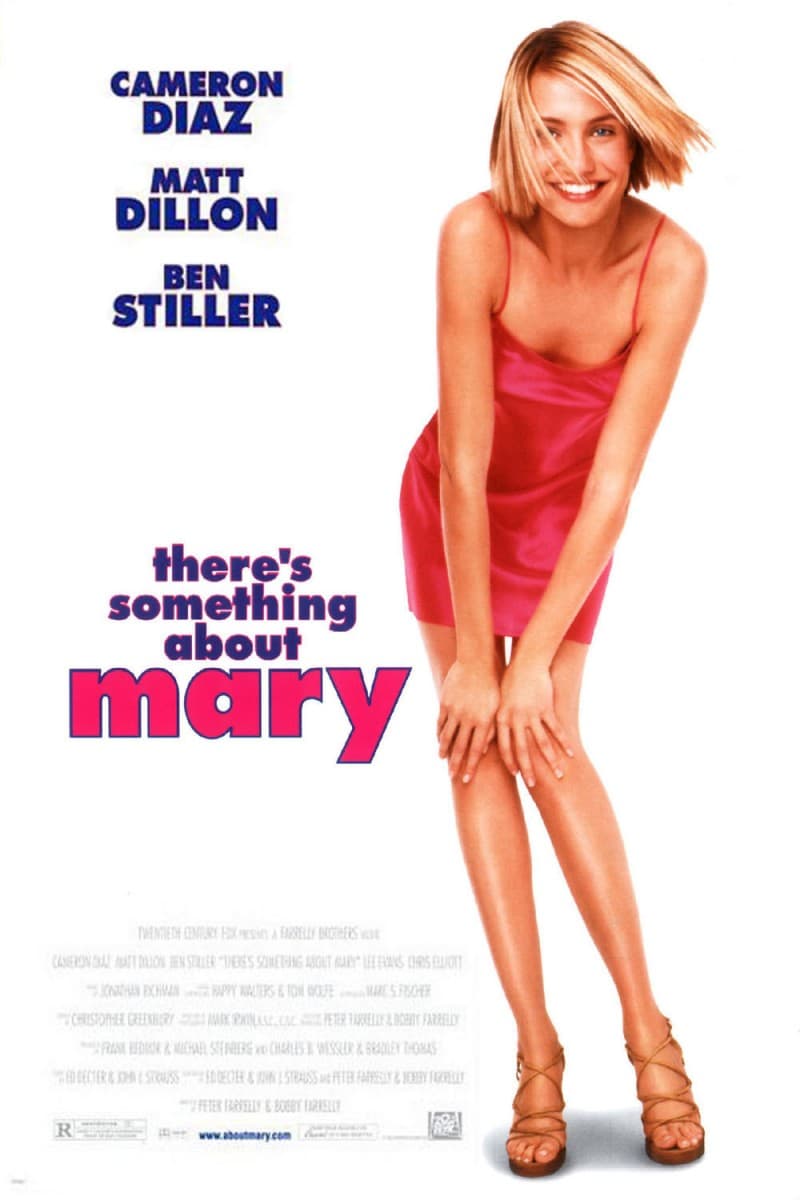
1998 // VHS
There's Something About Mary
Romantic obsession, awkward masculinity and a hair‑gel gag you can't unsee.
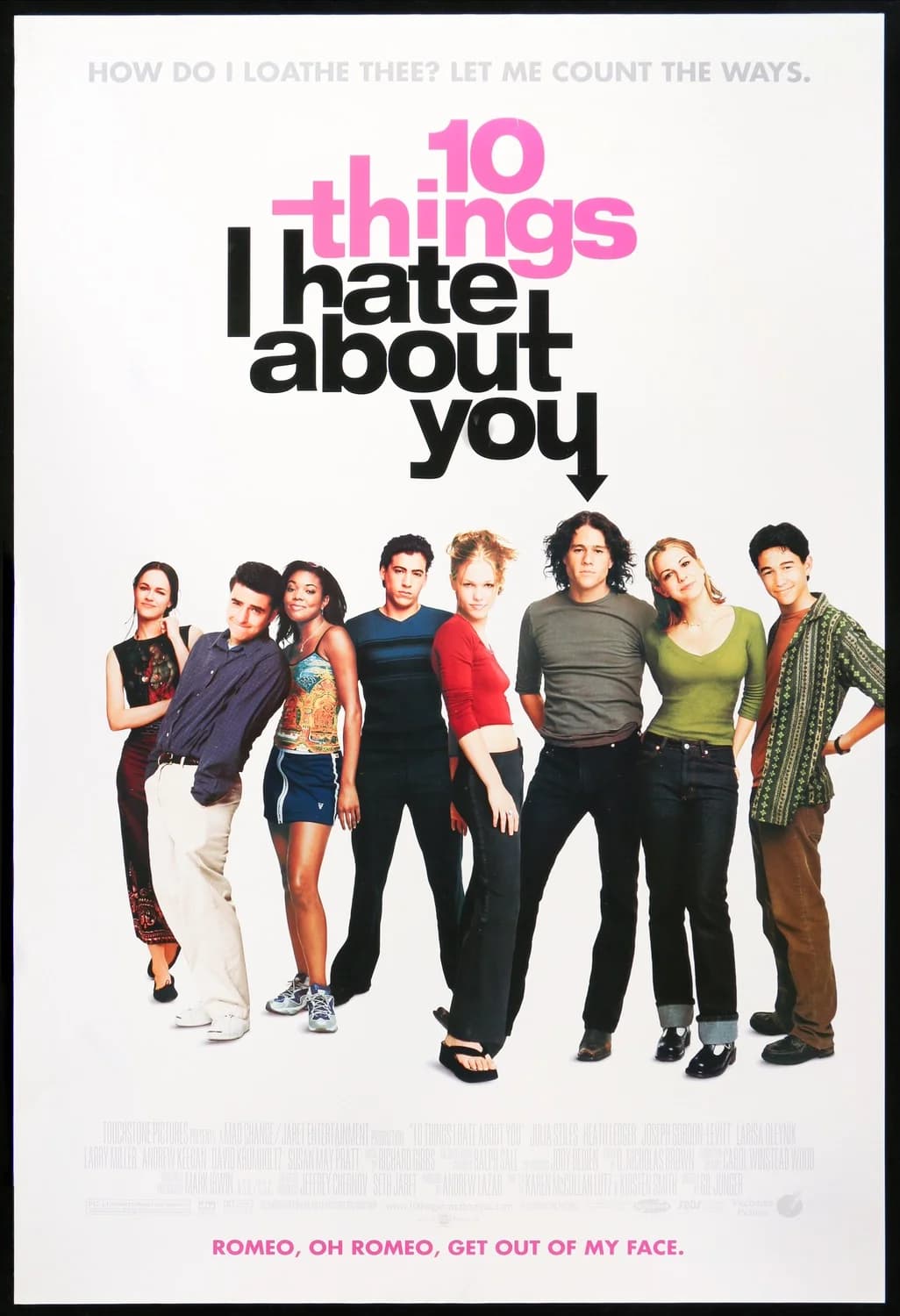
1999 // VHS
10 Things I Hate About You
Sibling rules, a rooftop serenade and one very stubborn Kat — Shakespeare in a school corridor.