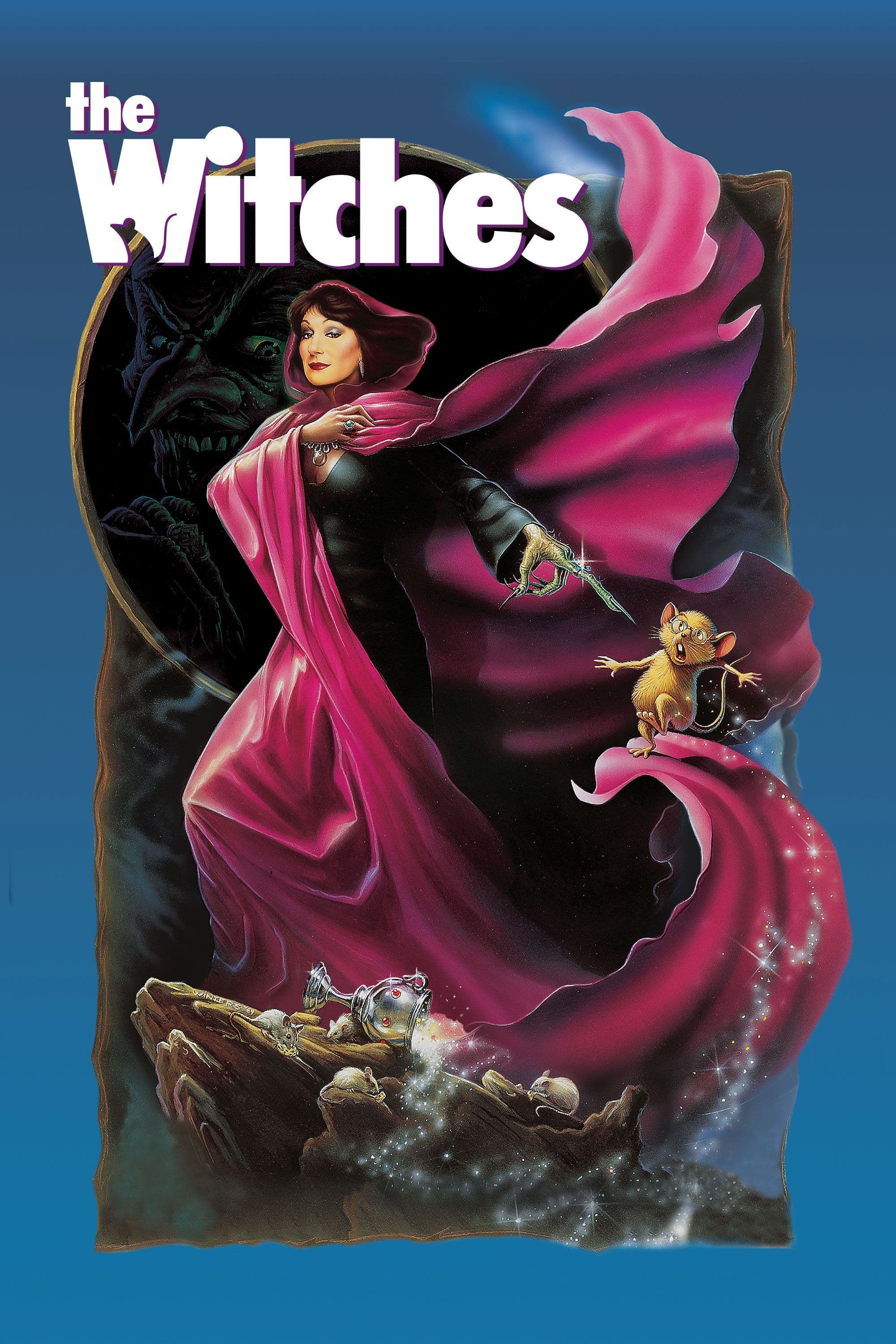
The Witches
A seaside hotel, a grandmother on watch and a boy who discovers the grown-ups are hiding something terrible.
// The setup
PLAYBACK STARTED
Nicolas Roeg’s The Witches cuts straight to the nervous, delicious part of Roald Dahl: adults who are not what they seem and children left to figure out how to survive. It’s a film built around one curious nine-year-old — Luke Eveshim — and the grim problem he uncovers at an English seaside hotel.
THE MOVIE
Luke Eveshim is still the reason this movie works
There’s a moment early on when the film hands you its key: nine-year-old Luke and his grandmother Helga arrive at a grand seaside hotel and the ordinary world suddenly looks like a costume. That simple set-up — a boy and his protective elder encountering a secret convention of witches — is where everything interesting starts.
The threat is precise and oddly domestic: the Grand High Witch, disguised as Miss Eva Ernst, plans to use a poison called Formula 86 to turn children into mice. It’s a small, horrible idea, which is why it lodges in the imagination; the stakes are childhood safety rendered as a believable, mechanical menace.
That clarity of premise is why the movie still gets under nerves: Roeg directs the thing in 1990, Jasen Fisher is credited as Luke, Anjelica Huston as Miss Eva Ernst / the Grand High Witch, and the film threads fantasy, horror and comedy through an oddly convincing sense of appearance versus reality.
THE SETUP
The idea that sets The Witches in motion
At its cleanest, The Witches gives you a single conceit and lets the story stretch around it. It adapts Roald Dahl’s book to follow Luke and his grandmother after their unsettling discovery at an English seaside hotel.
What complicates the set-up is that Luke himself becomes a victim of the witches’ method. He’s dosed and transformed into a mouse, which flips the story’s playing field: the human world goes on around him while he must act at a different scale.
That reversal — a child reduced in size and forced to sabotage the witches from inside the hotel — keeps the plot taut without turning it into a slow-motion chase. The idea is simple, but it forces the characters into a vivid, confined problem to solve.
THE CHARACTER
Why Luke Eveshim matters
Luke is not chosen because he’s flawless; he’s chosen because he’s curious. Jasen Fisher is credited as Luke Eveshim, and the character’s habit of eavesdropping and asking the wrong questions is what sets the plot in motion.
Crucially, when Luke is turned into a mouse, he doesn’t become a passive victim. The narrative makes him an active engine: his smallness forces daring improvisation and the film’s set pieces tilt around his new size and perspective.
That shift also brings other children into play — Bruno Jenkins, for example, becomes a friend-ally who shares the consequences of the witches’ plan — which pushes Luke from lone investigator into someone who has to protect others as well as himself.
So Luke matters because he’s the audience’s foothold: inquisitive, vulnerable and forced into resourcefulness, he turns a neat Dahl idea into an urgent, character-driven problem.
THE PERFORMANCE
Why Anjelica Huston's performance matters
Contemporary reviewers singled out Anjelica Huston’s work as worth noticing, which matters for a film that relies on one principal antagonist carrying the uncanny centre.
Her casting as Miss Eva Ernst, who privately is the Grand High Witch, gives the film a focal point around which the other adults revolve and the children plot.
That attention from critics helped fix the Grand High Witch in viewers’ minds: she’s the movie’s unmistakable adult threat, the person whose plan — revealed at the convention — sets everything else moving.
So Huston’s presence anchors the film: when the witches are revealed, the audience knows exactly who is in charge of the menace.
UNDER THE SURFACE
The Witches has more on its mind than the plot suggests
Beneath the hotel’s carpet and chandeliers the movie is quietly interested in childhood vulnerability. It stages adults as predators of a peculiarly domestic sort: women who look ordinary but are secretly planning to harm children.
Intergenerational guardianship is the story’s other steady thread. Helga Eveshim functions as Luke’s protector, and their relationship — a younger child under the watch of an elder with a fearful history — shapes how the movie handles danger and survival.
Appearance versus reality is the obvious theme: witches who pass as respectable women underline the film’s distrust of grown-up appearances. That suspicion of ordinary surfaces gives Dahl’s premise its moral bite.
Finally, there’s transformation and loss of agency. Turning children into mice literalises the terror of being made powerless, and the film keeps returning to how small bodies and quick thinking change what guardianship and courage can look like.
PRACTICAL EFFECTS
The effects work that gives The Witches its physical personality
This is a film that feels tactile because it is tactile. Jim Henson’s Creature Shop designed the prosthetics for the witches and built animatronic rats and mice that were used alongside live animals.
The production didn’t rely on one single trick either: three different scales of mouse props and puppets were employed — life-size for some interactions, enlarged hand-puppet scales for others, and intermediate sizes to bridge action — so scenes could read convincingly at different distances.
The Grand High Witch’s transformation involved serious makeup and prosthetic application, handled by specialist artists and coordinators; contemporary reports noted just how much work went into creating that final look.
Credits name multiple Henson puppeteers and mechanical designers, which is the kind of detail that explains the film’s mixture of mechanical whimsy and slightly menacing physicality.
PURE 80S
The Witches could not belong to any other decade
Although it was released in 1990, The Witches carries the tail end of an ’80s mood: Jim Henson-style creature effects applied to a dark, child-oriented fantasy at a moment when mainstream family films were growing cautious.
Part of Nicolas Roeg’s filmography, it’s the sort of curious, slightly offbeat project that fits the director’s willingness to mix tone and unsettle expectations across the 1970s–1990s.
And because it’s a direct screen adaptation of Roald Dahl’s 1983 novel, the film sits in a very specific place where children’s literature, practical creature craft and a slightly daredevil production attitude meet.
THE LEGACY
Why The Witches still matters
There are a few tidy reasons the film keeps being talked about. For one, it was the last theatrical project Jim Henson worked on before his death in May 1990; Henson is credited as an executive producer and his Creature Shop supplied much of the prosthetic and animatronic work.
At the time of release the film picked up genre-industry nominations — including nods from the Saturns — and critics’ groups singled out Anjelica Huston for recognition, which helped fix the movie’s reputation in the period press.
Finally, the movie has received collector attention in later years, including region-specific Blu-ray reissues and a 30th-anniversary UK Blu-ray in October 2020, which keeps it present for new audiences and fans alike.
THE VERDICT
Does The Witches still hold up?
Yes — but with a small, honest rider. The Witches is worth seeing because it keeps its central promise: a clear Dahl premise about adults preying on children, and a compact problem that turns a seaside hotel into a battleground of scale and cunning.
Luke’s arc — a curious boy (Jasen Fisher) who is dosed and transformed into a mouse and then forced to act from a different scale — keeps the film urgent, while Helga’s role as guardian gives the story a tough, survival-minded heart.
Anjelica Huston’s Grand High Witch remains the film’s formal centre; contemporary praise for her performance matters because the convention scene where Miss Eva Ernst unveils Formula 86 is the film’s hinge, the instant the threat becomes specific and visible.
So if you tolerate a film that mixes horror and children’s fantasy and enjoy practical creature work — the production leant on Henson’s Creature Shop and on oversized sets so the mice could genuinely feel small inside a human world — The Witches still rewards watching. It’s a neatly mischievous, slightly grim fairy tale that remembers it’s telling children to be careful about who to trust.
Share this movie
// Keep watching
More movies from the 90s
If The Witches is your kind of movie, there's plenty more on the shelves worth rewinding.
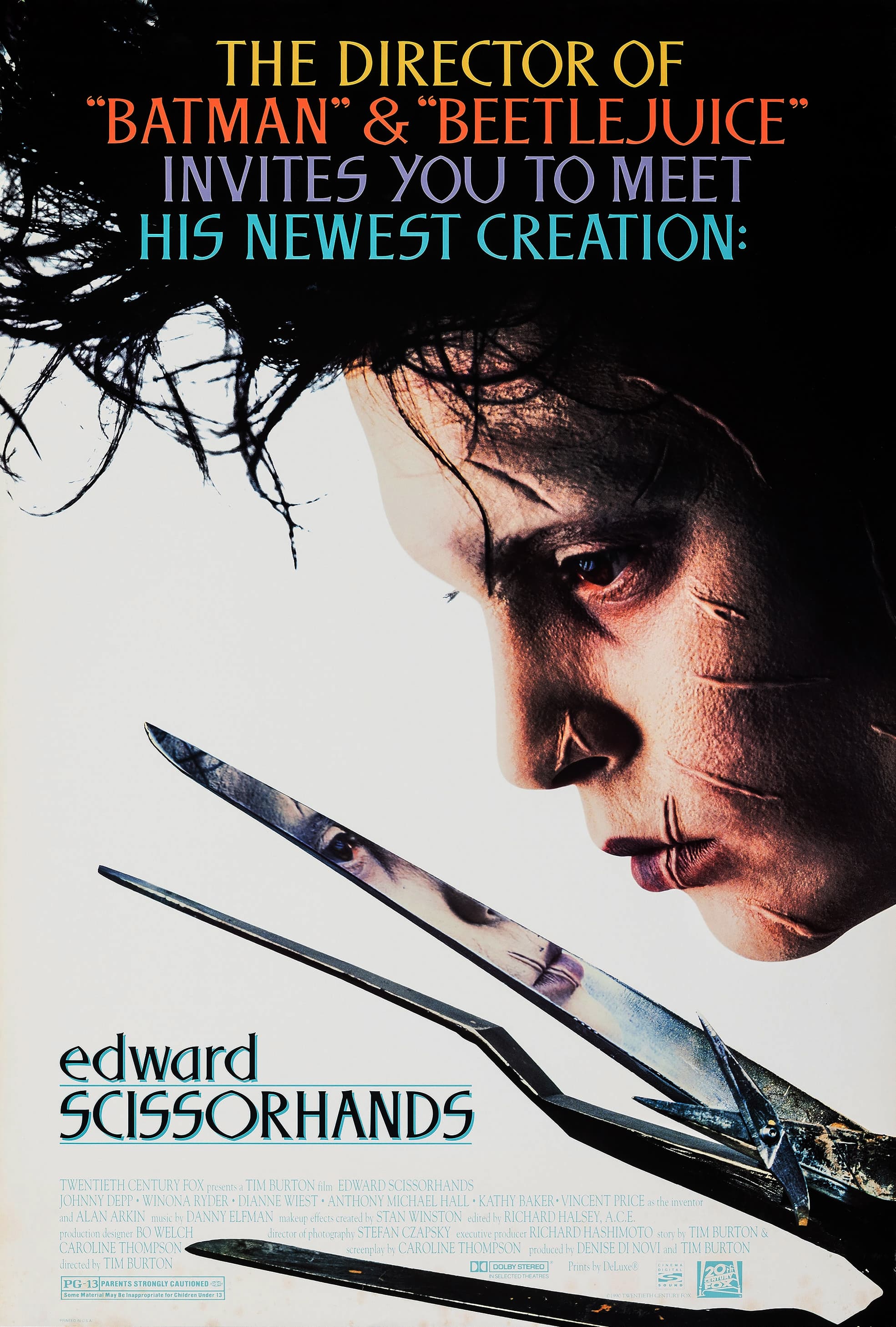
1990 // VHS
Edward Scissorhands
A fairy tale about a man who can’t quite touch the world — and the neighbourhood that can’t quite handle him.
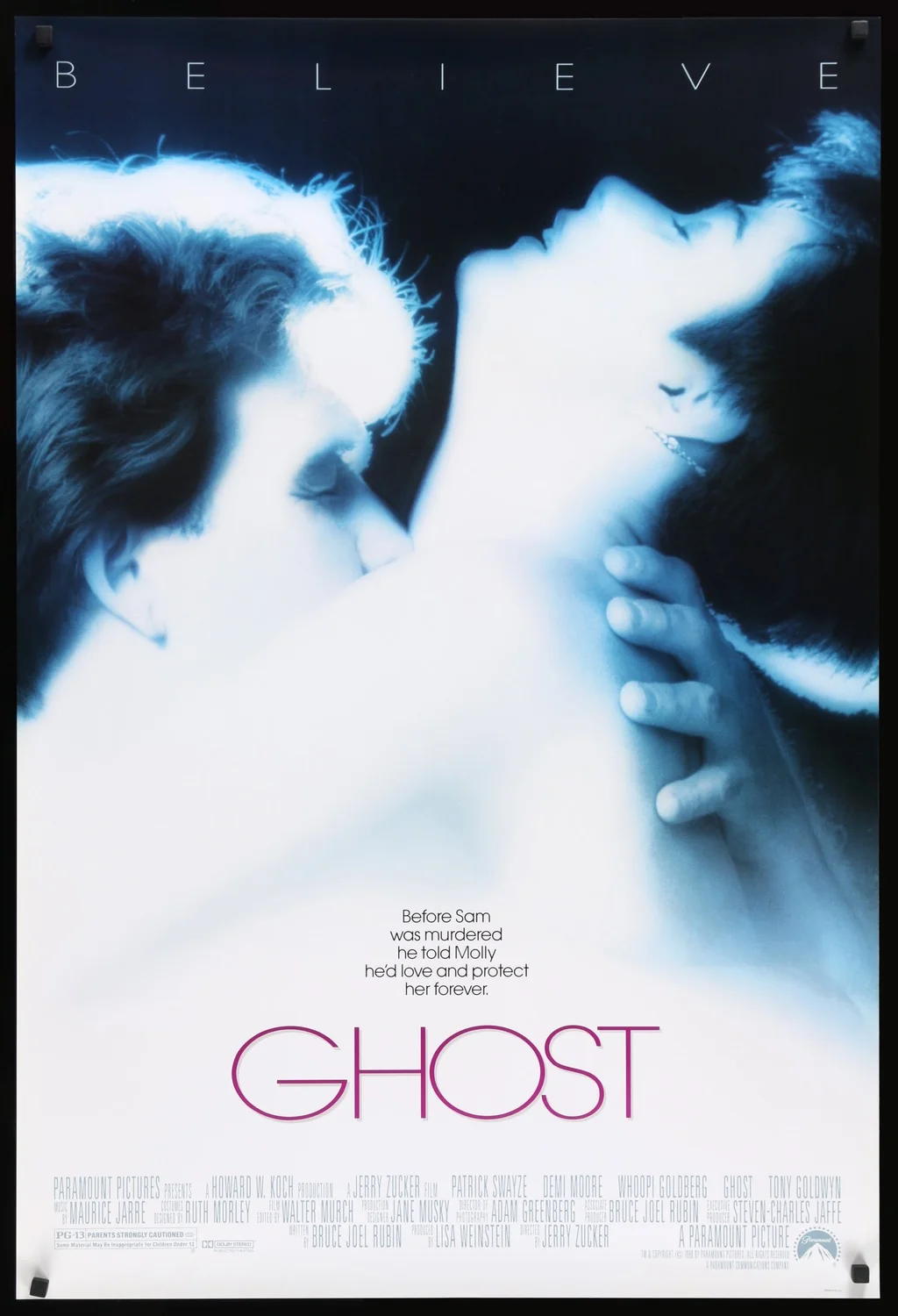
1990 // VHS
Ghost
A murder mystery disguised as a love story — with a man who won’t stop watching over the person he loves.

1990 // VHS
Total Recall
Memory, muscle and a very faulty holiday package — with Mars on the itinerary.