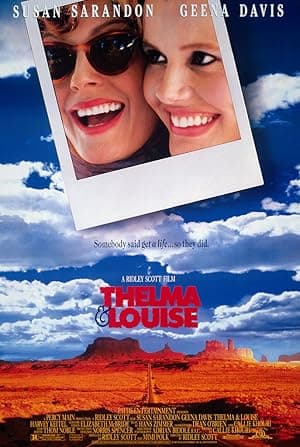
Thelma & Louise
Two women, one road and a choice that still makes you hold your breath.
// The setup
PLAYBACK STARTED
Thelma & Louise is the sort of movie that still gets people arguing in pubs: was it about freedom, revenge, or something messier in between? Ridley Scott’s 1991 road picture turns a weekend away into a moral and cinematic bellwether, and it does so by trusting two characters — and the connection between them — to carry almost everything. If you’ve not seen it, expect a lot more than a crime drama; if you have, expect to notice new small things that have stuck around.
THE MOVIE
Louise Sawyer is still the reason this movie works
This is a film that starts as a weekend, then keeps turning corners until the weekend is gone and everything else has changed. Thelma Dickinson and Louise Sawyer set off on a road trip, a simple plan bumped into something violent at a roadhouse — and that wrecks the neat life they thought they were living.
What follows is not just a thriller about police pursuit. The women’s choice not to report the incident and to run is driven by the plain, bitter calculation that the legal system will not protect them. That pragmatic fear — the thought that turning to authorities will make things worse — is what Louise pushes harder than anyone else.
Ridley Scott directs the whole thing with a steady, economical hand, and he’s got two actors at the centre who do the heavy lifting. Susan Sarandon plays Louise; Geena Davis plays Thelma. Between Louise’s protecting instincts and the pair’s mounting solidarity, the film finds an emotional engine that keeps the plot moving and the questions honest.
THE SETUP
The idea that sets Thelma & Louise in motion
At its broadest the story is neat and savage: two friends on a short trip whose evening at a roadhouse shatters everything. That single violent encounter is the engine that turns a weekend into a flight.
Practical beats keep nudging the plot forward: a witness spots their 1966 Ford Thunderbird, money is stolen and then replaced, and a robbery becomes the kind of error that makes getting out of it harder. Those moments aren’t filler; they’re the small dominoes that force decisions.
As the pair head west through the American Southwest, the film keeps returning to one basic question: do they surrender and trust the system, or keep choosing their own freedom? The debate — to risk escape, to try for Mexico, to give themselves up — is what keeps the tension taut.
That tight setup is also why the film provoked so much discussion on release: it wasn’t just a crime tale but a buddy-road picture asking what two women can realistically expect from institutions that have let them down.
THE CHARACTER
Why Louise Sawyer matters
Louise’s place in the story is practical as much as emotional. She’s the one who plainly calculates risk and decides a risky option beats a hopeless one. That kind of realism — grim, useful — gives the film its backbone.
She’s protective: not a shouty guardian but the person whose instincts are to shield Thelma and to keep them moving. That protection shapes the choices the pair make and, crucially, keeps their bond believable under pressure.
The relationship between the two women is what the movie returns to. Their dependence and growing trust provide the emotional currency for every dangerous step they take. Without that, the plot is just a string of incidents; with it, the incidents add up to something you care about.
Susan Sarandon plays Louise, and the character’s mix of worry, stubbornness and competence makes her the film’s steady centre — the person you can see making the hard decisions when everything is collapsing.
THE PERFORMANCE
Why Susan Sarandon's performance matters
Contemporary reviewers and later retrospectives repeatedly pointed to the central performances as a major reason the film worked. Critics singled out both Sarandon and Geena Davis for how they occupied the story together.
That attention wasn’t just about star names on a poster. It was about how the two leads made their partnership feel like the film’s true plot — the thing audiences were invested in, even when the police were closing in.
Talking about the performances is comfortable shorthand for why the emotional stakes land: reviewers noticed the two leads and their chemistry in a way that helped the movie become a talking point beyond cinema lists.
So when people say the casting mattered, they’re pointing at a piece of evidence: critics marked the actresses out at the time, and those notices helped the film stay in the wider conversation.
UNDER THE SURFACE
Thelma & Louise has more on its mind than the plot suggests
At face value it’s a buddy crime-road picture; under the bonnet it turns into a study of friendship under pressure. Thelma and Louise’s relationship is the recurring image: when everything else fails, they have each other.
That friendship is tied to agency. The film keeps returning to the idea that the women must decide for themselves what freedom looks like, rather than waiting for institutions that have already let them down.
Institutional failure is threaded through the story: the characters are repeatedly shown, by circumstance and calculation, as having little faith in legal redress. That absence — of trust in the system — is as much a theme as the literal chase.
And because the inciting moment involves male aggression and an attempted sexual assault, the film never loses sight of how those threats shape the choices available to its female protagonists. The road becomes a place of transformation precisely because escape has been forced on them.
THE FILMMAKING
How Thelma & Louise was put together
Ridley Scott brought together a compact crew to build the film’s look and rhythm: Adrian Biddle as director of photography, Thom Noble editing the pieces together, and Norris Spencer overseeing production design. Those roles shape how the road feels — purposeful, lived-in and mobile.
One practical detail that keeps recurring in production notes is the Thunderbird itself: five 1966 Ford Thunderbirds were used, including a purpose-built camera car and stunt vehicles. That repetition matters because the car is more than transport; it’s a moving set-piece and a character in its own right.
The choice to rig a camera car with sections cut away for equipment is an example of how the production married practical solutions to storytelling needs. It allowed the camera to get close without faking the motion, which helps keep the film’s energy immediate.
All of these crew choices — director, cinematographer, editor, production designer and the practical decisions about vehicles — add up to an approach that keeps the story grounded while letting the landscape and movement do the emotional heavy lifting.
PRACTICAL EFFECTS
The effects work that gives Thelma & Louise its physical personality
The film leans on practical stunt driving rather than clever CGI illusions. That meant real choreography on location: modified vehicles, stunt drivers and careful planning to make the car work feel authentic.
The production used a camera car with sections cut away to take equipment close to the action, a straightforward but effective way to keep the motion believable without relying on trickery.
There’s also a filmed explosion sequence — a tanker truck with practical pyrotechnics — which underlines the film’s commitment to doing action in-camera when it matters. Practical pyrotechnics give those moments a tangible bite.
Those choices don’t make the movie showy for its effects. Instead, they make the action feel like part of the road-trip world the characters inhabit, so a chase or an explosion lands as part of the story rather than a spectacle grafted on.
PURE 80S
Thelma & Louise could not belong to any other decade
Thelma & Louise arrived at a moment when mainstream press seized on it as more than a film — it was a public conversation piece. Coverage such as a prominent Time magazine feature made it a cultural touchpoint in the early 1990s.
That attention helped the movie sit in the wider debates of the time about gender, justice and representation. It meant the film’s questions were discussed beyond cinemas, in living rooms and on newsstands.
Seen in that light, the movie is very much of its era: not because of fashions or music, but because it became a lightning rod for public argument about who gets to be believed and how women’s choices are portrayed.
That mainstream conversation is part of why it still feels anchored to the early 1990s — the film and the moment that received it are entwined.
WATCHING IT NOW
What has aged — and what hasn't
If you sit down with the film now, what lands first is the central friendship. Modern essays and Criterion features keep returning to the relationship between the two women, and that focus shows the element that still carries weight.
The movie’s placement in the road-movie lineage also gets regular attention; critics and curators note how it slots into a tradition of fugitive tales while flipping the gender script. That conversation is part of why it remains interesting to revisit.
Debates about its feminist claims continue to be raised in contemporary criticism. That ongoing argument — whether the film’s choices are liberatory, tragic, or a mixture of both — is evidence of continued relevance rather than the absence of it.
So, what ages well? The core questions and the friendship. What doesn’t age into neat answers is the way audiences interpret the film’s politics; that ambiguity is still being argued over.
THE LEGACY
Why Thelma & Louise still matters
Callie Khouri’s screenplay won the Academy Award for Best Original Screenplay, and the film picked up multiple Oscar nominations — recognition that put it on the map beyond the initial controversy.
The movie’s imagery, especially the Thunderbird and that final Grand Canyon sequence, lodged in public consciousness and has been referenced and parodied enough to become recognisable shorthand in popular culture.
Institutions have kept returning to it: AFI listings, Criterion programming and the Library of Congress preserved it in the National Film Registry in 2016. Those formal acknowledgements reflect a continued sense that the film is culturally or artistically notable.
Put together, awards, public references and institutional preservation explain why the film still pops up in conversations about road movies and women-centred stories in American cinema.
THE VERDICT
Does Thelma & Louise still hold up?
Yes — but with a clarifying sentence attached. Thelma & Louise still works because its heart is not the plot mechanics but the relationship and the choices those two women make when everything collapses around them. The weekend-turned-flight premise gives the film motion, but the friendship gives it meaning.
The story’s pivots — the assault that sets everything off, the decision not to involve police, the theft that escalates things, and the repeated debates about surrender versus escape — all still read as credible pressures that force character choices rather than convenient plot points.
Those choices reach a single, widely discussed final sequence at the Grand Canyon, and that ending keeps the film in public argument for a reason: it’s the emotional and moral capstone of everything that came before.
If you haven’t watched it in years, see it again for Louise and Thelma as a pair. If you’ve never seen it, go in expecting a road movie that uses crime beats to ask urgent questions about agency, solidarity and what happens when women refuse the rules they’re handed.
Share this movie
// Keep watching
More movies from the 90s
If Thelma & Louise is your kind of movie, there's plenty more on the shelves worth rewinding.
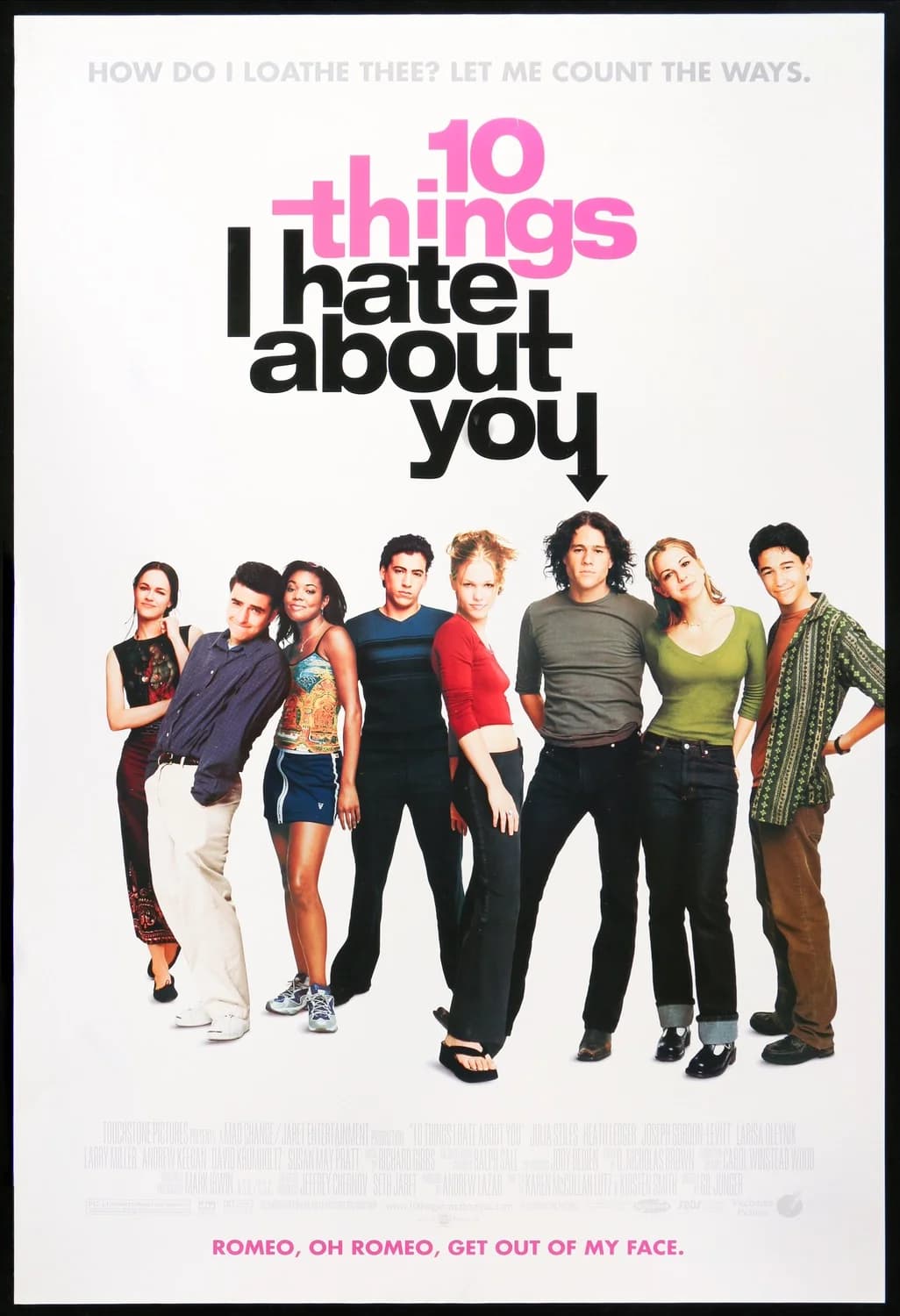
1999 // VHS
10 Things I Hate About You
Sibling rules, a rooftop serenade and one very stubborn Kat — Shakespeare in a school corridor.
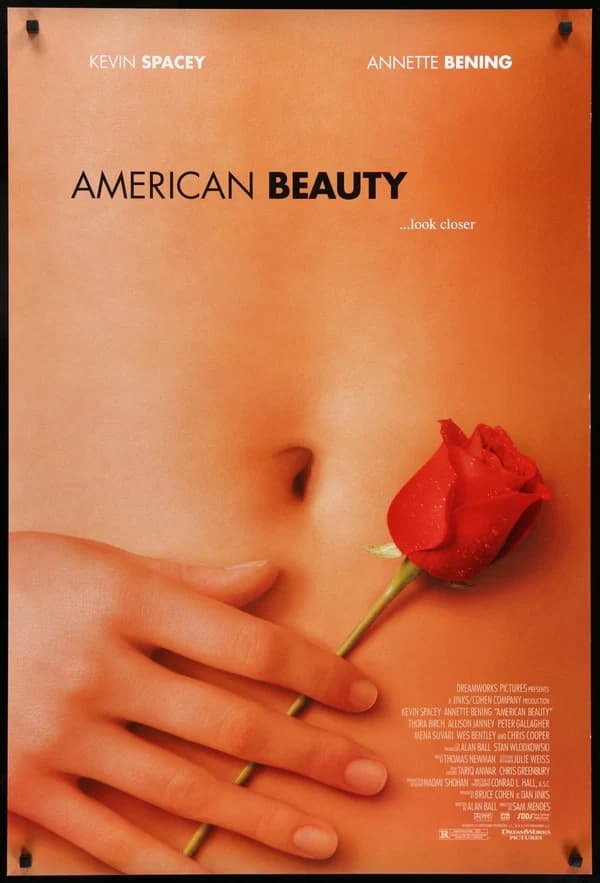
1999 // VHS
American Beauty
Lester Burnham, suburban rot and a midlife argument that still stings.
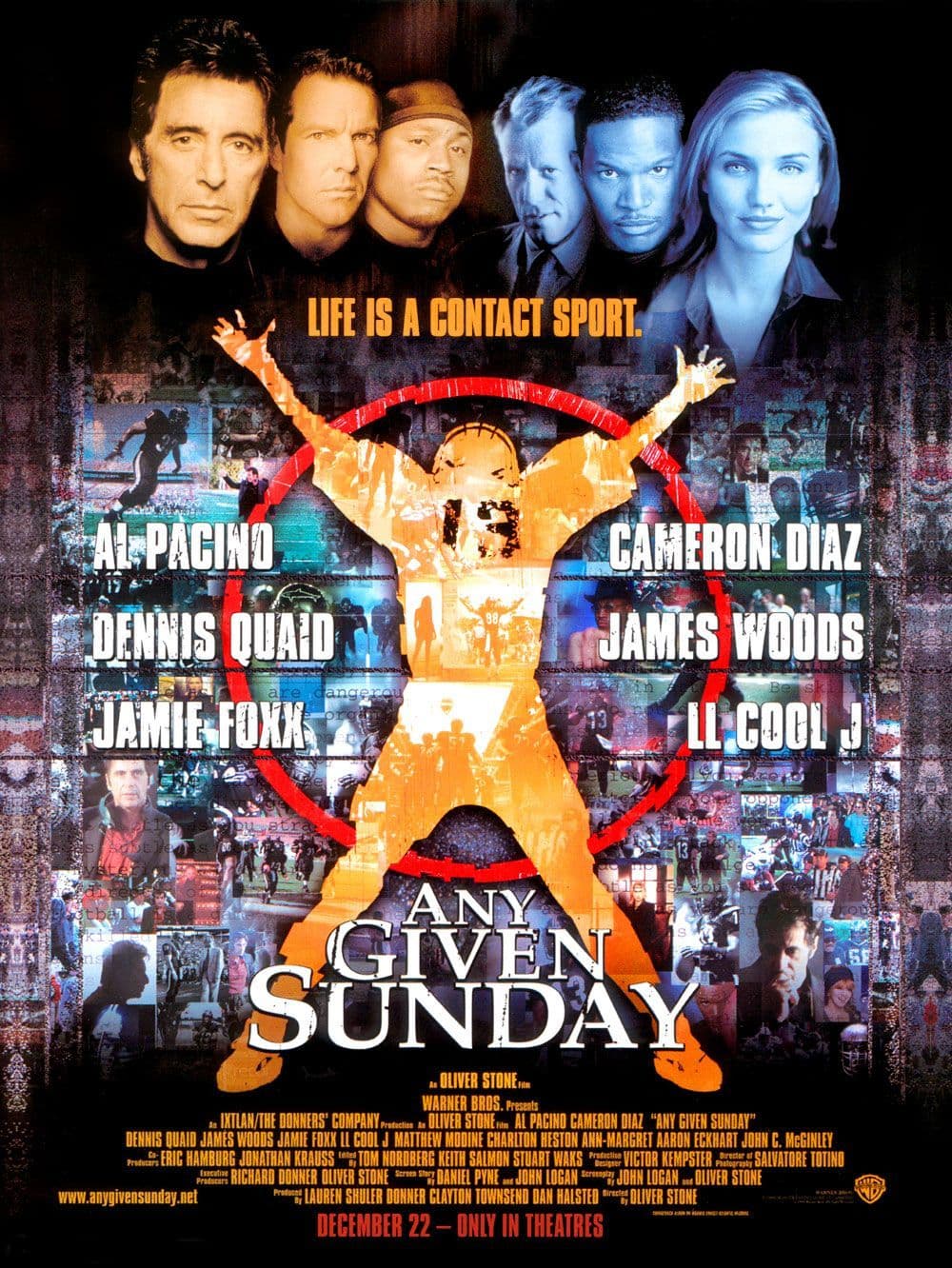
1999 // VHS
Any Given Sunday
Al Pacino's coach anchors the chaos of a film about football turned into product — loud, messy and oddly persuasive.