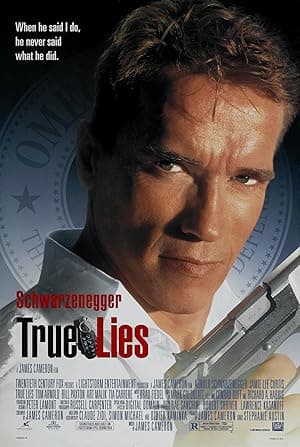
True Lies
A marriage of missile mayhem and domestic farce — and Harry Tasker holds the whole thing together.
// The setup
PLAYBACK STARTED
True Lies pairs James Cameron’s appetite for over-the-top set pieces with a domestic comedy at the centre of its chaos. At its heart is a man leading two lives: one as a spy and one as a husband — the tension between the two keeps the film lively, rude and oddly tender in turns.
THE MOVIE
Harry Tasker is still the reason this movie works
True Lies arrives, immediately, as an idea: a secret agent whose family thinks he sells computers. That double life is not a throwaway detail; it’s the motor that drives James Cameron’s film — all the explosions and pratfalls circle back to what Harry is hiding at the kitchen table.
Put simply: Harry’s secrecy shapes both the action and the emotions. The movie swaps between international trouble — a plot involving trafficked missiles and an arms dealer — and domestic turf wars, and it only feels coherent because Harry’s split existence links the two worlds.
This is Cameron doing action and romantic comedy in the same breath. Released in 1994 and headlined by Arnold Schwarzenegger as Harry and Jamie Lee Curtis as his wife, True Lies latches onto its lead character and refuses to let go.
THE SETUP
The idea that sets True Lies in motion
At its simplest, the film rests on one neat conceit: Harry Tasker is a covert government operative who keeps that life secret from his family by presenting himself as an ordinary computer salesman. That blank space in his marriage is where the story grows teeth.
The immediate external problem is classic spy-flick fare — Harry’s undercover work pulls him into a confrontation with an international arms dealer and an associated terrorist network. Those threats supply the big-action backbone of the film.
But True Lies doesn’t stop at chases and shootouts. It deliberately pairs the global stakes with a domestic mess: Helen, Harry’s wife, grows restless and comes to believe he’s betraying their marriage. Mistaken identities, staged deceptions and setups are used again and again to propel both laughs and danger.
Cameron and the writers intercut the major action set pieces — from air-to-ground drama to rooftop finales — with a long domestic subplot in which Helen is manipulated into thinking she’s the target of a secret agent. The film’s rhythm comes from that ping-pong between public spectacle and private humiliation.
THE CHARACTER
Why Harry Tasker matters
Harry isn’t memorable because he’s mysterious; he’s memorable because his secrecy anchors everything. The film keeps looping back to the question of what a man becomes when he performs heroism at work and domestic normality at home.
Arnold Schwarzenegger’s Harry is both a problem and a propellant: his professional duty forces choices that complicate his marriage, and that tension creates the movie’s emotional stakes. The more he protects his family, the more his lies tangle him up.
Those stakes are sharpened by the presence of a child in the household. Dana’s existence raises the cost of Harry’s missions; protecting a family means decisions have consequences that hit home, literally and thematically.
Harry matters because he’s where spectacle and private life collide. Without that collision the film would be a different, simpler exercise in action — it’s the secrecy and the attempts to keep both worlds spinning that give the movie its engine.
UNDER THE SURFACE
True Lies has more on its mind than the plot suggests
If you take the explosions away, the movie still has a clear preoccupation: leading two lives. Secrecy and double identity aren’t just spy clichés here — they’re the emotional currency the film spends to buy both humour and jeopardy.
Marriage and deception sit at the centre of the story. Helen’s boredom and Harry’s concealment set up a comic tragedy: the jokes are funny because there’s real hurt underneath them. That makes the comedy feel, at times, uncomfortably close to the drama.
There’s also a conversation about masculinity going on, awkward and loud. Harry’s public heroics and his domestic evasions ask what being a ‘man of action’ means when it has to live inside a suburban life.
Above all, the film keeps returning to the split between private and public selves. True Lies is, in a way, interested in how someone manages an outward image while fighting different battles behind closed doors.
THE FILMMAKING
How True Lies was put together
True Lies is a director’s playground: it stitches together big, complicated set pieces with sitcom-style domestic scenes. The editors credited on the picture — Conrad Buff, Mark Goldblatt and Richard A. Harris — are part of how the film keeps that balance moving at pace.
A lot of the conversation around the film when it came out focused on those large-scale sequences: the air-to-ground encounters, the causeway/bridge business and the downtown rooftop climax. They were covered heavily in the cinematography and effects press because they demanded technical ambition.
That ambition isn’t empty. The cutting between spectacle and living-room rows is deliberate: one minute you’re watching something that looks like a military exercise, the next you’re back in a farce about a marriage. The filmmaking choices always pull those two tones into the same orbit.
Put another way: the movie is constructed to make its imagery and its domestic comedy play off one another. That’s what gives True Lies its particular identity — an effects-driven blockbuster with a nose for marital absurdity.
PRACTICAL EFFECTS
The effects work that gives True Lies its physical personality
The film doesn’t rely on one trick. It blends miniatures and model work with early computer-generated imagery, with Digital Domain among the vendors bringing the digital elements to life.
A good example is the harrier/causeway sequence: the production used a miniature causeway and practical pyrotechnics and then layered in CG missiles and composited smoke trails. That hybrid approach is fundamental to how the action reads on screen.
Experienced special-effects practitioners and specialised miniature shops were involved in the work, so the movie’s practical side wasn’t an afterthought — it was planned and executed by teams used to that kind of miniature pyrotechnics.
The physical effects give the film a tactile personality: even when digital elements are present, the models and explosions provide something you can feel in the cut, which helps the spectacle land alongside the domestic beats.
PURE 80S
True Lies could not belong to any other decade
True Lies follows on from James Cameron’s appetite for effects-heavy filmmaking at the end of the 1980s and the start of the 1990s. It’s part spectacle, part domestic farce — a blend studios were eager to bankroll in the 1990s, when crossover tentpoles were an attractive bet.
The movie also marked an early major project for Digital Domain, a VFX company that emerged in the early 1990s and went on to define a lot of later blockbuster effects work. That places the film at a technical moment when CG was moving into conversation with models.
Contemporaneous coverage treated True Lies as a hybrid: an effects-driven action picture that deliberately mixed in romantic-comedy beats. That hybrid nature was typical of the decade’s appetite for high-concept films that could reach wide audiences.
In short, the film sits in the 1990s because of both its ambitions and the tools it used; it’s a product of a moment when practical craft and nascent digital techniques were being stitched together for maximum spectacle.
WATCHING IT NOW
What has aged — and what hasn't
There’s no getting around it: the film’s depiction of Arab and Middle Eastern characters was criticised at the time and continues to be noted in later commentary. That element sits uncomfortably with modern viewers and is a legitimate reason to watch the film with a critical eye.
On the other hand, the premise — a covert operative who keeps his spy life secret from his family — still functions as an engine for both laughs and tension. The double-life set-up is simple and direct, and it still fuels the film’s central conflicts.
So True Lies reads now as a mixture: some parts of the movie feel dated because of stereotyping and tone, while the structural idea that powers its comedy and action remains clear and watchable.
If you rewatch it, you’ll enjoy the mechanics of the setup, but you’ll also notice places where the film’s perspective has not aged gracefully. That combination is part of the film’s modern profile.
THE LEGACY
Why True Lies still matters
True Lies left a few concrete traces in industry memory. Jamie Lee Curtis won a Golden Globe for her role, which is a tidy marker of the film’s crossover into comedy territory.
On the technical side, the movie earned an Academy Award nomination for Best Visual Effects, and the work helped raise the profile of Digital Domain as a significant VFX house in the 1990s.
The story has kept enough life to be adapted for television in 2023, even if that version didn’t stick around. That alone is a sign the central premise still interests creators and audiences.
So the film matters both because of individual recognition — awards and nominations — and because its effects and premise continued to be points of conversation beyond the original release.
THE VERDICT
Does True Lies still hold up?
Yes — with reservations. The film’s central engine is simple and robust: a husband who is secretly a spy, and the collision between that life and his marriage. That basic setup still supplies laughs, jeopardy and surprisingly steady dramatic stakes.
If you want sheer spectacle, the movie delivers: the plot lets Cameron swing from domestic farce to large-scale action (the Harrier/causeway and rooftop beats are part of that mix) and the effects work remains a clear part of its appeal.
But the film also carries problems that matter now. Critics at the time and later commentary called out stereotypical portrayals of Arab and Middle Eastern characters, and that’s a real blot on the movie’s record you shouldn’t gloss over.
So watch it for Harry and for the way Cameron marries blockbuster set pieces to a messy marriage comedy — but watch it with an awareness of its shortcomings. It’s a big, noisy hybrid that still entertains, and it asks you to enjoy the ride while keeping some questions in your head.
Share this movie
// Keep watching
More movies from the 90s
If True Lies is your kind of movie, there's plenty more on the shelves worth rewinding.
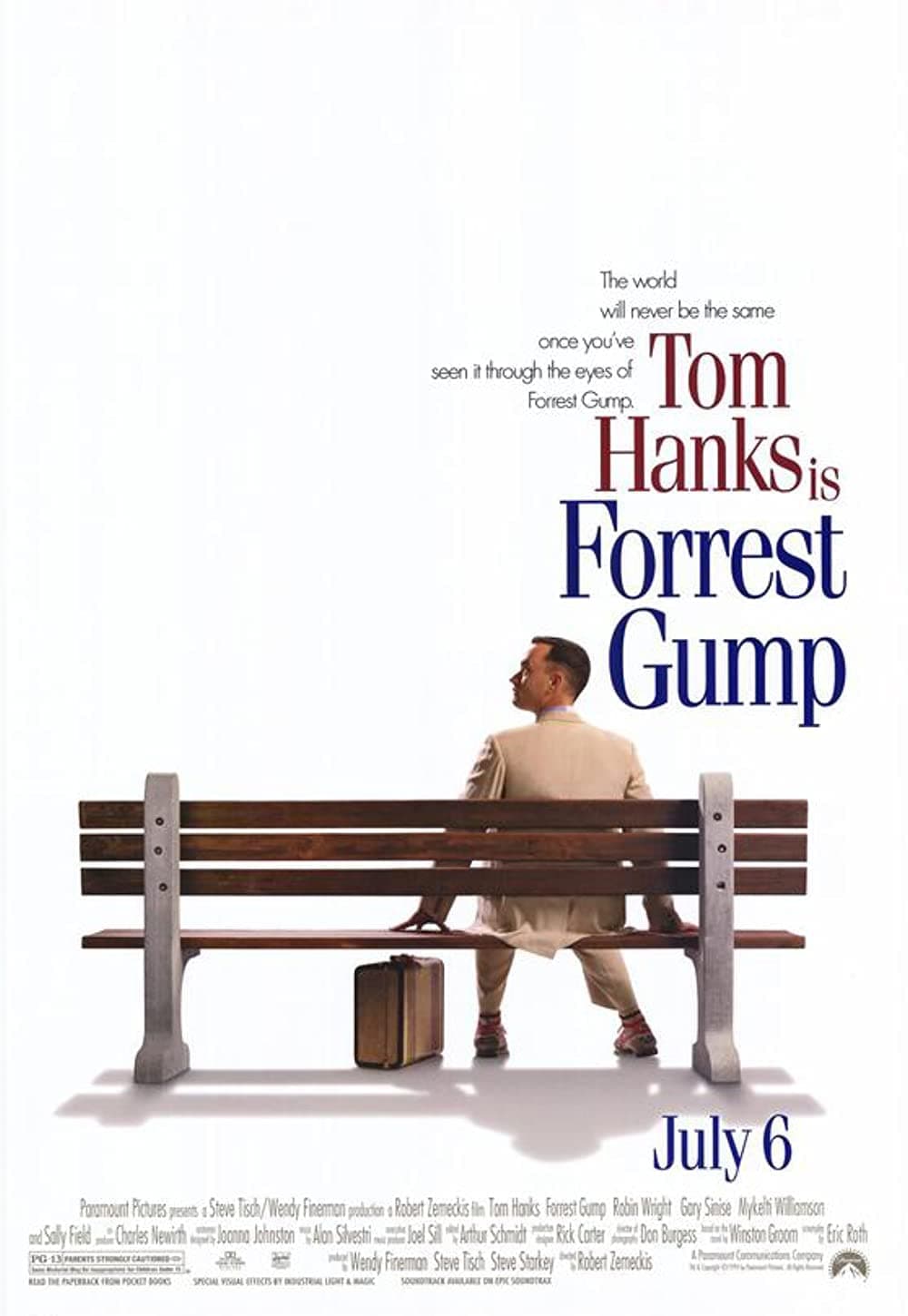
1994 // VHS
Forest Gump
A man on a bench who refuses to make history anything more complicated than a story worth telling.
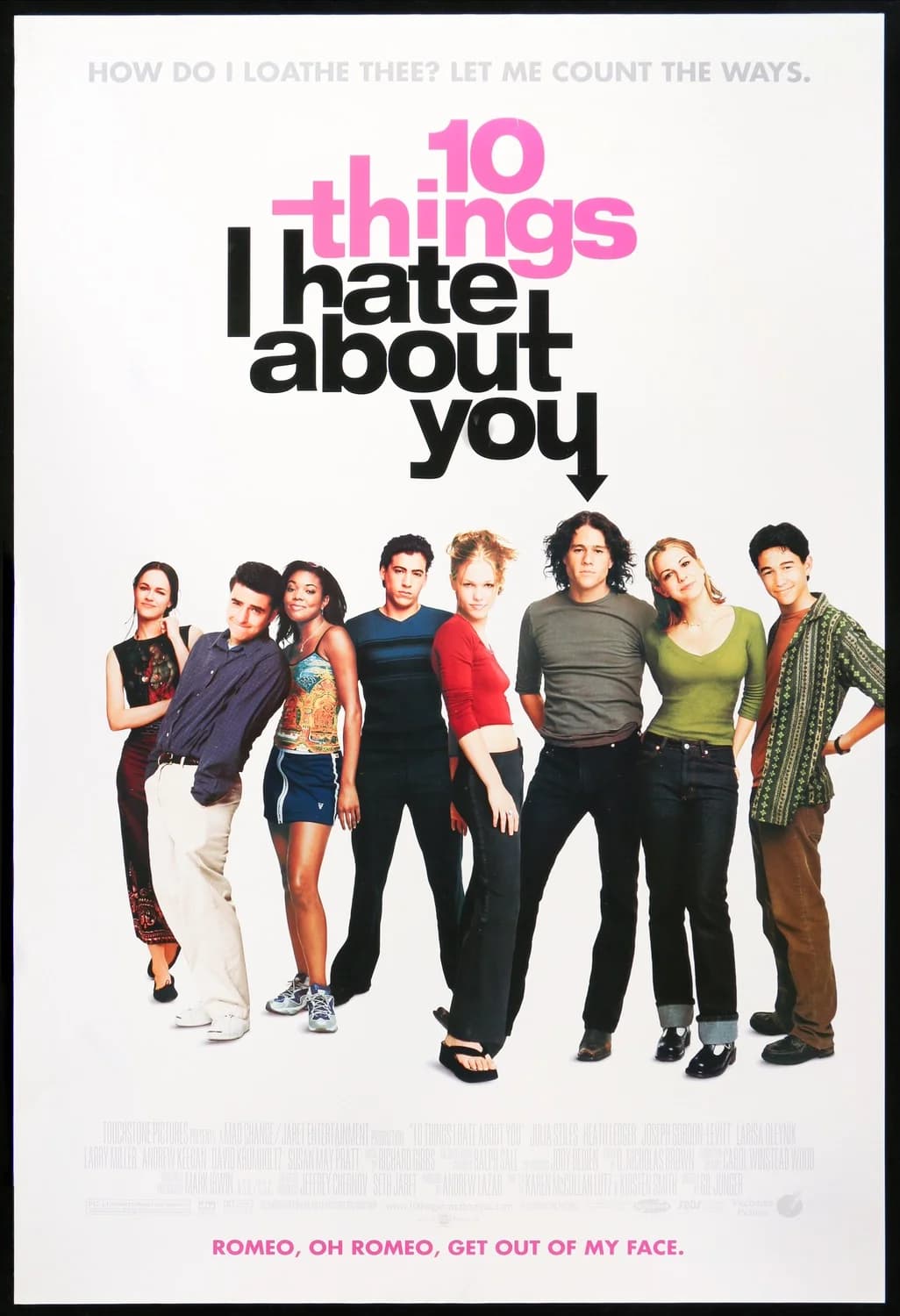
1999 // VHS
10 Things I Hate About You
Sibling rules, a rooftop serenade and one very stubborn Kat — Shakespeare in a school corridor.
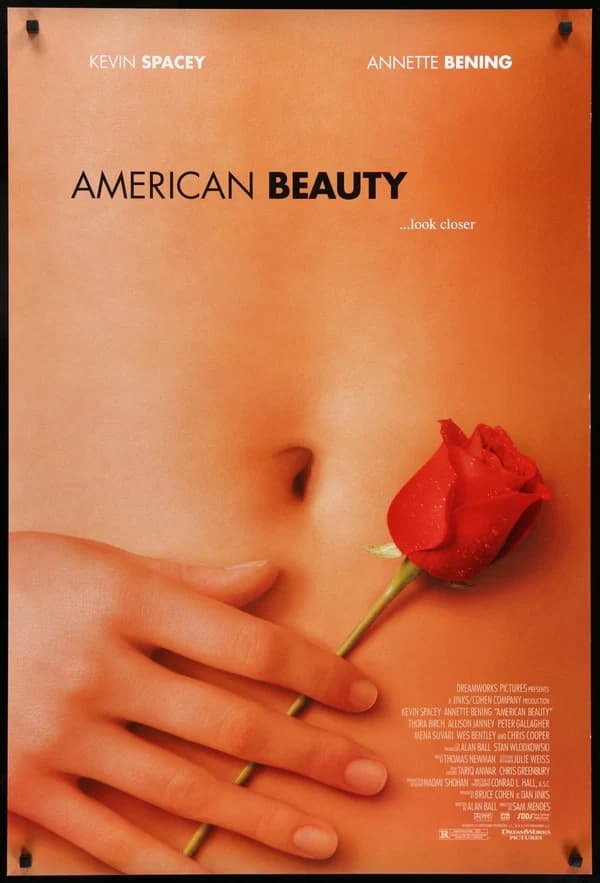
1999 // VHS
American Beauty
Lester Burnham, suburban rot and a midlife argument that still stings.